Log in
EN
FR

Virtual Instruments

9274 products found

Categories
Filter
Sort by
Brand
Evaluation
  • Reviewed or not
  • Editor’s award
  • Reviewed by Audiofanzine
Availability
  • Available or not
  • Sold new or used
  • Sold new
  • Sold used
Must-have products
  • All products
  • Flagship products
  • Best rated products
  • Hot products
  • Popular products
Price
  • Freeware
  • Low-cost (< $65)
  • Mid-range ($65 - $150)
  • Premium (> $150)
€
Clear
Sort by
  • Popularity
  • User ratings
  • Price - low to high
  • Price - high to low
  • Used price, increasing
  • Used price, decreasing
  • Name (from A to Z)
  • Name (from Z to A)
  • Added on
Sort results
  • Popularity
  • User ratings
  • Price - low to high
  • Price - high to low
  • Used price, increasing
  • Used price, decreasing
  • Name (from A to Z)
  • Name (from Z to A)
  • Added on
Filter results 9,274 results found
Brands
Evaluation
Availability
Must-have products
Price
  • Freeware
  • Low-cost (< $65)
  • Mid-range ($65 - $150)
  • Premium (> $150)
Show results

The best Virtual Instruments reviews

The reviews Audiofanzine members found the most helpful.
  • « A total mess ! »

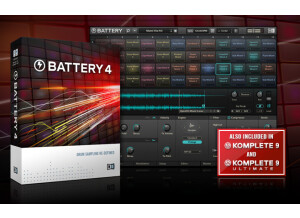
    This version 4 of Battery is a total mess. A lot of things have regressed compared with Battery 3, and finally only little evolution. Compared with Battery 3, here is a list of what was lost: - It is no longer possible to rename several cells at once. - "Random" mode is now totally erratic, plus it lost some features. - If no sample is affected to a certain cell, there no longer is any visual indicator to show the cell is being played by the host. - Some cell colors are hard to distinguish from others. - Cells are too small and hard to read. - The envelope curve that used to be shown over the sample's curve is no longer there. - The cells no longer indicate the audio outs they are affected to, nor the key that triggers them. - linking cells to each other (for instance so that the kick and snare are triggered together whn pressing a single key) is now a pain, even if before it wasn't as easy as it should be. And still the same lacks inherited from Battery 3 : - No synthesis to emulate drum machines or create new sounds. - EQ is ridiculous and not intuitive. - No included flanger/chorus effect. - No test cell (to test sounds without disorganizing the current active cells ans so as to gain space). As for the good points: - Filter, saturation and transient designer sections were added, as well as automation.

  • « Excellent value for money »

    The purchase is done online on the KV331 web site. Installation was easy enough, especially if it's just for Live as all you have to do is copy the VST in the Live directory. I installed it on an i7-3770 3.4 GHz with 16 GB of Ram and W8. I use the 64-bit version with Live 9. I did not need a manual or guide for installation. SUITABILITY/PERFORMANCE Synthmaster's level of quality is configured as "draft" by default. Under these default conditions, the performance is very good with my setup. I can easily run 10 instances of Synthmaster without reaching the limits of CPU. The sound is already correct and impressive. Surprising for a VST bought for € 70 with over 600 sounds. With the quality setting at its highest, most sounds can still be played through Live without any complications. Performance only starts to take a hit with certain big pad sounds, in which case lowering the quality setting will get the job done without losing quality in sound rendering. But in general, at the maximum quality setting, the sound rendering quality is excellent and the virtual filters react beautifully. It really feels like you have a hardware machine at your fingertips. OVERALL OPINION Like the Zebra2, Diva, Omnisphere, etc, the Synthmaster is a real synth that responds well in live applications to external stimuli. The level of sound quality delivered is impressive, especially given the price. Definitely worth the money! It's almost shocking that the Synthmaster is relatively unknown, given the price and the quality. I highly recommend.

  • « LuSH-101 is LUSCIOUS! »

    Works Great. Easy to Use. SUITABILITY/PERFORMANCE Everything works fine. Wish the CPU load was less, however. OVERALL OPINION LuSH-101 is a thick, juicy, versatile synth that derives its lushness from multilayers and state of the art synthesis features (oscillators, filters, envelopes, etc.) and effects. D-16 Group has an uncanny knack for developing unique and inspiring audio plugins, and LuSH is no exception. It is a flexible and fantastic virtual audio instrument. I've always been a D-16 fan, enjoying their sound, features, and product names. When they first changed the name of this synth from Shioitor to LuSH I was worried that they were selling out . . . breaking away from their cutting edge, dare-to-be-different ways, but soon after launching this thing I smiled — LuSH is the perfect name for this VSTi. They also could have called it, abundant, delicious, dense, heavenly, lavish, or voluptuous. :-). It's certainly the opposite of bare or sparse. LuSH not only sounds good, but it looks good. I'm a visual guy, and the interface means a lot to me. This GUI is easy on the eyes and a pleasure to work within. Everything is in the right place and is the right size for inspirational tweaking. If you don't have time to create something from scratch, there are more than a thousand well thought out and designed presets in the factory library that you can adjust to taste. The preset browser is intuitive and user-friendly. Like all D-16 Group plugins, LuSH has it's own personality. It's diverse and capable of doing tracks for any kind of electronic music, whether it be alternative, ambient, dubstep, drum and bass, house, industrial, new wave, retro, second wave, soundtrack, or techno. There aren't that many synths that can produce both warm analog sounds and a crisp clear digital sounds. LuSH can! Is this the only synth you will need? It could be, but of course if you are like me you will want more! I wouldn’t let go of my other favorites. If I could change one thing about it — I would make CPU demand more efficient. It's too heavy a load for one synth, but then again . . . it's 8 synths in 1, so it's not bad at all, is it? The price is good. The customer support is great. The sound is wonderful. I give LuSH five stars. Thank you D-16 for creating another masterpiece!

  • « Big Mama »

    The installation and, especially, the updates, are a bit complicated, starting with the fact that Spectrasonics offers different updates for the software itself, the presets and for the sound libraries. But everything works fine once we've gotten pass that. SUITABILITY/PERFORMANCE I use it on a Dual Core with 6 GB RAM and have never had an issue under Windows 7 64-bit / Cubase 6. That said, I generally use one or two patches per song at most, so it's not very indicative. OVERALL OPINION I've used it for two years now and I must confess that I'm really fascinated by the software, even if it only use it rarely. Why? Because it sounds huge and its sounds are sometimes so complex that they are more than enough by themselves. It is often hard to try to incorporate them in a song. During mixdown, you will have to cut a lot with the EQ (especially in the low end). And, to compose, it seems that the best you can do with Omnisphere is start from scratch with one of the presets and see where it takes you... But we must also admit that an Omnisphere layer and a Stylus groove are enough to make a song, which can be exciting and frustrating at the same time... Loaded with processing and modulation possibilities, the software is nevertheless not the most user-friendly, in my opinion. Its interface with multiple panels make it unnecessarily complicated and might end up discouraging beginners or will make them stick to presets, which, then again, are admirable. This is without a doubt an inspiring instrument whose sounds have a lot of personality. But that's not always what you are looking for...

  • « The melodic sound and ambiance that I love for sound for picture!!! »

    I use it with Windows 10 and Cubase 8.5 on an i7 6700k through Kontakt 5.5 with 16 GB of RAM – and sometimes it’s not even enough, which is a real pity. It also can be used with the Kontakt Player. It can work in the following modes/formats: standalone, VST, Audio Units, ASIO, Core Audio, WASAPI, Native AAX – so plenty to do. First, Cinematic Guitare Infinity is a bundle that contains Cinematic 1, 2 and 3 as well as Infinity, which is the latest soundbank. It still requires quite a bit of resources for big multi projects, I went up to 35-40% SPU usage with a 2ms latency – which also accounts for why the announced required setup seems to me very minimal: Windows 7 or Windows 8 (latest Service Pack, 32/64 bits), Intel Core 2 Duo or AMD Athlon 64 X2 26 free GB space on a hard drive 4 GB of RAM at minimum Like any other Kontakt bank, it gets authorized using a serial number. Nothing difficult, but it’s always uselessly time-consuming to my taste. It can be used for creating ambiance musics for movies and the sound is really great, the manual talks of a dramatic sound and some of them really convey emotions greatly, just go for the appropriate scale and here you are – a bit too quick perhaps. The sound is really massive, thick, heavy, impressive, and it distorts quickly if you don’t go with a limiter in the end of the FX chain. The manual provides the following details: 2,000 sound sources, 1,000 sound presets and 750 instrument presets all ready-for-use, allowing users to work with slightly over 2,400 billion(!) different sound combinations at hand. Sounds for each bank are divided between atmosphere, instruments and percussive sounds, with a large variety of each. As an example, the effect page for the (aptly-named) “Cries for help” setting : http://zupimages.net/viewer.php?id=17/47/hwl9.jpg It’s easy to start working with, but nothing new except for its large variety. So it’s not hard to use, but still needs time to explore thoroughly. As usual, the way the banks are organised (with instruments and multis) is logical and relevant. You get some rather nice sounds that would perfectly suit a prog rock intro. Pads + guitars with delay and a bit of reverse, and the ambiance is instantly here – all within only one or two notes… Sounds can contain 8 different sound sources through a dozen effects (including distortion, delay, chorus, flanger, filter, lo-fi, filters... we’ll see the list later). http://zupimages.net/viewer.php?id=17/47/yypp.jpg You can get more towards a sound or another. Each sound can be modulated using effects and filters, allowing for an almost-infinite number of combinations. Those who know Korg’s WSAD will find a certain number of similarities as the WSAD allowed to use simple sounds within a performance, and for each sound the joystick could be used to point to 4 sources with the same sound being usable to be stacked within multis where the sound register could be chosen; well, here it’s almost the same, with an additional sound modulation feature – not that the WSAD couldn’t do it, but it was less powerful. As an exemple, the sound sources can be modulated using the joystick but also another – virtual – joystick (see image below). This is where you wish you had a hardware controller to make things easier. http://zupimages.net/viewer.php?id=17/47/9xx4.jpg The basic sound is called soundcore and features two sound sources. Up to 4 soundcores can be used for a total 8 sources – and this isn’t even multi yet!!! An arpeggiator is also available. http://zupimages.net/viewer.php?id=17/47/cpw9.jpg As usual with Samplelogic, there’s a nice additional feature with the modularity of filters and all other parameters to be used with tempo-synced step sequencers. For each step, the volume (for instance) can be modulated to create gating effects, or to manage the distortion level… Everything can be assigned and parametered (which is a bit more complicated – I haven’t tried to modify anything so far) http://zupimages.net/viewer.php?id=17/47/rxyl.jpg In the end, I’d make the same choice especially considering the special price for which I bought it (a very convincing argument, indeed!). It’s a soundbank that needs exploring, tweaking… No limit, except that of one’s “image-in-a-sound”… I’ll add below some presets of sounds and multis so that everyone can hear the kinds of sound sources that are included. I benefited from a very special price at $190 instead of its $599 full price tag Some demos, just to give you an idea of what can be done using it: https://soundcloud.com/sample-logic/rayshaun-thompson-retaliation?in=sample-logic/sets/cinematic-guitars-infinity https://soundcloud.com/sample-logic/stutter-city-eishi-segawa-0529?in=sample-logic/sets/cinematic-guitars-infinity https://soundcloud.com/sample-logic/spanish-fire-amy-baer?in=sample-logic/sets/cinematic-guitars-infinity https://soundcloud.com/sample-logic/dark-rebellion-tom-salta?in=sample-logic/sets/cinematic-guitars-infinity

  • « Great product »

    Easy and problem-free installation. Easy-to-install expansions and very well organized in categories. No incompatibility problems with cubase nor protools. Logical and simple manual. It's a sample preset player. SUITABILITY/PERFORMANCE My setup: Windows 7 64b I7 4930k 64 gb ram 2400 Asus p79 deluxe gold RME madi soundcard coupled with a burl mothership b80 SSD Performance with windows 7.7 The software works correctly and the samples are loaded in less than a second, even the hollywood2 range. Stable setup Very low resource usage Possibility to open 30 nexus instances in a single project without any overload, even on my old I7 2600k. OVERALL OPINION I've used it for 7 years, I think. I've tested all vsti on the market What I like best: Original sounds that are regularly updated by the publisher with expansions. Nice built-in effects and the addition of a real IR reverb, which is great to give more character and breadth to the sound Fast and easy use and setup What I like least: Sample player only, so it lacks synthesis generators to make sound design Sound editing is restricted and you can't create your own combinations The sounds are usually found on several expansions, which can be a bit disconcerting when you consider that an expansion costs $60 and that from the 128 sounds it includes, you have already heard 10 or 15 in other expansions and there are 20 useless SQ sequences they've put in just to fill space. It lacks a search engine for the sounds What I regret: They should make version 4 mixing phalanx / sylenth and it would be awesome Nevertheless, it's a very good product for people who like modern sounds and quick searches. There are bundles with very attractive prices, but the complete version is pretty expensive. I have used it every day on all my projects, so I would buy it again.

  • « Faithful Reproduction of a Prophet Synth, and Way More! »

    These days in the Prophet 5 emulator market, you basically have the U-he Repro 1/5 and the Arturia Prophet V. The Arturia can emulate both the Prophet 5 and the Vector and even combine them as a hybrid, but the overall sound is not as detailed and fat as the Repro. Most go with the Repro as the standard for Prophet emulation, but the plug-in is way more computer resource-intensive. ...but wait, there is one more contender..... Enter "Messiah" by Memorymoon, which was actually the first and original Prophet 5 emulator from 2008. However, version 2.0 arrived late-in-the-game in the fall of 2018, and not a whole lot of fanfare (marketing). However, Messiah is very different these days in that it has a whole new engine and lots of added features and sound banks (presets). Because of this, it rivals the sonic capability (sound) of Repro 1/5, but uses a lot less resources (this is important to me). Plus it has several features not found on the on Repro or Arturia (additional oscillator options and filter mods) and comes with close to 900 good useful presets. Also, update version 2.1 is set to come out before the end of year 2019 and will introduce even more features, tweaks, and a slew of internal "choosable" MIDI map templates for various "external MIDI controller" boxes and synth keyboards (there is a template in there for the new SoundForce SFC-5 "Prophet 5 style" MIDI controller box). I was actually in the market and was planning on purchasing Repro, but after demo'ing Messiah, I changed my mind and purchased it instead.

  • « KILLER SYNTH! »

    No issues. Easy to install. Easy to use. SUITABILITY/PERFORMANCE Runs smoothly. Good CPU performance. OVERALL OPINION Predator by Rob Papen is an amazingly simple, yet powerfully deep synth. The interface is well organized; knobs and controls are accessible and easy to use. Creating sounds from scratch is fun and rewarding, and for those who are less adventurous, the synth comes with a vast array of presets from the master himself, Rob Papen. One of the most enjoyable features are the randomize buttons, which allow the user to generate new sounds without much effort. This vicious beast has 128 waveforms, not just saw, square, sine, and triangle. There are also many ways to modulate and tons of high quality effects Predator suits any kind of electronic music, and can produce many kinds of sounds — cutting leads, meaty basses, soothing pads, atmospherics, rhythmic soundscapes, etc., but where it really shines is with leads and arpeggios. For this reason, Predator is an electronic dance music producer's dream synth. Tracks created with this synth usually sit well in the mix, standing out just enough, but not getting lost and buried. Grrrrr, a gentle roar. The only area whereby I would suggest improvement is the patch browser it could be more intuitive. Otherwise, it's all there and is an extremely stable plugin. It has never crashed on me, launching smoothly and performing well in Logic, Studio One, and Numerology. Considering the depth of the sound, CPU demand is not bad, and the sound quality of the most recent version is fantastic, without any noticeable aliasing. Customer/User support is excellent. Rob and Jon are active on the threads and respond to emails within a day or two. They are great people creating great plugins — a pleasure to deal with! I highly recommend Predator to any electronic musician or producer looking to add a powerful, killer VSTi to their plugin collection. This synth cannot do it all, but what it can do — it does REALLY well. It's a wonderful soft synth that successfully combines the sonic nuances of analog and digital to deliver a punchy modern sound that you may quickly become addicted and never be able to live without. That's what happened to me! I've been going to counseling and a recovery program for nearly a year, and it hasn't helped. I keep launching every chance I get! Thank you, RPCX, for creating such a ferociously addictive synth. Tommy Zai gives Predator three thumbs up. Love it! BTW, if you search online you will find many threads on electronic music forums comparing synths, i.e. this synth versus that synth. Don't be surprised if Predator is mentioned a lot!

  • « Unmistakably the Real Thing! »

    Easy online purchase, download, and installation. SUITABILITY/PERFORMANCE Works perfectly within Kontakt. I have been using it for 48-hours (straight). ;-) OVERALL OPINION INTRO The 1965 Ludwig Super Classic Kit by DrumDrops is an excellent drum sample library and rhythm workstation that provides a detailed patch for Kontakt. The Pack contains up to sixteen velocities per articulation and 5 round robins that total over 8000 individual samples. The kit sounds great out-of-the-box and it is easily customizable and adjustable. Ludwig’s Super Classic model was a standard configuration for the industry and used by many top drummers, including the one and only Ringo, who served a song without dominating it! The ’65 kit had a simple, compact configuration; yet, it was powerful enough to drive some of the greatest bands in the history of pop, rock, jazz, soul, etc. I love having “Ringo in a box,” but even if I weren’t a Beatle-maniac I would buy this sample library for the pure sound of the kit. There is something very special about it! This library is everything I sonically hoped for — authentic, warm, tight, punchy, alive, and personal without any unwanted room ambience. I’m not sure what microphones, preamps, drummers, and engineers were used to create this sample library, but whatever and whoever they are — they did a sweet job. Until now, I had been constructing my pseudo Super Classic Kit by cannibalizing bits and pieces from various sample libraries to approximate the sound I was after. Sadly, coming close was not good enough. In addition to the authentic sound, DrumDrops has created an interface that serves as a rhythm workstation. It comes with a Groove Player, featuring 800 or so MIDI patterns created by real drummers and an eight channel, 32-step per channel Step Sequencer. There is also a Groove Slicer that I have yet to explore. The beat creation aspect of this pack allows me to finally ditch some of the other subpar sample libraries that I’ve been holding onto that have a groove player. DRUM SPECS ▪ Kick Drum: Vintage 1965 Ludwig Super Classic (14" X 20") ▪ Snare #1: 1960s Rogers Dynasonic Wooden Snare (5.5" X 14) ▪ Snare #2: 1970s Ludwig 402 Snare (5" X 14") ▪ Rack Tom: Vintage 1965 Ludwig Super Classic (13" x 9") ▪ Floor Tom: Vintage 1965 Ludwig Super Classic (16" X 16") ▪ Ride: 1970s Zildjian K Medium Heavy 20" Ride ▪ Crash: 1970s Zildjian K Dark Medium Thin 18" Crash ▪ Hi Hat: 1970s Zildjian K 14" Hi Hats FEATURES I LIKE MOST • Simple, powerful interface. • Easy to process according to taste. • Randomization feature for tuning, velocities, EQ, etc. • Sequencer and Groove player. • Microphone blend – ability to vary the balance of the different microphones at their respective positions. • Eight channel mixer (Mute, Solo, Phase Reverse, etc.) with excellent routing to DAW. • Built in buss compressor and tape saturator. • Useful mix presets. • Responsive, innovative developer. VALUE FOR THE PRICE • Excellent quality vs. price ratio when compared to other vintage packs. QUALITY OF THE SOUND • Unmistakably the real thing. Sound is phenomenal, and with very little imagination I can feel and smell the mahogany. QUESTIONS • Can I add my own MIDI drum patterns to the Groove Player? • What revisions and updates are projected for this library? SUMMARY Knowing what I know, I would buy this again without hesitation! Yet, this is a bittersweet day for me as a songwriter and producer. Sweet, because I finally have one complete, authentic, great sounding, industry standard 1965 Ludwig Super Classic Kit; Bitter, because I no longer have any excuses. My muse is looking me and asking, “Well, are you going to chew gum or bang out some beats?” Now that I have this drum sample library, it’s time to create some music! I highly recommend this kit to any eMusician, producer, sound designer, film or video sound-tracker, video gamer, DJ, etc., who digs the vintage, yet timeless mid-60s sound. Tommy Zai gives this fine Kontakt 5 Pack two hard-hitting rim shots help up high! Thank you, DrumDrops, for resurrecting and breathing life back into my ultimate dream kit.

  • « BEST Virtual Electric Guitar! »

    No problems at all. Easy to install. Easy to use. SUITABILITY/PERFORMANCE Very Stable. Using for only a week, but many launches. OVERALL OPINION Soon after getting RealGuitar, I had to get RealStrat. The moment I installed and launched it, I smiled and thought to myself, "MusicLab has done it again!" Just like the acoustic guitar plugin, this electric version has five excellent performance modes. I turned up the volume on solo mode and played a cool little lick for my guitarist, who had his back turned at the time. He quickly spun around and was in shock for two reasons: 1. I'm a terrible guitarist, and what I played sounded great. 2. I was using a plugin. I had to prove to him I wasn't playing a loop sample. One of the other things I like about RealStrat is the size of the package. I get amazing quality without filling my hard drive with a zillion levels of questionable samples. I no longer have to spend weeks learning key-switches. RealStrat is fun right out of the box. Just launch and let your creative juices flow. When you don't have much money, you need to make sure every penny is spent wisely. RealStrat is a great value . . . lots of bang for the buck. I've paid more hiring the wrong "guitarists" :-). All in all, RealStrat is a fantastic virtual Fender Stratocaster emulation. I highly recommend it to anyone who wants to write, produce, and record sensational electric guitar parts, whether it be rhythms, leads, or FX. Thank you MusicLab! I think I will start saving for RealLPC. :-).

  • « Fantastic Virtual Guitar! »

    I'm using a MacBook Pro i7, with Studio One as my DAW. I have no compatibility issues. Smooth sailing! Easy on the CPU. SUITABILITY/PERFORMANCE Smooth sailing! Easy on the CPU. OVERALL OPINION I had an accident and could no longer play guitar. :-(. I missed having guitar on my tracks, especially acoustic accompaniment and riffs. I tried using my synths, but they sounded like synths! I needed something real — something human! Waiting for friends to come over and play parts for me became inconvenient and embarrassing. I needed to find a way to lay down tracks on my own. I needed a virtual guitarist! I went on a mission, buying and trying nearly every guitar library ever made. A couple of them weren't bad, but most of them left me cold or frustrated. I was tired of filling my hard drive with thousands and thousands of samples that were packaged in a non-user friendly interface. The last thing I wanted to do was spend more years learning complicated key-switches. By the time I got a track down, the inspiration was lost. I was discouraged and frustrated until I tried MusicLab's RealGuitar. It's fantastic!! The interface is neat, clean, and fun! I'm a visual person, and I love seeing the notes on the virtual neck. The way the keyboard is laid out is intelligent, giving total control over the type of strum, fret noise, slide, tremolo, and all the other little squeaks and articulations. The strum engine is a snap to work with and as powerful as you need it to be. I think they call it the "Struminator." The built-in rhythmic patterns usually give me exactly what I need, and if not . . . I can simply make adjustments or create my own patterns. All in all, RealGuitar is easy to use, sounds realistic, and sits perfectly in the mix. This is the first sample-based virtual guitar plug-in I've found that truly emulates the real thing. I've got pretty good ears and most of the time I cannot tell if it's real or RealGuitar. I feel like I'm playing again! Thank you, MusicLab, for creating such a great product. :-). I'm saving up to buy RealStrat and/or RealLPC!

  • « Miroslav Philharmonik »

    Easy and hassle-free installation and setup. PERFORMANCE I use it in my second home with an old pentium 4 (2 ghz) with 1 gig ram under xp pro .... no problems whatsoever. OVERALL OPINION It can be used to compose orchestral classical music or cinema scores fast. It doesn't have the same quality (nor the price) as modern libraries, like those of eastwest and projectsam, but it can be used with an old or mobile and light setup (with a net book, for example)... The interface is simple... you don't need to wait long to load sounds. It's quite all right for a first draft, if you consider that when writing classical music, the final goal is to record with real musicians. To make yourself an idea, you can listen to some examples here: .....www.ikmultimedia.com/philharmonik/audiodemo/