Log in
EN
FR

Elixir Strings

35 products found

Categories
Series
Filter
Sort by
Evaluation
  • Reviewed or not
  • Editor’s award
  • Reviewed by Audiofanzine
Availability
  • Available or not
  • Sold new or used
  • Sold new
  • Sold used
Must-have products
  • All products
  • Flagship products
  • Best rated products
  • Hot products
  • Popular products
Price
  • Freeware
€
Clear
Sort by
  • Popularity
  • User ratings
  • Price - low to high
  • Price - high to low
  • Used price, increasing
  • Used price, decreasing
  • Name (from A to Z)
  • Name (from Z to A)
  • Added on
Choose a category
Choose a series
Sort results
  • Popularity
  • User ratings
  • Price - low to high
  • Price - high to low
  • Used price, increasing
  • Used price, decreasing
  • Name (from A to Z)
  • Name (from Z to A)
  • Added on
Filter results 35 results found
Evaluation
Availability
Must-have products
Price
  • Freeware
Show results

The best Elixir Strings reviews

The reviews Audiofanzine members found the most helpful.
  • « Not my cup of tea; but I can tell it's a damn fine cup of tea »

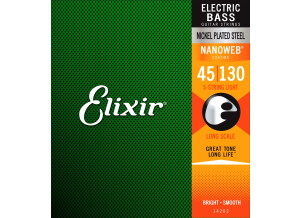
    I recently had a chance to try out some Elixir Nanowebs (14202 - Light gauge .045-.130) and I must say that I was pleasantly surprised! These are actually the first coated strings outside of tapewounds that I've tried, but I have heard from numerous folks over the years that coated strings are simply a novelty, don't sound as good as an uncoated string, and only give a very slightly longer playable life. Gotta say I no longer believe those folks. Numbers ratings are mostly way subjective to what each person prefers, so here's a summary of my thoughts now that I've had a chance to really put these strings through the wringer. Tone When I first put these strings on my Moser Bastard Vi, I immediately noticed that they were very crisp, bright, and rich. After playing them for a few solid hours, the initial brightness did very slightly wear off as the strings broke in, but the tone just evened out a little bit and then stuck with the same nice and bright tone since that point a few weeks ago until now, with many hours on them in between. They aren't the very brightest strings I've used, but are about as bright as any other quality round wound and hold at that same level better than most. Definitely far lower string noise that normal roundwounds. Feel Part of the objection that many have to coated strings is that they just don't feel right and just slide around everywhere. I was definitely surprised how much like uncoated these strings feel. I would say the initial impression (when my hands were dry was that they just felt like they were polished or something, but not like the noodly mess that I expected. That said, if your hands sweat as much as mine do, they do indeed get rather slippery, especially i. THAT said, my hands sweat tons, but don't corrode strings like some other sweaty guys do. If your sweat is on the more corrosive side, the slipperiness may be worth the protection. Longevity After a month of heavy use, they are still keepin' on keepin' on. As mentioned in the Tone section, the tone has held beautifully compared to many traditional round wounds. While they have not maintained the same brightness as when they were fresh, it has definitely decreased far less that most others. While I generally don't use a pick very often, I did give these strings a good bit of time with picks ranging from Wedgie rubber picks and super thin and floppy picks to a 3mm stubby and even a big stainless steel triangle pick. Through all of this, the coating seems to have held up perfectly. To be fair, I certainly didn't put in the kind of time that a dedicated picker would, so I can't attest to how they stand up to heavy and continuous picking, but I feel that they did well for the amount that I did put them through. Appearance They look like a standard set of strings. They aren't super glossy and reflective and they definitely haven't gotten cloudy or yellowed or anything in the month that I've been using them. Personally, I kinda like having a nice looking silk on my strings, but then again you could also run into the color clashing with your bass or your strap or whatever, so it's not like it's any sort of negative that these are naked. Naked is definitely more neutral and versatile, but sometimes fancy is nice too. Overall If you like your strings to keep as close to that fresh brightness as possible and your hands don't sweat a whole lot, I think these are going to knock it out of the park for you. For me personally, I don't foresee using them regularly as I've got very sweaty hands that don't corrode strings and my preference in tone and feel is more for quarter round strings. I could certainly see using these strings in certain situations, though All in all, not my cup of tea; but I can tell it's a damn fine cup of tea. Here are some pictures of them on my Moser: (Sorry for the only slightly above potato quality. Turnip maybe?)

  • « Much better than expected »

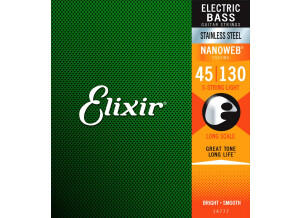
    My only past experience with Elixirs was many years ago. While the sound was good, I was never thrilled with the feel of the strings. I was skeptical but optimistic about the new formula for these strings but I was excited to give them another go. FEEL: Out of the box the strings do exhibit the same "Elixir feel" of old. The coating feels a little slick and slightly unnatural. I wanted to wait a few weeks to write this review because I suspected the strings would start to feel more natural as they broke in... and I was right. After three weeks of playing the strings, they don't feel any different than uncoated SS bass strings. SOUND: Once broken in, the strings sound about as you'd expect stainless strings to sound. They're definitely not super bright like a few strings offered by other manufacturers but they are brighter than nickels. Fundamentals are strong and overtones are present enough to work for a variety of modern bass styles. These strings are GREAT for modern jazz. I used the strings on several gigs over the last few weeks, mostly jazz and folk rock. In the context of jazz they worked wonderfully for both rhythm and soloing. While stainless strings wouldn't be my first choice for the folk rock gig I was pleasantly surprised at how they performed in the context of the mix. They sounded big and full but every note was also completely audible. No thuddy plunky sounding lines! While I didn't test them in context, I think the strings would also work well for metal and modern funk. CONCLUSION: Overall I'm very pleased with the strings and I think Elixir has nailed it with the new formula. I would advise new users to be patient and give them time to break in. The great thing about coated strings is the longevity they provide. After a few weeks of hard playing they still sound new. My usual SS strings will begin to change significantly after a few weeks of being played so this was a pleasant surprise.

  • « Worth the extra $$$ »

    I have played the guitar for over 15 years. I have always been dedicated to keep fresh strings on my guitars (acoustic and electric) because I could hear that it makes a big difference in tone. Plus, who likes to play on strings with dirt and grime all over them? I have always been skeptical of paying the extra money for a $10 set of strings compared to a $5 set of strings. I figured, as long as I kept them fresh, that is what matters most. I had played Martin SP lights, and Ernie Ball slinky strings as long as I have have playing the guitar. Recently I tried out a set of Elixir strings on my acoustic guitar. I thought they sounded pretty good, and played really well. Then I switched back to the Martin SPs. It sounded like my guitar had lost all its tone. I was so surprised that the Martin SPs sounded dark and dull even with a brand new set of strings on the guitar. It was a shocking experience, and I couldn't believe that I had just been playing the Martin strings for so long and never tried anything else. Unfortunately for my wallet, I am going to switch to Elixirs. It is too bad they cost twice as much money, but the difference in tone was too much not to make the switch. I suppose I will just try not to switch my strings as often. But I will definitely put a new set on any time I am doing to recording, it makes a huge difference. Many times you can find retailers that carry these strings in "multi-set" packs so that you can buy two and get one free, or buy 10 sets at a discounted price. Assuming that you love the strings, and wouldn't want to try a different brand, buying in bulk is a good way to save a few extra bucks on these 'luxury' strings.

  • « Elixir Elixir cables »

    Standard guitar cables and patch cords. Gunmetal gray finish in a variety of lengths an connector configurations. Cables were a demo set given to MGR by Elixir for review. They are available at most music retailers ranging in price from $25 to $70 depending on length. Being primarily a bassist, I first used the Elixir cables with my USA Lakland 55-94, a bass that sounds good set flat in nearly all situations. I'd been using Monster cables and, while happy with the tone they produced, I wasn't crazy about their tendency to retain the shape they'd been stored in (coiled in my case). The first thing I noticed about the Elixir was their flexibility: they're heavy, yet softer than most other heavy-duty cables. Best of all, they stayed flat when uncoiled -- no more danger of tripping over my own cord onstage. No complaints. Well made -- heavy yet flexible with integrated heavy duty connectors. There are several companies offering high-end instrument cables these days, and why not? Spending thousands of dollars on a great instrument but using cheap cables is like wearing flip-flops with a tuxedo. Based on our experience at NAMM, live and in the studio, Elixir is doing things right with its new cable line. You really can hear a difference. Whether that difference is what you're looking for is up to the individual, but it's hard to argue that improved clarity and flexibility is bad thing. This review was originally published on http://www.musicgearreview.com

  • « Longer lasting with a more natural feel »

    Since nowadays I play so many guitars my personal guitars have to go long times without maintenance. I recently decided to try out the Elixir coated strings the Nanowebs and the Polywebs. I used two guitars and equipped them with each of the different types of strings from Elixir to test out the longevity and tone from the string with the different methods of coatings. The Nanoweb strings seem to be the more natural feeling of the two sets of strings. With the Nanoweb strings each little thread of string is individually coated then wrapped around the central string. The coating helps prevent dirt and gunk from building up in the ridges of the string. This seems to do a good job and the Nanoweb strings seem to last a 3 or 4 times longer than normal strings. Straight out of the box they do not have the twang and spank of a brand new set of uncoated strings but they retain their brand new tone 3 to 4 times longer it seems. This is the 10-52 set which I prefer. Having used GHS strings for years when I could get them I find that other companies strings are slightly lighter than there in feeling. This could all be in my head but a 10-52 GHS set to me feels heavier than everyone elses 10-52 set. This doesnt really matter as these strings held tune and performed fine with the slightly lower tunings I use. The coating gave them a slightly smoother feel and string noise was slightly reduced as well. These strings cost twice as much as regular strings but since they last 3 to 4 times as long you still end up saving money if you switch to these Elixir coated strings. If you are looking for coated strings that still feel close to what regular strings feel like these strings may be for you.