Log in
EN
FR

SeriesMarshall Anniversary

26 products found

Filter
Sort by
Evaluation
  • Reviewed or not
  • Editor’s award
  • Reviewed by Audiofanzine
Availability
  • Available or not
  • Sold new or used
  • Sold new
  • Sold used
Must-have products
  • All products
  • Flagship products
  • Best rated products
  • Hot products
  • Popular products
Price
  • Freeware
€
Clear
Sort by
  • Popularity
  • User ratings
  • Price - low to high
  • Price - high to low
  • Used price, increasing
  • Used price, decreasing
  • Name (from A to Z)
  • Name (from Z to A)
  • Added on
Sort results
  • Popularity
  • User ratings
  • Price - low to high
  • Price - high to low
  • Used price, increasing
  • Used price, decreasing
  • Name (from A to Z)
  • Name (from Z to A)
  • Added on
Filter results 26 results found
Evaluation
Availability
Must-have products
Price
  • Freeware
Show results

The best Marshall Anniversary reviews

The reviews Audiofanzine members found the most helpful.
  • « Marshall's last great amp »

    Note: I'm writing this review about the Marshall 25/53 Jubilee, which is a smaller box version. The Marshall Silver Jubilee came about in 1987 as the flagship amplifier to celebrate the company's 25th anniversary. It was based on a hot-rodded Marshall circuit with cascading gain controls, but it also had a clean channel and was available in a very cool silver tolex. It delivers 50 watts of power (powered by EL34s of course) and has two channels. The EQ is shared between the two channels and it consists of bass, middle, treble, and presence. On the back of the amp are the requisite speaker outputs, footswitch jacks and the send/return plugs for the effects loop. The first gain knob is a push/pull that toggles between the two channels. As I stated before, the two gain controls are cascading and a bit of tweaking is required to get the right balance between gain levels for both channels. UTILIZATION Getting a good sound out of this amp is easy and difficult at the same time. Dialing up a great tone on one channel is easy and straightforward, but getting the two channels to balance can be a tempered nightmare. Because the dual channels share gain and EQ controls, plus the gains are cascading, it can be a chore to get a gain level that suits both channels and there is definitely a bit of patience involved in dialing it in! If you think of it as a one channel high gain amp (or as a high gain amp with a really gritty sounding "clean" channel as a bonus) then you might fare better, but for those looking for sonic versatility, you aren't going to get it with this amp without some tweaking. SOUNDS I've tried this guitar with various Les Pauls, Strats, and the odd superstrat here and there. In my opinion it offers one of the best (if not the best) high gain tone that I've ever heard from a stock, non-modified Marshall. All the traits of a good Jose, Friedman, or Cameron mod are here... tight and responsive low end, a subdued but still punchy midrange and a snarling, vicious top end that screams with harmonics and perfect overtones. It's great for everything from Van Halen/Ratt/Dokken of the early/mid eighties all the way up to modern shred tones. If you back the gains down you can get a nice classic rock tone for stuff like Michael Schecker Group or Deep Purple with ease. The clean tones are good as well when set right and I would say they work well for jazz/blues type things quite well. You can't really switch on the fly like I stated before, but when the amp is setup for good clean tones, it can produce some great unique clean tones that remind me of a goosed up old Fender or VOX. OVERALL OPINION All in all I think the Marshall Silver Jubilee is a great amp for anyone looking for an awesome hot-rodded Marshall amp who doesn't want to get something that's been modified. It has all the traits of a killer sounding Marshall. Sure the functionality isn't great, but there are other amps for that. If you take the Jubilee for what it is, it's probably the best stock Marshall ever produced for high gain. They're getting harder to find and more expensive so snap one up while you can!

  • Audiofanzine FR's review

    (Originally written by Voodoo10/translated from Audiofanzine FR) I've owned this beauty for years, I payed almost nothing for it and I haven't written a review about it yet! I have the 1992 blue version with gold logo and EL34 power tubes. It feeds a cabinet with 50-watt Jensen speakers. Features summary: - Switchable 50/25 watts - Serial or parallel FX loop - Impedance selection (8 or 4/16 ohms) - Midi control I fitted the preamp channels with a mix of several 12AX7 (Golden Dragon, JJ and sometimes EH). I recently equipped the power stage with Harma E34L-STR (cryo). It's mind-blowing! Small con: It isn't possible to switch between channel B modes... It's really a pity because each of these 3 modes has its own tonal character and sounds amazing. UTILIZATION It's so versatile that you'll need some time to get to know it. And you'll have to read the user's manual carefully if you want to understand this beast. You have a lot of parameters to fine-tune your sound thanks to the Midi control, channel voicings, tube interaction, etc. But once you understood everything it isn't that difficult. SOUNDS I play in a rock/metal band. You could say that I'm the rock soul of the band while the other guitarist provides the heavy (metal) touch with his Mesa. Whatever the music style this amp perfectly fits the bill with a Marshall-like character. If you want a Mesa sound, buy a Mesa. But if you like the real British rock sound, this amp head is for you. FYI I use it mainly with a Gibson Nighthawk Custom and sometimes with a Tele 52 :o) Channel 1: Everybody is crazy about this channel and that's for a darn good reason. For once you get a good clean sound with a Marshall. Channel 2: It's the holy Grail. 3 modes (A/B/C): From JMT45 to Plexi and JCM900. The sound just rocks: it has punch, warmth and dynamics! Channel 3: It sounds like a boosted JCM900. This channel can be used for soloing as complement for channel 2. I use it for heavily distorted parts. OVERALL OPINION I've been using it for 10 years now. The electronics of this amp head are somewhat fragile. I had some voltage problems which resulted in several burnt resistors. Since then I connect it only to secure AC power lines (not to the power lines feeding the lights!!) (those of you who play regularly on stage know what I mean...) But I won't give this amp away, all the less when it's price is increasing.

  • « Nice Anny »

    These amps weer produced to commemorate Jim Marshall and they were labeled the 25th anniversary of Marshall. These were great amps at the time and more of a modern touch than the other models that Marshall was producing at the time. These amps had the unique silver tolex covering and the mirror faceplate. The were a huge departure from the tradition look of black and gold to which Marshall was recognized. These were the amps that John from Red Hot Chili Peppers played through as well as Slash from Guns N Roses and Velvet Revolver played. They seemed to have a boutque wuality to them as well as a more usable and hot rodded tone. I believe they were built to the JCM800 circuits with some extra tweaks and juice to make them the jubilees. UTILIZATION These amps were two channel one for teh clean and one for the the distortion channel. Like most Marshall amps these were easy to dial in and get a great tone. For all Marshall a general rule of thumb is to turn the bass all the way up and the treble and middle around 1-2 o clock. Then the presence as desired. Max out the preamp gain and tun the volume to the tolerable level. There you have it, the most basic Marshall tone for Eqing most amps. SOUNDS There is a magical tone that comes to life when you hook up a Gibson Les Paul through a Marshall amp. These amp followed that trend. If you played this amp with a solid Gibson Les Paul or an SG you could get some solid rock tone and have it sustain all day long it seemed. This was the favorite setup for guy like Slash who used a Les Paul. A nice Fender Stratocatser will work wonders as well. This was used on the last album by Red Hot Chili Peppers as John F was using his Strats with this amp only in a head version. He was able to get great rhythmic tone and lead lines that were just amazing. OVERALL OPINION These amps have long been out of production. The used market is the only way to go at this point. I have no idea what the going rate for this amp is now. They can be had pretty inexpensively. The 100 watt versions will fetch more money of course. I would recommend this to anyone trying out the guitar or someone who needs c good combo for practing or light gigging. These amps will serve their owners with solid tone and reliability.

  • « Tribute to the old gods »

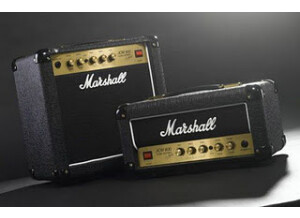
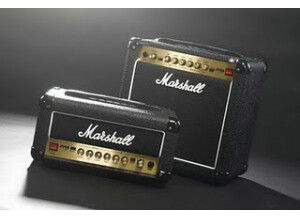
    Marshall has recently released a series of 1 watt amplifiers that correspond to each each of their flagship amps from each era. The JTM 1C is thus the first of the series, modeled after the 60's era JTM amplifiers. The JTM1C is a low wattage combo that can deliver sounds true to the original while offering the flexibility of a very small ambient volume, perfect for home recording and practicing. The amplifier can be switched from 1 watt down to 0.1 watt. The front panel is adorned with a simple two knob control scheme (volume and tone). The aesthetics are very pleasing and it would appear that Marshall has made it their focus to deliver a visually refined product. UTILIZATION The amp sounds very good in its intended application, low volumes. Once you begin to open up the power section on the JTM 1, the amp becomes plenty loud even for being a single watt. If you were to put a mic in front of the 1x12, you could easily gig with this amp, and if you were inclined towards a simple, no frills setup, it might be perfect for you. However, in most applications the JTM 1C will be a large compromise in the live environment, but that's ok because Marshall did not intent for it to be a slayer of stadium audiences. The simple control layout allows you to focus in on your tone and get tracks recorded quickly, removing decisions that may have otherwise distracted you. SOUNDS I played through the JTM 1C with a Gibson Tweedy SG. Weehbo plexdrive and carbon copy delay in front. This amp sounds very close to the original JTM tones of the 60's. It has a very percussive quality that is unmistakably classic Marshall. Starting with the gain set low on the plexdrive, I was able to get a variety of very nice sounds that ranged from Hendrix to The Darkness. The amp sounds quite pleasant in the room without verb, but a little delay allowed the amp to speak fluidly with leads. I was very surprised at the amount of versatility the amp provided with the helps of some pedals. On it's own, this JTM should please the crowd it was intended for. OVERALL OPINION The Marshall JTM 1C is an excellent low watt amp for home recording and practice needs. You could certainly gig with this amp if you mic'd it, and with the help of a decent pedalboard, the amp can be plenty versatile. I could argue that, for what it is, there are plenty of more affordable and better equipped amps out there, but that would be missing the point. Marshall built these for fans, for those who want to give homage to their favorite era Marshall amp, and in that regard they really have made something special.

  • « A DSL by another name... »

    The Marshall DSL 85th anniversary head was made as a limited edition amp by the company recently in order to capitalize on the 85th birthday of Jim Marshall, father of loud. At its core it's a two channel Marshall head. Each channel has two modes available, offering different levels of gain. There's also a great onboard spring reverb and an effects loop as well. It is a 50 watt head and it could be purchased in a combo format as well. It is basically a deluxe edition version of the standard DSL 50 amplifier both in looks and tone. UTILIZATION Getting a good sound out of this amp is pretty simple. it has an interface much like other British voiced amps, with the traditional gain and EQ controls for adjustment. I find it to be less responsive to subtle tweaks of the controls compared to other high gain amps on the market, but the core sound is very much a typical hard rock EL34 based tone, great for everything from AC/DC to Whitesnake. To be truthful I prefer amps like the Splawn Quickrod for functionality as far as control reaction, but most diehard Marshall fans know how to make them work. I myself am more accustomed to high gainers with very responsive and sensitive controls, but that's another type of amp altogether. SOUNDS It's possible that Marshall made a few minor circuit tweaks to this particular head, because it soybeans bit rawer and less buzzy than the standard DSLs that I've used. It can still get kind of ice-picky at high volumes, but it has a more focused sound, whereas the regular DSL 50 can sometimes lose a bit of definition in the low end and end up sounding thin when placed next to more modern sounding amps. The clean channel has a decent sparkle to it that is a voice all it's own, not trying to be a Fender or VOX type of sound. It has a bit more of a scooped midrange voicing which can either song great or awful depending on the settings. The drive channel is pretty good too. It has the classic Marshall bite and raunch and when it's EQ'd to taste it sounds pretty good for sure. OVERALL OPINION All in all I think the Marshall DSL 85th head is a decent yet overpriced amp for what you're getting. They sold for about $2000 new which is way too much considering something like the Splawn Quickrod is less, and likely easier to dial in/sound better. I'd give one a try for the right price but honestly you'd be better off with a used DSL or Splawn QR and some cash...