Log in
EN
FR

ProCo Sound

43 products found

Categories
Filter
Sort by
Evaluation
  • Reviewed or not
  • Editor’s award
  • Reviewed by Audiofanzine
Availability
  • Available or not
  • Sold new or used
  • Sold new
  • Sold used
Must-have products
  • All products
  • Flagship products
  • Best rated products
  • Hot products
  • Popular products
Price
  • Freeware
€
Clear
Sort by
  • Popularity
  • User ratings
  • Price - low to high
  • Price - high to low
  • Used price, increasing
  • Used price, decreasing
  • Name (from A to Z)
  • Name (from Z to A)
  • Added on
Sort results
  • Popularity
  • User ratings
  • Price - low to high
  • Price - high to low
  • Used price, increasing
  • Used price, decreasing
  • Name (from A to Z)
  • Name (from Z to A)
  • Added on
Filter results 43 results found
Evaluation
Availability
Must-have products
Price
  • Freeware
Show results

The best ProCo Sound reviews

The reviews Audiofanzine members found the most helpful.
  • moosers's review

    The ProCo Sound CB-1 is a passive direct input box, with a pretty simple overall. It's got 1/4" connections for input and output, as well as an XLR output. It doesn't require any sort of power, since it is of course passive. It also has a ground switch which comes in handy and isn't rack mountable as it is a stomp box. UTILIZATION Setting up and using the ProCo Sound CB-1 is quite simple, so if you know how to set up any other type of DI, you'll be fine using this one. There isn't anything at all out of the ordinary to know, as everything is self explanatory and easy to understand without any help of a manual. SOUND QUALITY The ProCo Sound CB-1 will do it's job quite well as a passive direct box. I've used the CB-1 for a slew of different applications, including for recording bass guitar and keyboards, as well as for routing purposes. It has always done a great job for me as far as I'm concerned, with a clean sound quality and no noise at all. While of course you will get noise every now and again while using the CB-1, it isn't the box itself and the ground switch does a great job of eliminating it most of the time. I've only used the CB-1 in the studio, but I would imagine that it would do the same great job for live shows if you wanted to use it for that... OVERALL OPINION Overall, the ProCo Sound CB-1 gives you some of the best bang for your buck that I've seen in terms of direct input boxes. While it might not seem like the sturdiest built direct box out there (and it isn't), as long as you treat it properly I don't see a reason why it shouldn't last a very long time. The price makes it a very attractive option for anyone in need of a direct box, and it is overall one that I'd definitely recommend regardless of price. Just to get an idea of what else is out there, I'd also encourage those interested to check out other direct boxes like the Radial Pro DI and the Countryman DI Type 85, as these are some of the best available although they will cost more than the CB-1. For those looking not to spend much on the DI box, the CB-1 is definitely one of the best available options...

  • moosers's review

    The Proco Sound Turbo Rat is a supped up version of the classic Rat distortion pedal. This is an analog pedal with a 1/4" input and output, and has a 9 volt power supply jack as well. The pedal is a very compact one, as it is just about as small of a pedal as you will see out there. It is rackable since it is a foot pedal. UTILIZATION No one should have trouble figuring out how to use the Proco Sound Turbo Rat. It has some of the most basic parameters possible for a distortion pedal, and are ones that are pretty ubiquitously found on pedals of this type. The Turbo Rat has three knobs - one for distortion, one for filter (EQ), and one for volume. If you look at most simple distortion pedals, these are the three parameters that they will have, so if you've got experience with any distortion pedals, chances are that you have seen this sort of configuration. I've never seen the manual for the Proco Sound Turbo Rat, so can't really say anything about it. SOUND QUALITY The sound quality of the Proco Sound Turbo Rat is comparable to the original Rat, but definitely has more oomph. I've used the pedal for recording with a 1976 Fender Twin Reverb amp and a Fender American Stratocaster. While the Turbo Rat wouldn't be the distortion pedal that I would use in every situation, when the pedal works, it works very well. The sound can be described as thick, full, and vibey distortion pedal. It almost has kind of a fuzz sound, but is a bit more transparent than your average fuzz pedal. If you like the sound of the original Rat, just imagine that with more beef. OVERALL OPINION While the Proco Sound Turbo Rat isn't a pedal that I have in my live guitar rig, for occasional use in the studio for certain situations, this is great pedal. This isn't to say that this pedal wouldn't work for live shows too, its just that for the sound that I'm going for, I don't find it necessary. I can definitley see people using this pedal all the time for heavier genres of rock though. The price is a bit less than $100 USD, so it is only a tad more expensive than the original Rat. If you're a fan of the series of Rat distortion pedals, or are just looking for a thick distortion pedal, the Proco Sound Turbo Rat should be on your list.

  • moosers's review

    The Proco Sound Rat Solo is a distortion pedal that is designed for electric guitar and has standard 1/4 inch connections. It can be powered by a nine volt power supply or battery and isn't rack mountable as it is a stomp box. UTILIZATION The make up of the Proco Sound Rat Solo is extremely easy to follow as there really isn't anything out of the ordinary here. The pedal has knobs for distortion, scoop, tone, and volume and has a switch that has modes for hot, melt, or burn. There isn't anything to the pedal other than this and I found that it didn't take too long for me to have a full grasp of the entire pedal, so for this reason I don't believe that a manual is needed. SOUND QUALITY The sound quality of the Proco Sound Rat Solo is mediocre in my opinion. I think they designed the pedal for solos as the name states and is probably best suited for lead parts rather than rhythm ones. I have used the pedal two or three times with my Fender Strat and '76 Twin Reverb, so I'm getting an accurate read on what this pedal actually sounds like. While I haven't been too impressed with the pedal, it doesn't have that bad of a sound overall I just don't think that it is up to par with most of the distortion pedals that I use out there. I usually like the pedals that Proco Sound put out there, but this is an exception to that. OVERALL OPINION I've only used the Proco Sound Rat Solo a few times in the last year or so and I don't think that I will be using it again anytime soon as I'm just not a big fan of the way that it sounds. It is probably a bit over priced as well and I would recommend just sticking with the original and vintage Rat pedals over this one as it will cost less and in my opinion will sound a lot better. All in all, the Proco Sound Rat Solo pedal is a mediocre pedal in my opinion.

  • « Round and Round!!! »

    The pro coat Rat pedal is what is his iconic distortion pedals that it's been one of the most legendary distortion sounds in all of rock history. Much like the boss pedals and even Ibanez tube screamer this pedal goes down as one of the most highly used most recognizable distortion pedals in the music industry. It's a very simple design that produces a nice gainy sound. This is a sound that is somewhat unique to itself and it doesn't really sound like any other distortion pedal that you've heard. It does capturing the gaining distortion you looking for but the voice is slightly different. UTILIZATION This pedal basically asked three control knobs. You get the distortion control, filter control, and volume control. It has the foot switch along with the inout and output plugs and that's pretty much about it. It's a very simple design and you won't be hard pressed to figure out the best sound in this pedal. SOUND QUALITY The tone of this pedal is quite unique but still falls under the nice gain distortion that you've heard from basically any other distortion pedal. It's a cool vintage unit and if you really like that legendary rat tone, and I'm not talking about the band, than this is the only pedal to achieve that with. It's a cool sound and it's good for boosting already overdriven amps such as a Marshall JCM 800. If you like Nuno Bettencourt than this is probably a pedal that you would want to invest in. Nuno use to use this pedal in front of a old Marshall JMP amplifier. So if you dig that sound than this is a cool pedal to own. OVERALL OPINION You can find these pedals for well under $100 used. I don't find that the vintage ones to sound any better than the new or ones so I suggest just by passing that whole idea of the vintage rat battle. There's a lot of hype that's involved with the vintage rat pedals and I don't suggest drinking the Kool-Aid on that. These are cool pedals but they're very unique to their sound so if you're not digging the sound but I suggest getting a boss pedal or in MXR distortion pedal.

  • moosers's review

    The ProCo Sound DB-1 is a passive direct input box that I have used in the recording studio. Like pretty much all DI boxes, you could use this for live sound as well but I haven't done so as I don't do very much with live sound. This is an analog piece of gear consisting of a 1/4" input and output, and an XLR output. It also has switches for ground lift, high cut, and for speaker/instrument line. It doesn't require any external power supply and isn't rack mountable as it is a box. UTILIZATION There isn't very much that you need to know in order to operate the ProCo Sound DB-1. For the most part it is self explanatory what everything does, and if it isn't I would recommend doing some research on direct input boxes. I don't think that a manual is necessary at all, as most users will be able to figure out everything on their own. SOUND QUALITY The sound of the ProCo Sound DB-1 has the perfect amount of clarity, punch, and fullness for a direct input box. It will give you back the same signal that you send to it, meaning it is has great fidelity and is reliable. I've used the box for a slew of different applications including for recording bass guitar, keyboards, and for routing purposes for electric guitar. In my time using it I've only found it to be a good sounding direct box without any noise or loss of quality. OVERALL OPINION Overall, I really don't see any problems with the ProCo Sound DB-1. It is reliable and will do the job very well. The price falls right in line with what else is out there, so I don't think the price should be a factor here, but I will say that it is on the cheaper end of high quality direct boxes. I'd also recommend checking out the Countryman DI Box Type 85, the Radial Pro DI, and the ProCo Sound CB-1, but definitely include the DB-1 on the list as well...

  • moosers's review

    The ProCo Sound RAT is an analog distortion guitar pedal. It has a 1/4 inch input and output and is not a rackable unit as it is a foot stomp box. It needs some sort of nine volt power to run on. UTILIZATION The configuration of the ProCo RAT is really simple and straightforward. It simply has three knobs - one for distortion level, one for filer (EQ), and one for volume level. It is easy to get a thick sound from this and is easy to manipulate the different parameters to get a sound that suits your needs. I don't have a manual for this, so I don't know how useful it is when learning this pedal. SOUND QUALITY The distortion sound from the ProCo Sound RAT is really thick and full. I would recommend this if you are looking for some really heavy, metal-like distortion for your guitar. I have only used this with guitar and it probably isn't all that useful for other instruments or genres other than metal or hard rock. Turning the distortion all the way up will give you a huge tone that is great for getting that fat distortion tone heard on many metal records. OVERALL OPINION I've been using the ProCo Sound RAT for about two years. While somewhat narrow in its ability, for getting a thick distortion sound it sounds really great. I would use this more for big rhythm playing rather than lead, but will work fine for both. It is hard to find a pedal that has as thick of a tone as this and the price is dirt cheap if you can get one used and quite reasonable new. If you are playing heavy metal or hard rock and need a pedal that will give you a tone for these types of genres, this pedal is worth a definite look.

  • « The mods didn't really gel with my rig. »

    The Rat 2 modded by Keeley is like any other rat, 1/4" input and output, volume knob, filter, knob and gain knob. The Keeley mods give it a BOSS style 2.1mm 9VDC jack which is very convenient. Then it adds a 3-way switch. This essentially turns it into 3 pedals. The "Mighty Mouse", the "Phat" Rat and a Regular Rat. The Rats are pretty much fortresses of pedals. One of the most appealing things I've ever seen about any pedal, the rat feels like it will withstand a bombing. It's rugged and has good weight. Great for self defense. haha. UTILIZATION Keeley ships the modded rats out with a nice write up about the mods. Very easy to understand what was done and why it sounds the way it does. Really easy to understand. The three knobs are very familiar, very simple configuration. No issues there. SOUND QUALITY Where the mods take a turn against the benefits of my rig. I run a Sunn Spectrum I and a Mesa Three-Quarter 2x12 cabinet. Both are very, very bassy by nature and with the added bass response and everything that comes with the cap changes keeley does, it makes it virtually impossible for the rat to cut through in a mix. I find it's much better for bass than it is for guitar. For bass it makes a killer distortion. Some of the nicest I've heard. I'm really basing this review on how it works for guitar, but I'll still rate it kind of high because it really opens up when used with a bass. OVERALL OPINION Obviously, for me, it definitely has its flaws. I feel like overdrives and distortions are a really sensitive subject when it comes to guitar players because there are so many flavours. This one is certainly not for me. I would definitely recommend it hands down for bass, but for guitar I'd recommend you give it a shot with your rig before you go buying one. They are priced really reasonably and they are built like tanks. There are no real sound issues, they are great. Definitely just not for me.

  • moosers's review

    The ProCo Sound MAX20 is a -20 db pad that you insert in between your mic cable and microphone to give you some more head room and -20 of attenuation with hot mics and on loud signals. There isn't really anything that you need to know other than that as it will simply give you -20 db of attenuation. There is also both a -10 db and -30 db version of this pad, each of which varies in price but this one if the most expensive since it's right in the middle and is kind of the perfect amount of attenuation you'd need if you were using one of these. A studio that I recently started doing some work at has one of these on hand for situations where there might be a loud source and we're using a sensitive mic. It definitely comes in handy more times than you would think and is something that every studio should have one or two of. Of course many microphone preamps have a built in pad, as do many microphones, but there are plenty out there of both that have neither of these, so it's always good to be prepared for whatever, especially if you're working in a professional or semi-professional environment. I can't say that the price of the ProCo MAX20 is too unreasonable, but it does seem like there are other pads out there that could be a bit cheaper than this one. Still, it's not all that much more and it's probably in the end worth it as it seems to be a pad that is built to last and can be your studio mainstay for however long you might have it. I'd scope out pads made by Shure and others but you can't really go wrong here with the Proco Sound MAX20.

  • « Gritty and in your face »

    This is Distortion/Fuzz style effects pedal. There are only audio and power hookups, no midi, usb or other type of connections. This is an analog pedal. The only audio connections available are a 1/4" input and output. UTILIZATION There are only three knobs on this pedal for manipulating your sound, Distortion, Filter, and Volume, so yes, I would say that is pretty simple. Setting up this pedal is a breeze if you have two standard guitar cables and either the power supply (mine has a male power supply tip as opposed to the standard female) or a 9 volt battery. I have never seen or desired to see a manual as this is a very easy to understand effects unit. SOUND QUALITY I use this pedal with just about everything. I now run my guitar effects chain in my aux channel on my mixer. This way I can run all my instruments/samples/ and whatever else into the effects. I particularly love this pedal for Synthesizers. I also use it for Guitar (of course), Rhodes, Clav, and also on plain old audio tracks to give them some nasty grit. I also really like it on vocals too. OVERALL OPINION What I like most about this pedal is it is relatively versatile. I have friends who actually use this in there Jazz band guitar rigs. They sweep a lot of frequencies out via the "Filter" knob and get a pretty nice warm tone reminiscent of Wes Montgomery. I personally use it more for the "Screaming" distortion aspects which this pedal is wonderful for. Again, I love it on Synthesizers and my Vocals too. It's a bright enough (when dialed in to be so) distortion that when used even heavily, won't mud up your sound beyond recognition. The only thing I can see being a hassle is the strange male power supply tip. Luckily I have a VooDoo Lab Pedal Power 2 which came with a male tip adapter. So thankfully I don't have to go to Radioshack and dump $25 + on a new one. The sound quality in this pedal can range from smooth distortion to screaming fuzz/hiss. I love it. I have used a lot of distortion pedals including Ibanez Tube king, Damage Control's Distortion and Ibanez TS9. I use both the TS9 and this together to get some excellent distortion tone. I got this unit for a really good price ($50), if I find another at that price, I will buy that one as a back up. Also I should mention this thing is built like a tank. It's made of solid, heavy metal material and weighs a little more than you would expect.

  • moosers's review

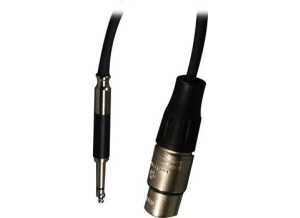
    The ProCo Sound TTXF3 is a female XLR to TT cable for use in the recording studio. We've got a couple of these types of cables on hand in our rooms and in reserve at the studio where I work, as they're necessary for plugging microphones directly into the patch bay. I don't tend to do this all the time, but it can be really helpful for times when you're working in the control room and want to set up a mic in there rather than in the live room. They're also useful for hooking up external gear to a patch bay if you don't have any extra tie lines. However, the main thing I've used them for has been for plugging a mic directly into the bay. In any studio with a patch bay it's going to be a good idea to have a few of these, and it's especially important to have them in a professional studio environment where you're never sure what you're going to need next. I've found the ProCo Sound TTXF3 female XLR to TT cables to be as good as any of them out there. Of course you can always get better cables, but for situations where you'd need one of these I don't think it's imperative to have a top of the line, gold plated cable or anything like that. Since it's kind of an obscure kind of cable it's not the cheapest that you'll find out there, but it's not too expensive for what it is and it's worth having them around. Also, I don't think you're going to be finding them for all that much cheaper, although I maybe wrong about this. Either way, check these out if you're going to want to plug microphones into your TT based patch bay.

  • moosers's review

    The ProCo Sound Switch Witch is a four channel powered monitor selector box, designed for quick switching between different sets of monitors in the studio. It has two XLR inputs for sending your console or interface to the box itself, and then four sets of stereo XLR outputs for routing your different sets of monitors to the box. The unit is rack mountable and will take up a single rack space, but in the professional studio where I have used it in, we had it above the console not racked for easier access. I can't think of any other sort of uses for the Switch Witch beyond for being able to quickly switch between different sets of monitors in the studio, but this is essentially a four way splitter, so I'm sure users will be able to find other ways to adapt it if they wanted and/or needed to. I've used the Switch Witch with three different sets of studio monitors - a pair of Adam A7s, a pair of Auratones, and a pair of larger JBL speakers. While most of the time we would keep it set on the A7s, if I was looking to get a different perspective from a different set of monitors, all that needed to be done was to flip the switch on the proper channel. The front panel has on/off switches for each of the channels, so it isn't like you can only have one of them engaged at a time. In fact, you could have all four sets going on at once, or none at all if you so choose. The price of the ProCo Sound Switch Witch doesn't make it the cheapest around, but the price also isn't unreasonable considering the great build and design on this. If you've got three or four sets of studio monitors that you find yourself constantly switching between, the ProCo Sound Switch Witch is definitely the way to go for quick switching and easy routing.