Log in
EN
FR

Solid-State Guitar Amp Heads

181 products found

Filter
Sort by
Evaluation
  • Reviewed or not
  • Editor’s award
  • Reviewed by Audiofanzine
Availability
  • Available or not
  • Sold new or used
  • Sold new
  • Sold used
Must-have products
  • All products
  • Flagship products
  • Best rated products
  • Hot products
  • Popular products
Price
  • Freeware
  • Low-cost (< $250)
  • Mid-range ($250 - $650)
  • Premium (> $650)
€
Clear
Sort by
  • Popularity
  • User ratings
  • Price - low to high
  • Price - high to low
  • Used price, increasing
  • Used price, decreasing
  • Name (from A to Z)
  • Name (from Z to A)
  • Added on
Sort results
  • Popularity
  • User ratings
  • Price - low to high
  • Price - high to low
  • Used price, increasing
  • Used price, decreasing
  • Name (from A to Z)
  • Name (from Z to A)
  • Added on
Filter results 181 results found
Evaluation
Availability
Must-have products
Price
  • Freeware
  • Low-cost (< $250)
  • Mid-range ($250 - $650)
  • Premium (> $650)
Show results

The best Solid-State Guitar Amp Heads reviews

The reviews Audiofanzine members found the most helpful.
  • « Crate Power Block was ahead of its time . »

    The Crate Power Block can be use in Monophonic mode at 150 watts at 8 ohms or in Stereo at 75 watts at 4 ohms. On the front of the CPB, are the Gain, Treble, Mid and Bass knobs, an Input plug and Headphone input so you don't disturb neighbors or your significant other. The back features an input for RCA Jack's to plug in any outside source like a Tascam CD-GT2 Guitar Phrase Trainer to play along or learn music from . And there is a knob to control the volume . It has a mono switch , monophonic output and two stereo out put, in case you want to play in stereo . The Effects Loop needs a "Y" chord to work properly. I placed a BBE 482 Sonic Maximizer for proper phase alignment and Hush / Rocktron Super C Noise Reduction Unit to act as a Noise Gate in the Effects Loops of my CPB's . I use mine as if it were a Hiwatt amp : a clean pedal platform to translate what various distortions or clean tone are sent in from my Decibel Eleven Loop Expander, Digitech RP-12, RP-1 and rack processors. I gain stack my distortions, Overdrive , Fuzz and clean sounds from my multi effects units and set the gain knob in my CPB's at 2 or 3 O'clock, set my guitars volume knob at 6 or 8 for clean sounds . My Digitech 2112 SGS has 12ax7 tubes and from the left and right balanced out puts they go into two VHT Valvulator 1's before going into my two Crate Power Blocks. I have 100% tube dynamics and sound, I no longer have haul my heavy tube amps around to rehearsals or venues . This came out way before Quilter, Seymore Duncan Power Stage or Orange Tiny Terror. In my opinion, this was Crate's greatest / most versatile amp ever and it was way ahead of its time . Some people use them as a backup, just incase their main amp goes down during a gig, but I managed to get the sounds of my Fender , VHT, Carvin, Peavey, Mesa Boogie and Marshall amps, I keep those aforementioned amps at home safe . Two years ago, the Crate Power Block was usually selling for $ 80.00 to 120.00 US Dollars, but have doubled in price and when you try one, you will see why .

  • « Amplifier in a stomp (pedal board) format offers plenty of features & flexibility »

    SOUND: Any quality amp should be diverse, no matter its design. The Taurus SH3 (Stomp Head) HG (High-Gain) Amplifier is exceptional in its overall diversity and design, as well as in sound. Taurus may not be as well known as other amp companies (at least in North America), but this European company has been around since 1983 and should be given serious consideration for what they have achieved with their proprietary Master Tube Design and creating a Stomp Head style amplifier. Below is a sound/features demo to get this point across. The SH3 is a pure analog Tube and Solid State hybrid. The tube is located between the pre-amp and power-amp while influencing both. And so, what you get are the dynamics of a tube amp (the breaking up, the saturation, harmonics, sustain, etc.), while achieving incredible clarity and articulation of the notes, whether playing clean, with some crunch or full-on high-gain. This is vital for metal and hard rock players and particularly those with extended 7 and 8 string guitars. Often playing low notes results in muddiness… and so having the right pickups help, but so too does having an amp that can provide an authentic (non-digital) result while remaining clear and true to the sound of the guitar, its pickups and the effects pedals used. As a result, the Taurus SH3-HG really cuts through the mix when recording – you can differentiate individual tracks when layering and while having those tracks stand apart from the drums and bass. Further to the above, when playing on the Clean channel you can tweak the bass, mid-range and treble to your heart’s content and the notes remain obvious and clear, even if you turn the mid and treble down completely (it doesn’t sound bass heavy with a boom or thud). Full high-gain also comes through loud and clear while delivering an excellent punch for plenty of in-your-face rhythm chugs – there’s a very edgy and dirty quality to the high-gain. A pleasant surprise was in the Crunch (Clean channel while increasing Gain), which has a throaty grind or dirt to it – very ‘classic’ in its sound, and yet more modern. The High-Gain channel also can act as a Crunch, you merely have to tone down the Gain to achieve a result that is unique from the Clean channel (you get two Crunches in one amp!). An added bonus is that each Channel has its own ‘Middle Range’ button. And so, when you set the Middle knob you have a particular mid-frequency; but when you press the Range button it shifts the mids into a higher mid-frequency range. If that’s unclear, think of adding some Treble into your mid-range. Both channels have their own Presence so that you can add whatever sparkle you wish. And you can apply a Boost to either the Clean or High-Gain channels. I must say this is one of the best Boosts I’ve heard, as it is truly transparent (in that it doesn’t alter the tone’s characteristics), and yet it makes the signal sound slightly fatter or full – very nice on lead playing. The headroom is huge on this Boost… setting it at 2.5 to 3 (out of 10) and you can hear a distinct difference or punch to the signal. Going half-way to a level 5 is too much… at least to my ears. Consequently, it’s unlikely you will run out of Boost! A feature that I find impressive is the BLEND control. This allows you to combine both Clean and High-Gain channels for even more tonal combinations. By easing off the Gain on the High-Gain channel (and adding in the Clean, with or without a touch of gain) you can get some excellent rock sounds without going full metal. I recall seeing a review for a different Taurus stomp head whereby the reviewer did not like the Blend feature – but he had the High-Gain at full distortion, which simply fattened up the signal (while taking away the edginess of the high-gain) when adding the Clean channel. Conversely, tweaking both channels as I suggest produces some nice and very usable sounds that are quite varied and that make the SH3-HG extremely diverse. FEATURES: The ability to dial in so many tones, from soft clean playing to high-gain is an incredible feature as it stands, but the group at Taurus Amps has set a new standard with their Stomp Head technology. They are the first to integrate tube technology in a literal Stomp Head. Although you easily could place this atop a speaker cabinet, it is meant to be placed on the floor by your feet (where you play)… and even on your pedal board – this means shorter cable connections with your effects and, as a result, a cleaner signal with less noise. Weighing less than 5-pounds (2.2 kg) it is far lighter than most amp heads (throw it in a backpack with some cables and you’re ready to go!) and does not take up too much bulk on the pedal board (unless you’re into having a dozen or more pedals); I suspect that the diversity and quality of tones achieved with this amp would not require a plethora of pedals surrounding it in any case (likely a typical delay, some type of modulation, a wah pedal, etc.). The design itself sold me, as did some of the sound samples I heard on YouTube videos (as well as the channel Blend feature). But there’s a lot more. You can select the nature of the power output, whether playing on stage or in a studio, and whether you want 7 or 15 watts (Studio) or 25 or 60 watts (Stage)… keeping in mind that this is a true 60 watts of power, which is loud enough for most stages apart from large arenas. As well, there’s a 6dB input boost button if you’re in the need for even more power. You also can change the voltage (120-230) if you happen to travel abroad and need to meet a country’s voltage requirements. The SH3-HG amp has the ability to determine whether you are plugging into a 4, 8 or 16 ohm amp cabinet; no need to guess, flip switches, etc. And if you go direct to a PA system (you can do both… cabinet and PA), you can do so with or without the built-in cab simulator. The Line Out accepts a stereo cable, and so when you use such a cable direct to a PA or your music DAW program you get the sound of a 4x12 CELESTION Vintage 30 cabinet (a regular quarter-inch cable produces the sound of the amp alone – same tones, but not quite as full or beefy for obvious reasons). There is an Effects Loop, which is fairly standard on most amps, but also a Phones in for private playing and an Auxiliary In for other audio devices like an MP3 player – allowing you to jam to backing tracks, songs, etc. And in case you want to have a separate controller for Mute, Boost and Channel change there is an input for an External Controller (some musicians may choose to place the amp atop a cabinet and require a separate controller). RELIABILITY & DURABILITY: The design for the SH3 is well thought out. Not only is it angled for clearer viewing and access to the controls when viewed from above, the housing is steel all around. The footswitches are solid in feel and located several inches from the other controls… and there’s enough distance between the foot controls that your foot will not accidentally stomp down on something other than what is intended. The power chord is placed in the back, as is guitar in and the cabinet out. Any accessory inputs/outputs are located along the left side of the amp, which likely would not be used in a gig situation unless you are going direct to a PA without an on-stage cabinet (regardless, the cable out to a PA is not in harm’s way). OVERALL IMPRESSION: Each amplifier, from any company, has its unique tonal characteristics and features. If you truly desire the sound of a Blackstar, Mesa Boogie, etc., then obviously your decision will be directed toward that purchase. The sound, and particularly the High-Gain tone is different with the SH3-HG, but stands out in the crowd and is very competitive in that regard. Ola Englund (a well-known YouTube metal-head) demonstrated the SH4-HG (an older model, but with very similar tones) and he definitely impressed his YouTube viewers, as well as myself – hard-hitting distortion that remained clear and articulate. Consequently, all the tonal features and capabilities of the SH3-HG are equal to any amp in its price-range AND it is smaller, more compact and designed for multiple uses… atop your cabinet, on the floor where you play or on your pedal board next to your effects. However, one of the downfalls of the SH3-HG is that it is not a traditional amp head. It looks different and has a different design (being on the floor or on your pedal board). As a result, I suspect some people may view the SH3-HG as costly ($729 Canadian) because they are not used to the concept (thinking it’s a big pedal) and there are some full tube amp heads (not many and often with limited features) for about the same price. In the high-gain arena, I don’t believe full tube offers anything superior – the loudness and ‘thickness’ of the music genre demands clarity, which is a big problem in production when mixing. The SH3-HG automatically produces greater clarity because of the solid-state aspect, but still delivers the dynamics people want from tubes – which is where the Taurus Master Tube Design triumphs. Consequently, I would hope musicians would set aside any biases when it comes to the Stomp Head concept and investigate this amp even further for what it offers as an entire package.

  • « Possibly the most underated and misunderstood Marshall head »

    I do repair work from time to time for a vintage music shop, which is where I came across this amp. The owner had it in a back storage room in nonworking condition and ask me to take a look at it. The output transistors were blown along with the over current protection circuit transistors. After repairing and returning it to the shop it sat for some time with no takers so I made the owner an offer and took it back home. This amp gets a lot of bad press on the Internet probably due to being really misunderstood. First of all it really nails a clean Marshall tone, which should be expected. But the secret to getting a good overdrive sound out of it is that there is an additional 20db of gain which can only be turned on with the foot switch. The amp uses a plain vanilla two button contact closure foot switch with a TRS stereo 1/4" phone plug. Peavey used the same foot switch on several of their amps over the years. So don't listen to all the neighsayers out there who have either not tried a 2098 or have not run it with the proper foot switch to get the high gain that this amp is capable of. My unit has 100 watts of RMS power at clipping which would be 140 watts the way many amp makers rate their products. Since it has a transformer coupled output the power is the same regardless of load. The transformer also reduces the damping factor which makes for more of a tube sound than a typical SS amp. If you get a chance to try/buy a 2098 don't pass it up. Get a foot switch and enjoy.

  • « nice price.. worh it »

    The Marshall Lead 100 Mosfet has a solid-state power amplifier with a tube pre-amp through a 12AX7. It delivers 100 watts of solid-state power at 4 ohms. The Clean section is only solid-state, whereas the "Tube Drive" section delivers exactly what it says - tube like tone out of a hybrid head amplifier. There are two channels within the Tube Drive section, and one clean channel. UTILIZATION There are standard tone knobs (Bass, Mid, Treble) for the Clean and Tube sections, but although there are two different gains for the Tube sections, there is only one set of tone controls. There is a mid-shift tone option for the Clean channel. All connections are through standard 1/4" jacks and cables. A footswitch can toggle between multiple channels. The amp has a spring reverb, and there is also an effects loop with adjustable levels. There are multiple speaker outs that provide 4 or 8 ohm connections. There is a line out from the rear of the amp. SOUNDS It's pretty easy to dial up a good sound - just fool with the gain, drive select, and tone controls. I read through the manual once, it has some suggest amp settings that can be useful starts, but for the most part the amp is pretty intuitive and won't require reading it. Some great sounding tones can be delivered out of this amp, but it comes with one caveat: The amplifier can't go very loud before it starts to feedback. This is probably due to the fact that a lot of cabinets are at 8 ohms, which means that the full 100 watts can't be delivered to the speakers as the amp is meant to produce 100 watts at 4 ohms. OVERALL OPINION I can't get past the fact that the amp doesn't deliver enough gain without feeding back. This problem is exacerbated when combined with overdrive or distortion pedals. As a result of this, the amplifier couldn't produce enough gain to meet my heavy metal needs, although it would be an excellent budget amp for someone who plays blues or classic rock material.

  • « Decent for an aspiring rocker »

    The Marshall MG100HFX is the updated head version of the MG100 head that has been around for a fair few years. It's meant to be a good amp for beginners who want to have a real Marshall stack, but can't afford the hefty price tags of a JCM800 or Silver Jubilee. It's a 100 watt solid state head that features four programmable channels (think Hughes and Kettner Switchblade) and has a few built in effects as well. It basically takes the idea of the clean/crunch/OD1/OD2 system that has been used on Marshall amps like the JVM and brings it to the MG series and combines it with programmable channels to give more options to the user. Here's a full list of specs: Features 100 watt output 4 storable channels Digital effects including Delay, Chorus, Phaser or Flanger Digital reverb Power amp damping MP3/Line input Emulated Line/Headphone output External Effects Loop MG footcontroller compatibility Reverb & FX The MG100HFX amplifier provides three simultaneous effects, Reverb, Delay and one of three Modulation effects (Chorus, Phaser, or Flanger). Tap Tempo Use tap tempo to set your delay times as easily as tapping your foot. Tap Tempo switch is used for the Delay effect only. MP3/Line In Jam along to your favorite bands or personal recordings by connecting to your MP3 or CD player to this convenient 1/8 inch input jack. Headphones & Line Out The Headphone/Line out provides speaker emulation, so you can hear your guitar like its being blasted through powerful speakers or record direct to a source without using a microphone. Damping Make it sound like your using 2 completely different amplifiers. When Damping is Off the power amp response resembles the feel of a classic power amp with emphasized middle and limited bass and treble. Switching Damping On will boost the speaker resonances both in the bass and high frequency ranges. FX Loop The FX Return socket on the rear panel is used to connect the your favorite external effects pedals or processor. The FX loop is series and set at instrument level so both guitar FX or professional units can be connected. UTILIZATION Getting a good sound out of this amp is not difficult if you don't expect to sound like the pro level Marshall or Mesa tube amps that we all know and love. The programmable channel layout is a welcome change from the dual channel layout of the old MG amps, which was clumsy and hard to balance. The ability to store presets and not have to worry about balancing things like gain levels or EQ settings is something that is good for younger players who just want to jam. The onboard amp models and effects obviously don't sound stellar but who am I kidding if I said I expected this to sound like the tube amps I love. It's definitely an improvement functionality wise on the previous model though. Do the sounds stack up... read on. SOUNDS The Marshall MG100HFX is an amp that is designed to do many different sounds in general for the player who wants to go from clean to mean and everything in between. The clean tones are decent. They lack a lot of the sparkle and punch that I look for in a clean tone but for solid state cleans they're fairly good, especially with effects like chorus and reverb applied to them. The crunch tones are a weak point. I find that crunch tones like that rely on subtle tube breakup to sound good... these just sound forced and pretty fake to me. The OD1 and OD2 modes are good for what they are. They're a bit compressed and scooped sounding for my tastes but they have a nice low end punch to them too that is enjoyable for an amp of this price range. It's a decent amp for anyone who wants to play rock or metal on a budget for sure. OVERALL OPINION All in all I think the Marshall MG100HFX is a decent enough amp, and it's certainly an improvement over the awful MG series of old. There are some better options in the price range such as the Peavey Vypyr amps, but if you want a "real" Marshall head for $350 new, you can't really go wrong here. The matching cab will bring it up to more, but it's still a decent deal for the aspiring rocker.

  • « Cheap head »

    Hughes and Kettner have some of the best sounding amplifiers on the planet. This a German company who designs high quality guitar amps for touring musicians and the average consumer. They guitar amps that range from just a few hundred dollars to several thousand. Some big names have pickup amps from Hughes and Kettner including Alex Lifeson from the band Rush and Tommy Thayer from the band Kiss. Those two gentlemen have their own signature models but they have used been great artist for this company. This amp is a solid state amp that has four channels. With a host of effects built right into the amp. You get a two channel solid state amp with one clean channel and one distortion channel. Not too much as far as effects go. You have a reverb and that is about it. This is the head version and not much else to it. Hook it up to a speaker cab and you're good to go. UTILIZATION 2: Clean, Lead Power 80 Watts Poweramp Current Feedback Effects Spring Reverb Effects Loop serial Very easy to dial in. The exact same operation as the combo version as far a control knobs. Everything on the front panel is pretty self explanatory. No need for biasing the amp as there are no tubes in it. Overall this is very simple amp that doesn't need a whole lot of intervention to get it up and running. SOUNDS This amp sound great on a lower gain setting with a nice Gibson Les Paul or Gibson SG guitars. It fits the rock tone and compliments my playing very well. This amp sounds amazing with a solid classic rock tone that can get anything from the 60's and 70's rock tones. I like the tone especially playing songs from AC/DC or Led Zeppelin. This amp nails those tones without any problem what so ever. Good for doing the chugging type riffing.This amp sound pretty decent for what it is and that is a basic practice amp. You really don't need 80 watts of it as it is not necessarily a gigging amp. Overall this is great amp for anyone who needs a good tone for two channels and who doesn't want to spend a whole lot of money OVERALL OPINION If you need something with effects built in I would go for the matrix amps. They have the same style of voicing but with more channels and with effects built right into the heads and combos. These amps have long been discontinued. You can find them pretty cheap on the used market. I have seen them as low as $100 at Guitar Center,so I highly recommend picking one up if you need something simple and easy and love the way Hughes and Kettner design their tones and if you can get it at that price.

  • « Attax boy! »

    Hughes and Kettner have some of the best sounding amplifiers on the planet. This a German company who designs high quality guitar amps for touring musicians and the average consumer. They guitar amps that range from just a few hundred dollars to several thousand. This is a great multi channel amp head that will produce a great array of possible tones. This amp has four channels and all of them are very different from one another. You get a bunch of effects to go along wit the amps channels that will free up some pedals and external effects processors. Then you have a great serial effects loops for running those external effects if you so choose. You get a four way foot switch that allows you to channels channel on the fly on stage. You will also be able to hook up an MP3 player or even a cd player to play along with your favorite songs in real time. This allows someone who wants to play to a band without the band. Then to top it off you get a a head phone jack to play silently if you so desire. UTILIZATION Channels Clean, Crunch, Lead, Ultra Power 100 Watts Poweramp Current Feedback Technology for warm tube-like tone Modeling No Effects Chorus, Flanger, Tremolo, Delay, Reverb, seperate per channel (Channel-FX-Memory) Effects Loop Serial Footswitch/Stageboard 4-way Stageboard included Switching Functions Clean, Crunch, Lead, Ultra Special Features Channel-FX-Memory, CD-Player Input, Headphones Out Headphones Yes CD-Input Yes Line Out Yes SOUNDS This is a four channel amp that has a clean, crunch, lead, and the ultra lead channel. This amp is not a modeling amp or any kinds so you won't hear them try to pull off a Vox tone or a Mesa Boogie Dual Rectifier tone of any kind. However, you do get an array of effects to combine with your channels for even more tone changing. This is an amp that has the Hughes and Kettner tone for all four channels. If you want a decent clean channel then there is a good one locate don this amp. The crunch tone is a nice sweet light crunch that has the capability of produces some great classic rock tones. You can add effects to this channel like a delay and get s cool U2 type of tone. The lead channel is much like the other lead channels form other Hughes and Kettner tube amps. You get a silky smooth lead tone that is also good for thick chunky rhythm tones as well. This is good for the player who is into the rock tones of today's hard rockers. The ultra lea is more gain that you can handle. This channel features so much gain that you will never need a boost pedal or anything else to boost. It s an over the top gain channel. This is great for the guy who needs to drop tubing voicing for the uber high metal tones OVERALL OPINION At new these amps come in right at around $450. They are harder to find than other Hughes and Kettner amps but they can be located if you look hard enough. I would recommend this to anyone who needs a good amp and can't spend the money on a tube amp. This amp will need a cabinet to play through so there will be an extra cost involved as well. They are decent sounding for a solid state operation and will produced a wealth of tones form these four completely different channels.

  • « Four Channel, 100-Watts with different Hard Rock/Metal Voicings »

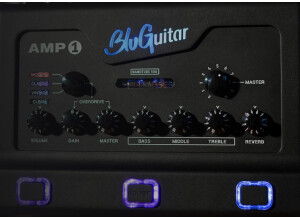
    SOUND If you’re into various genres of Hard Rock and Metal, this is such a great solution for achieving a myriad of tones in such a small package. Having access to Rock, Hard Rock and Metal tones (that range from the 1970s to current) in a four-channel setup definitely puts the challenge to all other amp manufacturers. This may be a 100-watt system (and it is loud!), but its custom power soak technology allows you to get that hi-gain saturated tone with the Master dialed back to under 1-watt – absolutely no loss in tone. The tones themselves are inspirational; clear and cutting best describes it, and the amp does have tube characteristics and dynamic responses, although having but a single nanotube under its hood. Its clarity is not as ‘warm’ as you would find in a traditional tube amp, which is good for remaining clear in the mix, but which may sound a tad ‘sterile’ or ‘cold’ to some ears (particularly the gain channels, although I think it sounds fantastic). The Clean channel ranges from modestly warm to shimmering, depending how high you place the Volume (since more volume gives you more drive) and whether using the Boost. On that note, when engaged the Boost operates at only one level (a bit louder than without and a decent amount for soloing, etc.); but when turned low you get a clean boost (some note fattening and added overtones) and when turned up there is more drive and note definition. This is likely one of the most ‘useful’ boosts I have used and tend to use it a lot with this amp since it adds such diversity and richness in the tones. The Vintage channel offers up that classic British rock sound and somewhat Marshall Plexi in nature; ideal for Hard Rock, e.g., AC/DC and even Soft Rock when dialing back your guitar’s volume. The Classic channel has that Brown Sound, with rich grain that simply pops. However, this channel also has a separate Tone control that ranges the sound from woody and edgy to hot-rodded rich and modern. Factor in the Boost and you can go from thick and well-rounded crunch tones to a tone that sizzles and bites. The Modern channel, based on American high-gain sounds, is likewise diverse and is very tight in its delivery. Those who play 7- and 8-string guitars, or use drop-tuning will appreciate this ‘no-mud’ channel. The separate Tone control will have you playing fat screaming leads and hi-gain, all the way to Ultra- and Industrial Metal. The Amp1 Iridium has some other features that contribute to the sound. The 3-way EQ (Bass, Mid and Treble) is very touch responsive and was designed so that one setting would be very complimentary no matter what channel you’re on. In other words, unless you want a big mid-scoop on one of the channels, you likely will find something pleasant to your ears and it could very well work with all channels, e.g., Bass 7, Mid 5, Treble 6 is my typical setting). Certainly some fine-tuning and tweaking will open up other tonal variations, but they will not be extreme. The Noisegate works exceptionally well. It can be turned off, set to ‘soft’ or ‘Metal.’ The Metal setting is a fast acting noisegate, although it does not cut off lead notes unless you hang there too long. Definitely suitable for heavy chugging and riff work. Using the Metal noisegate setting also automatically shuts off the Reverb (to avoid any premature and unnatural reverb trail endings). The Reverb, based on a spring reverb (although it has some plate qualities to my ears), is very subtle, even when turned all the way up. It was designed to be complimentary and to add fullness to the tone, which it does, rather than be dominant and excessively wet. The Amp1 Iridium includes its own cab sims, supporting the clear and sparkling nature of the Clean channel, as well as an incredible amount of energy and saturated warmth with the hi-gain channels. This can be bypassed by running the Amp1 Iridium (via the speaker out) to a separate cabinet or cab/IR device. Although I did get some decent alternatives with different sources, including BluGuitar’s BluBOX, I keep going back to the internal cab options. FEATURES: Designed for pedalboard/floor operation, this is a full-fledged 100 watt amplifier. The channels include Clean, Vintage, Classic and Modern (with those genres geared toward the Metal musician). The Clean channel is reminiscent of Fender, whereas the Vintage offers classic British tones, the Classic that ‘brown sound,’ and the Modern a heavy to ultra/industrial quality. The Classic and Modern channels can be adjusted in tone so that you can get a more ‘vintage’ to a more ‘modern’ sound quality under each channel/preamp. You can adjust the Gain and Master Overdrive to your liking and then adjust the Master volume to an appropriate level (without losing tone quality) so that your output ranges from less than 1-watt to 100-watts. Both the Classic and Modern channels also have independent volume controls so that they can be matched with the Vintage and Clean channels (which has a separate volume control). There is a basic EQ (bass, midrange and treble) control, which works well as a whole and when working among channels (unless you want a lot of mid scoop, there isn’t much tweaking required once you find the tone you like). You select Channels via the left footswitch (from Clean to a gain channel), although you need to dial select which gain channel you want (Vintage, Classic or Modern). Dial-selecting a gain channel can be avoided if you go into Preset mode and use the three footswitches to change channels and settings (an optional dual footswitch allows you to switch to Clean and to engage/disengage the Boost). The middle footswitch is for Boost, which stays at one level (loud enough to know there is a boost), but which can be adjusted to further develop your tone (turned low = clean boost, whereas turning it up adds more drive and note definition). The right footswitch adds Reverb. The Noisegate function can be left off, turned to ‘soft,’ or to ‘metal,’ the latter of which is more abrupt and ideal for hi-gain chugging (this setting also shuts off the Reverb if you happen to have it on, so that you don’t get odd cutting of the reverb trail). The back panel includes the usual power in, guitar in, line/headphone out and effects loop (that you can run is parallel or series). There’s also an 8 and 16 ohm output for a speaker cabinet (which you also would use if not wanting to use the built-in cab sim and when going to a different cab/IR source). There’s also a Remote in for a two-way footswitch (as described above), a MIDI system or if using the optional Remote 1 controller (for presets, looping, etc.) offered by BluGuitar.

  • « Crate GFX 1200H »

    For an inexpensive 120 amp head, this thing rocks. As with most Crate amps of the last 10 yrs they have done it again, they nailed tube tone from an inexpensive solid sate amp. I build and repair tube amps, but Crate has floored me again with the tone and crunch they are getting from this amp. I've played guitar for about 30 yrs now, I'm in a Death Metal band and the GFX 1200 is a great rehearsal/recording amp for me, I normaly use a B-52 AT 100 on stage I bought this amp off of craigslist in Jacksonville FL for $50.00, it had some nasty hum issues, but after a quick solder job(the filter caps had cold solder joints)it sounds quiet,meaty,crunchy and the clean channel with the digi FX made me rember how much I missed a sweet chorus effect. The amount of sound and tone you get from such a small light weight amp head, compaired to my tube amps this thing is like a feather to tote, oh I did I mention the tone. I'm not much into FX on the crunch channel of any amp, but on the clean channel the chorus,reverb and delay are very cool, it has a flanger also but I don't use that to much, and did I mention the tone, yes tone very very close to a tube amp, not sterile and bright like a lot of SS amp...cough cough um..Marshall MGDFX Heads....The Crate GFX amps kill the Marshall MGDFX amps(I've worked on both)..more tone,more bottom end growl(for METAL)more sound and tone at high volume. The fact that I can't asign the DSP to a single channel..ie Clean or Crunch. The fact that it's under rated,my friends laughed at me when I showed up with it, that untill I unleashed it and let it run ramped through the band room...who's laughing now!!!! The Crate GFX 1200 is built very well for a small 120 watt amp head, aside from the soldering the amp is tough, maybe Crate and LOUD Technologies can figure out some thing to stop the solder joints from cracking..99% of the Crate amps I work on(new and old) have soldering issues. The Crate GFX amps kill the Marshall MGDFX amps. Crate has one of the best lines of affordable,Solid State amps on the market new and used This review was originally published on http://www.musicgearreview.com

  • « Crate GT1200h »

    I' ve been playing for about 4 and a half years now. I play black chaotic metal ( band ) and alot of suthing melodic stuff to please the mind. I'm mostly into metal ( no bullshit like Nu metal or hardcore ) I mean good old metal. héhé I got this midget in a local music store in my hometown in Belgium. I was amazed that in costed only 450eur ( in promotion ) and it was the last one. I was on a tight budget and i decuded to give this amp a go. ( before purchasing it i did a very wide investiagion about this product, ofcourse ) I sugest everyone to do the same if you're interested in purchasing some gear!!! I love the fact that is't a solid state ( almost nothing that can go wrong ) and allso it's built very well. very hard and decent! I actualy expected it to be built like a chineese motorcycle, but i've allready got proven wrong. We do alot of transportation with the band and it gets kicked around alot, but no problems! The clean chanel is very good for a solid state! Surprisingly good! :) The spring reverb is allso a very nice sounding feature. BUT! For the distortion chanels are a little too weak for our music, i just bypass an external distortion pedal through it and voila, problem solved! The lead distortion is good enough for 80ies metal, but not black. Well still i love the sound! And this mad midget will blow the drummer away! It has enough power to gig with it in a concert room with +-250 300 people! No need to mic it up. Of course there's a few disadvantages. Because this amp is cheap, there are a few things where some money was saved on. like: - Knobs are made of plastic ( but haven't fallen off yet ) - The footswitch is very light, but yet steady ( note sometimes the jack inputs on the footswitch get a little lose. Just tight it up, and you're ready to go ) - The cab is very compact! I mean this amp is TOO SMALL for 120Watt of power ( but it delivers it effortlessly!!! ) - There are no 2inputs for send/return effects, you need to obtain a special cable for that. But in general i still don't care about these minor issues!!! :) I love the way that the price/quality ratio is so good! This amp is built to survive an american invasion! Very well built ( exept cost saving materials like plastic ) The grid of the cab is allso very tough. And note the cab is surprisingly light! i've tested it with 100Watt rms cabs and i couldn't lift it off the ground. Another feature i love is the fact that this amp was built for punishement! I played 4.5 hours on it ( volume on 7 ) and the power transformer wasn't even hot in the end. Ok here's the deal. If you're an all round musitian looking for good tone and a decent price/quality ration, this would definatly be a good choice! This amp is very versatile. ( but for my personal pleasure i still use a dist pedal héhé ) I'm not disapointd in crate. Me and my midget will still have allot of fun for many years!!! ( a good 4 because of the slight minor issues ) This review was originally published on http://www.musicgearreview.com

  • « Marshall MG100HDFX »

    I bought this from a local guitar store (Bizarre Guitar) for $635.00. It is nice and loud, excellent clean tones and the overdrive is great, too. I use a Boss Metal Zone through it and I can get exactly the tone I want out of it. After a few days it started making a buzzing sound from the fan. I took it back and they said they fixed it, but the day after I got it home it started doing it again, and now it's back with them. I also have a friend who had the same amp and the same problem. Heavy duty and well built, except for the fan problem with mine. Putting aside the annoying sound from the fan (it goes away after a couple of minutes), this is a great amp and comes for a great price. I'd definitely recommend it for anyone looking to get their first half stack. This review was originally published on http://www.musicgearreview.com

  • « Peavey XXL 100 Watt Head »

    i was in long and mc quade picking up my new but very used laney 1x12 50 watt combo when i saw this head unit surrounded by mesa's and marshall's, i have owned marshall's but never mesa's and never a peavey head, but i like peavey, i always have, i originally wanted 1 or 2 bandit 1x12's but they didn't have any, so the next day i went back and handed over the laney and said give me my xxl, i tried it out and holy hell this thing rocked harder than any marshall i have ever tried, the xxl is mine now. i got it used but like new for 480.00 candian. it is freakin loud, it is nice and quiet when you need it to be, it looks damn good, sounds damn good, i really like the 25,50,100 watt settings, i like the 16,8,4 ohm settings, the head is big but not too heavey (weight that is), peavey just rocks awesomely.... nothing except for the foot pedal button's are way too close for shoes. otherwise i love it!!!!!! awesome i hope it last's me forever. peavey i knew i could count on you, you've never let me down in the past, i hope you never do in the future. this amp rocks stupid crazy awesome.!!!! This review was originally published on http://www.musicgearreview.com

Categories that may interest you