Log in
EN
FR

Hybrid Guitar Amp Heads

97 products found

Filter
Sort by
Evaluation
  • Reviewed or not
  • Editor’s award
  • Reviewed by Audiofanzine
Availability
  • Available or not
  • Sold new or used
  • Sold new
  • Sold used
Must-have products
  • All products
  • Flagship products
  • Best rated products
  • Hot products
  • Popular products
Price
  • Freeware
  • Low-cost (< $70)
  • Mid-range ($70 - $250)
  • Premium (> $250)
€
Clear
Sort by
  • Popularity
  • User ratings
  • Price - low to high
  • Price - high to low
  • Used price, increasing
  • Used price, decreasing
  • Name (from A to Z)
  • Name (from Z to A)
  • Added on
Sort results
  • Popularity
  • User ratings
  • Price - low to high
  • Price - high to low
  • Used price, increasing
  • Used price, decreasing
  • Name (from A to Z)
  • Name (from Z to A)
  • Added on
Filter results 97 results found
Evaluation
Availability
Must-have products
Price
  • Freeware
  • Low-cost (< $70)
  • Mid-range ($70 - $250)
  • Premium (> $250)
Show results

The best Hybrid Guitar Amp Heads reviews

The reviews Audiofanzine members found the most helpful.
  • « Powerful enough, and with a great sound. »

    A single channel hybrid mini amp head with a single preamp tube, a 20W solid state poweramp, a headphone out, mono effect loop and 8-ohm output. I needed a amp with a headphone out, at least one tube and an effect loop which was compatible with the speakers I already owned, so considering all amp heads on the market the Micro Dark was the obvious choice for me (all-tube models with a headphone out are very scarce, except fot a Bugera model which costs 3 to 4 times as much). Oh, and the sound of course: this one goes from blues to metal in a breeze. I’ve owned it for a week as of writing this review, and haven’t tried any of its competitors. Please note that this amp has a rather warm sound in my opinion, it might be powerful enough in rehearsal, especially in overdriven sound or maybe even in a jazz band with a not-so-violent sound. So, I’ve only used it at home, most often with headphones and the rest of the time plugged into one of the two speakers of my Carlsbro GLX 150 combo – Celestion 12"s, which I consider better for the lower range than the cab which comes with the Micro Dark which is only a 10”. Soundwise finally, this head certainly gives its all with a cab. The sound of its preamp tube is not a mere myth, having only used solid state amps so far I can clearly tell the difference. However, my headphones are awful, so it would be worth trying with quality headphones. As for its controls, except for an on/off switch, you only have 3 knobs left to do the job. Left from right, you have Volume, Shape and Gain. No introduction necessary for the first one, the Shape knob controls the tone from the lows on the left to the highs on the right, and the Gain control really rocks as hard as it gets past half its course with the volume cranked up. The way the contrôle interact with each other is very important with this amp, and those used just like me to put several od/dist pedals in front of it will often have to change the gain depending on whether you use a pedal or not. Another point to notice it that until half its course, the Gain control works as a volume/boost with the sound remaining clean. The drive sounds beautiful, with a simple-yet-efficient 70s-rock British sound that reminds of Vox, so it would be a pity to only consider the Micro Dark as a mere base for using pedals, which was how I originally intended to use it. In the end, I have diminished my number of overdrive/distortion pedals after getting it. The effect loop beautifully mixes the modulation and delay effects in, which is what I was after. A little cons though with the lack of compatibility of some pedals, for instance the Voodoo Lab GIGGITY which doesn’t come out well, I still have to figure out why. In the end, I recommend this excellent Orange Amps product, which features an excellent value for money. I’m happy to have discovered it.

  • « Great for me !! »

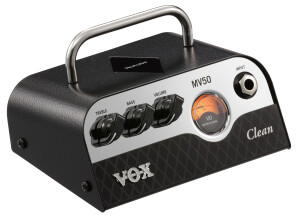
    For which specific applications or uses have you chosen this product? Installed on my pedalboard, I use it only on headphone so far as I recently moved to a flat but I consider buying a good cab soon to play at home at low to moderate volume. How long have you been using it ? : I’ve use dit daily for 3 months with an American Standard Limited Edition Telecaster with a bridge humbucker. Have you tested other comparable or competing products before purchasing this one? : I tried supposedly good small last generation digital amps with all known features (modulation fx, headphone out…) and it sounded digital and cold, a no-go for me as I previously played on a tube Marshall DSL 40C which was way too powerful to play at home, so to get a good valve amp I turned to this small Vox head which keeps its promises. I also tried the Two Note preamp range which I found attractive but they provided me with strange noises which I couldn’t determine whether it came from the device or the supply, considering I only tested it in a shot using my own pedalboard. In comparaison, the VOX head was really silent with a nuanced and sharper sound, so in a word convincing. As for my pedalboard, I use : a Moller TREX tube screamer, an MXR Fet driver fuzzy distortion, a TREX comp, a TREX wah, a TREX ghost tone reverb, an MXR carbon copy delay and a BOSS EQ. I generally put the VOX’s gain at 0 (clean), its tone at 12h and volume at 10h, which is way enough to mye ars while playing on my headphone. The pedals sound really good on the amp’s clean, and sometimes I only use the amp’s crunch with a little comp for the typical Vox sound I love. In clean, a bit of compression and reverb are required to have yous playing style’s subtleties come out (comething all amps require to my taste). I use my pedals on clean sound to change the grain and get into more modern territories, and also getting close to Marshallesque sounds. In the end, I get a wide sound palette with a single-channel amp, with a tube sound in my headphone (harmonics, warmth, dynamic…). I originally intended to buy the VOX MV50 Clean, but it wasn’t available before a while so I got for this AC which was in the shop’s window and tried it for a long moment. I not only have no regret but am also particularly satisfied – hence this review. I read people criticizing this VOX head xlaiming the Hotones were half the price with an extra fx loop, well I’ve owned both and I precisely sold my Hotone British Invasion which I used to work at night as it was way too limited with my setup – as soon as distortions came in let alone the wah, it definitely lacked clarity. While the Vox has no fx loop indeed, I put all my pedals in the front and it works perfectly. What are the pros and cons of this product? PROS: + Sound quality with a pedalboard (can’t wait to try it with a good cab!) + Value for money + The knobs’ progressivity and precision + its look ! CONS: I can’t think of any so far, as it perfectly matched my expectations but I may update this review after using it more – and especially with a cab. Now that I think of it, perhaps it lacks an internal reverb for those who want to use it with no effect pedal.

  • « More than excellent!! »

    USE It's very easy to dial in, you only need to plug in, adjust 2-3 things and you've got it sounding! SOUND I play mainly metal. With a good guitar, it's amazing. The clean sound is wonderful and super warm. The drive is very Brit rock and blues. It's super well-defined. The boost channel adds gain to the drive channel and it's incredibly good!! You can also reboost the gain!!! This amp head is perfect for all kinds of rock and blues. For metal and similar sounds, I recommend you to add a 7-band EQ via the effects loop. You will be under the impression of having changed amps, the sound is ten times better and much more shapeable. I used it 3 years with an Ibanez equipped with Rio Grande. I never used effects!!! (except for the Boss EQ). Sound is precise, very round and unforgiving with wrong notes. OVERALL OPINION I used it for 3 years to play rock, blues, jazz, and metal, and it never disappointed me!!! The proof is that I became a fan of Trace Elliot amp heads (even if they are not manufactured anymore) and ended up finding and buying the all-tube version (Speed twin H100). I used to play Marshall hybrid amps (Valvestate 8080 and 2000), which are good amps, but there's simply no comparison!!! The sound is really impressive for a hybrid amp head!! Even more so considering its like a collector's item!! I would certainly buy it again if I was faced with the choice!!

  • « Good Cleans and an Unmistakable Orange Drive »

    FEATURES: If looking for a small floor/pedalboard style amplifier, measuring only 6.1 (D) x 13.4 (W) x 9.9 (H) cm (2.4 x 5.4 x 3.9 inches) and weighing .38 kg (.84 pounds), the Orange Terror Stamp is a viable option. Able to pump out 20 watts of power, it consists of a hybrid platform, combining a valve (ECC83) preamp with a solid state power amp. Tones vary from very clean to biting and edgy – that classic Orange sound, together with a Shape control that helps you to achieve Micro Terror and Dark Terror characteristics. The footswitch controls two channels (both share the same Shape and Gain settings), allowing you, for example, to increase or boost the volume higher on the second channel for lead solos. The rear panel on the Terror Stamp includes the input and two types of output. There is a speaker output to a cabinet (1 x 8 ohm, 1 x 16 ohm or 2x 16 ohm), whereas the other is a headphone/PA-mixer/computer interface output. The latter includes a cab sim that emulates a mic’d Orange 4x12. There also is a buffered FX Loop to add effects pedals, such as delays, modulations, etc. For those who do not want the built-in cab sim, thereby using a different device for different IRs or speaker emulations, whether through software or something like the Line 6 Powercab (FRFR), you would run your cable from the Effects Out and into the appropriate device. Of course, you can go from the Terror Stamp’s speaker out and into an IR, etc., thus necessitating a load box as an interface between the amp and other device. SOUND: Compared to those big 100-watt heads (which few people require unless playing arenas) the Orange Terror Stamp may not ‘seem’ loud, but this thing is powerful and more than enough for small to medium sized venues. The sound, no matter the settings is exceptionally clear with a good punch. The ECC83 tube and internal circuits produce a tight low end and rich mids with highs that are clear, but not overly pronounced (definitely not shrill). The Shape control allows you to add in more mids while reducing highs when turned counter-clockwise, whereas turning the Shape clockwise scoops the mids. How well the Shape works seems to be affected by how clean or driven the tone is, via the Gain knob. For example, with the Gain down to about 9-o’clock the sound is very clean, yet full. I find that no matter the guitar pickup (neck, middle or bridge) you can use the entire scope of the Shape and find some great tones. As the Gain increases to a solid crunch (close to 12-noon) the Shape knob sounds best when dialed in around 10-o’clock and 2-o’clock, although a bit more in either direction still sounds good. When pushing the Gain beyond 12-o’clock, and particularly when Gain approaches full throttle, the tone sounds best with the Shape dialed in between 11-o’clock and 1-o’clock. Certainly your speaker cab and guitar pickups will determine an ideal range that may differ. The built-in Cab Sim (ideal for private practice or going direct to a mixer/PA or computer interface for recording) is very decent – not all effects units or amplifiers can claim this – and the overall tone remains clear, punchy and cuts through the mix rather easily. The buffered FX Loop certainly helps in maintaining a quality tone. OVERALL IMPRESSION: There is a lot of Orange aggression in this tiny amp, although with Gain dialed back it offers very thick and rich cleans (very full in response when compared to a classic Fender clean that is thinner and sparkly); this makes for an exceptional pedal platform, whether using overdrives/distortions, modulations or some other effect. The Gain produces very well-defined dirt that cuts through the mix exceptionally well and once dialed around 10-o’clock or higher, and power chords are very punchy to say the least once at 12-noon. Tonal shaping is both quite extensive and provides a host of options that literally make this tiny amp sound very different as you rotate the knob in either direct from the middle 12-noon position. And not only is the FX Loop buffered to maintain clear tones, you can use the FX Loop for modelers while driving the signal through the Terror Stamp’s power amp. Its compact size cannot be over-stated – the Orange Terror Stamp is the size of a typical pedal, small enough to pack in your guitar gig bag. Overall, its size, sound and price ($199 USD) make it winner and likely one of the best NAMM 2020 releases. The Terror Stamp also comes with its own 3.3+ meter (11+ foot) 15VDC/2A cable adapter. There is one limitation, although for what you get for the price (great sound quality in a tiny and super portable package) addressing this would increase production costs and certainly size. Now, although the second Volume allows you to boost your signal for solos, you are limited to the same tone (Shape and Gain settings); if you wanted a different tone and drive for rhythm vs. lead, you would need to set those manually each time. Another option would be to have an overdrive or distortion pedal for additional gain/boost, although this would eliminate the need for Volume 2.

  • « Metal Marshall hybrid amp »

    In the 90s Marshall attempted to bridge the gap between tube amps and solid state amps by making hybrid amps. The Marshall hybrid amps contained a tube in the preamp with a solid state power section. This solid state power section meant you could easily simulate load on the amp and get great tones even at low volumes. It has a clean channel and an overdrive channel. The overdrive channel comes with two voicings and the clean channel has its own EQ. They call it a 3 channel amp but it is really a two channel amp with two overdrive modes. It puts out 100watts of power with an effects loop. It has a rather flimsy spring reverb. When i got mine it was almost broken off. It pretty much rattles inside the amp chassis. UTILIZATION It has a few more knobs than your normal amp. Starting at the left you have the input for your guitar cable. The first set of knobs are for the clean channel. After the clean channels EQ knobs there are some buttons for a clean boost or clean OD sound for the clean channel. The next two knobs are the gain and volume for the overdrive 1 channel. Then there is a button to switch between OD 1 and OD 2. The overdrive 2 section has gain contour and volume. The contour knob will be your best friend with this amp. After these knobs there is the shared EQ for the overdrive channels. The last set of knobs are for the FX loop and the reverb. You can adjust how much reverb you get on the clean and dirty channels. SOUNDS The gain on this amp is very contemporary sounding. Playing with the contour knob you can go from a classic British sound to a searing high gain sound. The contour knob emulates the loading of the power amp. Chuck Schuldiner from Death used this this amp on most of his albums and it sounds exactly like what you heard on these albums. With the contour knob on low the sound is more classic Marshall. It has a lot of bite and clarity. With the contour knob turned up all the way the it tightens way up. With the contour knob up it almost sounds like a modern 6l6 amp. The clean channel is good but it is not great. The clean channel has a very cold sound even with the reverb on. OVERALL OPINION These amps are hidden gems. They only sell for about 200 bucks because everyone is afraid of the valvestate label. These amps are really good. You can get classic Marshall tones and heavy metal tones. Since it has half the tubes there is pretty much no maintenence needed. If you are looking for a good solid metal amp and see one of these you should try it.

  • « Marshall Mode Four »

    How Purchased: (1)New 2003 and (1)New 2004 model. Cost: 1199.00 a piece. Where: A little store in Ft. Worth, Tx Why I purchased: Conducted solid bench test and research for MY sound. Compared sound to other manufactures/models and decided on 2 Marshall MF heads for my rig. So far, both heads prove to be solid performers. I'm a metal musician (lead gutitar player 14 year vet). The MF gets its best reviews for good cleans and bottom end for detuned axes. However, my Gibson Vs and RR1s cut through nice and clear with standard tuning as well. (My bass player and drummer love me for it)! Dialing in MY tone took a little work but I was successful at achieving the "singing tone" along with the feedback and saturation I deperately depend on. Ah yes, feedback! Achieiving and controlling it has never been sweeter! (As we all know, pickups have a lot to do with it too). Yes, I'll agree that the MF is a little weak and thin to some degree but all hybrids are. Also, the MF sounds DARKER than say the TSL/DSL/2203s. That's because its a Marshall hybrid (Solid State) and the head/cab combinations i.e., MF400 A/B Anyway, I like this particular hybrid because it is simple, explosive and to the point. I prefer not having to deal with the expense and care of hotroding/biasing/tube matching of say a JCM 800 etc.. However, to each his own. Actually, I owe a lot to the aforementioned Marshalls. They set the stage and were the spring board to the sound I have now! With a little tweaking, I have the tube sound through the MF. The first stage to achieving MY tone is a solid performing graphic EQ run through the effects loop. Talk about boosting signals and tone shaping! The MF loves it! Thats only the first stage though and newer guitarist will have to dig in and find THEIR sound like us veterans. Good luck! I bought two of em, so that should sum up how I feel about this particular hybrid. The overall contruction of the Marshall Mode Four is highly comparable to most of the big boys in the Marshall line up. Solid as a rock! The cooling fans in both heads needed extra care by adding a little machine oil to reduce friction hum. **Always take time to perform minor maintenance checks on your gear.** Bottom line: I'm a personal fan of the British made Marshall, so I'm a little biased. If it weren't Jim... Anyway, both hybrids are a powerful selection to MY inventory and fit my taste well. When I step off stage at the end of a gig, I'm told my sound is "awesome." It makes me feel freakin good to hear that! Ultimately, I'm glad that I selected something from the Marshall family that pleases my taste and encourages me to play! This review was originally published on http://www.musicgearreview.com

  • « Marshall Mode Four Half Stack »

    I packed up My Gibson SG, Fender Limited edition Fat Strat w/active EMGs and my GNX3 and headed for my local Guitar Center and Sam Ash to check out the 'The Big Amps". It was kinda fun watching them inventory my stuff and fill out the paperwork. This has to be some of the tightest security I've ever seen! I tried every high gain amp and cab combo I could. I mean Crate, Mesa Boogie, Randall, Marshall, Vox and a couple 'off' brands. Honestly, every one of the major brands ROCKED BIG TIME. I wanted a couple of them, but I'm not rich. They all had good points and poor points. I have a Crate 120w combo, but I was after some sort of stack and wanted higher volume (read in Tim 'Tool Time' Taylor type POWER VOLUME). I didn't want to pay for a full stack, but wanted the sound and power. I got it, This was the Amp for me. The FX loop is way cool. I also like the Amp2 mid three way switch, the EQ mid works with it, both Amps scoop switches work with the EQs too. Having tube preamps means it sounds better loud. This bad boy is LOUD. I chose the 400A cab as to get the full 350 watts from a half stack. I thought the MF cabs easily sounded the best with the MF head, and I tried other cabs because the MF cab is a couple hundred bucks more. I try and get the most for my money. The 400A cab is 8ohms. The 400 cab needs to be plugged into the number 2 plug. The 280 cab in #1 for half stack or both for full stack. There's a chart on the back of the head. This is to match up the impedence of the speaker cab to the amp. The 280 at half stack is 235watts, still not shabby. The angled (A) cab produces a more cutting upper mid and treble that I liked over the (base) B cab. When you 'tweak' the controls for the first time turn the knob quickly from side to side to understand the amount of variation of the tonal control. You can make the amp sound bad to you (to each his own 'bad') by over adjusting the tone from your liking. The Marshall has a definate 'sweet' spot. There is just that much adjustment available in the tones. The manual is available from the Marshall web site. Pay attention to the hints and tips. The balanced outputs for silent recording are awesome. I get the tones through the recorder and don't have to worry about the cab volume. I do have to add bass if I don't mike the cab due to the deep sound of the cab vs. straight to the recorder through the head. I also hook up my amps the the PA and this feature makes it a breeze. I play every style of Rock and Blues and I can get whatever tone I want out of the Mode Four. I also get those tones at extremely high volume. Too Cool I had to buy a clamp on console light for the head strap handle and color in the dots on the adjustment knobs to see them at low light levels. I think I'll hit my local gun shop for 'dots' like you use on night sights. Marshall should do this. I had to tighten my knobs when I got it. It needs one more handle on each side of the cab as it's heavy. Don't expect your girl friend to help you, no offense ladies, but my wife could really hurt herself tryin' to help me muscle this beast up on stage. The cab weighs in at about 150lbs. Please, it's a Marshall. It is extremely heavy as it weighs in at about 150lbs. Seems tough as hell. No major brand of amp I know if is built 'cheap', or nobody would use them due to the high replacement cost. As far as looks go this is one badass amp. It's beautiful as well as intimidating. I love the tones and the volume of my Marshall Mode Four Half Stack w/400A cab. I'm already recording with it. I swear sometimes she....it gives me wood. This review was originally published on http://www.musicgearreview.com

  • « Fender Performer »

    Ive never seen a fender like this before. Its was made in the 80s by fender japan and has a pointed headstock and a angular body. But the sound and feel was pure jazz bass! I purchased it from some poor guy a couple of weeks before christmas. His truck was broke and he needeed the money. 500.00 for both the 4 string bass and a 100 watt peavy combo. It wasnt the fender that i wanted but the price was right! The neck is killer! it is a 24 fret rosewood fretboard that feels like a long thin jazz neck. The tone is also a lot like a jazz bass, the fit and finish is good, That one is easy......the looks are horrible! It looks like a prop from a bad sci fi flick! And the pickups are a odd shape so as to make a pickup swap hard. The body I think is basswood and the neck is a bolt on maple with a rosewood fretboard. the neck joints are real tight. a good solid fender bass, except the hardshell case sucks. THe bridge seems a little cheesy but the tuners seem to stay in tune ;a pretty solid bass. A solid great sounding bass!Also ,it would seem, very rare and suprisingly playable. I was gonna sell it to buy a p bass but i think i will keep it as my "jazz bass" This review was originally published on http://www.musicgearreview.com

  • « Marshall AVT50-Head »

    I paid about $450 for this at a local music store. It came with a footswitch and tone that kicked my ass. Just about everything! Both the clean and OD channels rock. The clean channel is suprisingly good far a half solid state. It has a pretty good amount of warmth, and sisnce it doesn't push a cab as hard as a 100W head, it has really good headroom. Then, there's the sweet, sweet distortion. The tube preamp makes an awesome OD sound that is extremely versatile. You can go from soft blues licks to skull-crushing death brekdowns in the crank of a knob. The reverb is pretty good, but I don't really like using it (personal preference). Since it has a headphone jack, you can practice without bothering anybody else. Awesome amp. Since it's only 50W instead of 100, you don't get quite the chest-pounding volume out of it. But it is definitely loud enough to gig with and jam with. Also, it takes forever to warm up. I'm not sure why, but a JCM 2000 TSL100 boots up in about half the time this one does. The tone controls aren't 100% expressive, either. They work really well but not quite like a full tube amp. Everything is amazing about this amp. It's built perfectly in the Marshall tradition. It's impossible to fuck this thing up. I recommend this amp to anyone who wants a very good gigging amp with tons of tone. (That would be all of us.) The price is really good, and with a good cab, the tone is outstanding. Whatever you do don't get the combo version. It deosn't sound half as good as the head. No matter what kind of music you play, this amp can suit you. It's practically flawless. Go buy one ASAP. This review was originally published on http://www.musicgearreview.com

  • « Nice hybrid »

    Randall has a good hold on the module world which has been exploding in recent years. They have really put their focus on those amps and the preamp modules but still carried a lot of their good old regular amps as well. This is one of those simple amps that sound like the typical Randall tone. This amp has a set of preamp tubes in the preamp section and the power section doesn't have power tubes but does have a preamp tube in the power section to help soften the attack and blend the two amp sections. This is an amp that does not have any effects in it. It is not a modeling amp either but just a hybrid of solid state and tube valve UTILIZATION T2 Designed with a simple straight ahead front panel layout, the T2 has a shorter signal path that produces an extremely powerful, punishing tone. A true 3 mode amplifier, the T2 provides an extremely wide range of tones to fit any playing style while seriously catering to those who hunger for gain. PREAMP CHANNELS 2 Channel/3 Mode All Tube (3) ECC83S Tubes Mode 1: Classic Tube Clean Mode 2: Classic Tube Overdrive Mode 3: Modern Tube Boost EQ CONTROLS Bass • Middle • Sweep • Treble MASTER CONTROLS Volume • Presence • Density POWER AMP "Valve Dynamic™" Tube/Mosfet Single Tube • 12AT7 POWER OUTPUT 480 Watts @ 2 Ω 400 Watts @ 4 Ω 280 Watts @ 8 Ω FEATURES MIDI In / Thru Assignable Series/Parallel EFX Loop Slave Output with Level “Mic Eliminator” XLR Output World Voltage Selector RF4T2 MIDI Footswitch SOUNDS The tone of these amp is pretty decent for what it is. You get three channels one for the clean, one for the crunch channel, and then one for the high gain tone. Te clean tone is pretty good and simple. Nothing spectacular about it. The crunch channel is a good classic rock tone and 80's crunch voicing. This will get you anything from AC/Dc to Motley C Rue. It is a good overall channel for covers and pretty much general music. The third channel is the more modern tone and gets you into the more modern voicing style of music. This is where you would get the modern metal tones and better for down tuned guitars. Overall it is pretty usable amp for what you get tone wise. OVERALL OPINION You can find these head for right around $599 for a new one. Used ones will fetch for a lot cheaper than that price. These amps are good for the money and have a great tone for the price. Randall is great at getting very usable cheap amps to the budgeted consumer. I would recommend this amp to anyone needing a good amp for gigs and practicing.

  • « Fender gives OK head »

    The Fender Roc Pro 1000 has a solid-state power amplifier with a tube pre-amp through a 12AX7. It delivers 100 watts of solid-state power at 4 ohms. The Clean section is only solid-state, whereas the "Tube Drive" section delivers exactly what it says - tube like tone out of a hybrid head amplifier. There are two channels within the Tube Drive section, and one clean channel. There are standard tone knobs (Bass, Mid, Treble) for the Clean and Tube sections, but although there are two different gains for the Tube sections, there is only one set of tone controls. There is a mid-shift tone option for the Clean channel. All connections are through standard 1/4" jacks and cables. A footswitch can toggle between multiple channels. The amp has a spring reverb, and there is also an effects loop with adjustable levels. There are multiple speaker outs that provide 4 or 8 ohm connections. There is a line out from the rear of the amp. UTILIZATION It's pretty easy to dial up a good sound - just fool with the gain, drive select, and tone controls. I read through the manual once, it has some suggest amp settings that can be useful starts, but for the most part the amp is pretty intuitive and won't require reading it. SOUNDS Some great sounding tones can be delivered out of this amp, but it comes with one caveat: The amplifier can't go very loud before it starts to feedback. This is probably due to the fact that a lot of cabinets are at 8 ohms, which means that the full 100 watts can't be delivered to the speakers as the amp is meant to produce 100 watts at 4 ohms. The clean is excellent on this amp - it's the type of beautiful, shimmering Fender clean one has come to expect from even Fender solid state amps. The tube gain channels are both good and fairly distinct from each other. OVERALL OPINION I can't get past the fact that the amp doesn't deliver enough gain without feeding back. This problem is exacerbated when combined with overdrive or distortion pedals. As a result of this, the amplifier couldn't produce enough gain to meet my heavy metal needs, although it would be an excellent budget amp for someone who plays blues or classic rock material.

  • Audiofanzine FR's review

    (Originally written by hugues blanchon/translated from Audiofanzine FR) - Hybrid amp with one 12AT7 tube and mosfet circuitry. http://www.randallamplifiers.com/about/news/valvedynamic.asp (for more information) - This solid-state amplifier head produces 300 watts of power. - Connections: adjustable FX loop, line output and 4-input Midi footswitch. - Two separate channels plus master: - Claen channel: 3-band EQ (mid/bass/treble), boost, reverb control, volume control. - Lead channel: 3-band EQ plus sweep control and voicing switch, volume control, two gain controls (switchable). I give it an 8 because a perfect amp would have a third channel to get a good rock'n'roll crunch. UTILIZATION - The settings are not very easy for a beginner. With the sweep control, all the voicing possibilities, and the master and channel level controls the amp it can be a real pain in the beginning. - You'll easily get a good sound but to get an optimal sound, you'll need time... It has a pretty exaggerated low-frequency response so you'll have to control it (2-3 for clean sounds and 5 for distortion sounds... Otherwise, just play bass guitar...) Average dynamic response. I guess that has to do with the low-quality speaker... SOUNDS - I play in a black and death metal band and this amp is perfect for this sort of music... - I play a mahogany LTD Eclipse 500 with EMG pickups. I had the opportunity to try out the amp with a Schecter Hellraiser and the sound was also very good (even better in certain cases...) - The clean sound is well-defined and crystal-clear. Even though you don't get the character and warmth of a tube amp I still like it, but do enable the boost otherwise you'll get a poor dynamic range. - The distortion sound is good but difficult to shape: First of all, avoid "V" EQ settings if you want to cut through the mix, it's not a tube amp. For distortion sounds I set the high and mid controls to maximum (same sweep setting) and the bass and distortion controls to 5. With these settings I get a full and heavy sound, accurate and sharp for rhythm parts. The lead sound is clear and accurate but with a low dynamic range. - The amp is not versatile at all, it's conceived for heavy metal and nothing else. Don't except to get a typical ACDC or Guns and Roses sound, nor a good blues rock sound. The response is too clean and with a high-gain... - I hate hollow sounds with imposing lows (and this amp can produce enormous lows, especially using the voicing switch). I hate that heavy sound with no dynamics and nuances! - The main disadvantage of this amp is the lack of dynamics but that's due to the low-quality speaker... which I will replace with a good one! I give it a 7 because the amp is just alright, average. I will update this review when I change the speaker to solve the dynamic range problem. I will make another update after my first live gig with it... Update, 9 March 2009 It's a good idea to use a distortion pedal, the result is great. I wanted a less metallic sound, more vintage with stronger mids and character (I play in a melodic death and black metal band and the amp sounded too much like modern thrash metal or hardcore). I used it with my Electro Harmonix Metal Muff and the sound became more precise and clear (no more overemphasized lows), well-articulated, very accurate and with more warmth and character. I used the pedal with the clean channel so I could boost solo parts and strong passages for some songs. I haven't tested this setup with my band yet... OVERALL OPINION - I bought it in August 2008. - I like the sound character and the comprehensive controls even if some settings are useless. The amp has a poor dynamic response compared with an all-tube amp. - I previously tried out several other models: Randall RG50 (yuck!), Randall G2 (very good but discontinued), Randall RX (nice budget product), Peavey Valveking (I don't like the distortion sound), ENGL Screamer (amazing distortion sound but only one EQ section for both channels so it's impossible to get good clean and distortion sounds...) - Virtually unbeatable value for money in this category, especially if you need a good clean sound. - I don't know. If I had had more money I would have bought the Randall V2 amp head and a cabinet with V30 speakers!!!