Log in
EN
FR

Soundcraft

268 products found

Categories
Series
Filter
Sort by
Evaluation
  • Reviewed or not
  • Editor’s award
  • Reviewed by Audiofanzine
Availability
  • Available or not
  • Sold new or used
  • Sold new
  • Sold used
Must-have products
  • All products
  • Flagship products
  • Best rated products
  • Hot products
  • Popular products
Price
  • Freeware
€
Clear
Sort by
  • Popularity
  • User ratings
  • Price - low to high
  • Price - high to low
  • Used price, increasing
  • Used price, decreasing
  • Name (from A to Z)
  • Name (from Z to A)
  • Added on
Sort results
  • Popularity
  • User ratings
  • Price - low to high
  • Price - high to low
  • Used price, increasing
  • Used price, decreasing
  • Name (from A to Z)
  • Name (from Z to A)
  • Added on
Filter results 268 results found
Evaluation
Availability
Must-have products
Price
  • Freeware
Show results

The best Soundcraft reviews

The reviews Audiofanzine members found the most helpful.
  • « Flexible, with a great sound ;) »

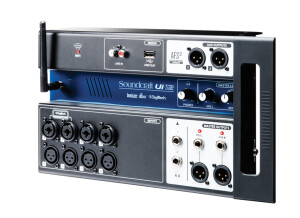
    I bought this mixer after a long quest: I wanted a digital mixer which behaved and provided the ergonomics of an analog model :) PLUS, with a USB connection to a PC or Mac... I spend 5 years mixing with digital mixers by Roland, Behringer (mostly the X32 in different versions), Midas (M32), ... Each of them had its own pros and cons. Later on, I had the opportunity to mix using a Soundcraft Expression 32 and really loves its preamps and summing (which was not the case with the X32), and I also enjoyed the Soundcraft's ergonomics (alike the Roland models by the way). The only cons were the absence of a small screen for each channel, the lack of a USB connection... After a quick research on the web, I came across the Soundcraft Impact, which featured all that the Expression was missing -in my eyes at least- :) I was also lucky to be asked to mix at a music festival, with 13 bands in a row to be mixed within 13 hours using this console while multitrack-recording the entire festival... So I immediately embraced the challenge, worked the manual and got my hands on the table on the evening before the festival was to start. I quickly downloaded Reaper (which I didn't know at all...), tried and tested everything and on the following day I was ready for the mixing marathon :) And 13 hours later, my decision to buy this mixer was made. The preamps let you get them into the red, and in a pleasant-sounding manner. The high-pass filter available in the preamp section works with no issue whatsoever. The Gate section is VERY thorough: it features a "high-pass" and a "low-pass" knob with Side Chain mode, allowing turning it into a de-esser which I found quite impressive... Otherwise, it also works well as a "standard" gate ;) There are also LEDs to show the Gate's state... The (DBX) Comp section is also very thorough, but remains "classic". Still, the GR features LEDs. All settings have their own dedicated knob... The EQ section is also VERY thorough with a full-configurable 4-band and all knobs on the front - great job! When you push the low or high band's Q, the band commutes to Shelf mode :) The "Output" section features pan setting and a delay that can be applied compared with the input signal (apparently designed to sort some front-of-house issues...). Each of the small screens indicates the input level, compression level, channel name and Gate's state. Please note that the mixer's touchscreen doesn't offer a lot of features (EQ display is rather basic, and there is no Gate or Comp display :) ). I like this, as it forces you to work with your ears - not your eyes :) Hence, the analog-feeling I was talking about :) :) :) However, it lacks a page which would display the levels for all of the mixer's inputs and outputs. Please also note that the mixer can of course be remote-controlled using an iPad and dedicated router. Using this option, you get that very modern and complete display ala X32... So, getting a tablet besides the table is definitely a possibility (and one I intend to try out very soon...). So, the mixer comes with the MADI and USB card. So, you can play AND record in the same time towards a PC or Mac (which I did in a live situation): benefiting from a two-way flow from and to a DAW is something very appreciable!! So, it's perfect for live. In my studio, I have a PCIe SSL MX4 card with an available MADI connector, so it's perfect!!! I will be able to add this mixer to my studio setup, as I'll use it for all my headphone monitoring duties. The monitor outs 9 to 14 can be switched to stereo, and with a total 16 XLR outs on the mixer it allows to send 8 different and independent mixes to the headphones (and of course the same in live situations... ). Other than that, the mixer originally features 14 mono aux and 4 send aux to the mixer's internal FX. The effects are Lexicon-made effects from the MX400 series, with mono sends and stereo returns to the dedicated 4 stereo tracks... After thoroughly exploring them, I can say that I really like the effects which are offered here. beautiful reverbs and delays, as well as more special stuff such as a voice doubler (pitch on one side and reversed detuner on the other), choruses, flangers and so on :) Regarding the number of channels, the master manages a total 40 channel (32 XLR, MADI or USB ins + the four stereo FX returns), plus 14 aux, 4 sends and matrixes... Each of these channels features the aforementioned gate, comp and EQ sections. Plus, each of the mixer's outputs (aux, master and matrixes) features an additional 32-band EQ... The mixer also includes a good monitoring section, a headphone out located under the mixer... Please note that (compared with the Roland models) it features 32 XLR ins in front (including 8 XLR/jack combos), 16 XLR outs, USB and MADI inputs and outputs as well as HQNet connectors (compatible with Soundcraft STUDER boxes), a free slot for a second (optional) card (plenty of card models are compatible with this mixer!! ), the (integrated) power supply. No MIDI. So, this mixer can't be used as a control surface in a studio. The integrated software is rather ugly, but very easy to use. However, I advise those who like the M32 or X32's beautiful screens to get a Wi-Fi router and an iPad. Each fader features an underneath band-shaped light. This lit ban changes color with the function attributed to the fades (mono mic in, stereo in, matrix, aux, 32EQ...), and this is anything but a gadget when you have to take quick decision... Let alone that sexy look it provides to the mixer as a whole :) The upper front features two USB sockets: one for the USB lamp, the other one to update the mixer's firmware or save a "Show" - as they call it... Otherwise, this Soundcraft sounds very very good, the different - Gate Comp EQ- sections are very useful, the preamps take in very well, the summing is flawless and there are extreme freqs in both the highs and lows (something the X32 has more problems to deliver). I'm going to add a SansAmp pedal and a 1176 to go towards a more rocking sound, and perhaps a PCM 90 for big and thick reverb sounds (as the mixer's internal delays and short reverbs are already perfect!!! ). I'm about to start a series of shows with an electro-pop band during which I'll have their Mac with me in the control room, and I'll split their mix all across the console mixing it with stage mics. I can't wait to be there, future 'in residence' studio sessions look promising, this feature is really great!!! So, what do I like least in it?? Perhaps the lack of possibility to use an Android tablet to monitor some necessary data. Their partnership with Apple is somewhat burdensome... Except for this, that' a perfect score! :)

  • « A good choice for small to mid-sized studios »

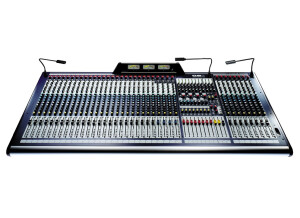
    An analog mixer with an in line setup, which allows a direct out to the recorder from each in/out module. However, the mixer features 8 busses, which are repeated in block (1-8, 9-16, 17-24 and so on) all along the mixer and can be used with just any multitrack provided you don’t need more than eight subgroups. Each channel goes into the multitrack’s corresponding track, or to another through the eight subgroups – as for the monitoring it’s done through the track’s corresponding channel, obviously. This mixer includes – among other things – an input/output module featuring a noise gate, plus a double stereo module, or a double line in module, and all this can be combined in chassis featuring 20 to 52 ins. The mixer that I’ve used features 44 inputs. Other features will be developed in the next part. USE High quality commutators offer a nice course, but the LEDs are too sparse to my taste and makes getting a global vision difficult: the only LEDs on the in/out module are the Gate On, PFL, mute, solo, peak and active channel indicators. The faders feel soft and the knobs relatively soft too, they’re larger for more frequent tweaking such as pan setting or monitor level, and nicely color-coded. The color code is also features on the Bounce, Extra Effect and Reverse Fader switches, which are yellow while their send, buss and sub counterparts are in a pale shade of purple. Using the mixer remains quite simple, now let’s see in details its most important functions. 1 inputs: Input gain is controlled using a double concentric knob for the line/mic in and multitrack in. The mic in will only work if the line switch is up. Switches are here for phase inversion, and a 100Hz high-pass filter. There’s also a purple knob labelled “sub” (bus to channel) which sends the subgroup affected to the channel to the recorder’s corresponding track, with the channel then working as a subgroup “master” control (ala SSL). 2 the Noise Gate: Like on every nameworthy studio mixing desks, each in/out module features a noise gate which can easily be assigned to any signal path (or input). Three knobs allow to control a bandpass filter (ranging from 70 Hz to 4kHz), a threshold and a release controls. The release control can be held through a control named… HOLD, so as to work like a sustain control for up to 2se with a release time fixed at 0.1s. A 15dB or 60dB attenuation can also be selected using the Range switch. There is also a Flip switch which allows to start the noise gate from the other signal path in the modult to that where the gate is, like on the Neve VR 60! Hallelujah! 3 the equalizer: The EQ section is divided into two parts, with a HF+LF part and a HMF+LMF part, each being separately switchable to the whole audio path. The rather subtle HF and LF controls deal with the 12kHz and 60Hz frequency areas, with +/- 15dB. The LF’s asymmetrical curve allows cuts with a radical, steepest slope, while the gain setting’s slope is way softer. The 600Hz-to-12kHz HMF and 100Hz-to-2kHz bands allow for +/-15dB, unfortunately without a bandwith setting, resulting in a gain on a larger band and a cut on a narrower band. There’s a practical reason though, as you’ll often go after suppressing a very specific, localized fault in the sound, while making the sound better generally requires a wider band approach – so as to confere more brightness, for instance. 4 Auxs: 6 aux sends can be found, with the first being a stereo aux. Auxs 1 and 2 can be switched pre- or post-fader, as well as to any audio path. The others are fixed in the monitor path and are of course post-fader only, their main aim being to feed the monitors and studio monitoring effects. This lack of routing can be bore with, even if mutes are still missed to send a vocal (or other) detail to a delay line. Using a Tape Send out through a XFX (Extra Effect) control is possible if need be, like an extra aux send, as this feature attaches the channel’s volume to the monitoring level, which IMHO makes it a source for problems. 5 assignations: The channel faders come with routing controls, which won’t surprise anyone – not at least thoses used to use a mixer. So, these routing controls go towards the main mixing buss and the eight subgroups that are paired on four switches, through the channel’s pan control. There’s also a bounce switch which bring the recorder’s monitor out back to the mixing busses. There are also XFV and REV Buttons which allow reversing the linear knobs. Each of the eight busses is placed repeatedly on each 8-channel group, with a “bus” button controlling it. Group 7 goes towards track 7 – or 15 if “buss 7” is set on channel 15 – no trap here. Another button located just under it then allows to listen to the group’s mix on this channel, sending the “Tape Send” signal to the studio monitor buss – nothing unusual here. 6 The master section: Of course, this section is very simplified compared with big studio consoles. No automation here – not on the model I’ve tested at least. Two big VU-meters can be switched on control either the main mix or the currently selected tracks, which are signalled permanently by two 20-point LEDs above the master section. The six aux general levels have their own “AFL” each, and the aux 1 features a mono switch. A 6-frequency oscillator can be can be routed to the mix or busses. Two keys allow to set the AFL or PFL mode for one, and the SOLO status for the other one – that is interrupting or not the signal’s path in the mixing busses of the whole mixer, with small yet very bright LED indicators! Of course, there are AFL/PFL and overall volume controls, with a “dim” control. Monitoring can be done in mono or through two sets of monitor speakers. Selecting two 2-track recorder controls with the main mix is also possible. These three monitoring sources can be introduced into a “foldback” headphone monitoring buss, which I personally find both clever and practical. The “foldback” section takes its sound from the main monitor section, and features its own output level, AFL and cut controls. SOUND Here we come. First of all and to be totally honest, I must mention that the mixing desk has been entirely refurbished by highly competent people, that I don’t own it andthat it was chosen by a studio wanting to offer a third desk. Let’s start with the beginning: the preamps are rather good, they only bring little hiss and allow for a great sound dynamics. The EQ is pleasing and works well, but the combination of both sections don’t make what I’d call a first-class equalizer. Once again, I must mention that I am comparing this Sapphyre with the studio’s other console, an Amek 9098i, and.of course there is little if any ground for comparing – the budget is not the same either. As for the equalizer, it is adequate and efficient but it is not awesome and lacks a bit of subtlety, which is quite surprising at first from a Soundcraft. OVERALL This mixer is mostly aimed at a musical use, and i believe this “small” analog console to be a good choice for small to mid-sized studios looking for a worthy analog mixer. This console is quick to get used to and quickly adapts to tracking sessions. For a refurbished 44-input mixing desk, the 11,000 € investment that was made seems to me both reasonable and adequate. It’s a good analog console with great performances, but stripped-down features. Please keep in mind that it’s not an SSL, Neve or Amek, so don’t expect it to be – there’ll be differences and lacks compared with such other models, obviously.

  • « A comprehensive, transportable and reliable 16-track mixer with phantom power. »

    I bought this mixer in the 1990s to mix a drumset (8 tracks), a guitar (1 track), a bass (1 track) and two stereo keyboards (4 tracks). No integrated FX but 2 busses and 16 tracks with faders, gain knobs hi mid and lo settings, 3 auxes and pan setting. 1 track on/off, one buss change per track and a PFL. A buss junction, 2 mix faders per buss, 3 auxes in pre or post mix, a headphone volume setting, 16 mono inputs (four of them assignable 2-by-2 to stereo tracks). One insert per track. Plus, it’s made by Soundcraft, which can be seen when you consider how long it resists time in spite of all it went through. I got the faders cleaned up by a specialist for 25 bucks, and now it’s like brand new. A real mixing jewel.

  • devil's review

    Rack-mountable (optional). Analog console with 8 mono channels, 2 stereo channels with EQ, 2 stereo channels with EQ except mids, 2 stereo channels without EQ, 1 bus. 3 aux sends on every channel, one of which is exclusive for the LEXICON multi-effects. NO effect returns. Connections on the mono channel: Jack or XLR for mic, 1 direct out and 1 insert per channel The same goes for the 2 stereo channels with EQ, 1 direct out and 1 insert per channel Jack on the 2 stereo channels with EQ but no Mids RCA for the other inputs All outputs are on jacks All connections are balanced The EQ is parametric: The mids only 1 built-in LEXICON multi-effects USE Everything is simple and clear, the manual is very well made and I've had no problems. All functions are accessible without any magic tricks. SOUND No noticeable noise (although the multi-effects does produce a bit) The Spirits aren't transparent, they add a bit of warmth The EQs also have a lot of SPIRIT. 100% effective 1 Hi-pass filter (18 db/oct) on every channel with EQ, for the mics OVERALL OPINION I've had it for 4 years and everything works fine. What I like best is that you buy an 8-channel mixer and you get an 8-channel mixer. It's not like with MACKIE and other brands. The lexicon effects are a nice plus Excellent value for money. Based alone on my experience, I would buy it again. However, as time has gone by, I've gotten more gear, so I would get a bigger model. In any case, I'll remain faithful to SOUNDCRAFT!!!

  • Audiofanzine FR's review

    (Originally written by Peaveycroquette/translated from Audiofanzine FR) Practical and well-designed mixer offering many possibilities in spite of its compact size and its light weight. UTILIZATION It wasn't difficult to learn how to use it, even for a beginner like me when I bought it. It provides all basic functions you can expect from a small mixer. I like especially the possibility to switch the Aux 3 to pre-fader. The long faders are pleasant but a bit too soft for my taste. I haven't opened the user's manual! SOUNDS The mixer has a transparent sound. I tested it for mixing using Logic Audio in the box or with the Spirit as a summing device, and I can hardly hear or see (with the max. waveform zoom in the sequencer) any sound difference. See HERE ( https://forums.audiofanzine.com/index%2Cpage%2C1832%2Cidtopic%2C16697%2Cidsearch%2C0%2Cidcat%2C5800.html ) to see me talking about the comparison. Maybe the problem comes from the fact that it sounds too transparent! But in this price range you can't expect too much. OVERALL OPINION I've been using this mixer for about 9 months for live (rehearsals) and home studio applications. I like its simple design, conception and manufacturing quality. As I mentioned above, a stronger sound character would be better but that would be expecting too much considering the price.

  • jichu34's review

    - Rack-mountable mixer, but the brackets are optional! So add about 50 bucks to he price! - 3 returns, 16 xlr or line inputs, 16 direct outputs to send to a soundcard!!! It's perfect for recordings!! - Quality Lexicon built-in effects compared to the effects on similar mixers! USE Clear manual (you can download it from Soundcraft's website) No issues in use, it's simple and user-friendly! SOUND Transparent console, "warm" sound, no noise unless you really push the effects, but then again...! Effective EQ! OVERALL OPINION I've been using it for a month. I love its compactness, its 16 XLR inputs and its direct outputs, plus its quality effects!!! It's very handy as PA system for a band...it has everything you need! I used to use small mixers but I needed more inputs for a drum kit...9 inputs alone for the drums!!! Drummers, they always need more! Soundcraft could include the brackets in the price...! Excellent value for money, I bought it new for 590 euros!!! Can you find a better price? I wouldn't hesitate to buy it again!

  • « Soundcraft does it again »

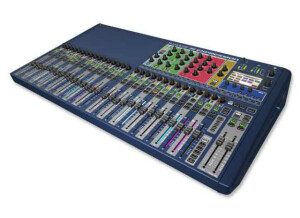
    The Soundcraft Si Compact 24 is an unreal mixing console that comes at a large price. I don’t think that the average at home musician or engineer can afford to have this unit in the basement of where they live. But if you go to a major updated studio, one of the recording rooms will have this unit. It is a 24 channel digital unit , 24 analog mono mic channels and 24 fully motorized faders. Soundcraft has been known for making very good mixers in the past but the issue is that most of them have been analog mixers and not fully digital. This unit is fully digital and by far is the best unit they have mad to this date. I have been using and interacting with this unit since January of this year and it is one of the best newer ones that I have ever used. UTILIZATION It has over 20 effects all preset and they can all be controlled by the screen that is on the unit. There are 4 mute groups and 16 analogue master connectors. The touch screen on the Soundcraft Si is very easy to navigate through no annoying menus and a lot of stuff to go through to get to what you want. You can basically control everything on this unit all from the screen. SOUNDS Each individual output has a graphic equalizer and a 4 band EQ for every channel as well. The Soundcraft Si Compact 24 mixing unit can make your whole studio project so easy. It is well built and comes with a solid warranty just in case anything fails or shorts in the unit. OVERALL OPINION Yes, the price of this unit is high. But if you have the chance to work with one of them you will see that its worth every bit of what it cost. The unit is well built out of solid and heavy material , I don’t think any of the knobs or sliders will ever get weak or break off. There is also 1 expansion slot on it too that you may use down the road but you won’t need to right away. This unit does not connect to your computer, because it basically is the computer!

  • EyeLWait4U's review

    For the past 3 years, our troupe of entertainers have traveled the coast of Washington, Oregon and a bit into the top of California. We have brought with us this robust and rich sounding, easy to use mixer and amplifier combination. Yes, it's true that it does weigh-in at about 50 lbs or so but it is rugged, time tested and we believe it's worth the trouble of carrying it. Don't be confused that there are many "Power Station" models manufactured by Soundcraft. This is simply called 'Spirit Power Station-By Soundcraft' while the other nearly like it is named the 'Power Station 600.' The unit above is 245 watts per left and 245 watts per right channel as we understand it. It powers multiple sets of monitors and features a wonderful Lexicon brand effects mixer when we want to dial in one of several neat effects. This is helpful when you have a small room, you have a big room you want to sound smaller/tighter and so on. The original price was $1,600.00 but we picked it up second hand at a steal for $500 with our virtually new monitors/speakers and cables from a friend. The sides come off so you can mount it on a rolling cart, set it on a table, crate it or 'whatever.' Either way, it has rich, vibrant sound and an on board graphic equalizer which really works well for each speaker (Left/Right) and audiences always comment how clean and clear our microphones and sound system sound. Our group agrees we would make this purchase again if we had to.javascript:submitForm(); Add

  • « Soundcraft EPM6 Mixer »

    I've had this mixer since I decided to start taking my production seriously. It is a simple, cheap, surprisingly functional home mixing board. The board has 6 mono inputs/faders with an XLR, channel gain, return input, FX send, 3-band EQ, 2 mono aux sends, pan, a PFL switch, and a mute switch. It has 2 stereo i/o's with channel gain, Hi/Lo shelves, 2 aux sends, balance, a PFL switch, and a mute switch. 2 Aux outs send via T(R)S, 2 monitor outs via T(R)S, 2 master XLR outs controlled by a set of LR Master faders. There is a knob for the monitor out gain, and a phone jack with it's own monitor gain. There is a set of 2-track i/o's. This board is equipped with +48V phantom power that feeds the mono channel XLR inputs. I marked this board as "beginner" because sending a signal to the master is very easy. However I feel like truly pushing this board to it's limits takes some significant understanding of signal processing. Overall I give the Soundcraft EPM6 4/5. This board sounds great sent to a full-range PA or farfield monitors, nearfield monitors, and phones. The amplifiers are clear, transparent, and honest. There's no "sheen" or glimmer to this board. If your input sounds bad, you'll know. I find this a very nice feature with the board, although some engineers might find the amplifiers somewhat boring. Driving the solid state electronics at the fader to peak gives a gritty low mid range distortion that I like. Once again, 4/5.

  • « A good little small gig head! »

    The thing to like most about this portable PA head is it's portability, weight, and definitely it's sound quality. The pre-amps are very clean and punchy, the eq's are fixed at intuitive frequencies, and this guy just looks cool! For some reason I just can't help but imagine some sort of vintage submarine sonar gear when I look at this guy! It's drawbacks are few but here they are: 1-the fan is loud! It's not going to be heard over the music but it's pretty loud. 2-it has a delayed power on function, so if you've already got mics hooked up make sure you either mute or turn the mains or the channels down before you turn it on! It comes in it's own little integrated rack case which is cool and the channels are quite clean even with extreme gain and the individual as well as the graphic eq's are engineered and balanced well. It's not hard to get a good sound from this guy! The price is only ever so slightly higher than the competition and you get cleaner pre-amps and great looks in return. Soundcraft is a very reputable company and this unit lives up to their reputation. As I've said the pre-amps are nice and clean and the eq's are well engineered. Also the actual power amp section is very clean as well! There is very little unwanted noise or hum from this unit and it's adequately powerfull to run even a pair of 1x15, 1x12 + horn tweeter rig! I've used many different portable PA heads and I've liked a good many of them but the Soundcraft has that extra little bit of cleanliness and quality that sets it apart from the crowd. It's a solid investment for the gigging musician or band!

  • « Soundcraft MFXi 20 »

    The soundcraft MFXi 20 channel mixer has plenty of room for medium-large mixes, has 2 auxiliary channels, built in lexicon fx, sub channel, hi, mid (and sweepable mid), and low frequency controls on each channel (among other features) I play in a busy band, and going from a behringer unit to this one, we are very impressed. We payed 1200 for it and are very impressed <a href="http://www.myspace.com/pasttheperimeter">http://www.myspace.com/pasttheperimeter</a> very nice pre amps (that dont even come close to hissing at -5 dB!!) built in lexicon fx, a sub group which comes in very handy. sweepable mid also comes in handy. 20 mono channels, and 2 stereo channels, 2 auxiliary channels for monitors. the only thing that i would change about this mixer is the headphone control. You cant get an After fade listen signal out of it (meaning you hear the sig before it gets to the eq and faders), but the monitoring system on the mixer makes up for it as long as you have a headphone amp to power your phones. not too fond of the inputs at the top of the mixer rather than the back, but just my opnion. would have also liked to see a lamp plugin somewhere too. Very sturdy construction, have had no problems with any knobs or faders coming loose or falling off. very high quality for the price we paid. Very exceptional mixer in terms of sound, versatility, and quality for the price paid. This review was originally published on http://www.musicgearreview.com

  • « well built mixer »

    I recently used the SoundCraft 400B and I cant believe how loud and clean it is. I am running B1520 speakers and I am very impressed with Behringer. I have owned Yamaha speakers in the past, and they dont even come close to sounding as good as this system. I was concerned about buying powered mixers because some have a tendency to over heat. I hope this Class-D feature will keep the show going. UTILIZATION Manual is extrememly easy to understand, all the basic functions are easy to navigate and use. SOUNDS Analog effect presets such as delay, chorus, and reverb. Apply them to any channel, as well as to the monitors and main output. In case you're pulling double duty as sound engineer and performer, the FX processor features a footswitch jack for remote on/off. Of course, if you have treasured outboard gear you've grown attached to, sound craft 400B can integrate them into the mix while leaving out the built-in FX processor. started leaving the bigger mixer and amps at home. this mixer/amp can handle small to medium rooms, i add 1 stereo power amp to run subs/monitors and where all set. of course if bands require more than 12 xlr inputs i bring out the big mixer and use the SoundCraft 400B for monitors and it does a great job. its well worth the money and more. if you compare it to Yamaha or peavey (12 xlr)its like half the price and sounds as good or better OVERALL OPINION Overall, this mixer has everything you need to get the job done. Built like a tank. From what I have seen for powered mixers on the market this has them all beat especially for the money, power and features. I also own a Yamaha EMX512SC powered series, this blows it out of the water. Right now the SoundCraft 400B is better priced, can't say enough about this board for the money and quality.