Log in
EN
FR

Boss

571 products found

Categories
Series
Filter
Sort by
Evaluation
  • Reviewed or not
  • Editor’s award
  • Reviewed by Audiofanzine
Availability
  • Available or not
  • Sold new or used
  • Sold new
  • Sold used
Must-have products
  • All products
  • Flagship products
  • Best rated products
  • Hot products
  • Popular products
Price
  • Freeware
€
Clear
Sort by
  • Popularity
  • User ratings
  • Price - low to high
  • Price - high to low
  • Used price, increasing
  • Used price, decreasing
  • Name (from A to Z)
  • Name (from Z to A)
  • Added on
Sort results
  • Popularity
  • User ratings
  • Price - low to high
  • Price - high to low
  • Used price, increasing
  • Used price, decreasing
  • Name (from A to Z)
  • Name (from Z to A)
  • Added on
Filter results 571 results found
Evaluation
Availability
Must-have products
Price
  • Freeware
Show results

The best Boss reviews

The reviews Audiofanzine members found the most helpful.
  • « Sound synthesis for guitar players? »

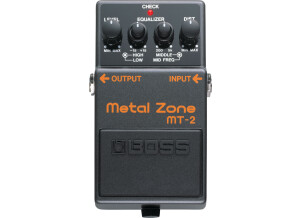
    Sound synthesis for guitar players? Exactly! Ladies and gentlemen, from now on sound synthesis no longer is the privilege of the sole keyboard players! But was it really the case until now? Whatever... Let's make it short (I'll edit this review when I'm more experienced with it. I've only had it since early September, have already created a dozen sounds with it and used it twice live). Here are a few constatations: - the SY300 has NOTHING TO DO with whatever was available before and usurped the name of "guitar synth". Nothing to do. I won't quote any brand, but there are not so many to sell guitar synth pedals that sound nothing serious. - the SY300 is not to be compared with all the Roland GKxx-type MIDI pickups, either in technology or the approach of their practical use to make music. These MIDI pickups (hexaphonic guitar pickups) are used to trigger real, sampled sounds of piano, sax, violins (and so on) and even... guitars (sic, getting a guitar sound while playing the guitar, how amazing!). Nothing to do either. As far as I'm concerned I never took this road, if I want to play the piano i play the piano, or ask a piano-playing friend to do this for me. But this is up to everyone and the SY300 is absolutely not a competitor for such systems. And, don't forget, the input source of the SY300 is SOUND! Not a MIDI value! A great difference, isn't it? Just to say that, of course, no hexa MIDI sensor is needed to use the SY: your guitar’s standard jack will do. - so the SY300 is a synth! Yes, a synth which input is whatever you feed it with – not literally, of course, what I mean is, the SY300 accepts all sorts of sound sources, not only guitars but really all sorts of sound sources, even mic’ed voices. - It features three oscillators, LFOs, filters and so on - it also features a multieffects that leaves behind most dedicated multieffects you can find these days. I’m a former HD500 user so I can compare: soundwise and regarding ease of use, they don’t compare. Direct feature editing is as simple as it was difficult to edit the HD500 without using Line6’s software editor. Boss also released a soft editor for the SY300, I do use it but I can just as easily configure everything with the box in standalone, with no GUI. A definite plus in my eyes. The SY300 is a synth, which involves that if you have no technical knowledge whatsoever regarding sound synthesis you’re gonna have a hard time developing your own sounds with it (the multieffect function left aside). It is indeed necessary to know at least a few things in that regard to use the SY300 for something else than the original presets which I’d call, err… pure sh*t, except for 4 or 5 out of 70. I personally learnt it all with a few Korg synths (including the MS20 and DSS-1, many years ago) and now I still use the Micro Korg, a real wonder that has all the roots of what you can do with a synth and a keyboard. So the SY300 has three oscillators, independant from each other (of course), which can be activated or not. Each has several associated parameters including waveform and pitch – try to imagine all you can do with just the three oscillators oneach with a differet waveform, different pitch and so on… Then come the filters : length, cut, resonance,. I’m not detailing everything here but these parameters are enough to show that we are here in the world of sound synthesis and that, obviously, the sound creation possibilities are almost infinite, and I’m only mentioning the synth’s basics. The SY300 offers many more wonders such as a small 16-step sequencer that you can set up as you like. This pedal (sounds a bit restrictive compared to how powerful it is but hey, it is meant to be activated using your foot) also features a tuner, and allows to associate CTL switches to precise functions (like opening the filters on a patch). Let’s now consider routing, or how the sound « travels » through the synth. This is one of the SY300’s strongest points. You can route oscillators it almost any way you like, just like the multieffect if you use it (you don’t really have to if you don’t want to). While it only has one “in” (which is way enough), the SY300 offers two “out” busses, MAIN and SUB (stereo or mono/L if need be). It is possible to assign the oscillators’ and effects’ routings to either, or both. As far as I’m concerned, for now, I only use the SUB out (I’ll explain why in a minute). There’s also a THRU jack output which allows keeping the raw, unprocessed guitar sound, unaffected bu the SY300’s sound synthesis modules (unless of course a stompbox or another effect is places before the SY300 in in the chain). Let’s get back to how I use it sor shows (or in the studio, for recording or rehearsal). Here’s how it goes: - guitar plugged first into the SY300’s INPUT jack - a jack comes out of the THRU out (raw, unaffected guitar signal) to my pedalboard. Yes, I have kept my good ol’ analog stompboxes (see pic), with the likes of Maxon OD, chorus, Boss DD20 and so on, YET I’m gonna dig deeper into the SY300’s multieffect section as the chorus and delays I’ve tried so far are very good, just like the OD/Dists (hey, there's even a metal zone sound!). - The pedalboard goes straight to the amp - The SY300’s sound comes out of the SUB jack outs to one of my PA’s stereo inputs. NEVER route the SY300 towards an amp!! Well, of course you can do what you please, but it just sounds awful, and by the way it wasn’t even designed for that. If Boss made it this way and included two stereo outs, it’s not just like that. During the show, I activate the synth when needed using the left on/off switch. Before that, I will have changed (or not) the patch using the CTL2(up)/CTL3(down) switches to change patches instantly. No latency, neither when changing patch or when playing. Really great, and I haven’t even yet mentioned the sound… The sound, by the way : I’m currently using a dozen different patches (none of the factory ones, or deeply remodelled from some of them). My arsenal is quite simple: “synth strings”-type sounds, some fat moog-style leads (EVERYTHING is possible with chords), a metal zone (with no oscillators, well, just like a real MT2 except I can add a reverb, delay, compressor and so on if need be) and other great sounds, some old-sounding but all come well with the band’s songs, which is what matters. Sounds are synthesized sounds, keep that in mind,. Once again, we’re not here expecting perfect modelling of a symphonic orchestra or a big band, but frankly, even only for the strings, it does the trick. I am approximately at 10% of what I can get out of this SY300, so I’ll update my review later in a little time. There also is a great US-based forum where a lot of SY300 users exchange reviews, advices and even patches. Here it is: http://www.vguitarforums.com/smf/index.php?board=189.0 There are also a lot of SY300-related videos on Youtube, but I’d say 80% of them are hopelessly useless, with people only reviewing the 70 (bad-sounding) factory presets, which are just as useless as those videos. In a nutshell, I wouldn’t hesitate to say the SY300 is a real turning point, not only regarding synth guitars (how I HATE this expression – it just should be banned!) but even sound synthesis. For synthesis addicts, who never dreamed to activate the ADSR adequation with the palm of their hand – not with a keyboard and keys? Well, Boss made it with the SY300. Incredible, but true, my friend! :) Your guitar-player’s hand does it all ! (well, technically essentially the attack and release, the decay and sustain can be set up within the SY). Overall, it’s really, really good! :) Eric EDIT : some soundcloud sound samples : http://www.soundcloud.com/sy300

  • « A very good, versatile pedal ! A very good Delay »

    I use this with a Fender Baja Telecaster. To me, a delay works better with a clean/crispy :) For a delay, it takes very little current : 200mA. As for voltage, it’s a standard 9V. Esthetically, the pedal looks quite simple. Its color is not as white as it seems from pictures. In reality, it’s even prettier. It seems sturdily built. The pedal is compact (17cm) for a delay that features several functionalities. The three lower switches are made of metal, the knobs are plastic-made. As for the settings, it’s damn well designed! Reverse mode is a real killer! Vintage Delay mode makes it a rather warm sound (for a digital delay) SFX mode (allowing to simulate LO-FI/noise type sounds, which can give interesting results if one takes time enough to tweak the knobs) As I’ve only had it for a short time, I didn’t have enough time to review the other modes. All in all, 12 pretty well done Delays! The following settings can be tweaked on each delay : - volume - tempo (bpm, note (half, quarter, dotted quarter, whole note, 8th, 16th, triplet and so on...) - feedback, of course ^^ - filters (low, high, decibels, damping and even the pannel for managing stereo effects..) - tone - modulation (a rather good emulation of a Chorus effect) All this using the small lcd screen. Quite useful for all these settings. It provides high precision and a rather good ergonomics. Of course, not everything is perfect and it also has its part of cons. I essentially think of the “shimmer” mode. It only allows a single octave ! STRYMON’s Timeline (in its “ICE” mode) offers up to 5. On this point, Boss couls have done better and offered saveral octaves so as to enhance the sound and create ambiances with that sort of modes. Of course, the mode is still useable if you spend some time tweaking the settings (it’s possible to detune the octave using the “fine” feature, to change the octave to -24, -12, 12, +24). Like with a pitchshifter. All other modes are mostly good. A great innovation by Boss. The features of the third switch are a real crush It can of course be used for tap tempo, but also as an expression pedal! (note that a different function can be assigned to the switch for each preset). Well done, BOSS! :bravo: This avoid having to spend more in other types of additional pedals to benefit 100% from this one. Of course, you still can add external pedals for more versatility. Regarding the looper: classic! Record/play/overdub/stop. The different delays can be used while recording/playing. Still, you can’t save your loop (the pedal wasn’t designed for such). Just an advice if you are a delay fan: if you want to be able to build/finetune your sound, get this pedal! You sure won’t be disappointed. :bave:

  • « Small Katana amp offers offers great value for money. »

    I first bought this Katana 50, then a few days after I returned it to get the Katana 100 instead as I had regrets. I’ve used the Katana 100 as my regular working amp for 6 months now, and I’ll also mention that I own two other amps besides it: a Fender Deluxe Reverb and a small Yamaha THR 10. Let’s now get back to this Katana 50 which I’ve had the opportunity to use for a few days. The amp seemed to me very easy to use. If you like old-school amps, this one will ring a bell. No Bluetooth, screen or complex settings, it follows the same philosophy as the Roland Cube series: very easy to use. It features 5 sounds based on the GT1/GT100 technology. Some geek geniuses have found the way to unlock the sounds of the GT1 / GT100’s 28 amps on the katanas. Lol! In short, forget about Boss's marketing chat about Tube Logic or Wazza technology. Boss has made us a good series of unexpensive amps with the good old GT100 chip inside. It features 5 sounds: clean, crunch, lead, brown and acoustic, each of them based on a sound from the Boss GT100 pedalboard. Don’t hesitate to tweak your guitar’s knob to modify the grain – the amp reacts to such variations. The clean sounds very well and works for every style. It’s based on that featured on Roland’s jazz chorus 120. The crunch sounds is a tad fatwhen the gain is pushed, and you soon get into lead territory. Again, don’t hesitate to use the guitar’s knob to get convincing crunch sounds, even with the gain setting at ¼. If I remember correctly, the crunch sound is based on a Fender Tweed. The Lead is modelled after a EVH 5150. I really love it! It sounds very fat, too. I’m not too much into Brown sounds, but at least there’s something for every taste. IIRC, it’s modelled on a Soldano amp. As for the acoustic model, well… it’s almoist full-range to plug an electric acoustic guitar in. The sounds is very convincing using my own electric acoustic, but not only it. This channel is very transparent, so I also use it with my electric guitar to allow my distortion, overdrive and preamp pedals to come out more transparently, as they would if plugged straight on a PA or poweramp. This feature is all the more interesting on thes Katana 50 that the amp doesn’t feature an effect loop. The included effects are great. There’s really all kinds of effects and for once I found the result better sounding than on other amps in the same price range. Again, I believe they are the same that can be found on the GT 100 & GT 1 pedalboards as the processor seems the same. The Katana 50 provides enough volume but lacks a little projection and low end. So, for stage or rehearsal use I can only recommend the upper model – the 100W version which is more suited for such uses. Or perhaps even the 2x12 cab and amp head. The difference between the different Katana model scan be heard clearly here: https://www.youtube.com/watch?v=oiC6MTQsZsE The included power control switch could seem a little useless on a 50W solid state amp, yet it appears practical for home use. Please note that the 0.5W setting already rocks – well enough for playing at home or in an apartment. Its cons according to me: - No presence setting. It would have helped to tame this 50W version’s sparkling aspect. If I remember correctly, the presence can be set using the Tone Studio software, but not directly on the amp. - Limited connectors: no effect loop, no line out, only one pedalboard out. This is the series’ entry level model, and the connectors reflect that. - The speaker’s quality : the sound is too shrilly to my taste, and the amp lacks projection with clean sounds. However, playing at moderate levels reveals no such big problem, while the highs quickly pierce your ears when the volume is pushed – more than with the 100 version. - No tuner: too bad on an amp that can be considered as a working tool. Its pros: - Its look and name: yeah, I know, it’s all about taste but I love them. - Its price: not much to be reproached considering the price - Its size and power, which make it the most suited amp to be used professionally in that series - The possibility to plug an electric acoustic guitar in: a great, alas rare feature! Plus, this channel’s transparency when used with external preamps. - The amp’s sensibility and reactivity to the guitar’s setting for a solid state/modelling amp - The included effects, which are very good as a whole. - The power control switch - The MP3 in & headphone out - The possibility to unlock more amp sounds & effects by tweaking it. Google “katana sneaky amps” for more details – in a nutshell, you can unlock almost all of the Boss GT100/GT1’s amps and effects, for a total 28 or 30 amps and many effects. Considering its price, it’s a really surprising “small” amp!

  • « Awesome »

    Those who say this pedal is worthless don't know what they're talking about: - Either they didn't read the manual - Or they don't know how to sing. Yes, because you need to, at least, know how to sing to use it and you can modify all the effects with the controls. It's quite intuitive and, in case you have any problems, the manual is very clear. USE Sounds can be easily edited, everything runs smoothly. The built-in Loop pedal could've been a bit more elaborated, but with only two pedals it's obvious that you'll be somewhat limited by the functionalities sometimes. In fact, live, it's hard to play with harmonies and, at the same time, trigger a loop because you need to push the Loop button with your hand. But that's anecdotal. SOUND QUALITY Very good quality. It sounds really good, even if some harmonies sound a bit metallic in the high end. Live, it's a real plus. OVERALL OPINION I've been using it for two years, in the studio to record quick takes and, live with an entire band or with a duo. It's good and beautiful.

  • « Great Desktop workstation!! »

    I picked this up dirt cheap! IDK why? It has ALOT of features and uses! Guitar, vocals, FX processor! Great Amps and dynamic quality of real tube amps! Specs= BOSS GT-001 Guitar Amp/Effects Processor and USB Audio Interface Features: -High-quality 24-bit/44.1kHz audio recording via USB -Record with your favorite microphone via the XLR input -Process your voice or acoustic guitar too, with specially-designed patches for vocals and acoustics -Start exploring right away with 200 built-in patches, with 200 user slots to store your own creations -Play your software instruments with your guitar, thanks to built-in guitar-to-MIDI conversion -Create and organize your own patches with the BOSS Tone Studio software (free download for Mac/PC) -Connect your own expression pedal or footswitches for even more control over your sound -Four knobs give you fast access to your patch's parameters -External audio input lets you connect your music player, drum machine, etc. I have a Zoom G3 and in comparison the Zoom has higher fidelity but slightly less dynamics on the amp tones. May be the Zoom's 32 bit processing vs the BOSS's 24 bit? It has all the amps of the $500 floor unit too! The Marshall Plexi "Brown Sound" is the best I've ever heard! EVH true tone there. Great tracking on the Gtr to MIDI coversion too. Lots of EQ's on this and great FX. Large FX chain too of everything most want/need. Best acoustic sim I have ever heard! Worth way more than the $300 price IMO.

  • « AMAZING AMPLIFIER THAT JUST KEEPS SUPRISING ME! »

    I have owned the Katana 100 watt amplifier with 1 12" speaker now for a month,..I have warmed up to it slowly since getting it from fear that once again I would be disappointed with any amp I bought for under $500.00 that doesn't have tubes in it, I live and play around the Boston area and usually bring along a fender supersonic tube amp (when I really don't mind breaking my back for good tone) or if I'm feeling a bit tired I will bring my fender cyber deluxe (which has a few great sounds that can compete with some tube amps) to local gig's and open mic's. I have been playing guitar for about 20 years and consider myself a good guitarist who strives to have a very good tone every time I play,..its important to me. I purchased my Katana online (Ebay) and bought it from a gentleman who bought it for a music school that realized it had bought to many amp's so this one had to go, the gentleman said he would let it go for $400.00 WITH the GA-FC footswitch included, it was new in the box warranty and all. When I first got the Amp I was impressed with the way it looked everything seemed very familiar (unlike the fender cyber deluxe for instance) but the real surprise was when I plugged my vigier Excalibur with suhr pickups into it (ssh+,ssv),...not only did the amp SOUND and respond like a tube amp,..it FELT like a tube amp, which is very hard to understand if you don't play guitar, great rock and fusion tones are there (brown channel) as well as a VERY usable clean channel (I can hardly use any clean channels on the cyber deluxe because they just don't break up in a good way and spike in the treble way to much)after playing this amp for 2 hours the day I got it I didn't even want to LISTEN to my cyber deluxe never mind play through it, the Katana had a great sag to it, and the breakup and the compression on the clean channel sounded amazing and I haven't really even made it to the effects portion of the amp's capability which is incredible if you play open mics or small gigs and you don't want to carry a pedalboard around with you. The katana software is pretty easy to use if your a little computer savvy and have some patients the payoff is well worth it, it took me 1 hour to set up the software and start downloading different effects into my Katana (it would of taken a shorter time if not for having to update the katana which took about 1/2 hour) in 2 hours I had programmed my katana with 4 different sounds on all 4 channels and now it was time for the big test.... I took this amp to a big open mic blues jam we have here in town at a place called cellys pub in Lynn,ma its a big place with a stage and all. My setup took less than 2 minutes (which consisted of me plugging in my guitar, the amp,..then the foot controller,.I jammed on 4 blues tunes and this amp just killed, not only did I get compliments on the tone but I could HEAR THE DIFFERENCE easily, the number one thing for me about this amp is the DYNAMICS you can get out of it,...pick soft,..it sounds SOFT , pick hard and it produces a little good dirt,..amazing that I pretty much played the whole gig on the first channel (clean) used a built in boost to dirty it up and controlled a majority of the volume with my VOLUME knob! I never turned the master volume on this amp to more than 6, that was playing with another guitarist, a drummer, bass player, singer and harmonica player!!! the fender supersonic is a great amp (and it should be for $1000) but when I A/B the two,.. for the money,sound and all the effects you get not to mention the mobility issue the clear winner was the Katana, unbelievable value for the money, I recently have gotten back into shred and there are some great sounds there as well, no problem going from Paul Gilbert to danny gatton with this amp, the versatility, sound and thanks to BOSS a whole bunch of pedals for the right price ...$0....gets me thinking I got an incredible Deal, then I plug my guitar into this amp, listen and then I KNOW I got not only an incredible deal,..but an incredible amp.

  • « UPGRADE your BOSS ME-5 ! »

    BOSS ME-5 -UPGRADE KIT - just £13.99 Few people realise that the ME-5 incorporates the classic BOSS pedal internals that are now vintage in their own right including the: CS-2, DS-1, OD-2, RV-3, EQ-1, CE-2, DD-2, BF-2 all together with a switchable Noise Suppressor that calms the proceedings. NOW THIS all up-to-date set of BOUTIQUE Patches which gives you many great new sounds such as: Univibe, Vibratone, (and other Leslie effects), Rangemaster, Fuzz-Face, Tweed and driven Deluxe Reverb emulations, classic JTM45, Rockabilly, Bluesbreaker, 'Rectified' and 'Twang' - all classic tones in various states - and not modelled!! These new sounds can be uploaded either via sysex/midi and your PC or by manual input from the parameters chart provided. Click the link where to hear them and more details. https://boss-pedals.jimdo.com Set also contains a wealth of Editor software, MIDI utilities and other apps so that you can fully integrate your BOSS ME-5 into your music/studio software setup. Contact direct: via boss-pedals.jimdo.com £13.99 - inc shipping worldwide

  • « It's great »

    There's not much to add. USE It's very easy to use. You push a track, choose the input, mic,line or jack, set the track's level, press Rec and you're done. Very comprehensive manual. It's not complicated. You even have the possibility to move the tracks from a time code to another one using the in and out points, or seconds or tens of a second. All that is done pretty quick, there's not much of a learning curve. There are even customizable beats. I must say, however, that it took me quite a long time to get the right volume levels, because the VU-meter is not very precise. In fact, you can let it peak without risking any distortion, which is what you have to do for the final result to have a high-enough volume. SOUND Lots of effects for guitar, bass, vocals and piano. Lots of effects in general. Besides reverb, chorus and delay. To cut it short, it features all you need. In terms of the sound alone, it's quite all right. With a good mix, with the right volumes and pans, you can make good quality songs. I must admit that I can already see its limitations. It's semi-pro, I think the songs sound a bit "tight," with a slight lack of dynamism, even if you listen to them on headphones. But it also seems logical, considering it works as an amp for guitar, piano, vocals, so it's inevitable. You might get a truly optimal sound using external preamps connected to the line inputs. OVERALL OPINION I've been using it since I first started writing songs, back in 2005. I never did switch to computer music because this is precisely the kind of tool that allows you to do without a computer. The sound might not be the best, but it depends on what you connect it to, and since you can plug anything to it... For those who don't know, the number of tracks is unlimited. You can record 8 tracks, bounce them, record 8 more tracks and bounce them with the ones you had already bounced before, etc. It's great. It's portable, with batteries, it's solid, I have never had a technical issue. It makes recording easier.. You can easily find memory cards in any shop. I recently connected a mixer to it because I think one of its limitations is that it can only amplify one instrument at a time (besides guitar and vocals). This means you can't play simultaneously with a drum machine and synth going into the boss. It's natural, but it annoyed me, now it's cool. One last thing, the CD reader/burner is very nice but, in the end, it's faster to transfer it all to a computer, so even if it's a great value for money (it allows you to mix and finalize a song at a very affordable price), there might be another model in the series without CD reader and, thus, cheaper. I always use it. Without my Boss, I wouldn't be able to record anything. It's the key element in my studio!

  • Audiofanzine FR's review

    (Originally written by Marty62100/translated from Audiofanzine FR) Flanger pedal. Typical Boss features: analog, rugged, easy to use, etc. UTILIZATION It's pretty easy to use and it's made so you can fool around with the settings... Just try it and have fun. SOUND QUALITY Its sound is more "liquid" and "chorused" than the BF2. The overall quality is very good. It's supple and will easily find it's place in the sound. You can almost create a chorus effect with a very slow speed setting. On the contrary, you'll get a "leslie" sound with a high speed setting. The effect undulates and gives you a wide overall sound. The only thing I can criticize is that the effect could be a bit more intense. Sometimes I would like to get an extreme flanger but it's virtually impossible. This beast is too kind! But it's good for all sorts of applications as long as you don't want any extreme effects! OVERALL OPINION It's a good flanger pedal and it also offers a chorus-like color which is a good alternative to the classic swirling sound. It doesn't sound as dry as the BF2. Very good pedal. For your information, you can change the op. amp to turn it into a BF2!

  • « Discreet and effective »

    Boss chorus pedal, mine is made in Taiwan (or Formosa, for erudites and old dogs) and it's Green Label. It has two controls, depth and rate, and a third one to output sound to two amps: so, two outputs. You can either output the chorus on both or the processed signal on output 1 and the "dry" signal on output 2. And it's analog (you can hear it, you can't cheat on that) Make sure you have a daisy-chain power cord because it uses the old system (12V) and if you connect it to a PSA, the LED won't light up completely and the sound won't be "whole." USE It can't get any easier, that's the Boss trademark. I don't have the manual, but there are no mysteries behind the controls. SOUND QUALITY I already have an analog chorus (on the VS h2o; I love the chorus) and, compared to the CE5 (which I also have, since I couldn't sell it), it's warmer. The "hazy" chorus swirling is very characteristic, but also better and bizarre (I'd say a mix of sine and square waves), and even with the depth set to max, you won't feel dizzy. I use it with the Fender Mustang and Tele (aerodyne, to be more precise), together with the DS2 SD 1, BF2 (the other analog one) and the boss DD 20, as well as a holier grail reverb, plus an Engl screamer Combo (I don't like to talk about it like that because it sounds very pretentious...). Do note that even if using only one output and setting it to type II, the sound will be different. It's fantastic to play in stereo. Some people say it has a low level, but I haven't noticed it. It's a bit noisy, but, honestly speaking, whose gonna notice during a gig at high volumes??? OVERALL OPINION I've been using it for... 48h, so these are my first impressions. Yes, I've tested several models, which I own and have in stock (VS h2o, Small Clone, CE5) and I'm a chorus fan. Its simplicity and VERY distinctive sound are the trademark of this nice pedal. I don't regret having bought it. At a time when effects can be really expensive (but also very good), it's a god alternative and a convincing buy. It's easy to slam BOSS, but it's still excellent shit (except for some disgraceful examples, like the MT2, but that's only my personal opinion!).

  • moosers's review

    The Boss RV-2 is a digital reverb effects pedal, and I believe it was the first reverb pedal made by Boss. The pedal has a 1/4 inch input and two 1/4 inch outputs. It has the standard size and make up that most Boss pedals do, with a nine volt battery compartment and power supply jack. This isn't a rackable piece of gear as it is a stomp box. UTILIZATION The configuration of the Boss RV-2 is generally speaking quite easy to follow. In terms of parameters, it has knobs for effect level, pre EQ, time, and a six point knob for choosing the mode. The reverb modes include room, two hall modes, plate, gate, and a panning delay. All of the modes are pretty cool, though I do like some more than others. I can't say I've ever had an issue with using the pedal, so I don't believe that a manual is necessary unless you're having some sort of technical difficulty. SOUND QUALITY While the sound of the Boss RV-2 Digital Reverb doesn't match the clean sound quality of its followers (the RV-5), it does sound quite good across the board. I've used the pedal a number of times for recording with a few different guitars and a '65 Fender Deluxe Reverb amplifier. My favorite modes on the pedal would have to be the plate and the panning delay, but all of the modes have a similar sound quality and this is really just a point of personal taste. While the RV-2 doesn't offer up the same type of versatility that you'd get with the RV-3 or RV-5, you can definitely get a ton of different reverb sounds from it anyway. OVERALL OPINION The Boss RV-2 is of course no longer being made, as it first came on the market more than twenty years ago. However, you can definitely still find a good amount of them on eBay, so you can get one if you want one. There is definitely a romantic aspect of having the older model of Boss' Digital Reverb, but I have to say that I like the RV-3 and RV-5 better overall. This isn't to say that the RV-2 isn't a great pedal, I just think they perfected it after this one...

  • Audiofanzine FR's review

    (Originally written by Marty62100/translated from Audiofanzine FR) 9-volt analog overdrive pedal. Uses the legendary JRC4558 DD chip. 3 knobs: Tone Level Drive. --- IMPORTANT --- My review describes the pedal after customization: I added two switches: one for gain boost and another one providing two different sound colors. UTILIZATION Very easy to use. Numerous possibilities when you use it as a booster. SOUND QUALITY AAaaah! The main thing: It's exactly what I was looking for. The sound is clear, tight and effective. The overdrive is precise, powerful and clean. It's perfect for AC/DC covers and blues and rock tunes. The mid frequency range is very responsive giving the sound big dynamics. And you can adjust the dynamic response using the volume knob. Tone knob works effective and allows you to create very sharp and round tones. You can do lots of things with it. Drive knob: produces sounds from clean to aggressive overdrive. No distortion, it's a big overdrive. Volume knob: it allows you to adjust the output volume to the amp's sensitivity but also to create a fuller and more powerful sound. Higher settings produce a tone with less definition. The tone becomes... fuzzy. I would say the high frequency range has less resolution. With a wah effect, this pedal is excellent. The sound character is strong and the sound is well-defined. The highs are not sharp. As a booster, it makes a VERY, VERY good job! UPDATE: I modified it adding two switches, one for a balanced or unbalanced overdrive, and another one to add more gain. I used two small Monte Allmus kits. I also reduced the value of a condenser to produce more saturation. The balance switch gives a new life to the pedal... It's incredible! --- EDIT --- It sounds better after the modifications I made. It has a higher output level compared to the original and the gain switch adds overtones. It's perfect for playing solos!! The sound is now sharper, in-your-face, and thicker. It's killer! OVERALL OPINION As a summary, this is a pedal with a strong sound character, and a well-defined and powerful tone. The result is amazing. From blues to rock and even hard rock. Excellent pedal. I don't regret my purchase.