Log in
EN
FR

Arturia

263 products found

Categories
Series
Filter
Sort by
Evaluation
  • Reviewed or not
  • Editor’s award
  • Reviewed by Audiofanzine
Availability
  • Available or not
  • Sold new or used
  • Sold new
  • Sold used
Must-have products
  • All products
  • Flagship products
  • Best rated products
  • Hot products
  • Popular products
Price
  • Freeware
€
Clear
Sort by
  • Popularity
  • User ratings
  • Price - low to high
  • Price - high to low
  • Used price, increasing
  • Used price, decreasing
  • Name (from A to Z)
  • Name (from Z to A)
  • Added on
Sort results
  • Popularity
  • User ratings
  • Price - low to high
  • Price - high to low
  • Used price, increasing
  • Used price, decreasing
  • Name (from A to Z)
  • Name (from Z to A)
  • Added on
Filter results 263 results found
Evaluation
Availability
Must-have products
Price
  • Freeware
Show results

The best Arturia reviews

The reviews Audiofanzine members found the most helpful.
  • « A monstrous sound that goes to the bottom of things »

    Hi, I've been using the matrixbrute in my studio for the past 3 weeks. It's an exceptional gearn just as I expected. Look at it from far and this beast is impressive: knobs everywhere, many buttons that light up... Very pretty! From closer the finish appears worthy, with details everywhere. No comparaison with Moog synths that often look a bit too austere to my taste. This synth is unbelievably easy to use from the start. Switching patch is very easy with the 256 lit buttons, each corresponding to a sound in "preset" mode. Want to create a sequence? No need for the manual. Oh, yeah, there is a sequencer, and it's just plain huge! Well, of course you need to know synths at least a little. The most surprising is the Matrix's price. I don't understand how they managed to release such a product at such a price. A word about the factory presets: I'd been extremely disappointed by the demos I'd found on the internet so I was very happy to hear the scope of the factory sounds. Top notch! The grain is huge, with very well-rendered stereo and analog effects. You could spend full hours tweaking the same sound and, well, that's a bit of a trap. There's a sound bank (called P)to save presets, plus 4 knobs which can be assigned to the modulation you want. I particularly like this feature, as I didn't expect it when reviewing all the machine includes! Well done Arturia, you really go to the bottom of things! The editing tool is simple, provided you know synths. Whay I like least so far (but I guess this is something I'll end up sorting out) is that I have,'t managed to synchronize the sequencer with my external workstation (korg m50) so far, but I assume there's a computer-related trick to get. Oh, just to mention: I hate computers and only get into it reluctantly. OVERALL: this is the best value-for-money machine that I've known, and god knows I've known many a synth!

  • « Good, but it can't play B flat! »

    I had seen the demos online and after talking over the phone with jean michel jarre he convinced me of buying it. It isn't 256-voice polyphonic but you can use two fingers at the same time, which produces the same sound as my cousin's Ford Escort when it blew up on the highway 12 years ago. No need for a sampler. The finish of the product is superb for the price, arturia has faithfully reproduced the ivory coating of my aunt's '73 moulinex toaster. UTILIZATION The 400-page manual is well written, but it's in British English. Nevertheless, it is very well written. Plus, there's a PDF in American English as well. That's fair play from arturia. And the American version is also very well written! SOUNDS The sounds are very realistic: It's the first device that allows me to reproduce, with one single finger, the famous sound of my cousin josé's 1978 2L Ford Escort. The problem is that it's a rather exclusive device: If you are more sensitive to the sound of the audi 80, you'd better take a moog, although, if you push it a bit you can come close to an opel kadett. What I really regret is that it doesn't have more modulations: A step sequencer would've allowed to comfortably reproduce the rising of the piston that presses the fourth cylinder. On the other hand, when I plugged it to my playstation, it was a delight to be able to reproduce the solo of gran turismo in HDMI. It's definitely the device's main strength! OVERALL OPINION I really love it but I'm thinking about reselling it. I play in a martin solveig tribute band and we have a concept song where we do a medley with the concert for flute, harp and orchestra by mozart in the middle of the song. I asked the salesman before buying it and he promised I would be able to play a B flat. When I first got it I was stuck at the E and we tried to play the song stopping at the E but it didn't work. I called the store but they wouldn't refund me. However, they offered to give me a gift certificate instead because they would soon be having a special offer where you'll get a round table when buying 10 arturia brutes. I'm not sure, though, so I'll wait a bit more and then I'll update my review...

  • « Easy to use, efficient and practical! »

    I’ve used in in a homestudio with a DRM1, a Doepfer modular, a Matrix 1000, a TX81Z, a SUB 37, an Alpha Juno, a Werstatt, Cubase and OSX. Once the firmware updated, no compatibility problem so far. The metal box seems sturdy, it’s heavy, the knobs are sturdy and velocity-sensitive. In my opinion, the most interesting part of it is how it can be used with all sorts of synths and drum machines. It’s practical, easy-to-use, the multiple outputs are a great feature and I like the simplicity of the TR-type sequencer with the notes displayed to make editing easier. I also like the roller which allows to replay a part of que sequence in 1/4, 1/8, 1/16, 1/32 loops. Computer editing provides the same features as the machine with additional dedicated MIDI mods for each pad and knob, which is practical and easy to use. Though I haven’t really gone through it, there is a Swing feature which shifted my sequences when I tried to reset it, which is quite surprising. In the end, I really love it and while some might say there are more complex (and complete) sequencers (especially in eurorack format for modular synths), I’m very happy with it so far.

  • « Very good features but again toy quality, second version »

    I was hoping this second version of Keylab would be road-safe, and Arturia could and should have learned from the many many complaints they got on the internet and their aftersales probably. But it ain't so, it's the same toy quality as MkI. Read my review here: https://en.audiofanzine.com/49-key-midi-keyboard/arturia/keylab-49/user_reviews/r.133848.html It's the second time I buy a keylab and I will return it. Check my YT video https://youtu.be/jPnfD3y9IhQ As said, very disappointing because I was hoping to finally get a decent controller with decent keybed. Because it has all the features one could wish that I don't find on the competition: Pro: - lightweight - compact design, for 61keys, PW/MW are placed on top - height is also ok, so it doesn't take to much space. - enough controllers and pads - aftertouch (!) Con: - Key quality is very bad - rotary and sliders are low quality I doubt this will last longer then 5 gigs ;-) Maybe good on your desk to play some tunes, but nothing road-worthy. And sure not at 450€. On the contrary, Arturia software is very nice. but I almost feel I bought the software with a free China keyboard extra ;-)

  • « A nice drum machine. »

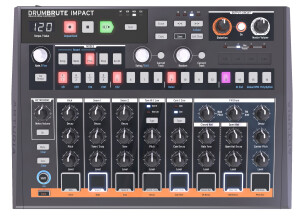
    I use it in my home studio which is (temporarily) deprived of my pc. The machine’s qhality is very good (I suppose Arturia change dits Chinese supplier ^^) The knobs are very nice, the pads are pleasant and the ribbon controller is really coll. Soundwise, some will disappoint a bit like the clap, the so-so snare… It’s essentially the filter variations that are “just a bit not enough” YET… It offers 12 independent outputs (with some instruments sharing the same channel) and a main mix out. And this is where… you can put whichever effect you want on any given instrument! That’s terrific, you can do what you want to do (provided you have the necessary mixer and effects). The sequencer is very nice, even if a longer “song plus” mode would have been appreciated. I’ve only just started using it, and have no idea so far regarding the software side, which allows many modifications, saves and so on. The device was tailored for live use, but can also really find its place in a computer music environment. As far as I’m concerned, I built myself a set that involves a Bass Station 2 + a Circuit + the Drumbrute, and i’m currently waiting to receive cables and effects (hurray for Christmas time, ladies and gentleman!), and as an already insomniac person it will certainly take a sledgehammer to get me to sleep when I get all that!!! The device is very intuitive to use, programming it is simple (though some aspects remain a bit obscure but i’m only starting with it). The manual is well done (unlike some competing brands whose name I won’t mention here). It will clearly need extra effect pedals (there’s plenty of choice for that), and then you can make it sound as you like, and make it do what you like! So far, its limitations don’t bother me at all. In my opinion, Arturia hit the bullseye, I hadn’t had so much fun since I got my Circuit! Take it as a beginner’s review, but what a pleasure to discover it day after day :) Clearly, I’m not about to sell this one! And i’ll learn to know it even better tomorrow, yeepee! PS : no polyrhythmic mode, only polymetrics (which is already complicated enough). PS 2 : now, I have a bit more to say about it. Its ergonomy is still flawless. You really MUST add effect pedals to it, and/or use your mixer’s effects to make the shy-sounding filters sound better. It’s all down to trial and error. So far, I have a basic distortion pedal and a Marshall compressor. I use my mixer’s effects – reverb, flanger, earlyreflection & so on – plus the presets, and things start to get interesting. The MIDI control center is very interesting, but it takes a pc – grrrrrrr ! :) The sequencer is very nice, it provides many a possibility (especially the polymetric mode which is a real asset – used alongside the random feature on the current track, it provides a result, how could I describe it ?...). I really like this drum machine, and its cons (which certainly have to do with the requested specs to offer it in this price range) aren’t a real problem to me (well almost not, but such limitations can be made up for and I’m already considering buying a cheap looper). But even with just a chorus and fuzz/ overdrive (better than a “normal” dist) pedals plus the mixer’s internal effects, there’s already much to be done with a wide array of sound to be explored :) What a pity the filters are so soft-sounding… But, what fun! PS3 : the sounds are flat and you have very soon ended exploring them all. No way to use it without additional filters/effects. I need a REAL reverb, a flanger and a better mixer (more DJ-oriented), a kenton midi thru 5, a keystep, AND... a looper AND – most important – a Squarp Pyramid! But I’ll get one, someday! With only my Circuit slaved to the DB, I’ve just done (not without errors) a 1h30 long mix! Easily, so in a whole night… And, with an audience ! This machine has a great ergonomy! As for the surface inside, well, it’s less reassuring. But the greatest feat is this ribbon controller (like on more and more DJ mixers and controllers) :) PS I don’t remember how much i paid for it. Back to1990-2000 (if you want to)

  • « Some issues with output volume »

    The Arturia Origin is a virtual analog synth desktop module that has 2 line inputs and 10 line outputs. It does come at high price but it is worth it. I have used this with a cheap MIDI keyboard and it didn’t work for me, I needed to upgrade the MIDI keyboard in order for it to have a nice feel to it. So I purchased a MIDI keyboard that has weighted keys so I could get a better feel while playing with the sounds and patches on the Arturia Origin. If you can imagine a sound in your head, I am pretty sure that the Arturia Origin can create that sound. It may take you some time to get the parameters worked out to the way they will need to be, but it is fun getting it to the way you want it. UTILIZATION The Arturia has polyphony of up to 32 voices and a 32 or 16 step sequencer. There are MIDI in, MIDI out, and MIDI thru on the Arturia Origin as well as 11 total outputs. The Arturia Origin is not even as heavy as I thought it was going to be. But with it being so wide you cannot really call it portable. SOUNDS The Arturia Origin comes loaded with around 400 presets, and there are not expansion capabilities. The soft synths on the Arturia Origin are by far the best feature though, the pads are pretty decent too. Despite the fact they took a long time to release the Arturia Origin it still released with some issues. OVERALL OPINION The main issue that I have come across is the volume output is not as loud as it should be. You will really have to jack up the volume and hope you can still get a clean recording when tracking the audio out to your DAW.

  • webstersays's review

    This software installed without any problems. It was very simple to get it installed and registered. There isn't a huge sample library to load on to your computer since it is synth based, and it is all automatically loaded and streamlined. I didn't have any compatibility problems. The configuration is very simple to get it to run on your computer. The manual is fair - there really are a ton of controls on this software. The manual tries, but I have definitely scratched my head a few times about how to use some things in this program. SUITABILITY/PERFORMANCE I have a Dell computer with an intel processor and 2 gigabytes of Ram on Windows. I use this program in cubase. It works as VST, so I had no problems with getting it to work in that configuration. Since it is not sampled, it hardly uses any memory which is great. It uses an average amount of CPU for a synthesizer like this, certainly nothing major. I have had it crash a few times, but whenever it did I was running more than one instance of it. Maybe that is a problem? OVERALL OPINION I have been using this for a few months. I like the great vintage moog sounds you can get from this software. I have used the real thing, and while it definitely doesn't truly compare to a real analog moog, it is by far the next best thing if you want a software alternative. There are a lot of great presets, and you wouldn't believe how much you can tweak the sounds. If you click the top panel it folds open to a huge amount of knobs and switches. It is actually kind of overwhelming, but after a learning curve it's a powerful tool. I also particularly love the glide control, you can make some really cool sounding melodies with that. I have tried other synths that try to accomplish what this does, and fall short of the mark, but this one is the closest thing I have heard. For a software moog you can't beat it, and the price is reasonable as well. I would definitely get it again.

  • « Love to have it!! »

    I am composing New Age, minimal and ambient kind of music but not exclusively. I work in a PC i7, with 64MBRam, 2Xssd disks, 3Xhard disks, Akai EIE Pro sound card, NI Komplete Kontrol s-61, 2XE-mu precision monitors, Steinberg Cubase 8Pro (64bit), Wavelab 8. I had the V3 collection and now I bought the V4 update, in an excellent (and smart) promo price of 100euros. If I had to pay for all these instruments the full amount I would have done. Arturia managed to make a product better from the former version just to give us the “excuse” to buy it. When they first issued the V4 I was thinking that I have not yet “drained” the possibilities of V3 so there is no reason to proceed to another purchase. When they gave me the opportunity to give 100euros, they spread my reluctant thoughts away. The Arturia V4, and the latest updates of V3, do not need an e-licenser or i-lock key anymore. This is more practical since you do not need to have to keep the e-licenser in mind. They do not overload the processor of the PC and they have the small window which tell us the PC load and the Panic button. Installation and midi programming are very easy and even a less experienced user can finish the job without any problems. I believe that the number and the variety of the presets is bigger (larger?) than the V3. Additionally there are 14 instruments instead of 9.The sound quality is excellent as usual with Arturia. All the arpegiators are grate and easy to control. They work excellent through my Cubase 8. Moreover the CS-80 v2 co-operates outstandingly with the Komplete Kontrol s61 who has the two “touch mod wheels” and so you can move your finger across the mod wheel and the synth follows you. The idea of the Arturia Sotware center is very clever and practical. Minor changes in some fonts and small details are also welcome. As you can understand I am very happy with my purchase. PROS: • Value for money (in any way – upgrade or not) = Excellent! • Very good quality of sound. • Ease of use. • Good “collaboration” with DAW • Larger variety. CONS: • I cannot find any so far.

  • « Vintage synths »

    The Arturia Origin Keyboard is a 61 key synthesizer, it comes loaded with some really good vintage sounds. The first thing that I notice with the Arturia Origin is how many actual sounds are own it. You will be using these sounds for a long time because it gives you so many of them. It has some of the most classic synths in it like the CS-80, Prophet VS, and Modular (there are a few others that I cannot remember). It has a built in 16 and 32 step sequencer. There are up to 32 voices and it has MIDI in , MIDI out, and MIDI thru. UTILIZATION The Arturia Origin does have an arpeggiator on it and a total of 9 outputs. You can have 1 foot pedal (footswitch) and 1 foot controller plugged in to the Arturia Origin. There are about 10 different effects on this synth. I do wish there were more effects built into it because for the price I would expect to have a lot more. The Arturia Origin is very expensive, I do not own it but I use it at the studio all the time and the effects are the only downfall of the Arturia Origin. The ones it has are very good, but there should be a lot more. They spent a lot of time developing the sounds to model classic synths, but they did not spend time adding effects. SOUNDS The sounds and presets are great, if you are into vintage sounds then this is a must have because you are getting the sounds from some really good synths. You are getting sounds from boards that cost more than this does. OVERALL OPINION If you went out and purchased those boards individually you would be spending about 3 times what this keyboard cost. So you can have those vintage synths all in this synth for one decent price.

  • « full analog »

    The MiniBrute is a 25 key analog synthesizer that has a 3 waveform oscillator and a noise generator. The keys are pretty good for it to just be a 25 key synth. They have nice expressiveness and after touch. The MiniBrute does have pitch and modulation wheels plus two oscillator types, Ultrasaw and Metalizer. The Vibrato LFO does have 3 modes, sine, trill down and trill up. The MiniBrute is made for the portable musician. It is well built and has a solid structure, you could probably run a car over it and it would still be intact. UTILIZATION Setting it up is simple, but understand it will take some effort. There are a lot of knobs and sliders on it. you will need to read through the manual to understand what these knobs and sliders do. Most of them are labeled but if you don’t have a general knowledge of working with a full analog synth then it could give you a headache trying to figure it out. Take the time to read through the manual and do some research on working with a analog synth before you purchase the MiniBrute. SOUNDS The MiniBrute is very affordable and portable. If you are looking for a analog synth to get your feet wet with than the MiniBrute is perfect for you. It has 2 audio outputs and a built in arpeggiator. The thing is, there are no presets on this synth as with most full analog synths. OVERALL OPINION So every single sound that it makes you will have to create. That could push some of the beginners away , but if you are a seasoned producer and understand working with analog synths this is a must have for your collection. The distortion on the MiniBrute is pretty good, it is called the Brute Factor. You will not be unhappy if you purchase this, it will remain a part of your gear for a long time.

  • « A classic synth, unchanged »

    Arturia's CS-80V 2 is their plugin synth that accurately copies the Yamaha CS-80, without the need of having to carry that bulky keyboard around. It has all the original parameters of the Yamaha CS-80: 2 oscillators, 4 filters (high pass, low pass), 2 LFOs, 4 envelopes, 2 VCAs, 1 sub-oscillator (LFO), 1 ring modulator, chorus and tremolo. The new version contains better MIDI Control Assignments, and it has official support for 64-bit operations and the new operating systems, such as Mac OS X Lion. SUITABILITY/PERFORMANCE What makes Arturia's CS-80V 2 is the direct, exact copy of the visual interface from the actual classical synth. There are many synths that replicate older, vintage keyboards, but change the visual layout to something more modern and practice from a software plugin standpoint. Little has changed here. Even the preset buttons 1-12 (and two rows of them) still exist on the plugin version, which is relatively useless, since the VST plugins can handle presets externally. But it is pretty cool that feature is on there, and they accurately capture the original presets on the original keyboard. There are a few sections that are added to make the keyboard more modern, such as the modulation section and the additional layering section on the top. But if you turn these off, it's just like using the original synth, which is amazing. Being vintage, it is a little hard to follow the synthesis chain, when compared to modern synths, but it only takes a few hours (or a few minutes) to understand what's going on here. OVERALL OPINION Overall, the sounds of the CS-80V 2 are amazing, and the version 2 adds even more features. The sounds here are a bit raw, as there are little built in effects, such as reverb, to help smooth the sound. If you ever wanted to fool around with a classic synth, and see how these old guys work, be sure to check out one of Arturia's synths. They capture that essence almost flawlessly.

  • « classic »

    The spark is a great forward thinking idea put forth by Arturia. I wasn't sure what to expect considering this was Arturia's first walk in the park with a drum type machine and it was to be my first drum machine, but I have been very happy with the results. At this price point, I am very pleased with my purchase. The spark boasts some big time features as well as emulations of the famed 808, 909, and more. I wasn't expecting much from the content that came with the machine, since I already have so many sample drum packs, but I was floored by the quality of the included samples. The manual was very clear and sufficient. I really didnt even need it! The quality of the samples caught me off guard. The interface looks a bit tricky and confusing at first, but within minutes I was jamming. The way everything integrates is very easy to understand which was a concern of mine. Spark is a unique instrument and approach to building drums but it is also a very straight forward and easy to understand instrument. Basically, you can create up to 16 tracks, each with up to 64 steps. These tracks are numbered 1-16 and placed in a circle. Overall, I can sit and play with Spark for hours and have so much fun. Bringing back the tactile feel of a drum machine that’s been missing from my arsenal for so long, but adding features that are very cleverly thought out and making them easy to get to. Spark ships with a great array of sounds and as I mentioned, it’s easy to change banks or individual sounds within a bank and add your own sounds. Probably the most amazing thing about Spark is the price. I had to look a couple of times to realize that at $599 retail, the hardware controller comes with Spark. How Arturia does this with such a great piece of hardware is nothing short of incredible.