Log in
EN
FR

Celestion

287 products found

Categories
Series
Filter
Sort by
Evaluation
  • Reviewed or not
  • Editor’s award
  • Reviewed by Audiofanzine
Availability
  • Available or not
  • Sold new or used
  • Sold new
  • Sold used
Must-have products
  • All products
  • Flagship products
  • Best rated products
  • Hot products
  • Popular products
Price
  • Freeware
€
Clear
Sort by
  • Popularity
  • User ratings
  • Price - low to high
  • Price - high to low
  • Used price, increasing
  • Used price, decreasing
  • Name (from A to Z)
  • Name (from Z to A)
  • Added on
Sort results
  • Popularity
  • User ratings
  • Price - low to high
  • Price - high to low
  • Used price, increasing
  • Used price, decreasing
  • Name (from A to Z)
  • Name (from Z to A)
  • Added on
Filter results 287 results found
Evaluation
Availability
Must-have products
Price
  • Freeware
Show results

The best Celestion reviews

The reviews Audiofanzine members found the most helpful.
  • « A precise sound, with a "thank you" note from my back »

    I ordered 2 Celestion Neo Green back from my favourite UK speaker dealer. This is the 16-ohm version. Here are its main specs: Nominal diameter: 12", 305mm Power rating: 60W Nominal impedance: 8Ω & 16Ω Sensitivity: 97dB Chassis type: Pressed steel Voice coil diameter: 1.75", 44.5mm Magnet type: Neodymium Frequency range: 75-5000Hz Resonance frequency Fs: 75Hz DC resistance, Re: 6.6Ω & 13.1Ω I own a Budda Superdrive II 2x12 combo amp. This isn’t a heavy amp for a 2x12 (26kg, approximately 58lbs) but since it only has a single handle, it’s well enough to break a musician’s back. This amp’s sound is very dark on the overdrive channel and delivers a loud loud sound (the original speakers, the Eminence-made Phats, weigh in at 5 kg and deliver up to 103dB!). Replacing the original speakers replied to several aims: 1. making the sound better, to make it more precise, keeping the lows but pushing the trebles a bit further. Also, I’m used to Celestion speakers and as a rule I don’t like Eminence speakers, so I wanted a bit more “Britishness” into the sound. 2. making the combo lighter, so as to avoid visiting my chiropractor every time I moved it. 3. Turning the overall power down to be able to get the master volume beyond 10% (even in rehearsal!). In the end : 1. Soundwise, it’s perfect. The sound is avesomely precise. I’ve kept all the lows but they sound more dense, less on the drippy side than the Phats. I earned more mids as it’s a model M-based Creamback, but I also gained highs which are precise and not shrilly at all ==> first point, done! 2. Regarding the weight: no question necessary, the original speakers weighed in at 5kg each while the Celestion Neo weigh barely 2. In the end, I find myself with a 30W all-tube combo with two 12” speakers for a total 20kg all ==> second point, done! 3. Power: the power has diminished indeed since I got from 103dB speakers to “only” 97db ones. Unfortunately, it still delivers very loud, but now I can get the master up to 2! :-D ==> third point, half-done! The Budda is a very dynamic amp with a superb clean (you can get from a rather fat, Marshallesque sound to another more on the Vox side) which reacts very well to stompboxes. I feared I would lose on these fields in changing the speakers, but that didn’t happen. These Neo Creamback render the amp’s dynamic very well and the pedals still work as well. I’ll also mention the price, which I consider very acceptable as the Neo Creambacks are priced the same as the classic G12H Creambacks. I’d do the same choice if I were to change another amp’s speakers.

  • « My reference speaker! »

    I own a JCM800 cab equipped with g12-65s, and I'm replacing a pair of V30s with two others in a 2x12. This is my personal favorite speaker. It brings a great presence in all circumstabces and acoustic condition, with either one or 3 guitars in the band. Some will find it too "surgical-sounding". It's the exact opposite of a V30: bright-sounding, yet rather smooth, less of a beehive than a v30 or 75. Lows are less protruding and flattering (as it seems...) than with a v30. As a consequence, when the volume gets up, the sound remains accurate. To avoid for metal? Not so sure... If you like old-school heavy, this is a must have. I came across it by chance but always got back to it. Not the most flattering at first, but it turns out to be quite versatile, reliable (a lot of presence and a defined sound in all circumstances). All in all, accurate, and no need for extreme frequencies that blow your head off. Plus, it really bites, really much, in lead, whether you play clean, crunch or overdriven, but with a balanced sound. I'm neither a metal or thrash player but had the opportunity to play hard/heavy (it was featured on Marshall cabs in the glorious days of heavy metal), I mostly play rock & blues-rock. With all the heads and combos that were used with it, I consider it doesn't adapt so well to modern or so-called-vintage hi-gain type amps, which generally tend to a low mids, fat (think Rivera/Blackstar/Mesa) register. It doesn't work at all, these amps were thought for V30s or Classic 80s. The same goes with very bright-sounding amps such as Koch or Brunetti: much better but still a bit unbalanced. Must sound quite well with Orange or Marshall amps. While considered as THE 80s heavy speaker, its regular users (as mentioned by Celestion) are Mike Landau, Robben Ford, Ray Gomez, Lenny Kravitz... And since it takes a lot from the Greenback, if you also like Jimi and Eddie, your ears will have a good time!

  • « As (positively) surprising as they're little-known »

    These Ditton are an excellent surprise. While I bought them without getting any user review first, I found these speakers to be soft-sounding, powerful, very balanced, endowed with a real presence and more redical than other Celestion speaker models. It's a matter of taste of course, but they are well above the Ditton Two & Three while sticking to the same style and materials. Their softness requires to puch them so as to let their sound roam free on rock or classical music, but they're also more than fit for modern, electro sound (no I'm NOT talking of modern club sh** ;) ). I'm 26 and a real music fan, and I'm surprised to find such versatile speakers in series of that age. Created by Celestion and built locally for national dealers, the usual screw terminals or high-quality veneer are replaced by more generic stuff, such as what could be done at the time by JM Lab / Focal. This changes nothing to the fact these Ditton 400 were Celestion's high-end by the end of the 1980s. They followed the famous Ditton 66 Legend, featuring rather similar balanced, powerful and precise sounds, but with a finish of a slightly lower quality - which shall be forgiven. However, its durability is not affected in any way. Even if you'll have to renounce Celestion's usual "Made in Ipswich" mention, they were clearly built to last: an elaborated filer, tweeters, coils and suspensions that ain't degraded with time (except perhaps for the waving of the glue generously applicated underneath the frame by the technicians that built it, but since these are high-quality, rubber suspensions you'll just have to unglue it, clean it and re-glue it... or, the end of planned obsolescence :bravo: ). I recommend them highly... But hush! ;) Let's not cause its price to skyrocket. Here are the pictures from another happy Ditton 400 user I found on another forum... They're better than those provided by my old Samsung

  • « Fairly even sounding »

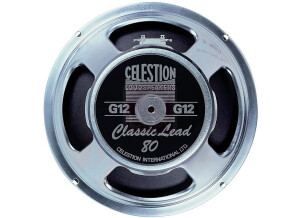
    The Celestion Classic Lead, also known as the CL80, is one of the famous speakers in the rack world. It’s a standard 12’’ guitar speaker that can handle 80 watts of power, comes in either 8 or 16 ohm configuration, has a round copper voice coil, ceramic magnet and pressed steel chassis. Those who have been around the LA session musician scene will know this speaker fairly well. Back in those days, everyone was looking for the perfect, even sounding speaker. They wanted stuff that would not color their tone, and this was their go-to speaker for that type of style. The speaker itself is fairly even without too much bass, too many mids or too much high end. It seems to fit just about perfect in the guitar spectrum when it comes to standard tuning guitars. I enjoy the tones that I get out of this, and it’s a very solid speaker. Usually, I mix it with another speaker, but it’s not bad on its own. Because it’s so even, however, I feel that there’s a bit of a lack of character. I generally like to have some midrange in my gear as it gives it this unique “guitar” quality. It also helps you cut through the mix. When something is too even, I find it to be a bit bland sounding, and that’s probably the biggest issue I experienced with this speaker. In the end, it depends on what you’re going for. If you’re looking for a very even sound, definitely check this speaker out. It’ll probably be what you’re looking for. However, if you’re looking for a strong midrange or strong bass, you might want to check out another speaker. Unfortunately, there aren’t many speaker cabinets that have this installed, so it might take a bit of searching until you’re able to test them out.

  • nickname009's review

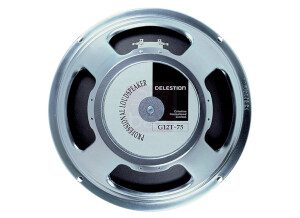
    These are the other half of the vintage 30. Basically, when you buy a cab without caring what speakers you get in'em, if they're not vintage 30s, you'll most likely get these. The G12T-75s have been around for quite some time, probably longer than the vintage 30 and they have a very different character to them. They're bright, quite bright. This is not to say that they sound bad! I believe every guitar speaker is usable in some context. The G12T-75 to me is a brighter speaker and would most likely suit straight cabs as such. I've found slant styled cabs to always, always be brighter and if you add an even brighter speaker in the mix you're doomed! However, I've never actually been a big fan of the angled cabs anyhow, they've always seemed to be mis-projecting the proper sound of the cab and guitar sound to me. Anyhow, back to this speaker, it's definitely brighter and I think would sound great for downtuned guitars to keep the tone tight and not too flubby. It's also got enough headroom so early speaker distortion is nothing to be worried about, unless you want something of that sort, then you may want to try another speaker. This is still, however a great speaker even for standard tuning if you EQ the amp right. I’ve found these speakers to be just as good, but different sounding from the vintage 30s, again brighter, more presence and high end sparkle and not so much of that midrange girth you’d find in a vintage 30. I do like the sound of both speakers and have seen others mix and match both the vintage 30 and 75 to get a very good balanced sound. I have yet to personally try this myself but it definitely does sound good on paper.

  • « My go-to speaker »

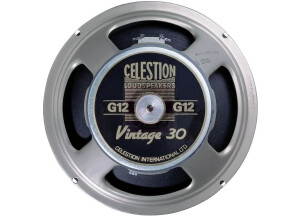
    The Celestion Vintage 30 has been one of the most used and most notorious speakers of the guitar world. This has been the predominant speaker when it comes to heavy metal recordings, and for good reason. It’s a standard 12’’ speaker with a ceramic magnet, 60 watts worth of power and comes in either 8 or 16 ohm format. In the midst of speakers delivering a classic breakup, there was a need for a higher wattage speaker that could handle the extreme riffs that metal players were dishing out left and right. Celestion introduced the Vinage 30 as a means to allow the guitarist to scoop their mids but still allow them to cut through even the most dense mix. This speaker is very polarizing. Some people love it, and some people hate it. Those that love it enjoy that it handles low tunings well, cuts nicely, records very easily and seems to really excel at a higher gain setting. Those that hate it mention the mids are too harsh, it doesn’t break up nicely and lacks that sweetness some of the more vintage speakers have. Personally, I’m a huge fan of this speaker. I’ve used this as my main speaker for the past decade, and it has never let me down. I never had issues cutting, and it handles the extreme low tunings without any problem. It also remains tight without sounding like cardboard or too stiff. I never really understood how people could complain about the harshness, but I guess it’s all in how you’re setting the amp. I find this speaker tends to work better with my 5150s and Dual Rectifier better than my JCM800, so it could also be the gear you’re using. I highly recommend the speaker, but considering how polarizing this speaker is, I recommend checking it out first. If you can, try it in a Mesa or Bogner cab as those tend to sound the best, in my opinion.

  • M Elise's review

    I have the Avatar Hellatone version of the speaker which is the same speaker only somewhat broken in when you buy it new. It is a 12 inch 30 watt Celestion speaker and is available in 8 and 16 ohms . I love this speaker. The speaker sounds smooth and the frequency range that comes through is wide. The speaker emphasizes the lower mid frequencies and lets very high frequencies through. It lacks pronounced upper mids and can lack presence and could potentially prevent your guitar from cutting through a complex mix but it still sounds great by itself. The speaker sounds good when pushed and does not begin to sound harsh when played loudly. To me this speaker definitely prefers to be used in a closed back cabinet. However I have used it in an open back Fender Deluxe Reverb Reissue and it can work good there as well even though it takes some of the "Fender" out of the sound. This is due to its being a British sounding speaker that needs a closed back cab to help supply some of its punch and a rounded bottom end. This speaker is the classic choice for 70s heavy rock sounds. It sounds great in a closed back cabinet with 70s style distortion playing through it and delivers a warm meaty bottom end. I have also used the speaker along with a Celestion Vintage 30 in a Marshall cab. These two speakers compliment each other well because the Vintage 30 produces the upper frequencies that the G12H30 lacks and vice versa. Together they provide a full wide frequency range. I have also compared this speaker to the Celestion G12T75 which is found in countless stock Marshall cabs since the 80s. These speakers are entirely different and tend to sound hard and scooped. I do not particularly like the G12T75. Of all the Celestion speakers I've mentioned the G12H30s are easily may favorites. But I've learned that you never know what will work best with each particular combination of guitar/amp/cab/and speaker. When I play my semi-hollowbody Triggs 2 guitar with Alnico humbuckers through my Fender Deluxe Reverb Reissue with volume on 10 through my Marshall 4x12 cab, the side of the cab with the G12T75s sounds better for some reason than the side with the G12H30s and Vintage 30. For clean sounds through the cab with a Fender amp the opposite is true. If I were playing through a Marshall amp I might feel differently because of that amps natural E.Q.. But if I could only have one of these speakers to play through inside the Deluxe Reverb cab it would definitely be the G12H30 because its so warm and smooth. It is one of my favorite speakers.

  • jean.michelc's review

    As a two-time owner of these celestion ditton 66 studio monitors, I'll give you my opinion about them. Back in the day, I used them with a marantz 4400 receiver, as well as a pair of mcintosh mc 30. These speakers highlight the mids, they have pretty detailed highs only and a good foundation in the lows, which are fuller with the Marantz. The tweeter gets pretty high with ease and without being irritating. These speakers are comfortable with all types of music and deserve a big room to really give their best in the low end, as well as a powerful and musical amp for the passive drivers. The only thing I would criticize about them is that the low mids are weaker, compared to JBL monitors or even the smaller 44s, it's flagrant. It's true that with a mid-range 5.5" driver the frequencies around 500Hz have a hard time coming through. And it's a pity, because if they didn't have that disadvantage I would still have them with me.

  • « Awesome breakup »

    The Celestion G12M Greenback has been the staple of classic rock tone for the past 30+ years now. It has been used successfully on recordings throughout the years ranging from Hendrix to Loudness. The Greenback comes in 12’’ format with a 25 watt power rating, 8 or 16 ohm configuration and a ceramic magnet. The Greenback is the standard when it comes to that old school early speaker breakup tone. It has a lower wattage rating, and it’s a lot easier to push into speaker distortion than the higher wattage speakers. While some types of music don’t want this, that speaker distortion is part of its charm. First of all, the speaker I’m reviewing is actually the Chinese one. There are about 5 or more Greenbacks on the market, and they all sound different. The Heritage, Classic, Pre-Rola, etc. all have different sounds going for them. There are different camps that argue as to which is better, but that’s not really part of this review. I’m just going to describe my personal feelings towards the standard Chinese version that you can find in the Marshall 1960TV cabs. These speakers have a little bit of a bite to them, but they’re fairly pleasant in sound. They work awesome with Marshalls, but they can also work pretty well with a cranked 5150. One thing people worry about is the wattage, but in reality, these can handle closer to 30 watts per speaker, so there’s no real issue when running these with a higher wattage amp such as the 5150. Not only do they sound great, but they record fairly easily, too. If you ever get the chance to try out one of those Marshall cabs with the Greenbacks in them, I highly recommend trying them out. It’s probably my second favorite speaker out there.

  • myriam63660_en's review

    - The century has a cutting sound: bass are not huge but very defined, mids scooped and good treble frequencies. - until now i had two V30 in my 2x12 mésa vertical rectifier, i like the warm tone they provide, but i wanted more bite for my heavy distorsion patchs so i swaped one of the V30 for a century vintage. The century vintage sounds not as huge as the V30, but it has more clarity and definition. - I think that a 100% century vintage cab would best match for agressive métal, with heavy gauge strings and heavylly detuned guitars. - and last, the century vintage weights three times less than a V30.