Log in
EN
FR

SeriesDiMarzio High Power

31 products found

Filter
Sort by
Evaluation
  • Reviewed or not
  • Editor’s award
  • Reviewed by Audiofanzine
Availability
  • Available or not
  • Sold new or used
  • Sold new
  • Sold used
Must-have products
  • All products
  • Flagship products
  • Best rated products
  • Hot products
  • Popular products
Price
  • Freeware
€
Clear
Sort by
  • Popularity
  • User ratings
  • Price - low to high
  • Price - high to low
  • Used price, increasing
  • Used price, decreasing
  • Name (from A to Z)
  • Name (from Z to A)
  • Added on
Sort results
  • Popularity
  • User ratings
  • Price - low to high
  • Price - high to low
  • Used price, increasing
  • Used price, decreasing
  • Name (from A to Z)
  • Name (from Z to A)
  • Added on
Filter results 31 results found
Evaluation
Availability
Must-have products
Price
  • Freeware
Show results

The best DiMarzio High Power reviews

The reviews Audiofanzine members found the most helpful.
  • « The classic neck humbucker and perfect pair for a Super Distortion »

    When I was younger, I spent a lot of time around the Sunset Strip during the days of the "hair metal" bands. One of the compulsory tools of the trade at the time was a B.C. Rich guitar. At the time they were producing all sorts of neon colors and wicked body styles. More to the point of this review, one of the standard pickup complements of a B.C. Rich guitar "back in the day" was a DiMarzio Super Distortion in the bridge and a Super 2 in the neck. On the Sunset Strip, this was THE sound of Rock 'n Roll. I always wondered how those B.C. Rich guitars always sounded far better than anything going when set to the neck position. Fast forward a decade or two, Al Gore invents the internet, and we now know the secret. The Super 2 was really just a Super Distortion with the EQ curve compensated for being in the neck position. At first glance, you might look at the EQ curve (Bass=4, Middle=6, Treble=8) and say, "No way! That thing's gonna sound terrible." However, it does just the opposite. Think of the glassy, treble-heavy EQ curves of some of the greatest Strat pickups out there in the world, then combine them with the output of a Super Distortion (425 mV) and you've got yourself a recipe for an incredibly clean, bright, and powerful neck position tone. Of late, I've noticed that DiMarzio has reduced the output of the Super 2 to 400 mV--maybe they found something a little more magical in the roll-off. What I DO know is that every guitar that I have that has a Super 2 in the neck position takes on a whole new persona. You get that wonderful, round, glassy strat-type tone without having to use a pedal, but with gobs of output to allow that great tone to sustain for days. It works well clean as well, producing extremely clear clean tones and nice gritty blues tones. The other B.C. Rich "go-to" neck pickup is the PAF PRO but at only 300 mV output, the PAF PRO doesn't hold a candle to the Super 2. As a side note, I know people who have used the Super 2 in the bridge position with good results. I can't imagine that with such a pronounced treble curve, akin to the Humbucker from Hell, but it may be worth a try. According to the Dimarzio site the Super 2 works well in either the bridge or the neck, but I've received the best results with the Super 2 in the neck and a Super Distortion in the bridge. Give it a shot... and don't forget the sweeps!!

  • « More versatile Super Distortion »

    The Super Distortion is a classic icon in the world of pickups. Dimarzio has been making aftermarket pickups since the 70s and the Super Distortion is what put them on the map. Back in the day when PA's werent used as much amps had to fill the whole arena with their sound. Having this much wattage and headroom meant it was hard to really push the amps hard because they were so powerful. There were not many overdrive pedals back then either so you had to try really hard to drive the amps. When the Super Distortion came out it really helped the players at the time get more drive out of their amps. This Dual Sound is a more versatile version of the Super Distortion. It has the ability to split its coils which is something the original Super Distortion did not have. In its normal mode the pickup is pretty fat and has lots of low end grunt. It can really thicken up guitars with thinner sounds and in already thick guitars it will give you a nice heavy tone that still has a vintage feel. Being that this is such a raw and rudimentary pickup it does not clean up very well. It is always hitting as hard as it can. This is what people wanted from a pickup back then. At the time no one knew you could make a hard hitting pickup that had a good clean tone. Everything was a compromise when the knowledge people had of pickups back then. The split tones in this pickup are alright. When you split a humbucker you will never get optimal single coil tones but if the pickup is good they can be passable. If you are looking for an old school high output pickup that can get some passable single coil tones when split the Dual Sound is one of a few options you have.

  • « You should try it in the neck position »

    Im am in a small group of guitar players that use the Dimarzio Tone Zone pickup in the neck position of a guitar but it is also good in the bridge position, as it should be because that was where it was designed to go.. The Tone Zone came out in 1991 and immediately was known for its vowel like open wah sound. There is a story going around that EVH helped design the pickup and I tend to believe this. When you play with it in the bridge you cant help but think of those 80s metal tones with the loads of chorus on them. In the bridge position of a guitar with a brighter wood it would be really good for 80s metal or even modern metal when used with the right amp and rig. I use an X2N in the bridge so I had to find a pickup that would have similar volume and output so I wouldn’t have a big drop in volume switching from the bridge to the neck. I found that some players have matched the Tone Zone to the X2N so I decided to try it. In the neck the Tone Zone produces a laser like sound. It does not get overly muddy and is perfectly smooth but not so smooth that it gets lost in the mix. The pickup is voiced with a lot of low end so in guitars of certain woods it may begin to sound muddy. With all the mids the Tone Zone had it sometimes sounds as if you are playing with a wah on during your lead playing. This is why the Tone Zone gets a split opinion among guitar players. Some players like this tonal quirk and other players do not. So if you are looking for a neck pickup that matches well with a super hot bridge pickup the Tone Zone may be the way to go.

  • « More modern X2N »

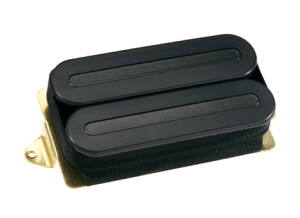
    The DiMarzio D Activator-X Bridge is kinda like a reinvention of the well known X2N but quite a bi tmore versatile. This pickup has the two huge blades that the original X2N had, four conductor wiring and a ceramic magnet shoved inside it. This is pretty much a modern take on the old school X2N of yesteryear. The X2N has been out for a very long time, and this new take on the pickup is very similar to the X2N while still offering some cool new features not found in the original. For one, it’s a bit more open sounding. This helps aid in note clarity. Output voltage, while lowered, it still really high. This thing is guaranteed to slam the front of your amp. The highs are rolled back a little more compared to the X2N, so it’s not quite as bright. It has a similar low and midrange to the X2N, so you still get that powerful sound that bands like Death successfully showed. Split coil tones on this are very nice, just like the X2N. In fact, there’s not much difference in tone between this split and the X2N split. Parallel is the same way. Both tones end up sounding fairly bright, but it’s not a piercing sound like some of the other pickups out there. It works in just about any wood combination you can think of, but I think it works best in mahogany, personally. It really aids in making a powerful sound with some good midrange. If you’re looking for a new, more modern take on the X2N, check out the D Activator-X Bridge. It’s a little more versatile than the older one, and while it doesn’t have the power the old one did, it still has a ton on tap to slam the front end of any amp out there.

  • « High midrange bite, yet not harsh »

    Steve Morse collaborated with DiMarzio to create his own signature pickups way back in the early 80s. The goal was to create a pickup that was balanced but has strong midrange. The pickup features adjustable pole pieces on both coils, four conductor wiring and a ceramic magnet. The Steve Morse Bridge model is a really cool pickup. It’s pretty hot and has this high midrange bite. The low end notes bloom nicely, and the high notes sound crisp without sounding harsh. The real cool thing about this is that it can work nicely in a single pickup guitar body. The pushed midrange is what gives this its unique tone. Steve wanted something with bite, and this pickup delivers. Split coil sounds are pretty cool. I’ve never tried it in parallel, so I can’t comment on that. The pickup works great in nearly any wood you can think of. If you put it in mahogany, there will be a lot of midrange, but it’ll sound fat. If you put it in basswood, everything will sound pretty even. In alder, it delivers a slight bite that many 80s guitarists had back in the day. However, take all of this with a grain of salt as every piece of wood is different. You need to see what your individual guitar needs and choose according to that. Steve Morse and DiMarzio created a really cool pickup. If you’re looking for a fat, bitey pickup that’s still clear and has really cool harmonics going on, this is the pickup for you. Just be aware that this is a fairly high output pickup. If you have a more modern amp that has tons of gain, it might be worth considering some of the lower output models that DiMarzio offers. That, or you could just run a noise gate and everything will be nice and quiet.

  • myriam63660_en's review

    Mounted on a ebmm JP6 The d-sonic is one step higher than the tone zone: précision, modern sound. Great pickup for distorted rythms and solos. You have two ways of installation: if you have heavy gauges strings or drop tunings you can install the pickup with the blade towards the bridge. If you play with standard tuning and strings, put the pickup the opposite way, (it increases the mids for a shredder oriented sound) I have also played on dimarzio Steve's special, Evolution, Tone zone, Seymour duncan JB, EMG 81, EMG 85... an excellent pickup for métal

  • « DiMarzio Evolution bridge pickup »

    I bought my first Dimarzio Evolution pickups in 1997, for an S,S,H basswood 1996 H,S,H Jackson JDR Reverse neck, mahogany 1984 H,H,H Randy Rhoads/ Jackson and an alder 1997 Jackson PS4 guitars. The bridge are rated at 13.84k ohms and 13.04 for the neck pickup. On the basswood S,S,H routed JDR Jackson, I have a Bill Lawrence L-250 pickup on the neck position, a Dimarzio Fast Track 2 in the middle and the Evo in the bridge position. It delivered ( luckily) the Steve Vai sound in the bridge position. It delivered the DLR's Eate'em Smile sound, Passion And Warfare and his White Snake Slip of The Tongue tone, down cold. With the alder H,S,H Jackson guitar with Evo neck pickup, Fast Track 2 in the middle and Evo bridge pickup, it turned out be a total Thrash monster guitar tone, much like Metallica's Master Of Puppets or Pantera's Vulgar Display Of Power Assault. The mahogany H,H,H configured RR/Jackson with guitar w/ three concentric stacked pots, made that guitar versatile enough to play 80's Hair Metal, Thrash or Classic 1980's Shred Guitar tones. The bridge pickup, like the neck pickup, are made to kick your amp into total over drive, give you fat rhythm and searing pinch harmonics with ease, when playing leads . The neck is very hot and sweetens up when you lower the volume knob. Just add a treble bleed cap to keep your high frequencies and you can have flexible tone machine, especially if you add a push/pull or push/push or Seymour Duncan Triple Shot pickup ring , you can get a beefy semi single coil sound. With that kind of circuit on Evo neck pickup, you can get a great acoustic guitar sound with a acoustic simulator pedal or Modeler patch or program. And achieve a Jumbo Acoustic sound. Both pickups are very sensitive to volume, tone knob manipulations to achieve different tonal variations and the pickup is sensitive to bridge, nut materials and series, parallel or different pickup splitting circuit that you install.

  • « Looks similar to the D-Sonic but sounds different »

    The DiMarzio D-Sonic was a fairly successful pickup when it first came out, but it has a lot of issues that came with it. For one, it was quite noisy. It also has some annoying treble in the high end. The Crunch Lab seems like them trying to fix the problems that the original D-Sonic had. It uses the same half blade/half adjustable pole piece design that the Crunch Lab uses, but DiMarzio doesn’t really recommend you swap this around like before. You can, however, adjust its orientation. I found that it sounds really good with the bar facing the neck, but you might feel differently. It’s a high output pickup, but it’s dynamic and fairly tight sounding. They fixed the treble issue that I was having with the original D-Sonic. That pickup had an annoying high end spike that I just could never dial out. This pickup doesn’t seem to have it. In fact, it sounds a bit fatter overall. The midrange seems very even, so this pickup should actually work in just about any wood you throw it in. I’ve tried it in basswood and alder, but I haven’t had the chance to try it in anything else. In both cases, it sounded really good. I had this wired up to a three way switch to split the inner coils automatically, similar to how Petrucci does it. This is one of the pickups he uses, after all. It had a great split sound, and I really recommend trying that. It’s clear under high gain and very dynamic, which is something that is important these days. Today’s amplifiers have so much gain that it’s easy to choose the wrong pickup and have a complete mess on your hands. This should work for those running modern equipment, and I recommend you try it out.

  • « Calmed down version of the Evo »

    The Evolution is a super hot pickup with lots of harmonics and is very tight. However, it had an issue when you try to calm it down. It seemed like it was always full on with no real way of introducing some dynamics to your playing. If you’re someone who likes to ride the volume knob, you’ll probably not like the original Evo. That’s why DiMarzio (or Steve Vai, I’m not truly sure) decided to make the Evo 2. This is similar to the Evo, but it’s not quite as tight sounding, yet it’s more harmonically pleasing and complex. The pickup has a lot of unique overtones going on with it. It has a lot of midrange, so keep that in mind. If you put this in basswood, it might be a bit too strong in the midrange, but a lot of people like it in Ibanez guitars, so it might be worth a shot. Personally, I find this best suited towards alder or mahogany bodied guitars as it really helps push those complex mids while leaving everything else fairly even. It’s not overly bright like the original Evolution was, but this still has a lot of harmonics that the traditional Evo has. I originally put this in my RG3120 and really liked the results I got. I’ve since taken it out and replaced it with something else simply because I like to change up pickups once in awhile, but this is a very solid pickup. I’ve since moved this to my JEM, and it works amazingly well with the middle single coil for those Hendrix and SRV kind of tones in the bridge position when split with the single coil. My guess is that this would sound great with a push/pull, but I didn’t have any on hand to test it, and I didn’t feel like opening up my guitar again.

  • « Vai's other famous pickup »

    Vai has a lot of pickups these days. However, in the past, it was really only the Evolution and the Breed pickups. Whereas the Evolution was a super tight and bright sounding pickup, the Breeds were very fat sounding. In fact, the Breed was actually an overwound PAF Pro with double adjusting screw heads that allow you to fine tune the guitar’s tone more than most pickups at the time. The double adjusting screw heads actually give this pickup its fatness and is the secret behind the tone. The pickup has a lot of bass and midrange - a signature trait of DiMarzio pickups at the time. It also has some more compression to it compared to the PAF Pro that was Vai’s original pickup that he was using. It sounds fairly modern sounding, but it’s not super tight like some of the other pickups out there. This really sounds best in even to bright sounding guitars. A lot of people like this in basswood guitars, and that’s the wood it was originally designed for. I’m not sure if I totally agree with that because basswood has a lot of mids, and this pickup also has lots of mids. It can be a bit overbearing if you’re not careful, but I’ve made it work in my Ibanez guitar at the time. Vai also makes it work, so it all depends on your tastes. I really like this in alder, personally. It works great in mahogany as long as the mahogany bodied guitar has a maple top to help extend the high end a bit. Otherwise, I would look towards another pickup instead of this. If you’re looking for a super tight sound, you’re probably better off with the Evolution instead of this too. Otherwise, this offers a nice higher output PAF kinda pickup without sacrificing too much on the dynamics end of the spectrum.

  • « Used by many I loved, but not by me. »

    I purchased this pickup to replace the bridge pickup in a Washburn guitar that seemed to be a touch anemic for playing the heavier music I was in a band for at the time. I chose this pickup because I had an axe with EMGs in it for metal and was looking for something a bit more organic sounding. Many guitar players I was a fan of had used this model over the years and I figured I would like it for myself as well. Well it was OK. I found that as the name implies it was geared for providing distortion. It did that fine. I played this through two separate tube amp rigs and in both situations it seemed to just have too much high end for my taste. It was a very cutting sound and I have heard many players pull out great tones from this pickup but as we know we all sound different and this was a poor match for me. I tried cutting the tone on the guitar, pedals, and amp in many different combinations and found that as I tried to reel in the harshness I was killing the parts of the sound I did like. I also like to play certain lead passages on the bridge pickup at times and that was not an option for me with the DP100. The sound was way to thin to be useful for any single note playing in the mid to upper registers of the guitar. I did give this pickup a long chance with more than a few output options to show me why it has been used for many years by a lot of my guitar heroes but in the end we were not meant to be together. Its hard to slight a piece that has such a good history as this pickup does but not only would I not buy it again but if I found a guitar I really wanted with it installed in it I would be prejudiced against it and preplan its replacement.

  • « A Super Distortion on steroids »

    Lets take the Super Distortion our most popular pickup and double the output. After that lets jack up the mids and the bass. This is exactly that. This pickup was ahead of its time and its less than 20 years old. The output is really off the charts. Its hotter than the old X2N and the X2N had huge bar magnets. The Super 3 puts out a rediculous 25k of output in a traditional design. You will have to use a noise gate with this much output because this guitar will pick up everything. DiMarzio intended this pickup to be the new workhorse for metal music. It is voiced with a dark top end but a tight low end. The boosted mids are for people who ran the mids scooped on their amps. I dont know anyone who does this anymore but in the 90s when this came out that was the trendy way of getting a heavy sound on your amp. The mids are so cranked on this pickup you may find yourself using those 90s amp settings again. This is the pickup you want if you just want to push your amp to within an inch of its life. You will not get much single note clarity. Because the Super 3 is so dark it works well in brighter guitars. You have to think what guitars were popular for metal at the time. Guitars like Ibanez's and Jacksons and other shred guitars made from brighter woods. Jacksons with their neck through construction are ideal candidates since neck through construction tends to provide the brightest sound acoustically. Ibanez's work well too because of the wood they use in most of their guitars. So if you want a pickup that has insane gain while still being passive, and is so dark it only drinks blood this is the pickup for you.