Log in
EN
FR

SeriesEpiphone Les Paul

83 products found

Filter
Sort by
Evaluation
  • Reviewed or not
  • Editor’s award
  • Reviewed by Audiofanzine
Availability
  • Available or not
  • Sold new or used
  • Sold new
  • Sold used
Must-have products
  • All products
  • Flagship products
  • Best rated products
  • Hot products
  • Popular products
Price
  • Freeware
€
Clear
Sort by
  • Popularity
  • User ratings
  • Price - low to high
  • Price - high to low
  • Used price, increasing
  • Used price, decreasing
  • Name (from A to Z)
  • Name (from Z to A)
  • Added on
Sort results
  • Popularity
  • User ratings
  • Price - low to high
  • Price - high to low
  • Used price, increasing
  • Used price, decreasing
  • Name (from A to Z)
  • Name (from Z to A)
  • Added on
Filter results 83 results found
Evaluation
Availability
Must-have products
Price
  • Freeware
Show results

The best Epiphone Les Paul reviews

The reviews Audiofanzine members found the most helpful.
  • « nah not my thing »

    If you've ever spent time with a Gibson Les Paul guitar than this guitar is not really got cut it for you. It doesn't carry the same feel, weight, and craftsmanship that a genuine Gibson Les Paul guitar would give you. It's more of a budget friendly guitar that is priced and crafted in such that it's marketable for more people because of the lower cost. Overall the tone is pretty much the same but just the feel and balance of the instrument doesn't come close. UTILIZATION Features Mahogany neck Chrome hardware Mahogany body 700T/650R open-coil humbuckers 24-3/4" scale 1-11/16" nut width SOUNDS The tone is pretty much the same as a real Gibson Les Paul guitar. You get the same warm tone that you would get from the genuine Gibson Les Paul instrument. This guitar features two humbuckers with mahogany wood on the body and on the neck with a nice rosewood fretboard. So you can have pretty much the overall same frequency range within this guitar because of the similar materials used as a regular Gibson LP. This guitar can feel real nice with a high gain amplifier such as a Marshall or Mesa boogie or anything like that. You will get a really thick chunky type tone that will be very good at any hard rock, pop, or metal music setting. OVERALL OPINION These guitars are pretty inexpensive so you can find them pretty easily for right around $250. That is a pretty good price for someone who doesn't have a whole lot of money and wants to get this type of sound out of their instrument. I would recommend this guitar to someone who is looking for a Les Paul focused tone and doesn't want to spend a whole lot of money. Maybe Epiphones do have a nice feel and comfortable even though they don't feel like a genuine Gibson Les Paul guitar. Overall it's a good buy for someone that does not have a whole lot of money or someone who is trying to learn how to play the electric guitar.

  • « Simply a gem! »

    This is the first guitar I bought and even though I have a Fender Strat lying around nowadays, this is the one I use for every music style I play. It is more than worth the price and I won’t exaggerate if I say that this guitar can be placed against some of the higher grade guitars which cost three times as much. Before I continue, I need to mention that I have modified my Les Paul by changing the stock bridge pickup to a Seymour Duncan SH4 and I will separately discuss how this guitar behaves with its stock setup as well as with the SH4, which is probably the most commonly used upgrade in any LP. There was nothing wrong with the stock pickup; the replacement was a simple matter of taste which was also influenced by that little fanboy who lives inside all of us when it comes to our idols. Features As the name would suggest, this guitar is covered in a black satin finish which gives it a dark, somber look to it, while it lacks the standard fret inlays, except for the 12th fret which has the Roman numeral XII to add to its design. This is a solid body guitar, all in one piece built out of mahogany which gives the guitar a rich, warm tone. The neck is smooth with fast action, while being rather thick like most Les Pauls, especially when compared to typical Stratocasters which have skinny necks. The Tune-o-Matic Bridge used on this guitar is very simple and practical in design, making it extremely easy to adjust the guitars intonation, while its simplicity in design helps with a little extra boost of sustain when playing. This Epiphone boasts to have Grover tuning pegs, which hold the guitar in tune quite well if the stringing has been done correctly, even though I did have to grease up the interior of one of the pegs because it kept slipping during the tuning process. The guitar comes standardly equipped with 2 open coil Alnico V Humbuckers, which certainly give the guitar a darker, warmer sound keeping in tone with its visual design. It has 2 tone knobs and 2 volume knobs, from my knowledge using the 250k potentiometers, and a 3 way selector which is placed above the neck pickup like on most LP’s. The placement of the 3 way selector has always bothered me though, even if it’s in a typical location for a great number of guitars. Sometimes when strumming chords with a bit too much enthusiasm I accidentally hit the selector and switch from the bridge pickup to the neck one, completely throwing me off. This happens rarely nowadays, but I still wish the selector would be placed on the lower side of the guitar’s body, like on Stratocasters for example. Meanwhile, I’d like to warn you to invest in a proper strap locking system. The stock strap pins are usually bad on any guitar, but many have ruined their LP through accidents. When I first played in a stand-up position, due to the guitar’s weight I assume, 1 of the pins slipped out but fortunately I managed to catch the guitar before it fell on the ground. Many people damaged their guitar in this way, so invest in Schaller, Fender or Dunlop strap locking systems to avoid any risks. It’s also worth mentioning that replacing the guitars pickup with the SH4 was easy and straightforward and literally anyone can do it. There’s enough room to work with and it is extremely easy to follow the schematic. While performing this operation you might want to consider shielding the guitar’s inner cavity with copper or aluminum foil or tape, it helps to reduce any leftover hum or buzz, even though in my case this guitar didn’t buzz at all when plugged in. Sound I mainly play 80s hard rock, punk/ pop punk and progressive metal. This guitar certainly has the versatility to handle all of these genres but it clearly excels on the metal side. The stock Alnico’s along with this entire setup will give you a warm, dark, bassy sound. I find it perfect for anything involving heavy distortion, but for a cleaner sound I prefer the Stratocasters richness in mids and highs. There is no sign of random humming or feedback coming from the pickups. I did experience some heavy sympathetic vibrations (when you play a string and others vibrate along with it)… more than normal, and it turned out that the nut wasn’t cut and lubricated quite right and it caused this type of hum to be more pronounced than normal. With just a bit of filly and adding some graphite (from a pencil) the problem went away mostly. Some humming will exist though, all guitars have it to some degree and it is quite manageable. You can find ways to reduce it and learn to play cleaner in order to try to eliminate it as much as possible, but it’s actually barely noticeable. Back to the tone itself, as said before, these pickups favor the lower frequencies and will make your guitar sound very warm and alive. Natural and pinched harmonics sound great, while incorporating dead note chugging in your playing will also be fun with this kind of beefy sound. All of this I do using the bridge pickup, therefore I can’t really say much about the neck pickup because I never use it at all. Moving on to the Seymour Duncan SH4 pickup, I must say it was a nice upgrade that gave me just what I wanted. I bought this pickup because of loving progressive metal, especially Tool’s guitarist Adam Jones which uses this SH4 and because I wanted more mid and high frequencies in my sound for this style. The warm quality of the guitar’s body certainly complements the SH4 which is a high output pickup with rich frequencies overall. It’s highly versatile for any style of music and now I get even richer pinched harmonics while my dead note chugs feel more aggressive. The sustain added by this pickup is simply phenomenal and it was certainly worth the upgrade. I must warn you, however, if you want this pickup or any other upgrades for that matter and you only have a solid state practice amp, don’t bother. I noticed that with small solid state amps all guitars and pickups basically sound the same. A Gibson will sound like the cheapest Epiphone and so on. Invest in this pickup if you own a tube amp and if you want more mids and highs in your tone mix as well as simply a more powerful sound because the stock pickups focuses on the lows a lot more. Guitar Setup and finish I had to adjust my guitar’s intonation and action and most likely you will need to as well. They don’t all come the same, but in my case the action was extremely high while the intonation was somewhat off. Other than that I needed to also make a very small truss rod adjustment because of a slight fret buzz problem. Performing all of this can be done easily and gives you the chance to learn more about your guitar so don’t be afraid to learn how to set it up yourself. As for the finish, I find it to be of great quality, my guitar is 3 years old and while I banged it a couple of times, the paint still didn’t chip off. The only “problem” is that because of the matte finish, you will see every single dust particle and piece of dead skin on it. It is somewhat fun to see how much pick dust you can gather in the bridge area after a while. It’s easy to clean though, so it’s not a problem. Your fingerprints will also still like crazy to the pickguard. I have no idea why, but literally every print gets stuck to it… but again, it’s extremely easy to clean. Reliability and Durability This guitar is highly reliable and it’s great for any situation, including for live performances. If you aren’t a gym goer or an experienced Les Paul user, you might have some shoulder or back problems if you play for too long because it is still quite a heavy guitar. I have experienced no neck dive problems at all and the guitar seems solid enough to resist for quite a few years. The only weak part I find, as mentioned before, is the strap pins. They come out easily out of the guitar and if not careful you might drop it, so invest in some quality strap locks as soon as possible. Overall Impression I bought a great guitar at a perfect value and I turned it into my dream guitar. Even with the SH4 addition, this guitar still maintains some of its natural deep, dark sound and it’s simply perfect for the genres I play. I used to play my modified Fender Strat for Pop Punk and Punk before I modified this guitar, but nowadays the Fender is decorating my bedroom’s wall most of the time. This Les Paul certainly is everything I need and I simply love how it looks, feels and sounds. It’s my first, and the relationship is special, therefore I will certainly recommend it to any single beginner or pro on a budget looking for a good deal. Despite all the tiny issues I encountered and small adjustments I had to make over time, I am giving this guitar max rating because it’s a gem that needs only a bit of polishing in order to shine and you shouldn’t regret buying one.

  • « Epiphone Black Beauty »

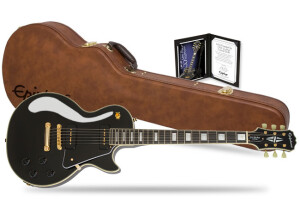
    I bought this guitar off of eBay for about $450. I wanted it because I'd heard a lot about it and because it was so BEAUTIFUL. First off, I must say that this is the best sounding guitar I've ever played. With reverb and light distortion, oh my gosh, it's so awesome. The sound is very rich and full, a tribute to the extra humbucker. Not only is it beautiful, but it has wonderful sound to back it up. Hmm.....I can't think of anything for my self, but if you want to play a lot of lead, I would get the Les Paul Custom, and not the Black Beauty. Why? The extra pickup gets in the way of the pick if you play lead, but on the LP Custom, it's the exact same thing, except that the third pickup isn't there. Like all Gibsons and Epiphones, it's build like a tank. The one I got had a few dings in it, but you can barely see them. The quality of this guitar surpasses anything except its Gibson counterpart. Bottom line, this is a wonderful guitar for someone who wants to play rhythm, but not lead. If you want lead, go with the LP Custom. One thing I have noticed is that the gold hardware looses its finish after a long period of time. Just a thought.... This review was originally published on http://www.musicgearreview.com

  • « I'll take one for that price »

    Epiphone is one of those guitar companies that basically mimics what ever Gibson guitars put out. At the phone as a whole line of models and series guitars that basically near everything that the Gibson guitar stand for and sounds like. This is a Gibson Les Paul type guitar with a different name attached to the headstock. Is a very cool looking guitar because it has a great vintage looking paint job. It really gives off that organic vintage vibe just from the paint job alone. It does carry to come back or pick ups like you would see in any other a Gibson Les Paul guitar as well as the volume control mob and tone control knob. UTILIZATION Epiphone Les Paul Special II Features: Color: Vintage Sunburst Left-handed Body Wood: Mahogany Neck Wood: Mahogany Neck Profile: Bolt-on, 1-11/16" nut Fingerboard: Rosewood Position Markers: Dot inlays Scale length: 24 3/4" Number of Frets: 22 Pickups: 2-Open Coil humbuckers Controls: 2 volume, 2 tone Pickup Switching: 3-way selector Hardware: Chrome Bridge/Tailpiece: Stopbar SOUNDS This is a very inexpensive guitar overall because it is the junior version of the LP series and Epiphone model series. Basically what that means at this guitar is one of the lower models of the Epiphone model spectrum. Although it does have a great tone and it creates a sounds that is inviting and more importantly is that you're not really going to break the budget when buying this guitar. The great thing about it is that it still features all of the wood combinations that you would get any other Gibson Les Paul instrument. This is very cool guitar for the money and it should be noted that it doesn't take a lot of money to get a great tone and this is one of those guitars that can do it very well. OVERALL OPINION At new you can find these guitars for one around $180. That is a steal of a price for what you're getting with his guitar. If you've ever wanted that classic Gibson Les Paul sound and you don't want to break the budget and this is probably the best option that you're ever going to fine. This is such a great sounding guitar for under $200 that it almost is a no-brainer to pick up if you are on a budget or even if you have the money but don't want to spend too much getting a particular Les Paul sound. Overall this is a great guitar and for the price is doesn't get much better than this.

  • « Nice price for a light weight »

    These guitars are built for the person who is on a budget and wants to get that Gibson type sound. Epiphone is really geared towards a musician who would doesn't have a lot of money or is financially strapped but still wants a Gibson voiced guitar. Many of their guitars are built overseas and I think actually all of them at this point are built overseas. So what you do is you get a decent sounding guitar for a lot less money than you would a Gibson Les Paul or a Gibson SG guitar. These guitar sound pretty much exactly the same as any other Gibson but the feel of the instrument is quite different. When you pick up this guitar you will immediately notice that the weight and feel of the guitar is not quite as comfortable as a Gibson guitar. So if you never played a Gibson Les Paul guitar than you probably won't think of anything otherwise, but there is a distinct difference in the feel and the balance UTILIZATION Epiphone Les Paul Custom Plus Features: Color: Vintage Sunburst Body Wood: Mahogany/Alder Top Wood: Flamed maple Neck Wood: Maple Neck Profile: Set, 1-11/16" nut Fingerboard: Rosewood Position Markers: Pearloid block inlays Scale length: 24 3/4" Number of Frets: 22 Pickups: 2 humbuckers Controls: 2 volume, 2 tone Pickup Switching: 3-way selector Hardware: Gold Bridge/Tailpiece: Stopbar SOUNDS These guitars really excel in a high gain amplification setting. So for example if you're using this guitar with the Bogner or a Mesa boogie amplifier in your to get are really saturated sweet tone. This guitar is not a bad guitar for the money and they sound pretty much exactly the same as any other Gibson guitar. However when you're playing it you're definitely going to noticed the feel but the tone is all intact . Overall they're a great sounding instruments for the money and if you are on a tight budget and it's a great alternative to the Gibson guitar. OVERALL OPINION You can find these Epiphone guitars pretty easily and most guitar centers or any other music guitar retailer around the world. They're very common among many online retailers in the big house type guitar stores. Trying to find these guitars isn't that difficult but I suggest trying out a few to find that perfect feel and weight that is complementive to your style of playing. You really can't go wrong with the Epiphone guitars that are built in Korea because they have a better weight and feel in my opinion. Many of these guitars have pretty decent build standards but not quite as good as the Gibson guitars. Overall these are great budget and financially sound purchases if you're looking for that Gibson tone. Overall this is a great buy for someone who wants that tone but wants to get the best bang for their money.

  • « Crimson Epiphone Les Paul Custom »

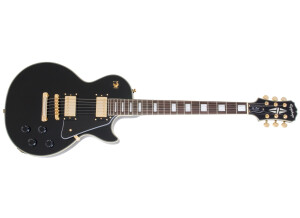
    Gibson is one of the biggest guitar makers in the world. They make many super high end and custom guitars for professional guitar players and collectors. They also make many guitars for beginners and working class guitar players. Many of these guitars are sold under Gibsons Epiphone brand. Epiphone is Gibsons foreign made line of guitars. They are built to much of the same specifications as a real Gibson but have much lower costs due to the overseas production. This is the Epiphone Les Paul Custom in Wine Red. It pretty much has all the same features as a real Les Paul Custom apart from the ebony fretboard. The Custom is bascially a dressed up Les Paul standard. It has more binding on the body neck and headstock and has larger block inlays. I think the large block inlays give the guitar a classy look. The guitar has s 22 fret rosewood fretboard with the large block inlays. The headstock is fully bound. The body is solid mahogany. Customs do not have the maple top on the body. The color is a lovely wine red with gold hardware to give it class. It reminds me of the cherry color you see on many SG's It has dual humbucking Epiphone pickups in the standard Les Paul configuration. There is a volume knob and tone knob for each pickup and a 3 way switch to switch among them. The bridge is your standard tune o matic and stop tail like you would find on most every Les Paul. UTILIZATION Which the specs being much of the same as a Gibson Les Paul Custom it shares all the quirks you would get on the real Gibson. Gibsons traditionally have larger necks than other guitars. In the 50s the necks on Gibson guitars were huge. They were commonly referred to as baseball bat necks. In the 60s Gibson switched to a slimmer profile. This slimmer 60s profile is the most popular neck profile on Gibsons and it is found on most Gibsons and Epiphones today. The upper fret access on this guitar is typical for every Les Paul. Since the body joins the neck at the 17th fret you will have to reach around the body of the guitar to get to frets higher than this. This strong joint helps with tone and sustain but limits upper fret playability greatly. The neck binding on this guitar and generally helps to limit the amount of sharp fret ends you feel when playing. The gold hardware will tarnish with playing but this happens on just about any guitar with gold hardware. SOUNDS The guitar itself has a good innate tone built in but it is let down by the low quality pickups. This is a common problem with lower end guitars that come with no name pickups. You do not get much attack with these pickups. Since these pickups do not have much definition the neck position can get really muddy. With a high gain amp the sound might get muddy due to the lack of definition. With some types of music these pickups are great. If you want a bluesy sound these pickups will do really good and you will be able to get a smooth tone out of them. With a pickup swap this guitar can sound great so I would recommend to anyone who has one of these Epiphones to try it out with some after market pickups. A set of Seymour Duncans would liven this guitar up greatly for rock and hard rock. If you are looking to play metal a set of EMG pickups will work nicely. There are Epiphones that come with EMG pickups stock so if you are planning to do this swap you may want to check out an Epiphone that comes with them from the factory and save some money. OVERALL OPINION Its nice that Epiphone is making this Les Paul Custom in this rare and classy finish. It is different than the white and black Les Paul Customs that are so common. The quality on this guitar is good and I find the quality on the high end Epiphones better than the quality on the lower end faded Gibsons. There are a few smaller companies making much better quality guitars for the price of these Epiphones. A company like Agile will give you an ebony fretboard and Seymour Duncan pickups for the price of this Epiphone. If you want to stay loyal and support Gibson you can check out this Epiphone LPC in Wine Red.

  • « Close but still not a true Custom »

    The Epiphone Les Paul Custom is, without a doubt, the most popular guitars that Epiphone has in their lineup. The guitar features a mahogany body with a mahogany neck, gold hardware, 24.75'' scale length, carved maple top, optional pickguard, rosewood fretboard, 22 frets, trapezoid inlays, tune-o-matic bridge, binding, two humbuckers, two volumes, two tones and a three way switch. UTILIZATION I might as well start complaining now. The biggest thing I hate about this guitar is the fact that it has no ebony. The Les Paul Custom should come with ebony, yet this one comes with rosewood. It's really no different from any other Les Paul if it has a rosewood board. The nut wasn't too bad on this, thankfully. However, the frets were a bit iffy. They weren't perfectly level, and you could tell that once you start lowering the action. They could have been crowned a bit better. Upper fret access sucks, just like every other Les Paul out there, but you learn to deal with it. SOUNDS This one had some EMGs swapped in it, so I'll be going by those in this review. The guitar had an EMG 81 in the bridge, and it ripped. However, the guitar itself was fairly bright, and I think the 81 wasn't a great match in the bridge. Considering that it's an all mahogany body, that's a bit surprising, but it happens sometimes. There are just certain woods that sound brighter than others, and this was one of them. The EMG 85 in the neck was just about perfect, however. It was warm and fat, but it also had some slight cut going on thanks to the naturally bright sounding mahogany going on. OVERALL OPINION In my opinion, Epiphone kinda dropped the ball with this. While it looks like a Custom, it doesn't have the ebony board. That's a huge minus for me. On top of that, this guitar was a bit bright sounding, so it didn't sound like a normal Custom does. Be sure to test out a few and get one that sounds thick without sounding muddy.

  • « Unique heavy metal Epiphone »

    Epiphone is Gibsons budget guitar line. Recently Epiphone has been putting out their own unique guitar models. One of these lines is the Prophecy guitar line. The Prophecy line has a few guitars of different shapes but they all pretty much have the same basic features.The Epiphone Prophecy series is a really nice line of guitars from Epiphone. These guitars have a real metal attitude to them. All the guitars in the Prophecy series feature 24 fret ebony fretboards on special satin finished necks with EMG or super hot passive pickups. The necks are nicely bound like on custom models They all have cool quilt maple tops and special inlays. This guitar is a Les Paul shape but with an extended fretboard to have the 24 fret neck. This model has active EMG pickups with an 81 in the bridge and 85 in the neck. The controls are simple it has a master tone and master volume control and a 3 way toggle pickup selector. UTILIZATION With the 24 fret neck on this guitar it does not do any favors with the upper fret access. The body still joins the neck at the 17th fret on this guitar so the upper frets are even harder to get to. The speed taper satin neck is nice and is a good alternative to a completely raw neck like you would get on a Zakk Wylde signature guitar. The ebony fretboard with the jumbo frets is really nice under you fingers and provides a good action once setup. The tune-o-matic bridge is locking so it will not fall off when you are changing strings. This is something that many Gibsons do not have. SOUNDS This guitar sounds great with the EMG pickups. It sounds like the real Zakk Wylde guitar. The 81 in the bridge has been an iconic metal pickup for decades. It has a high end crunch and distortion that gives it clarity no matter how much gain you are using or how low you tune. The 85 in the neck is a great pickup too. Since the neck pickup is pushed farther back it will get more bite than a normal neck pickup. It has a more fuller sound than the 81 so in the neck position you can get fat lead tones. The 85 is also good too in the bridge. With EMG's quick connect system you can easily swap these pickups position without soldering anything. The 85 in the bridge produces a super thick tone and cleans up better than the 81. Speaking of cleans if you do the 18v mod on the EMG's. With the 18v mod you run the pickups on two batteries instead of one. This provides a more organic tone with more headroom. This tone produces better cleans than stock EMG's and clean tones are usually the weakest part of the EMG sound. The 24 frets expands the tonal variety you can get with the guitar. OVERALL OPINION I like that Epiphone is putting out some of their own designs now. If Gibson put out this guitar it would be a few thousand dollars atleast. With Epiphone putting it out its very reasonably priced. The playability is great with the satin neck and ebony fretboard and the tone is great with the active EMG's something Gibson is reluctant to put in many guitars nowadays. If you are looking for a reasonably priced Les Paul that can really rip this guitar is in a class of its own.

  • « I prefer the Gibson version »

    The Epiphone Les Paul Studio is the low end, budget model of the budget model. I'm not really sure why they decided to make this considering how cheap the regular Gibson models go for. The guitar has a mahogany body, it has a mahogany set neck, a rosewood fretboard with 22 frets, a tune-o-matic bridge for tuning stability and tone, two humbuckers, two volumes, two tone knobs and a three way switch. UTILIZATION The fretwork on this guitar wasn't that great. There were some sharp edges, and the frets weren't perfectly leveled. The nut also wasn't cut properly because every time you'd bend, you could hear a noticeable ping. That means that the string is binding in the slot. Both of these issues are fairly common on the lower end Epiphones, so be sure to watch out for that. The fret access is the same as any other Les Paul style guitar out there in that it's pretty poor. Reading those higher frets can be a bit of a pain. SOUNDS The guitar itself was kinda dead sounding. There were other Epiphones I played that were much more resonant and lively sounding. The pickups were also pretty poor sounding. They were very muddy and undefined. What made matters worse is that the neck pickup was bright. I hate bright neck pickups, and this thing just didn't deliver in terms of the tone I was looking for. I'm not sure if it was the combination of woods in conjunction with the pickup or what, but it just didn't jive for me. OVERALL OPINION I wasn't a fan of this guitar as the fretwork was pretty poor, the nut was cut bad and it didn't seem to resonate that nicely. That said, the guitar is pretty cheap, and it's basically pennies if you're buying one used. They can be great beater guitars if you're into that sort of thing, but I'd rather get a Burny instead.

  • « A reasonable LP facsimile »

    The Epiphone Les Paul Standard was made to act as a lower budget version of the classic Gibson Les Paul Standard. It features all of the classic appointments of the LP, such as a mahogany body and neck, flamed maple top, dual humbuckers, and a tuneomatic bridge and stop tailpiece. The full list of specs is as follows: Epiphone Les Paul Standard Plain Top Electric Guitar Features: Mahogany body Maple veneer over carved top Alnico Classic humbuckers Chrome hardware Grover tuners 24-3/4" scale 1-11/16" nut width Set mahogany neck Slim-tapered neck profile Rosewood fretboard with trapezoid inlays Body/neck binding LockTone Tune-O-Matic bridge/stopbar tailpiece Basically, it's designed to be a classic Les Paul, but at about 1/4 the price... does it live up to the hype? We'll see... UTILIZATION Design wise, the Les Paul was never the most ergonomic guitar on the planet, and this Epiphone model is no exception. The Epiphone model, like the 2008 model Gibson LP Standard, features chambered construction so it's lighter than your average LP, but as I stated in my LP Standard review, the cost of a lighter wait is a thinner/un LP like tone in my opinion. The upper fret access on Les Pauls is decent enough, though the neck heel can get in the way on occasion. Getting a decent tone out of this guitar is not difficult. Like nearly every Epiphone guitar I've tried, it's plagued with muddy, cheap sounding pickups that lack note definition, so the tones as stock are not even close to my Gibson LP that is loaded with '57 Classics. However, I have tried models that have had replaced pickups, and it does greatly improve the tone of the guitar plugged in. SOUNDS I've tried these guitars through various Marshall and Mesa Boogie amplifiers, both in stock and modified form. I would say the tones are reasonable enough when you consider the price they sell for new. O The clean tones are fair enough when set up correctly. The pickups lack a lot of the punch of some higher quality models from Gibson, DiMarzio or Seymour Duncan, but even considering that, the cleans have a decent low end and midrange tone that's excellent for jazzy and bluesy tones. The overdrive tones are nice for the guitar for sure. It seems to excel at seventies/eighties arena type hard rock. The guitar isn't quite as dynamic as my Gibson LP, so using the volume and tone controls really don't do quite as much as I might like. All in all, the stock tones really are average at best. It improves greatly if you upgrade the pickups, but that's an additional expense to consider when buying... OVERALL OPINION All in all I figure the Epiphone Les Paul Standard is a decent lower budget guitar for someone who really wants to be the next Jimmy Page or Slash, but is on a budget. The construction of the guitar is fine and it plays fairly well... but the electronics are simply just not up to par. Personally, if I was spending $600 on a flamed top Epiphone LP Standard and then an additional $150 or $200 on pickups/electronics... I would simply put my money into a second hand Gibson Les Paul Studio or Studio Faded, which to me is a far superior instrument and will hold its value far better than an Epiphone.

  • « Epiphone LP Jr - A Fun Instrument »

    Features — 7 Bought new from a shop, 2010 model. This showcases a classic no-nonsense approach to instrument building, with bolt-on neck, stock Epiphone tuners and one humbucker. This guitar has a single cutaway, 21 frets, a wrap-around bridge, and one volume and tone knob. No other fancy features, it's pretty much designed to get you playing as quickly as possible. The neck is a little fatter than I expected and has a gloss finish. It's a little raw and unrefined, but works well for the vibe of the instrument. Sound — 8 Suited my blues and classic rock style well, the sound could go from fat and full, to clean and smooth. Classic PAF vibes. Although the pickups did not handle crisp tones well, and sounded muddy at times. Played it through a Marshall combo. I didn't use any effects with it and just cranked up the gain a little when playing AC/DC, Hendrix, etc. It's not a noisy guitar. You can get a wide variety of sounds, although I wouldn't play Metal or anything too heavy, go for a Jackson or ESP in that case. It's perfect for that classic rock or blues sound. Action, Fit & Finish — 8 The guitar was well set up by the shop. I did need to adjust the truss rod several times over the years, but nothing dramatic. Wiring and finish were all fine, good quality there and no complaints. Same with the frets, nothing to flag. All in all a solid instrument that looks and feels more expensive that it is. There were no flaws upon purchase. I was very impressed by the out of the box nature of its playability. Well done Epiphone! This is how it should be. It felt better finished than a Squier Bullet. Reliability & Durability — 8 I would use this as a second live guitar, or rehearsals and home practice. Reason being the pickup quality could be better but it's good at this price point. Durability is fine. It's dependable and looks quite cool. I had fun using it and it never let me down. It's a great feeling and sounding guitar, I would easily recommend it to anyone looking for an alternative to a Squier or Gibson. I would swap out the pickup for an Epiphone Probucker or Gibson with clearer tones. I like the overall reliable feeling you get when playing this guitar. Overall Impression — 8 Costs have been cut in terms of the pickups and tuning keys, although upgrading these would cost the same price as the guitar itself, if not more. The humbucker version sounds like a typical mid-range Epiphone pickup, i.e. hot enough for classic rock but quite muddy when going clean. It’s a cool mod or project instrument, and you wouldn’t really gig it as is. It’s fine for playing at home and recording basic tracks. You can’t argue with the iconic look made famous by so many artists from Keith Richards to Billie Joe Armstrong.

  • « Epiphone Les Paul »

    The color is a cherry sunburst, it is a plus top (100$ worth of paint!) I play all kinds of music, i have been playing for about 3 years I aquired this guitar from guitar center in Naperville,IN, i paid 467$ (with a coupon) I love the action, humbucking pickups, action, look, and just about everything about this guitar, but especially the sound of the alnico pickups, and the action, plus the fact that it has 4 control nobs, and the tune-o-matic bridge I dislike the factory strings that came on it, I would suggest replacing them with Gibson VR10s, or Gibson les paul strings, also the nobs get wobbly sometimes, and the input jack was a little loose after some use (just tighten them up with some pliers, and it will stay) It is a very good instrument for the price, it handles anything from Hard rock, to slow christain chording music, overall a WONDERFUL instrument, and the set neck is wonderful, plus the tuners are grover, so they have no problem with staying in tune Overall this guitar has great everything after some minimal modifications, if you are ever looking for a cheap genuine paul, or just a great overall intermediete-pro guitar this is exactly what you want This review was originally published on http://www.musicgearreview.com