Log in
EN
FR

Ernie Ball

232 products found

Categories
Filter
Sort by
Evaluation
  • Reviewed or not
  • Editor’s award
  • Reviewed by Audiofanzine
Availability
  • Available or not
  • Sold new or used
  • Sold new
  • Sold used
Must-have products
  • All products
  • Flagship products
  • Best rated products
  • Hot products
  • Popular products
Price
  • Freeware
€
Clear
Sort by
  • Popularity
  • User ratings
  • Price - low to high
  • Price - high to low
  • Used price, increasing
  • Used price, decreasing
  • Name (from A to Z)
  • Name (from Z to A)
  • Added on
Sort results
  • Popularity
  • User ratings
  • Price - low to high
  • Price - high to low
  • Used price, increasing
  • Used price, decreasing
  • Name (from A to Z)
  • Name (from Z to A)
  • Added on
Filter results 232 results found
Evaluation
Availability
Must-have products
Price
  • Freeware
Show results

The best Ernie Ball reviews

The reviews Audiofanzine members found the most helpful.
  • « Could be better for 20€ »

    I bought this cable in jan'2025 to use w/ my Jackson DKMGTFF & Orange Crush 20. 1st i did, i tested the capacitance. Having ~530pF for 10 feet gives us 53pF/feet, almost x3 of what good guitar cable should have. Actually i'm searching for a replacement and i will return this article back (bought on amazonfr). There are good cable w/ 15pF/feet to no problem. So just need some time to check datasheets (capacitance aren't mentioned for this cable btw!). Shielding is average. 20.50€ too expensive for what is it. I'd say, no more than 10 bucks.

  • « A great tool »

    For which specific applications or uses do you currently use this product? I use them (I bought 6 :bravo:) both at home and on stage, for guitars and basses. -How long have you used it? One month, more or less. -Have you tested other comparable or competing products before purchasing this one? It has no real competitor: using an adhesive, a pick holder or putting the pick under the pickguard all have in common not to allow (or with real difficulties) to put the pick down and take it again during the same song. As for the tool-which-name-I-forgot to be placed on a mic stand... well, it's not on the guitar itself! -What are the pros and cons of this product? I like how simple it is: you just had to think of it, but now I can switch in a breeze between picking, chicken picking, fingerpicking or finger playing. Regarding its cons, well, the price (of course you pay the concept too, but technically it's just a mere sucker and 9 bucks is a bit expensive for that), and the sucker itself is not always reliable. Both these elements take one star away, otherwise it really is perfect!

  • « Very nice, made me consider switching »

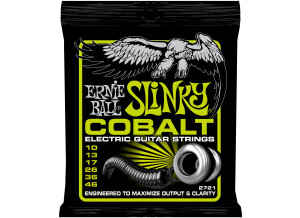
    I've used Daddario's for 8 years, just recently switching to daddario coated. I've gone through damn near every brand I can think of and always gone back to daddario. When these cobalts came out I decided to give them a try. My concerns were longevity and tone. They're brighter than most strings and rougher like daddario's so that was a plus. I've had a pair on my Jackson Rhoads for about 3 months now, just to see how they last. They still sound like new, haven't rusted or corroded at all, and feel great. The whole line of them being louder and more definition I think is BS. Even if they were louder with the type of pickups, distance from pickups, amp, amp settings... you'd never know it was the strings, no matter how much louder they were (which they are still negligible. So I think these are great strings and could possibly make me switch from Daddario but I'll have to test them a little more. They cost about the same as coated strings so money isn't an issue.

  • « might or might not fit your bass »

    first off let me say have used ernie ball cobalts exclusively since release and had NO issues until recently with the 5 string set. so here is the issue, i have the following basses. ibanez SR400QM, traben pheonix, traben array obsession ( recent acquisition). i have had no issues with the cobalts on my ibanez or pheonix as far as fit. however, the 5 string set does NOT have enough wound area to run string through body on the array obsession. i have compared the eadg strings of the 5 string set to the eadg string 4 string sets and i can confirm the 5 string sets have less wound area than the 4 string counterparts especially on the heavier b and e strings. now here is ernie balls official response: "cobalts dont fit long scale basses, for 34 -35" scale length you need to use the long scale nickel strings" now i dont know about all of you but if you are going to be forced to nickel wound strings why bother with ernie ball? every manufacturer has nickel strings and some are even cheaper than ernie ball. now let me say this, yes the 5 string set will fit my 34" traben array obsession however, due to either manufacturing defect or ernie ball cheaping out on manufacturing to increase their profit margin per string set to use the 5 string cobalt bass set i am force to run bridge mounted instead of through body. so be forwarned when looking at the cobalt 5 string sets. i think ernie ball decided to only fender style jazz, p, and pj 5 string basses and changed the manufacturing. what makes me say this is that i have a friend with a 24 fret rogue LX205B bass ( which is also a 34" scale length) and he has a set of the 2736 cobalt 5 string sets on it. so at this time all i can do is reccomend people to contact ernie ball if they want to see ernie ball fix the issue with the strings on our long scale basses and if they refuse just purchase another brands strings i mean no reason to stay with the ernie ball brand for nickelwound strings when every manufacturer has them.

  • « New Strings Make All the Difference »

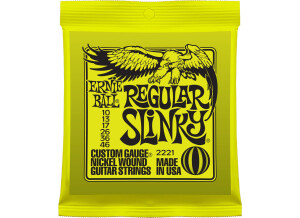
    I have been playing Ernie Ball regular slinky strings for more than 10 years. I typically change the strings on my electric guitar once a month, or even more often if I am recording. Probably the biggest tip I can give someone that is either new to playing the guitar, or is looking for a simple way to improve the tone of their guitar - change the strings. I know too many people that never change their strings until something breaks. This is the easiest way to insure that your guitar sounds dull and lifeless until the next time your strings break. The Ernie Ball slinky strings are the cheapest way to keep your guitar sounding good. Every time you put a new set on your guitar will sound much better than when it old strings with dirt and grime all over them. The main thing is that all the dirt and grime changes the physics of how your strings vibrate. When the strings can't vibrate properly, you are going to lose tone. Therefore, change your strings and clean them whenever you play. The only downside of these strings is that they don't hold their tone for very long. As soon as you put them on, they sound great. However, after about 5-10 hours of play time, they really start to sound dull. I guess you get what you pay for. There are more expensive strings that hold their tone for longer. Pretty much if you pay more money then you won't have to change the strings as often. With these strings, they are super cheap. I typically buy them in packs of 10 sets. But then you have to change the strings over and over again. This is a little bit of a hassle. I have recently tried out the new Ernie Ball Cobalt strings. I honestly don't think they sound better than the Regular Slinky strings, but I am hoping they hold their tone for longer. All this to say, the regular slinky strings sound great. As long as you are willing to change your strings often, then these are the way to go.

  • « Aluminum wah brick »

    A Wah pedal is a wah pedal, and then again not. They each have their own quirks and this one is cut out of a solid block of aluminum, making it almost unbreakable, even under enormous stress on or off stage. As with all other wah pedals, you get a seriously simple circuit, with an input and an output jack. Like with the Crybaby GCB95, that really laid the foundation for the wah pedals, the simplicity is to be admired. UTILIZATION Should you feel the need to point out who invented the plug and play principal, then it has to be Dunlop. Ernie Ball chose to go by this principal as well - good for them! You plug in you cords, give it some power and bam - you'r up and running. However! Getting the right sound out of this kind of effect does take some time and practice. Granted, some require longer then others. SOUND QUALITY A wah pedal often tend to be either muddy in heel position or to bright in full out toe position. This is not the case with the Ernie Ball edition. Somehow, they manage to keep a clear sound all the way through the wah pedal's sweep range. It may be due to the Soft 12º traveling with the kevlar drive. But I'm not sure. I've often experienced, that the wah has a certain point, where it "falls over", i.e it goes from being just pass the muddy part to being almost extremely bright (to bright). It's like the whole mid range part of the sweep, where the guitar really comes to its right, is gone. That's not the case with this wah though. I've found, that when running this wah in my setup, I really like to throw in a fast compressor right after, to take out the transient peaks from the wah. OVERALL OPINION In the world of wah pedals, it's either hit or miss. This time, it's a hit! For the price, that's maybe on the rather pricy end, you get a really great wah pedal, that's transparent enough, to leave you a clean wah signal (that might sound a bit wrong, but hear it, and it's right!) to make it sound good throughout the whole sweep range. The reliability is really great, because of the aluminum chassis, so if you find that this is the pedal for you, you won't need to buy a replacement any time soon. The only thing that's in danger of breaking, is the string pulling the pot underneath.

  • « Baby brother »

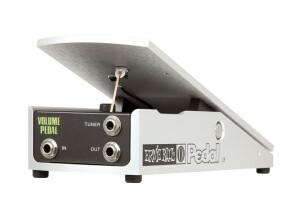
    This is a volume pedal. Plain and simple. You don't need editing options, digital conversions, thoughts whether it's best with a tube or a transistor. This is pure analog. You get a 1/4" inputs, output and tuner jack. It says 'Tuner Out' on the pedal, but it is in fact just a parallel signal, so you could actually use this, as a passive split, should you feel the need for that. UTILIZATION I bought this pedal as an expression pedal to run along my G-system. The space at my began to be a bit crowded with all the 6166 volume pedals (the big brother to the 6180 VP Jr. hence the name), so I went for this instead. You do get a Jr. pedal, that's for sure. I don't mind at all, but if you got a big foot, like a size 11 or 12, you might get into trouble with this one. When using it as an expression pedal with the G-system, you have to take into account, that you'll miss the last few percent of range. You won't be able to hear it though, as the G-system adapts to the range, and still provide you with 100% range. SOUND QUALITY As I wrote in my review of the 6166 :"This is were you might find some issues. I've not experienced it myself, even though I'm a huge sucker for tone, but some people complain about the fact, that this pedal takes away some of your treble signal, when pulled slightly back. Some have also complained about the parallel output (tuner) to suck away some tonal quality to the main signal. I haven't experienced that myself neither. It might all just come down to a matter of buffers in the setup (and partially also some psychological factors)." And that is also true with this one. I've used it a single time as a volume pedal, and didn't notice any of the issues mentioned. OVERALL OPINION If you don't need the big 6166 pedal, go for this one instead. It's completely like the 6166, but just smaller. You have the same sturdiness and unbreakable construction. Your wallet won't be ripped as much either, so you can't go wrong. Possible repairs on this one, are identical to the 6166.

  • « Volume control by foot! »

    This is a volume pedal. Plain and simple. You don't need editing options, digital conversions, thoughts whether it's best with a tube or a transistor. This is pure analog. You get a 1/4" inputs, output and tuner jack. It says 'Tuner Out' on the pedal, but it is in fact just a parallel signal, so you could actually use this, as a passive split, should you feel the need for that. UTILIZATION I bought this pedal, as I was tired of the impracticality of using the volume knob on my guitar, when doing volume swells and such. Throwing this baby into the chain made it so much easier. It couldn't be any easier to set it up too. Take the jack from you guitar, plug it into the input of the pedal. Take the output of the pedal and send it to your amp, or the next effect in the chain. Simple as that! I use a G-system and run one 6166 volume pedal in front of the G and one using the build in volume pedal expression jack in the G. This gives me the option, to kill my input volume and let a delay tail die out on its own, or lower the volume in general. This is a really neat trick, if you'r using guitars with different outputs don't want to change settings on e.g. your drive pedal. SOUND QUALITY This is were you might find some issues. I've not experienced it myself, even though I'm a huge sucker for tone, but some people complain about the fact, that this pedal takes away some of your treble signal, when pulled slightly back. Some have also complained about the parallel output (tuner) to suck away some tonal quality to the main signal. I haven't experienced that myself neither. It might all just come down to a matter of buffers in the setup (and partially also some psychological factors). OVERALL OPINION If you want a sturdy and practically unbreakable volume pedal, without any unnecessary options, then you should go for this one! It's build out of a solid block of aluminum, so it won't break even under heavy stress. The weak link is the string pulling the pot internally, but for as little as $10 (tops) you'll have it fixed again. You can even do it yourself. You pay a bit more, when buying it new, compared to other volume pedals, but you'll be glad you did! If you need it in stereo - don't worry. Ernie Ball got you covered to.

  • nickname009's review

    This is a volume pedal, one of, it not the most simplest pedal ever made for guitar. It's simply a 250k pot controlled via a string, some pulleys and a spring. This is an older 6166, and by that I mean so old it doesn't even have the model number on it. But considering the 6166 is the most basic volume pedal, I'm sure this must've been the predecessor to the 6166. Just one in jack and one out jack. Nothing else! UTILIZATION It's older so it's not as well thought out in terms of layout, even though there's almost nothing to lay out except the placement of the input and output jacks. Which, aren't laid out properly haha. The in/out jacks are on the SAME SIDE, both on the right! Which in today's world is completely inconvenient for chaining to other pedals or boards! I like to have my pedals lined up like the signal chain I have it in, with this inconvenience, I can't do that, AND I need a longer patch cable to get to the other pedals. It's really not well thought out. Otherwise, the pedal motion is quite smooth. I had to replace the string/spring since it's so old, the old string was wearing out. More on that later. Not much to say otherwise! SOUND QUALITY It produces no sound, it's used for swells or muting between guitar changes or song changes or tuning etc, things of that nature, what I COULD comment on in terms of sound is how evenly balanced the swelling is from heel down to toe down position. In which case it is smooth, though I don't think it's perfect. It could be the pot, maybe it's not as linear as others? But it seems that from heel down to about 2/3rds through the signal comes in, and the main volume difference is noticed from before then. Going all the way to toe down position is sort of not dynamic enough for me, it's a bit too subtle or just jumps right to full volume. Sort of like there's a sweet spot range where the swells can be the most dynamic and NOT within the entire range of motion of the pedal. However, I could still get it to do what I want. OVERALL OPINION Overall it's decent. It's a volume pedal, and unfortunately there hasn't been anything too revolutionary with volume pedals aside from maybe the visual volume, which even then isn't that big of an improvement on the overall function of a volume pedal. I will review that eventually. My one beef with this other than the range of motion not being as wide as I thought, would be the string replacing kit. It's actually VERY difficult to do properly!! It took me nearly 2 hours or so to replace these strings! I don't know how the employees do it! it was HARD! Even now I don't think I did it right, but it seems to be working so I'm just gonna leave it as is until the string wears out or until I grow more patience to reattempt the install. I got this for free from a friend! But I know they're also quite cheap. Volume pedals usually are within $100 or less. It's definitely sturdy though, super hard steel chassis and all. I don't expect any problems except the strings, which are problematic with all volume pedals that are designed this way. So it's expected, and will most likely not break or wear for a very long time.