Log in
EN
FR

Sony

578 products found

Categories
Series
Filter
Sort by
Evaluation
  • Reviewed or not
  • Editor’s award
  • Reviewed by Audiofanzine
Availability
  • Available or not
  • Sold new or used
  • Sold new
  • Sold used
Must-have products
  • All products
  • Flagship products
  • Best rated products
  • Hot products
  • Popular products
Price
  • Freeware
€
Clear
Sort by
  • Popularity
  • User ratings
  • Price - low to high
  • Price - high to low
  • Used price, increasing
  • Used price, decreasing
  • Name (from A to Z)
  • Name (from Z to A)
  • Added on
Sort results
  • Popularity
  • User ratings
  • Price - low to high
  • Price - high to low
  • Used price, increasing
  • Used price, decreasing
  • Name (from A to Z)
  • Name (from Z to A)
  • Added on
Filter results 578 results found
Evaluation
Availability
Must-have products
Price
  • Freeware
Show results

The best Sony reviews

The reviews Audiofanzine members found the most helpful.
  • « Sony C 48 the unknown LDC »

    A couple of years ago, I was looking for a pair of used Neumann U 87 mics for vocals and general aplications. Then a pair of Sony C 48 was offered to me at a ridiculous low price. Here in Germany the Neumann, AKG,Shoeps mics are omnipresent. only a few people know about high-end Japanese microphones.I already owned a Sony C 38 B and was very pleased of it. Since then i use them on drum overheads or room-mic, piano Leslie-cabs.... Then we had to record one of my songs with double vocals. The other singer did very well with the U87 but i wasn´t very happy with it. So i tried the C48 for my vocals. It did for me what i had expected from the u87! So i think the C48s do their job as well as a U87 or a U89! And they have the 9V battery compartement !

  • moosers's review

    The Sony C-800G is a tube condenser microphone made for use in professional recording studios. I would never recommend bringing this outside of your studio as it is not built for live use - it is simply too expensive and too big. It is such a powerful microphone and emits so much heat that it needs its own little radiator, which is the big thing hanging off of the back of it. Since it is a tube mic, it also has its own power supply. This is one of, if not the best sounding microphone I have ever heard. OVERALL OPINION I've been using the Sony C-800G for about three years. When I first heard it used, I was absolutely blown away. The clarity and overall tone quality is unbeatable. I did a shoot out with some pretty awesome Neumann mics and some other high end tube condensers and the C-800G reined supreme. I don't get to use this everyday, as most studios cannot afford to have one, but whenever I do get to use one it is an absolute treat. I can't say enough about the fullness and crispness of the tone quality. It is a great vocal microphone for all types of singers, but will work great in any type of situation. The price makes it impossible for just about anyone except for big professional studio owners to have them, but if you get the chance to use or rent one, you'd be crazy not to. The Sony C-800G is in a class by itself and I haven't heard a microphone that can match the crisp and clean sound this mic has. If you can afford one of these, God bless you. As for the rest of us, if you can ever get your hands on using one of these, you need to take advantage!

  • « 17 years of reliable service. »

    I bought this item on a whim to do digital, two track recording from the main outs on my new Mackie 1604VLZPro, around 1998 or 1999. It was five hundred dollars at the time, and very small. I imagined with the ATRAC compression cutting off a lot of lows and highs that I could add them back to the mix by dubbing them through some low end on the board. The cheapness of the disks appealed to me, as did the portability. I only use it these days for listening to the 100 or so MD that we fully recorded in stereo (74 min) or mono (148!) And to prove that it still works. The sound quality was incredible. Building quality was top notch. It took some hard floor drives during it's career, travelled to some shows and on trips. Not a smoke free environment. Never once gave up, never quit working. MD is of course a dead format now, and it really does sound like MP3s, especially through the 1/8" outputs. But the "remote" is handy, and the manual is great.

  • « Good mixer »

    This was a good low cost mixer for it's time. It has 6 mic/line inputs which may be used as 6 mono inputs or 3 stereo inputs. The mic inputs are low Z unbalanced using 1/4 inch jacks. The line inputs are high Z unbalanced using RCA jacks. The mic level outputs are 1/4 inch jacks, the line level outputs are RCA jacks at -10dB. There is a 20dB switchable pad on each input. There is a rotary master gain pot and a dual mechanical VU meter. There also is a headphone jack but no headphone volume control. It will operate on 6 D cells or an external power supply. I have used mine for live recording, P.A. mixing and radio broadcast mixing. UTILIZATION This is a very basic portable desk-top mixer. All controls are on the top panel. All connections are on the rear. SOUNDS It has been years since I measured the performance but at the time the frequency response was flat from 100Hz to 20KHz. Noise was about -60dB. OVERALL OPINION This mixer proved to be very versatile and I used it hard for 20 years or so. This was be best thing going at the time I bought it. I have since acquired other mixers with features we take for granted now, which didn't exist in that era.

  • « Old, but good »

    -For what kind of music do you use this product? ? I personally use it for electronic music (Industrial). There's no reason which wouldn't allow to use it for "extreme" (if I may say so) styles... -What do you think of its finish and ergonomics? It seems quite sturdy. The old school painting makes me think of an old army Jeep. I got it used for a bargain price from a squat, in perfect condition! Very classic, easy to work with from the start. Beware though regarding the connectors, it only features RCA and XLR. -What about its sound? I won't get much into the details as for me this is a little source of concern.. Perhaps it's due to how it was stocked by its previous owner but I find the sound to be muffled and lack clarity. In the studio there's no problem, but in live it clearly showed its limits... The sound was awful on the PA. Studio use only! -pros ans cons: Its greatest quality remains its sturdy design, and its major flaw the disappointing sound quality, which is perhaps due to the RCA connectors and is a real issue for live use.

  • « Perfect for a first time home musician »

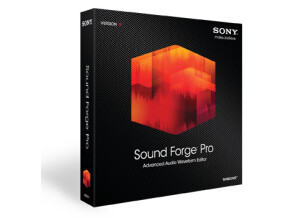
    Sony Sound Forge Studio 10 is a program that can handle anything that all of the popular DAW’s can handle. It is actually a lot easier to use than many other DAW programs that are on the market but the only problem is that it is not as in depth as some of them. So Sound Forge Audio Studio 10 could be great for someone who is just starting out recording music from home on their computer. It is very affordable and extremely easy to set up and start using right way. SUITABILITY/PERFORMANCE Using this program is simple but you can make it more complex if you choose by using plug ins from third party software or from your other programs. I would not use it to run too many CPU intensive programs but it was not bad using some effects plug ins like Antares Auto Tune and even some of the Waves plug ins in Sound Forge Studio 10 worked fine. It never froze up or crashed on my Laptop running Windows Vista. This program is exclusively only for PC’s, it will not work on Mac computers and you will need to have at least 512 MB of RAM for it to run properly. OVERALL OPINION One of the reasons I say it is for beginners is because Sony has included a “learn” feature in this program that is like tutorials on the go. As you go there will be tutorials that you can learn from right in the program, of course you can turn these off if you don’t want them there. Recording, mixing, adding effects, it is all easy to do with this program. The only issue with it is that some CPU intense plug ins tend to be more ‘intense’ in here. The same plug ins that ran in Pro Tools using little CPU used about double that in Sound Forge Audio 10. Also, most of the filters and effects that come with it are very basic. If you are a beginner you will love working with this program but I think the average user will eventually out grow it.

  • « No longer made :( »

    The Sony DMX R 100 is a digital mixer that has everything you need, and I mean everything! My first time seeing this in person was a while back and I had no idea how to operate it. It was kind of confusing because its like a hardware that’s a software on the onboard screen. But once I fished through the manual a bit I understood the basic functions of it, and once I got that down I was good to go and never looked back. In one of the local studios still has this so I still have a chance from time to time to get to work with it. Sony has stopped making these though, after they never really produced a lot of them to begin with. I am not sure why, I am glad that I had a chance to work with this hardware though. It was unlike any other hardware mixer I have every used. UTILIZATION Not easy to use at all, it takes time to understand how things work and seeing all the menus and sub menus. You will need to read the manual, no mater how much you had manuals you will need to pick this one up unless you have someone else there with you that can teach you first hand how to operate this. So don’t get this with the hopes of just plugging it up and just going with the flow like most of us do. I burned hours trying to do it my way before I finally gave in and picked up the manual. SOUNDS Sounds are great, it will give you a very solid mix. Unfortunately most software can do the exact same thing this can do which is the reason you are seeing most of these type of units go out and never come back. Because software can be offered at a cheap price and has no overhead meaning they only have to create the program once and sell it a ton of times. Where hardware has to be produced and each unit cost. that’s why software is taking over mixers like the Sony DMX R 100 OVERALL OPINION Overall, no complaints I love it. Its just a shame that its not being made anymore so don’t bother trying to get this at guitar center!

  • moosers's review

    The Sony MU R201 is a vintage stereo digital reverb and multi-effects unit and is one of the first of it's kind. It was made in the mid to late 1980's and has stereo 1/4" inputs and outputs as well as MIDI connections and footswitch controllers as well. It is rack mountable and will only take up a single space. UTILIZATION Navigating through the Sony MU R201 can definitely be a bit difficult. I'm glad that the person who brought this into the studio that I work at actually knew how to use it, as I wouldn't be able to use it on first sight for sure. You can toggle between different sounds pretty easily, but beyond that I don't really know how to use it well. Perhaps given a situation where I had to use it on my own, I could rise to the occasion, but I've yet to have that chance. The manual might be helpful for someone new to it. SOUND QUALITY The Sony MU R201 has a really great overall sound for a really early on digital reverb and effects unit. I've only heard the reverbs on here and haven't jumped into the other modulation effects since I don't have access to it. Having said this, the digital reverb is absolutely some of the best that I've heard and I can understand why the engineer brought it around as he did. It's not as warm sounding as something like our plate reverb, but for the sounds it can get it's definitely an awesome unit. OVERALL OPINION The Sony MU R201 is rare, but it's one of the first of it's kind, and a great place to start at this. This is definitely better than a lot of rack mountable digital reverbs being put out today and definitely has a lot more than just a nostalgic factor. It's probably going to be pretty hard to find one of these, but I'm sure they are around from time to time. I guess not too many of them were made or something. Either way, it's a worthwhile digital reverb to look into for professional engineers and studio owners.

  • « Just a little too pricey for me »

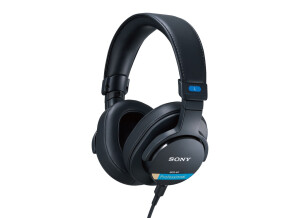
    This is a studio headphone made by Sony. I like some pairs of their headphones but I've often found that their main drawback is that they break too easily. That is thankfully not the case with these, as they are built very well. They are primarily marketed as studio monitoring headphones, or live monitoring headphones for live sound engineers. However, they could realistically be used for regular music listening as well, just by using the appropriate adapter which will vary depending upon which system you are using to listen. I've used these primarily as a studio monitoring headphone which is, in my opinion, their best use, followed closely by live monitoring (they they don't always have enough isolation for that). I like the clarity of the tone of these headphones. They are capable of being very balanced and can do a pretty good job of replicating the tone that is coming through to the monitors. They're not exact, in fact I haven't really used any headphones that perfectly replicate the monitors, but these come about as close as anybody else has to doing that. They're also really comfortable, which is important if you're working an 8 hour session. Even after an hour an uncomfortable pair of headphones can be a bother. Mostly I'm concerned about the price. To be honest, you don't need crystal clear sound in the headphones, you just need it to be accurate enough to get the feel of the music down when using them. Performers won't necessarily notice the difference between these and a pair of Audio Technica studio headphones really, even though the Audio Technicas are about 80 to 100 dollars cheaper. I think that is mostly because of the Sony name, they think that they can jack the price up. Well honestly, that's a bad idea as informed buyers are going to look elsewhere. So while these are nice, I'd have to say that they're just a tad bit overpriced.

  • « Sony PCM D-50 will not turn on. »

    I use this attached to the mixer board and record a duo. Can't find any pros for this product as it will not turn on now. Used it for 3 years and it slowly had problems turning on. I have seen other reviews, on other boards, and it seems at least 100 people have had exactly the same problem. All Sony will say is, send in for repair, this would mean sending it to Toronto and I understand cost is prohibitive. Most likely they change to a board that they have fixed the problem and they make another $350.00 !!!! I will never buy Sony again. The Tascam looks as good and at 1/2 price.

  • « Top-notch pocketable field recorder »

    Since I've purchased the M10 a few months ago, it's been my sole recorder for both outdoor field recording ambiances and also studio recording sound effects. It's also easy to keep in my pocket to carry around and record random sounds that I encounter while I'm on the go. The first thing you notice about the PCM-M10 is that it's extremely compact, about the size of a small cellphone, though a bit thicker. It features 8GB of internal storage with a slot for a MicroSD card or Sony's proprietary M2 format for more storage and both a microphone and line input in addition to the two onboard omnidirectional microphones. The omnidirectional mics are actually quite usable and relatively quiet for cheap onboard microphones. They actually have a bit of wind protection under the casing, making them usable outdoors on mildly windy days without requiring a fuzzy wind protector. It's important to note that the M10 doesn't have any XLR inputs and it doesn't supply phantom power, so you'll have to use a phantom power supply or a separate mixer like the Sound Devices MixPre-D to power condenser microphones if they aren't battery powered. The M10 is able to record in PCM format up to 24-bit/96KHz. It's also capable of recording in encoded MP3 in 3 bitrates: 64kbps, 128kbps, and 320kbps. One problem with the M10 is that even when using an external microphone you cannot record in mono. I do most of my recording with the M10 for one shot sound effects so I don't actually need stereo recordings too often, therefore I have to manually strip or downmix in my 2-track audio editor to get a mono recording. A mild annoyance, but an annoyance nonetheless. The build quality is great. It's mostly plastic with an aluminum face, but it doesn't feel flimsy at all. There's no loose parts wiggling around and it feels very solid. There is some handling noise when you use the onboard mics, so you need to be careful with your hands while recording. The interface is decent, but you need to dig through menus quite a bit when it comes to enabling options and features as the front panel is very simplified with just the transport buttons and a few other utility buttons like changing what the display shows and an options menu button. There's a roller knob on the side that controls your recording level and a rocker switch on the other side that controls your line out volume. The preamps are very quiet, especially for a handheld recorder in this price range. I use a Rode NT1A, NT3, and NT5 with a Denecke PS-1A as a power supply as my main microphones when recording sound effects in my studio. The results are clean and clear with low noise, definitely capable of professional quality recordings. I used a Zoom H4n briefly before buying the M10 and found both the mics and preamps quite noisy in comparison (though still usable!), so I returned that and purchased the M10. That said, the line out when using headphones is actually quite noisy, even when set to headphone mode, it's mostly only useful for simple monitoring. The display isn't very big, but the backlighting is sufficient and the volume levels take up a good portion of the LCD screen so they're easy to see even in low light situations. When using the onboard mics, there's actually two LEDs on the top left and right corners that will light up green or red to give you a quick reference for your volume levels as well. Two of my favorite features of the M10 are the exceptionally good battery life and the Cross-Memory recording. Sony handheld products in general are usually pretty good about battery life and the M10 is fantastic in this regard. Two AA batteries will power the unit for over 30-40 hours before you'll need to replace them. In real world time, this can end up lasting weeks or months unless you're doing very long recording sessions on a regular basis. The Cross-Memory recording will seamlessly switch from the internal storage to your MicroSD card once the internal storage fills up without stopping a take. A very handy feature that will give you some peace of mind during those really long recording sessions. The M10 has a built-in limiter and low cut filter to help reduce some wind and low frequency ambient noises, but it's not as configurable as some other handheld recorders in this price range that let you specify the frequency you want to cut at, it's just a simple on-off option. It's an awesome little recorder for not much money. If you can get past the lack of XLR and phantom power, it's an easy recommendation. It's small, has decent onboard microphones, quiet preamps, and some excellent quality of life features like the cross-memory recording and best-in-class battery life. Pros: + Great build quality + Superb battery life + Decent omnidirectional microphones + Quiet preamps + Cross-Memory recording so you don’t need to stop a take and switch from internal to external storage + Small and portable + Affordable (about $200-250 USD new) Cons: - No XLR or Phantom Power - Can only record in stereo - Some menu diving necessary to turn on and off features

  • « it does not get any better than this! »

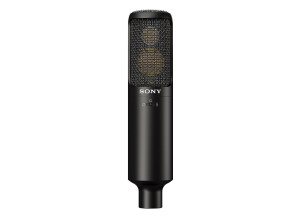
    The Sony C-3B is the type of microphone that can be used for anything. It is a large diaphragm mic that is intended for broadcast and studio uses. I love the way this microphone sounds with more aggressive instruments with a lot of dynamics like trumpets and saxophones. With the dual switch that it has on it for omni-directional and uni-directional polar patterns it gives exactly what you may need for the current recording session. The price for this microphone is very expensive and I have only used it in a big studio where the acoustic treatments and perfect environment could be a contributing factor to how it sounds. But if I could afford to spend almost 3 grand on a microphone to have at home I would get this one in a heartbeat! OVERALL OPINION The sound of this microphone is very clean and crisp. When we recorded with it there was no need to even worry about boosting any frequencies because it puts a little boost on those mid to high range frequencies and they were cutting through the mix right away without even touching them. There is also a low cut filter and a pad switch on the Sony C-3B. The engineer at the studio said this is his favorite microphone to record with because it works perfectly for anything and has never failed him. I highly recommend this microphone to any musician or studio that can afford to purchase it. The pad switch is an -8dB pad witch that gives added headroom while leaving out distortion. The C-38B has a great dynamic range to pick up all sorts of vocals and instruments. I would love to see how it would sound in just a regular “home bedroom” setting and not a major studio just to see how it can compare to some higher end affordable microphones that I have. Because in the studio, there are a lot of acoustic things to take into consideration on how much better it could be making it sound. But the C-38B has become my dream microphone that I plan on purchasing as soon I get the money for it!