Log in
EN
FR

Zoom

274 products found

Categories
Series
Filter
Sort by
Evaluation
  • Reviewed or not
  • Editor’s award
  • Reviewed by Audiofanzine
Availability
  • Available or not
  • Sold new or used
  • Sold new
  • Sold used
Must-have products
  • All products
  • Flagship products
  • Best rated products
  • Hot products
  • Popular products
Price
  • Freeware
€
Clear
Sort by
  • Popularity
  • User ratings
  • Price - low to high
  • Price - high to low
  • Used price, increasing
  • Used price, decreasing
  • Name (from A to Z)
  • Name (from Z to A)
  • Added on
Sort results
  • Popularity
  • User ratings
  • Price - low to high
  • Price - high to low
  • Used price, increasing
  • Used price, decreasing
  • Name (from A to Z)
  • Name (from Z to A)
  • Added on
Filter results 274 results found
Evaluation
Availability
Must-have products
Price
  • Freeware
Show results

The best Zoom reviews

The reviews Audiofanzine members found the most helpful.
  • « H6 is perfect EXCEPT it doesn't allow overdub with onboard mic/capsule »

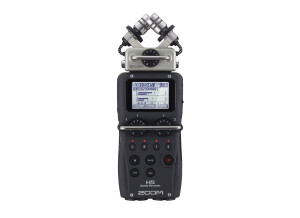
    Having owned the Zoom H4n a few years ago, the H6 is like revisiting an old friend that had lost weight, got in shape and stopped cussing all the time. The interface is really sleek, easy to get to, easy to adjust, and easy to see recording volumes. The volume knobs on the front are a very welcome improvement over the H4n. I liked the H4n but, always hated having to mess with the menus before recording. Never a good option at band practice as it took so long to go through the menu system and you could never be certain what kind of volumes you were recording. I recorded with the H6 as a stand alone using the onboard MS microphone, as well as two DI outputs from my Fishman Artist amp, into the 1/4″ inputs of the H6. The MS mic for the Zoom H6 is very clean, full, and smooth on both vocals and guitar. I even experimented recording with an iPad, using the iPad as an instrument into one of the Zoom H6 tracks that sounded amazing. I use a little app called ThumbJam. Love the Cello on ThumbJam and I can’t believe how well it recorded. Used the headphone jack from the iPad into channel 2 of the H6, with a 1/4″ plugin. The H6 onboard M/S mic recordings of the guitar finger picking and vocals came out better than the plug in from the Fishman DI output. I was able to hear every note, clearly, ringing vibrantly with the onboard M/S Mic Capsule. The recorded tracks from the Fishman DI outputs weren't as clean but gave a nice mix to the finished Mp4. Also used the zoom H6 interface with Logic Pro. It worked well as an interface but, got a bit muddy after several tracks. It was all usable though not the same sound quality of the direct MS mic. Now for the bad. With the H4n it was nice to be able to select which input to use for each track. With the H6 that isn't an option. When you record with the onboard mic capsules, you get a stereo L/R track that can't be overdubbed. Nor can you record with the onboard mic capsuled to another track/channel other than the L/R tracks, making overdubs using the onboard mic capsules impossible. I did call Zoom about this and was told the mic capsules are "hardwired" into the unit which doesn't allow the overdub or re-assignment of tracks. I've posted the email, with the suggested work around, from Zoom on my website https://www.deberney.com/zoom-h6-overdub-work-around/ Here are two recordings using the H6. https://www.deberney.com/home-page/deb-erney-2/deb-cover-songs/ One version has the H6 recordings along with tracks using the H6 as an audio interface with Logic Pro X. The second version is the clean version with just the H6 inputs, no effects, no processing.

  • « Very good multi-track recorder »

    Hi. I've had the R16 for 2 years and use it in my home studio, as a multi-track field recorder (radio deck, conferences) and a soundcard. That's its main strength: It's a multi-task device that allows you to work without a PC. I think it complements perfectly a pocket recorder, like the microtrack II. While it's very light, it's also very fragile. I think there's not much to add regarding its usability and functions. I didn't have the stuck plugs problem, but I did have the one regarding tracks that produce loud noises (hiss) at the input. The problem goes more or less away if you let the unit warm up. Apparently, it's a problem with the electronic components of the preamp. I had to take into to the shop twice (under warranty the first time and then for a manufacturing problem, so I got a free replacement and only had to pay shipping and handling). I'm crossing my fingers now... I'm not a big fan of the control surface function, which is somewhat of a trifle. It's perfect to record a public conference: Up to 8 speakers simultaneously and you can mix live to send it to the stereo master and the PA via the jack outputs. Another good point is that it supports SDHC cards of up to 32GB, so there are no recording capacity issues, even with 8 tracks. The drivers are up to date for windows 8.1, so it's still a relevant product in 2014. However, there's no news for Linux, the hardware isn't generic, so it isn't recognized as a sound card (however the R16 is perfectly recognized as a player, so you can import your recordings and mix them with Ardour). As a multi-track soundcard, it works fine with Cubase 6LE (included) and also with my old Sonar 5, while Audacity and RadioDJ recognize it as a 2-track soundcard. In short, it's a good value for money, but be careful if you get it secondhand, first check that everything works fine. I don't think I'd buy it again now: I think I'd go for a more modern unit (and not the R24, which doesn't add many things). Nevertheless, a secondhand R16 in good shape is a good deal.

  • « Pretty Clean Sound »

    Bought this to replace the Alesis PicoVerb I have been using for a couple of years. Was not entirely happy with that unit (one of the 1/4" pots was making noise when jiggled). And the plates and Chorus/reverb sounds were just ok. Fine for a small studio, church, or gig. After using a G2 Zoom pedal for my guitar and reading reviews of the legendary Zoom rack from back in the 1990 years, I decided to try this 1202 Rack made by Zoom. Although the Chorus/Reverb/Plates etc. are a bit wet, they are CLEAN compared to the Alesis. Pot tuners are very sensitive also, so dialing in to your preference is pretty good. I use this in a small room with my DAW for keys, drum module, computer and 12 channel mixer inputs. Unit seems cheaply built (bottom of product line) but got it less than $50 bucks. Well worth it. Still testing...have not tried it for mics or guitars yet.

  • « These are great units for live recording »

    These units are great for live recording. They have a good solid sound. I like the clarity of this unit for live band recording. They have a really clean sound and they can take a great deal of input volume. We just used some recording a live band www.chrislieckstudios.com. I like the sound for the money. I like the layout. I don't like the small middle knob. Some of the design layouts are a bit weird. The output usb has to have the right operating system to use it on and so that is annoying as is the output headphone jack. I think that they should consider more options for a hand held recorder but as far as sound it is solid. I would rather this be a metal casing than plastic that feels like metal at least that what I call it. I think an that if your using it for live recordings then you want to have a great deal of flexibility when recording for a band or if you use if for video more options as well. Some external recorders for field recording have multiple inputs and allow 4 inputs for lavalier mics and additional mics. I also want easier exportation of audio files. My real problem with these small compact recording devices is the screen size is horrible. You need bifocals to read the screen on most of the Zooms. It becomes annoying when moving from one recording to another and especially if you have several tracks of recorded. But back to the sound, it is good and sounds solid overall. I used it three times and aside from the screen and other issues I must say I was pleasantly surprised at the sound of the unit. It is a great sounding piece for the money. I don't like that it does work importing from what I find on 10.4.1 on Mac and if you have an older computer you may have to update your operating system so that is an issue if you want to do a direct transfer but you have an older operating system you have to go through hoops to make it happen. I would rather that by a plug and play on any operating system or just a basic output feature to send the .wav file to your desktop.

  • Steve_Boudreaux's review

    I am taking a different approach to the review of this amp, and the Washburn X-30 guitar I got at the same time, than I usually do. Rather than live it with months or years, I am going to review these on a "first impressions" basis, as I play them, together, for the first time. SS amp, modeling/DSP effects. 18 watts. The usual controls, plus... UTILIZATION With an 8" speaker and decent controls, the tone to be had from this mic is better than some amps in it's class (budget/bedroom practice amps, under 20 watts.) SOUNDS Versatility is this thing's forte'. Perfect tone, alas, is not. The "clean" and "Fd" (Fender) amp settings, for instance, are not so clean- no Fender tube chime, here. None of the amp models were identifiable as being modeled after a certain make of amp- Marshall, Vox, Fender, etc., by sound alone, but they do a reasonable job of reproducing those tones- for a bedroom amp. OVERALL OPINION First thing I did was tune the guitar, of course. On-board tuner can either sound the notes through the amp, or mute them. Nice touch. Display is easy to read, and fairly intuitive, once you realize what it is doing. The 11 amp models were next. One thing I can say for them- they are ALL different. Some rather over the top ("Metal, in particular,) and the "acoustic" model is a bit weak on volume- but it does about as good a job of simulating an acoustic guitar as most do. "Plain" amp model defeats all the effects of the model amps, which might come in handy if you want to use only out-board effects, but really, who would? If you are using stomp boxes and such, you are probably using a whole different amp. The LED display reads out the value of whatever knob you are turning at any moment, and the knobs have dots to give you a rough idea- another nice touch. EQ's are active, with cut and boost on all three. For "18 watts," this amp is not nearly as ballsy as that power rating would suggest- if it were not for the balanced line out XLR and unbalanced TS jacks on the back, this would be a bedroom amp, only.=-(as of this writing, I have not tried those outputs) until you switch from "manual" to "program-' then, it gets louder. Not tube-amp, Twin Reverb 100 watts loud, but at least loudER. The effects are all accessible via little buttons on the front, so most can be had at the same time. This amp commits the budget-amp's cardinal sin- only one parameter of time effects can be changed- but that's common at this price range. The feature that is unique on this amp is a built-in condenser mic, positioned right in front of the speaker but behind the grill cloth, which Washburn promises will allow the user to "mic" the amp easily- just plug into the line-out and adjust the mic level out and/or line-level out to taste. I am looking forward to trying this out, and will report back.

  • « A KILLER drive pedal from Zoom! »

    The Zoom Hyper Lead HL01 is one of the four pedals in Zoom's vastly unknown and underrated line of analog dirt boxes. This one was designed to be like a hard rock distortion, replicating the sound of a classic British stack amp. It has a very basic control set of gain, volume, treble, bass, middle, and range controls. The range control is very cool in that it adjusts the frequency and sweep of your midrange control, so you can adjust it to be more scooped in nature or more boosted in nature. As I said above, it is an analog pedal, so it does sound far more authentic than its digital counterparts. Being that Zoom is a company known for digital products, I was extremely skeptical that this pedal could work... but it does, and it does very well. I liked it so much that I sought out a PD01 Power Drive to run with it in tandem a few years later. UTILIZATION Setting up this pedal can be a little bit tough at first just because the controls need to be dialed in to counteract with one another, but once this happens it's a walk in the park. Most of the controls are fairly straightforward. The biggest one to dial in is the aforementioned "range" control. It really depends on the tone you are after. I find setting it at full gives the most "scooped" sounding tone, and moving it back towards 0 brings more midrange into the equation. I usually went for a fairly neutral tone (IE: setting it around 12 oclock or close to it) and it worked out quite well. SOUND QUALITY I used it most often with various Yamaha guitars and Yamaha and Laney amplifiers. One of the best hard rock tones I've had was my '92 Yamaha Pacifica with Gibson HBs into the Laney LC15R combo amp with the HL01 set up for a good seventies/eighties rock tone. I would set the Laney up for very mild overdrive (basically a clean tone with some grit when I picked harder) and use the HL01 for all my distorted tones. I used it in various rock, jazz, and blues projects without issue. The great thing about this pedal is that it's quite organic (due to the analog circuitry), and because of this it has a very tubelike tone and feel. When I plugged this pedal in, regardless of the amp, I FELT like I was using a tube amp, and that's a huge plus in the field of dirt boxes to me. OVERALL OPINION All in all, I feel that this pedal is great, and vastly underrated. I like it a lot, not only for the tone, but for how it feels when I use it. It's very versatile and works well for whichever musical styles I throw at it. I haven't used it or my PD01 as much since getting into more high dollar amp heads but occasionally I press it back into service when I have a pick up gig or a show that requires me using an amp that isn't my own. I want to try the other pedals in the series at some point as well, as I can imagine that they all have the same versatility and tubelike feel as the HL01. Definitely an awesome pedal, especially for the money... if you get the chance to buy or try one, do it for sure!

  • Audiofanzine FR's review

    (Originally written by vinc59600/translated from Audiofanzine FR) Nine simultaneous effects Jack input Mono jack output for an amp or stereo for headphones, mixer or computer. USB connector also used for power supply. My dealer said the external PSU is optional (I had to bargain to get it for free). Integrated expression pedal assignable to each patch. Connector for an FP02 expression pedal to control the volume (optional). 40 factory presets 40 fully editable user presets. UTILIZATION Short learning curve. Fast and intuitive editing, no signal dropouts when you change presets. Easy and precise user's manual. You'll have to edit the factory presets because they don't sound good. It won't take you long to get the sound you're looking for and you'll be surprised by the power of the device. SOUND QUALITY I play rock, funk, pop, a bit of everything. I use it on stage and for rehearsals but also at home where I connect it directly to my PC. It's sweet! You can connect it to your amp or to a mixer depending on the setup. I use it with a Fender Strat or a dual-neck Ibanez, and with my 100-watt Yamaha combo. I get a wonderful fat distortion. Chorus, reverb and delay effects sound amazing. The optional FP02 expression pedal is not necessary but quite convenient to control the volume. As I said before, you'll have to edit the factory presets to get the sound you want. I can get the sound of The Edge, Andy Summers, Knopfler, and even Gilmour. Only acoustic guitar simulations are not convincing. And some effects are only provided to show off the power of the unit. OVERALL OPINION I owned a G2 two years. Four months ago I gave it to my son who plays in a hard rock band, and I bought its big brother. Before buying it I tried a G7, but the value for money isn't good so I ended coming back to the G2. I just had to transfer all the presets I had created. I love the fast editing for stage and rehearsal applications. 40 presets are enough for almost any application. Excellent value for money. Based on my experienced, I would buy it again.

  • Audiofanzine FR's review

    (Originally written by Kerb/translated from Audiofanzine FR) Audio interface with tube and solid-state preamp. This gear is conceived to record guitar and bass but it can also manage vocal recordings... so it's perfect for demos! UTILIZATION Ultra easy installation. Sweet! GETTING STARTED No crashes until now. Very low latency. Three softwares are provided with the interface: - Zoom plugin (guitar and bass amp simulation): large choice of amps but average sound. - Guitar rig 3 lite: JCM800 and Fender Twin simulations but it's far from being the ultimate amp simulation (I've tried out virtually everything!!) - Cubase lite: everyone knows the software... OVERALL OPINION I've been using this product for 3 months and I'm very happy. The weakest point is the Zoom simulation software which has a very poor sound quality. Luckily, Guitar Rig 3 improves the quality of the bundle (was Zoom so ashamed of its own software that they decided to add a competitor product in their package???). Very satisfying value for money, I'm sure I would buy this product again. I give it an 8 due to the limited amp simulations, considering that only Guitar Rig 3 is actually usable (for guitar applications).

  • « Zoom HD16 does the job and then some »

    The Zoom HD-16 has tons of great features making this an extremely powerful tool for any musician looking to record. It has Drum and Bass machine built in, digital mixer, CD-R/RW drive, built in effects. You can lay down 16 audio tracks, 8 simultaneously. As per the user’s guide, you can also do stretch/compression, pitch compensation and harmonization, although I have never messed with those features. Tons of input sources can be used from guitars, bass, high impedance instruments, dynamic and condenser mics as well as synthesizers. UTILIZATION My brain usually shorts out learning to use something like this but I was up and running laying down tracks in about 15 minutes, which is pretty good for all the features this has. The manual lays out a nice section on how to get started and makes laying down some simple tracks quite easy. This is great because unless they make it easy, something like this would have been back to the store in about a half hour. Was not the case with this unit. Guitar and microphone plugged in and the controls were easy to understand. SOUNDS I was immediately impressed with the drum and bass machine and how easy it was to manipulate if for no other reason than to give me a click track to play over. You can use the tab tempo feature to get the speed easily to where you want it. Sound quality was excellent. I miked a Marshall 4X12 and it recorded perfectly capturing the raw dynamics of that set up, which is exactly what I was hoping for. I love being able to work with audio files imported from the CD player to use as back up tracks. This is perfect for my purposes and probably way more sophisticated than I will ever need. OVERALL OPINION I love the simplicity of getting started and the knowledge that there are way more features to learn as I go along. I did get this used so I can honestly say it was worth the trade I made giving my buddy an Ibanez guitar for it. Definitely satisfied with the quality of what I have been able to do thus far. I had been using a DP-004 pocket studio prior to this, but this opens up a whole new world of possibilities and options. I would highly recommend this unit to anyone looking to make high quality recordings for a fair price. Perfect for those on a mid-range budget that can't afford a Mac and all of the other things needed to use the PC. This does the job and then some.

  • Heavyspender's review

    Multi-effects pedal with 42 programmable / editable presets. I believe this is a digital device. The main effects categories this unit has includes compressor/limiter, wah, "drive", Equalizer, noise suppressor, pitch modulation, delay, and reverb. All effects can be used at the same time, which is great. Within the modulation category, you can set the unit for flange, chorus, phaser, tremolo, just to name a few. You can also choose between 4 different amp models as well as an additional 7 types of "drive." Connections are a standard input and output as well as a 9volt connector for power supply. The output also doubles as a headphone in, which is cool. Unfortunately, the presets/effects cannot be edited via a Mac/PC editor utility program. This is designed as a floor pedal, so it is not rackable. UTILIZATION The actual face of the pedal is easy to understand and utilize. As far as actually navigating the presets in order to tweak them or modify them,the unit takes some playing around with. This is where the manual, though long, comes in. The manual is very self-explanatory and explains the operation simply and easily. The only reason the manual is so long and why it takes a long time to figure out the extent of this unit's capabilities is because there are so many options/sounds that can be coaxed out of this little unit. SOUND QUALITY For being digital, the effects on this little unit are very solid, and many of them are sufficiently realistic. For example, I feel it does the Fender Twin very well. Use that setting on any amp, close your eyes, and you'd swear there's a Fender Twin right beside you. If you want a Mesa or a Marshall, you can have something darn close to them. There is a Soldano lead setting, and a psychedelic Jimmy Hendrix sound. The standard wah sound is pretty spot on as well. If you want to sound like standard Eddie Van Halen, or if you want his "unchained" flanging sound, this unit can give you both, and is pretty much right on the money. There is a tweed preset with a cool tremolo effect that sounds great for country, western, or blues. If I had to name some cons, the acoustic modeler is not that great. There are also 2 entire "banks" or sets of 6 presets that are kind of cheesy sounding for the most part. But the great news is that these can be edited, so you have room to create your own unique presets. Overall, I've got so many sounds at my disposal with just this one unit. Much cheaper than buying several pedals, or even worse, several amps. I use this unit only with my Ibanez RG 120, and it is perfect. OVERALL OPINION I have been using this since the beginning of the year. The more I get used to it, there is nothing I really don't like about it. I am actually more of a purist, plugging straight from the guitar to the amp. But this unit just makes me such a "tonal chameleon," I have so many options for changing my sound depending on the song, it's great. The distortion choices alone make me drool every time I think about it. I checked out a similar Korg unit as well as the Behringer V-AMP floor pedal, but this one was available at a great price. As soon as I plugged it in and played a couple of chords/solos at the guitar store, I was already sold. I ended up playing it for another entire hour before I left the store and brought it home, that's how much fun this unit is. This is probably the best $50 I've spent on equipment. I really don't see myself needing any other pedals, unless I upgrade and replace the ones I have currently. So many sounds and options all in one unit. I do not regret the choice I made and if I needed to, I would buy this again.

  • « Great live board with high quality recording capability »

    I have a small live recording studio and needed to upgrade from my reliable Mackie analog board connected to a Focusrite FireWire computer interface. I reviewed several similarly priced products and selected the L-20. I have found it to be a easily configurable live board with 6 easily modified monitor outs and very good sounding main outs. I typically record 6 to 10 mono channels on to the SD card. I am the guitarists and vocalists and also the recording engineer. Getting correct level set was a challenge. Having the recording interface closer made getting input levels easier. Pros 16 combo XLR/1/4” inputs with decent preamps and easily configured effects 6 easily customized personal monitor outs Small footprint...easily rack mountable Programmable ‘scenes’ allow for quick setup. Cons Fairly steep learning curve It’s easy to not set the inputs faders to the desired levels if a previous setting has been used I feel that the Zoom L-20 is a great value and have produced mixes that equal those obtained using my traditional computer interface.

  • « Great performances, but lack of ergonomics »

    Pros The H5 is super powerful; great built-in mics, great preamps, and the gain control knobs are a great step up from the H4n. I highly recommend it, it offers a great quality and can be used in almost any situation. Cons The only concerns that I have are about ergonomics. My main issue is about powering it; on batteries, it doesn't last long at all when phantom powering an external mic. And the only option to plug it to a power source is using the mini-USB port. This is a shame, because it can be very easily get unplugged, either when moving the Zoom around, or because of the weight of an USB/AC power adapter + extension cord. My workaround I have found a way to power the Zoom that keeps things easy and handy; through power banks. They are cheap, lightweight and last forever (even when using phantom power). Here is a little explanation : http://rgalix.com/audio/power.png