Log in
EN
FR

Zvex

79 products found

Categories
Filter
Sort by
Evaluation
  • Reviewed or not
  • Editor’s award
  • Reviewed by Audiofanzine
Availability
  • Available or not
  • Sold new or used
  • Sold new
  • Sold used
Must-have products
  • All products
  • Flagship products
  • Best rated products
  • Hot products
  • Popular products
Price
  • Freeware
€
Clear
Sort by
  • Popularity
  • User ratings
  • Price - low to high
  • Price - high to low
  • Used price, increasing
  • Used price, decreasing
  • Name (from A to Z)
  • Name (from Z to A)
  • Added on
Sort results
  • Popularity
  • User ratings
  • Price - low to high
  • Price - high to low
  • Used price, increasing
  • Used price, decreasing
  • Name (from A to Z)
  • Name (from Z to A)
  • Added on
Filter results 79 results found
Evaluation
Availability
Must-have products
Price
  • Freeware
Show results

The best Zvex reviews

The reviews Audiofanzine members found the most helpful.
  • « The Most Beautiful Sounding Tremolo? »

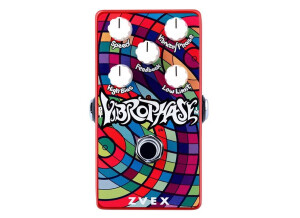
    SOUND: The Vibrophase can produce sounds from subtle to complex, can mimic a pulsating tremolo or phase-type waves, but with its 4-stage phasing technology it produces incredibly beautiful sounds that take a tremolo-phase to new levels, as demonstrated in the YouTube video accompanying this review. This tremolo-phaser is based on a very costly candle-driven/powered ZVEX invention called the Candela Vibrophase – a four-stage phaser using Super Hard-On phase-shifting stages (as the candle illuminates the photoelectric cells through a rotating painted disc). It’s pretty interesting technology, merging the old with the new and worth checking out if you have not: The Vibrophase has no actual ‘mix’ or ‘amount’ knob, and so when you want only a small amount of tremolo-phase you need to tweak the High Bias and Low Limit knobs, as placing the amount of either on the low end will keep the Vibrophase tame and only slightly in the mix. When doing so you can produce a very lovely and unique effect with chord playing or to add a hint of depth to lead playing. And if you care to go for something more exaggerated, I don’t think there’s another tremolo pedal on the market that can touch it, with its almost hypnotic three-dimensional swirling. OVERALL IMPRESSION: This pedal is very unique in its sound, and the sounds it produces, that it may seem limited (insofar as to how often you would use it). By that I mean the ‘quality’ is so apparent that it sits best within a particular atmosphere of composition. However, with some tweaking it’s easy to keep the Vibrophase low in the mix for that added dimension and warmth, as opposed to a full tremolo-phase assault. The pedal’s art graphics certainly does it justice, reminding me of a Kaleidoscope (the reason for the demo video’s direction) or a stained glassed window, which supports the ethereal and utterly beautiful sounds produced by this ZVEX creation. The ability to shift from a more common vibrato to a drunken dreamy phase is useful, but being able to adjust the degree of high and low filters to tailor the effect is what really helps to give this pedal added appeal. But having stated as much, the real ‘piece de resistance’ is the Feedback knob, which takes the effect to another level of surrealism and helps separate it from so many other tremolo-phaser pedals on the market. Available from: https://www.rogueguitarshop.com/products/zvex-vibrophase EASE OF USE: The Vibrophase has several knobs, but it can be relatively easy to hone in on the correct amount of mix, tone, feedback, etc., with only a few minutes practice. The Speed is straight-forward, in that it controls how fast the sine wave repeats – whether long and slow (Pink Floyd) or rapid (Surf music). The Vibrato-Phase alters the signal from a more traditional tremolo to lopsided warbling (and sounds more ‘sweeping’ as more of the dry signal is phased in). Next are the High Bias and Low Limit knobs. Think of these as how much higher tone vs. lower tone you want in the mix and integrated with one another, and as you adjust one you may need to adjust the other (depending on what you want to hear in the resultant sound). If you keep both around 4-o’clock the signal will barely be audible… certainly audible compared to a dry signal without the Vibrophase, but offering just a hint of the effect. As one or both rotates toward 12-noon you begin getting a much higher effect. Adjusting counter-clockwise past 12-noon reduces the amount of mix/signal again, but in a different way (the demo video will make this clearer). The Feedback knob is the one that adds that extra pizzazz by leaking some of the output signal back in; and around 11-o’clock it becomes more obvious, but at 12-noon and particularly past 1-o’clock it is super obvious (becoming a bit too powerful past 2-o’clock, unless that’s what you want). Without any Feedback you have a fairly basic vibrato/phaser/tremolo type effect, although more enchanting than I’ve heard from other pedals in its genre because of how the high-low play off each other; but with the Feedback the Vibrophase becomes utterly unique. RELIABILITY & DURABILITY: The Vibrophase’s all-steel chassis measures in at about 2.25 x 4.25 inches (6.0 x 10.5 cm). The stomp switch is very solid with a quality click when engaged or disengaged. The knobs are heavy plastic, and although somewhat close to the footswitch should not be damaged under normal use. The knobs/pots turn smoothly and feel of good quality, as well. The power input (typical 9V, 2.1 mm) is located in the back, which I tend to prefer for pedal board purposes and keeping the area clean. The input/output both are located along the side and sometimes this location can cause an issue with missteps or abuse, but they are located higher up and about mid-way – far enough from a stomping foot. Vibrophase, like other ZVEX pedals, also is covered by a standard 2-year warranty (if you register on line… otherwise, a 1-year warranty).

  • « Heavy grainy distortion to smooth velvety fuzz »

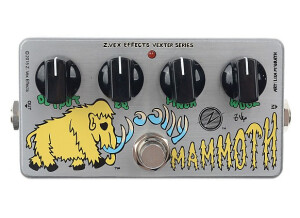
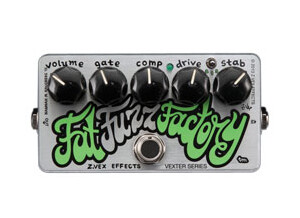
    SOUND: The Fuzz Factory is one of those classic pedals that originally put ZVEX on the map. You can dial into some great distortion and fuzz tones, and even some freaky feedback if that’s up your alley. The YouTube demo below includes several settings, although I kept it more conservative and traditional. Some of the functions are straight forward, such as the volume, gate and compression. Obviously you use the GATE to reduce any background noise (unless you want to hear added squeals and burps from the STAB (stability knob), and the COMPRESSION is excellent in pinching the tone or it can be used to smooth things out if you want a velvety sound. The DRIVE is very nice, in that you can achieve a gritty and dirty overdrive or distortion, more so than a fuzz quality… but turned all the way up and it sizzles very nicely while remaining clear in the mix. The drive also alters the tone, so that turned toward the left you get a deeper and thicker sound with more grain, whereas you get more clarity and treble when turned to the right. The STAB or stability controls the feedback pitch (low when turned left and high when turned right) – all the way right and it’s quiet as a mouse, but turn it left and past 2-o’clock and you can get some freaky results (that can be controlled or manipulated with the compression and gate). The sound of this pedal is very much like other ZVEX pedals… it sounds like a ZVEX. There is something very raw and organic about this company’s analog equipment and with their own characteristics, and the Fuzz Factory is no exception. Some other fuzz pedals, even if analog, have a more processed sound, whereas you can hear every detail in the Fuzz Factory, like bacon slowly cooking in a cast iron frying pan. OVERALL IMPRESSION: Encased in steel, the Fuzz Factory has a metal foot switch (for on and off) and plastic knobs. The foot switch is far enough removed from the knobs that there shouldn’t be an issue of damage caused by stomping. The standard 9v power input is located at the back, whereas the input-output are located along the sides. It’s interesting that a well-known gear reviewer on YouTube considered the Fuzz Factory to be in the top 10 worse pedals… ever! I can only hazard a guess that he did not control the feedback (from the STAB knob) by way of the compressor or gate… both of which can allow squeals and pops to trickle in, if desired, or become blatantly obnoxious (if you want to go that route). If you avoid the STAB all together you can some great thick distortion that transforms to a very fine and smooth fuzz… you then can get a very punchy effect with the compressor and, of course, have the signal super quiet with the gate. And so, I have no idea what the heck he did with the pedal when reviewing it. EASE OF USE: The Fuzz Factory is not difficult to use, but you will need to do some tweaking to discover how smooth, punchy or ‘wild’ you want the tone. Avoiding the STAB narrows your decisions and makes it easy to use, although some bubbles, burps and screeches in the mix certainly are fun and entertaining. There are no downfalls, unless you don’t like the particular tones of the Fuzz Factory… it does what it’s supposed to do and with very good versatility. It operate on a 9v battery, but also accepts a basic 9v power supply while consuming a paltry 3 mA.

  • « Box of Rock gives you the 1966 Marshall JTM45 Amp Sound (Townshend/Hendrix) »

    SOUND: Certain guitars and amps have become desired collectables because they just happen to have gotten something right. The 1966 Marshall JTM45 amp head is such a beast. If unfamiliar with this amp simply think of early Pete Townshend and Jimi Hendrix with their huge Marshall stacks. ZVEX landed on the map of guitar effects because of its Fuzz Factory, but continued to gain a following with its Box of Rock, which emulates the 1966 Marshall JTM45. Below is a YouTube demo that goes over the pedal’s sounds, but also and how it interacts with different bass, mid and treble amp settings. The ZVEX Box of Rock operates in a very straight forward manner. You have the VOLUME control (which needs to coordinate with the volume on your amp or other interface). There is a TONE control, which dictates how much bass or treble is in the signal. The DRIVE is also the distortion, giving that ‘tube breaking up’ quality… and ZVEX has done such an excellent job on mimicking a Marshall amp sound. A touch of Drive gives some warmth, but once you dial up to 50% the pedal begins to shine. Up full and you get a warm, but rich rumble as you wind-mill through some power chords, just like Townshend of yesteryear. The BOOST is a re-tooled ZVEX Super Hard-on, which gives you 50x boosting, but is more transparent and less glassy. Best yet you can use the Boost on its own or with the Drive. OVERALL IMPRESSION: Encased in steel, the Box of Rock has metal foot switches and plastic knobs. The foot switches are far enough removed from the knobs that there shouldn’t be an issue of damage caused by stomping. The standard 9v (3mA) power input is located at the back and far from harm’s way (it also works on a 9v battery, which comes with the pedal and lasts a long time since it requires such low power). If you’re looking for that classic rock sound so prevalent with groups from the mid 1960s to early 1970s, the Box of Rock will be up your alley. Similar to the ZVEX ’59 Sound (which emulates the 1959 Fender Bassman) it is not a diverse pedal, but does it’s one thing very well – true to its design and purpose – to sound like a 1966 Marshall JTM45. The Box of Rock is destined to become a classic, just like the amp it replicates. EASE OF USE: This pedal is about as straight forward as it gets. Set the VOLUME relative to the volume setting of your amp (or other device). Set your TONE relative to the settings on your amp, e.g., how much bass or treble do you want in the signal? Set the DRIVE to give you a warm ‘edge’ or crank it up for some classic rock tones (and by rolling off the guitar’s volume the Box of Rock cleans up very nicely so that you can keep your mini-Marshall up full all the time while controlling the dynamics from the guitar). The BOOST likely will be set around 25-40%, which is a very hefty kick in the pants when doing lead solos or wanting more emphasis on some rhythm chops.

  • « Not your dad's Big Muff!!!! »

    The Zvex Fuzz Factory is not a tradition fuzz box you may be accustomed to from records of old. Zvex has taken a unique but usable approach to the classic fuzz overdrive. Using germanium transistors and the very slightest touches of the controls takes your from usable fuzz OD all the way to oscillating synth squeals that will take noise making to a whole new level. Control layout as follows: Volume, Gate, Comp, Drive, Stab Volume is as it says. However, you do not want to take it past 10:30. Zvex has programmed this pedal to get excruciating volumes. In fact in the user manual is tells you not to take it past this range. Gate is simple a noise gate that allows a user to clip some of the noise feedback with blazing fuzz distortion. It also allows you to use as an oscillation knob depending on how you have the other controls. Comp simply compresses the tone but beware when using this when you have the stab and drive up. Again this knob creates an oscillation as well. Drive is where you get your distortion and can get very useful throughout the clock range from simple OD to blistering fuzz. Stab is a unique control that is only usable all the way to the right. You need to stay in the 3-5 o'clock range to be usable. Very touch sensitive and again usable as an oscillator. UTILIZATION It is quite easy to use. Any monkey who is capable of using a distortion box will be able to find there way around the tones of this unit. The manual helps you get started with some suggested usage settings. However, you need to take it for a spin to get the feel for the pedal and how sensitive the knobs can be. Zvex makes enough suggestions to get you up and running in seconds. SOUND QUALITY I used this with a Strat and an LP into a Fender HRD and Marshall JMP. I found it to work for me better with the Fender. Different feel with the Marshall....not bad just different. I probably spent more time coming up with crazy oscillation than running general fuzz applications. However, this isn't a pedal that I would use on a normal basis. It is more of toy that can make cool sounds but not as an everyday fuzz or distortion box. I also didn't find it very usable with other pedal such as a TS9 or a Boss OD-2. It really takes over your tone and the sound dominates what your doing. OVERALL OPINION The thing that was fun was making weird oscillating noises. Other than that I did not find a quality use for it. It is kind of expensive even though a got it a few bucks cheaper. Even though it is built very well, $299 for a fuzz box that kind of sounded weak if your used to a Big Muff was just not for me. The two could not be further from each other. If you want to hear it in its context, check out Matt Bellamy from Muse on the song "Plug Me In". There is a real recording application. If you like that tone then you will like this pedal. For me I'll stick to the Big Muff.

  • Audiofanzine FR's review

    (Originally written by poufinou/translated from Audiofanzine FR) The Wah Probe is a wah pedal combined with a Super Hard On (SHO). If you don't know Zack pedals, the SHO is a preamp pedal, which means it boosts the guitar's signal without coloring and altering it... The pedal doesn't use a foot plate but an "antenna" in the form of a copper plate that captures foot, hand and head movements. It's totally ZVex: vintage and modern. The device is heavy with a metal bottom side and a plexiglas cover containing the copper "antenna". The pedal is hand-painted and has a sturdy construction. It obviously has an on/off switch and an input/output. On the rear panel you have a drive control that allows you to adjust the gain of the SHO. The pedal requires a 9-volt battery and has no PSU operation (except via an optional ZVex socket). Luckily this product has a very low power consumption like all ZVex pedals! The bottom side must be unscrewed to access the battery compartment. It's not very pracical but it allows you to admire the handcrafted construction of the beast!! Stunning!! You can also adjust the sensitivity and the frequency response using two trim controls in the pedal!!! Each pedal is a custom product because it's handmade. You might even find one with a custom finish! The pedal is signed by the painter (Jason Mylord) and Zack Vex, who engraves his signature on the bottom side and on the copper antenna. The pedal is sold in an original cardboard box and cloth bag. That's right it's a high-class, handcrafted pedal whose quality and originality make it a work of art. UTILIZATION Plug and play. The user's manual is also atypical and very funny. ZVex pedals are a totally different species. Access to the battery is not easy, the lack of PSU operation is a turnoff, and the sensitivity and frequency response controls are not practical (you need a screw driver). But it's the typical ZVex style. It's handcrafted!! Using the "antenna" is easy, responsive and effective. Better than a rocker pedal! And you can use your hand to play with the wah. The effect response is very accurate even when you make fast moves! I give it 9/10 due to the small annoying details (which actually add to the personality of the product). SOUND QUALITY The sound of the Wah Probe makes it a high-class product. No emulation effect but a real wah with its own personality. The SHO circuitry is very interesting. It gives more punch to the sound, which gets thinner due to the wah effect (normal for a pass-band filter!!), but it also allows you to add saturation, sharpness and aggressiveness to the sound with the drive control. When the drive is maxed the wah effect becomes spectacular. In short, it's a wah pedal providing modern and vintage sounds thanks to the SHO circuitry. OVERALL OPINION Once again ZVex delivers a vintage concept with a very modern sound processing. It's a high-class product with a finish that almost makes it a work of art. Original and handcrafted like every other ZVex pedal, it's a totally new sound experience. i know, the price... do we really have to talk about it?

  • « Two is slightly better than one »

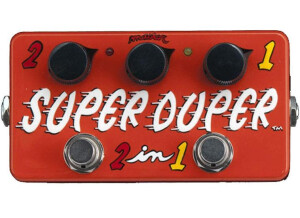
    - Two Crackle Okay knobs - Master volume knob for one of the two channels - LED - 9 Volt adapter requires modification or replacement bottom plate. - Hand painted enclosure - True bypass UTILIZATION This is basically two Super Hard Ons stuck in the same enclosure, one with a Master Volume knob. The sound is similar to that of the normal Super Hard On. The only thing changing is you are getting just slightly more ability to change the sound. You can also cascade them both together to get higher gain sounds. Regardless of those few upgrades from the original Super Hard On, the Super Duper is still grossly lacking in terms of flexibility. SOUND QUALITY Like previously stated, it sounds like two Super Hard Ons in one box. This can either be a good thing or a bad thing, depending on how you like the sound of the Super Hard On. Personally, I find the SHO to be very bright and hi-fi sounding. It can be a bit overbearing and painful depending on the setup. For what it does, it can good. It could sound a lot better and be a lot more useful with a few more knobs. Maybe even just one knob. OVERALL OPINION I have a few problems with this pedal. First off, the price is extremely high. The features are very limited. The sound is decent, but I don't think that it justifies the high price. It is nice to be able to have a Master volume knob on one of the two "pedals". It's also fun to cascade them both together. That being said, at the risk of sounding like a broken record, the price is simply not justified. Even the lower priced version (Vexter series) is way too much money for both terms of functionality as well as sound quality. Many other higher end pedals offer a lot more (in terms of tone and features) for the same or less (sometimes a lot less) money.

  • « It'll do weird, but it shines at subtlety. »

    The Instant Lo-Fi Junky is a brand new product from Zvex. It was designed to mimic the neat tones achieved by the Lo-Fi Loop Junky, an analog loop pedal also made by the company. Players loved the sound that they got from the Loop Junky, and wanted something that could get that tone in real-time. The Instant Junky has 5 knobs (vol, tone, "comp/lo-fi", depth, and speed) as well as a switch to control the waveform. The volume control can get a good level of clean gain boost out of it, so it is already a valuable addition to a pedalboard with just that. The comp/lo-fi knob is where this box shines. It acts as a blend between a compressor sound and a vibrato circuit. With the control all the way in comp, this pedal sounds like an old MXR Dyna Comp or similar. It can get really squished, and is fantastic for clean tone Telecaster chicken pickin'. When that control is turned up a little, it engages the lo-fi circuit, which turns on the tone, depth, speed, and waveform controls. The sounds in the extreme end of this are very watery, shimmery, and just dripping with the cool factor. Playing around with the depth, speed, and waveform controls can achieve anything from nice chorus washes to near-Univibe churning. It won't pass for "Machine Gun" to most discriminating ears, but it would work in a pinch at a gig where someone requested some Hendrix or Trower and a Univibe pedal wasn't handy. My favorite thing about this pedal was turning the comp/lo-fi knob to about 70% compressor, 30% lo-fi, and making the lo-fi very subtle, but turning the tone knob way down. I don't really personally want to emulate an old record player (as the hand drawn artwork on the box suggests), so I use this box to be a compressor/boost pedal with a touch of chorus. It is very inspiring on the clean tones, with a bit of delay and reverb added, and I could play on that tone all day. This is a great pedal from Zvex, and would make a handy addition to any arsenal.

  • iamqman's review

    Very simple ad easy to use unit. If you think you have a weak sounding guitar and or weak sounding pickups then this might be the pedal for you. With only one knob and two outputs for different amps or a tuner out there really isn't much to think about. Just plug it in and listen how it reacts to your guitars output and boost the natural frequencies of your guitar and pickups. * Hand-painted artwork * Ultratransparent boost * High-impedance input refuses current from your pickup * Ultrahigh output * Goes from unity gain to in excess of 8V peak UTILIZATION This is the perfect preamp pedal. The "Crackle Okay" volume knob is a negative-feedback control styled after classic 60's recording console inputs. (They crackled when adjusted too.) Most vintage guitars suffer from steadily deteriorating magnets in their pickups, since permanent magnets aren't really forever. The Super Hard-On's input impedance is so high (5 Meg) that it refuses any current flow from your pickup... maintaining the most magnetic field around each string, so you can hear exactly what your pickup sounded like the day it came off the winder. The output level can exceed 8 volts peak, and when it finally distorts, the wave is shaped like triode overload, not fuzz. Like all Z. Vex designs, current flow is low in this circuit (less than 2mA), enhancing battery life. The circuit board is hand-cut and soldered with the critical component, a BS-170 mosfet transistor, placed in a socket for easy user replacement should it be necessary. Your dealer can provide you with a free replacement transistor upon request. The box is hand-drilled using no petro lubricants, and hand painted so that every box is unique. Knobs are Harry Davies, made with the same molds they've used since the fifties. Each effect is hand dated and signed by Zachary Vex. SOUND QUALITY I love the clarity it can give you when you run the control knob around 9:00. It really gives a nice sweet volume and transparency. Turn the knob up to 12:00 and you will get a nice mild overdrive signal that works very well in front of an already overdriven amp. It is subtle but sounds great in front of a Marshall JCM 800. If you turn the control knob all the way up it gets a nice tubescreamer type overdrive which is mild and classic sounding. When it is maxed out it does get a little fuzz tones in there which is very cool and unique. OVERALL OPINION Like all Zvex pedals this is built quite well and will sound excellent through just about any source. At new these unit come in at around $240 a piece. Not a bad price for a solid built and sounding booster pedal. And for what it does it does quite well. Some people might think why would someone pay for a one control knob unit that just increases the volume, but if you got the chance to plug this thing in you would immediately hear the reason why this pedal is fantastic. I would recommend this pedal to anyone who needs a bit of a boost to their signal or feel that the pickups or guitar sounds a little weak. This will give you the clarity and gleaming tone that you find on mixed and mastering recordings.

  • iamqman's review

    This little unit is based off the Marshall JTM45 unit from the 60's. And I think they have done quite well on this thing. It has a great classic rock tone that sounds fantastic in front of a clean amp or even in front of a dirty amp on a clean boost. The circuit is a boost and an overdrive in one unit. So it is like having two boxes in one. UTILIZATION The Controls: Drive: Sets the amount of distortion. Start around 1:00 o'clock. Tone: Adjust for treble content. Start around 2:00 o'clock. Vol: Adjust for distortron engine volume level. Start around 9:00 o'clock. Boost: Sets the boost level, which is engaged with the left stomp switch. Start around 11:00 o'clock. The Drive and Boost controls are based on the original Super Hard-On gain control, so they may crackle when turned. This is perfectly normal. The super hard on is a great pedal as well. Operation: Plug your guitar (or any effect’s output) into the right hand input jack. Plug the output into an amp or other effect’s input. Rock out. Careful with the Boost setting when using a high-powered amp with lots of headroom... you may be shocked at how loud it can get! The best way to complete this pedal is to run it through a Marshall amplifier on a warm clean setting (try strapping the channels, setting the volumes below 3, and setting all other controls to 6 as a start point), which has the proper voicing to reveal the "rock" in the Box of Rock. Battery Change: If the performance of your pedal seems diminished or the LEDs become very dim, it's time to change your battery. Remove the four screws on the bottom of the pedal and carefully remove and replace the old battery, putting it back exactly in the center of the pedal on edge so that it is gripped tightly by the lid when it is screwed back in place. Specifications: Uses 1 9V battery (preferably alkaline, but the unit is shipped with a carbon-zinc battery.) The low current operation of this pedal's circuit will give you a long battery life. Current draw is approximately 3mA. A DC power jack (standard Boss configuration with center negative) is provided on the side of the pedal. Use a high- quality 9V adaptor for all high-gain effects! Warranty: All hand painted Z.Vex pedals have a lifetime warranty. SOUND QUALITY The sound quality is remarkable! I am not a fan of distortion boxes, but this thing has a sweet warm tone than is very reminiscent of the classic rock albums from the 60's and 70's. Slap a Gibson SG in front of it and you;ll get a solid AC/DC tone for days. Or try a Les Paul and back off the drive to about noon and great a great Pete Townsend or Jimmy Paige tones. OVERALL OPINION I am a big fan of this pedal. I like most pedals from Zvex with a few exceptions. This is must own for anyone who needs a solid overdrive pedal that can do a boost and distortion. There are a few different versions of this pedal but all of them have the same circuit inside. At new these units come in at around $330 for the hand painted. A bit higher than some of the other hand painted pedals from Zvex. I am exactly sure why that is the case, but they are great pedals, but it might have something to do with having the Super Hard On circuit inside as well. I highly recommend this pedal to any guitar player.

  • iamqman's review

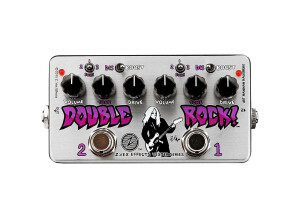
    This unit is very great distortion box. it is modeled after the Marshall JTM45 which in many people's opinion was the best sounding classic rock crunch of all time. It was Marshall's first amp that could get that overdrive when cranked hard so there is an allure there to recreate this sound and tone. I must say first that I am not a fan of overdrive pedal because I don't feel they have that natural feel and sound that an overdriven tube amp can create. So therefore my bias comes from that perspective. This pedal does an outstanding job recreating that tone from the glory days of rock. Much like all Zvex pedals this pedal is extremely loud. I'm not an engineer but I really don't know how they are able to get a pedal sounding that loud. It really is a testament to the design team over there at Zvex. UTILIZATION This pedal has many applications. You can use it as a main distortion unit or you can use it as a clean boost. Since this is two in pedals on one you can get some unbelievable variations to boot. I personally like using pedals like this as a boost function to an already overdriven high gain amp such as a Marshall JCM 800. The boost side does this quite well in my opinion. Here are some suggestions from the manual. The Controls: Drive: Sets the amount of distortion. Start around 1:00 o'clock. Tone: Adjust for treble content. Start around 2:00 o'clock. Vol: Adjust for distortron engine volume level. Start around 9:00 o'clock. Boost: Sets the boost level, which is engaged with the left stomp switch. Start around 11:00 o'clock. The Drive and Boost controls are based on my original Super Hard-On gain control, so they may crackle when turned. This is perfectly normal. Operation: Plug your guitar (or any effect’s output) into the right hand input jack. Plug the output into an amp or other effect’s input. Rock out. Careful with the Boost setting when using a high-powered amp with lots of headroom... you may be shocked at how loud it can get! The best way to complete this pedal is to run it through a Marshall amplifier on a warm clean setting (try strapping the channels, setting the volumes below 3, and setting all other controls to 6 as a start point), which has the proper voicing to reveal the "rock" in the Box of Rock. Battery Change: If the performance of your pedal seems diminished or the LEDs become very dim, it's time to change your battery. Remove the four screws on the bottom of the pedal and carefully remove and replace the old battery, putting it back exactly in the center of the pedal on edge so that it is gripped tightly by the lid when it is screwed back in place. Specifications: Uses 1 9V battery (preferably alkaline, but the unit is shipped with a carbon-zinc battery.) The low current operation of this pedal's circuit will give you a long battery life. Current draw is approximately 3mA. A DC power jack (standard Boss configuration with center negative) is provided on the side of the pedal. Use a high- quality 9V adaptor for all high-gain effects! Warranty: Your Vexter Box of Rock is warranted for 1 year from date of purchase, or 2 years if you send in your warranty card. SOUND QUALITY The boost in my opinion is the best thing about this pedal. I am not really a fan of the tone that the distortion side gets since its just not my thing. However, the boost side has a great clarity and warmth that slams the front of a dirty amp quite well. I use a Strat with this pedal along with a clean amp. I suggest using it with a Fender Twin or a Vox to get some good classic rock tones. Or use it in front of a Marshall JCM 800 or Plexi reissue. By couple ling this with a great tube driven amp you'll get some good sustaining notes coming from just about any guitar. OVERALL OPINION For what is does it does very well. This is a great little pedal that gives a solid overdrive in a small little unit. If you already have a clean amp and what to go into classic rock territory and or pop rock than this might be a great pedal to start with. At new price they come in at around $200. This is the same parts as the higher end hand painted. Great little pedal for the buck.

  • « Classic Metal with Box of Metal »

    SOUND: From a heavy pounding boom to a sizzle reminiscent of Dimebag, it’s possible to dial into several different tones with ZVEX’s Box of Metal. What really stands out about this pedal is how its heaviness still manages to cut through the mix incredibly well. The YouTube demo below demonstrates various settings on the Box of Metal, as well as a composition. Now, what should be made clear is that even when the GAIN is turned right down (with the pedal on) there is plenty of distortion and drive. This obviously picks up and becomes dirtier and without increasing the volume very much (and so, you can go from a filthy crunch to more traditional metal without having to fiddle with the volume knob). Another point to note is that the GATE works exceptionally well… so well that it should be turned almost all the way down or turned off when wanting to play lead with some modest sustain. Having said that, when the GAIN is turned up about half-way (or more) you literally can stop your power-chord on a dime! There isn’t even a hint of noise or artifact sneaking through the circuit. Best yet, the Gate is completely silent, and so you can click on and off as desired without introducing any transient noises. OVERALL IMPRESSION: This pedal is about as metal as they get… not only in sound, but in construction. Encased in steel, the Box of Metal also has metal switches and metals knobs. And so, if you damage it you are far too rough with your gear. The standard 9v (10mA) power input is located along the side and next to the guitar’s input (it also works on a 9v battery, which comes with the pedal and lasts a long time since it requires such low power). There’s enough tonal variation with The Box of Metal that anyone into the Metal genre will make use of it; and I think most people will recognize the quality of the sound to be reminiscent of 1980s high-gain amps. What makes the pedal even more diverse is that you can set your amp to super clean to crunch and can make very good use of it. My video demo is on pure clean, but with some added crunch you can get even heavier and thicker tones. The one unfortunate thing is that once you click the pedal off (for complete bypass) you cannot use the Gate – it works only when the pedal’s Gain is on. Other than that there’s no downfall with the Box of Metal. EASE OF USE: It’s not exactly plug-and-play, but the amount of tweaking required is not unreasonable – depending on your amp and guitar, as well as the sound you want to achieve, you certainly have to fiddle with the Bass, Midrange and Treble. The Gate needs only modest experimentation, as it’s either completely off or kicks in quite nicely at only a quarter turn. The Gain is already pretty intense when turned all the way down, and I find there’s a sweet spot around 11 o’clock if you want a heavy distortion with some grind to it (beyond 11 o’clock you get more sizzle).

  • « '59 Sound Emulates 1959 Fender Bassman Perfectly! »

    SOUND: One of the most sought-after amps (combo in fact) is the 1959 Fender Bassman. Originally developed for the bass guitar, six-stringers began realizing how great it was for them – characteristics like responsiveness and that fat tube driven sound when cranked up. It sounded good enough that Jim Marshall used the ’59 Bassman as a template to develop the first Marshall amps. Below is a video demo using a 1979 American Strat and later a Strandberg Boden Prog 7 (to see how those Fishman Modern Fluence pickups respond). I’ll cover each aspect of the ’59 Sound. First, the TONE is a treble booster of sorts that offers a very wide palette that is not overly dark when turned down. I find a lot of ‘tone’ knobs on pedals tend to be far too dark and muddy from the very start (too much low end), whereas this is not the case with the ’59 Sound (likely because the Bassman was designed for bass players and they don’t exactly need a lot of extra low end). As you turn up the Tone to full, it seems overly bright on the bridge pickup, but not brittle… yet it works quite nicely on a neck pickup, making it sound very lively and rich in harmonics. The DRIVE knob really brings to life that Bassman sound. Turned up only quarter way and a clean signal sounds very warm and thicker, but far from aggressive. Around the 11 o’clock position you get that true tube amp sound and a slight breakup. Around 1 o’clock it starts to get a bit mean-spirited and you can hear that bubbly tube saturation kicking in nicely. Once you go full tilt and hit some bar chords you can’t help but smile – the sound is very reminiscent of Hendrix pushing his amp to the limits… a thick three-dimensional, classic rock sound. Concurrently, leads sound smooth and edgy without any unwanted artifacts in the tone. The BOOST in this pedal is the infamous ZVEX Super Hardon circuit. It can take your volume from parity to 50-times! I’m uncertain what conditions would even have a person want to boost a signal with the knob even half-way, but it’s certainly there if you need it. What I like about this Boost is that it makes your tone sound just a bit more ‘mean’ or ‘angry’ without adding color – a very nice transparent kick in the pants. The Boost can be used on its own or with the Drive (it follows the drive, and so if you want to push more distortion into your amp, then this will do it!). Of course, there’s a volume knob, which needs only a touch of tweaking to accommodate how much Drive and Boost you plan on giving your signal. OVERALL IMPRESSION: Encased in steel, this version of the ’59 Sound is a re-issue… in a vertical format with new graphics. The original ’59 Sound had different graphics in a horizontal configuration. Most pedalboard users prefer pedals that take up space vertically rather than horizontally, and so ZVEX listened. The stomp switches have a nice solid click to them, and both are far removed from the plastic knobs. The standard 9v (3mA) power input is located at the back, and away from wandering feet (it also comes shipped with a carbon-zinc battery). This pedal is not meant for high-gain playing, but if you are looking for a distortion that can work with anything from Blues, to Country to Classic Rock (particularly from the 1960s and early 1970s), this would be a great addition to your pedalboard. Having said that, the ’59 Sound also works very well with other distortions and even fuzz – think of the ’59 Sound as an amp of sorts and that you are adding other pedals to your ‘amp’ and you get the picture. What helps the ’59 Sound stand out is how responsive it is… to palm muting, lighter picking, rolling back the volume, etc. ZVEX did an excellent job recreating that characteristic so well-known in the Fender Bassman and now it’s accessible to everyone. The other important feature is the incredible headroom it has. Obviously the Boost makes this possible, but even on its own the Drive produces significant volume changes when turning from low to higher levels. Just like a real amp!