Log in
EN
FR

SeriesAudio-Technica ATH

66 products found

Filter
Sort by
Evaluation
  • Reviewed or not
  • Editor’s award
  • Reviewed by Audiofanzine
Availability
  • Available or not
  • Sold new or used
  • Sold new
  • Sold used
Must-have products
  • All products
  • Flagship products
  • Best rated products
  • Hot products
  • Popular products
Price
  • Freeware
€
Clear
Sort by
  • Popularity
  • User ratings
  • Price - low to high
  • Price - high to low
  • Used price, increasing
  • Used price, decreasing
  • Name (from A to Z)
  • Name (from Z to A)
  • Added on
Sort results
  • Popularity
  • User ratings
  • Price - low to high
  • Price - high to low
  • Used price, increasing
  • Used price, decreasing
  • Name (from A to Z)
  • Name (from Z to A)
  • Added on
Filter results 66 results found
Evaluation
Availability
Must-have products
Price
  • Freeware
Show results

The best Audio-Technica ATH reviews

The reviews Audiofanzine members found the most helpful.
  • « Doesn't hold a candle to other headphones »

    I was comparing these to a pair of Shure SRH440's and AKG K240 Studios and these came in dead last. While they weren't awful or even exceptionally bad I feel they weren't even in the running compared to the AKG's. The high end on these was ice picky so I couldn't wear them too long without ear fatigue. The low end was flubbier so at higher volumes everything just started to mush together. These also aren't very natural sounding. They're more like audiophile headphones, EQ'ed to sound better so everything sounds good but doesn't give you a good representation of what something really sounds like. And since these are studio headphones that's a big problem. I prefer very natural sounding speakers so the heavy EQ'ed audiophile sound is a big turnoff to me. The problem with audiophile headphones vs flat response heads is that when mixing if the speakers are heavily EQ’ed to make things sound better then once you take your mix and put them through less than ideal speakers it’ll sound awful. If you have flat response headphones it’ll give you a true representation of what your mix really sounds like. So if you put it on a bad system it’ll sound fine, but on a great system it’ll sound even better. Another example would be, if you use EQ’ed speakers, made to have heavy bass, low mids, and heavy treble then in a car stereo it’ll have ice picky highs, muddy bass, and be so hard to understand from the lack of mids. If you use flat response headphones it’ll sound normal cause your reference tone with the headphones wasn’t EQ’ed heavily. Also these had a pretty bad clamp feeling on my head. They press together crushing your ears so I got a headache pretty fast as well as my ears stung. These may be great for just listening but that's not what I was looking for, these were to be strictly studio headphones. I sometimes wear headphones for hours on end so they need to be very comfortable. All headphones will start to hurt eventually but these were within minutes. I don’t have a big head so that wasn’t the problem, these just squeeze too much for me.

  • « Too fun for precise studio work, but perfect for enjoying music »

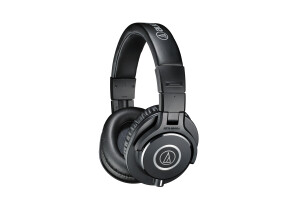
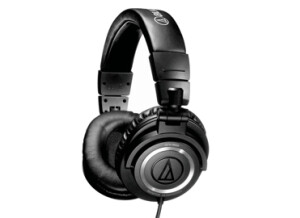
    Intro This review will mostly focus on M50x’s qualities from a studio professional point of view – what to expect when using these headphones as a monitoring device for mixing and do they really cut it for mastering work. After all, you should make your decisions based on what’s in the material, otherwise you might end up with mixes that translate well on your gear and not much else. Know the limitations of your equipment and you will be able to work around them. This text will attempt to illuminate, what to keep in mind when using the M50x for critical studio work. The original ATH M50 has been one of the most recommended closed headphones at the $150 price point. Most of its fame comes from the consumer segment. One of its largest communities – this forum – has generated dozens of reviews praising its qualities and excellent price/performance ratio. Currently there is a distinct lack of dedicated pro-audio headphone reviewers, therefore most of M50’s pro-fame has largely spilled over from the consumer audio segment. At the same time both M50 and M50x have an abundance of qualities useful for both music listeners as well as producers. Uncalibrated sonic performance Perceived Acoustic Power Frequency Response (PAPFR) graph. Measured at Sonarworks lab with a proprietary compensation curve. Not to be compared directly to AFR measurements from other sources. These headphones perform just like they measure – a fun, clean sound. This is mostly due to M50x’s U-shaped FR and extremely low THD. Looks like ATH has really put in some serious R&D work in M50x’s driver, because THD this low at sub bass frequencies has usually been reserved only to planar headphones. Kudos to ATH for bringing clean bass to the masses! Now onto the sonic issues to keep in mind if one wants to use these headphones successfully for music production. All of the M50x headphones we measured exhibited level differences between channels. At 200Hz-600Hz there is a wide dip which drops to around -5dB, whilst not too annoying to consumers, it can cause trouble to LCR mixing advocates. With the M50x, some string instruments like guitars for example will change tonality, depending on how they’re panned. The effect will be subtle, but must be taken into account to prevent chasing ghosts in the mix. On the top end of the U curve we have a peak at 5.5kHz-10kHz which goes up to +7dB at 10kHz which can cause a number of issues. First of all, too much de-essing will be applied to the vocals, as the peak resides right at the sibilant range. Secondly, your sweeps won’t be as accurate because the FR peak will give you a false sense of rising. In general, this peaking can cause your mixes to be dull – one of the inherent cons of all “exciting” headphones, if used in studio. The low-end response on these headphones is positively thunderous – there is no sub-bass roll-off until 20Hz and THD stays extremely low. The channel imbalance which starts at about 350Hz is still present, but on lower frequencies it shouldn’t be much of a nuisance. Most of the signal at these frequencies is mono anyway and humans don’t really excel at positioning low frequency sound. Calibrated sonic performance After we meticulously measured every dip and peak found in the M50x, our engineer generated a calibration profile. These profiles are available for every Sonarworks Reference 3 plug-in user. They turned these headphones into a serious instrument even fit for mastering. This paragraph will explain what can be gained by applying digital calibration to these already great headphones. We can bet that when you turn on the Sonarworks Reference 3 plug-in, you’ll wonder who flicked the fun switch off! Resist the urge to take the headphones off and listen to some well- mastered tracks. Your ears will need some time to readjust to the reference sound signature and your first impression will surely be dull for lack of a better word. At the same time, it will allow your mixes to translate well to speakers and just about any headphone out there. All in all, these headphones are a great candidate for calibration due to the low inherent THD and little change in tonality depending on how they’re placed on one’s ears. Obviously Sonarworks calibration gets rid of the U curve and makes these headphones a perfect candidate for mixing and mastering just about any kind of music. One thing to keep in mind is that the average calibration curve won’t be able to combat the channel imbalance properly, because only individual calibration profiles do stereo calibration. As always there will be some loss of output when applying calibration. In this case it should be about 8dB, which isn’t too bad due to the fact that these headphones are very sensitive. Most audio interfaces will be able to drive these headphones at ear-splitting levels even with calibration enabled. For some higher gain devices, the loss of sensitivity might turn out to be a blessing in disguise, as it will give more usable volume pot range. Ergonomics Just like its predecessor, the M50x has a great fit that doesn’t get in the way of everyday use. Unlike most on-ear headphones, this one doesn’t rely on a strong clamp to achieve a good seal, therefore it is fairly comfy even in longer sessions. One thing to note, however, is that all pleather pads are prone to becoming sweaty in hotter environments. Construction wise the M50x is decent, but isn’t the tank that is the venerable HD25-II is. Like almost every other headphone out there, most of the outer construction is plastic, however it feels like it’s the kind of plastic that breaks rather than bends on stress. Both earcups are on hinges which allow them to be folded up for a more compact package. At the same time, every moving part does present more points for wear, tear, and ultimately – failure. This time Audio Technica has given the M50x a swappable cable and generously included three additional cords. The standard package includes a coiled 1.2 – 3m cable, 3m straight cable and 1.2m portable cable. All three of them feature 1/8’’ TRS jacks and the two longer ones have a thread for 1/4’’ jacks. On the headphone end, M50x have a 2.5mm TRS connector which seems to be proprietary due to a locking groove. All in all, kudos to Audio Technica for choosing to go this route because with most headphones, cables seem to be the first to prematurely fail. Most studios tend to stick with their headphones until they disintegrate due to natural or unnatural causes and very few give attention to earpad wear. We recommend swapping out pads as soon as they start changing their initial geometry. Old pads seal worse and let the drivers sit closer to one’s ears, thus changing the initial FR. Fortunately the pads on the M50x are swappable as well, so the user is able to maintain their headphones at peak performance for a longer time. In terms of noise sealing, the M50x works well, but again is overshadowed by Sennheiser’s HD25-II and many in-ear monitors. The seal should be good enough for mixing in moderately noisy environments and will guard musician’s ears from excessive SPL’s, but most of the time noise will obstruct the finer details. The seal will also keep the user from disturbing others working in close vicinity, good for mixing on the road. Conclusion Has ATH hit a homerun again? Could be so – at least for consumers! At the studio professional end, things are a tad more complicated. No doubt, it’s a great headphone with relatively little shortcomings, but the tuning might be too “fun” to be considered reference grade. At the same time M50x’s competition doesn’t fare any better, most of the other closed studio headphones at this price range are starting to show their age. Sennheiser HD25-II scores some hits in the ergonomics department, but its drivers are a bit long in the tooth. Same goes for Sony MDR-7506. Now, Beyerdynamic DT770 is a worthy competitor to M50x sound wise, but the Japanese headphone is able to land some hits with its three detachable cables and superior portability. Everyone at the lab agreed that these headphones calibrate very well and after calibration pose a serious threat to newer higher end closed studio phones like Focal Spirit Pro and maybe even ATH M70x. In the end, this is a modern headphone meant for modern music. Engineers who work with a lot of bass heavy material will be in for a treat as the M50x offers excellent performance in this regard. They might not mind its other shortcomings, but should keep them in mind. Or they can use calibrated headphones and focus entirely on their work. Sonarworks calibration turns the M50x into one of the best closed headphones at any price.

  • « Good Enough for Forty Bucks! Good Enough for Back Ups! »

    The Audio-Technica ATH-M20 headphones are closed back, have an impedance of 40 ohms and a frequency response of 30-20,000 Hz. They are priced at about forty bucks and that being the case, it's hard to argue against them due to any cons. The good things about these headphones are few. They are extremely comfortable. They are lightweight and durable. They sound good. The bad things about these headphones include: They don't sound great. After getting used to them, I have been able to do some rough mixing with them, they work fine for tracking, but the response is certainly not flat. A boost in the lower lows gives them a more natural punch that you normally lose having the source of the sound so close to your ears, but it is not enough to make them great studio cans. On top of that, the so called isolation on these is a joke. I wear a hat or headband whenever I use them just to make them tight enough for a difference to be noticed. Any headphones work fine for tracking. Particular headphones that can reproduce the material that is being performed in such a way that it enhances the artists experience and gets them excited or in the zone about what it is that they are doing can be of great help. I like to track guitars with these. I also like them for recording rappers or anyone who is building around something bass heavy. They don't push the bass to an absurd extent like Beats by Dre or anything, but they compensate without over doing it. In the end, I only own one pair of these but I'd happily buy more. Forty bucks for headphones that won't let you down is a pretty great deal. They should be rated a 6 or 7 for sound but thanks to affordability, they get an 8!

  • « Yes! »

    The ATH-M40fs are a pair of closed circuit studio headphones. They are very affordable only costing 69 bucks. They are very comfortable around your ear and you can wear them for hours without them getting uncomfortable or irritating you. The cushions around your ear are soft and keep some of the outside unwanted noise away from your ears. The ear pieces do rotate so you can listen easy DJ style or “one ear monitoring”. The driver size on the ATH-M40fs is 40mm and the frequency response is 5Hz to 28 kHz with an impedance of 60 ohms. These headphones sound decent; I would not use them for any serious mixing of your music, Mainly for just listening or playback purposes. We had a bunch of these headphones and use to use them for playback listening especially when we were on the road. The best part to us about this headphones is that they cost was so low. We could buy many of these and not stress out if one of them got broken or crushed at a show or in the van because they didn’t cost that much and we could replace them quickly. Before we had these we were using a pair of Shure headphones that cost 180 dollars and when they started breaking it was really hurting our pockets. The sound that you will get while using the ATH-M40fs is pretty clean. The bass can be a little heavy sometimes depending on what style of music you are listening to in them. The mids sit nice in the ATH-M40fs headphones and the highs are pretty clean and crisp. I do recommend getting these headphones if you are a gigging band and you travel a lot and need some headphones that don’t cost a lot to use for general listening to music with and listening to playback with.

  • « Not bad, I suppose. »

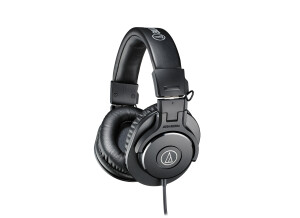
    The Audio-Technica ATH-M30 are a pair of closed studio headphones that are at that price that spills over into the mass consumer market. For this, they are fantastic. For consumers who have never used anything but a pair of iPod headphones, the Audio-Technica ATH-M30 headphones are something that will blow them away completely. This is where I absolutely am enamored with Audio-Technica as a company. Their headphones, down to their cheapest, offer some bizarrely and disproportionately high level of fidelity, transparency, and clarity. I wouldn't really use them to mix, having a set of higher quality headphones at my disposal, however, as with the ATH-M40FS's which I may have blasted earlier, I do certainly feel that at their price point, they aren't bad. They're noticeably lower in quality than the next tier of headphones, but that doesn't mean they're bad. Personally, I wouldn't mix with these at all, having a pair of Sony MDR7506's lying around. However, I would not have my standards discourage anyone from mixing on these. While I wouldn't do it, it's certainly doable. They're also quite comfortable as long as you don't move around too much while you are tracking. It's unfortunate that they do feel slightly cheap when this happens. That's why the Audio-Technica ATH-M30's are best suited for sitting around. If you're serious about mixing however, you'd buy a pair of monitors. Barring that though, since they are prohibitively expensive for the home studio owner, if you really want to mix, I would suggest investing in a quality pair of headphones, like my Sony MDR7506's, some of the Sennheisers that come between $100 and $200, or the Audio-Technica ATH-M50's. Those are a true investment, and even then, I wouldn't discourage getting some ATH-M30's for tracking and monitoring and A/Bing. The Audio-Technica ATH-M30's are a solid pair of headphones that you can't really go wrong with, but you could certainly go more right.

  • « I got these for free. Thank goodness. »

    The Audio-Techinca ATH-T44 are not so much a bad pair of headphones. It's just that they're not particularly good. I'll begin with the kicker. Everyone knows (or should know) about the phenomenon where completely new headphones have to be driven for a few hours before they've broken their sterile "new headphone" mold. I got these Audio-Technica ATH-T44's for free with a bundle I purchased, and they haven't been bad as a backup pair of headphones. But here's the kicker: That "breaking in" period that headphones need to go through? I've used these for hours and hours and hours, with them being plugged into the computer and having sound run through them even though I was wearing my trusty Sony MDR7506's. My fellow recording friend put them on and I didn't say anything. He turned to me with an inquisitive look in his eye and asked: "Are these brand new?" These headphones weren't just "not broken in." They are sterile, distant sounding headphones. When I listen to things through them, they obviously sound a lot better than your typical person will have. This is a fact. And the truth is, considering their price-point, they're unbelievable value for what the consumer needs. When you think about it, a consumer who wants quality headphones will spend several tens of dollars more to get a nice pair of headphones or earbuds if they really want them. These sound just as good, if not a bit empty. At the price point consumers are willing spend on headphones though (I'm talking to you, dr. dre) you start to wonder how silly everyone is when it comes to the market. I maintain that my Sony MDR7506's sound better than any dr. dre set of headphones, and they certainly sound better than the ATH-T44's. So, as much as I want to call these very bad studio headphones (which they are), I simply cannot ignore the fact that I would LOVE it if consumers decided to spend their money on one of these instead of something more arbitrarily expensive. The get back to the Audio-Technica ATH-T44's though, I find them to be quite strange to feel. They feel sterile like they sound sterile. It's not that they seem cheap. It's more of a strange soullessness these headphones emanate. I'll stick with my warm, toasty, sweaty studio cans, thanks. But I will give this four stars, simply because it targets a "consumer" market, and offers more at that price point that most other consumer-grade brands.