Log in
EN
FR

Volume Pedals for Guitar/Bass

139 products found

Filter
Sort by
Evaluation
  • Reviewed or not
  • Editor’s award
  • Reviewed by Audiofanzine
Availability
  • Available or not
  • Sold new or used
  • Sold new
  • Sold used
Must-have products
  • All products
  • Flagship products
  • Best rated products
  • Hot products
  • Popular products
Price
  • Freeware
  • Low-cost (< $95)
  • Mid-range ($95 - $150)
  • Premium (> $150)
€
Clear
Sort by
  • Popularity
  • User ratings
  • Price - low to high
  • Price - high to low
  • Used price, increasing
  • Used price, decreasing
  • Name (from A to Z)
  • Name (from Z to A)
  • Added on
Sort results
  • Popularity
  • User ratings
  • Price - low to high
  • Price - high to low
  • Used price, increasing
  • Used price, decreasing
  • Name (from A to Z)
  • Name (from Z to A)
  • Added on

The best Volume Pedals for Guitar/Bass reviews

The reviews Audiofanzine members found the most helpful.
  • « Built Like a Tank. »

    Overview It's really a shame that this pedal is out of production, because it's an amazing piece of work. the VOX V850 is a passive volume pedal (no power/battery required) that does exactly what it's supposed to: it increases and decreases the natural signal from your guitar (or other electric instrument). It was built with (almost) all-metal construction in the USA, features a sturdy 250k internal potentiometer, and it's the heaviest pedal I've ever held in my hands. My Experience I bought this volume pedal after extensive research of passive/active volume pedals. At the time, I was putting together a rig for a 3 month summer tour with a traveling band. I needed something that would fit the budget of a college student (myself), stand up to road wear, and not sacrifice the sound of my guitar setup. I discovered the V850, and after a few weeks I was finally able to snag one on eBay for a decent price. I've been using the pedal ever since, and it has performed very well for me. Pros and Cons The V850 was the first volume pedal I have ever purchased, and it may be the last. This thing is truly built like a tank, even down the actual configuration of the electronics. To use the example of a comparable product, the Ernie Ball VP Jr. Passive Volume pedal is another popular passive volume pedal that I have seen many guitarists use for their rigs. I believe it is actually lighter the V850 in weight, and it does include a convenient bypass loop for a tuner. The drawback to the VP Jr. is that the internal 'audio taper' potentiometer is controlled by a 'string' that is suspended to the top surface of the pedal. I have read many reviews where musicians express their frustration of this string breaking during live performances and leaving their pedal utterly useless (until they can get the string replaced). In contrast to the VP Jr., the VOX V850 uses a durable plastic gear system around the internal potentiometer, which moves seamlessly with the top surface of the pedal. This not only makes the V850 more durable, but it also keeps the mechanics and handling of the pedal consistent from use to use. Bottom-Line My VOX V850 has stuck with me for over 4 years, and I haven't regretted buying it, even in used condition. The pedal can be inconvenient due to its heavy weight, but I think it makes up for weight in durability and sound quality.

  • moosers's review

    The Way Huge Electronics Angry Troll is a simple boost pedal electric guitar. The pedal is made up of analog components and has standard 1/4" connections across the board for input and output. The pedal is powered up by a nine volt power supply, as is pretty much the norm with pedals like this. It isn't rack mountable in any way since it's a stomp box pedal. UTILIZATION Using the Way Huge Electronics Angry Troll should be as easy as using any pedal out there. It's only got two parameters to work with, although each can change the sound a good amount. The two parameters are for volume, and 'anger.' Of course 'anger' isn't exactly a descript word to use for a parameter, but it controls the amount of gain. That's all that there is to the pedal, so no manual or outside assistance should be necessary. SOUND QUALITY The Way Huge Electronics Angry Troll is really no joke when it comes to boosting your signal, as it's possible to boost up as much as +50 db with the settings up! This would definitely seem like overkill, but it's nice to know that you could do so if you wanted to. While the Angry Troll is really a booster pedal by nature, it's certainly possible to get a good amount of gain coming out of the pedal, although I wouldn't recommend picking one up if you're going to primarily use it for this reason. It's a great booster pedal to begin with, so it's awesome that you can use it for some more serious overdrive if you want to as well. The pedal also have true bypass, so you won't have to worry about any noise or signal loss when the pedal isn't engaged. OVERALL OPINION The Way Huge Electronics Angry Troll is definitely one of the best guitar boost pedals that I've got experience with. There are a number of them out there that are more than capable of getting the job done and sound great in general, but the Angry Troll is definitely up there with my favorites. It's fool proof to use and has a top tier sound quality that's hard to match let alone beat. I used this and a number of other Way Huge Electronics pedals on a recent session, and it was easy to see why they had so many of Way Huge's pedals there! Definitely worth a try if you're looking for a professional boost pedal.

  • « A strong volume pedal for precise volume control »

    This is one of the most reliable volume pedals that I know. I use it with my current clonewheel (Tokai TX-5 Classic, made in Brazil) and, you know, it's an essential item for that kind of instrument (well, the classic B3 has volume pedal, no?). The volume control is very precise and smooth - you can even determine how much volume will be controlled. There's a knob on it's left side with a 0 to 10 setting - I keep it on 0 so I can go from mute to full sound. One of the coolest things about this pedal is that it doesn't require any kind of power source to work - at least if you're using it with keyboards. Just plug the cables, et voilà. Simple as 1+1=2. Did I told about "2"? Yep. It's a stereo pedal, btw. The only minor thing is that there's a bit of background noise - remember: this is an analog pedal - but if you're using it as a part of your gig keyboard setup on a stage with a huge PA, that's not a problem at all. That little noise may be actually a "charm" while using the pedal with a clonewheel ;-) So if you want a cool analog volume pedal for your keyboard - and guitar, bass, no matter what kind of instrument - needs, this is the one.

  • « Baby brother »

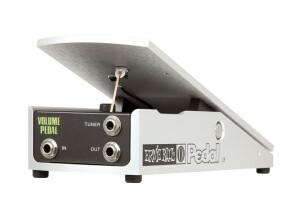
    This is a volume pedal. Plain and simple. You don't need editing options, digital conversions, thoughts whether it's best with a tube or a transistor. This is pure analog. You get a 1/4" inputs, output and tuner jack. It says 'Tuner Out' on the pedal, but it is in fact just a parallel signal, so you could actually use this, as a passive split, should you feel the need for that. UTILIZATION I bought this pedal as an expression pedal to run along my G-system. The space at my began to be a bit crowded with all the 6166 volume pedals (the big brother to the 6180 VP Jr. hence the name), so I went for this instead. You do get a Jr. pedal, that's for sure. I don't mind at all, but if you got a big foot, like a size 11 or 12, you might get into trouble with this one. When using it as an expression pedal with the G-system, you have to take into account, that you'll miss the last few percent of range. You won't be able to hear it though, as the G-system adapts to the range, and still provide you with 100% range. SOUND QUALITY As I wrote in my review of the 6166 :"This is were you might find some issues. I've not experienced it myself, even though I'm a huge sucker for tone, but some people complain about the fact, that this pedal takes away some of your treble signal, when pulled slightly back. Some have also complained about the parallel output (tuner) to suck away some tonal quality to the main signal. I haven't experienced that myself neither. It might all just come down to a matter of buffers in the setup (and partially also some psychological factors)." And that is also true with this one. I've used it a single time as a volume pedal, and didn't notice any of the issues mentioned. OVERALL OPINION If you don't need the big 6166 pedal, go for this one instead. It's completely like the 6166, but just smaller. You have the same sturdiness and unbreakable construction. Your wallet won't be ripped as much either, so you can't go wrong. Possible repairs on this one, are identical to the 6166.

  • « Volume control by foot! »

    This is a volume pedal. Plain and simple. You don't need editing options, digital conversions, thoughts whether it's best with a tube or a transistor. This is pure analog. You get a 1/4" inputs, output and tuner jack. It says 'Tuner Out' on the pedal, but it is in fact just a parallel signal, so you could actually use this, as a passive split, should you feel the need for that. UTILIZATION I bought this pedal, as I was tired of the impracticality of using the volume knob on my guitar, when doing volume swells and such. Throwing this baby into the chain made it so much easier. It couldn't be any easier to set it up too. Take the jack from you guitar, plug it into the input of the pedal. Take the output of the pedal and send it to your amp, or the next effect in the chain. Simple as that! I use a G-system and run one 6166 volume pedal in front of the G and one using the build in volume pedal expression jack in the G. This gives me the option, to kill my input volume and let a delay tail die out on its own, or lower the volume in general. This is a really neat trick, if you'r using guitars with different outputs don't want to change settings on e.g. your drive pedal. SOUND QUALITY This is were you might find some issues. I've not experienced it myself, even though I'm a huge sucker for tone, but some people complain about the fact, that this pedal takes away some of your treble signal, when pulled slightly back. Some have also complained about the parallel output (tuner) to suck away some tonal quality to the main signal. I haven't experienced that myself neither. It might all just come down to a matter of buffers in the setup (and partially also some psychological factors). OVERALL OPINION If you want a sturdy and practically unbreakable volume pedal, without any unnecessary options, then you should go for this one! It's build out of a solid block of aluminum, so it won't break even under heavy stress. The weak link is the string pulling the pot internally, but for as little as $10 (tops) you'll have it fixed again. You can even do it yourself. You pay a bit more, when buying it new, compared to other volume pedals, but you'll be glad you did! If you need it in stereo - don't worry. Ernie Ball got you covered to.

  • « Boss FV50L Volume Pedal »

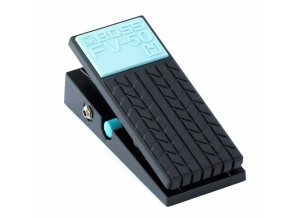
    I bought this from ZZounds.com because they had the best price. I got it for $69.95 new. I bought it because my Morley began misbehaving and this pedal has a minimum volume control feature which I need for my live playing. I trust Boss and Roland products. I have many. Their products are very dependable. I like the small size of this pedal. It fits very nicely on my pedal board and sounds clean. The price was nice, too. And it's a name brand. I can't get the minimum volume up as loud as I would like compared to the full volume but I'm learning to adjust to that. The Morley was better at that. Good construction. You can't go wrong with Boss! I like this pedal a lot. I've only had it a couple of weeks but I've used it live and so far it is great. Quiet and smooth. This review was originally published on http://www.musicgearreview.com

  • « Bulky but Quality »

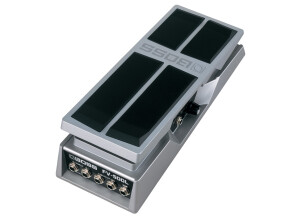
    The Boss FV-500H is a passive volume pedal from Boss for use with mono input sources. It features a single input jack, a single output jack, a jack for use as an expression pedal, a silent tuner out, and a knob for setting the minimum volume. The pedal measures 29” by 11.4” by 4.4” so it is quite large and takes up a considerable amount of space on a pedal board. UTILIZATION The Boss FV-500H has a heavy duty aluminum dicast body that will stand up to just about anything. They put the Boss name on this so you probably knew this beforehand, but this thing is probably the strongest made volume pedal you’ll find. It has a ultra smooth pedal movement and is very comfortable and easy to control. The torque of the pedal can be adjusted to the user’s preferred pedal feel and the rubber on the foot pedal makes sure your foot is secure and won’t be slipping around while in use. A silent tuner out allows you to roll back the volume and tune without annoying the crowd during gigs and a minimum volume knob allows you adjust how quiet the pedal can go all the way down to completely nothing. SOUND QUALITY I have noticed no change in tone quality when using this pedal and it doesn’t introduce any unwanted noise. The Ernie Ball offering definitely rolled off some of my high end. You can go from clean to dirty if it’s in front of your amp, or as a more dramatic volume only alteration when it’s in your effects loop. I like to do volume swells and violin like passages, and the taper on this pedal work well for that when the minimum volume is set to zero. I also like to use it in front of my dirty amp and set the minimum volume to a clean sound and then roll up and get the dirty tones. This method is nice when a smooth transition is need between clean and dirty instead of a quick change like you get from channel switching amps. OVERALL OPINION Overall I liked the Ernie Ball version until I picked up the Boss volume pedal. The Boss pedal is huge in comparison, but is built to last a lot longer and incorporates a minimum volume knob. This is great for going between two different settings and not having to worry about over shooting it. I don’t use the expression pedal out, but that’s an added bonus too. With the Boss you also don’t have to worry about changing out the strings like you do on the Ernie Ball. The Boss also does not seem to suck as much tone off the high end as the Ernie Ball. The sound quality of the pedal is great and the feel is very smooth, the only downside is that this thing is massive in size. I have remedied this by carrying it along and setting it up alongside my pedal board and not having it mounted directly to the board to save real estate.

  • moosers's review

    The Guyatone SV2 “Slow Volume” is a unique pedal for electric guitar. It’s an auto volume swell pedal, which isn’t something too many pedal manufacturers are making. It’s got your basic pedal characteristics with ¼” connections for input and output and require 9 volts of power from a battery (or power supply). It’s of course not rackable since it’s engaged with your foot. UTILIZATION It’s really easy to set the controls for the Guyatone SV2. Getting all of the sounds you want from it at the right times will definitely take some practice, but still since it’s only got two knobs, it’s not exactly rocket science. These parameters are for output level and input/threshold. It’s tough to explain how these effect the swells but it’s fairly simple once you play with it for a minute to see what each does. No manual is necessary. SOUND QUALITY What the Guyatone SV2 does for your sound is definitely something that will interest many guitarists out there. If you’re not a fan or not able to do volume swells with the volume pot on your guitar or a designated volume foot pedal, this can help you achieve that same sound with simpler controls. It’s great for electric guitar, but I’d still recommend using a traditional volume pedal for a lap or pedal steel, although this can definitely be cool in addition. OVERALL OPINION The Guyatone SV2 is a very cool pedal for those interested in volume swells. It comes from a reliable place in Guyatone and is unique for how it’s made up. It’s definitely worth a look for those who want to do easier swells and maybe not have to think about using your picking hand to control it. Even if you do like doing that too, this can be beneficial to you to get some new sounds in that vein. Either way, it’s definitely fun to play with!

  • « great pedal »

    One of the main problems that I have with most volume pedals is the lack of control. I know I'm probably being a huge stickler for quality. I only really bought volume pedals because I thought that they would allow me to lower my volumes during live shows when necessary, but also not rob me of brightness or tone. A second, more active use I have for them is for volume swells. I was used to performing this technique on my guitar's volume knob, but the impracticality of that was severely limiting. I have often been frustrated with some of the volume pedals that I have purchased over the years, but have recently found a few good ones. UTILIZATION This pedal is definitely one of those. It's a little more pricey than what I would really want to pay for it, but it's a good value and Ernie Ball will fix it anytime for a reasonable price (so they say). The pedal is only suitable for guitars and basses with passive pickups because of the resistance that it can handle, but I don't own any instruments with active pickups anyway, so it's not a problem for me at all. Another neat feature is the fact that it provides a switch that switches between two rates at which the volume will swell. For the most part I stick with one setting for my main sound, leaving it at about 80-85% of total volume, and cranking to 100% when it's time for a solo. I find the other setting to be better when I actually want to throw some volume swells in there. I find this technique with a good delay can make some really cool sounds! SOUND QUALITY Another neat feature is a tuner bypass switch, which will allow the guitar to tune while the pedal is completely depressed for silent tuning. However, since I already have a tuner that bypasses for silent tuning, I don't really need this at all, though I'm sure many others will appreciate it. I feel like this is one of the better volume pedals I've tried. I have mixed feeling about the Ernie Ball brand in general, but lately I've really been coming around to them. OVERALL OPINION This pedal has certainly helped in that situation. It's versatile enough for anyone trying to stick with one channel.

  • nickname009's review

    * Die-cast aluminum housing * Blue and red LEDs * Active and Passive modes * Clean boost pre-amp in active mode * Two inputs and outputs for mono or stereo use * Tuner Out jack for silent tuning This is probably the most exciting thing that's ever happened to volume pedals for generations now. Volume pedals have generally just been nothing but a pedal, a pot and some strings. But now visual sound has literally reinvented the volume pedal making it not only suited better for live use but also added extra stuff to make it even more usable as a clean boost pedal!! Awesome! UTILIZATION Pretty simple to use, even though there are tons of different ways you can use this pedal. First off, to roll the volume on and off you use the big pedal. To see where you're at with the awesome LEDs, you have to be powering the pedal. If you don't want it and/or don't want to power it, you can still use it as a regular volume pedal without powering it but you won't get the LEDs which I find are very useful. Inside, there are two internal knobs that you can adjust the volume output with as well as the clean boost preamp. Set it to however you'd like. I set it so that when I max out the volume pedal it boost the signal as well. The Tuner out is there to hook up a tuner for silent tuning even with the volume all the way down, the tuner out still sends volume to your tuner, very cool. And you can run the pedal in mono or stereo out. The pedal itself is very smooth when in use with your foot. From seeing it and playing with it with my hands at the store counter it looked and seemed clanky, but when I put it down and actually tried it, it turned out to be one of the smoothest pedals I've ever used! SOUND QUALITY Technically since it's a volume pedal I shouldn't be rating the sound quality, but since it has a clean boost preamp built in I can. The volume pedal itself is active for the most part and therefore, includes s sort of buffer that's engaged when it's plugged in and set in active mode. This is visual sound's idea of true bypass but better as it acts as a buffer too bringing back any signal degradation that you might've had from the rest of your board or long cable runs etc. The clean boost itself is very very transparent. Depending on how you use it, even if it's maxed out it will add a large amount of volume, maybe around 10db but will also add, not distortion but, clipping, i'd say, depending on what your amp's set at. Which is also cool and useful if you're running on high gain through the amp and you're looking to push the amp into that saturated-esque super heavy uber metal distortion! OVERALL OPINION I personally love this pedal. I don't know what I would do without it, it's your basic volume pedal taken up 10 notches! You can do everything you've originally done with older volume pedals and more! The LEDs are also very very helpful on stage and are very bright for the stage! I love pedals that are made for live use! This is definitely worthy of that! I'm just not totally sure of it's construction yet, I've had it for a while and have treated it well but I just still don't know yet how long it'll last before it becomes a train wrecked piece of equipment. Everything looks like its made of plastic? Not sure..

  • « turn down the volume »

    The Morley little alligator is an optical controlled volume pedal. Most volume pedals operate with s volume pot similar to the one on your guitar with a string attached to the foot treadle. There is no internal potentiometer or string to wear out inside this pedal. It has standard 1/4" input and out put jacks, 9 volt DC jack, bottom battery compartment, and a knob for minimum volume when in heel down position. UTILIZATION This is as simple as it gets in the pedal world. I do not think I even ever opened the manual when I bought it. SOUND QUALITY I have used this both in front of my amp as well as in the effects loop with similar results. Many people complain about volume pedals sucking high end and fullness from their signal but I do not notice any of that with the Morley. It seems to preserve your tone even when dialing down the volume and I like it much better than using the guitar's volume control as that normally kills your high end. In the effects loop this pedal works great as a control for lead boosts. The minimum volume knob allows you to have the pedal all the way back in the heel down position for your main volume and then kick it up during solos. I like that much better than an abrupt volume change using some amps solo boosts. Using it in the effects loop also allows you to swell in distorted tones without reducing the amount gain. OVERALL OPINION I think this is one of the better volume pedals out there. I have tried the large Ernie ball pedals and they seem to roll off some high end. It is not really noticeable in the amp's effects loop but I use the volume pedal in different ways depending on the gig. I also prefer the optical set-up as opposed to the string in the Ernie ball. I have seen those things break on people in the middle of a gig and it's not something that can be fixed with a quickness. I have owned this pedal for many years now and not had one hang up with it.

  • « Great volume, Classic look! »

    The reissue Fender volume pedal is one of the many potentiometer based volume pedals on the market. It has the standard 1/4" Input and Output as well as a Tuner Out. It is durable and has a very nice chrome finish. The footprint is rather large though. Which could be a problem for some. It's great for my very large feet. UTILIZATION It's a very easy to use volume pedal. Has great range for volume swells and is built very well. There is a compartment for the guts so you don't have to take the whole thing apart if you have any problems. I haven't had any problems though in over a year, I'm sure this pedal has many years of life left. It's a very simple and easy to use pedal. SOUND QUALITY I've used this volume for guitar and bass. It doesn't seem to have any negative effects on my tone and it doesn't make any noise when it is used. It's a very nice pedal for volume swells. I have absolutely no issues with the sound quality of this volume pedal. OVERALL OPINION I really like the easy access to the guts and the very sturdy construction. Very nice unit. The price is nice as well. About the same as most of the other volume pedals on the market, so the value is great. I tried everything from older and newer Ernie Ball volumes to the optical morley volume pedals and this pedal does exactly what I want in a volume pedal. Has a great range of sweep and is very appealing to the eyes. The construction makes it very hard for dust and dirt to get inside it and that is always a plus. With the string and potentiometer not exposed it's harder for things to go wrong. If something were to happen to my volume or if it were to get stolen. I would definitely buy another one. Absolute best, and my favourite volume pedal on the market.