Log in
EN
FR

Sennheiser

790 products found

Categories
Series
Filter
Sort by
Evaluation
  • Reviewed or not
  • Editor’s award
  • Reviewed by Audiofanzine
Availability
  • Available or not
  • Sold new or used
  • Sold new
  • Sold used
Must-have products
  • All products
  • Flagship products
  • Best rated products
  • Hot products
  • Popular products
Price
  • Freeware
€
Clear
Sort by
  • Popularity
  • User ratings
  • Price - low to high
  • Price - high to low
  • Used price, increasing
  • Used price, decreasing
  • Name (from A to Z)
  • Name (from Z to A)
  • Added on
Sort results
  • Popularity
  • User ratings
  • Price - low to high
  • Price - high to low
  • Used price, increasing
  • Used price, decreasing
  • Name (from A to Z)
  • Name (from Z to A)
  • Added on
Filter results 790 results found
Evaluation
Availability
Must-have products
Price
  • Freeware
Show results

The best Sennheiser reviews

The reviews Audiofanzine members found the most helpful.
  • « A dynamic microphone that could record a space launch without overloading. »

    VERY high maximum SPL (or, if you will, little sensitivity, rated at 2mV/Pa +-3dB), dynamic and cardioid shaped (don't be fooled by it's condenser-ish disguise, the mic's front is it's topmost end!). This mic is a staple on most studio locker's around the world. You can throw them on unnecessarily loud rock amps and they will hands-down handle it, put them on toms and you'll get a classic sound with good rejection from the rest of the drums, just remember, this ain't no jazzy and delicate mic. It has a not so obvious bass roll-off switch intended to reduce the proximity effect, labeled from "M" (which I presume is for "music", or flat response) to "S", which I suppose means "Speech", or full roll-off starting @ 500Hz. It is also very well built, mine was bought used and has no dents or obvious scratches at all. OVERALL OPINION I love it on bass cabinets, specially since I've been recording stoner/doom stuff that is just amazingly fuzzed up and somewhat loud (remember though that loud amps = great sound is a myth). I also like it on toms, depending on how the drummer hits the kit and the genre. If it's really loud and rock-ish I'll put the 421's without thinking twice. They're also inexpensive, maybe not 57 cheap but still a pretty good deal. My only complaint is the retarded design on the clamp that just seems to be made by the devil himself so you drop the mic over and over again. Good thing it's built like a tank.

  • « The Best Choice for miking a cab »

    This mic has a HUGE sweet spot that is much more simple to dial in than the traditional SM57...It also has 2 frequency rolloffs as well... Here's the official specs: Pick-up pattern: supercardioid Frequency response: 40Hz-18kHz Sensitivity in free field, no load (1kHz): 2,2 mV/Pa Nominal impedance: 350 ohm Min. terminating impedance: 1000 ohm Dimensions: 55 x 34 x 134 mm Weight: 1/3 lb. OVERALL OPINION It's easy to place...GREAT value considering a new one is under two hundred...I own two and hope to get more... I tried a lot of different mics over the years and none have worked so well on guitar cabs than this one...I place mine just off center from the cone and it is perfect....It's so forgiving that I can setup most times without having to check it...I know exactly what I'll get from it...Everytime! This mic also does nicely on snare drums...It can handle some really high signal to noise ratios too...I would bet it's great on horns thoug I've never tried... You can't miss with this mic...It is the new standard for many...SM57s still have their place too, the E906 is a great alternative that sounds as good if not better and is easier to place...

  • « Very good, simple and can cover up to 300ft without dropouts »

    Good mic, reliable, ideal for speeches, karoke, MCs. The sound is all right (80-16000 hz), not too sensitive to feedback. Vocals come through fine. It probably has a bump in the mids. It has a switch at the bottom, but no mute, some handling noise, but using a mic stand solves that. It makes a very good job ^^ Frequencies: 742.5 to 744.5 mhz (4 channels). Ideal for conferences, live entertainment, karaoke, MCs. A good entry-level mic with a more than decent price tag! 5 ***** for its sturdiness! It may fall but it won't break! You can find it secondhand for about $130-$160. Today a new entry-level SENNHEISER mic costs about $300!

  • « Great Sounding Tom Microphones »

    There are great things about these microphones if used and placed properly. They are proximity microphones and I ran a comparison at my studio, www.chrilieckstudios.com, and Remember I grew up as a professional engineer using 420 mics on toms only. The Sennheiser 420s are the best tom mic ever produced, however I must say that this microphone is the closest I have tested and at the price there is not a microphone for toms that is better. They don't have the attack at 3.5K to 4.5K that I need, but that is a quick fix with a simple one band EQ boost. However if the drummer hits the toms hard (like you should have them do at all times) the mic will provide enough attack to cut through the mix. We test mics and gear all the time as my engineers work at The Guitar Center so we have gear at the studio all the time. They provide a good bump at about 200hz so if you like that bump (I don't I remove all the low mids on my toms) these mics will provide you a deep low mid tone. OVERALL OPINION I would not use this mic for snare except for in a live environment. They don't have the attack at 3.5K to 4.5K that I need, but that is a quick fix with a simple one band EQ boost. We test mics and gear all the time as my engineers work at The Guitar Center so we have gear at the studio all the time. I have been doing this for 30 years so I am aware of what microphones sound good. I say if you have a studio and you are looking for a Tom Tom Microphone, this is the only professional line of tom tom mics I would buy. I have a set of them on the toms now and have done 40 records with these mics. You will have limited uses of these microphones. They are not good for much else besides the tom toms. They do not do well in other application modes but if you want exclusive microphones for your tom toms, and you are on a limited budget.

  • moosers's review

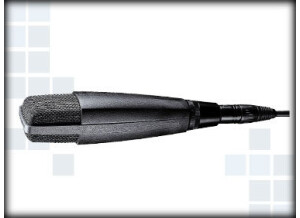
    The Sennheiser MD 409 is a dynamic microphone great for both in the studio and on the stage. I have only used this microphone in the studio, but have seen it used in a live setting as well. Only one of the sides of the microphone will pick up, which is what makes its such a great microphone for micing guitar amps. The MD 409 has been around for a while and has become ubiquitous in studios and on stages alike. OVERALL OPINION I've been using the Sennheiser MD 409 for about four years and have found them to be one of the best dynamic microphones I have used and are great for a number of different applications. Due to the nature of the way this microphone is shaped, it is great to put up on the grill of an electric guitar amp. It also sounds great on tom tom drums and vocals. I have seen the MD 409 used for vocal mics on stage a number of times, including in Pink Floyd's Live at Pompeii. However, its best sound application is probably for electric guitar amps as it really shines in this scenario. It also sounds great on horns - specifically saxophone. Sennheiser has a lower end model of this microphone known as the e609, and while the e609 is a great deal for the price, the MD 409 is the original and reigns supreme. The sound quality of the MD 409 is full and crisp and always delivers a great tone for me. The price isn't too expensive for a great dynamic microphone like this one, but it isn't the cheapest microphone on the market either. The Sennheiser MD 409 has become a classic mic and Sennheiser has a great reputation for making great sounding microphones that are reliable. I highly recommend this microphone for studio owners and anyone looking for a great dynamic microphone.

  • « Outstanding! Even in 2014 »

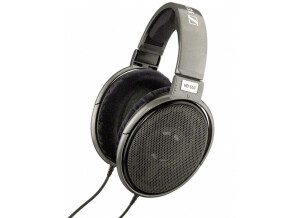
    After 25 years! I tested some stax, beyer, audio technica, the famous jecklin float, the akg k240 monitor, but I fell for the HD540 Reference. Back then I feared they would be too fragile. But I'm more confident now. Although I have always taken good care of them. They are a true gem, and they need some care, they are hard to find in good shape and at a reasonable price. USE AND DESIGN Light, smooth. The foams are hard to find, although those of the HD560 are supposed to fit them too (I've never tried it). The cables and internal foams can still be found as spare parts. STURDINESS Mine are from 1989 and nothing (except for the ear cushions) has ever broken, so, yes!!! They are sturdy AUDIO QUALITY They sound superbly. Very well-balanced. That said, be careful, because they are 600-Ohms headphones, so you need quite some power to drive them. They will sound dull, lifeless and without depth with many basic headphone jacks, so they might disappoint you. You need to know what you want. These headphones are fantastic IF you can make the best of them, meaning you have the right gear to amplify them correctly. In which case they sound pristine, delicate, chiseled. But also merciless! It's not a good idea to hear questionable MP3s with them. It won't be a pleasant experience. These are headphones that must be earned and they deserve the best. Not at all the type that will settle for the bare minimum. Don't buy these headphones to plug them into a smartphone or iThingy. They really needs more. One last remark: These are my only headphones I have never modified.

  • « Average at best »

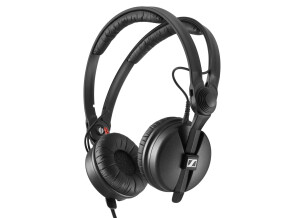
    These phones have a very low threshold and give you a big bass bump at about 70-120hz and you don't want any of that when you are buying a set. I think that headphone mixes are important. Isolation was not that bad when cutting drums and that is unusual for a set of cans like this. The sound is more enhanced than professional flat headphones. I have pair and we use them in our C room www.chrislieckstudio.com but not in our A room or B room. Use other more professional phones if you have the money. Buy AKG 240's. As anyone can see I say that if you shop around and read the articles by most veteran producers or engineers you will find that most pros like to use a specific set of cans that can take a great deal of input and these can't. Most headphones break up at around 30hz if you are to pump that frequency into the phones at a decent level ala a heavy hitting kick drum. I think that you will find that for vocals these will suffice. We use them all the time in our C studio and we don't have many complaints about them but we don't have anyone raving about them as well. Most of the time I like to have headphones that are all the same but unfortunately clients are hard on headphones so you don't want a pair that cost $200. I like the HD line although that word is quite deceiving. I think if you want to save a bit of money and your hard on your headphones and you are not real picky about a flat pair, or you mix a lot on your phones get a pair of K240's.

  • chrislieck's review

    The thing about the HD201 is that in any of these HD (so called) headphones it seems that you get what you pay for. Plastic made to break. Not used in any PRO STUDIO ROOMS that are serious about your headphone mixes and we are www.chrislieckstudios.com. I think that you need invest more and get a more flat pair of headphones such as the AKG 240's. Again these can't take a great deal of volume without breaking up. This new bread of phones if for more amateur recording. Average at best. These phones have a bump so that if you are recording a vocalist that hears more high mid response it that bump at 50hz or in that basic area will cover up that mix that you need to cut vocals. I like phones to have cuts if anything at that lower frequency so that when you are tracking they vocalist you don't have to have a separate headphone EQ for the singer. I have to do that a great deal with newer so called HD phones. I also like to match phones meaning if I have three pairs of headphones in my studio I want them all to be the same. I don't want to have two singers in the booth and one has a lower volume than that others. Also these phones are not as sturdy as I would like. I have read other reviews of these whereby they state that they are sturdy and I find that the cheaper the headphone the more likely it will break upon impact to the ground. Most singers drop their headphones all the time and the few times these headphones fell I was nervous that they were done. Back to the sound, I was just not that impressed with any one thing with these phones. Isolation was minimum thus drummers would not like them, and the fact that they are not that isolated is not a good thing. We used them just the other day on a drum live session and I had to move to a set of vic firth for the drummer to hear the click drum. No on the other side my engineer likes them a bit more than I do so I have them an average rating as he likes this line of headphones and he works at the Guitar Center so he gets to hear a great deal of all of the new headphones either before they come out or when they are in the store. Normally I hear from him as to liking a specific set of phones. He will call me and rave about them. I did not get that call on these headphones and the reason we had a pair is s student left them at the studio and we started using them in the C room for a while. The student was mixing on them and never mix on headphones if possible. That is not a great idea for any mixing engineer. I would just invest in good pair that standard producers and engineers like the AKG 240s or any great AKG line that is commonly used by professionals.

  • Deleted member's review

    The Sennheiser E 865 is one of two stage condenser microphones available from Sennheiser. Knowing Sennheiser, they do not fool around, and even this microphone, the dramatically cheaper one of the two, the other being the Sennheiser E 965 for almost three times the price, is an almost prohibitive $270. The interesting thing about the high end live vocal microphone market is that every company generally has its own pacing and gradient on which they place their microphones, so it turns out that the E 865 is actually an incredibly cheap microphone considering what it turns out to be up against. First off, the microphone is beautiful and inspiring to sing in. It is microphones like these and the Audio Technica Artist Elite microphones, among some of the very high end ones, that inspire the singer to give the performance of his or her life. The E 865 itself is a supercardioid, and unbelievably impressive at off axis rejection. Its frequency response is from 40-20,000 Hz and it has an impressive ability to handle SPL's up to 150 dB. In use, the E 865 is very interesting. This is because something in the way its engineered preserves the strange squish of a dynamic, but not in a way that would be viewed as a disadvantage. It works well to tame all of the other renegade frequencies, and makes the microphone silk and/or butter to sing through. I cannot truly compare it with any other microphone because there is no real stage vocal condenser as good as this around the same price. There is a Blue Encore for a little bit less, but compared to the 865, the Encore loses that "special" that I first felt for it. OVERALL OPINION The Sennheiser E 865 is a fantastic microphone at a relatively incredibly low price. The closest microphones in price and class would be the Audio Technica Artist Elite dynamics, but while they are wonderful microphones, they simply function in a different class as the E 865. The best thing to do would be to figure out what you need on your voice, because even though these all sound good, some will make sure certain singers soar.

  • Deleted member's review

    The Sennheiser E 965 is Sennheiser's top of the line microphone for live vocal usage. Naturally, it is a condenser, and it is actually a true, externally biased, large diaphragm condenser. Yes, you read that right. It is a large diaphragm condenser. What makes this microphone especially interesting is that like the Shure KSM 9, the Sennheiser E 965 has been engineered to have multiple pickup patterns. The E 965 is capable of picking up sound both in the cardioid and the supercardioid pickup patterns. What I found especially nice about this option, however, is that it is not a switch that can be activated by accident by the performer, as it is actually located inside of the grill, which must be unscrewed to reveal not only the pattern selector, but a 10 dB pad, or attenuation switch. Before the pad, it is already capable of handling up to 142 dB of SPL before distorting, and with the pad, it can handle up to a whopping 152 dB. Combine all of these features with a low cut and an frequency response starting at 40 Hz and going all the way up to 20,000 Hz, and you not only have a microphone that is technically impressive, but is also a joy to listen through. Many may be wondering about the other choices, especially the big one, the Neumann KMS 104/105. What I have found is that the KMS microphones tend to give the sound that Neumann vibe, so they are fantastic for quieter environments, and color the sound greatly. The E 965 cuts through with extreme clarity and presence. OVERALL OPINION The Sennheiser E 965 is a very clear, present microphone that will without a doubt cut through a mix. If you have the money to shell out, and need a great vocal microphone, this is certainly an option, but the top microphones in this application are very well documented in their strengths, so you should go check them out!

  • Deleted member's review

    The Sennheiser E 609 is a microphone specifically built with guitar amps and cabinets in mind. When the standard for mic'ing anything goes, "Just put a Shure SM57 on everything and EQ it to make it fit better later," it can understandably get a little obnoxious to do so repeatedly, and because the SM57 is a workhorse microphone, mic'ing up most things with the SM57 falls just ever so slightly short of perfectly ideal. Enter the Sennheiser E 609. It is a dynamic microphone with a supercardioid pickup pattern, so you can count on it picking up just what is in front of it. The Sennheiser E 609 boasts a comparatively impressive frequency response of 40-18,000 Hz, so you can count on it to pick up a few more of the nuances of a guitar through an amp than the Shure SM57, which only goes up to 15,000 Hz. The microphone itself is unique in design, being very low profile, and side address. This makes it incredibly inconspicuous when using on stage or in the studio, and in the short time I had access to it, I found that having an E 609 in front of the guitar amp was more of a godsend than I thought. Its low profile makes sure that the E 609 never gets in the way, unlike the SM57 which will protrude from the amp. When working in cramp spaces, I can only imagine how much more secure one would feel. The sound itself is very impressive. The SM57 is by no means a bad guitar amp microphone, but comparatively to the Sennheiser E 609, it sounds downright hollow. You just have to imagine the SM57 sound, but richer, and at the same time, a bit crispier. The low mids pop out with a sizzle that I did not previously know the low mids could have. OVERALL OPINION For roughly the same price as an SM57, you can have a dedicated guitar amp microphone. It's not the workhorse that the 57 is, but if you're completely aware of what you want to mic things up with, you shouldn't have to worry about not having an ideal microphone anyway. If you desperately need a guitar amp microphone just to have a guitar amp microphone, this is a great choice over the vaunted SM57.

  • moosers's review

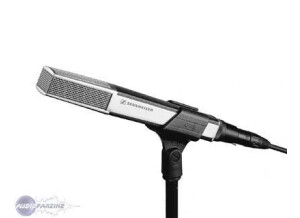
    The Sennheiser MD 421 N is a dynamic microphone suitable for both recording and on the stage. I have used it primarily in the studio, but would definitely work well in both applications as it is sturdy and is overall a great dynamic microphone. Unlike later versions of the MD 421, it doesn't have the bass roll off. This isn't that big of a deal as it definitley sounds just as good if not better than later versions of itself. The silver/white shade of this microphone is also unlike other versions of the 421, which are usually black. The silver color has set this microphone apart to be recognized as a different version of the classic 421 microphone. It also has a short (about two or three feet) male XLR cable connected to it that I usually plug an XLR microphone cable into to send to my board or audio interface. OVERALL OPINION I've been using the Sennheiser MD 421 N for about two years. Those who know about the 421 know it is great in a number of different applications. I love using this microphone for tom tom drums, electric guitars, and bass guitar cabinets. It seems to have a slightly warmer tone than the modern 421, and is around a similar price as well. I would describe this microphone as a slightly fatter Shure SM57. The price is about the same price as a new 421 which is quite reasonable for such a great sounding microphone. The MD 421 is an industry standard in recording tom drums and has been known as a great all around dynamic mic. While I can't say this is better than any other version of the MD 421, as they are all great, this has its own look to it and if you looking into getting a used 421 this is just as good as any 421.