Log in
EN
FR

Harley Benton

876 products found

Categories
Series
Filter
Sort by
Evaluation
  • Reviewed or not
  • Editor’s award
  • Reviewed by Audiofanzine
Availability
  • Available or not
  • Sold new or used
  • Sold new
  • Sold used
Must-have products
  • All products
  • Flagship products
  • Best rated products
  • Hot products
  • Popular products
Price
  • Freeware
€
Clear
Sort by
  • Popularity
  • User ratings
  • Price - low to high
  • Price - high to low
  • Used price, increasing
  • Used price, decreasing
  • Name (from A to Z)
  • Name (from Z to A)
  • Added on
Sort results
  • Popularity
  • User ratings
  • Price - low to high
  • Price - high to low
  • Used price, increasing
  • Used price, decreasing
  • Name (from A to Z)
  • Name (from Z to A)
  • Added on
Filter results 876 results found
Evaluation
Availability
Must-have products
Price
  • Freeware
Show results

The best Harley Benton reviews

The reviews Audiofanzine members found the most helpful.
  • « A Harley PRS for a very low price »

    This model inspired by the PRS Hollowbody I is really surprising. (and for a low, low price, you almost get a tailored suit of a guitar!) A very good, versatile instrument so pretty and unexpensive, you couldn’t get all that a few years back. Let’s begin with its only real weak point: the wraparound bridge, also featured on many more high-end guitars. First, it has to be set up with more care as the guitar comes with a standard setting, a (way too) high action, pickup height to be readjusted and frets to be polished… Once all these operated, you can measure this machine’s real potential. A hollowbody with a beautiful maple top and two very acceptable humbuckers that can be split into single coil – offering a good compromise in between a strat’s clear and slappy sound and the round, warm one of a LP. The clean sound is just astounding. Crunch sounds are very precise and progressive. As for big saturations they require more accurate settings, but that’a also the case with guitars 5 to 10 times as expensive. While very agreeable and fast to play, the neck may not be up to par with an Ibanez or some strats but it’s already quite good. I have all sorts of guitars, some of which are considered high-end instruments : if you except for a few finish imperfections here and there, this one is largely in their league. This 200-bucks guitar can satisfy both amateur players and more demanding professional players. I find it as pleasing and efficient as my Godin LGXT – plus its only 1/10th of the price ! If you’re after a very beautiful guitar to play all sorts of styles without breaking the bank, go for it! Of course, you won’t get the prestige associated with playing a legendary brand’s instrument but this guitar still has its own prestige – and who knows, it might even become a legend?

  • « Unbelievable ! »

    I fell for this model from « Thotho », it looked great and the 84 user reviews on their website tended to confirm this impression. A ordered a B-stock for 155€… it wasn’t much, but there still had to be seen whether it would meet my expectations. I received it perfectly set up. A quick look confirmed how beautiful and well-finished it was. As an owner of several guitars in all price ranges for 20 years now, it really looks like a 400€+-model. It seems sturdy and all. You can spot a tiny excess of glue at the neck’s junction into the body but it’s hard to notice. Original strings are d'Addario std. As for its specs : mahogany body and neck, maple fingerboard, quality traditional binding (very regular), gold hardware, HBZ active pickups and tuners which I suspect to be Grovers (we’ll get back to it later). Enough introductions, let’s now plug it into my Line 6 XT live (metal setting). I tune it and the first chord is enough to send other low- to mid-range guitars (up to 500€ in price) back home! The pickup’s precision and character are unbelievable, each sound is perfectly heard, no false note, the sound is heavy and clearly not here to piuck flowers up. Pop addicts, thou shalt not pass: this axe is here to destroy it all! Let’s not get excessively excited though : compared with my Les Paul, it’s still less preciuse, less warm-sounding too but what an attack and output level ! I suppose thest active pickups are made by Wilkinson and like its namesake it provides two blades – and how sharp they are! Even though I own several guitars with Gibson, SH4, EMG or (7-string) DiMarzio pickups, this one still stands out with its own character – and it sounds clear. Please keep in mind that these pickups don’t equal the others I’ve mentioned, still they’re very surprising. As for the neck pickup, it’s a bit precision-lacking, still it brings a little warmth. Together, they offer balance and coherence, but not enough to get really excited. The bridge one is a huge surprise. The sole apparent flaw is an important hiss, the shielding is really bad – I’ll have to have it done again. In clean sound, it’s the other way around: while the bridge pickup (although clean-sounding) is just average, the middle one offers a nice sound palette and the neck pickup sounds round, powerful and warm. The neck is pleasant, I’d say it’s a 60s C profile. It’s easy to play, even though the frets are still a bit fresh (you can feel the differenc with e.g. a Les Paul), it’s up to par with an Epiphone and honestly the same as an LTE ec 331… which is way more expensive. Not to say they’re out of the same factory, but… Especially when you know that the one where this HB model is built has been here for 40 years and has manufactured for Epiphone, Ibanez, LTD and so on. The guitar is heavy, almost the same weight as a Les Paul. I take it as a sign of quality. Line 6 amps are nice, but i consider them to modify the sound too much. So i brought it to rehearsal to use it with my tube head (with a 4x12 cab), and my positive initial impression was confirmed with a really clear, precise, razor-sharp sound. I played it syanding, its very balance is nice and in 3 hours i never had to retune it (hence the reason I believe them to be Grovers). So let’s not spend more hours on this axe. Who is it aimed at? Well, everyone! A gift from Heaven for the poorer guitarists, and if you’re after a good-looking, Eclipse-style guitar that’s well-made and pleasant, it’s made for you! All this for 155€, yes, you said it: unbelievable. Years ago you had awful things for the price, while this one is clearly about to become my official secondary guitar. Of course I have no idea how reliable it will prove. Perhaps 4 years from now its frets will be worn, the neck will be twisted? No idea, but if it were the case for such a price I’d certainly buy a new one. To conclude, this HB L-1000 (mine in in black/gold finish) is a great instrument for a rather low price. It can easily compete with just any Epiphone, LTD or Ibanez guitar under the 400€ mark. If you love rock, hard rock and/or metal it’s a real bargain. I give it a 5-star rating in spite of its cons, as for such a price… Pros: - overall building - weight and balance - astonishing active pickups - set, mahogany neck - precise tuners that do stay in tune even after several hours - very well set from the start - made for rock & metal Cons: - pickup shielding is a joke (huge hiss) - low-quality nut - molded knobs are badly done - not a very versatile instrument Here we go! PS: i’ve changes the knobs as they were badly molded and ugly. I’ll record something when i have the time. EDIT on 06/22/16 : after a few months using it, the guitar has not changed, the frets have aged normally and many of my friends who had an opportunity to play it were astounded. I even played it live. Just one thing I’ve remarked, the neck pickup lacks precision due to a heavily excessive output level. Setting the pot allows to change that, still without making it an exceptional pickup. All in all, I’m still quite happy with my purchase and would almost buy a second one! EDIT on 11/17/2016: I’ve been using it for 8 months now, so it’s time for a more exhaustive review. First, the tuners: I’ve remarked that they’re getting weaker and weaker (which was to be forecast) and I have to re-tune the guitar more an more often. It doesn’t like aggressive bends. I’ll still stick to my initial opinion which was that they’re good overall, I believe the weather of my home region (I live in the cold Savoie mountains) may influence that and the short travel from home to rehearsal and back requires these days a tiny readjustment. Second thing, the pickups : that’s a common problem with active puckups, but their output level makes them barely usable outside of metel territory. Still, you almost get a passive pickup sound in (heavily) diminishing the volume. Then, you get different sound colors, the neck pickup gets more creamy in clean, the bridge one more punkish and sharp (even if you lose sustain along the way). I still intend to replace them someday, but don’t hesitate to play with the volume knob to see what they can do. Nothing else has changed, the neck is still as pleasant (and straight), the C60 profile is perfect for small fingers and the guitar is always as balanced as it was. I’m planning to put better tuners on it and replace the pickups (probable by Gibsons or EMGs) in order to make it a second guitar for live. I’m still recommending its purchase for beginners and advanced players, and those who already tour a lot and are after a good secondary guitar to complement their main axe will find it quite useful, provided they operate the aforementioned upgrades.

  • « Quality at a discounted price »

    - Which amplifier and/or effect(s) do you use with this guitar? What playing and musical style(s) do you play with this guitar? I use it on a Vox lil' night train with a v112nt,nothing exceptional effect-wise (megalith delta) and a noise gate (ns2), essentially for metal (thrash, djent, heavy, death...) :bave: - What are your thoughts on the workmanship, electronics, and finish of this instrument? How is its intonation? Does its neck, touch, feel, shape, etc complement your playing style? This pretty yhing has the following specs: Deluxe series Basswood body Ash top Bolt-on maple neck Rosewood fretboard Radius: 350mm 22 frets 648 mm scale lengh Nut width: 43mm Double action trussrod 2 Wilkinson Alnico humbucker pickups 3-way toggle switch 1 volume knob 1 tone knob Die-cast tuners Tune-o-matic bridge (string-thru body) The wood and workmanship are a good surprise for such a price, the neck is very pleasant, soft, not rough, similar to that of a fender tele but I'd say it's flatter. Well-fretted, the highs are easily accessed, no problem except for the bridge that I had to change for a Gotoh shortly after buying because the original warped a bit. I haven't been curious enough so as to go and inspect the electronics' cavity but no problem with it so no need to! The top is BEAUTIFUL, it first seems a rather common chiny black but ibce well lit you realize it's more a very dark brown (which looks beautiful with the golden hardware) and the wood veins can be seen through the lacquer, just sublime. It keeps in tune very well (I play in drop C with 11-52s), even after 3 hours playing it doesn'y need to be tuned again, sometimes it happens on the C string but it's a universal issue... When I play sitting (in the position of a classical guitar player) it doesn't slide, doesn't hurt your thighs (I've had an Explorer-shaped guitar which tip did), so everything's fine. When playing standing, it doesn't take a nosedive, in spite of the basswood body and ash top I don't find it heavy (so no aching back :bravo: ). - Do clean, crunchy and distorted sounds adapt well to different microphone positions? Are the guitar's different frequencies and sounds well-balanced? That's the TE 40's weakest link, its pickups (although quite good) sound too bassy and lack trebles (to my taste), making distorted sounds lack precision, but this is something one can solve easily tweaking the knobs ;) In itself, it provides the instrument with a real sonic identity, so I won't change them, I'm fine with them! Clean sound is hot and a bit fat, even on the bridge pickup, which is great for blues. It crunches easily, with the same sonic characteristics as in clean, and regarding distorted sounds (those I use most) I manage to get a large amount of distortions, it does the job, whether for sharp and shrilly sounds, overcompressed high gain, or clean dists... But the guitar's sonic identitu remains noticeable, I can get a large array of sounds with my pedal but whichever setting I use the guitar will remain recognizable! The neck pickup sounds much fatter than the bridge pickup (which already is - fat), which can be considered a pro or a con (to each his own)., to my taste it tends to limit the available sonic options. - What are the pros and cons of this guitar? Pros: - wood & craftsmanship - ergonomy - it look - ITS PRICE - the pickups Cons: - the pickups (yes, I have sort of mixed feelings about them) I decided to buy this guitar because I liked its look, and I wanted a HH tele-like, plus I only heard good thing about this brand so I thought "Why not? in the worst case I send it back if I don't like it"... And I didn't send it back. ;) To conclude, what we have here is a tele halfway between a Les Paul and "classic" Tele, it looks good, is comfortable to play, a sound... that provides mixed feelings :) All this for the price of a EMG 89-x ! Ain't it greaaat, huh ? :-D I'd do the same choice again if given the opportunity!

  • « Incomparable value for money »

    I received the 2x12 cab one month ago. I use it with a 1988 Carvin x100b amp head. I have tested other cabs by Palmer, Peavey, Marshall (2x12 and 4x12 ). After one month of use, I find it relatively light (it can be transported without breaking your back) and pretty solid. I opened it as soon as it arrived. You can take out the speakers after removing the grille (which is fastened with Velcro; I used a screwdriver and a cloth to protect the Tolex). No ugly surprises here: 2 celestion Vintage 12" speakers. The connectors are tidy and protected with a plastic shell. Overall, the finish is good and, unlike what you may read in other reviews, it's not made of wooden crates. Once you remove the foam (and use it to fit the gear in the car = it avoids vibrations), you can go so far as to use wood glue and mastic. I reinforced all the edges with wood glue and the handles and circuit board with mastic. Then I sanded and applied some lacquer to the wood. (which takes about 3 days, if you respect the drying times). Then you put it all back together and...what a surprise, it sounds great. It's a Celestion Vintage speaker inside the cab, so there's no way it can sound bad. From all the things I have been able to test by Harley Benton, this is without a doubt the best. But you obviously need to break it in. The Tolex is quite all right if you don't abuse it, the handles are sturdy, etc...You can add some casters, which is easily done and comes in handy. Would I buy it again for the same price???? I will definitely buy another one to put Jensen inside. If you are not convinced, go buy a Mesa cab for a thousand bucks and see if it sounds four times as good. Otherwise, if you are scared of being judged by fellow hard rockers, you can save $30 from your next gig to get a custom grille and save your honor...Although, that will mean you care more about the grille than the cab itself and what's inside.

  • « For Jazz – but not only »

    Thomann had it made in China under the brand name Harley Benton, but this model has no longer been produced since September 2015 as far as I know. I bought the last model, a b-stock guitar, and I don’t believe that many were produced. I’ve used it with tube amps to play Jazz exclusively. I have other guitars for other genres. I have been playing for over 50 years now. Workmanship is perfect, the (very straight) mahogany neck is lightning-fast once the truss rod and bridge (for intonation) are set correctly. Its fretboard is made of rosewood and features thin, well-polished frets. Arched top, very basic rosewood bridge that requires either replacement by a tune-o-matic or adapting the saddle to the neck’s curve. The tuners do their job in the softest manner. The body is purely hollow, without a central block. Of course, it features flatwound 12/56 strings, very close to the neck except for the outer strings due to the non-rounded nut. The guitar was originally equipped with a floating humbucker pickup and two basic potentiometers, almost a make or break. It will require being upgraded to a Classic 57-type pickup and good pots. This is a quality pickup provided you upgrade it for approximately 250 euros – including your repairman’s work! You can find a Youtube video of Jean-Luc LACHENAUD playing AUTUMN LEAVES on this guitar equipped with a Classic 57: what a sound! https://www.youtube.com/watch?v=Cd7wCKSvzEA If you manage to fin dit used for 120 to 150 euros, go for it provided you can afford a total upgrade. For a total 400 euros (much less provided you can service it yourself and gat a cheaper, used pickup), you couldn’t dream better. Or perhaps after spending twice as much? Mine is still as i twas when shipped, except for the usual settings. I take my time to upgrade it, as I have other works in progress. EDIT1: I've changed the pickup for a Wilkinson humbucker that I found on a Harley Benton Les Paul-type guitar – of course, the body had to be drilled. They come together fine, but the next step would be upgrading to a Gibson Classic 57. I’ve also changed the bridge for a Goldo Tune O’Matic, with a result close to what you can hear on Jean-Luc LACHENAUD’s video. I did it all myself for under the 300€ mark. The good news is, Thomann now offers this model again. EDIT2 : I got a used Classic 57 from AudioFanzine’s classified ads section and put it on the guitar straight away. I now have the exact sound I was after!

  • Greig's review

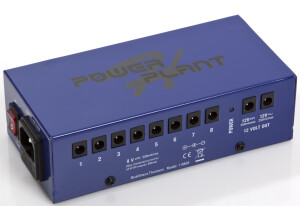
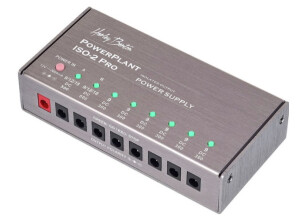
    I had had enough of random noises and bulky PSUs (I use one Line 6 PSU, one 1 Spot-like PSU, an ibanez PSU for a fuzz and a Dunlop for the 18V of the OCD... - oh, and I also have the H&K Tube factor PSU). I bought 3 to power 10 pedals (DT10 > Small Stone > MicroVibe > Derr Bender MkII > OCD > LGW > MicroAmp > Boss HF2 > DL4 > DisasterTransport. The results are conclusive from all points of view: Bulkiness, noise (well below my previous setup), cabling, price. I was able to feed the OCD with 18V and the DL using 3 outputs to guarantee the necessary current (theoretically, 2 are enough but I suffered untimely resets...). The cables supplied are perfect, with right-angled plugs, although they could've added a voltage doubler, now Ill have to solder a bit... Note: I use the daisy chain supplied as a current multiplier.... I'll update my review after my first gig and in a couple of months, if necessary. A detachable power cable would have been a plus.

  • « Quite Simply Put It's A Good Bass »

    A bold title yes but one I'll stick with. Having played bass for over 30 years this was my 1st purchase from Thomann and a fine one in my opinion. I'd recently joined the UK BassChat forum and saw the retailer mentioned plenty.On visiting the site I liked the look of the PB-50. The spec was good, long scale,maple neck and fretboard,light Basswood body,D'Addario strings and a Wilkinson pickup.Now the strings and pickup would cost 50 euro alone,the PB-50 was less than 100 euro.Worth a gamble I thought (since then I now know there is 30 days return) In 2.5 days the bass was delivered from Germany to Scotland and the fun began.Out the box I was struck by how well constructed the bass was,good finish,no sharp or high frets,playable action.Surely this was a fluke,basses this affordable shouldn't be this good. No fluke, another was bought as I'd strung the 1st with nylon tapes and it is equally good.I was so pleased with the PB-50 I started a thread on TalkBass and soon heard from other players similarly impressed. A word about the Wilkinson pickup,one of the posters to my TalkBass thread works in Kenya and after 6 months bought one from a fella in England( Thomann don't deliver to Kenya).His arrived with a Seymour Duncan pickup fitted and he was intrigued by how the Wilkinson would have sounded,as I planned on trying either a toaster or mudbucker in one I sent him my Wilkinson pickup.Both pickups had the same range and clarity,in fact they both sounded the same.Only the Wilkinson is LOUDER. Seriously this is a great bass for under 100 euro and I'm hard pressed to see how the Squier CV equivalent costs 5 times as much.So where are costs cut ? well it has a basswood body but so do many other basses.The finish is a FotoFlame under the gloss though this only matters if you want to relic it. A great 1st bass,a great back up bass,a great bass for the classic look and tone. Do yourself a favour and get one and remember Thomann offer 30 days return if the QC isn't 100% and 3 years warranty as standard. You really have nothing to lose:bravo:

  • « Nicely finished but above all a well playing 335 style guitar! »

    This guitar is something special. With its beautiful retro look and very well finished, this semi-hollow guitar is a pleasure to look at. And then I haven't even mentioned the beautiful maple top and bottom of which the wood texture drawing is still clearly visible through the lacquer. The playability is very good and the Roswell humbuckers will not disappoint you either. I think that the price/quality ratio of this Harley Benton is unrivaled for such a guitar. After almost two years of playing, I can say that this is one of my favorite guitars. Highly recommended!

  • Audiofanzine FR's review

    (Originally written by Xavuplex/translated from Audiofanzine FR) UTILIZATION This bass guitar is very ergonomic and has a comfortable neck. The strings are rather high over the neck but the bass is very light and easy to handle. The sound is good for the price. You can use it on stage or in the studio. I compared it to the Epiphone version it isn't very different (the Epihone has another neck and perhaps the pickups are slightly different but the parts are the same). SOUNDS As I wrote before, the sound is good enough. It is excellent for Beatles-like pop rock songs and even better with a fuzz pedal. OVERALL OPINION I've been using this bass for about one year. I'm a drummer but I like to play bass and this bass guitar is exactly what I needed. It's nice, very cheap and it sounds ok. I used it to play live on stage and record demo tapes and I can't complain. I bought it secondhand. The value for money is incredible. I would definitely buy it again for its price and look. If you're not looking for a top-range instrument, this bass guitar will do the job!

  • « Not bad »

    A rendition of the MESA BOOGIE American amp sound. I'm not that much into that kind of sounds, but I admit it has some advantages, so I'll be totally neutral. Only 4 control knobs: gain / tone / voice / volume. It looks simple, yet (just like on a real Boogie) the knobs interact with each other, taking time to adjust the settings... Imagine if there was a full EQ section... With Gain at 12:00 and Voice full on, I have no problem getting Metallica's "Sad But True" tone with my EMG81-equipped LTD. I'm stunned! :bravo: With Gain and Voice full-on, the sound is razor-sharp, but it's noisssssssssssy! :8O: My ISP Decimator has lots of work ahead! The Tone setting provides a rather dark sound for the first quarter of the knob's range, but after that it soon gets shrilly. To be set carefully, then no need to change it again. A lot of lows, sometimes even way too much. It lacks accuracy, so an EQ will be needed to fine tune it all, it tends to sound harsh. Some like it, others hate it... For rhythm playing, the pedal works well., but for soloing get your "compressor/EQ/noise-gate" ready to get an acceptable sound out of it. This box is said to have been designed for being plugged directly into a PA or sound interface for recording. Duh, I don't like it much, sounds messy! I really prefer to use it it as a "normal" pedal. On a side note, at home, when I plug the pedal alone with just the guitar and amp, no problem at all... But, when used with a T-REX Fuel Tank power supply, it goes noisy like hell with "whoooooom" sounds as soon as I switch the stompbox on. I've had problems with my home's not-so-recent electrical system so I won't really blame it on the pedal, but at least I've warned you, just in case... Overall, it's a nice pedal, but it won't be THE ONE versatile distortion in your gearset, especially since there are more convincing models out there. Pros: - small-sized - very good crunch sounds - good overdriven sounds - cheap - sturdy Cons: - not as good in solo as for rhythm - so noisy it requires a noise gate! - a big buzzing sound to be expected depending on your electrical system - doesn't sound like a real Mesa Boogie, more like a rendition of it

  • Audiofanzine FR's review

    (Originally written by blackhorse/translated from Audiofanzine FR) Fabriquè£ en Chine Corps en Tilleul 2 Humbuckers Volume, Grave Aigu Sè«¥cteur de micros Cordes traversant le corps UTILIZATION Comfortable neck and better fret work than on a Squier Affinity, for example. Ergonomic Rather heavy Very nice acoustic sound Good pickups. SOUNDS The original pickups are rather good, better than a Hohner G3T. It's quite surprising considering the price... OVERALL OPINION I bought it in November 2006. This guitar is great if you consider its price! Good finish (binding, transparent varnish) Sound is ok. Good acoustic tone. I would only criticize the golden hardware because it can oxidize if your not careful. Otherwise it's a very nice guitar for its price! Comfortable and durable.

  • « A really top notch guitar!!! »

    I bought it after reading enthusiast comments by people who’d bought it before I did… so no need to add too much (just go and see the website of the well-known German online retailer that sells this brand), but in short PRS had better watch out, for such a price the result is just incredible… The single shortcoming I've found is the tremolo arm which wouldn’t stay in place, the hole seemed too big so I asked on the retailer’s website what to do (they didn’t know what to tell me – too bad...). In the end, I found the answer by myself when setting the guitar again as for string height, vibrato (unfastened the springs, the six bridge screws, truss rod and so on): the tremolo arm gets blocked using a small BTR screw which can be accessed through the black rear part by pushing the bridge and vibrato forward! (the screw can’t be seen as it’s hidden in the vibrato’s hole when in normal position). For the price, the finish is really high-quality... It wouldn’t blush in front of the “original”, so in the end this guitar is plain magic!