Log in
EN
FR

Studio headphones

638 products found

Filter
Sort by
Evaluation
  • Reviewed or not
  • Editor’s award
  • Reviewed by Audiofanzine
Availability
  • Available or not
  • Sold new or used
  • Sold new
  • Sold used
Must-have products
  • All products
  • Flagship products
  • Best rated products
  • Hot products
  • Popular products
Price
  • Freeware
  • Low-cost (< $100)
  • Mid-range ($100 - $300)
  • Premium (> $300)
€
Clear
Sort by
  • Popularity
  • User ratings
  • Price - low to high
  • Price - high to low
  • Used price, increasing
  • Used price, decreasing
  • Name (from A to Z)
  • Name (from Z to A)
  • Added on
Sort results
  • Popularity
  • User ratings
  • Price - low to high
  • Price - high to low
  • Used price, increasing
  • Used price, decreasing
  • Name (from A to Z)
  • Name (from Z to A)
  • Added on

The best Studio headphones reviews

The reviews Audiofanzine members found the most helpful.
  • « Very good for its price ! »

    I use it to listen all kinds of music either home or away on mobile devices, on a smartphone and various fixed audio interfaces (m-audio firewire solo, focusrite 2i2, xfi usb hd, audiophonics U-sabre). It’s well built, seems sturdier than most headphones I’ve had the opportunity to try or own in this price range. This trustworthy and sturdy aspect is a good thing and should allow it to survive longer than other headphones… Soundwise, how clear it is! What I mean is, sound is “airy”, you can actually feel a sort of space in between the instruments, e.g. it all sounds more detached than with a Senn in the same price range. But of course, with just any headphone in this price range, don’t push the volume too high or the sound gets messy, which is quite logical. I’ve had the opportunity to compare it with many of its competitors, and provided you like audio technica’s signature sound (a bit light on the mids and a bit too much low mids (but still dry) with an overall “credible” sound), it’s one of the best you’ll find. I’ve been a Senn fanboy for ages now and I must admit this model may convert me. I favour it over my AKGs for instance, as they’re very pleasant but comparatively the sound dull ond too soft. All in all, it’s a great surprise, not so expensive and it provides a really convincing sound, and most important a worthy building quality (it’s not a plastic thing all about bling bling). Well done, AT!

  • « best dj phones so far..... »

    I brought these heaphones beacuse I was tired of using sub-par consumer headphones (UGGHHHH!!!!) Theses headphones are great at canceling out unwanted sounds due to the cushion of the inner (nonleather) & outter (leather) padding. The sound is amazing. From 30 kHz to 5Hz is the range for the 50MM drivers. Precise highs, excellent mids and very low bottom, pretty much you can her everything, especially if you use these as studio monitors. The price I cannot argue, for a quality pair of headphones, you cannot beat it. If i was to do it all over again I would DEFINITELY buy another pair of theses...which would be a few years from now, very durable headphones.

  • chrislieck's review

    The thing about the HD201 is that in any of these HD (so called) headphones it seems that you get what you pay for. Plastic made to break. Not used in any PRO STUDIO ROOMS that are serious about your headphone mixes and we are www.chrislieckstudios.com. I think that you need invest more and get a more flat pair of headphones such as the AKG 240's. Again these can't take a great deal of volume without breaking up. This new bread of phones if for more amateur recording. Average at best. These phones have a bump so that if you are recording a vocalist that hears more high mid response it that bump at 50hz or in that basic area will cover up that mix that you need to cut vocals. I like phones to have cuts if anything at that lower frequency so that when you are tracking they vocalist you don't have to have a separate headphone EQ for the singer. I have to do that a great deal with newer so called HD phones. I also like to match phones meaning if I have three pairs of headphones in my studio I want them all to be the same. I don't want to have two singers in the booth and one has a lower volume than that others. Also these phones are not as sturdy as I would like. I have read other reviews of these whereby they state that they are sturdy and I find that the cheaper the headphone the more likely it will break upon impact to the ground. Most singers drop their headphones all the time and the few times these headphones fell I was nervous that they were done. Back to the sound, I was just not that impressed with any one thing with these phones. Isolation was minimum thus drummers would not like them, and the fact that they are not that isolated is not a good thing. We used them just the other day on a drum live session and I had to move to a set of vic firth for the drummer to hear the click drum. No on the other side my engineer likes them a bit more than I do so I have them an average rating as he likes this line of headphones and he works at the Guitar Center so he gets to hear a great deal of all of the new headphones either before they come out or when they are in the store. Normally I hear from him as to liking a specific set of phones. He will call me and rave about them. I did not get that call on these headphones and the reason we had a pair is s student left them at the studio and we started using them in the C room for a while. The student was mixing on them and never mix on headphones if possible. That is not a great idea for any mixing engineer. I would just invest in good pair that standard producers and engineers like the AKG 240s or any great AKG line that is commonly used by professionals.

  • « UNBEATABLE VALUE FOR MONEY »

    Hello musician friends, I just got the HD681B and I'm surprised by the sound quality. Like the HD681, they are semi-open, 32ohms, 98dB, 10-30000Hz, the difference between them is the frequency response curve. The low end is a bit rounder, but less emphasized and, as a consequence, the mids have more presence, while the highs are well-balanced. The high-mids are a bit too pronounced, which is the brand's sonic trademark, emphasizing the impression of definition. In terms of precision/definition, they are quite all right. I've compared them to giants like the Beyer DT880pro, AKG K701, and they are not that far in terms of sound. You really need to know your headphones to tell the difference, which says a lot about them! However, they are a bit less precise than the DT880pro across the entire frequency spectrum. In other words, for 30 bucks you get a well-balanced, well-defined, and not tiring pair of cans, which nevertheless remain dynamic, musical and comfortable. What else could you ask for? I still have to see how long they last, but they cost 8 times less than the big shots. Well done Superlux!

  • moosers's review

    The GK Music UltraPhones is are a set of high isolation studio headphones, suitable for a few different purposes. My experience with the UltraPhones has strictly been in the studio to monitor during recording, however their use is definitley not limited just to this, as they are also intended for live use and even for general listening purposes. Having said this, they're great for recording vocals with as they cut out all bleed you'd normally get from headphones. However, be sure to have the vocal up in the headphone mix as they'll definitely make it hard to hear yourself without them. The headphones are quite large and have a coiled cable that ends in an 1/8" or 1/4" jack depending on if you have the adapter on or not. GK Music is a company focusing on drummer products, and the UltraPhones are definitely best suited for drummers as well. They're great if you want to use them to play to a track or a click with, or simply for protecting your ears while playing a drum set. The sound heard through them is definitely awesome, but the isolation factor is really where the UltraPhones do their magic. You can get better sounding headphones out there for cheaper, but when complete isolation is needed, nothing does it better than the UltraPhones. Having said this, I do believe that the Vic Firth SIH1's are quite comparable, and even though they aren't as sturdy and are not quite as good in general, they're still a legitimate option for those who won't be able to afford the UltraPhones, which are quite expensive. If you're going to be using headphones like this on a daily basis, definitely invest in the UltraPhones, but otherwise I'd probably save the dough and go with the Vic Firth SIH1 headphones.

  • « Excellent! »

    I've been using them actively for two months and, after having tried out lots of headphones, including some really expensive ones, these ones really stand out. Their frequency response is really flat, although the previous reviewer said they sound bright. It's true in the beginning, before breaking them in, but after 24 hours they sound really good and have a divine precision in the lows. I'm rediscovering songs with details I had never heard before. A simple example, I had never noticed that in "Like Fire" from Bloodbath, there's voice shouting "Like Fire" in the background throughout most of the song. But you can hear that clearly with this headphones. I have tested other headphones and listening systems but haver never heard this effect. It goes to show the quality of these headphones. They certainly have the same spirit as the KRK speakers, which is great. They are perfectly isolated and feel really comfortable on the ears. The only thing I would criticize about these headphones are the two small pads on the head. They make my head hurt after several hours. So I put on a cap and the problem is gone. I strongly recommend them. TRULY unbeatable value for money.

  • « comfortable but lack mid range »

    The SR850’s come in at a very low price, for them to be 60 dollars the frequency response is pretty good! They are a pair of semi open studio monitors that have a driver size of 50mm. They come with a ¼ adapter as well. When it comes to price and performance, I would choose these over some of the Sony headphones that cost almost double what these do. Though the SR850’s have a great frequency response and they are affordable you still need to be careful with them, they don’t take much wear and tear and can break on you easily. They also can be a bit heavy when it comes to overall sound. I would not plan on getting a perfect mix with these but if these are all you can afford they will hold you over until you can afford to upgrade and invest into a solid long lasting pair. The Samson SR850’s are comfortable to wear for long periods of time, they can be adjusted to fit your head size and they fit perfectly over my ears. I did not use these long, they became more of a regular set of headphones for me to just listen to music in. The bass sounds solid and it is very clean, the highs are crisp. But the mids are the issue when it comes to mixing in these headphones, they seem to make the overall sound really heavy to me. The SR850’s mid range is a bit shaky and can mess up your whole mix if you try to fully mix in these monitors. But I am happy that I purchased them and wouldn’t take it back for anything because they are affordable and great to have around in case I am going somewhere and want to take a decent pair of monitors with me to listen to some rough drafts of stuff that I have recorded. They do need some changes but what can you expect to get for 60 dollars. This is about as good as it gets for that price range.

  • « Just a little too pricey for me »

    This is a studio headphone made by Sony. I like some pairs of their headphones but I've often found that their main drawback is that they break too easily. That is thankfully not the case with these, as they are built very well. They are primarily marketed as studio monitoring headphones, or live monitoring headphones for live sound engineers. However, they could realistically be used for regular music listening as well, just by using the appropriate adapter which will vary depending upon which system you are using to listen. I've used these primarily as a studio monitoring headphone which is, in my opinion, their best use, followed closely by live monitoring (they they don't always have enough isolation for that). I like the clarity of the tone of these headphones. They are capable of being very balanced and can do a pretty good job of replicating the tone that is coming through to the monitors. They're not exact, in fact I haven't really used any headphones that perfectly replicate the monitors, but these come about as close as anybody else has to doing that. They're also really comfortable, which is important if you're working an 8 hour session. Even after an hour an uncomfortable pair of headphones can be a bother. Mostly I'm concerned about the price. To be honest, you don't need crystal clear sound in the headphones, you just need it to be accurate enough to get the feel of the music down when using them. Performers won't necessarily notice the difference between these and a pair of Audio Technica studio headphones really, even though the Audio Technicas are about 80 to 100 dollars cheaper. I think that is mostly because of the Sony name, they think that they can jack the price up. Well honestly, that's a bad idea as informed buyers are going to look elsewhere. So while these are nice, I'd have to say that they're just a tad bit overpriced.

  • « A step up from the rest. »

    Searching for "The Sound" The world of headphones is a world of endless possibilities. One might think all headphones are simply designed to create 'good sound,' but this could not be further from the truth: there are multiple factors that are considered in the design and construction of headphone sets at all price points: - Frequency range - Sonic accuracy - Driver size - Closed-back vs. open-back - Noise reduction and attenuation - Comfort and flexibility - Building materials - Style This list only begins to crack the surface of headphone features, and still one of the biggest motivating factors for headphone choice, not listed above, is the price. Headphone prices range from $5 to $500 and beyond, and it is no easy task to shop for a quality set of headphones without being able to test them individually for sound, comfort, and style. Since many musicians and sound professionals (like myself) do not always have the luxury of testing products in person, the next best option is to find recommendations and research specs. This was the process that eventually led to the Audio Technica ATH-M40x closed-back headphones. Overview It's no secret that Audio Technica has been a leading force in the audio industry for years, because they have continually offered exceptional quality at reasonable prices. The advent of home recording over the past decade has only boosted the demand for affordable gear, and Audio Technica has released a vast supply of options for headphones, microphones, and other recording gear to meet every budget on the market. Many serious home studio users often ask the question, "What is the best set of headphones for $100 or less." No doubt, there are a few industry standard options to choose from, such as the Sony MDR-7506 or the Sennheiser HD 280 Pro headphones. But the title for "A step above the rest" belongs to the Audio Technica ATH-M40x closed-back headphones. The Sound When choosing a pair of headphones, most audio engineers and musicians are looking for good sound. Now, while "good sound" is somewhat subjective, accurate frequency production is not. The ATH-M40x's produce an even projection across a wide frequency range of 15Hz-24kHz, making them a very 'flat' sounding set. While this may be a "shorter" range than its competitors, the M40x's do not lack in clarity across the spectrum, and they do not expend energy in low and high frequency ranges outside of the human range of hearing (20 to 20kHz). The comparable Sony and Sennheiser models reach frequencies of 10Hz or lower, but this is wasted energy since it is so far below the actual human range of hearing. The ATH-M40x's feature powerful 40mm drivers (standard at their price point), and have considerably lower impedance levels than their competitors (35 ohms versus to 64 ohms, respectively) making them very compatible with many modern basic home studio setups. Distinct Features Not only do the ATH-M40x's excel in the area of sound, but they also provide some very useful features that cannot be found on other headphones below the $100 range. The most distinct difference is that the M40x's use detachable cables, and every brand new set includes two 9.8 ft. cables--one coiled and one straight--right in the packaging. This means that if one or both of your headphone cables wear out and stop working, you can buy a replacement cable for a fraction of the cost of a new set of headphones. This has huge implications for long-lasting use, when comparable models may stop working and you must replace them altogether. The M40x's also include additional comfort features such as rotating ear cups and firm ergonomic padding all throughout the headphones. They are lightweight and comfortable for long listening sessions, but they do not feel flimsy and weak. And best of all, they don't break the bank. Bottom-Line Every person has his or her own preferences when it comes to sound, comfort, and style. These preferences may be subjective, but quality and price are not. The Audio Technica ATH-M40x's may not be the audiophile's "dream come true" in terms of sound and build quality, but they are great all around headphones for basic mixing, performance tracking, and easy listening.

  • « "Classy Audiophile headphones" »

    The Beyerdynamic DT 770 PRO comes in 32 Ohms, 80 Ohms and 250 Ohms. I went for the 250 Ohms version, as these are very suitable for professional studio monitoring applications and the best among the series for audiophiles especially. This closed reference dynamic transducer headphone is a circumaural headphone constructed to fit around our ears. Weighing around 270 grams, the DT 770 PRO provides a frequency response from 5 - 35,000Hz, providing a nominal sound pressure level up-to 96dB. This headphone has a single sided cable for connection coming with a gold plated 3.5mm mini-jack plug and 1/4'' adapter. I have done extensive research before purchasing the Beyerdynamic DT 770 PRO, as I always do with all my products. After listening to these headphones from various different studios and receiving recommendations from several musicians and artists, I understood that the DT 770 PRO is something serious and still uses it since 1 year. Since I am someone who always travels and arranges music and mix on the go, the DT 770 PRO does an extremely professional job. I had previously used several headphones from different companies (not naming them), but they always failed me. After doing a basic mix with these headphones and when you playback on the monitors, you will realise how well the sound reproduction is produced by the DT 770 PRO. Though I do not suggest to get used to mixing with these, but for a beautiful start and for monitoring and listening to extreme detailing of the sounds and arrangement, this headphone stands out and is one of the best in the market. For $200, these headphones have to be grabbed immediately and are highly recommended for quality sound monitoring. Pros 1) Innovative Bass reflex system. 2) All parts are replaceable. 3) Soft inner pads, hours of playback and monitoring will not give you the slightest fatigue. 4) Reproduces almost 90 % of sound detailing after mixing through these and playing back later on monitors. 5) One among the best Audiophile headphones for monitoring. Period. 6) Not over-priced. Cons 1) No drawstring bag (Promised to come along with the purchase, but I did not get one). 2) The 3.5mm mini-jack is not that strong as it seems to be. A quick mis-handling can destroy the wiring. (This happened to a few of my friends and had to replace the whole headphone). 3) The box this gets shipped with is very amateur and not at all safe. To be honest, did not like the packing at all. 4) Optional ear cushions and travel bags are available for purchase on the website (Something that should have been given along with the purchase. C'mon!). 5) Slight coloration in the high mids and highs while monitoring. 6) Not recommended as recording headphones. Slight leakages noticed. I had planned months before itself to purchase the DT 770 PRO's. After searching for something that could fit softly on my ears, playing back audio for extended hours without any irritation or fatigue, and something that can be used for mixing and monitoring at the same time, Yes, I went with the right choice, and will go for it, even if it was now.

  • « Pro! »

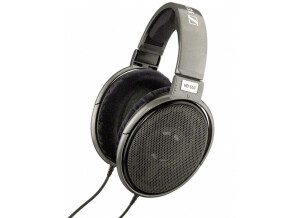
    I make soundtracks for videogames, and wanted a headphone good enough to mix my projects with when I'm not at home and to use as a second reference for my monitors when I am. A friend of mine gave me the best recommendations about the Sennheiser HD 650, let me borrow it for a couple days and I was totally convinced after that. It comes in a big and nice box with foam enough to keep it safe in case of falling or being hit by anything (you never know). The headphone's grey color is discrete and good looking, it is easy to adjust to your head and is very, very comfortable to use, even for long periods of work: that's because the phone's headband padding quite cleverly has a space in the middle, so it never presses the top your head. Also, its earpads are pretty big and stay around your ears, not agaisnt them. It's and open-back model, so the sound isolation is not so great, but good enough anyway. The sound quality of this headphone is outstanding. The bass is full and round, mids and highs are very clear, transient response is excellent. You can totally trust it if you want your mixes to translate well to other systems: stereo, tv, car, etc. It might be only my impression, but to me it sounds like the stereo image is a little bit narrower than some other ones I've used. Nothing that will make your work any worse - I don't even think that this is bad, to be honest - but it might be something you'll notice in an A/B comparison. The only thing I don't really like about it is that the cable is way too long... it might be a good thing maybe for a studio, but in my case I just don't need it. So, lastly, I can say that the HD650 is definitely not cheap, but absolutely worth it. I would buy another one without thinking twice.

  • « They don't last very long »

    My love for Audio Technica runs deep. They're a very good brand that makes a lot of good gear. They're reasonable with their prices and they have good customer support. These were my very 1st pair of closed back headphones. I purchased them years ago and wound up purchasing the same model years later (in the future). What I love: Cheap/Affordable and they're closed back. Very flat sounding which makes them good for mixing or better yet detailing a mix. Did I say affordable? (40-60 bucks). Accurate across the board, meaning if you purchase 2-3 pair, they are going to sound the same. That's important to me as a consumer What I Don't Like They start to breakdown after a couple years. The ear pieces, the material starts to flake off and it gets nasty because it's all around your ears, neck etc. It's kind of annoying. This is why I had to purchase a second pair and yes that one broke began breaking down as well. Did I Try Other Brands?: Hmmm, you know, I did actually. Farting around in studios, I've always been use to using the MDR 7506 by Sony, but when I went to purchase my own pair of headphones they were out of my price range at the time, both times actually. Are They Worth The Money? No, I don't think they are and If I had to do it all over again I wouldn't waste my time with them because for just 50-60 more dollars you could get a good pair of headphones that would last longer... Going with the cheaper option made me spend 3 times as much 1st pair, 2nd pair and then finally some headphones that were better in both sound and build. Again, I love Audio Technica, but I don't think I'd give these headphones another chance. if all you have is $60, please save the money and get some cans with a better build unless it is an absolute emergency.