Log in
EN
FR

DigiTech Multi-Effects for Electric Guitar

63 products found

Filter
Sort by
DigiTech
Evaluation
  • Reviewed or not
  • Editor’s award
  • Reviewed by Audiofanzine
Availability
  • Available or not
  • Sold new or used
  • Sold new
  • Sold used
Must-have products
  • All products
  • Flagship products
  • Best rated products
  • Hot products
  • Popular products
Price
  • Freeware
€
Clear
Sort by
  • Popularity
  • User ratings
  • Price - low to high
  • Price - high to low
  • Used price, increasing
  • Used price, decreasing
  • Name (from A to Z)
  • Name (from Z to A)
  • Added on
Sort results
  • Popularity
  • User ratings
  • Price - low to high
  • Price - high to low
  • Used price, increasing
  • Used price, decreasing
  • Name (from A to Z)
  • Name (from Z to A)
  • Added on
Filter results 63 results found
Brands
Evaluation
Availability
Must-have products
Price
  • Freeware
Show results

The best DigiTech Multi-Effects for Electric Guitar reviews

The reviews Audiofanzine members found the most helpful.
  • Audiofanzine FR's review

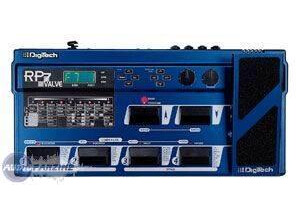
    (Originally written by tazon79/translated from Audiofanzine FR) Very comprehensive effect set: compressor, distortion, EQ, wah-wah, whammy, flanger, chorus, phaser, delay, reverb, noise gate, intelligent harmonizer,speaker simulation... Digital technology. The small preamp tube adds warmth to the overall sound. Headphone output, stereo output and jam-along connection. Two big knobs allow you to adjust the output level and presence. The display shows the program number or the edited parameter. The LEDs display the active effects for the preset. UTILIZATION The LEDs are convenient to see the different effects and their position in the sound chain. The user's manual is quite comprehensive. Unfortunately, this footboard is not very easy to use. It's possible to get a very good sound but you'll need to spend a lot of time editing, considering the amount of parameter some effects have. But once you get passed that, this footboard becomes very versatile and can provide very different sounds. SOUND QUALITY The effects sound very authentic and can still compete with new multi-effect processors in the same price range. The preamp tube enhances the overall sound. Only the distortion section is not so good, especially if you want a fat distortion sound. It's impossible to get a huge and fat distortion for death or black metal. The footboard provides the typical Californian sound (like the whole RP Series of that time). This footboard is a high-quality tool that provides an excellent clean sound and very high-quality effects (especially modulation effects). I use it with an Epiphone Les Paul and a PRS Santana SE and the sound is very satisfying. The sound is great with a Club Reverb amp. It's excellent in a stereo setup with two amps. The sound color might be old and not trendy anymore, but it has a proven quality. OVERALL OPINION Right now the main assets of this footboard are the clean sound and the effects. The distortion sound is not so good in spite of the preamp tube. Compressor, EQ and speaker simulation effects are not on the same level as modern effects anymore. You'll need to be patient with this footboard, but you'll get a wide sound range in return . The device sounds great in a stereo setup. With a more versatile and authentic sounding preamp stage this device could have been a guitarist's secret weapon. I miss that small detail that would make this excellent unit sound exceptional. The sound is too clean, thin and accurate. Except for the GT3 from the same generation, few multi-FX are so interesting, and certainly no product in this price range can compete with it. This product is very attractive but you'll need time to get to know it. The value for money is exceptional nowadays and perhaps a better preamp tube (like an Electro-Harmonix) could add more warmth and punch to the sound. I would surely buy it again, even if I'm considering getting rid of it to get an RP 14, 20 or 21D because they simulate famous amps.

  • « Many great options!! »

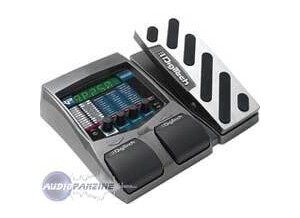
    Bought new in 2008, wanted it as an effect board for my tube amp. I looked at a few other boards such as the Vox tonelab, Line6 X3, and the Boss GT10. I chose this because it had the option to run it as a standard amp/pedal modeler but also with a push of a button it became a pedal only board. So when using it with my amp I could use my amps tone with the pedals of this, without having to turn of each amp model. It has all the standard effects: compression, distortion, overdrive, chorus, flanger, phaser, delay, reverb... but along with some other cool ones. Whammy, pitch shifter, talker (talk box simulator), wah, rotary, tremolo, and many more. Another great thing about this is some of the amp models. It has some that no other modeler I've found has, such as the Randall RG100 and the Mesa Boogie Mark IV (up until the Axe FX added it). UTILIZATION Like all Digitech modelers it was very easy to setup and get passable tones from. Most of the presets are ok and easy to work off of. This is pretty basic, pick the amp, the cab, the pedals, put the settings in and go. Some more advanced modelers get deep into things like tube bias, power tube sag and many other deep options that are to advanced for most players. That is where this shines, the simplicity. SOUND QUALITY The sound is the only thing that didn't do it for me. While it does have a ton of great options they just aren't the greatest sounding. I owned a few of the pedals this modeled. I ran both into my amp and A/B'ed them back and forth to compare them and they just were too different to compare. I was pretty disappointed. I was able to get some pretty cool sounds using this as an amp modeler, but it just didn't have a great feel to it. Nice amps have a indescribable feel to them when playing through them, most modelers can't even attempt to copy this. This RP500 was just very uninspiring feeling so I ended up selling it. OVERALL OPINION Even though I ended up selling it I'd recommend it to beginners to modeling. It's easy to use, has tons of options, and doesn't sound bad, just not to my standards. It's very easy to setup and most of the factory presets are pretty good sounding.

  • myriam63660_en's review

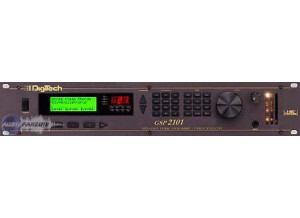
    Analog preamp + digital multifx in a 2U rack Got more effects than you'll ever need in this unit UTILIZATION - you got to be patient when you setup the 2101, the effects chains can be very complicated: lots of paraméters, same effect can be used and re-used at any place in one chain. The manual is well designed and very helpfull SOUND QUALITY The effects are really good. 2 groups: - analog (préamp): compressor (excellent), distorsions (transistor or tube, they both sound very good) - digital (multifx): the wha is cheap but otherwise all the effects are great (you've got here all the effects you can think of, even the whammy). You can blend the ratio original signal/processed sound with the mixers in the chain. I only had problems with the réverbs: lot of people find it great, i don't (T.C. electronics reverbs sound 10 times better to me) You can really achieve uncommun sounds ala allan holdsworth etc. Everything is possible! OVERALL OPINION - If you are fond of never ending tweaking, unusual but beautiful sounds, for a low price, go for that unit you won't regret it - I have used it since 2003 but mine is a 1995 version. At the time it was a very professionnal and expensive device. nowadays a lot of recent processors give you a better sound quality, but few will give you the flexibility the 2101 has - You can find a used 2101 with a single S-disc for 500 dollars or less, at this price, it's a steal. If you can, take the 2101 with 2 S-discs or even better: the 2101 limited edition - I love this unit, but i already have my ENGL head for the distorsions and i only use my digitech as a multifx when i need delays or chorus. I don't really need so much effects and i never use more than 2 effects at a time, so i will instead get a T.C. electronics M350, which is way easier to use and sounds better in my opinion

  • « DigiTech RP1 »

    Bought this effects box from EBAY for $50 USD. I wanted a sturdy multi-effects box that I could kick around a little. Very sturdy, and doesn't move around on the stage when you're playing. You can move it with your foot, but it won't follow the cord......Also love the effects, especially the clean country effects. Digital delay is fantastic, separate preamp volume and gain controls are magnificent. Very durable, and easy to change effects, add effects, layer effects. Can be programmed from the computer as well, through midi interface. raunchy sounds really kick, too. wish it had a foot pedal volume control and effect control, but for the price I surely cannot complain. Need to have the manual handy to remember the patches, but easy to change excellent metal case, controls are sturdy, parameters are easy to work with, power supply is internal, and so just needs a power cord like a computer. Definitely a top notch pedal. great for practice, stage, studio. Changing on the fly is seamless, with no buzz or pop This review was originally published on http://www.musicgearreview.com

  • « Interesting. »

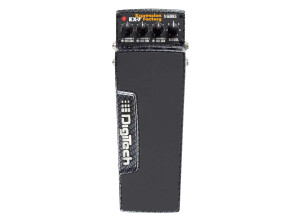
    The Digitech space station is a digital floor pedal with a wide variety of effects. It requires AC power unlike the more common DC, it has one 1/4" input, two 1/4" outputs, a volume trim knob, two foot switches (bypass and bank), and one expression treadle. UTILIZATION Set up is simple with this pedal and getting a sound out of it is as easy as hitting the stomp switch. There are no user adjustable parameters for any of the effects with the exception of rocking the treadle. The manual is pretty much all you can expect with just a quick explanation of the effects and how to hook it up. It also describes what the treadle changes on each patch. SOUND QUALITY I mainly use this pedal in a guitar set up. Sound quality is an odd thing to comment on with this pedal since most of the sounds are meant to completely aletr your signal. The bypass however is terrible. There is an always active preamp connected to the volume trimmer and it is not a clear one at all. This pedal robs much of your high end when in bypass and can even clip at times. The switches are also pretty bad and can become intermittent easily. I always keep this box in a true bypass looper to solve both of these issues. My favorite sounds are the synth pads. They can be cheesy sounding at times but when used sparingly are great for creating sound scapes. They are basically cheaper versions of the sounds you get with higher end eventide boxes like the infamous U2 "shimmer" sound. It's a combined effect of massive delay, reverb, and pitch shifting in intervals like +5 and octave up. There are other useable sounds in it but without any user adjustable parameters they can be difficult to work into a tune. OVERALL OPINION For the money these used to cost it was hard to beat.I luckily bought my first when they were on clearance because they did not sell well and bought a second one for cheap as a backup when I noticed how bad it was made. Unfortunately they have been discontinued and the used prices are just all over the map. Kind of funny how that happens. If you can find one in good condition it's a great box to have around but be warned about the reliability of it. I have changed the switches in both of mine numerous times and have now modded them to use a sturdier, more reliable stomp switch.

  • Audiofanzine FR's review

    (Originally written by captainpalmer/translated from Audiofanzine FR) UTILIZATION The configuration couldn't be easier: everything is clear even when you edit using the footboard. SOUND QUALITY To get to the interesting part: I'm not a guitarist, I play keyboards. I connected the RP250 to a Fender Rhodes and the result is great! I had to make my own presets but it was worth it. The Twin Reverb simulation is stunning and it allows me to have less bulky gear. I use the distortion, phasing, flanging, delay and wha effects. It certainly depends on what you play and it's not interesting for soft accompaniment and pop songs, but it's great to get a seventies sound, or for electric jazz stuff, jazz rock and psychedelic music! On stage I play mainly with a PC2 Kurzweil instead of the Rhodes and the RP 250 is also great for that. It sounds huge. I also use the footboard with a Roland VK8 (for old school hard rock). OVERALL OPINION I've been using it for several months in a somewhat unusual way. I like most of all its sound and the sturdy metal housing. The PSU connector seems to be a bit too frail if you connect/disconnect it too often. I wanted a dirty vintage sound without using half a dozen effect pedals and I find this small Digitech is great. Great value for money. I give it only a 9 because of the PSU connector.

  • « Digitech RP-12, still relevant. »

    I play various Gibsons, Epiphones, Fenders, Squires, Kramers, Ovations, Applause, Charvel, home assembled custom guitars and Jacksons guitars . The RP-12 is still on my pedalboard as a controller, of up to four other devices ; a Decibel Eleven Loop Expander, Digitech RP-1, Behringer 1124P Feedback Destroyer Pro ( for its 12 band parametric Eq) and a Digitech 2112 SGS . It has 3 distortion; Grunge, Overdrive and Heavy Sustain. I like to gain stack the distortions from the RP-1 and 2112 SGS and emulate any distortion, overdrive or fuzz pedal ever made . The noise gate and Silencer noise reduction is World Class. It has only one input, a right output, left/ mono output, headphone output and MIDI in, out / thru ports. The unit has 36 Effects Algorithms, transmits 0-127 and recognized 0-127 and 1-128, transmitted MIDI Channels Omni- 1-16 and recognized Omni -1-16. The MIDI Mapping is great activating my Decibel Eleven Loop Expander with various footpedals, RP-1, Behringer 1124 P and 2112 SGS. I set the RP-12 to controll the others units effects parameters with Continuous Controller messaging, if I gainstack from the RP-1 or 2112, I can program the RP-12's command message to lower of raise the distortion levels of either units. The Whammy pedal program is as good as my 1990 Whammy pedal. The harmonizers are as good as my Eventide 3000's Harmonizers. In fact, the RP-12 has only a two part harmony capacity, but with CC Messaging, I can add a third note from the 2112. I programmed it so if I set on a switch on my RP-12, I have it set, where the root note is in the middle of the stereo field, the lower 5th is on the left and the raised 3rd is on the right. I own an original 1968 Univox Univibe and the RP-12 has a great Univibe program to get that Band Of Gypsies / Hendrix at Woodstock sound. The modulations are great ; ● Mono Chorus ● Dual Chorus ● 4 Phase Chorus ● Mono Flanger ● Dual Flanger ● Mono Phase ● Dual Phase ● Mono Phaser ● Mono Tremolo ● Stereo Tremolo ● Auto Panner It feature 10 different Cabinet simulations . Has a great noise gate, Stereo Ducker, Phase Inverter, Traditional Wah ( not too great) and Auto Wah . Reverbs ; ● Big Verb ● MFX Reverb ● Gated Reverb ● Reverse Gated Reverb Delays; ● Mono Delay ● 2 Tap Delay ● 4 Tap Delay ● Stereo Delay ● Modulated Delay ● Sampler With Infinate Delay option . You can program it to toggle 5 program / patches with the top five switches to control the RP-12's effects or program it to activate 10 different patches/ programs. Pro ; Even though the RP-12 came out in late 1996, you can get some great relevant sounds. Great, if you are on a budget and want an introduction to the World Of MIDI Implementation. Easy if you can get or download a copy of the owners manual . Con; it only has one input .

  • « A Nice Value For the Money »

    Considering this unit has a little built in drum machine, for the low price (available used for $20-$50), its a great value. Nothing like playing along to drum tracks to improve your playing and improvisation. As a multi effects unit, it has alot of effects (some good, some not), alot of distortions and sounds (some good, some not), and the ability to save 40 of your own tailored sounds (this is great). I personally didn't like most presets in the unit (and almost gave it away), but you can create some genuinely nice sounding sounds w/effects as your personal presets. The noise gate works great (nice for noisy high gain amps). In short, it's easy to write this unit off as kinda crappy if you don't spend some time with it. There are some very nice sounds lurking within if you have a little patience and get to know the unit. Then add a little drum machine, noise gate, and tuner......and it becomes a steal at say $30 or $50 bucks used these days. Plenty worth picking one up for that low investment. Metal chassis too, built rugged.

  • « Outdated, But Kinda Cool »

    The Digitech Genesis is a guitar multi-effect unit well suited for a desktop or studio enviroment. It is chock full of all kinds of effects, amp and speaker models and just all kinds of goodness. I bought mine online for 99$, though you can probably find them much cheaper nowadays. The unit is made of plastic, and is difficult to operate in a live setting, so it's only suited for home/studio use. It's an awesome unit for home recording, but a little dated. It doesn't have any usb support for editing on the computer, but supports an external midi controller. UTILIZATION Setting up the unit is as easy as plugging it in and hooking up. From there it's not hard to figure out how to work the interface, effects etc. It has lots of cool effects and sounds. The amp models are ok, not as good as the real thing, but still pretty cool. It's got some GREAT distortion sounds, though some of the cab models aren't so great. It's not too expensive thanks to it's growing age, which makes it perfect for amateur guitarists. It has basically every effect you might want so there's no need for hundreds of different pedals. SOUND QUALITY I have used this unit with both vocals and guitar, and am pretty satisfied. I haven't really had many problems with coloring the sound, and there are some AWESOME distortion models on it. I'm not too impressed by the speaker/cab models however. One really awesome and unique feature is the Warp Knob, which lets you morph two different amp/distortion models together for all kinds of unique combinations. OVERALL OPINION Overall I would recommend this unit to anyone who needs a good, cheap multi fx unit. It's not expensive and was top of the line just a few years ago. You can squeeze some great sounds from it, thought it's a little work to program just right. It can also have tendency to steal some of the dynamics, but it's got some awesome sounds.

  • « DigiTech RP350 »

    Intuitive operation - pick one of 30 settings from the Tone Library; add your choice from 30 Effect Library combinations. 27 Amp/Preamp/Acoustic models with A/B switching . Modern rectifiers and boutique amps 70 Factory/70 User presets. Power supply included. Included Cubase LE4 Music Production Software.Quick easy effect library access Extremely versatile USB connectivity Built-in expression pedal 30 settings from the Tone Library 30 Effect Library combinations 118 total models 73 Effect models including classic distortion stomp-boxes Up to 5 seconds delay 27 Amp/Preamp/ Acoustic models with A/B switching 18 Cabinet Models 70 Factory / 70 User presets 400% more horsepower. No wonder the RP350 modeling guitar pedal sounds so good. You're looking at the one of the world's most advanced audio processors, the 'engine' that gives RP models so much more raw impact and subtle detail. Many manufacturers use general-purpose, off-the-shelf chips. But creating the best guitar tone requires a 100% specialized, optimized processor. Being total audio processing fanatics, DigiTech 'Chip Wizard' engineers set out to create a super-processor specifically designed to power a whole new generation of effects and models. The design team worked for over two years, literally re-defining audio signal processing at the chip level. Then 'Tone Guru' engineers—fresh from Production Modeling triumphs like the Jimi Hendrix Experience Artist Series pedal—set to work taking advantage of all this new raw processing power. When you hear what AudioDNA2 does for the tone of the DigiTech RP350 you'll agree it was all worth it. I think this multi-effects unit is capable of a lot more than most folks will have the patience or curiosity to get out of it. You really need to explore the unit. <img src="http://ecx.images-amazon.com/images/I/5148RK-hiYL._SL500_AA300_.jpg" /> The Expression Pedal on the RP350 can be linked to control the RP350’s Volume, Wah, Whammy ™, YaYa™, or almost any of the RP350’s other parameters in real time with your foot. When a parameter has been linked to the Expression Pedal, a minimum (heel) and maximum (toe) value can also be specified. Apply extra pressure to the toe of the Expression Pedal to activate he V-switch, and the Expression Pedal switches between the linked parameter and the Wah. The procedure for linking a parameter to the Expression Pedal is as follows: 1. Press either Edit button until the Expression row has been selected (indicated by the LED lighting on the Expression row). 2. Rotate Knob 1 until EXPPDL appears in the Display. 3. Rotate Knob 2 until the desired parameter to be linked appears in the Display. See page 30 for a complete list of parameters that can be linked to the Expression Pedal. 4. Rotate Knob 3 to select the minimum (heel) value the assigned parameter will reach with the Expression Pedal in the toe up position. 5. Rotate Knob 4 to select the maximum (toe) value the assigned parameter will reach with the Expression Pedal in the toe down position. 6. Store your Expression Pedal assignment to your preset. See page 12 for more information on the storing procedure This review was originally published on http://www.musicgearreview.com

  • « DigiTech RP50 Modeling Guitar Processor »

    I've been playing the guitar casually for about 15 years. During that time, I've been in a few bands in various capacities (lead guitar, rhythm guitar, singer, bassist or combinations thereof). During this time, I have never had much in the way of money to steer towards satisfying a guitarist's inherent gearlust and usually relied on others to provide the heavy duty equipment, such as power amps, mics, etc. Ultimately, my true interest lies more in songwriting and recording, inspired by the King of All Guitar Effects (U2's The Edge) and U2's frequent producer, Brian Eno, who in addition to his own early work with Roxy Music and later solo abstract, super-processed, ambience-heavy compositions, has also worked with David Bowie, the Talking Heads, Jane Siberry and a number of other of my favorite artists. I have always had that passion to create (you either have it or you don't, and those who have it know how playing, composing, recording, and mixing is addictive as any drug!), but it always seemed like there was something that was a greater priority (though these things never brought the sheer joy of making original music). Thus, I have always been diverted from spending the time, energy and money necessary to seriously pursue this goal. However, when facing a series of back surgeries last year, I reevaluated my priorities in life and realized that if I don't start "now", there may never be a "now". So I unpacked my Fender Strat, a small Crate practice amp, some effects pedals and started playing again. I invested some money in Sony's ACID Music Studio software for composing and recording (both affordable, easy to use, and capable of producing a decent quality composition - at least, for purely personal enjoyment.) As I threw myself into recording and mixing, I realized that my meager stock of equipment was limiting the range of tones I needed to produce the type of music I want to make. I needed something that both suited my tight budget (a wife and 3 kids don't leave much for purchasing ripe gear!) and was compatible with my virtual studio setup while providing as many sonic options as possible. Thus, my purchase of the DigiTech RP50 Modeling Guitar Processor. I had briefly experimented with the Line 6 Pod which I managed to purchase relatively cheaply in a local music store's clearance sale (the unit was scuffed up a bit, but otherwise fine). I loved the flexibility it provided. Unfortunately, I ran into compatibility problems between it and my recording setup which could not be easily or cheaply resolved. I began looking for alternatives that would allow a direct input into the Line In of my computer's sound card. A local music store (Rutland's) had a variety of guitar processors in stock, but most were out of my price range. However, at $69.95, the RP50 caught my eye. It possessed a fair number of effects plus a number of amp models, a built-in tuner and drum machine. The RP50 has a lot of features that allow the user to create a massive range of sounds. It has 80 separate presets (though only 40 of them are programmable; the other 40 are static factory presets). Some people will always want more, of course, but this should cover most, if not all, a guitarist's basic needs. With this unit, I have the ability to create combinations of sounds that range from simple amplified, unprocessed tones to ultra-fuzzy, crunchy, or stratospheric ambience. When I record, I tend to use a LOT of guitar overlays and ethereal backing tracks to create as deep a nd subtle a feel as possible. This unit is an excellent starting point to achieving those desired sounds (though to truly complete the equation, I also use a lot of plug-ins and digital editing on the computer). For the sake of completeness, the effects available in this unit are: volume level, pick-up/wah effects (it can simulate humbuckers or single coils as well as automating three seperate wah effects), a compressor, 12 separate amp modelers with 9 separate settings (except the acoustic modeler which has a single setting), a noise gate with two separate modes, a basic 3 channel EQ, a host of modulating-type effects (chorus, flanger, phaser, tremelo, bender, Leslie, harmonizer, pitch shifter, detuner, and a few others), three different delays (digital, analog, and pong), and a slew of different reverb effects. The box has two pedals which allow you to cycle through the presets quickly just by holding the pedal down. Programming a preset is extremely easy (though this is due in large part to the very basic nature of the individual effects). Simply put, for my purposes, I have found the RP50 to be an excellent source of creativity and production. In answering the question "What don't I like about this unit", let me first qualify this answer by saying that I love this unit, despite it lacking a number of different parameters for its effects that a more expensive unit would possess. There are definitely some obvious limitations, so - to use a painting analogy - it is rather like painting with broad strokes rather than, oh, say, the precision of impressionism. In a similar vein, as far as I can tell, there isn't a signal "chain" as such. It looks like all the effects are applied concurrently rather than consecutively. There are times, for example, when I would like to have my flanged signal echoed, or conversely, I'd like to have my echoes flanged. There isn't any obvious way in the unit itself to priorities or order these signals. Regarding the physical construction, the unit is plastic and, while I think it would probably be okay to use on stage, I don't know that I'd feel comfortable without some kind of backup (especially given the style of guitar that I play which tends to rely heavily on effects and processing to achieve a unique sound - what can I say? I'm a very much a product of the Edge/Robert Fripp/Jonny Greenwood/etc. school of guitar work). For my purposes doing pure recording while sitting at a desk, this isn't a problem, but the ability to stomp on a pedal in the heat of a performance without it breaking is worth a few extra bucks, to be sure. First, this is not a physically large unit - if I had to guess, I'd say it's about 6"x5". As mentioned above, the RP50 is plastic, though it looks pretty sturdy. My kids have gotten ahold of it on occasion and it is no worse for the wear. It has two pedals for cycling through the presets and a small, red LED to display information. It also has 6 buttons on its face: two for cycling up/down the various effects, another two for cycling up/down the settings on those effects, another button to store those settings to a preset number, and another button to toggle the built in drum machine (the other buttons cycle through drum tracks and tempos). There's a tuner built into this unit, too, but I haven't actually used it, preferring my old Fender AG6 automatic tuner out of sheer force of habit. The RP50 is powered either by 6 AA batteries, but it also comes with a power adapter, which is what I use. There is a single input and output jack in the back, as well as the socket for the power adapter and a port for a DigiTech expression pedal. Like the tuner, I haven't used this particular function so I cannot speak with any authority about it except to say that it is there. Unless I'm mistaken, there is a similar unit from DigiTech - the RP70 - that has an expression pedal built into the device itself, which can really help add to a dynamic performance, I'm sure. For the sake of completeness, the effects available in this unit are: volume level, pick-up/wah effects (it can simulate humbuckers or single coils as well as automating three seperate wah effects), a compressor, 12 separate amp modelers with 9 separate settings (except the acoustic modeler which has a single setting), a noise gate with two separate modes, a basic 3 channel EQ, a host of modulating-type effects (chorus, flanger, phaser, tremelo, bender, Leslie, harmonizer, pitch shifter, detuner, and a few others), three different delays (digital, analog, and pong), and a slew of different reverb effects. The box has two pedals which allow you to cycle through the presets quickly just by holding the pedal down. Programming a preset is extremely easy (though this is due in large part to the very basic nature of the individual effects.) Overall, relative to the price, this is a very decent unit. Bottom line: This is a very good product if you don't have a lot of money to spend on the higher end units but want a fair degree of flexibility and diversity in tone. It has its limitations to be sure, but it has served my purpose for home recording quite well. I wouldn't stake my performance at a gig on it, not because of the sound quality (which is very good), but because it is plastic and might get smooshed by an overly enthusiastic player. If you want something NOW but only have a limited budget, ths is the unit for you. This review was originally published on http://www.musicgearreview.com

  • « Digitech RP300A Guitar Multi-Effects Pedal »

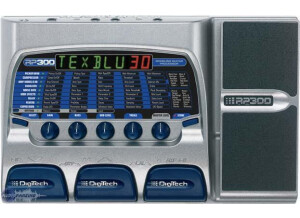
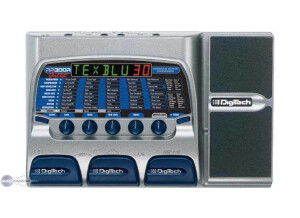
    I got this for Father's Day from Mucisian's Friend via the internet for $200. I needed an effects pedal to complete my sound set up that I wanted to be able to play the songs I am learning/like. This unit is very sturdy and easy to use. It comes with a ton of presets. The built in drum machine is great to play along with and helps me improve my timing. I haven't used the sampling feature yet that allows playback of sampled songs at 1/4 speed but I like the fact that it's there if I can't figure a song out. I also like the built in tuner and it works very well. I honestly haven't found anything I dislike about this effects pedal. It does take a little reading of the manual to figure out how to fully utilize the controls/capabilities of this pedal but once you get over the learning curve you can't stop trying out all the different effects. I was surprized how tough this bad boy is. I'm pretty big (6'5" and 240 lbs) and my size 14 foot has no trouble stomping on this pedal and it takes the abuse. I like this pedal alot. I did tons of research before I bought it so I could bet the best pedal for my money and this baby surpassed my expectation. You can't beat it for quality, affordability and capability. This review was originally published on http://www.musicgearreview.com