Log in
EN
FR

Fender

Series

3313 products found

Categories
Series
Filter
Sort by
Evaluation
  • Reviewed or not
  • Editor’s award
  • Reviewed by Audiofanzine
Availability
  • Available or not
  • Sold new or used
  • Sold new
  • Sold used
Must-have products
  • All products
  • Flagship products
  • Best rated products
  • Hot products
  • Popular products
Price
  • Freeware
€
Clear
Sort by
  • Popularity
  • User ratings
  • Price - low to high
  • Price - high to low
  • Used price, increasing
  • Used price, decreasing
  • Name (from A to Z)
  • Name (from Z to A)
  • Added on
Choose a series
Sort results
  • Popularity
  • User ratings
  • Price - low to high
  • Price - high to low
  • Used price, increasing
  • Used price, decreasing
  • Name (from A to Z)
  • Name (from Z to A)
  • Added on
Filter results 3,313 results found
Evaluation
Availability
Must-have products
Price
  • Freeware
Show results

The best Fender reviews

The reviews Audiofanzine members found the most helpful.
  • « A precise-sounding, beautiful and nice Stratocaster »

    I use this guitar with several amps : a Rivera R55-112 Fifty-five Twelve, a 1990s Laney LC50, and a Carvin Bel Air 212 (three great amps in my opinion). I occasionally play on a Peavey Classic 50. I mostly use the guitar to play blues, rock up to hardrock, jazz-rock, funk, and a little bossa, too. I was looking for one of the best Fender-made Stratocaster models, one with a very typical sound and particularly comfortable to play. This one suits all my needs. Everyone knows the Stratocaster so i won’t develop further, and rather try to concentrate on what characterizes this model in particular. The Vintage Series’ concept is to offer true reproductions of some of the brand’s emblematic instruments from Fender’s landmark years, up to the smallest detail but with subtle evolutions so as to adapt history to modernity. This is how models from this series differ from real reissues. We are talking about a $2000+ model. It comes with a beautiful G&G brown case with golden corduroy on the inside and Fender-branded golden hardware, a whole lot of nice documents (manual, technical sheet, certificate of authenticity) plus the tremolo arm, a chromed “ashtray” bridge cover, a black leather strap (which looks nice on the pictures but on the pictures only according to me), and two spare parts in small paper bags (I’ll get back to this later). The case is really beautiful but it hardly stands up, a mere gust of wind and down you go! Totally abnormal. Now let’s talk about the instrument, as this is what most interests us here. First, the appearance: The Sonic Blue color (as called at Dupont’s) is very peculiar, depending on the lights it will appear white, sea green or a light blue. It’s very sixties-ish and I love it, but some won’t. It looks even better when the guitar is naturally relic-ed, and clearly the thin nitrocellulose lacquer won’t be an efficient protection for long :( Anyway, when you touch it, the feeling is great – even sensual! The 3-ply pickguard is a tone close to kaki, the dealer I bought it from told me that back then, white pickguards quickly took that kind of tint – a defect linkef with the material used which became a standard in a purely accidental manner. The pickups, knobs and selector switch tip are in a cream tone, it may seem a bit of a patchwork but it looks beautiful. A lot is to say about the neck: the rosewood fingerboard was assembled according to the “slab” concept. A little flashback: from its start, Fender had favored local woods to make its instruments, but the growing demand led them to ass rosewood fingerboard instruments to their line, which were more expensive as they required imported woods. For approximately 2 years, the design was as follows: the maple part was made with a plane up side, and the piece of rosewood was glued over it. The main backdraw of such a method was that it implied sculpting the radius into the most expensive wood, which implied a lot of leftovers of the same “noble” material. This is why Fender subsequently imagined a different method which implied sculpting the radius directly on the top part of the maple piece, with the fingerboard reduced to a thin slide of rosewood originally perfectly plane… Using glue and a drill press, the rosewood gets shaped to perfectly adapt to the maple part’s radius – and here you are! So, a ’59 model features a higher quantity of rosewood compared with a “non-slab” guitar: this can be seen if you observe carefully the side, and even more the middle of the neck. If you ever were to doubt, the junction line between the fingerboard and maple is a perfect straight line. It’s obvious looking at the headstock as this line is parallel to the nut, but it can also be seen on the other side of the neck, close to the pickguard. But if the junction is slightly curved, then the second technique was used. The fingerboard of my guitar is pretty, with beautiful wood veins, but it looks a bit light, I prefer them darker. Perhaps the color will densify with aging… The frets are thinner than what I’m used to, in the same time I’m used to Gibson guitars and I had my 1979 Stratocaster equipped with medium jumbo frets. But in the end, I have no problem with the frets, they suit my playing style. The finish is perfect. Still regarding the neck, the trussrod’s screw is on the body side, resulting in the (classic-shaped) head to be both simple and sober-looking – only a butterfly string tree for the B and E strings. The nut is beautiful, really worth the look. The nitrocellulose lacquer is very pleasant to touch, and the D profile is perfect for me – really perfect! The neck is very soft and even sensual. I’ll mention two downsides however: - the inlays are “clay dots”, meaning they’re clay-colored hence difficult to see (especially when playing with your hair in front of your eyes), as they’re barely lighter than the fingerboard! Fender only made these clay dots for a short period of time, I suppose there were complaints they went back to white – like anybody else or so. - the neck features 21 frets :( that’s understandable on a reissue model, but here they could have gone to 22, to me this is the guitar’s only real flaw. The neck-to-body junction seems very precise to me. The chromed plate features the guitar’s serial number as was the case back in the time, but here it has a V for Vintage followed by the manufacturing year (V12 and so on for mine). There is no big “F” logo on the plate, nor a serial number on the head as Fender stayed true to the 59 standards. There’s not this small hole to adapt the neck-to-body angle either, it may be useful on many guitars but here it wouldn’t bring anything. Now, let’s talk about its sound and playability: Either with a strap on on your thigh, the guitar is light and well-balanced. It’s comfortable, the neck is pleasant (yes, I’ve said it before) and easy to play. Unplugged, the guitar’s resonance can be felt and the feelings are already very enticing. Once plugged, the three pickups sound particularly well suited to each others. All of the selector switch positions reveal interesting sounds and there are 5 of them – one of the small adaptations to modernity I evoked above as Fender offers here a “modernized” version of the ’59. for purists who want a real ’59, please note the aforementioned spare parts that come with the guitar are a 3-way switch, included with wiring schematic. Trying to describe this guitar’s sound with words appears a very difficult job, so I’ll just say I found from these pickups exactly all that I expect from a good Stratocaster: a rich, precise sound that is pleasant in all sound registers, clean to overdriven. I find this guitar to flatter the mids, at least way more than usual. There’s roundness in this sound. Playing this guitar is easy, a real child’s play (in the noblest sense). It favors the sound, the notes can sustain, nuances are favored too and the response is great. A very dynamical instrument. Even with a heavy distortion, the characteristic sound grain is recognizable: no way to drown it into too much dist, or you’d really have to go for it purposefull – and what use would it be? The neck pickup is awesome, the middle pickup is interesting (for once…), as to the neck pickup it perfectly does the job with no shrill, however it sounds a bit “classic”, well it’s no Di Marzio Tone-zone ^^ I also find the 3 knob controls to be very efficient and ideally places, but here, there’s nothing new under the sun. What else? I don’t use the vibrato, or very little. A 2 additional springs set comes with the guitar, allowing to “neutralize” the floating bridge, hardtail-style for those who want. That’s the aforementioned second enclosed paper bag. ;) The tremolo arm’s shape won’t suit if – like i do – you set the bridge as close to the body as possible: when you screw it in, it soon interferes with the guitar’s top and if you’re not cautious enough it will leave a semi-circular mark! I intend to buy another vibrato arm to suit this setting. In the end, I consider this guitar to be an excellent Stratocaster. All elements concur in the same direction, providing it a clear identity. The manufacturing care, finish, attention to details and overall coherence clearly match the expectations for an instrument in such a price range. I recommend it to anyone looking for a precise-sounding and balanced instrument with rich and classic sounds. I like everything in this guitar, except for its 21 fret, to me there’s one missing! But it’s not a no-go for me as I keep it and don’t intend to part with it. Beware of the barely readable, tone-on-tone inlays. Although transgressive, the inclusion of a 5-way pickup selector is a great idea, as far as I’m concerned I wouldn’t even have considered this guitar had it been equipped with a 3-way switch.

  • « First arrived, first served! »

    While i’m not a big Hendrix fan, i’ve always liked the look of this Monterey Strat. When Fender announced this Made-In-Mexico version, my attention was all the more raised that I still didn’t have a strat with a pau ferro fingerboard, due to missing the opportunity to get the first version of the SRV signature model… as a result, I’m now the owner of the very first Monterey Strat available in France. The shop called me as soon as it had arrived, I went there to give it a test ride and – wow, it sounded very good for a “small” strat and the decoration was rather nicely executed. After reading the specs from the Fender website – neck with a 7.25” radius and vintage slim frets – I really wanted to try it before buying, not buy it online. I’ve had a bad experience that let me know that Fender’s fretwork is not always top level, which is all the more a make-or-break with vintage specs – it’s either well done and you can play bends everywhere without a 3mm-high action, or you’re in for a 160€ visit at your favourite guitar repair shop, so you’d better know what to expect – and what you’re to buy… This one is flawless in that regard : a 1.5mm action at the 12th fret, the neck is almost straight and you can play 2-tone bends as you want – YES!!!! This model is very similar to the Classic 60 FSR SJapan Fiesta Red Strat I had bought in 2016 (which was also perfectly crafted). The neck is just as thin. As a result, I’m about to buy the Japanese strat ;-) Please note that a black Fender softcase is included . Don’t dream though, this ain’t the kind of models that will become valuable collectors as they age. In France only many are to be sold – over 500 about to be shipped or preordered – but it may take a while before being able to try it in a shop. However, this is a well-finished instrument with a nice yet not too flashy look (compared with my Wayne Kramer strat for example – just saying). So this guitar is a real pleasure, you recognize a strat’s typical quacky sound and the pau ferro fingerboard is both beautiful and nice to touch. The model I own offers excellent sustain and the vibrato keeps everything in tune. I made a small video where you can hear its resonance However, the nut’s slots are a bit too deep for the D and G strings, sot hey tend to get out of the nut if you pull’em too hard. This mostly happened to me when stretching the strings though, not while playing, so there’s no need fot me to plan doing anything about it so far. If you like it I can only recommend you to try it – but beware, you might very well never leave the shop without it!

  • bloodjob's review

    Small, 60-watt all-tube amp that can single-handedly deliver more power into its speaker than many other amp heads with higher ratings. Despite the year of production, you can be sure it's made in the US, with a quality hardly seen today. You have an EQ, a spring reverb, a stand-by for the tubes, a master volume and a rather nice overdrive. On the back you have an effects loops, which is nice. No headphones output, which is normal on an all-tube amp. UTILIZATION The key word is use. You turn the red knobs, the brand's trademark, and you can easily find YOUR sound. Thank God Fender does things right, mamma mia! It's awesome! Half way up, the clean channel starts to crunch heavily, but the sound remains crystalline and pure. It's an amp that can make even the worst guitars sound good. SOUNDS I won't beat around the bush. I had never been a Fender fan. Until the day my dad gave me his "old" amp saying: Here you have something to enjoy yourself. And he was not mistaken. I've tried everything on top of it, from the grimy metal zone to the digitechrp2000 multieffects and the floor pod plus. Once you have found the right settings, this amp can deliver any sound in any style. I helped out a buddy of mine during a good death metal concert since the tubes had burned out. With the right settings and some good effects, it saved his day. And my small combo left more than one dumb founded. The only con is that the distortion/overdrive sounds really dirty for my taste, and the spring reverb isn't very impressing. OVERALL OPINION This small combo is 25 years old, according to the warranty card. The tubes had to be changed once during this period. The knobs make no noise after several years and the sound is still amazing. What warmth and tone. When I play stairway to heaven with my gibson les paul custom, I come close to the sound of jimmy page. If I could find this type of amp at a modest price today, I don't think I'd hesitate. But vintage gear is pretty popular and it's impossible to find it for less than $600-$700 unless it's in pretty bad shape. So, I don't want to sell mine. It's...priceless!!!

  • « Good craftmanship , bad replica and high price for a so-called signature model »

    A beautiful, well-crafted Mexican-made bass. Very high price for a remote "signature" model. Indeed, Steve Harris uses a Seymour Duncan Custom Shop SPB1 (500€ in 2002)… On this model, Fender offers the commercial Steve Harris signature model, which xosts approximately 100 bucks and is nothing but a mere classic SPB1 with slightly enhanced mids. Harris also uses a Badass II bridge, while this model features a Fender Himass… with a very average sustain! As for the West Ham model (Harris owns two – one with black/blue/black binding, the other with red/blue/red). This is important as only that with the red binding features the Fender Precision Bass logo. The other one (with the blue binding) has nothing written on the head. So, that Fender “replica” is only an average-crafted Mexican bass that they sell at an indecent price so as to make believe it is a perfect replica. In a word, if you’re a big fan of Harris, do what I did and go for the older Harris signature model, which is closer to “the real thing” with its Badass bridge and SPB3 pickup.

  • Audiofanzine FR's review

    (Originally written by poufinou/translated from Audiofanzine FR) It's not easy to overlook Fender's huge product range! They don't have a lot of different models (Strat, Tele, Jaguar and some others), but the options available are endless... From new products to reissues and signature, relic and vintage models, the choices are overwhelming... and it's not easy to find the guitar that matches your needs best... Short history: Clarence Leonidas Fender, named Leo, was not a musician. Not at all! But he liked electronics. In the mid 40's he started buying amps and lap steel guitars with his first partner: Doc Kauffman. He had already worked on solid-body guitar prototypes. As a reminder, the first marketed solid-body guitar was the Electro/Rickenbacker developed by George Beauchamp (who patented the electromagnetic pickup) and Adolf Rickenbacker. It was the the A-22 (1931), better known as the "frying pan". Later came some prototypes and limited series like Les Paul's famous log (1941), which amused the guys at Gibson's pretty much, and the guitar made by Paul Bigsby for Merle Travis in 1948. Leo Fender built his first real prototype in 1949 under the name Standard Electric. He renamed it Esquire, introduced it at the NAMM Show in 1950 and marketed it during the same year. But Leo had introduced a model with only one pickup, so when dealers started receiving a guitar with two pickups they felt a bit lost. Leo decided to sell this dual-pickup guitar under the name Broadcaster and reserved the name Esquire for the signe-pickup model, which he wanted to market later. But at the same time Gretsch was selling a drum kit named Broadkaster so they asked Fender to change the name. Leo removed the headstock sticker from the first guitars he sold, which as a consequence didn't have a name anymore (and today are known as "NoCaster"), and chose the name Telecaster as a tribute to the first steps of television. This model was conceived for production in series: flat-top ash body without glued top, bolt-on maple neck with non-glued maple fingerboard. It was easy to customize this guitar and exchange damaged parts. The guitar also had two single-coil pickups, a one-ply black pickguard, a 3-way toggle switch, a volume control and a "mix" control. Tele and Esquire models used the same body. The instrument had plenty innovative features: in-line machine heads (headstock shape and tuner design was probably inspired by Paul Bigsby's 1948 guitar!!), an innovative body shape which was fully different from the "Spanish" and "Hawaian" inspired competing models, a very powerful single coil pickup in the neck position with metal housing for high-frequency attenuation, a less powerful bridge single-coil pickup placed on a metal plate plaque, which added 10% of power and produced that famous brilliant and twangy sound, three adjustable saddles (one saddle for two strings), six body-through strings. The 3-way toggle switch was originally presented as a tool that allowed the instrument to sound as a guitar or a bass (Leo launched the first electric bass-the Precision Bass-one year later). The toggle switch provided the following combinations: one position for the neck pickup with a low tone control, one position for the bridge pickup with a high tone control, and one position for the bridge pickup with a "mix" control (instead of a tone control), which allowed you to mix the sound of both pickups to have more low frequencies. This very brilliant and twangy sound with a short sustain immediately had a big success among country music guitarists. And the solid-body tidal wave started! Later came a few enhancements: the electronics changed to provide a tone control and the three pickup selection we know nowadays was introduced. Other versions became available towards 1958 (alder body, rosewood fingerboard, custom finishes, etc.) Made in the USA. Premium ash body. '52-type maple neck with U profile. Maple fingerboard. Radius: 9.49" 22 medium jumbo frets, pearly inlays. Two Samarium Cobalt Noiseless Tele pickups. Volume control with S-1 switching system, tone control. 3-way toggle switch combined with the two S-1 settings. American Tele bridge with six chromed brass saddles. Fender®/Schaller® Deluxe tuners. Chrome hardware. 1-ply black pickguard. Scale: 25.51" Neck width: 1.69" at the nut. Strings: Fender Super 250L Nickel Plated Steel (.009-.042) Sold with flightcase. It's the Deluxe version of the New American Standard. Excellent manufacturing quality even though this guitar was conceived as a very basic instrument. Mine has a clear vintage touch: ash body with the "butterscotch" finish of the first Telecaster models, the 1-ply black pickguard and the maple fingerboard, which increases the typical twang of this guitar. Some details are new: revised saddles, slimmer varnish for a longer sustain... nothing revolutionary! The three saddles of the original model were replaced with six individual saddles for a better tuning!! The pickups are noiseless single coils for an enhanced signal to noise ratio. The modern electronics provide more versatility than the original. The S-1 system on the volume control allows you to wire the pickups in series, instead of the usual parallel solution. It provides a rounder and fuller humbucker-like sound with a higher output level. This system is only effective when both pickups are on, obviously. The change isn't evident when you use only one pickup. I chose this one out of the endless Telecaster models available because it is faithful to the features of the original model, and it adds some modern improvements that provide it a wider sound range and a more accurate tuning. I give it a 9/10 regarding manufacturing quality. It's a high-end instrument even if Fender is not Gibson or PRS. UTILIZATION The '52-type neck with U profile is pretty thick. Either you like it or not! In spite of the cutaway the access to the upper frets is not very easy, and the bolt-on neck doesn't help much. In short, it's a Telecaster!! As a reminder, Leo Fender developed the Stratocaster from the feedback of musicians already using the Telecaster. So he could have improved playability and comfort using a dual cutaway and an ergonomically chamfered body. The guitar is rather heavy. But tit is easy to play. The S-1 system on the volume control is not very convenient. A push/pull solution would be more convenient and reliable. Another annoying detail is that the output jack is slightly recessed so you can't use right angle connectors. On the other hand, a small advantage is that the guitar is sold with strap locks. Due to these small disadvantages I give it an 8. It's simply unforgivable for a Deluxe model from an experienced company like Fender! SOUNDS The unplugged sound is very good and the sustain isn't as short as I expected. Once you plug the guitar you get the twangy Telecaster sound straight away... but not the usual single coil noise. The S-1 system shows its true versatility as soon as you play with both pickups. The sound becomes bigger and fuller, but it doesn't lose the sharpness of single-coils pickups. Blues players will get a more mellow sound. You obviously won't get a real humbucker sound but the versatility is clearly improved. The higher output level will also allow you to get a crunch sound simply by the way you attack the strings. It's a pity that the S-1 system is not more practical and reliable. The sustain is ok. This Telecaster is faithful to its ancestors but it is no stranger to these modern times. If you are thinking about getting the Hot Rod model with a humbucker, try this Telecaster, I find it more versatile. I give it 9/10 because of the S-1 system, which is not very practical nor reliable. OVERALL OPINION In a review about a Fender guitar, it seems to me that the most important thing is to describe why the model is interesting compared to all other versions. If I just say that my Fender is super, I don't help anyone to choose the right Telecaster among the endless models available. This instrument is faithful to the spirit of the original instrument: ash body, maple neck and fingerboard, butterscotch finish, 1-ply black pickgard, two single-coil pickups. But it also adds some improvements: six saddles for a better tuning, S-1 switching system for more versatility, and noiseless pickups. The Deluxe finish and especially the pearly inlays give it a high-class look. The sound is faithful to the original but more versatile. This guitar is a tribute to the authentic 50-52 Telecaster with a more modern sound. It's a good choice if you're looking for a high-end authentic Fender without some of the disadvantages of the original model. Compared to this guitar, the Hot Rod version is less authentic and versatile because of its alder body, rosewood fingerboard and custom finish. The tuning reliability of the Relic model it not as good due to its 3-saddle bridge. This version is a first-class compromise... But it's all a matter of taste.

  • « Perfect for me, yes! »

    All tube, cathode biased 6V6 pair, 2 12ax7s on the preamp side, 13 watts, 15" speaker, volume, vibrato and a bright/dark switch, 3 inputs: guitar, mic( lower gain input ) and accordion ( basically filtered somehow to give a "honkier" sort of sound. I'll give it a 9/10 here because I did two mods to get it to where I wanted it. UTILIZATION I did two mods to get it to perfection as I see it. I changed all the Chinese fizz-bottles with: JJ 6V6s for the power end, a vintage RCA 7025 for V1 and a JJ ecc83s for the vibrato slot ( V2 ). The amp actually sounded pretty darn good out of the box but the JJ 6V6s and the 7025 really got it smoothed out. The vibrato was barely audible with the Chinese 12ax7 in V2 but it really started to come lively with the JJ. The second mod was a 500K potentiometer to replace the bright/dark switch. "Bright" was too bright, "Dark" was too dark. The pot basically pans between the two extremes, my general-purpose setting is halfway, 5 on the pot. SOUNDS I've got a G&L Legacy, a G&L ASAT, a '74 Les Paul Standard and a couple of pretty wonky no-name guitars and I can get just about any sound I'm looking for out of this baby. It's a player's amp, not a knob-tweaker's amp. Turn it up, it gets dirty, turn it down, it gets clean. Turn up the guitar volume, it gets dirty, turn down the guitar and it cleans up BEAUTIFULLY. Turn on the vibrato and play some country licks, you're there. Jazz? Turn down the tone pot ( which you WILL install, it's dead easy ) to it's darkest setting, hit the neck pickup, adjust the guitar's tone knob to taste and you're there. Rock? Get some dirt and let it fly. Weird honky twang-thang sounds? Hit the accordion input, get the vibrato warbling, adjust your guitar's volume and tone controls to dumb settings and you're just plain retro hi-fi alien. Clean, dirty, skinny, fat, it's all there. It's just one spunky little amp that's a blast to play. "Little" is not a good word 'cause it's also pretty loud, I would say small gig territory. This amp is VERY responsive to what you put in it, dynamics, gain, tone controls on the guitar, etc. Ok, so it's not for metal-style sounds, but that's kind of a no-brainer, huh? OVERALL OPINION I love this amp. I think the two tweaks I performed on mine are pretty well necessary. My only outlay after the initial purchase of the amp was the pair of JJ 6V6s. I had the JJ ecc83s and the RCA 7025 sitting in a drawer as well as the tone pot. About 2-3 hours of work and I was good to go. Value for the money, you bet, I'd do it again in a second. I've joined a photo of my tone pot mod. That's a Strat Volume knob, by the way. Here's the horrible, shameful truth. I like it better than my Orange AD-30 Combo and I like my Orange A LOT...

  • loupgarou2a's review

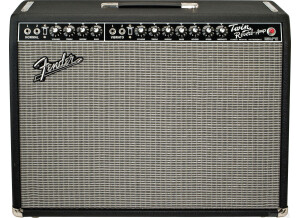
    All-tube amp. No need to add anything to what has already been said. It's important to choose the tubes right, try different things, but with the right tubes (like the RCA NOS) the amp gains in quality. There is no master volume but it's useless anyway, once you find the right volume for the clean channel, the distortion channel has a gain and a volume and you can balance everything. The effects loop is as simple as it gets and there are no ugly surprises when you switch from clean to distortion channel. The effects are all right. I use it with a Line 6 DL4 and MM4, and when I switch channels the effects are identical. Unlike what usually happens with Mesa, Marshall or Rivera, for example. The reverb is just what you expect from a Twin. UTILIZATION It has loads of push-pull controls to sculpt your sound, but it always sounds great. The manual is simple, but do you really need a manual to use a guitar amp (except maybe for the chapter dedicated to adjusting the bias)? The clean sound is that of a good Twin — it's clearly a Fender. The distortion sound is quite convincing, with a Screamer as booster you can come close to the sound of an old Mesa Boogie MarkI, which is awesome. Be careful, it has a lot of power and it can get very loud very fast in clean. No noise with good tubes. SOUNDS Crisp sounds, velvety crunch. I play blues, rock and a bit of jazz, and a couple heavier songs (like Deep Purple). I use two strats and a Heritage H535, a Fulltone Wah Wah, a Jacques Tube Blower and two Line6. The tone of the guitar is well-respected, you can hear clearly all nuances of your playing. It's perfect in every situation. OVERALL OPINION I've had: Music Man 65 210, RP100 212 and RD115 one hundred (I dream about finding another one, one of my best two amps), Seymour Duncan Convertible 60 and Convertible 2000, Marshall JTM100 and TSL100, Mesa Boogie MkI, MkIII, MkIV, DC50 and F50, Carvin XV112E (a great amp), Line6 Flextone, Rivera Anniversary 60, Fender Cybertwin, Acoustic (from the '80s, I can't remember exactly the model), Peavey, and Laney. I resold my The Twin because it was too heavy, and I just bought another one after two years of mourning its departure. Which means I HAVE BOUGHT IT AGAIN. You can find it at reasonable prices secondhand, and its value for money is unbeatable. The pros: The sound, the ease-of-use, the versatility The cons: The weight and, especially, the fragility of certain electronic components. You have to be kind to it, it can break down (I have seen several in that condition). But I've never had a single problem with it. Like every tube amp: Let it cool down before moving it, let it warm up a couple of minutes before putting it in stand-by, check regularly the state of the tubes, don't place any objects on top, give it some space to breathe, open it from time to time and use a vacuum cleaner to remove all the dirt and you'll have a faithful companion for decades.

  • « Amazing, what can I say... I'm amazed! »

    It's almost a year since I've had this amp. Small combo, not heavy (14kg), two channels plus reverb. Zero tubes, zero problems... Two full EQs, but shared reverb. You can change the channels remotely. Not much to say, actually. The integrated effects loop outputs a very powerful signal, almost impossible to match if you don't have a pedal with an input control. 12" speaker, 8 ohms for my model, but 4 ohms for the following models 94 watts rms, this amp can really rock you off your socks! UTILIZATION It's super easy to use, you just need to learn to control the contour setting on the distortion channel. The volume goes from 0 to 80 watts by simply blowing on the control, which is typically Fender... Not progressive at all, I'd say! So if you play at home, you'll need a volume pedal, like for mono pianos (I have a bespeco vm-16l, stable and not expensive) in the insert loop and it works great. It's an easy-to-live-with amp, especially in concert, because it's light, powerful and simple, plus easy to listen to (unlike a spider 75 that makes everything hazy). SOUNDS Typical clean sound, very clear. The EQ is effective. No further remarks. The big surprise is the distortion. I expected a deluxe hot-rod-like sound, but that's not the case at all. It delivers a tight and aggressive sound that can be shaped at will, with a damn good punch but proper at the same time. I love this channel, with my rg7 it's jaw-dropping, but I don't play metal. A hard rock sound is more than enough for my needs. The color of this channel, with the contour, suits my guitar particularly well. It's a real treat! OVERALL OPINION I gave the amp to a student of mine, who is very happy with it. Unlike a modeling device that does half the work for you, I believe this amp encourages you to learn about the sound of electric guitar. That said, its generous, clean sound can be used with any multieffects unit without a hitch, don't be a snob! It's an ideal amp, easy-to-use, light, really powerful, and absolutely reliable in real situations. Mine had several years of touring on its back and I never had a problem, except for the spring reverb and a speaker that became too soft (solid-state watts are very aggressive), both of which I had to replace. If you find one second-hand, check the reverb and, honestly speaking, for 350 euros, tops, it's a very good deal.

  • « An interesting finding »

    I discovered this little wonder by pure chance… and I essentially was conquered by its look ! I know, how weak of me… Now, you must admit that its flame top red finish and golden hardware do look great! You have to see and touch it with your own eyes and fingers to believe it. Before going further, a little bit of context : this was the very first time I’d touched such a guitar, as from my youth I’d always been used to humbucker-equipped and Les Paul-shaped instruments while never having an opportunity to have a Fender – whatever the model. So this is an all new trip for me - yeepeee ! :-D The first contact is a bit strange : le neck is narrow and somehow thick (not a pickaxe handle either, but clearly more narrow than a LP neck), with a very pronounced D-shaped (yes, I know they call it “Thick C”, but to me this is clearly more of a D as the middle flattens out). Needless to say I have to take my marks and learn how to play again! This neck’s main asset compared with what I’ve previously experienced is that it seems extremely rigid and sturdy, at least it seems really reliable and I believe this Strat to be able to be taken on a tour with no major problem. Plus, its satin finish makes your life easy while playing (even really fast). The only cons I could find to this neck is the way the medium-jumbo frets feel as they’ll slow you down… I must express my utmost disappointment to the Japanese luthers responsible for this betrayal that blocks the way to the Mountain of Ultimate Kawai Perfection! :oops2: :oops2: This guitar’s overall workmanship shows a great level of care, I found no fault in its lacquer or problems with the neck/body junction, no screw that juts out or anything like that, so no problem at all – except that with the aforementioned frets (which can easily be solved using a nail file). The ash body is covered with a maple flame top. Its resonance frequency seems to be lower than the usual alder used on many a classic Strat, which in the end seems to result in a mellower sound, at least playing it unplugged. The glossy dark red finish lets the maple’s grain show for a beautiful result, and what to say of the pearloid white pickguard which reflections remind of a spring morning with blossoming cherry trees… :8O: :bave: Well, you see what I mean, huh!? :bravo: The harwdware also seems flawless, though I’d prefer a more massive bridge: this one is the hyperclassic Fender model that seems quite correct and lets you set each string’s height and length, but I would have appreciated something more innovative – especially considering the price! The Gotoh tuners are not locking tuners, but so far I haven’t had any problems with the guitar’s ability to stay in tune. It seems to be able to stay in tune for a whole playing session, unless you use the vibrato to extreme length of course but even then for non-locking tuners the result is still quite good. Of course it won’t allow you the kind of extreme things a Floyd would, but it brings its own magic, just like the rest… Soundwise finally, I have hardly a reliable point for comparaison but the three DiMarzio single coil pickups seemed true to the sound I was expecting : that of David Gilmour, whom I’ve been listening to since I was 10 years old, but also that from early Dire Straits, and finally of course the immense Jimmy Hendrix. In a nutshell, I find the sound to have well enough bite on attacks, exactly as I like, plus the whole has a whole lotta punch in the mids – so no problem for playing solos, it’s help you stand out in the mix like a real guitar hero and now I understand why such a guitar made history, from Jimmy the great to Malmsteen and many others… I personally only go fingerplaying, and even then no problem, the sound stands out clearly even among a dozen pad synth sounds, a huge bass and a crazy drummer :-D. Each and every note can be heard even with a huge overdrive, which in itself borders to miracle. Special kudos to pickup position 2 for its clean sounds, arpeggios and even basic rhythm sounds, and to the last one for the ear-piercing solos it helps deliver! The DiMarzios are relatively silent, even if at the highest volume settings on a tube amp you tend to get interference here or there, but nothing too problematic. Plus, what would an electric guitar be without the accompanying noise? This is part of the sound’s “life” if I may say, of its dirty, vulgar, naughty and unpredictable aspect that no sampler can ever dream of capturing! Of course, the pickups will never deliver as much power as humbuckers, so the overdriven sounds won’t ba as heavy-sounding as they would with humbuckers or active ceramics pickups such as EMGs, but frankly, who cares? If you want a huge overdrive, just use a transparent booster (if you like your amp’s natural overdrive and don’t want to change anything to your sound), or a preamp or overdrive, and here you go! :bravo: So, overall? I put one star away for the fret problem, the very classic and thin metal bridge (don’t worry, it will stand time but I would have preferred something more massive like those you find on some basses from the brand, the aptly-named HiMass)… plus, for the fact that the guitar is provided “as is”, without a case or even a bag, this is really stingy of you Mr. Fender! :oops2:

  • « The ultimate dream !!! »

    This model celebrates the anniversary of the very first Stratocaster model. It was manufactured with carefully selected materials and benefits from a "Heavy Relic" aging process that evokes decades of use, abuse and pronounced wear. Available once in a decade! I wanted this one at all cost! The one-piece body is made of ash (rare, just like in ’54), after that the bodies were made of 2 or 3 parts glued together (to cut costs, obviously). A bone nut (and you quickly see the difference with a plastic-nut-equipped standard strat – soundwise, regarding resonance and also visually). The body features an aged finish with nitrocellulose lacquer. The color is Dirty White Blonde – which is superb. The one-piece neck is made of quartersawn maple with a comfortable U profile (as was the case in 1954): finally a neck that perfectly fills your hand!!! It features a tainted lacquered finish. The maple fingerboard features a 9,5" radius and 21 “6105” frets for modern playing specs. The three, single coil, Custom shop ’54 pickups deliver a nice sound worthy of that time period. Other specs include a modern 5-position selector, aluminium “anodized gold” pickguard, (which was Leo Fender’s original intent, which he finally gave up for a cheaper plastic pickguard), a 6-saddle synchronized vibrato bridge with a numbered back plate, and vintage-style tuners with gold relic hardware. Comes with : Tweed Case with embroided « 60 anniversary » logo, custom shop certificate and all that comes with it ! In a nutshell, it’s Fender suctom shop quality (that is the best of wood and electronics), with an unbelievable tune keeping ! The neck is just a dream! I’d never played on a U profiled one before and I wonder how I could live all this time without playing one of these. A real man’s neck, you feel the wood. The best neck I’ve ever played!!! If you like ultra-thin, shredder necks ala Ibanez, this is not for you! The finish of the back of the neck without the (relic) nitro lacquer is still covered with an ultra-thin satin lacquer, which allows to slide very easily – really good custom shop work! It provides different feelings, a bit disturbing for a start but which soon turn pleasant and soft, you’ll love it. Addiction comes fast! It doesn’t stick nor catches on, the touch is very natural, as close to the wood as it gets and believe me, you soon develop a taste for it. Now, hyper-lacquered necks look to me as if they were made of plastic! The jumbo frets are thicker than on a usual strat (but it perfectly comes along with the neck). The original 5-position switch is perfect for a wider sound palette. The woods involved for the body and neck are of an excellent quality, and most important they’re perfectly dried. Hence, the guitar is rather on the light side (and doesn’t hurt your back). Perfectly ergonomic, like all good old stratos. Excellent dynamics on a tube amp (I play a Fender Hot Rod Deluxe 3 and it’s great !) I feel that I’ve finally found THE sound I’d been after for over 20 years!!! I mostly play Blues, Rock and Funk. (no metal) Effectwise, i only use an Okko overdrive, a slight delay and here we go! It delivers heavy sounds for Blues and on sounds ala Dire Straits, Gilmour, SRV, Hendrix (of course) and all these good ol’years! Now I’ve sold all my guitars except for two: my new ’54 Relic Strat and my ’96 Gibson Les Paul Standard – I need nothing else now! (I’d always dreamt of saying this!) Original ’54 Strats are impossible to find now, and even it you chanced to find one it would cost a good 150,000 bucks! This answers the question, at least it does for me. I’m no Jean-Pierre Danel to own an original pre-production ’54, but I’m quite happy with this one! This reissue model is an ideal compromise, plus it won’t get lost in the (long) list of custom shop models (you could get lost in it!) as it’s a limited edition custom shop strat made only for 2014, for Fender’s 60th anniversary! And I can tell you that for this 60th anniversary, Fender has been particularly attentive to each and every detail! A very good value for money, it’s worth more than its original 4,300€ price tag. In Canada in 2014, it was worth 5,500€ ! I totally understand not everyone can afford it, but after waiting for 20 years you can give yourself a treat ! (I’m 41). I’m in love with the ’54 model since I’ve turned 18, for me it’s THE ONE model to own for all Stratocaster fans and collectors. The relic is surprisingly realistic, you either like it or not, my wife was even frightened looking at the guitar ! Well, I like it, and for others you’ll just have to play it to love ot! Now i can finally say “stop”! Let’s stop goofing around, this is the realm of REAL guitars, those you keep a lifetime, those that make your hands shake when you open their case and remind you how much you love it each and every time you play it.

  • « Right in your face! »

    As far as I'm concerned, this guitar is a killer as I play genres ranging from rock to heavy metal - not thrash or black. For those latter musical styles, I think there are other models that are better suited! ;) I play on an Engle Sovereign and it sounds great using the amp's distortion! Regarding its tech specs, go and read the Info tab on this site, and as far as I can tell its finish and so on are really great. It provides a very good sustain and I can use the Floyd any way I like, it won't detune (or very slightly, even when abusing it). Sounds are incredible, especially the clean in the medium position. The bridge pickup is awesome with distortion. The only regret I have is I wish Fender would sell this model with a hardcase, not a softcase. For a David Murray signature model, even if it's made in Mexico, this would have felt more respectful! :-D Value for money is great! To tempt you even more, I suggest you have a look at this video: https://www.youtube.com/watch?v=0kY0t7x3qv8&spfreload=10

  • « Elegant-looking – and, most important, great sounding!!! »

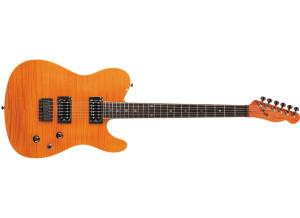
    Which amplifier and/or effect(s) do you use with this guitar? I’ve used it with a Marshall DSL50 and currently with a VOX MV50 AC with analog pedals (Trex Nova Comp, Trex Moller Tube Screamer, MXR Fet driver dist/fuzz, MXR Carboncopy delay...) and a DV Mark small 112 cab. What playing and musical style(s) do you play with this guitar? Blues/Rock, Country What are your thoughts on the workmanship, electronics, and finish of this instrument? I chose the Ice blue metal finish. The finish is very carefully done, the finely glittered paint is very classy and remains sober-looking while delivering that little extra that characterizes high-end models. The chrome hardware and the neck’s wood nuances come together perfectly. Ass for the luthers’ work, no problem, this is American Standard quality and you get a god wood resonance. The electronics is noiseless. The neck is just perfect for me, and after trying many a Telecaster model I can tell it’s only slightly under the Elite series but clearly above the usual Standard series models. The knobs and switches are nice, neither too hard or soft. How is its intonation? Does its neck, touch, feel, shape, etc complement your playing style? It perfectly stays in tune, even playing heavy bends. The neck matches my playing style. I consider the Telecaster to allow a very wide array of styles and sounds if you pair it with the right effects and amps. The nech is perfect for picking and fingerpicking.To me, the rosewood fretboard sounds more precise and pleasant than the maple one while retaining the same snappiness. Do clean, crunchy and distorted sounds adapt well to different microphone positions? Are the guitar's different frequencies and sounds well-balanced? The clean sounds are just perfect with the neck and middle pickup positions (although sometimes too bright, which can be EQed on the amp or corrected using the guitar’s Tone knob). I find the Vintage 58 pickups to sound more precise and “organic” than the Noiseless series that I’ve owned on one of my previous Teles (the Noiseless are good piuckups of course, but they tend to eat frequencies away). For distorted sounds, I put a Dimarzio ChopperT (a single-space humbucker) in the Bridge position to have more gain with my distortion pedals without altering too much the guitar’s personality. Wired in parallel with the neck pickup, the combination is excellent for rhythms. Of course, the original pickup is better-crafted and sounds wonderful but it still lacked a bit of punch to my taste (I’ll also mention I was just out of a “humbucker-only” period). Since then, I’ve put the original pickup back on as I have to sell it to finance another project, and I rediscover its original vintage sound with more snap, brightness, twang… Depuis, j'ai remonté le micro d'origine car je dois la vendre pour financer un autre projet et je redécouvre ses sonorités plus vintage avec plus de claquant, de brillance, de twang... What are the pros and cons of this guitar? Pros : - one of the most beautiful models in a limited edition - very good pickups, one notch better than the series standard models - the whole is well-balanced and up to par for such a price range Cons : - None that I can think of