Log in
EN
FR

Multi-Effects Processors

221 products found

Sort results
  • Popularity
  • User ratings
  • Price - low to high
  • Price - high to low
  • Used price, increasing
  • Used price, decreasing
  • Name (from A to Z)
  • Name (from Z to A)
  • Added on

The best Multi-Effects Processors reviews

The reviews Audiofanzine members found the most helpful.
  • « A special sound »

    It's a basic multi-effects including all sorts of reverbs, echoes, chorus, flanger, phaser, compression, and pitch shifting. Effects cannot be used simultaneously. It has basic MIDI connections that can't be edited, except maybe with a PC via Midiquest, which is useful to recall the program you are looking for. 12bit audio processing technology, which is not very high and is technologically outdated. The controls are not too practical (two +/- recall buttons and two +/- parameter buttons), but they are not complicated. It's rack-mountable (1U). Easy setup but its poor usability is tiring in the long run. UTILIZATION Easy setup but its poor usability is tiring in the long run. SOUND QUALITY This is where the unit is interesting, because it has very unique sound. The 12-bit technology and the Yamaha digital processing make this multi-effects very particular and it suits all instruments and vocals. The chorus effect, with a very "wet" setting, is very good for guitar, bass, synth, and synth bass. The cathedral reverb is ideal for vocals. OVERALL OPINION I used it since it came out in 1985 and resold it in 1992 because I didn't use it and I wanted a multi-effects whose effects were better and could be used simultaneously, which I never did found, except at ridiculously high prices. In fact, I kept my other multi-effects, an old Boss SE50, which I use as a Swiss-army knife. All my musician friends reprimanded me for selling it, since it has a unique sound. And yes, the sound is great, very fat and percussive. I regret having sold it.

  • iXtlan23's review

    24bit, 44.1Khz stereo multi-effects in 19" rack format. The MPX-100 is part of the famous MPX Lexicon series and, even if it's an entry level model (in relation to the MPX-5 or MPX-1), it nevertheless inherits the brand's sound and know-how. 1/4" stereo jack, midi in, out/thru, bypass, S/PDIF digital output, bypass button, stereo peak LED (one per channel), tap button to sync to a given tempo. UTILIZATION Very easy and instinctive use. On the front panel you find the typical controls: input, mix, output, as well as Level/balance and a knob to adjust the effect. The program knob allows you to choose different effects, each with 16 programs (selected with the variation control). Some programs (11 to 16) are dual, so you can use it as two mono processors. You have the possibility to save 16 programs (single or dual) by pressing "store" at any given moment In relation to the MPX-550, which is more studio-oriented, the MPX-100 is more adequate for live applications where you need to be able to adjust the parameters quickly (that's the utility of the knobs!) SOUND QUALITY LEXICON sound quality, which means the effects are clear and precise, the reverb tails can be easily controlled (less than on a mpx-1) but much more than on any digitech or alesis that sell for the same price point. It can be compared to an M-one in terms of quality and it is much better than a TC Electronics M-300! OVERALL OPINION Very good value for money, very fitting for live applications, both for sound engineers and musicians. Its main asset is the Lexicon sound, obviously.

  • moosers's review

    The Yamaha SPX990 is a multi-effects processor that I've used in a professional recording studio. While I know that most people will get their effects in the box, the SPX990 is an older piece of gear that was designed well before the days of plug-ins. It is a digital piece of gear and I don't know the types of connections that it has since the one I used was racked in place already. I didn't need to check out the back as it was hooked into the patch bay so I just made the connections to it there. It is a rackable piece of equipment and will only take up a single space in a traditional rack casing. UTILIZATION The only thing that I don't really like about the Yamaha SPX990 is navigating through the screens. I wouldn't necessarily say that it is hard, it just isn't all that user friendly in my opinion. There is definitely a lot that you can do with it in terms of storing your own sounds and all that, but I haven't really delved in that deep with it since I haven't really had to. The manual would be a good idea to have for someone looking to learn all the ins and outs of the unit. SOUND QUALITY The quality of the effects found on the Yamaha SPX990 is pretty impressive. While perhaps not the warmest sounding effects, for a digital piece of gear it definitely sounds good. The reverb is definitely the best sound on it, but it nice to have the other effects like delay and a variety of modulation effects as well, as you never know when they might come in handy. I've mostly used the SPX990's reverb on vocals, but the effects on it will translate well for pretty much anything that you'd like to use it for. Most of the effects on here are very respectable sounding, but where this makes its money is with the reverb. OVERALL OPINION While I don't think I'd recommend the Yamaha SPX990 for home studio owners since I wouldn't recommend using outboard multi-effects processors in general, I would recommend it for professionals who are looking to add to their palette of sounds. Of course this could be used in home studios as well, I personally would just invest in some good sounding plug-ins to save the hassle of having outboard in a home studio, as I don't think that this sounds good enough to warrant it. All in all, the Yamaha SPX990 is a very solid multi-effects processor for usages of all types.

  • « Yamaha REX50 mit dem legendären Symphonic Preset, Gitarren Multieffektor (Yamaha SPX90) »

    Das Effektgerät Yamaha mit dem legendären Symphonic Preset, welches auf quasi fast jeder 80s Platte zu hören ist und auch der Signature Sound der Nirvana Gitarre usw... Legendäres Effektgerät der 80er Jahre. ähnlich SPX90, SPX900, SPX1000, SPX990. Yamaha beschreibt den REX50 als "digitalen Multieffektor"-"Gitarren Multieffektor mit Hi-Z-INPUT", dass er eine große Anzahl von Audioeffekten einzeln. Gibt es einige Fälle, in denen Sie mehr als einen Effekt gleichzeitig erzielen können. Yamaha REX50 richtet sich möglicherweise in erster Linie an Gitarristen, aber der kleine Studiobesitzer könnte es vorziehen, es als Adaption des SPX90 zu betrachten. Es stehen 9 Haupttypen von Effekten zur Verfügung: Reverb: 4 Typen - Hall, Room, Vocal und Plate. Frühe Reflexion: 4 Typen - Hall, Random, Reverse und Plate. Verzögerung und Echo: entweder mit separatem oder kombiniertem Feedback. Modulation: 4 Typen - Flansch, Chorus, Phase und Symphonic. Tonhöhenänderung: 3 Typen - MIDI-gesteuert mit Feedback; 2 Tonhöhen in Stereo oder Mono. Gate: Ein Noise Gate / Envelope Shaper und ein Gated Reverb. Kompressor: eine Verzögerung und Kompressor. Schwenken: Automatisches Schwenken. Verzerrung: Grundlegende Overdrive-Verzerrung plus neun Kombinationen mit Hall-, Delay- / Echo- und Modulationseffekten. 30 Presets werden permanent im ROM gespeichert und geben einen Eindruck vom Umfang der Grundeffekte. 60 RAM-basierte Speicherplätze (mit Batterie-Backup) dienen zur Speicherung Ihrer eigenen Variationen. Das eingehende Audiosignal kann entweder Mono oder Stereo sein, obwohl die beiden Kanäle des Stereosignals vor der digitalen Verarbeitung summiert werden. Ein Drehregler auf der Rückseite ermöglicht die Einstellung der Eingangsverstärkung. Ein Trimmpotentiometer "Hi-Z-INPUT" für den Eingangspegel - eine Verbesserung gegenüber dem ursprünglichen SPX90, der nur einen Eingangspegelschalter hatte. Der unsymmetrische Ausgang ist in Stereo mit einem Schalter zur Auswahl von Nur-Effekt- oder Effekt-Plus-Eingang, sodass Sie den REX50 über die Sende- und Rücklaufanschlüsse eines Mischpults inline oder als Außenborder verwenden können. Alle Audiopegel arbeiten mit dem Studio-Standardpegel von -10 dBm und einer Impedanz von 10 kOhm. Der linke Kanaleingang ist der Mono-Eingang. Wenn Sie nur diesen anschließen, wird an beiden Ausgängen das Direktsignal angezeigt. Anstelle der üblichen Phono / Cinch-Anschlüsse nach dem Standard für die Heimaufnahme verwendet der REX50 Viertel-Zoll-Buchsen für die Audioeingangs- und -ausgangsanschlüsse, vermutlich aufgrund seiner beabsichtigten Anwendung als Gitarreneffektgerät. In der TRUE GUITAR-Effektmode bietet der REX50 ¼ "Audio-Ein- und Ausgänge auf der Rückseite. Dies bringt uns direkt zu etwas, das geklärt werden muss - obwohl der REX50 linke und rechte Ein- und Ausgänge bietet und Stereoeffekte möglich sind, sind die Ein- und Ausgänge möglich werden nicht separat verarbeitet. Stattdessen werden sie summiert und dann zusammen verarbeitet, um Stereoeffekte zu erzeugen. Anschließend können Sie die trockenen Eingangssignale mit dem Effekt mischen. Dadurch eignen sich die Eingänge für den Betrieb des REX50 als Inline-Effekt für Instrumente (normalerweise Synthesizer) ) mit Stereoausgängen. Bei der Inline-Gitarrenverarbeitung wird der REX50 durch Einstecken nur in den linken Eingang für den monophonen Betrieb eingerichtet, obwohl das trockene Eingangssignal an beiden Ausgängen angezeigt wird. Im Inneren des REX50 wird das Audiosignal mithilfe einer sehr cleveren Technologie, die das von Yamaha bei der Entwicklung von Chips voll ausnutzt, in digital umgewandelt. Sie verwenden einen einzelnen DAC-Chip, um die Analog-Digital-Wandlung sowie die Stereo-Digital-Analog-Wandlung durchzuführen und zwischen den einzelnen Funktionen zu multiplexen. Die Quantisierung ist 16-Bit-linear bei einer Abtastrate von 31,25 kHz, was einen resultierenden Frequenzgang von 20 Hz bis 12 kHz ergibt. Vintage Sound! Die Reverbs klingen natürlich, ohne unerwartete Farb- oder böse Quantisierungseffekte. Das Early Reflection-Programm bietet eine überzeugende akustische Simulation eines Raums ohne die Mushiness des Nachhalls. Die Presets Flange, Phasing, Chorus und Symphonic machen genau das, was ihre Namen vermuten lassen, und erzeugen sehr effektiv Effekte vom Typ "Modulated Delay". Der Reverse Gated Reverb ist ein sehr effektiver Spezialeffekt, der den Eindruck von Rückwärtsecho oder Hall erweckt. Die zusätzliche eingebaute Verzerrung macht den REX50 zu einem Anwärter auf die Effekt-Waffenkammer des Gitarristen. Die letzten 10 Presets verfügen alle über die digitale Verzerrung, entweder allein oder in Kombination mit anderen Effekten. Die Meinungen über den Verzerrungseffekt selbst waren bei den von mir konsultierten Gitarristen unterschiedlich - dies ist ein sehr subjektiver Bereich. Sie können MIDI Program Change-Meldungen verwenden, um einen REX50-Effekt aus der Ferne auszuwählen, die Tonhöhenverschiebung einer der drei Pitch Change-Optionen einzustellen und die Gate-Effekte auszulösen. Insgesamt ist dies eine wunderbare Box, um nahezu jede akustische Umgebung zu schaffen, die Sie erwähnen möchten, von natürlich bis unmöglich. Freq Response: 20Hz to 12kHz (+1/-4dB, 1kHz = 0dB) Sampling Rate: 31.25kHz Quantisation: Linear, 16 bits Dynamic Range: 74dB (effect) Noise Floor: -76dBm 60 RAM memories 30 preset effects 4 banks of MIDI program change mapping Stereo Input and Output at -10dBm MIDI In only

  • « Pretty Clean Sound »

    Bought this to replace the Alesis PicoVerb I have been using for a couple of years. Was not entirely happy with that unit (one of the 1/4" pots was making noise when jiggled). And the plates and Chorus/reverb sounds were just ok. Fine for a small studio, church, or gig. After using a G2 Zoom pedal for my guitar and reading reviews of the legendary Zoom rack from back in the 1990 years, I decided to try this 1202 Rack made by Zoom. Although the Chorus/Reverb/Plates etc. are a bit wet, they are CLEAN compared to the Alesis. Pot tuners are very sensitive also, so dialing in to your preference is pretty good. I use this in a small room with my DAW for keys, drum module, computer and 12 channel mixer inputs. Unit seems cheaply built (bottom of product line) but got it less than $50 bucks. Well worth it. Still testing...have not tried it for mics or guitars yet.

  • « GREAT EFFECTS HAS UNIQUE PITCHSHIFTERS »

    This is one of the best effects units i have in my collection it has 500 sound patches 250 can be edited and shaped to your liking what i find interesting about this unit is the unique pitchshifters and harmonizers it has, the distortions and overdrives are pretty good to and includes all other effects from delays to flangers tremolo and all the rest i bought mine with the foot control which is great for switching from sound to sounds ,i believe oberheim only ever made 2 different type of guitar multi effects as they are mostly known for synth making this gm1000 was made in italy when the Tom Oberheim company went bust in 1985-1988 the company was then bought by gibson then later viscount international an Italian digital organ producer ,these units are now rare as hen's teeth but if you can find one go for it but their not cheap now seen them up for as much as £2,500 with foot control but ive seen them cheaper without foot control but no doubt the price of these will increase with time

  • Audiofanzine FR's review

    (Originally written by korg800dv/translated from Audiofanzine FR) Effects list: FX1/FX2 section Stereo Chorus / Flanger Flanger Dual Chorus / Flanger Modulation Delay Stereo Modulation Delay Dual Modulation Delay Tape Delay Phaser Stereo Phaser Dual Phaser Pitch Shifter Ensemble Doppler Horn Simulator Rotor Simulator Stereo Tremolo Stereo Ring Modulator Dual Ring Modulator Stereo Resonance Filter Dual Resonance Filter Stereo Wah Talking Modulator Stereo Compressor / Limiter Dual Compressor / Limiter Stereo Gate Dual Gate Early Reflection Saturator Stereo 3 Band EQ Stereo Ducker Delay/Reverb section Long Delay Tempo Delay Stereo Delay Dual Delay Cross Delay L/C/R Delay Multi Tap Delay Dual Multitap Delay Room Reverb Hall Reverb Plate Reverb You can use either FX1, FX2, Delay/Rerverb, or every possible combination of these three modules. Each module is freely assignable and has its own EQ. UTILIZATION Easy to use but it has a lot of sub-menus... The buttons and endless encoders work very well (unlike my Yamaha A3000!! If someone is interested, make me a good offer!!) What about the user's manual? I don't even know if I have it! SOUND QUALITY AD/DA converters: 18 bits, 48 kHz, 128x oversampling. That means more than 96 dB in dynamic range and 20 Hz - 20 kHz frequency response. The result is a compromise between audio processing power and sound clearness for a nice price. The PSU makes some noise... But in my house, all PSUs transmit noise to my speakers... I'm open to advice! I personally love the EH-like phaser effect. OVERALL OPINION The AM8000R allows you to simultaneously edit up to eight parameters in real time. Unlike lots of effect processors that allow you to control only some parameters, the AM8000R allows you to edit virtually every effect parameter via MIDI, an expression pedal or the WARP control on the front panel. The AM8000R allows you to modulate chorus, flanger, phaser and filter effects with four different LFO and envelopes. I love it.

  • « I recommend it »

    The best place for this audio processor is a rack, its versatility makes it an irreproachable tool. UTILIZATION Used as an S/PDIF DAC, this M One integrates perfectly in an AES3 digital processing chain made up of a DEQ2496 and a DCX2496 for the amps. It's very intuitive to use, even more so thanks to the display and the synopsis of the functions. The background noise is almost inaudible, the controls are well thought-out, the knobs may seem fragile, but they aren't. The control panel and the housing are very nice, it features XLR and RCA for audio, but also MIDI ports and a jack for external control. SOUND QUALITY The different choice of reverbs, echoes, limiters, expanders, compressors are of very high quality, which makes them usable in most cases. It has a bypass, to make it transparent. OVERALL OPINION This processor proves to be very effective in use. Don't forget that effects are like the dressing for salads, they shouldn't be more important than the main ingredients. To sum it up, it's a hardware unit with an extremely good performance and a very affordable price tag.

  • « Lush reverbs in a simple package for a song »

    The Rumour is a stereo in, stereo out, 24-bit, 44.1 or 48khz digital multi-effects unit. Analog connectivity is via 1/4" TRS. XLRs would have been a nice touch, but no biggie there. Analog output operating level is switchable between -10dBv and +4dBu at the back of the unit. RCA-type S/PDIF digital i/o is also available, as well as MIDI i/o and a jack for a pedal which I have never used. The Rumour has a good variety of large and small room, hall and plate type reverbs separated into banks, as well a additional banks of gated/reverse/compressed verbs, "unusual" effects (examples: "acid trip room," "cabinet in room"), a Kurzweil party piece bank called "LazerVerb" which I find rather gimmicky and not often very useful, and banks of delays and delay/reverbs, choruses, and flagers. There are 192 presets in all. In addition, you can save your own edits in four banks of 16 each, which is a nice touch for recall or personal go-to presets, particularly as the unit will NOT save your edits when the power is switched off at the end of a session. You either save it or lose it. The unit also has a 3-band digital EQ on the output which can be bypassed by a master bypass switch which will also allow you to bypass the effects, or both EQ and effects. UTILIZATION The presets are generally ok starting points which I always like to go in and edit/tweak. This is quick and easy to do thanks to a straightforward and simple parameter selection interface based mainly around a pleasant-feeling stepped rotary knob and a jogwheel. It's a fairly intuitive unit to navigate, menus are straightforward and the display is easy to read. The settings can be edited fairly deeply, though if you prefer a simpler menu and don't want to go really deep with the editing, you can set the unit into a mode that shows fewer editing options. This is a nice touch to help the Rumour suit the tastes of a broader variety of users. I will nitpick that the 3-segment LED input metering is completely insufficient. There is a yawning chasm of decibels between -48, -12, and "CLIP" which makes gain staging through the unit tricky. Fortunately, the output trim is a different story as its position in 0.5db increments is visible on the display. Kurzweil includes a perfectly satisfactory, simple manual although users already familiar with other hardware rack effects should be fairly comfortable navigating the unit right away. SOUND QUALITY It's nice to have the other effects, but I mainly reach for the reverbs on this unit. The medium and longer/bigger rooms, halls and especially plates are very good. Extremely short reverbs can take on a bit of a metallic sound; the unit doesn't excel there though the bright, metallic character can be finessed a bit, but otherwise I would describe the sonic character of the Rumour as having a pleasant lush sparkle. The delays are also useful and tapping in a tempo is a piece of cake via a pushbutton that functions with an audible click. The digital 3-band EQ works well enough but I prefer to EQ my reverbs on analog console channel returns, so it's not a feature I use very often. The digital converter quality is quite decent and you can indeed leave the EQ and effects bypassed and use this unit as a stereo digital audio converter, which is a nice little trick. It's not ultimately neutral and refined as with high end audiophile quality converters, but certainly better than you'd expect in a mid-priced effects unit. OVERALL OPINION The Rumour excels at my most-used reverbs, has a number of addition effects for icing on the cake, and has a pleasantly colored, generally high quality sound sound that is unique compared to other brands I use such as Lexicon, Yamaha, TC Electronic. My few complaints about it are mainly aesthetic, though I would prefer it to be be a bit smoother with short reverbs. The unit is well built and has never given my any trouble in some 7 years of routine use. The chassis is vented, it does give off a bit of head and it's a good idea to give it a bit of breathing room in the rack. Kurzweil has discontinued the Rumour (and its class-mate, the Mangler), but still makes basic info and the manual available on its website. I considered it to be a very good value at its new price, and even moreso on the used market which will sadly now be the only option for purchase.

  • « It would be great if it cost less!! »

    The M2000 is simple to operate and you can do some really cool stuff with it. But the price is what throws me off. It cost over a grand and I did not feel like I got a grand worth of effects out of it. It does have some very good effects but there are other similar units that virtually sound the same with the same effects but cost about half the price. UTILIZATION The reverb you can get with this rack is very good, you will have full control over the parameters of whichever effects you choose to use. I love the chorus and the delays a lot because during a live show it is great to use some chorus to beef up the vocals a little bit to make them sound bigger. SOUND QUALITY There are 250 presets on the M2000 which is a lot but not all of them are that good. The ambiance effects are good for the most part but there are some of them that are not good at all and it almost makes me wonder why they even put them on there. There is also a tap temp button which comes in handy to sync up your clocks if you are in a studio with this rack. It also has XLR, RCA and ¼ input/ output audio connections. The LCD screen is decent but could be a lot better especially when paying this amount of money; it should be a little more vibrant and easy on the eye. OVERALL OPINION We have also used the pitch effects on the M2000 and they are ok but nothing to get too excited about because I have used better pitch effects on cheaper units. This unit would be worth the buy if it was in the 600 dollar range but because of the cost I do not recommend getting this unless money is not an issue for you.

  • « Great for teaching »

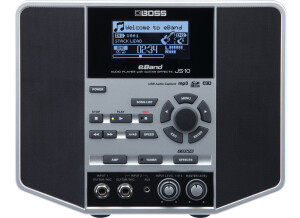
    If you are looking for a unit that can help you practice with your guitar playing or bass playing then you will love the Eband JS-10, it is also very good for its songwriting abilities. I am no beginner to guitar playing and bass playing so I am always weary of buying units like these because they tend to be gear more for beginners who are just starting out, but that is not the case with this unit. It is great for all levels of playing. I give out guitar lessons about twice a week and it is very good for me to help teach my students how to play and I actually recommend them getting a JS-10. There are many neat features that you can utilize on this unit like the effects that you get that are made by Boss; they are a huge plus and something that I did not expect to get for the price of this unit. UTILIZATION Setting this up and using it could not be easier, I have been using it more and more over the last few months because I have been working with more students and this has become my number one go too tool for working with them and teaching. SOUND QUALITY The sound on the JS-10 is second to none; it has a great sound system built into it that I did not expect it to have because most systems in this price range will lack sound quality. The reason why this is such a great tool is because you can do anything at the touch of a button like change the key of your song or transpose it a key up or down quickly and easily. This is crucial for beginners learning to play by ear. OVERALL OPINION It comes with plenty of loops and backing tracks to practice with. If I could do it all over again and was not a teacher, I would still buy the eBand JS-10 but probably just more for the effects and transpose option. But since I am a teacher all of the other stuff is a huge bonus.

  • « Rare Half Rack Processor »

    The VF-1 was a multi effects processor that Boss released for awhile. It was, and still is, one of the few half rack effects processors out there. Their goal was to basically put every Boss pedal effect inside this small unit as well as guitar modeling and mic emulation. You can add a footswitch, MIDI and expression pedals all to the back of this little device. It was mostly made for guitar, but you can use it for other applications as well. UTILIZATION Boss did a great job at laying everything out in this. The buttons feel nice and tactical, and the knobs are sturdy. The fact that they managed to fit everything in a half rack box is amazing in and of itself. The buttons are clearly labeled on the front, and there aren't too hard to read in a dimly lit stage. The LCD is big and clear, so there is never an issue with seeing what you're trying to modify when making patches. Making and adjusting patches is also a breeze with this unit. The manual can assist you with anything you need, but just playing with it should be sufficient. SOUND QUALITY The sound of this unit isn't bad. The weakest point is probably the guitar modeling/microphone aspect of it. It still sounds like a modeler, and more importantly, it still feels like a modeler. This can be a bit of a turn off, but if you're looking to mainly use it for effects, it's quite nice. All the effects are laid out nicely, rich sounding and easy to adjust. OVERALL OPINION If you're looking for a half rack effects processor, your choices are fairly limited. Given that requirement, I'd say this is a device worth looking into. However, there are other units out there, albeit full rack units, that are better. I much preferred the Rocktron Intellifex for delays, reverbs and chorusing sounds. However, that's a 1U device. If space is of utmost concern, definitely check this effects processor out.