Log in
EN
FR

Spectral Processors

974 products found

Categories
Filter
Sort by
Brand
Evaluation
  • Reviewed or not
  • Editor’s award
  • Reviewed by Audiofanzine
Availability
  • Available or not
  • Sold new or used
  • Sold new
  • Sold used
Must-have products
  • All products
  • Flagship products
  • Best rated products
  • Hot products
  • Popular products
Price
  • Freeware
  • Low-cost (< $650)
  • Mid-range ($650 - $1,500)
  • Premium (> $1,500)
€
Clear
Sort by
  • Popularity
  • User ratings
  • Price - low to high
  • Price - high to low
  • Used price, increasing
  • Used price, decreasing
  • Name (from A to Z)
  • Name (from Z to A)
  • Added on
Choose a category
Selected category: Spectral Processors
Sort results
  • Popularity
  • User ratings
  • Price - low to high
  • Price - high to low
  • Used price, increasing
  • Used price, decreasing
  • Name (from A to Z)
  • Name (from Z to A)
  • Added on
Filter results 974 results found
Brands
Evaluation
Availability
Must-have products
Price
  • Freeware
  • Low-cost (< $650)
  • Mid-range ($650 - $1,500)
  • Premium (> $1,500)
Show results

The best Spectral Processors reviews

The reviews Audiofanzine members found the most helpful.
  • moosers's review

    The Helios Electronics Ltd Type 69 is a microphone preamplifier and equalizer channel strip that is designed for 500 series rack casings. You need a 500 series rack and power supply to use this, as it doesn't have it's own connections. It's an analog piece of gear that is both unique is make up and sound. It isn't rack mountable in a traditional sense or outside of a 500 series casing. UTILIZATION The configuration of the Helios Electronics Ltd Type 69 has more going on than most 500 series channel strips will, which is really a great thing in my opinion. I'm always interested in gear that has it's own unique qualities, and this is definitely the case with the Type 69 mic pre/equalizer. Starting from top to bottom, you've got a line/mic selector with a trim knob to set your input level. You've also got a pad option on the mic pre at -20 db. The high band on the equalizer simply has a gain knob that is fixed at a 10 kHz frequency. The middle band splits it up into two separate parameters for both gain and frequency as well as a peak/through switch, while the bass filter has the same make up minus the extra switch. On the very bottom there is then an EQ bypass switch, a phase revere switch, and a high pass filter which can be set at either 0, 40, or 80 Hz. I didn't need to look at a manual for this, so I don't know anything about it. SOUND QUALITY The main thing that I want to stress with the Helios Electronics Ltd Type 69 channel strip is that it has a unique sound! This is rare this day and age where a lot of microphone preamplifiers sounds similar. There is plenty of control over your sound, so it not only sounds great but it is also versatile and can be used for just about any application. I've yet to find a context that I didn't like the open sound of this microphone preamp, and I've used it on vocals, acoustic guitar, and snare drum thus far... OVERALL OPINION I've yet to use a channel strip in any format that sounds quite like the Helios Electronics Ltd Type 69 mic pre and equalizer. It's really got an incredible sound that needs to be heard to believe. Of course with top notch sound comes a big price tag, as the Type 69 is more expensive than any other 500 series module that I've seen. Having said this it does indeed have both a mic pre and an equalizer which isn't always seen on 500 series casings. If you're a professional who is looking to add to your 500 series case, this is one of the best modules I've used to date and I'd recommend it to anyone who can afford it.

  • « BBE Sonic Maximizer »

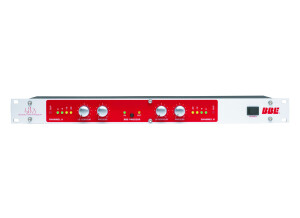
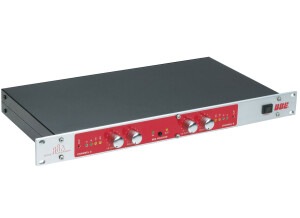
    Great device if your using to mix a recording , but will do wonders in the effects loop of an amplifier while playing live. I use one before my two 31 band Eq's and one after my 12 band Eq ( Behringer 1124P Feedback Destroyer) , because something happened to tone, so I added another 462 after my two 31 band Eq and my tone was restored . It has a Lo Countour knob for the lower frequencies , it doesn't affect the mid frequencies at all and the Process knob works on the high frequencies. If you get one, set the knobs at 12 O'clock and adjust the sound to your liking. All Sonic Maximizers , do a time / phase alignment; first the high frequencies come out, the mid frequencies and finally the bass frequencies . This is makes the speaker deliver an clean delivery of you sound and takes the "mushiness" out of your speakers .

  • « BBE 482 Sonic Maximizer »

    I own a BBE Stomp Sonic pedal, 362, 462 and 482. Many folks use the Sonic Maximizer for studio mixing and fine tuning recordings , but I love using them in my racks, effects loops of my amps, effects loops of my Digitech RP-1, Digitech 2112's effects loop and between my two effects processors on my pedalboard. What does a Sonic Maximizer do ? It does phase alignment on your audio sources, it does a time / phase alignment of your sound before it reaches your speaker. First the treble frequencies come out, the mids are not affected and the lower bass frequencies. And the results amazing, a clean, clear and more detailed sound comes out of the speakers . Wah Wahs are more dynamic, Modulations are more 3 dimensional sounding, Delay and Reverbs sound more detailed. Set the knobs at 12 o'clock and then proceed to do adjustments according to what you want to sound like and you'll be amazed .

  • « Used as a preamp + sound tailoring »

    After trying a bunch of other home and pro EQs, Azden, Sansui, Technics, SEA, DBX, Alesis, and a few DSPs: 2 Behringer DSPs both (1 has crossover and the other has a built in room set up) 2496, minidsp, biamp and a Brazilian made DSPs, I found out thar DSPs were never going to be part of my system since they all were so limited on what they could do, even though they always lead you to believe they have limitless functionality. Limited by on board memory and computer processing are #1 issues. The EQ section becomes a challenge that ends up in frustration and quickly finding the limitations of each unit. The other graphics EQs all had small quirks that became obstacles, mainly for me was the fact that none had any real volume control. They offer a slight attenuation but none offered a full cut to zero db. Then I came across this unknown brand in a local sale for just $20. I figured if it fidnt work out no big deal, it was about $350 less than some others! The main feature for me was the full volume control, this offered me the opportunity to bypass the preamp since I only use 1 source. It also has an unused mono sub output channel with an analog control dial from 30Hz to 150Hz. It has XLR in/outs as well as ¼" mic type in/outs. 5 segment LEDs to show levels, 6db or 12db range, a lowcut switch and a bypass switch. I found no noise even when all bands are maxed out. I use this as a pre amp and it remains relatively flat most of the time.

  • moosers's review

    The Ross 15 Band Stereo RX15S is a dual channel graphic equalizer, with each consisting of 15 bands. It's an analog piece of gear, although I'm not sure what years these were made for. I also don't remember the connections on it, as the one I've used was hooked into the patch bay for making connections. It is rack mountable and will take up a single space in your traditional rack casing. UTILIZATION You don't need to have too much experience or knowledge about sound in order to use the Ross 15 Band Stereo EQ RX15S, or at least I've found it very simple. Beyond the 15 bands on each channel, there is a low cut and an in/out button for each as well. That's everything there is to know about the RX15S, or at least on paper it is. I haven't seen a manual for this, so I can't say anything about it. SOUND QUALITY The sound of the Ross 15 Band Stereo EQ RX15S is about average, as it isn't bad but also isn't anything special; it is what it is - a 15 band stereo EQ. It's really what you do with it that counts, although here they do make it very easy. It's not the cleanest EQ in terms of sound, but sounds good enough for making simple moves, either for live sound or in the studio, although I believe it would be better suited for live sound, even though I've only used it in the studio. OVERALL OPINION While I don't know that it would be worth it to seek out the Ross 15 Band Stereo EQ RX15S, if you do come across one at a cheap price, it's worth considering if you're looking for a graphic EQ. This isn't very much different from most of the other graphic EQ's out there, but while it doesn't stand out, it is pretty good at what it does...

  • moosers's review

    The API Audio 554 is a three band, semi-parametric equalizer. It is a 500 series (lunchbox) style module, only fitting within these confines. It is an analog piece of gear, consisting of no connections of it's own, except of course the connections on the lunchbox. This isn't rack mountable in any other way than a 500 series casing. UTILIZATION Anyone who has a bit of knowledge about parametric equalizers should be able to use the. API Audio 554 without any issues. It's really a simple equalizer, with three bands that each have tiered parameters for gain and frequency. Each band also has a bandwidth switch, for either a wider or narrower Q. I'm not sure how wide or narrow exactly each setting will give you, but it's noticeable upon listening. Lastly, it has a button for engaging the unit to affect your signal. I haven't seen the manual for the 554, so I can't speak to it's make up. SOUND QUALITY The sound of the API Audio 554 is totally clean. It's easy to make any EQ move within the range of these three bands, so this is usually the EQ I'll go to when I'm just looking to make a quick and easy change. We have a single 554 in one of our smaller studios on site where I work, and it definitely sees a good amount of use since it is in a room without a console. It definitely isn't the most versatile EQ out there, but again for simple equalization it's perfect. It's a very sterile EQ, as I don't find it to color my sound at all... OVERALL OPINION With the API 554, what you see is what you get - a really simple, but highly effective parametric equalizer. For whatever reason, I don't believe that they make the API Audio 554 any longer, but I don't think it would be too hard to get one used. The API 550B is definitely a more versatile equalizer, but in most situations I wouldn't think it would be worth the difference in price. If you've got a 500 series rack, the 554 is definitely an EQ that you should be aware of.

  • moosers's review

    The Great River 32EQ is a reissue of the equalizer found in the Harrison 32 Series consoles, and as far as I know, both parties had a hand in designing this new model. The 32EQ is made up of analog components, boasting four bands and both a high and low pass filter. It isn't rack mountable in a traditional space, but rather will fit into a 500 series lunch box style rack. UTILIZATION There isn't really anything that you need to know about the Great River 32EQ that is out of the ordinary. Each of the four bands has knobs for gain and frequency selection. The only weird thing about the 32EQ that threw me off for a second was the way they numbered the frequencies, but users will soon see how it works as it isn't complicated at all. The high and low pass filters have a button to turn them on a knobs to choose the frequency at which you would like signals to pass. I haven't seen the manual for the 32EQ, but I think it is easy enough to use on its own where you don't need one. SOUND QUALITY I have not used the original Harrison 32 Series consoles, so I cannot compare the Great River 32EQ to its original, but will say that regardless of what it is modeled after, the 32EQ is a great sounding equalizer. It is up there with the cleanest sounding that I've heard, which is always what I'm looking for in an EQ. Some engineers like when an EQ adds something to your sound, but I only want my EQ to do exactly what I tell it, and that is what you get with the 32EQ. I used the 32EQ on a whole slew of different applications within the same mix, and the mix came out shining bright as can be. Of course like all signal processing, it will only be as useful as you make it... OVERALL OPINION For such a reasonably priced piece of gear, the Great River 32EQ sure gives you a lot of bang for your buck. Today more than ever I think the way to go for equalization is to pick and choose the modules you like and put them in something like the 500 series rack, and the 32EQ would be a great choice for any studio owner to have. They are cheap enough where you could have a few of them without spending much money at all. While the price may still be a bit much for home studio owners, smaller studio owners need to keep in mind that you're going to have to pay to get great gear, but everyone once in a while you get a piece of gear like the 32EQ that combines top notch tone with a reasonable price...

  • moosers's review

    The GML 8200 is a stereo parametric equalizer, with a ton of versatility. It is an analog piece of gear that XLR connections for input and output for each of the channels, and requires a five pin power supply. Each channel has five bands of EQ, and overall the unit is rack mountable, taking up two rack spaces. UTILIZATION If you know how to use a parametric equalizer, you already know how to use the GML 8200! It is really that simple. Each of the five bands has parameters for frequency and gain. The frequency knobs each have a certain amount of fixed frequencies to choose from. There are two low bands that are identical, as well as two high bands that also have the same frequencies to choose from. A manual isn't necessary to use the 8200, and if you think you need one I would recommend just learning about parametric equalizers in general rather than trying to tackle the 8200. SOUND QUALITY The GML 8200 is definitely one of the cleanest sounding equalizers that I've used to date. While I wouldn't say that it has as much character as some of the other, warmer sounding EQs that I've used, it cannot be matched when it comes to clarity and transparency. The GML 8200 is absolutely the perfect equalizer to use for all sorts of applications, and especially for notching and carving in very specific places. OVERALL OPINION The GML 8200 was definitely designed with professionals in mind, and for those looking for top notch sound regardless of price. They don't try to mess with the formula too much if at all here in terms of make up, which is something that I like very much since it makes it easy to use and to operate. Of course the price for the 8200 is insane, which makes it inaccessible to everyone except those with a ton of cash to spend on an EQ. While I can't say that it is worth the price, I will end by saying I'd be hard pressed to find a better sounding EQ at this price...

  • moosers's review

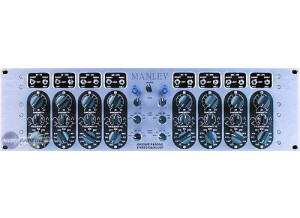
    The Manley Langevin Massive Passive EQ is a stereo parameter equalizer. I'm not sure what type of connections it has (although I think it has XLR) as the one I have used was pre-racked in a studio and I was not invovled with racking it. This is an analog piece of gear that is rack mountable and will take up four rack spaces. UTILIZATION Using the Manley Langevin Massive Passive EQ isn't too difficult as everything is laid out clearly and the unit is overall easy to follow. Each of the stereo channels has four bands of EQ, each including parameters for frequency, bandwidth, and gain, along with switches for either boost or cut and either shelf of bell. Each channel also has an overall gain parameter and a bypass button and there is also a high pass and low pass filter on the unit. The overall editing of your tone is easy granted that you understand how to use a basic parametric EQ and for that reason I don't think that a manual is needed in most cases. SOUND QUALITY The sound of the Manley Langevin Massive Passive EQ superb. It is extremely clean and does everything it is supposed to do. I feel confident using it in pretty much any situation, but I would say it excels extremely well when you are trying to get a stereo spread like on a piano or on drum overheads. This is definitely more of a clean EQ than a warm one, but when used right this can be the perfect type of EQ in a lot of different situations... OVERALL OPINION I've been using the Manley Langevin Massive Passive EQ for about half of a year and was definitely impressed with it from day one. I love the tone it has and I love that it is so easy to use and so familiar looking in terms of the parameters that it has. This is definitely a piece of gear that I would recommend to professionals looking for a stereo EQ with great tone regardless of price as this does cost a lot! Even if you can't afford to look at buying one, if you're ever in a studio that has one like I did, you won't be disappointed if you give it a try!

  • Audiofanzine FR's review

    (Originally written by sebastro11/translated from Audiofanzine FR) UTILIZATION Many parameters and possibilities. Be patient and read the user's manual so you understand how it works. The display menus and pages are well conceived!! SOUND QUALITY I find it's really a good device considering the price!! It enhances the sound of my keyboards and racks (I gave rediscovered my Roland JD990 and JV2080!!). It's stunning!! Be careful with the compressor and avoid extreme settings! In spite of this, everything is great considering the price!! I think it's a good tool live and even in the studio. OVERALL OPINION I haven't found a con until now (I've been using it for one month). You only need to think logically and be patient (it will be like magic!) I previously had a Behringer DSP9024 without digital input and output. This device does provide these connections, which is a must to stay up to date in the digital world!! I recommend it if you play live on stage (and if you like the Behringer sound!!)

  • « Top quality equalizer »

    The TC Electronic 1128 digitally controlled analog 28-band high-performance graphical equalizer, winner of the 1995 Tin Ear Award really lives up to its name. The late 80's/early 90's amazingly transparent equalizer sports MIDI and footswitch controls. Features such as Store and Recall makes this a perfect EQ in either a professional recording studio, in a bass rack or even in conjunction with a guitar rack. And yes, this gismo is rackable and that's the only way you can have it. The unit was originally shipped in different configurations. Some of them even had a D-sub connection, so you could hook up the unit to a TV and watch the spectrum analyzer on that instead of the rather small display build into it. You have a choice of using either XLR or 1/4" jack connections with this unit. The 1/4" jack is -10 dB (instrument level). Not only do you get 28 bands of graphic equalization, but you also get a possibility of adjusting the input as well as output level for the whole unit. This is very convenient, if you go into some drastic cutting or boosting. The unit is designed with variable Q as well as minimum phase shifting. The design and technology of these analog filters enable the user to do equalization in a better quality than any manually controlled analog graphic EQ. UTILIZATION As always, TC Electronic has made a product, that is simple and easy to operate. The manual is well written and easy to understand. Programming presets is however a tad tricky. It is easy to locate the correct frequency band, that you want to adjust, get it adjusted and move on to the next. The problem lies in making sure that the preset is stored as you want it to. The lack of an "Enter" button makes it a bit confusing. In order to store a preset, you press the Store button, select the preset number you wish to store on press store again. There are no confirmations that the preset has been stored. Besides that, the newly made preset gets named "USER". You then have to navigate on to a completely different menu, create a name there and then select a preset number on which you want this name to stick. Come on TC - you could have done better! A good thing, however, is the ability to change the view angle on the LCD display. SOUND QUALITY Once again, TC has done an excellent job. This unit is really ridiculously transparent, which is great for a unit designed in the late 80's/early 90's and is digitally controlled. The unit sounds as an EQ should sound, with a minimum of added noise to your signal. It is hard to come by and EQ in that class, which is still affordable for a normal human being, even today! OVERALL OPINION The unit has been discontinued by TC Electronic and is therefor not supported any longer. Should you however be able to find one on the used market and are willing to take the risk of buying a unit without support - you won't miss out on something good! Pros: - Build in spectrum analyzer - Ability to store and recall presets - Clear LCD display Cons: - Poor menu layout - No support anymore

  • U-FLYstudio's review

    Dual mono EQ without link function, 4 fully parametric bands with tube output circuit, whose level can be adjusted. XLR I/O, possibility of shelving or bell filters for the upper and lower bands, while the other two mid bands are only bell. Bypass per channel, power switch on the front panel, input gain per channel, VUmeters. UTILIZATION The pots are very small, but with a very nice feel. They are detented, which simplifies copying the settings to the other channel. The rack is pretty heavy and looks quite nice, even if the finish quality can't be compared to the super stars in the genre: TLA Summit, Avalon, Manley... SOUND QUALITY It's a very interesting product, rightly in the mid-range category. Admittedly better than some plug-ins and mixer EQs for home studio. You can perceive a warmth recalling more expensive products, the output tube is interesting, the EQ is quite precise, but it's in the depth where you can tell a difference in relation to the big names. With the Behringer you can feel a very real processing but the depth is a bit horizontal, you have the impression of a nice color but with a fairly narrow depth. OVERALL OPINION Don't think you're getting the equivalent of 2 Fearn VT4 when you buy a T 1951, but I was nevertheless surprised by the quality of the unit, given its price. Very good signal-to-noise ratio, rather versatile EQ and effective tube output circuit for an entry-level diagram I think it's interesting to record amps, percussions and piano. And when you are looking for a decent EQ and see the price of the 1951, it's hard not to take it seriously, even if the sound is far from being that of a real tube circuit. Arnaud Houpert Plastok Studio