Log in
EN
FR

Effects Processors

621 products found

Categories
Filter
Sort by
Brand
Evaluation
  • Reviewed or not
  • Editor’s award
  • Reviewed by Audiofanzine
Availability
  • Available or not
  • Sold new or used
  • Sold new
  • Sold used
Must-have products
  • All products
  • Flagship products
  • Best rated products
  • Hot products
  • Popular products
Price
  • Freeware
  • Low-cost (< $850)
  • Mid-range ($850 - $2,000)
  • Premium (> $2,000)
€
Clear
Sort by
  • Popularity
  • User ratings
  • Price - low to high
  • Price - high to low
  • Used price, increasing
  • Used price, decreasing
  • Name (from A to Z)
  • Name (from Z to A)
  • Added on
Choose a category
Selected category: Effects Processors
Sort results
  • Popularity
  • User ratings
  • Price - low to high
  • Price - high to low
  • Used price, increasing
  • Used price, decreasing
  • Name (from A to Z)
  • Name (from Z to A)
  • Added on
Filter results 621 results found
Brands
Evaluation
Availability
Must-have products
Price
  • Freeware
  • Low-cost (< $850)
  • Mid-range ($850 - $2,000)
  • Premium (> $2,000)
Show results

The best Effects Processors reviews

The reviews Audiofanzine members found the most helpful.
  • « Modern Tape Delay with Great Features »

    Alter Ego is LiberaToe’s re-creation of a warm vintage Tape Echo delay, although with more transparency and less coloration. This analog pedal is both a stand-alone that anyone can buy and use, but also, it’s a module for the LiberaToe pedalboard/switcher system or platform. Since it has a dual channel, you can set both short and long delays with different delay times, repeats and mix amounts. I find this useful as I prefer a short delay with rhythm and a longer delay (or something a more intricate delay) with lead soloing. https://www.youtube.com/watch?v=6_o1JbP3_wI The general sound is very warm and with a modest modulated decay, melding into the background without being too obtrusive, and while maintaining it’s organic nature. Consequently, this is not a bright or attacking delay, as one would find with digital counterparts; Alter Ego becomes one with the instrument’s mix, rather than being a separate sound. There is a ‘tap tempo’ insert (requires a footswitch) that controls long delays (when the pedal’s Platform Tap toggle is in the up position), but you also can attach a separate switcher that controls the LiberaToe platform and which has a tap tempo function. As stated, tape delays are more subtle than other types, and they serve to provide additional space and breadth without being ostentatious. To create a bigger sound without necessarily hearing a lot of repeats, I keep the mix at least half-way (up to 2-o’clock), but with repeats around 12-noon. Of course, the tempo (Time) has a bearing on this and how tight you make the space between note and delayed repeat, but with a brief enough time you don’t hear much of the repeats, but you do hear a broader and fatter tone. I used that method for the lead section on the introductory composition of the demo video, whereas I exaggerated the time/repeats for clean and crunch tracks. Besides the dual channel feature, Alter Ego handles delay with some unique toggle features, such as mixing in parallel or serial, with both short and long repeats. A parallel mix provides a greater sense of space, behaving similar to a stereo delay on a single amp, thus making this a great feature for Prog and Ambient music. Here is another toggle example: The top toggle (Platform Tap) has two positions, and when flipped up, it provides short delays on the Green channel (or tails for the Red channel) and long delays if on the Red channel. With that toggle flipped to the bottom position (and on the Green channel), it acts as a bypass, and to hear delay you have to switch to the Red channel. I won’t describe every setting option, as I explore them, and will make more sense, in the video demo accompanying this review. What should be noted is that when on the Green channel and hearing short delays, those tails continue if you switch to the Red channel; conversely, if on the Red channel with longer tails, there is no spillover if switching to the Green channel. Alter Ego has its role, and I find it most suitable for someone looking for a simple delay effect that sounds warm and natural, but also with some features that optimize what a modern tape delay should be and can be. From its dual channel, to mixing of short and long repeats, Alter Ego is a great analog option for six-stringers and bassists; and I’m confident singers, keyboardists and other instrumentalists would find good use with this high-flexible delay pedal. Overall, great sound quality and build.

  • « Great! »

    I use the Evans as my main echo in the studio and live for "roots" Dub. In addition to looking good, it's sturdy. Speed is stabe, less unpredictible than a RE201 as far as the wow and compatible tape types are concerned. The speed presets are basic but all that is needed is here, and different selectors can be pushed at once to get other playback head selected. The removable head is a "must", hence its name "sound creator", the tape can be scratched with, which is terribly efficient - and good sounding. Soundwise, the echo is well sustained, on par with a 201, little signal degradation, a typical, quality tape sound and a very large bandwith. The tone knob does the job, as well as the feedback setting. Only cons, the speed knob is under the hood! What an idea! I put it on the front instead of the bypass jack, an easy manipulation. Mine was a little noisy, I recapped it which is way easier to do than with a 201, only 6 wires to unsold and the circuit board can be accessed from both sides, now it is almost totally silent and the sound is even better (Elna & Panasonic). All in all I love this device, I almost prefer it to my 201, less unstable, lighter and easier to transport, it has everything and is quite valuable too. Conceptionwise, the engine is not as oversized as a 201's and the drive is not direct, there is a belt (in spite of its age it is mint but is the first element likely to fail). The tape system is well conceived and rleiable, all length can be used as with a 201, and it's easy to change. There's no felt to retain the tape so it wears out slower, it just take a regular cleaning of the reside on the cylinder that ensures tension. I'm in love with this one... These Japanese definitely DO know how to work!

  • moosers's review

    The Roland SDD-320 Dimension D is a rare outboard stereo chorus effects unit. It's unique in that it doesn't have much to work with in terms of parameters, although this makes it incredibly easy to use. It's an analog piece of gear consisting of both XLR and 1/4" connections for both inputs and outputs of the two channels. It is rack mountable and will take up two spaces in a traditional rack space. UTILIZATION Using the Roland SDD-320 Dimension D couldn't be simpler! It simply has a series of five buttons that will give you a range of different amounts of stereo chorus. All you have to do is patch through to this and let it do the work. You really don't need to know much to use this! A manual shouldn't be necessary for this reason... SOUND QUALITY The Roland SDD-320 Dimension D is undoubtedly one of the best chorus effects that I've used to date. It sounds really lush and full, and it sounds so good that it really doesn't matter that there aren't parameters to tweak the sound. It's also great for spatial effects and for stereo spreading. I've only used the SDD-320 Dimension D on electric guitar and a Fender Rhdoes, and on both it sounded truly awesome. It pretty much does what it does without room for tweaking, but what it does sounds great! OVERALL OPINION The Roland SDD-320 Dimension D is a classic effects unit that's pretty well sought after, as you aren't going to see too many of these around. Those who do own one of these will surely want to hold onto it, so chances are you're not even going to see too many of these changing hands as it's one of the best stereo chorus boxes ever made. If you ever get a chance to try this thing out, throw anything through it and hear the magic!

  • « A very basic oldie but goodie »

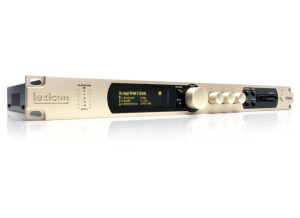
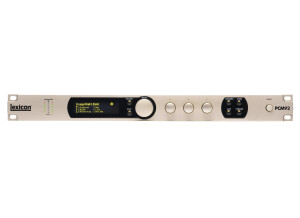
    The Lexicon PCM 60 is a 16-bit mono in/"stereo" out digital reverbration unit dating to the mid-1980s. The unit is a dead-simple bare bones affair, with only two main programs: Plate and Room. For either program, there are two banks of four additional shaping settings: one for decay time, from short to long, and another set for effect size, from small to large, which also affects perceived reverb time. The only other sonic shaping available are two "Contour" filters, one for bass and the other for treble. The unit's front panel also has controls for input and output level trims, effect mix from 0% to 100%, a bypass switch and unit power. Metering is a color-coded 5-segment affair that is easily viewed. All connections are at the rear panel, are all analog, and are all 1/4" jacks. There is one input, "stereo" (but not true-stereo) output, and effects loop, and a footswitch jack for bypassing which I have never used. Operating levels in and out are switchable between +4dBu and -20dBv. If you're after a multieffect unit, this isn't it. I rate this section based on what this unit IS--a simple reverb unit and NOT a multieffects unit. It does only what it endeavors to, and no more. That's good enough for me! UTILIZATION Reverb Units don't get much simpler than the PCM60. There are no displays, no menus to scroll through, just a single row of pushbuttons. Settings are easy as pie and although there's no recall, all you need to do is kick it old-school, write down the button and knob settings and keep that with your other sessions notes (you DO keep your sessions nice and organized, right?? ;-) Setting input and output levels are simple, and the rotary pots are still smooth and reliable after all these years. I prefer to use it as a mono-in, mono-out unit, preferring true stereo in and out reverb units where possible. The manual is perfectly adequate; it explains the basic functions of the unit complete with pics and example settings, and also has a page that you can copy for recall sheets. SOUND QUALITY This is a 16-bit unit, so care should be taken to leave some headroom on the input level--we don't want any squared-off 80's digital distortion, now, do we!? The quality of the reverbs is surprisingly good considering the vintage. The PCM60 has the familiar Lexicon family musical (but not transparent) character of sound to it. Bottom is smooth; higher frequencies come off as grainy yet lush, and smoother with the Treble Countour engaged. The Countour filters are especially useful for vocal and drum reverbs; engaging them essentially rolls off highs or lows for a more absorbed sound at the frequency extremes. The sounds this unit produces are of course limited, but when they work for a source (you will quickly find out if it does or not by twiddling a couple knobs and pushing a few different buttons), they work very well and sound...for lack of a better expression, nice! I tend to go for the plate sounds more often and especially for vocals and drums, but the room program has its place, especially for some vocals and the odd guitar or drum track. OVERALL OPINION PCM60s seem to be trading today for around $400 give or take, which is a bit of a surprise. I'm not sure it represents the best value at that price, considering other, more feature-packed and sonically diverse units at that price and particularly on the used market (where there are also more modern Kurzweils, TCs, Yamahas, lower end Lexis etc)...but for a good classic Lexi and "vintage character piece," the price of entry is on the more doable end of things. The PCM60 will appeal to persons after a musical two-trick pony with a classic sound and character that other units don't achieve--the PCM60 does have its own place in the digital reverb world. If you can get a really good deal on the price and want a couple interesting reverbs of the Lexi variety, I say go for it. The unit I'm most familiar with dates to the mid-80s and it's dead reliable, doesn't skip a beat.

  • moosers's review

    The AKG BX20E is a large spring reverb chamber that is most likely to be found in professional or larger home recording studios. The only one that I've ever seen is in the studio that I'm currently working at, and it really sounds good. We had this hooked up to our patch bay, so I didn't really get a glimpse at the connections that it has. It's got two channels in it, and since we had it hooked up to our Neve console, we used the level knob on the console rather than on the chamber itself. It definitely isn't rack mountable as it's bigger than most racks! UTILIZATION There isn't much to know about the AKG BX20E once it's hooked up. You don't have any control over the sound beyond setting how much reverb you want, but what else can you really ask for here? I don't know anything about the manual, but one isn't necessary with the BX20E anyway. SOUND QUALITY The tone quality of the AKG BX20E is definitely up there with the best sounding spring reverbs that I've heard before. It's big sounding with a certain dark characteristic to it. It definitely sounds like you placed a good room mic in your drum room to a degree, as it's up there in terms of realistic sound quality. You don't need any parameters here, as the sound that it does have is it's own color already. Beyond getting a room sound, this is really as close as you'll get to realistic sounding reverb. OVERALL OPINION I don't really know how many of these AKG made, but it really doesn't seem like there are too many BX20E's out there any more. Until I used this I didn't even know that AKG made anything like this, as they certainly aren't known for this. I'm definitely a big fan of any sort of reverb/echo chamber, but the AKG BX20E definitely goes beyond what I could have expected from it. Definitely a spring reverb that's worth using if you're ever able to.

  • songboy's review

    This is mainly a reverb unit with some delay and modulation options. Yes, you can edit this through a computer using software such as MidiQuest XL. This is in fact a 1u rack mount piece of gear. The Yamaha REV100 is a Digital unit. There are 1/4" stereo audio in and outs and a Midi in connection. UTILIZATION Yes, the sound and effects editing is fairly easy via the three main parameter knobs and the Mix knobs on the front of the unit. It is also even easier using MidiQuest. Yes, the general configuration is very simple. Simply select the patch you want and tweak it with the knobs on the front to change the mix, delay time, the decay, etc..... The only reason I used the manual was to find out exactly what all the presets were as they only display a number in the LCD. SOUND QUALITY I used this mainly on drums, vocals and acoustic guitar. With drums, it definitely can give you that 80's and 90's plate reverb sound which is fun to use here and there. As for vocals, I found that I didn't really like most of the sounds with the exception of some delay/modulation presets that made some cool sound effects. With the Acoustic guitar is where this unit really shined for me. It really brought some depth and warmth to my guitar and I used it on many tracks for the year that I owned it. The preamp did color the sound a little by making everything just a little muddier, but I generally used this on a bus so I was able to mix in the audio from the separate channel for the finished project. OVERALL OPINION What I liked about this unit was how well it made my acoustic guitar sound. It reminded me a lot of the recording I find on "Windham Hill records." What I didn't like about this unit is that the reverbs were definitely dated and didn't sound all that great on most other instruments/tracks I used it on. I paid $35 for this used on ebay and sold it for the same amount a year later so I am pretty happy with that. I give it a 7 out of 10 for sound quality. If you want your drums to sound like they are from an 80's studio, than this can help. It also works well with acoustic stringed instruments, other than that, don't bother in my opinion. I upgraded to a Alesis Microverb 4 after I sold the REV100 and the Alesis blows the REV100 out of the water. No, I wouldn't buy this unit again

  • moosers's review

    The Deltalab Effectron II ADM 1024 is a digital delay unit, of which I'm not sure what types of connections the 1024 has as the one that I have used was already racked up in the studio that I used it at. The 1024 is cased in a single space rack mountable unit. UTILIZATION I don't find that using the Deltalab Effectron II ADM 1024 is too hard as everything is straight forward. You've got parameters for (left to right) level, feedback, delay rate (ms), delay factor, width, speed, and delay mix. Getting basic tones is quick and easy, although this can get pretty in depth and I did find that it took a little while to discover all of the possibilities that this versatile piece of gear has to offer. This being said, I don't believe that a manual is necessary unless you are a beginner. SOUND QUALITY The sounds heard from the Deltalab Effectron II ADM 1024 aren't the warmest sounding delays that I have heard, but its versatility and clean tone more than makes up for it. I find that this is a great delay for both traditional delay tones and for experimentation. I've used the unit on all sorts of instruments and applications including electric guitar and vocals, both of which turned out to be a great fit for the 1024. I don't think that there are any applications that I wouldn't recommend at least trying this out on, as it has the capability to cater to all sorts of different sounds. Even though this is a digital delay that I don't find incredibly warm sounding, it also doesn't come off too digitally enhanced either. OVERALL OPINION Overall, the Deltalab Effectron II ADM 1024 is one of my favorite sounding digital delays. It is capable of getting so many different types of delay tones and is incredibly easy to use. I'm not really sure what type of price this usually goes for as the only one that I have used was in a single recording studio location. If you're looking for a really cool sounding digital delay that isn't like all the rest of them out there, the 1024 is definitely something that you should consider.

  • moosers's review

    The Roland RE-150 Space Echo is one of the first units of its kind and is truly a classic piece of gear. It is an all analog unit and actually has a real audio tape inside of it that provides the tape echo. It has 1/4 inch inputs for either your microphones or instrument and also has 1/4 inch outputs for a foot pedal and for both direct output signal and wet output signal. This is not a rackable unit and is enclosed in a box. UTILIZATION The configuration of the Roland RE-150 Space Echo isn't too difficult to understand. Each input has a knob for getting your level, and there is a large knob in the middle to choose between six different modes, three of which are repeat delays and three of which are single delays. It then has other knobs for repeat rate, intensity, and echo volume. It also has a VU meter and a switch with a few options in your output section. I've never seen the manual for the Roland RE-150 Space Echo but it is an easy unit to use and you really don't need it. SOUND QUALITY The sound quality of the Roland RE-150 Space Echo is absolutely awesome. The real tape loop gives it an awesome sound that is warm and vintage sounding, and the vast array of parameters allows for complete control over your tone. This unit is great for just about any application that you would want to use delay with including for vocals, guitars, and just about anything else you can think of. The Roland RE-150 Space Echo is really the holy grail of tape echo delays and truly has one of the best echo tones I've ever heard. OVERALL OPINION I've been using the Roland RE-150 Space Echo for about four or five years and I can't say enough about how awesome this thing is. It has a great reputation and for a good reason - the tone quality is really out of this world. These aren't that hard to find but aren't cheap. If you love that vintage delay sound like I do, there is no better than Roland RE-150 Space Echo.

  • moosers's review

    The EMT 140 is a real plate reverb that is enclosed within a huge case that has XLR connections to send this to your console. It is a strictly analog technology and is not rackable at all - it is huge. UTILIZATION The configuration of the EMT 140 plate reverb is pretty basic and once you set it up you don't really have to touch it again. The studio I have used these at has their 140s in the basement and don't ever touch them. It is easy to get an awesome sound from these, simply by setting the reverb send on your console, or whatever else you might have it hooked up to. I don't have a manual for one of these, so I can't speak to how helpful it is or not when setting the EMT 140 up or using it. SOUND QUALITY The sound quality of the EMT 140 plate reverb is outstanding, and is unlike any other reverb that I have ever used. I use this on all types of instruments, including for vocals, guitars, keyboards, snare drum, percussion, and drum overheads. It truly has the most realistic reverb sound that I have ever used beyond getting a great reverb sound at the source. This is better than any plug-in replication and definitely has its own distinct sound to it that has become recognizable around music. OVERALL OPINION I've been using the EMT 140 plate reverb for about four or five years and when I can use them, I always do. They really have one of the best reverb sounds I've ever heard and I can't say enough about how real they sound. The EMT 140 is the holy grail of plate reverbs, and has really become a classic piece of gear. These are extremely expensive these days, but if you are in a studio that has them, they are a must use. Overall, the EMT 140 plate reverb is a brilliant piece of gear.

  • moosers's review

    The Lexicon PCM 91 is a digital reverb unit. It is rack mountable and it will take up a single rack space unit. It is a stereo unit and it has both 1/4 inch and XLR inputs and outputs. It has a memory card slot for those who have older units or want to store their pre set sounds on the memory card to swap them between different Lexicon units. I have only used the PCM 91 in the studio, but it would also work well within a rack based guitar rig. UTILIZATION The general configuration of the Lexicon PCM 91 digital reverb unit is basic for a unit like this, but does like a bit of figuring out if you are not familiar with effects like this. It is easy to get and control the reverb pre sets and parameters that this has to offer, and also won't take to long until you are making and storing your own. The manual for this is pretty complete, and is definitely good to have around while you are trying to learn how to use the PCM 91. SOUND QUALITY The sound quality of the PCM 91 is top notch. The reverb effects are full sounding and the unit is overall versatile in terms of the different types of reverbs you can produce with this. I have used the PCM 91 on a myriad of different instruments, including electric guitar, lap steel guitar, vocals, and snare drum. I won't ever record with this on my signal, but while mixing it can come in quite handy. OVERALL OPINION I've been using the Lexicon PCM 91 for about five years, and while it is a great sounding reverb unit, I find myself using plug-ins more and more for reverb. The reason for this is because it is much easier to control and save, and I can get some sounds that are comparable o this unit at a fraction of the cost. While the reverbs on this will probably be better than that of most plug-ins, sometimes the convenience of plug-ins can outweigh a slight difference in sound quality. This being said, if you are looking for a rack mountable reverb unit, you definitely can't go wrong with this, but the big price tag will make a lot of people shy away because they can get reverb within their digital audio workstations. Overall, if you want a digital reverb unit like this, this is worth a try.

  • moosers's review

    The Lexicon Prime Time II Model 95 is a digital delay processor that has both delay and reverb like tones in its capability. It has XLR inputs and outputs and it is indeed a rackable piece of gear that will take up two rack space units. UTILIZATION The general configuration of the Prime Time II is pretty easy to follow, but because there are so many different options and parameters, it takes a bit to figure out exactly what everything does. It has two groups of five sliders - one for input mix and one for output mix. It also has four knobs for LFO controls, including ones for manual sweep, depth, shape and rate. It then has a slew of other controls and an LED window. It is easy to get a quick sound from this, but you can also sit there and twiddle with it for a while if you'd like, as there are a ton of different sounds that this can get. I don't have a manual for this, so I can't speak to how sufficient it is, but if you have one it is definitely a good idea to have it around, as this unit can be confusing at times. SOUND QUALITY The sound quality of the Lexicon Prime Time II is pretty great. It is versatile and can get a number of different high quality delays. I have used it on all types of instruments, including pedal and lap steel guitars, electric guitar, drums, and lead and back up vocals. I like the sound I get with this because it is warm and the different types of delays I can get is far and wide. All of the parameters it has can seem confusing at first, but only add to the overall versatility this has. OVERALL OPINION I've been using the Lexicon Prime Time II digital delay processor for about a year and a half and I have found it to be an overall useful and great sound delay unit. While I try to use outboard gear like this as little as possible, as it is a hassle when compared to plug-ins of this nature, the Prime Time II has a unique sound that I turn to when I am looking for it and can't find it within the box. The Prime Time II has an awesome look to it and if you can find a used one, it isn't too expensive at all. If you are looking for a piece of hardware to go along with your delay and reverb plug-ins, the Lexicon Prime Time II Model 95 is a fine choice.

  • Audiofanzine FR's review

    (Originally written by martinex699/translated from Audiofanzine FR) Analog mono echo effect. UTILIZATION Very easy to use. SOUND QUALITY Perfect for vocals as very fast echo or slapback effect in rockabilly or Suicide style. It also provides a very long and vintage-style echo for dub-like effects with drums or other signal sources. It's great to use the delay control in real time to modify the effect pitch. It generates noise. OVERALL OPINION You might find it secondhand and you'll have fun with it. It's not a plug-in, for a change, and it gives an organic touch to a computer-based mix.