Log in
EN
FR

Dynamic Processors

1135 products found

Categories
Filter
Sort by
Brand
Evaluation
  • Reviewed or not
  • Editor’s award
  • Reviewed by Audiofanzine
Availability
  • Available or not
  • Sold new or used
  • Sold new
  • Sold used
Must-have products
  • All products
  • Flagship products
  • Best rated products
  • Hot products
  • Popular products
Price
  • Freeware
  • Low-cost (< $800)
  • Mid-range ($800 - $2,000)
  • Premium (> $2,000)
€
Clear
Sort by
  • Popularity
  • User ratings
  • Price - low to high
  • Price - high to low
  • Used price, increasing
  • Used price, decreasing
  • Name (from A to Z)
  • Name (from Z to A)
  • Added on
Choose a category
Selected category: Dynamic Processors
Sort results
  • Popularity
  • User ratings
  • Price - low to high
  • Price - high to low
  • Used price, increasing
  • Used price, decreasing
  • Name (from A to Z)
  • Name (from Z to A)
  • Added on
Filter results 1,135 results found
Brands
Evaluation
Availability
Must-have products
Price
  • Freeware
  • Low-cost (< $800)
  • Mid-range ($800 - $2,000)
  • Premium (> $2,000)
Show results

The best Dynamic Processors reviews

The reviews Audiofanzine members found the most helpful.
  • « Colored sounding Good for live not studio. »

    If you hit this compressor with a very hard signal you will hear the compression and the sound of the unit. The sound of the unit is not what I want in a compressor for all things. I used this for very specific instruments such as snare drum or at times a kick drum, but not on vocals. For vocals, even at a mere 2:1 it is very noticeable and I don't want that in a vocal performance. I don't think you would want this for studio applications. I would buy a better compressor such as the Empirical Labs or a really high end unit. The unit lay out is about as simple as you can get. Threshold, ratio, output, bypass.... you get the picture and for the price it is great for live. I have seen many young producers use this compressor and use it the wrong way. For the price it is a bit high for my liking and I would not get this unit for the studio but that is my opinion and I am sure that there are many studios that use them in-house for vocals and other instruments but for me it is way to compressed sounding even on a light ratio and with not much input gain it can be heard. I tried it on bass guitar a few times and it is really a great unit for that but that was live and when I used it for vocals live it picks up so much bleed that I had to go back to using it for bass and guitars. When I have tried it in the studio it really does not sound like some of my compressors that cost about the same. I like the Blue Tube better for the studio personally. UTILIZATION It is not difficult to get use to if you have used a hardware unit before. If you have not it will be confusing. The manual will only help you if you know compression and how much to use or not to use. SOUND QUALITY I used this on snare drum, bass and guitars only. I only like DBX on bass guitar or snare. The hardest hitting instruments. I also use it on kick or room mics. If you like colored compressor this unit will suffice but if your not use to compression this will be over your head. OVERALL OPINION It has a colored sound and if you are not use to compression you may want to get use to it on a plug in first. DBX has a very distinct and so you have to be very careful as to how much to use. I have tried this on Live Sound and snare is the most common use for it or in a guitar rig it is great. I have seen a lot of them in guitar racks for some time. If you are not use to the sound of the DBX compressors it is very distinguishable to my ears. There is a sound of DBX that only DBX can provide. I love DBX for live but not my favorite in the studio. For this money I would shop around for a studio compressor.

  • moosers's review

    The DBX 163X is a simple compressor/limiter that comes as a single channel unit. It is an analog piece of gear, and only takes up half a rack space, so if you had two of these you could fit them perfectly in a single space in a traditional rack casing. I don't know what types of connections it has, as the one that I've used was already connected to the patch bay, but it does have a 1/4" input in the front. UTILIZATION It doesn't get much simpler than using the DBX 163X for a compressor/limiter. It only has a slider for setting the amount of compression that you'd like, and a level knob for setting the gain make up/output level. That's everything there is to know about the make up of the 163X, so as you can tell this is a very simple piece of gear. It also does have a series of LED lights for metering your compression level. I haven't ever needed to look at the manual for this, so I don't know anything about it. SOUND QUALITY The sound quality of the DBX 163X is really quite good. Generally I'm a much bigger fan of the older DBX gear, but the 163X has a more modern compression sound. It's good for a variety of applications, but I've had success using it mostly on drums. I don't think that it sounds full enough on lead vocals, but it depends on the singer. In general I use these for mixing drums, but again they are definitely suitable for use with other instruments as well. It's really easy to get a quick sound, which is also a big plus with this, as it allows you to see quickly if it will work for the application you're trying to use it for. OVERALL OPINION For a compressor that can be had at a very cheap price used, the DBX 163X is a great deal. It isn't up there with the DBX 165A and 166, but it has a more than respectable sound that is useful more times than not. I've used this in a higher end professional studio, but since they are pretty easy to find at a cheap price, they are definitely a perfect fit for a home studio as well. If you're looking for some bang for your buck in a compact compressor/limiter, the DBX 163X is definitely something worth checking out.

  • moosers's review

    The Summit TLA-50 is a single channel compressor that is semi-modeled after the classic LA-2A. It has XLR and 1/4 inch connections for input and output as well as a 1/4 inch output for a side chain. It is an analog piece of gear and is also rackable as it will take up two rack spaces. UTILIZATION The configuration of the Summit TLA-50 isn't hard to follow at all as this is just about as basic as a compressor as you can get. It has knobs for gain and gain reduction and it has switches for attack, release, and for setting the meter. This is all that there is to the TLA-50 and even those without any experience with compressors shouldn't have too much trouble understanding how to use this as long as you understand what a compressor does. A manual definitely isn't necessary as this is easy enough to use on its own. SOUND QUALITY The sound of the Summit TLA-50 is quite good but of course isn't as great sounding as a LA-2A, but at the same time it will only cost you a fraction of the price. I've had success using this with all sorts of instruments and voices, but vocals are probably the main thing that I run through this. It has a wide sound that for whatever reason seems to work best with vocals. Having the same amount of parameters that it does makes it easy enough to dial in a great sounding tone within a few minutes every time... OVERALL OPINION Overall, the Summit Audio TLA-50 is When comparing this to the LA-2A this obviously isn't going to sound as good, but when comparing it with other compressors in this price range, this is a great deal that is definitely worth trying out. The price is quite reasonable for a great sounding compressor like this, but at the same time if I have access to an LA-2A I am always going to use that over this. Whether you are a professional or a home studio owner, the Summit TLA-50 is a compressor that is a great deal for your dollar.

  • « GREAT on almost anything. Sonically pure. »

    I own a Quad Eight Pacifica console - and there are 2 of these included with it. They are great on almost anything - a very natural sound, even when pushing hard. I know they use a DBX gain element for compression, but the makeup gain is the super-sounding AM10 from Quad Eight - together I think it's a strong combo. Besides compression, they do Expansion/Gating, which is quite useful for me. I find it not to be a "hard" compressor (like DBX) it has a soft edge and makes things FAT and SMOOTH, especially when you have an unruly sound with spiky midrange etc - it tames it right down, but without the squashed sound. Mine have been modded with the factory settings for De-Essing - this is a super option. Only a few were sold like this, but it's SO useful, especially as the range goes well down into the midrange too. See below for documentation of this mod...

  • « Simple, yet efficient »

    I've owned the Silverface and Blackface versions. Their sounds slightly differ: the Silver favors high mids, while the black is richer in the low mids, but it's really, really subtle! What's nice with such pieces of gear is how simple they are: you only tweak the ratio, threshold and output level and it always sounds right. The problem with them is... how simple they are! Either it gives you straight away what you expect, or it no use insisting and you'd better gat after something else. Its sound remains quite neutral colorwise, the release setting is rather slow. Compared with other gear I have I mostly use it for a transparent sound treatment and "technical" compression so as to only keep the signal without a real impact on the sound itself. I's been my first "serious" compressor and I like it, it's a nice little unit.

  • « Suprised me »

    The DBX 166XS is a 2 channel compressor/limiter and gate. It is a rackable unit taking up only 1 rack space and comes in a fresh white color that pops out. Out of all of the DBX products that I have used in the past, I was very surprised on the actual build of this unit because I have used some other rackable units from them in the past that are not built very well and the knobs break off very easily. On the 1667XS I have yet to experience any problems with the knobs or the unit as a whole and I have been working with it for about 7 months now. UTILIZATION There are 2 XLR inputs and 2 ¼ inputs; 2 XLR outputs and 2 ¼ outputs with 2 ¼ side chain I/O. It is very easy to get this unit up and running, it only took me about 5 minutes to start working with and I didn’t even have to look at the manual. But strangely my unit didn’t come with a manual; I had to download it online. I am not sure if this was a mistake or if that is the way they are distributing the manual to cut down on paper cost. SOUND QUALITY I have tried many different things with this compressor and I love using it with different instruments and drums to see what sounds I can get. I like to use this to compress many different audio signals before pushing them through my interface to Pro Tools. I have used it on everything from guitars to brass instruments just to see how it sounds but my favorite is the kick drum because I can get some really cool sounds with the gate and compression. OVERALL OPINION This unit has turned into more of the “experimental” sounding unit for use. It only cost 239 dollars which was a lot less than most of the other compressors that I have ever purchased. Also DBX has a 266XS unit that is very good too and it is even cheaper than this one is as far as the price goes. But like I said with DBX you have to be careful because some of the products may be built “cheap”.

  • « Great piece for the money. »

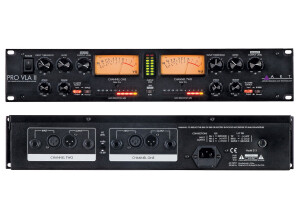
    It has balanced 1/4" and XLR inputs and sounds great for the money. I have used it in my studio www.chrislieckstudios.com daily for a year. Sounds great and don't waste money putting any new tubes it. Simple controls on the front, look at the photo I have attached. Pretty self explanatory if you know compression. If you are looking for a great compressor for a great great price then this unit might really serve your needs. I think that it is a great compressor. The tubes sound fantastic and although it is a bit noisy on the output stage and at times it can be a bit erratic in that it makes some very strange sounds that I cannot describe but that is not constant and that could be just a bad tube but it does not stop me from recommending it nor does it stop me from using it. I like this unit a great deal. There is massive headroom on the input stage and the compression is really nice. The sound is really nice and the compression sounds really good. For really heavy hitting instrumentation it is a bit colored like kick drums. I first tried this on a room mic on the kick drum and it was a bit to colored but on vocals it shinned. I was pleasantly surprised that it sounded so good right out of the box. I was not expecting it to be so solid. The construction is very solid and the unit much to my surprise was very well made. The body is full metal and the knobs are metal as well. The large VU meters are great and remind me of an older unit. ART did a great job designing this unit. Most compressors in this price range don't even come close to the sturdy construction of this unit nor do they come close to the sound of this unit. I will say that there is a bit of coloring but only on extreme inputs of heavy levels and even then the sound is very clean and authentic. UTILIZATION Very easy to use and very nice looking and is an A Class pre amp. I use it on vocals and overhead drum mics. That is the best uses for me personally. The set up is really easy and most beginners will love this compressor in that it is simple to use and the sound is not like a DBX sound or even like a real over compressed cheap compressor. The compression is not that noticeable and is very smooth for a unit costing only this much. SOUND QUALITY I use it on vocals and overhead drum mics. That is the best uses for me personally. Does not color the sound on vocals which is surprising for a pre amp at the 250.00 range. I got mine on EBAY. Great deal, Great Pre. OVERALL OPINION I like it and would recommend it for anyone that wants a compressor under $300 then this is the best one out there. I like the construction and the large VU meters and the sound. I tried a great deal of these out and this one by far has the best all around sound for the money. We use it on vocals and overhead mics and it really shines.

  • « A masterpiece »

    The Distressor EL-8X is a digitally controlled analog compressor. The stereo Distressor model ships as two matched Distressor units along with a short pair of good quality stereo link cables intended to connected between the two units' Stereo Link TRS connections on the rear panel. Additional connections are parallel 1/4" TRS and XLR balanced input and output connections. The power cord connection is a detachable IEC socket and of course standard power cords are included. The Distressors also come with a short yet helpful manual which, in addition to covering utilization basics, also has suggested settings and "pet tricks." The fun, laid back style of writing makes the manual enjoyable to read and indeed, I keep a manual on my rack for occasional reference even though I've had my Distressors for years and am very comfortable with their operation and characteristics. Of note, the "X" and stereo designations in the model number indicate the presence of the Brit Mode and Stereo Link features which are optional on the basic, mono versions of the Distressor. The Distressor also has a very nice color coded 20-segment LED bargraph for gain reduction, and does not have any input or output level metering. You also get true Bypass selectable with a pushbutton switch on the front panel. UTILIZATION Empirical Labs lay their equipment out similarly across their model range, but differently from other gear manufacturers. If you've used other EL gear, the Distressor's front panel layout should be familiar if you haven't, you'll want to spend some time getting the hang of how they do things. Scrolling through the compression ratios (1:1, 2:1, 3:1, 4:1, 6:1, 10:1, 20:1) are familiar territory for anyone who's used a compressor before. In 1:1, you use this unit for its filters rather than compression. There is also a special "Nuke" ratio which creates an extremely aggressive, heavy, radical compression characteristic that works especially well for super-compressed room mics. Another area where EL differs is in their Input, Output, Attack and Release knobs. The I/O do not have your typical markings referenced to dB levels (there is not 0dB unity marking, for example), but I think this is good because if forces you to listen to what you're doing. Of course you can reference your I/O levels to any metering you might have on your signal source or destination as well, which, again, is just as well since those are really the important reference levels. Likewise, the attack and ratio knobs do not have the usual markings in seconds and milliseconds, but instead arbitrary numbering from 0 to 10.5 as with the I/Os, which, again, happily force you to set the units by ear rather than sight. I love that the knobs are large and easy to read, with hash marks that make it easy to recall settings as tight as half a tenth of a point. You use the input knob to drive the compressor. The more you crank the input knob, the harder you're compressing and the more gain reduction you're going to get. One catch when operating a pair of Stereo Linked Distressors is that it's the compression that gets linked--one unit's compression settings will slave to the other, but you must still take care to set the ins and outs just the same to avoid shifting the stereo image. I'm sure EL did this to make linked operation more flexible, but for the sake of efficiency I would have liked perhaps a toggle switch to allow the I/O's to get linked along with the comp circuits, especially since there is no 0dB unity reference marking on those big ol' knobs. Let's be honest, if you're stereo linking compressors, you probably want to retain a stable stereo image along with the compression characteristics! In addition to the excellent compression facilities, the Distressors have two great filter banks: Detector and Audio. The Detector filters are an adaptive high pass filter which really cleverly follows the signal characteristics and works brilliantly with heavy compression where you don't want the signal's low freqs to get too weird or pumpy; also in this bank is a band emphasis setting that can help smooth over the upper mids so they don't get too shrill as you compress more aggressively, and finally, there is a "Link" mode which, along with the Stereo Link toggle switch, links two Distressors together. The other filter bank, Audio, features a different high pass filter which functions like any other HPF like you'd find on a mic or preamp, with a rollof frequency of 80hz. Then you have two Distortion filters: Dist2, which adds second order harmonics to the signal, which can help digital signal sources sound a bit more like they're passing through analog tape or classic transformer gear and is more or less a very subtle, general purpose filter; Dist3 takes things a bit further with more aggressive third order harmonics which can add a little "hair" to your signal. It's especially handy for rock bass sounds. Common to both filter banks is the ability to select between one filter, or to stack multiple filters on each other, so for example you could have the Detector HPF and band emphasis working together to keep weird modulations out of a heavily compressed signal, of you could have the Audio HPF and Distortion modes working together so that you're not adding too much THD under 80hz. The last feature to discuss on the EL-8X model is the special "Brit Mode," selectable by a toggle switch on the front panel. This setting is intended to evoke and extremely fast, aggressive compression characteristic similar to the classic 1176 "all buttons in" trick. The Brit mode is, in my opinion, of limited use. I've used it a couple of times on rock bass for a certain, super-quick "clamp down and let go" type of characteristic, but this is the one feature on the Distressor that I could take or leave. I really like having it as an option on the pallet, but I try it a lot more than I end up using it. This feature can be used along with any ratio you want, but even in 1:1 when you're letting it do its own thing, it's still very aggressive, and if you're wanting the "all buttons in" emulation, you'll want to keep attack and release settings under 4 on the dial. That said, you can get a clearer sound and less aggressive clamp-down by keeping the attack higher than that and not hitting the compressor so hard with the input. SOUND QUALITY Well, let me say that I normally don't believe in "perfection" when reviewing a piece of audio equipment, I mean, there's ALWAYS going to be something that leaves a tiny scrap to be desired with any gear, and generally speaking, the best I ever believe in rating some aspect of a piece of gear I'm criticizing is a 9--to me, that's just about as good as it gets...but the Distressor is the exception and I want you to know that I don't take my rating of a "10" here lightly. The fact is, what EL really knocked out of the park with the Distressor is just how incredibly MUSICAL this freakin' thing is, practically regardless of how you set it. Once you get the hang of how the compressor and filters handle, you really can't go wrong with this unit in terms of sonics. While a given setting may be the right one for a given source, hence all the ratios and filter options, it's almost impossible to make a signal completely unlistenable with the Distressor. This is what makes these units truly general purpose, and indeed, I have yet to encounter any signal source that the Distressor simply couldn't flatter! It's really that good. You can SLAM a signal in nuke mode right off the meter, we're talking past 20dB of reduction with a super thick, brutal, massively hairy, pumpy, breathy sound, and if it's the right setting for the source, it will STILL SOUND AWESOME. If all your source needs is a tender little kiss in 2:1 with a dB or two of reduction tops, say maybe on a vocal with a pretty good dynamic range but you just want to smooth it out and get it a little silkier, that will sound wonderful as well--and really anything in between. If you want a classic DBX-ish sounding comp characteristic, try 6:1, this is a great ratio for snare drums and sometimes vocals or bass. If you want a good, smooth characteristic that can still push things forward a little, 4:1 is a good one. 20:1 is my least-used setting, mainly because I don't use full-on limiting all that terribly much, but of course you can still get a good sound with it, something that takes 10:1 up a notch or two but doesn't have Nuke's maniacal, over-the-top insanity. My favorite setting bar none, and my most common go-to setting for just about anything from vocals to bass to guitars to percussion to kicks or snares or even drum overheads would have to be 10:1 "opto mode" which is a relative emulation of the classic opto compressors such as the venerable LA-2A. What you do is set the ratio to 10:1, attack all the way up, release all the way down, and you get this special circuit. Keep the input lower and you can a really nice, clear sound that clamps down late to just keep the signal in check, but if you want, you can crank the input just about as far as you want and the characteristic gets more aggressive, more in your face, more muscular--you can take the gain reduction meter into the yellow or red, and doggoneit if the thing doesn't just stay so completely musical sounding. I'm sorry to gush here, if you've read my other reviews then you know I like to stay pretty balanced and critical even on gear that I really like because, as I say, you can suss out the pro's and con's of anything no matter how good, but the Distressor sonic abilities really are a 10 out of 10 in my book. Hey, there's a first time for everything! OVERALL OPINION There's really nothing I'd change about the top of the line, fully optioned Distressor EL-8X save maybe for a switch that allows slaving of the I/Os in Stereo Link mode as mentioned above. That's really it. Everything else about the Distressors is just as I like it and I never go wanting otherwise. My Distressors get used literally on just about every session I do. If there's only one thing I'm compressing, it's probably through a Distressor. Also currently at my disposal are the Empirical Labs Fatso Jr (a different animal completely) as well as classic compressors from DBX, Altec and JoeMeek, FMR Audio RNCs, and more, the Distressors are bar none the kind of my racks. If I had a rack full of Distressor and nothing else, I'd a) be a happy camper and b) not be wanting for compression characteristics, thanks to the huge variety of sounds that can be attained by all the compression options and filters available. This is my desert island compressor without question, bar none my favorite compressor for tracking with comp on the way in, and hugely versatile come mix time (in fact, I routinely serial compress a given signal with Distressor on the way in, then a little more on the mix perhaps in a difference setting, say 2:1 or 3:1 kisses on one round, then 10:1 opto on the other). It's a jack of all trades, master of many compressor, certainly worth every penny, and comes with my highest recommendation.

  • moosers's review

    The Chameleon Labs 7720 is a stereo buss compressor, primarily designed for your 2 mix. It's definitely aimed at the home studio owner as it's super cheap for something like this. In fact, I really haven't seen a good stereo buss compressor for this price, especially one that sounds like this. For connections, it's got XLR inputs and outputs as well as an XLR input for a sidechain. It's powered by it's own power supply and is rack mountable in a single space. UTILIZATION The Chameleon Labs 7720 is a simple device but still covers all the bases as far as controls are concerned. Included here are parameters for threshold, attack, release, ratio, output, and a switchable high pass filter that has five different positions ranging from 60 Hz to 440 Hz. The meter is also programmable and can show you compression, or separately left and right input and output levels. I don't think that users will need the manual. SOUND QUALITY I really like the way the Chameleon Labs 7720 sounds on your stereo mixes! It adds a good amount of that glossiness and brightness that can help glue a mix together, depending on how you set the controls of course. For the home studio looking for some hardware on a budget, this is probably the best back for your buck that you're going to get. It really sounds great - the first time I used it I thought it was a really expensive piece! OVERALL OPINION If you are looking for a great stereo compressor for your home or professional studio, look no further than the Chameleon Labs 7720. While I would say it's best for home studios, this is merely because of it's ridiculously cheap price for what it is and home studio owners will usually be looking for the best possible bang for your buck. Even for pros, this is an awesome sounding stereo compressor!

  • « QES Labs Variable Gm Tube Stereo Compressor »

    The Variable Gm is a true analog tube stereo compressor, a serious piece of gear with a lot of option to choose from, since it's built on order. The available options are: mastering version, NOS tube set, custom wound transformer set, Mid/Side Matrix, Wet/Dry control, suitable for 'parallel compression'. A piece of gear like this is what makes the difference in a studio, and is really what sets professionals from amateur. It comes in a 3U high, 16.5 inch deep rackmount steel alloy chassis, and an external PSU, the total weight is about 53 lbs! (24 Kg). Tubes are used throughout the audio path, while huge coils and big capacitors are used to filter the supply. The controls are: Input, Output, Attack, Release, Threshold, Stereo link, Side-chain HPF, and hard-wired bypass. The (really nice looking) analog panel meter reads: Input, Gain Reduction, Output, via 3-step selector. The mastering version comes with gold-laminated 24-step Elma attenuators, which track perfectly together. UTILIZATION Using a piece of gear like this definitely requires some practice. While most of the parameters are self explanatory, some will require some time to play around with. Reading the well written manual is of much help. Anyway this amount of controls is what makes this a sublime compressor. SOUND QUALITY I have used this compressor on voices, bass, drum buss with great results, it is very easy to shape the sound you're looking for in many different ways, anyway it really excels on the mixing and/or mastering duties. It can be smooth and soft, or have a lot of character when pushed hard, still retaining transparency and being unobtrusive. The sound can be incredibly warm, punchy when set properly. The stereo three-dimensional image is astounding, huge, really interesting the color it imparts. The overall sound quality of the Variable Gm is nothing less than outstanding, a rare gem with musical qualities. OVERALL OPINION If you're looking for a serious compressor as a top of the line gear for your professional studio, the Variable Gm is absolutely one worth considering.

  • moosers's review

    The DBX 463X is a single channel over easy noise gate that is an older piece of gear no longer being made. It's a really simple piece of gear, that has a Hi-Z 1/4" input in the front of it. It also has 1/4" connections for input and output in the back of it, as well as for a few other features including for stereo coupling this with another one. It is rack mountable, but will only take up half of a single space. UTILIZATION The make up of the DBX 463X couldn't be much more simple. The only parameters that is has are for threshold and for setting your 'downward expansion,' which is basically setting the amount of gating that you'd like. That's all a user will need to know about the the 463X, but the manual is put together pretty well with a lot of information on it if you think you need some help with it. SOUND QUALITY I don't really know what to say about the DBX 463X in terms of sound quality, other than it does it's job and doesn't add it's own color to the mix. I've only used the 463X on various different drums and for no other applications. I've used it on a few tracking sessions where I was getting a lot of bleed from other microphones on the tom tom drums and wanted to simply gate it so that there would only be a signal when the toms hit, which was easy enough to dial in. It did the job just fine for this application, but I'm not sure that it's any better or worst sounding than other gates out there. OVERALL OPINION While gates are really all that necessary by modern recording standards, DBX 463X does it's job well if you're looking for one. It can be had at an incredibly cheap price if you're able to get one used, but I'd probably only recommend doing so in a larger studio setting where something like this might be needed every now and again. As far as single channel noise gates go, the DBX 463X will definitely give you some bang for you buck if you need it.

  • moosers's review

    The original Dbx 160 comes either as a single channel compressor/limiter, or as two paired together. The one that I've used is the model that came as two in one rack mountable casing. It is an analog piece of gear, with the 160 now coming in a variety of new models. I'm unsure what type of connections it has in the back of it since the one I used was already racked up and ready to be patched with the patch bay. UTILIZATION The make up of the Dbx 160 is pretty standard for a compressor/limiter. Each channel has parameters for threshold, compression, and output gain, which is almost as simple as you can get for something like this. The 160 also has a VU meter which is programmable and can show either input, output, or gain change levels, depending on which button you press in. Even less experienced users probably won't require a manual, but I haven't seen it anyway so I can't say anything about it's make up. SOUND QUALITY The Dbx 160 is undoubtedly the best of the different 160s that I've got experience with. I'm a big fan of the way these older Dbx units sound in general, as I think they have a lot more fullness to offer when compared to the newer Dbx models. I've used the stereo 160 in a variety of formats, including to track on drum overheads - really just to touch them to keep them in check and to add a bit of warmth to the sound. I've also used the Dbx 160 for mixing with a variety of applications that include bass guitar and acoustic guitar, again just to add some warmth and thickness to the sound. These are really just great all around compressor/limiters and I would bet that they would excel in most situations you put them in. OVERALL OPINION I don't know what type of price the vintage Dbx 160s command now, and I do see them here in there in professional recording studios. As far as I'm concerned, these older Dbx units are the best that they have to offer, and the 160 in particular really sounds great. I can't say a bad thing about the 160 as I've had nothing but good experiences with. I'd encourage anyone with access to one of these to take advantage of it and give it some proper use if you aren't already doing so...