Log in
EN
FR

Filters

135 products found

Sort results
  • Popularity
  • User ratings
  • Price - low to high
  • Price - high to low
  • Used price, increasing
  • Used price, decreasing
  • Name (from A to Z)
  • Name (from Z to A)
  • Added on

The best Filters reviews

The reviews Audiofanzine members found the most helpful.
  • moosers's review

    The Sontec MEP-250A is a stereo parametric equalizer. I do not know very much about Sontec or the origins of this EQ, but it's somewhat related to the GML 8200, or at least it shares a very similar make up (although not the same sound). I don't know what the connections are on the MEP-250A as the one I used was already set up in the studio. It is all analog, rackable and will take up two spaces. UTILIZATION The make up of the Sontec MEP-250A is straight forward, but like with any new piece of gear it will take a minute to get fully get it. Each of the two channels gives you three bandpass filters and both a high and low shelf. You've got full control over frequency, Q, and gain on the bandpass filters and just that minus a specific Q on the shelves. I've never seen a manual for the MEP-250A, but if you're familiar with parametric EQ's, you're most likely not going to need any help here. SOUND QUALITY The sound of the Sontec MEP-250A is really very good. It's not quite like the GML, which I think is way cleaner and more exacting, but I can see where the comparsions come up in terms of it's general make up and what it can do for you EQ wise. To me this seems to color the sound a little bit more, where the GML is totally precise. This isn't a bad thing for the MEP-250A, it's just a different sound and should be treated accordingly. I really like the sound of this EQ and think it can do it a lot for you in a lot of situations. OVERALL OPINION Simply put, the Sontec MEP-250A is a superb, top of the line stereo equalizer. In my opinion it's still not a replacement for a GML 8200 which is the king of precise parametric EQ, but it's still really cool and worth the time to check out. It will also only cost you about half of what the GML will, although it's much more hard to find since it's vintage and there is no support. Still, the Sontec MEP-250A is a very very good stereo EQ!

  • moosers's review

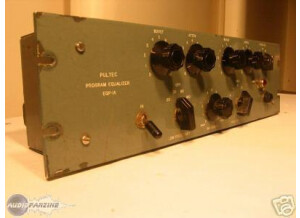
    The Pultec EQP-1 filter is a classic equalization unit in the form of a rackable piece of outboard gear. It is an all analog unit and it will take up two rack space units. UTILIZATION The configuration of the Pultec EQP-1 is very easy to follow and to use. It basically has two bands - one for low frequency and one for high frequency. For each of these, it has a knob to choose the exact frequency, and knobs for boost and attenuation. It also has a bandwidth knob that applies to both of the bands and has an attenuation selector that also applies to both of the bands. I don't have the manual for this EQ, as it is old and rare, but I never needed it and if you have ever used a basic EQ you should have no issues with this. SOUND QUALITY The sound quality of the Pultec EQP-1 is awesome in every aspect. It is an effective EQ, with all the parameters needed to do the job well. It has become a classic piece of gear for one reason, and that is because it just sounds so good. I have used this on everything from lead vocals to guitars and drums, always with great results. In terms of outboard EQs, it doesn't get much better than this. OVERALL OPINION I've been using the Pultec EQP-1 filter for about two years and whenever I have access to it, I always use it. It is extremely expensive now because of how rare and coveted they are, so I would only recommend trying to purchase this to those who are really looking to put together or add to a top flight professional studio. For the rest of us, we are lucky to be able to use these. Overall, the Pultec EQP-1 is one of the best EQ/filters ever made.

  • « Should cost more »

    The EarthWorks KickPad KP1 is an XLR kick drum unit that is for all microphones. It cost less than 99 dollars which is way under priced to me. The KickPad KP1 will allow you to turn almost any microphone into a kick drum microphone. I say almost any microphone because just trying to turn a cheap microphone into a kick drum microphone might work but the quality will not change too much. UTILIZATION The KickPad KP1 is simple to set up or use, all you have to do is just plug it in. The great thing about having the KickPad KP1 is you could be in situation where you don’t have enough kick drum microphones available, well all you have to do is pull this baby out and hook it up with a microphone and that is it; you will have a kick drum mic. SOUND QUALITY The KickPad KP1 works with almost all dynamic, ribbon, and condenser microphones but depending on how good the microphone is will still dictate how good the kick will sound. OVERALL OPINION When it comes to kick drum sounds it will always depend on the microphone and the microphone placement in correlation to the surrounding environment. So even the KickPad KP1 might not give you the perfect sound right out of the gate and you might have to do some experimenting with placement but it will not hurt to have this at all. Using the KickPad KP1 will give you ( with proper placement) a great thick kick drum sound with enough punch to slice right through your mix and if you are playing live with it, it could be just what you need to bring that kick out in front of all of the other sounds that may be going on. For the price that this cost it is a must have, I have seen similar devices cost almost double.

  • moosers's review

    The UTC 3A is a passive, two band equalizer that can be used for a variety of purposes across the board. First off, this is a really old piece of gear! You're definitely not going to find many of them, and those that you do find will probably have some sort of issue with them. The studio that I work at has a set of these, but they had to be fixed and restored and only recently have made their way out for use. These are all analog equalizers and will fit in two spaces of a traditional rack case. UTILIZATION Using the UTC 3A couldn't be much simpler. It's just got two bands that each have parameters for setting your cut or boost level and for choosing the frequency. The low band gives you three different frequencies to choose from, while the top band has five. Those are really all of the setting controls at hand, so a manual shouldn't be needed nor do I think you'll have much luck finding one. SOUND QUALITY While definitely not the most flexible equalizer out by modern standard, the UTC 3A has a really great tone and can do a lot if you're looking to add or lose some high or low end. It was probably originally used for broadcast, as the demand for studio gear was certainly a lot less when this was made as it is now. It works as both a mastering and mixing gear, and is especially useful as a mastering device as is the case here at the studio where I'm working. Small moves on the UTC 3A seem to work wonders for your sound, but you have to know where to use it as it's got a somewhat limited scope since you don't have control over the full spectrum of frequencies. OVERALL OPINION I don't know if you'll be seeing any UTC 3A passive EQ's out there anytime soon, but if you do come across one in a studio or elsewhere it's definitely a good piece of gear to know about. This is one of the oldest equalizers I've ever used or seen, as I think it was made as early as the 30's or 40's from what I was told. It's probably not worth pursuing since it's so rare, but if you do get lucky with one it's a really great sounding, simple two band EQ for mastering and beyond...

  • moosers's review

    The Dolby Model 360 is a simple noise reduction unit, that was originally designed for use with tape, and most likely designed specifically for tape hiss. I honestly don't know all that much about the origins of the 360, but we've got a pair of them in our studio A at the studio where I work. I must admit that I haven't seen them get used very much, but I have played with them a bit to see what they were all about. It's already hooked up to our patch bay, so I don't know the connections that it has in the back since I made all of the connections with the bay. It is a rack mountable piece of gear and will only take up a single space. UTILIZATION There isn't much at all to using the Dolby Model 360. There aren't any real parameters or anything, so it isn't like you can set what you'd like to be filtered here. Since it was designed for use with tape, the buttons that it does have are pretty much all for using it with a tape machine. It would be seriously hard to find a manual for the 360, nor would one be necessary. SOUND QUALITY The Dolby Model 360 is actually pretty good at getting out unwanted noise or tape hiss. Unfortunately you don't have much control over what you can do in terms of parameters, but in situations where you've got some simple hiss or noise, more times than not it will get it out. Still, I'd usually opt to use something where I have more control, or just use equalization to do the job. So while not as in depth as most modern day noise reduction units, these will still get the job done, especially if you're using tape. OVERALL OPINION While I can't say that I'd recommend seeking out a Dolby Model 360 noise reduction unit, if you have some around they're worth the space. They do the job fine for taking out simple tape hiss or noise, but aren't very in depth and certainly aren't flexible. If you could find one of these, they definitely wouldn't be too expensive. Even so, I'd only recommend picking one up if you're going to be using it in a professional studio environment, where you never know when something might be needed...

  • moosers's review

    The Mutronics Mutator is a uniquely designed filter with a whole ton of cool features. It is a stereo unit, so it has two separate channels, and is made up of purely analog components. I'm not sure of the connections that it has since the one that I have used was already pre racked in the studio that I used it in. It is a rack mountable piece of gear and will take up two spaces. UTILIZATION The Mutronics Mutator is split up into a few different sections. It has two main sections for envelope follower and LFO, and then has a three unnamed section with a few other parameters. The first section (env follower) has three parameters to work with while the LFO section has the same in terms of knobs, but a few more switches. There are also general parameters for envelope sweep, cut off, and resonance. It also a bunch of other switches to work with to control different features. I've never found it a problem to use the Mutronics Mutator, but since this is a unique piece of gear, if you're unfamiliar with filtering I'd suggest having the manual handy. SOUND QUALITY The sounds heard from the Mutronics Mutator are versatile, unique, and down right awesome. You would usually see this kind of filtering for use with synthesizers, but this is for general audio and can really provide you with some interesting tones. I've used the Mutator on vocals, electric guitars, and even some drums on occasion. This is a really creative piece of equipment, so what you use it for could be totally different from what I might find it useful for. It has the versatility in terms of parameters to adapt and be used in experimental ways. The Mutator is made up of great parts, so it has a really clean sound and everything does exactly what it is supposed to do. OVERALL OPINION The Mutronics Mutator is definitely one of the coolest pieces of outboard gear that I have had experience with. I've only seen the one that I have used, so it isn't like these are readily available in any stretch of the term. If you can find one for sale I would imagine that it would cost a great deal of money to acquire it, especially considering that the studio that I used this in was the biggest that I've been in. If money is no object and you find one of these available, I can pretty much guarantee that you will be happy with having this around!

  • « filtered moog goodness »

    The Moog murf is a digitally controlled analog filter. On the front panel it has controls for drive, output, mix, envelope, rate, a/b bank, and pattern selection. There are also 8 sliders to control which frequencies are altered. The rear panel has 1/4" jacks for input and stereo output. There are also stereo 1/4" jacks that allow you to use an expression pedal to control the rate, mix, envelope, and sweep along with a jack for tap tempo. UTILIZATION This is not a simple pedal by any means. Hooking it up is pretty straight forward but understanding the functions and knobs is a whole other story. You can just twiddle knobs and play with the sliders to get neat sounds out of it but it will just be guessing. The manual is long and very much necessary with this pedal as with most of the Moogerfooger line. I bought this used and did not receive a manual but it can be downloaded from the Moog website. Once you get a general idea of which pattern does what it becomes much more apparent what is happening when you turn the sliders. SOUND QUALITY The Moog murf has an active preamp in it that is always present in bypass and effect mode. Many guitar players complain about the preamp but I did not find it to be too bad, definitely not something that would stop me from using the murf. The effect itself is just amazing sounding. There are not many other companies that can make modulation effects that sound this thick. From bubbly to bleepy all the sounds are just other worldly. I find it equally useable on guitar and synth with maybe a slight edge to synth as you have a wider range of tones to work with. I would describe the sound as a highly tweakable mix of sample and hold and step filter. The pedal sweeps through the frequencies selected by the sliders and filters them in the most Moogish of ways. It is hard to rate it on functionality as it's really up to the user to understand how it works to get the most out of it. I really think the tap tempo is absolutely necessary. The effect really needs to be synced to the ebat you are playing otherwise it just sounds off. One you get it synced it can totally transform the tune you are working on. OVERALL OPINION This is pricey piece of gear that requires lots of reading and experimenting to really use well. If you like to just plug and play I suggest you find something like a sample and hold pedal to get similar sounds easier. If you are like me and enjoy tweaking and options then this is a great pedal.

  • « Panic »

    The Feeback Ferret D has been in my rig since 2009, it is a feedback processor that has panic filters on it. Using the Ferret D will get rid of all of the horrible frequencies that need to be gutted out. You can simply use a filter that the Ferret D offers and it will find certain frequencies that you tell it to and it will eliminate them. There are over 16 different filters to choose from and the Ferret even has four different presets to fit with whatever you environment is. UTILIZATION Using the Ferret D is simple because it is just about using the filters efficiently. Sometimes as we all know you might experience some sudden feedback that can really ruin your set and fast! All you have to do is use one of the Panic Filters and you will quickly have full control over the feedback and you can get rid of it really quickly. If you are into live sound whether you are a DJ for a band or group or an artist setting up your own gear, having the Ferret D is a must have because it will take care of your dirty work and get rid of all of the feedback. SOUND QUALITY The Ferret D has 2 channels with 2 XLR inputs and 2 XLR/ 2 ¼ TRS outputs. You can rack this unit up and have it in your set up quickly. No matter what setting you are in you will be able to change your options or change filters if you are in a panic situation and have sudden out of nowhere feedback strike your gig. OVERALL OPINION Even you are having some minor feedback sound issues that some people don’t think are that bad, you should still go out and get this unit because it will give you ease of mind knowing that feedback will not take over your performance.

  • « rack it with your mpc »

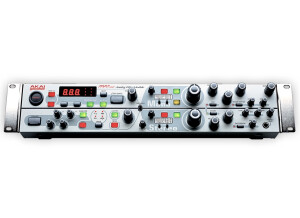
    The Akai MFC 42 can be purchased at a good price at a bunch of different stores that offer music gear so its definitely worth the try. It has 42 analog filters and is a rack able unit. My first incounter with it was when I got a chance to use it when someone had it racked on the MPC. I really had no idea what it was but since I am an MPC lover I knew that I had to get my hands on it and give it a shot. You will love using it, you can filter with mono and stereo sections and it has the ability to modulate as well. You can control the stereo and the mono completely separately . UTILIZATION Getting started with it was fairly easy, I didn’t even have a manual for it and had no problem just mesing around with the knobs and seeing what kinda cool sounds I could get out of it. You have a few different types of channels , Low, High pass, band pass and notch. Also the speed of the LFO is controlled by the “rate” knob. The Aka MFC 42 also syncs up to your MPC’s midi clock too so the timing will be right on. Some times it didn’t seem like the MFC42 had a mind of its own and I was difficult to get it to quite doing some effects. But that could have been something that I did wrong and because I didn’t have a manual for it at the time I had no idea what was going on. SOUND QUALITY The sound quality is amazing and it provides a very bright colorful sound. The filters really bring out some cool effects in some of the chops and samples that I use. Since I have been using this for a few years now, right around 4 years I have used up all of the filters maybe too many times at this point but I don’t care because it just sounds so darn good. OVERALL OPINION Overall, if you have an MPC you must have this. Akai MFC 42 was built for the MPC users.

  • « this will take your work to another level.. love it »

    The Electrix EQ Killer is a rack able piece of gear that almost any musician or engineer can appreciate. it’s a smaller unit but provides a very big analog sound. The EQ Killer gives you total control over the transforming the sound you want to get out of it. It can really change the frequencies and do it better than a lot of built in ones that come in softwares today. This is one piece of hardware that is not only affordable but can really make your music go to a different level. I usually only use the built in eq parameters that come in fl studio and cubase and sometimes in pro tools but when I get a chance to use the Electrix EQ Killer you can almost tell just by being a listener that something different was used in my work. Some of the effects are a wah sound as well as some powerful filtering (analog). UTILIZATION The elecrix EQ Killer is very easy to use and understand as long as you have a basic understand of some of the functions most eq’a have. Plus its hardware so its all right in front of you with knobs that you can play around with to get something that you will really like. SOUND QUALITY The Electrix EQ Killer will help you easily get the sounds out of the way that you don’t want there and lets be honest. A lot instruments and sounds have certain frequencies in them that don’t mesh well with your project, well with the Electrix EQ Killer you will have no problem filtering them all out and getting the best results while doing so. OVERALL OPINION Overall, its worth the buy. Especially if you have never used an analog Eq before. It will be a little different at first but once you see how much more powerful it is that the basic built in ones in your software you will tell the difference right away.

  • moosers's review

    The Krohn-Hite 3202 Band Pass Filter is an older and unique hard ware equalizer. I hadn’t heard of Krohn-Hite until an outside engineer brought one of these into the studio where I work. He had his own custom cables for connecting it to our XLR guest tie line jacks, although I don’t remember exactly what the connection on the other end was. It’s not a rack mountable unit as it sits inside it’s own box. UTILIZATION The Krohn-Hite 3202 Band Pass Filter is a really simple filter, as it’s not really your typical EQ. It’s made up of two bands, each of which can be used as either a high or low pass. Each band gives you control over the desired cutoff frequency via a wheel, as well as switch for multiplying the frequency and setting it to either a high or low pass setting. It’s certainly not the most versatile filter out there, but for high and low pass purposes, it does the job well. I haven’t seen a manual for this, nor do I ever expect the need to look for one. SOUND QUALITY The sound of the Krohn-Hite 3202 Band Pass Filter is pretty unique for simple high/low pass filter like this. It can be used in a traditional sense, but I like it best for experimentation purposes, as you can really get your traditional high/low pass filter from anywhere. It’s great for using with a synthesizer to cutoff frequencies and mess around with getting slightly altered sounds. You can definitely used it as a traditional filter, but it’s not really worth having around if you’re only going to use it in this capacity. OVERALL OPINION I don’t think you’ll be stumbling across the Krohn-Hite 3202 Band Pass Filter any time soon because as far as I can tell these are pretty few and far between. The engineer that brought this into the studio where I work had all sorts of little unique gadgets, so I feel like only someone like him would have something like this. Having said this, if you’re the type of engineer who likes to experiment with filters, the Krohn-Hite 3202 Band Pass Filter is definitely worth knowing about and trying out if you’re ever able to.

  • moosers's review

    The Roland SN-700 is a noise and hum eliminator, designed for use in the recording studio or in a broadcast type of setting. It's a pretty in depth noise reduction unit, as you won't find too many of them out there that have the capabilities that this one does. I don't know the types of connections that it has since we have it hooked up to the patch bay at the studio where I work. It is rack mountable and will only take up a single space. UTILIZATION Using the basic features on the Roland SN-700 is pretty simple, but I haven't taken it too far in depth so I don't know how easy or hard it is to do so. It's definitely not too hard to get rid of all types of different noises, although it of course will take some tweaking on your part when it comes from sound to sound. The manual isn't too readily available, as the SN-700 isn't exactly a piece of gear in the forefront. SOUND QUALITY The Roland SN-700 is capable of getting rid of all types of noise without losing your original sound quality. It really makes it as easy as possible to get rid of unwanted noise, buzz, or hiss of any kind. Of course there is always going to be noise that you can't get rid of without eliminating needed frequencies, but the SN-700 can take it about as far as you possibly can. It works well especially well for getting rid of unwanted amplifier buzz. OVERALL OPINION In terms of hardware based noise reduction units like the Roland SN-700, I haven't used too many of them in my time as an audio engineer. Usually I'll end up using a noise reduction plug-in or manually remove noise using equalization. However, the SN-700 is a very handy unit to have around, as it seems to do as good a job as any noise reduction unit that I've used. The only downfall in using the SN-700 when compared to a plug-in is that you won't get a full spectrum graph or anything like that. Besides this, the Roland SN-700 is a great noise eliminator.

Categories that may interest you