Log in
EN
FR

Workstations

185 products found

Filter
Sort by
Evaluation
  • Reviewed or not
  • Editor’s award
  • Reviewed by Audiofanzine
Availability
  • Available or not
  • Sold new or used
  • Sold new
  • Sold used
Must-have products
  • All products
  • Flagship products
  • Best rated products
  • Hot products
  • Popular products
Price
  • Freeware
  • Low-cost (< $750)
  • Mid-range ($750 - $2,000)
  • Premium (> $2,000)
€
Clear
Sort by
  • Popularity
  • User ratings
  • Price - low to high
  • Price - high to low
  • Used price, increasing
  • Used price, decreasing
  • Name (from A to Z)
  • Name (from Z to A)
  • Added on
Sort results
  • Popularity
  • User ratings
  • Price - low to high
  • Price - high to low
  • Used price, increasing
  • Used price, decreasing
  • Name (from A to Z)
  • Name (from Z to A)
  • Added on
Filter results 185 results found
Evaluation
Availability
Must-have products
Price
  • Freeware
  • Low-cost (< $750)
  • Mid-range ($750 - $2,000)
  • Premium (> $2,000)
Show results

The best Workstations reviews

The reviews Audiofanzine members found the most helpful.
  • « An exceptional instrument »

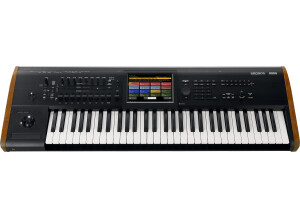
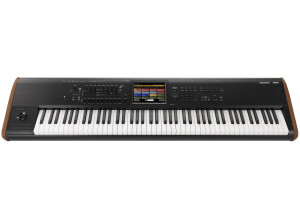
    I use the Kronos in a context where I'm getting back to making music after stopping it for many years. In the past, I’ve played many keyboards of all kinds, including a Korg MS-20 in 1979. The Kronos is the first keyboard I’ve bought since returning to music. I chose it because of its capacities, the numerous videos about it and a great test about it on AudioFanzine’s French version. I’ve ha dit for two months asof writing this review. To sum up muy impression, it’s 99.9% positive as to its sound synthesis and processing capacities, as well as its sound quality (tweak it a little and you can really get it to sound big, almost analog-like). Factory settings are good overall. There’s a large additional offer with excellent presets – even among the free offers. Some offer very cheap yet very high-quality soundbanks, such as coyote14 (https://www.youtube.com/user/coyotesynth/videos) who also offers very valuable tutorials). There are also more expensive professional soundbanks. However, the most important remains to have fun with sound experimentation. The 9 synth engines open the door to seemingly infinite possibilities. Ergonomically, the synth is well-thought, especially regarding the way to access each screen. However, the file management system is very complex, sometimes even obscure. As I’ve said I’m not a beginner, however this keyboard demands much, much time to be plainly mastered or even really usable. As an example, I’ve counted that the entire collection of manuals amounts to approximately 1800 pages!! Still, this comes with the feeling to have a particularly powerful keyboard. An outstanding care has been given to these mauals. Beware if you’re not at ease in English though, as the 1200-page Parameters Guide is in English only, and this guide is a must-read to get into the core of the machine and consider mastering its entire parameters. Hence, I wouldn’t recommend this keyboard to a beginner. Alongside these manuals, I’ve used Youtube videos, the “Audiokeys” and “KorgForums” online forums. This is undoubtedly a fascinating synth (or should I say workstation). So why giving it 4 stars instead of 5? Because of the keyboard, which is the said “heavy” RH3. It being a heavy-touch keayboard suits my taste, as I couldn’t play a piano sound on light-touch keys. The keys are mobile enough to get a good velocity level on other kinds of sounds (such as organ, pads, solos &c) so no problem regarding that. The problems are as follows: 1/ The noise generated by the keys . This question has been raised by many (not all) users. The keys are noisy at impact (which is rather normal), but they’re also noisy when released (which is way less). Consequently, the keys hardly get forgotten when playing softly. 2/ Bad calibration of the key’s velocity . The maximum velocity settings (120 to 127) are indeed impossible to reach, even when hitting very hard. The consequence with some layer-programmed sounds is that the last layer simply can’t be reached. Again, many users have reported that problem. 3/ Aftertouch : again a mechanical calibrating issue . It takes at least two fingers when pressing to start getting an effect – no matter which velocity curve is selected. I could write a lot more on this awesome instrument. Is could talk about sampling or audio ins for instance, and the possibility to sample any external source to turn it into a sample that will be used as the basis for a nex programme, and so on. This instrument requires to invest much time (especially in reading) to learn how to use it, but the pleasure it offers is well worth the time spent.

  • Deleted member's review

    Very good keyboard 76 note synth with big improvements compared to XP80. It has 4 controllers with dual functions editable and the famous D-Beam. It also has 4 OUTPUT, 3 pedals, 2 digital outputs S / PDIF (optical / coaxial), 3 doses noon. There are also lots of sounds but it is the quality that predominates. Building on the sound engine of the XV 5080, 128-PATCH users, especially users of 64 against 32 for the PERF XP80, and 16 KIT Rhythm. Of course, it is GM2. The major criticism is the meager 64-voice polyphony (128 XV5080), the lack of slots for cards SRJV80 (DAC 1??) And especially the complexities of using the beast. (Why such a big screen for not being a touch ????? KORG TRITON example !!!!) UTILIZATION Not very easy to use. Although the functions are the same as for XP, nothing is set as the latter. Eg to switch the mode PERF PATCH must enter the MODE menu, with the arrows or PERF PATCH go and confirm with a button below the screen but not in front of the function!! Galley for live. no !!!!! regarding the editing of sounds or other effects, it's the same thing. It must have all pages and sub menus at the top of the keyboard or else ......! For the manual, it is so far only in English (I'm French) but well done. SOUNDS The sounds are beautiful. Significant efforts on the drums, guitars, pianos, organs, finally, that the good and mostly beautifully highlighted by the dual arpeggiator. The effects are coming to realize most of the series of COSM. So property. The keyboard is much improved also firmer. I have been using OVERALL OPINION September 20, 2001. I tried all the models before you buy it because I'm hi-tech salesman in a music store (which is easier). I also have a Triton, a Nordlead 2, a CX3 an XP 80 and EMU B3. The price / quality ratio is faithful to ROLAND. Ie it is always the same price for all synths premium brand but it can never be too expensive! To conclude, I do not regret my choice.

  • « Has Motif XS Sounds? »

    The Yamaha MX-61 is a 61 Note Digital Performance Keyboard; it comes with over a thousand presets and works great with a DAW. The build of this keyboard is solid, the keys seem to be well made and do not seem like they would stick over time and they do not feel cheap and plastic made. This board comes with Cubase AI and a few other plugs ins as well. There are pianos, drums, strings, and some other sounds that are on this keyboard. They do claim that the acoustic sounds are very good and are similar to other Motif board sounds. I do not think there are many Motif XS sounds on this board at all. The Motif XS is so powerful and the sounds are so amazing, I just don’t hear them with the MX-61. UTILIZATION The set up process with this keyboard is very simple; especially if you use Cubase you will have no issues because the manual will explain everything. If you want to use a different DAW then you may have to figure out how to set it up yourself (not that it is that difficult). SOUNDS This keyboard is also a 1 in 1 out MIDI interface as well if you connect it to a computer. There are effects built into it like echo, phaser and some others but none of them really stood out to me. There are also a total of 88 chorus presets and master EQ. There is no sampling on this keyboard though, which is a feature that I think they could have added for this price range. OVERALL OPINION The pitchbend and mod wheel feel pretty good and do not seem cheap. But I would not be concerned with the fact that this keyboard has over 1000 sounds and that they claim some of them are from the Motif XS. This is not the case, maybe a few sounds are from the Motif XS but the majority of them are not.

  • « Swiss Army Knife of Sound Design and workstations »

    Specific application-primarily for practicing classical, jazz compositions for piano-also for composing and arranging works for myself and others. Have also used for creating samples and original sound design. Due to pandemic, basically using this in my home studios at present-I have 2 8HDs I fully restored. Will use for live gigs, jam sessions. Am an experienced keyboard player-have worked in professional bands, educational settings for live performances and shows as a music director, long-time user of music technology professionally and for my own enjoyment. Have owned many musical instruments-going back to pre-synth days playing electric pianos and Hammond organs. Keet up with most advances in music technology/computing and equipment-have several other classic workstations-I prefer keyboards that tend to be different but advanced. I own the Generalmusic Equinox, Ensoniq TS-12, yamaha SY77, several classic "beat-boxes"-the MC505 Roland and RM1X Yamaha, plus Yamaha QY's, a Roland PMA-5, have experimented with many auto-arrangers (not really my style) and now have several of the newest Casio Privia 88-key stage pianos. Have pretty good musical "ears" due to my training on various musical instruments, arranging and composition. So have tested many instruments-acoustic and electronic-prior to purchasing my used Fusions, and also research and listen to many instruments on Youtube, other user groups, I belong to several. Pros and cons This workstation has one of most well-supported, well documented user groups I've ever come across. www.alesismusic.com is moderated by 2 of the most knowledgable professionals I've had the privilege to seek information from. Big, big plus for something as complex and powerful as this workstation. Alesis abandoned this many years ago although InMusic in the US and UK still carry some parts and assisted me in restoring my Fusions. Another plus. Polyphony-unbelievable how this allocates voices and resources-I have yet to come across another workstation that can support this many voices, for songs, multis (called mixes in fusion speak) and programs. This is a monster of polyphony. Sequencer/recorder-32 tracks-only Generalmusic had such a thing-why I kept my Equinox. A little tricky to work at first-but can record like a DAW-audio tracks using the 8-input HD recorder, and 32 tracks of midi. Inputs/outputs are solid construction and TRS. The large monochrome screen-only the newest color screens surpass this-but this one is still very clear and easy to read. if it fails, it can be replaced or modded with LEDS, nice! I can do anything i need pretty easily from the screen and sequencer. Sounds-called "programs" in the Fusion-I learned piano on Steinways-and have owned several digitals as these progressed through the years. This is so comfortable to play with the 8-key Fatar action (its a TP40-same as in the newest Doepfers, Nords, Studiologics and some Korgs-but the fusion had it in 2005). i can practive serious classical for hours-finally can work on Chopin, Debussy, Schumann and others which I could not get through happily on other digitals-the weight was either wrong-or too noisy-or not enough dynamics-this feels fantastic to me. All other sounds-this has audiophile specs in the sound dept.-and it sounds it-very quiet throughout the signal chain. Factory sounds were OK, on par with Tritons, Roland RD's others I tried over the years. But the amount of work programmers put into this over time-astounding. It is a chameleon-I have only begun to program this-and it already has sounds I've only heard in my SY77 for FM, the Hollow Sun programs-listen to the Novachord samples-I've never heard anything like this anywhere. and others have created literally-a history of classic synths in this thing. Stuff I've only heard on Peter Gabriel recordings-i have played many older machines including Moogs, the original sequential Pro-One for analog, heard the first Memorymoog before it came to market-my god-this thing-its made everything else I have obsolete. I knew it-I watched this one for years-read about the problems-the more I studied the Montages, Fantoms, etc. the more I was pulled to this-I didn't care about the cost-i wanted something really different-and this is. And it is a full-on stereo sampler-and the sampler inputs can be re-routed to the HD recorder with simple patch cords! Geez! Now the bad stuff-it is heavy-but then the Kurzweil/ Fantoms/etc. with weighted actions are not lightweights either. it is very solidly constructed-all steel and aluminium plus Fatar TP40 thus the weight. Th pushbuttons might not be to everyone's tastes-but everything is back-lit, real nice for dark venues. This is an unorthodox design-but with 4 knobs-in a matrix can act like 16-takes a little getting used to. But then, even organ drawbar settings can be designed to work with the knobs, several organ programs include this function. The bottom curved shape is weird-won't sit flat on a keyboard stand unless you make some adjustments to how you fit it. Big complaint-Alesis abandoned the SATA outboard interface-frustrating because the electronics are all in there, but they did not create the firmware to activate it! it even recognizes my SATA drive in diagnostic mode-but you cannot access any info in the drive-but it has a CF card reader which works, but only up to 4GBs. Other big problem-if you don't upgrade to OS 1.24-which is readily available from the user groups-this was plagued with bugs-which is partially why it failed-maddening because the subsequent OS upgrades fixed almost everything except the SATA outboard connector-different loop lengths for individual tracks are there-syncing audio and midi now works-new DSP includes formant vocal effects and several others. another big complaint-which many users did not understand at first-I do! Since many sounds are sample-based (equally many are not-FM, VA and PM sounds for example) it initially takes a few seconds to load the larger sample-based sounds-taking these off the hard drive-but then you can load any sample-based sound directly from the hard drive when you first power up-store it in a "mix", "song" or 'favorites" folder-now sounds will be immediately accessible until you reboot. When you reboot-these samples load all at once and are instantly accessible. If a sound is not sample-based such as the VA or FM sounds-these load instantly. And 384MBs sample RAM with expansion cards installed-maybe not as much as the newest boards with sampling-but not shabby. I've played 1GB soundfont acoustic pianos that sound no better than the HG Fusion piano-which uses alot less sample memory than this. This thing is a monster-if you are looking for a very deep, perhaps too complex but very original sounding workstation-and are not too much in love with virtual software machines for music production-you might want to try one of these. If you are willing to put in some time, and have a good ear for music and sound design, I think you will be pretty amazed at what this thing can sound like. Join the user groups-you might need to, to learn your way around this-its not for a beginner certainly unless as a beginner you want to advance to becoming a sound designer and composer. Thank you.

  • « Huge sound and quality behind the puritanical plastic exterior. »

    Usage: In a rock band. Currently: Home studio, rehearsal room. I tested before: Korg Nautilus, Dexibell Combo J7, Kurzweil Forte 88, Kurzweil PC3 and PC4 88 instruments. PC4-7 advantages: Very dynamic sound, excellent piano, EP organ and other sounds. Only 10kg weight, compact and portable. Huge user flash-based storage (2GB) Disadvantages: Plastic casing, unprofessional switches, external desktop power supply. Overall, the instrument was a positive disappointment. I am alien to instruments mounted in plastic casings, but the PC4-7 made me forget about this with its huge sound, compact appearance and the fact that it was built with a usable keyboard. I strongly recommend it to everyone who likes the Kurz sound.

  • « A simple yet powerful workstation for the EDM Market »

    The Roland FA-08 is an 88-weighted key synthesizer workstation. It is equipped with sounds from both Roland's XV series of sound modules and the newer SuperNatural sounds. Additionally, there is a complete Virtual Analog Synthesis engine on-board that allows 3 oscillators to be programmed in many ways. There are 16 pads that can be used for triggering loops, samples, and sounds, a pitch bend and modulation joystick, 6 rotary knobs that can be assigned to a variety of parameters, a D-beam control, and a screen with a scroll wheel for editing and creating sounds/songs. The polyphony is 128 voices. UTILIZATION Editing sounds is extremely easy and fun. The supternatural Synth engine is a breeze to use. Everything appears clearly labeled on the screen and navigation with the buttons is straightforward as can be. I found using the sequencer to be a little annoying at times, compared to the Fantom G, but this is only personal preference. The G has a larger screen that is arranged more like a DAW. The screen shows your instrument list and numbered bars of the piece. You can see a color coded representation of which bars have audio or midi of that instrument recorded. I do like however, the ease of constructing and performing loops. This is much easier than the Fantom G. The sampler is pleasant to use. It is based on one of Roland's standalone samplers and works quite well. The sampling and looping capabilities make me feel that this workstation is aimed at the EDM market heavily. The Fantom G came out at a time when it was still common for people to produce their tracks on a workstation, but I believe that today people lean towards the DAW because of it's easy access. This keyboard gets it right and puts fun, easy to use functions at your finger tips without having to fire up a computer to create a few loops and play with ideas. That said I don't personally use the keyboard to create complete tracks. I don't think any workstation will match the speed at which this can be done in a DAW today. SOUNDS The sounds are fantastic. The XV series sounds still hold their own today and work well in a mix. The supernatural side of things is the best aspect of this keyboards sound. The synth is just incredible, and Roland has been great at supporting it and uploading more sounds to their AXIAL website where you can expand your preset bank. The synth is especially good at imitating a variety of vintage gear such as Jupiters, Junos, and Moogs. I don't notice any problems with the converters, they sound great through my speakers (yamaha HS series) and I enjoy them all very much. OVERALL OPINION The best part about this keyboard is it's loop triggering and portability. It's lightweight and small enough that I can take it to a gig without much trouble, and since I can create and trigger loops so conveniently I am able to hold quite the one-man-band show. I will say I don't like the keys as much as the Fantom G. They are still ivory-feel weighted, but they feel a little small and unresponsive to me. I will usually trigger the keys from another board at home if I am playing much. The sound quality is great and leaves me impressed every time. I considered getting a Korg Krome when this came out, but the many features of the FA lured me in and I have no regrets.

  • « I tested it but haven't had the time to buy it!! »

    The technical description is available at Yamaha/mdownload, etc.... So, in short: - 61 truly synth-like keys, almost like an organ, but what can you expect for the price... - Almost 1200 presets - Maximum three dual insert effects per channel, one EQ per channel, 2 x sends (reverb/chorus for example), one Master Fx, and one general EQ. - 2 x 4 pot matrix, 2 x assignable function buttons, 1 pitch bend wheel + 1 modulation wheel and 2 x footswitch inputs (I think) + 1 x sustain/hold... - 64 notes maximum polyphony for simple mono sounds (careful!!!). It's not such a great stage keyboard, it's more functional, I think Yamaha conceived it with Home Studio owners in mind ─ do correct me if I'm wrong!!! UTILIZATION The overall design is very simple. It's not easy to edit sounds with the small screen, but the PC editor makes it easier. I've been using workstations since the '90s, some of which were like Rube Goldberg machines, and it's not my thing!! I kept a Korg EMX-1, which I also use as an "expander" for electronic/analog sounds. The interface is perfect for that. Th menus system provides an intuitive browsing of the parameters and effects at different levels. Likewise, the music production workflow is pretty well implemented: Ever since the Motif 6, Yamaha has really evolved its sequencer and right now it's simple AWESOME. It's fast, creative, it makes you want to play more, make songs, play covers...In short, you have a blast with it! Ah!! If I had had it ten years ago instead of the Motif 6.... SOUNDS I have liked Yamaha sounds for a long time because I think the Yamaha sound is always a bit better than before, there's always something to arrange/compose/play in different music styles. It doesn't limit me, it sounds good. With a 800/1600W PA System it really rocks, with great dynamic response, sound might seem a bit cold but a bit of EQ will allow you to color it to your taste. There's plenty to do... There are not many Yamaha sounds that I don't like, maybe the synth sounds, but I have a supernova and/or EMX Korg for that, so..... The controllers allow you to do great things in Song and Pattern mode, it's good to create Fx/wooshes. OVERALL OPINION I didn't buy it: The MoxF came out when I wanted to buy it but I went to the store at least three times to test it properly. I kept my Rack ES equipped with two PLG-150-AP and PF cards. I had a Motif ES6 and an XS, which I sold. It might fall short in terms of polyphony for someone who does arrangements or composes with it, and it only stores three insert FX in multitimbral mode. Its main advantage is the built-in audio/midi interface and its PC integration: It's awesome! But even better is that it has the exact same engine as the XS but with half the polyphony....): Direct recording in performance mode of four Arps with chord recognition at this price...Simply put, it's a unit to make music with ease!!! Given its price, I recommend it to beginners, arrangers, composers, etc. It's a formidable practice tool and a superb stage instrument, too!!! Don't think it twice: At this price, specially secondhand, GO FOR IT!!!!

  • « So Far So Good »

    We just got the Korg Krome-88 in our studio last week, it has weighted keys and 600+ sounds. There are even 900 arpeggiator patters on it and 600 drum grooves. At first I really didn’t want to invest our studio’s money on another Korg board because a lot of the recent ones that we have got from them have been very similar in sound. I wanted to spend our budget elsewhere and get something different but after I saw the price of the Krome-88 I figured it would be worth a shot because it was very affordable. You can purchase the 61 key version, 72 key version or this 88 key version for all affordable rates. Of course the 61 and 72 key Krome are a little cheaper than the 88 key version. UTILIZATION Setting up was simple, as soon as it arrived we took it out and plugged it in and started to mess with it. There was nothing too it, it did come with a manual but have not even looked at it yet or even took it out of the plastic because if you have used a Korg keyboard before then you have used them all. Korg continues to keep most of their set ups the same from keyboard to keyboard. SOUNDS You can use the Krome-88 like a plug in on your computer. We are still in the testing phase of using it with a few different DAW’s to see which one we like it with the best. Most of the sounds from the Krome-88 come from the Kronos keyboard which I have used before but no longer own. OVERALL OPINION The Krome-88 has a full color touch screen that is very bright and easy to work with. There are however some sub menus and tricky navigation. The keys on the Krome-88 are great, the lower octaves have heavier keys while the higher octaves have lighter keys so you can get those melody lines out. If you are looking for a fresh sounding synth then you better get this one and use it before everyone else does. You will shock other musicians with the sounds you can get with the Krome-88. I look forward to seeing all of the capabilities of it over the next few months.

  • « A POWERFUL MACHINE »

    Features worthy of a modern piano. It came out in 2004 but it is still a well-respected workstation due to the quality of its manufacturing, sounds, interface, but especially due to its SRX 01 to 12 expansion cards, which can be found at very good prices. They are a real plus, even if the factory sounds are already terrific, like the acoustic and electric piano, the electronic sounds, strings, percussion/drums. It's up to you to see what the piano lacks depending on your needs. Follow this link to make yourself an idea of the SRX series: https://www.rolandus.com/flash/demos/srx/ Personally, I'm a big fan. Roland used to be ahead of the game, it's a pity they are trailing behind in terms of workstations nowadays. UTILIZATION Nothing could be clearer, I haven't found a better interface (except for the fantom g, whose interface is simply perfect). The manual is very clear, there's no need to fear anything. Sound editing is super easy, just like using effects. SOUNDS In terms of sounds, it limps a bit when it comes to brasses and electric guitars, but a simple SRX card fixes it all. Otherwise, there's not much to remark. It's great! ;-) OVERALL OPINION I would surely buy it again, the only thing that makes me think it twice is the weight: 65 lbs. Plus a betonex/readyroad type flycase, which makes 130 lbs. Good luck...and pump some iron if you plan on buying it lol lol lol I sold it for that, I don't pump iron lol But other than that, you can buy it with your eyes closed. Just watch for the wear and tear of the knobs and buttons, if you buy it secondhand you may end up with an ugly surprise. For example, changing the sensors of the keys and damaged buttons can cost you $400-$500, if you need to change the motherboard, make sure to get an unbeatable price to make up for the repair at a Roland authorized service shop.

  • « powerful board »

    I am really happy with the MOX8. Let's keep in mind that this is a mid class board but pro all the way. Finally a lighter weight, full sound pallet, with a good piano sound, 88 note weighted keys, synth and it's black in color! UTILIZATION The MOX8 is also not as bulky as so many of Yamaha 88 note keyboards tend to be so they are listening to us. I will take the mod and pitch wheels above the keys in order to make is smaller and more portable. The only drawback, in my opinion is the polyphony at 64 notes. You will hear drop out if you are a classical piano player playing long arpeggios with the sustain peddle depressed but for me I can live with it as the drop out is at least smooth not like I used to find with the S90 I had a few years back. SOUNDS The sound pallet is stellar with those Motif ES and XS sounds and that includes a very decent piano sound and it all comes in around $1700.00. The accompaniments are also surprisingly useful if not a blast to play. The weighted keys are on the lighter side which I like but it's still meaty and expressive. OVERALL OPINION Though you can probably find an MO8 used at a good price these days, I'd go for the MO8X as it's 15 pounds lighter and has a deeper and more up to date sound pallet. You will see Yamaha synths more often at big shows than any other company and it's because that sound pallet is solid in all categories and you get almost all the sounds of the Motif XS on MOX8. All in all this board is a winner and very suitable for anyone looking for a very portable, all in one weighted keyboard for live or home.

  • « its a great workstation »

    The roland fantom g 6 is extremely powerful, everyone in the industry uses this board or has used it at some point in their musical career. The price for it is pretty high, but if you look around on eBay or Craig list you can find a used one for very cheap, that’s what I did. UTILIZATION DAW like sequencer. Plug in a USB mouse and you have computer-like sequencing at your fingertips. Highly robust, reliable, accurate sequencer with 128 MIDI track capability. Unheard of. No button pressing delays like the XS. SOUNDS Buffet of extraordinary preset patches that are mix ready and can be seamlessly overdubbed together right out of the box. Roland sets up presets ready for your mixes. Drum kits are banging, EQ'd just right. Pianos, organs, Rhodes, wurlies, bass (acoustic and synth), leads, pads, brass, etc etc are all AWESOME. Can not wait for new Keyboard expansion card. Incredible. No glitch LIVE mode that guarantees no delays between switching performances live in concert. Finally a company listened to us. Thank you Roland. Live mode is SO cool OVERALL OPINION Overall its great, but if you don’t need the sequencing you can always go with the fantom rack and have all of the sounds, I think the fact that it’s a workstation is what makes it so expensive, because the rack is over a grand cheaper. but still roland always comes out with great products and this one is perfect.

  • « Love it despite some latency »

    Yamaha workstation, 61 keys, purchased 2 additional sound cards. See product descriptions with lots of details elsewhere. UTILIZATION For getting around the keyboard and doing the basic stuff for recording and performing, editing on this level is simple ONCE you've gotten accustomed to it. The manual gets a "C" grade from me. I've found more helpful info at YouTube - thanks for all who have posted on the ES there. SOUNDS Great sounds, expressiveness and touch sensitivity are excellent for a non-weighted keyed. Effects are all very good as well, and easy to edit from the top-left side of the unit. Acoustic piano and electric piano programs are among the very best IMHO -- I sold my Rhodes. Electric guitars (esp. Mega-Voice ones) and strings are also killer, as well as its organ programs. BTW, if you really want killer organs, use Performance Mode and program the 4 channels to different organs of your choice, and be able to use your 4 sliders to customize and edit your overall organ output/sound with these 4 sliders, and/or fade between different types of organ programs/sounds in any given song. Motif, hands down, produces the phattest and warmest/richest sounds around -- they kill my Korg Krome, which sounds very thin in comparison. Dynamic range is also excellent. While playing the grand piano, you can really hear the difference when playing FFF vs. ppp. OVERALL OPINION The 2 complaints I have about the ES are these: 1) when in Performance Mode and using all 4 voices and their effects, you can easily get some latency during a performance. I've got to experiment a bit to see how to minimize this; it'll likely require me to reduce the no. of effects associated with each of the 4 programs that I load into each Performance. 2) When switching between Performances, you may have to "clear" the volume settings for one or more of your 4 voices in this mode; which, requires you to slide the faders all the way to the top, then bottom (or visa versa). Otherwise, some voices won't be active. This was and remains a little frustrating; having to make sure that I do this little procedure every time I switch between Performances. I've not ever used the sampler, so I have nothing to say about that. There's a YouTube video posted that is a sped-up time lapse video of a guy really digging deep into modifying some sounds in the ES. It is worth checking this out, if only to realize how deep you can dig, and how much of an exercise this is/can be. I've play-tested the XS and XF, but truthfully, neither seems that much better than the ES in terms of overall sound quality. Yes, loading programs into the unit is much faster with these newer versions, but other than that, I've not had enough reason to sell my ES and opt for an XS or XF. Go to YouTube, and a bunch of guys tell you why you should switch/update to an XF, but they're much more expensive than the ES was, and I'm quite happy with my ES.