Log in
EN
FR

Samplers

180 products found

Filter
Sort by
Evaluation
  • Reviewed or not
  • Editor’s award
  • Reviewed by Audiofanzine
Availability
  • Available or not
  • Sold new or used
  • Sold new
  • Sold used
Must-have products
  • All products
  • Flagship products
  • Best rated products
  • Hot products
  • Popular products
Price
  • Freeware
€
Clear
Sort by
  • Popularity
  • User ratings
  • Price - low to high
  • Price - high to low
  • Used price, increasing
  • Used price, decreasing
  • Name (from A to Z)
  • Name (from Z to A)
  • Added on
Sort results
  • Popularity
  • User ratings
  • Price - low to high
  • Price - high to low
  • Used price, increasing
  • Used price, decreasing
  • Name (from A to Z)
  • Name (from Z to A)
  • Added on

The best Samplers reviews

The reviews Audiofanzine members found the most helpful.
  • « Great fun / Unusable live »

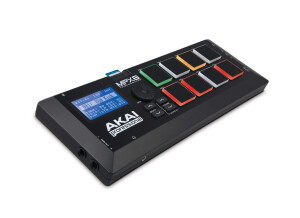
    This is a sample player. You load the samples on an SD card, the machine reads them. It's simple, but that is exactly what I needed for me not lugging a computer on stage. It could have been awesome BUT: the samples are played louder or softer depending on the strength of your hits on the pads, which is cool to have fun, simulate a drum ... but UNUSABLE to read samples in live situations. I was hoping Akai adds a feature to disable the pad sensitivity, but their "technical representative" told me that it was not in the agenda. UTILIZATION Very simple. No need for the manual. It is easy to have fun with. SOUNDS Transparent. No problem. Warning: unbalanced jack output so = ​​You need 2 DIs for use on stage! OVERALL OPINION I used it for 4 months. THE BIG PROBLEM: No option to disable the pad sensitivity. Specifically, in live situations, when I trigger a sample (2 or 3 times per song, at the very most): I never know if the volume is going to be too loud or not loud enough because it depends on the way I hit the pads (which varies! because no, I'm not a machine!). Result: the sample is either too loud or not loud enough. Working with the sound engineer for 1 hour will not change anything because the volume varies despite all my efforts to be as regular as possible. = The sound engineer goes crazy. = The MPX8 stays sleeping in the closet, I no longer use it. And I don't recommend it to anyone as long as Akai does not provide a firmware update in order to have the possibility to play samples at fixed volume. (Which is not going to happen according to J. Sandeen, their "Technical representative")

  • « Small, but effective, pocket sampler »

    It's pretty weird of Korg to create such a device in these times when everything is done with a computer. In the end, this is what anyone may be wondering with this Microsampler ─ the umpteenth version of the very lucrative Micro series of the Japanese brand. Regarding the features: 37 velocity sensitive minikeys. 14-note polyphony. Sampling frequencies: 48kHz, 24kHz, 12kHz, and 6kHz. 160 seconds of sampling at 48kHz. 5 sampling modes (ONE SHOT, GATE, LOOP, KEY GATE, and AUTO NEXT). Sampling sources: Audio IN (Mic or Line) and Resampling. 128 motifs (patterns), configured in 8 banks of 16 patterns. Number of bars per pattern: From 1 to 99. 21 types of effects, including the effects of the Kaoss Pad: General effect and insert effect. Built-in mic for fast sampling. CD-quality sound. Loop recording in real time. Sample editing tools. Import/export of WAV/AIF files via the USB interface. It can be mains or battery-powered. USE It was conceived as a portable and mobile tool. It's not complicated, but the manual is indispensable to find your way. In this regard, the manual is fairly well-done and instructive. For editing, everything goes swiftly with the "write" button. In terms of use, I would say the Microsampler is well-conceived without being pretentious. SOUND The sounds included in the banks of the MS aren't very interesting, except for one or two maybe. So you'll have to import everything you have in your head and play it quickly. Good sample reproduction at 48kHz, it's pretty smooth and the sound is clean, which is much more important. Effects are all right but a bit disappointing, in the sense that you can only choose one at a time. Other than that, it has good dynamics and the sampling system is all right, without being an experimenting nor synthesis beast. Because there's not much to do at this level here, no filters, no specific parameters, no complex editing. Sound goes out as it comes in, with the bare minimum in terms of editing. The small sequencer is a very good idea, it's the kind of stuff that allows you to quickly build an idea or that can come in handy in case of emergency onstage. The effects aren't bad, but it's impossible to choose one per sound, you have to do it at the bank level and then you determine the dry for each pattern. It's not great, but it spares you from having to carry an effects rack around, so it's interesting anyway. OVERALL OPINION You have to take the Microsampler for what it is, a portable sampler to take your sounds anywhere. It has nothing to do with an Ensoniq ASR10, an EMU 3, an Akai S3000 or the more recent Octatrack. It's not a experimental tool transcending the imported sounds, but rather a sample player with keyboard. People who buy it with the intention to revolutionize their set with the "sampling" legend will be disillusioned very fast. It's ideal live, for mobile musicians and also for people who don't have the means to buy all sorts of instruments, but who want to get out of their PC/Mac. The Microsampler is, in my opinion, a very interesting unit. But you shouldn't expect from it something it can't do. Its "plastic toy" aspect doesn't annoy me, because its lightness and the services it provides are more worth than its looks to me. At the price you can get it secondhand today (it's a bit expensive new), it's a trustworthy companion given its simple but solid features.

  • Audiofanzine FR's review

    (Originally written by amnesie1/translated from Audiofanzine FR) UTILIZATION Easy and intuitive use regarding sound synthesis. In spite of the lack of controls, it's easy to browse through the different menus and you'll quickly find any parameter you want to edit. However, the main problem is that some parameter changes are audible in real time but others only after retriggering! For example, if you edit the filter cutoff the change will affect notes you play afterwards but it will have no effect on the current note. On the other hand, you can edit resonance parameters in real time!!! So don't try to edit the sound in real time, use the modulation matrix. Given this, the modulation matrix should be more comprehensive. The synthesis engine is very comprehensive. Both methods are rather easy to use and give interesting results although they are not as ergonomic as the other functions of the device. I haven't used the sampling section so I can't say anything about it. The biggest turnoff is the storing of data. You need floppy disks, which isn't the most simple nor ergonomic solution. And the floppy disk reader is incredibly slow... I won't create too many presets... SOUNDS Here come the most subjective section. The 12/24 dB analog filter sounds just fabulous and very fat. Processing a digital sound (sample, wave) with this analog circuitry produces it a very strong and interesting character. I love hybrid solutions. The sound is not well-defined and it could be more refined, but it has the character of the time when it was made. You get a good dose of aliasing, which result very interesting musically speaking . If you like Carpenter's sound this synth is for you!!! And once again, listen to its fabulous filter!!! OVERALL OPINION It's true that it's very bulky and you won't be able to take it with you on stage. It also looks awful. But what a sound!!! I find it's quite pleasant to use once you've learned the basics (sample and waveform creation). The floppy disk storing solution is not very practical and a ROM would be a great improvement. But in spite of these disadvantages I love the sound and the versatility of this bulky monster.

  • « The legendary American sound »

    ensoniq certainly is to this day the most emblematic audio brand for the "American sound". The company managed to create customer loyalty from many musicians and sound lovers through offering highly musical pieces of hardware for a very democratic price. The EPS 16+ has the look and sound of American synths. Ensoniq’s tour de force was to offer at the time a hardware that could produce a high-quality music project from start to finish for a rather modest price ($3000). Please remember that back then, entering the sampling universe was at least $6000 (akai s 1000), not to even mention e-mu’s $15,000 samplers or those made by Fairlight (at $75,000!). The EPS 16+ is the third sampler in the ensoniq product family (mirage, eps). IMHO, it’s also the best sampler in the whole brand, it has this little something the others don’t. I’d rate them as follows: EPS 16+,EPS,MIRAGE,ASRX,ASR10. So, what does the EPS 16+ have that the others lack? I’d go for its flaws… Yeah, no mistake here, that’s what I meant to say. The EPS offered a rather warm grain (13-bit), with no effects. Getting to 16-bit, ensoniq wanted to convert to the standard of the time, that is linear 16-bit. As a consequence, you get a more accurate and dynamic sound. Compared with its predecessors, its sound has a “fake”, metallic texture. Sound snappy and narrow. The ASR10 has a way wider ans generous sound, but this turns into a cons. The outcoming cound on an ASR10 is less punchy than on an EPS 16+. The EPS 16+’s lethal weapons are its effects, sequencer, dynamics. In the end, you almost have a complete recording studio in a single unit. The sounds are of a rare level detail, effects are highly subtle, not so numerous but very efficient. In the end, you get a rather bluffing sound. Some criticized ensoniq for that pronounced, sometimes effusive sound grain. You either like it – or don’t. For those who love precision mixing, the EPS 16+ was made for you! This is what makes the unit’s strength: its musicality, which owes all to the sound’s surgical accuracy. Listen carefully to hear how detailed the sound is. Beautiful, clean, a lot of contour (while I reproach the ASR10 and TS10 to sound more blurry, less punchy). The EPS 16+ has this little something that makes it so sonically attractive – a device that has plenty of tricks up its sleeves, with its ridiculous 2MB of RAM it’s still able to produce tracks that do work (load while playing, boost). I won’t mention the (rather important) soundbank which covers well-known 80s & 90s sounds. Pros : - very dynamic, punchy sound (10/10 for drums & percs) - high-quality (although not numerous) onboard effects - the sound’s precision and subtlety - ensoniq sequencer - legendary American sounds (synth & spirit) - stereo placement of the instruments - magical musicality Cons (quite subjective) : - snappy, harsh sound (can be harsh to the ear when played at high volume) - limited memory (not a problem with nowadays’ dtd) - sound grain (the ensoniq color may displease some users who prefer a neutral sound) All in all, you end up with the “perfect sampler” to compose and get what any musician is after: inspiration, thanks to highly musical sounds the ensoniq way. https://www.youtube.com/watch?v=E2pVwcEhUu4 https://www.youtube.com/watch?v=B3znFKXzZPc&feature=youtu.be

  • Audiofanzine FR's review

    (Originally written by roger2004ien/translated from Audiofanzine FR) Already detailed (see bellow) Mine has the option for separate SCSI outputs I didn't install the maximum RAM and it's a pity because the maximum sample length depends on that... I can only sample about one minute But that's already enough to make loops, isn't it? I found a secondhand 4-GB SCSI HDD to save via SCSI (it wasn't easy to get the right cable) The separate outs can be assigned in a dedicated menu. It's probably nice to transfer the separate outputs to a computer in order to process each track (EQ, compressor, etc.) but I produce the songs entirely in the SU. I bought it a long time ago but I didn't use it a lot. I will update this review as soon as I learn more about it. UTILIZATION I've already owned similar devices and I have the user's manual, so it wasn't much of a problem... Once you learn how it works, the configuration is logical and the small vintage LCD with blue pixels helps you. It displays the track status (on/off, volume, effect intensity, etc.) and much more to make it easy to understand... People who work with software sequencers and don't know hardware sequencers must have a strong will. Although you can find the user's manual on the web and the device isn't that complicated. It's even very user friendly, a groove box is almost as difficult. And the user's manual is very clear. Sound editing is very intuitive (for example, the effect section is similar to the Yamaha RS7000 or RM1X), you must only adjust the different submenus with a rotary control, which makes the unit perfect for live applications where you need to configure effects on the fly. The pads are quite responsive. The recording section couldn't be easier. The ribbon controller is nice: you can assign several cut-off or high-pass filters to it. It's fun! This is essentially a device for live applications but it will easily find a place in your studio if you want to spend less time with your computer. I know you would be only replacing one machine with another one but this one is more like a toy... I'm a big retro fan! For me it's a delight. Of course it CANNOT replace a modern software sampler with all its functions (forget time stretching for example), but it's great if you combine it with a computer. You just have to prepare your samples on a PC (which is impossible with the SU), transfer them to the hardware, and enjoy more basic parameters (and good ergonomics!) that let you explore your creativity. Yes, it can be an amazingly creative tool. Obviously you can't compare it with a software sequencer (not that you can't get creative with software, but it's different...) The multi-effects processor is also great because it provides you with everything you need to test ideas. I started assigning effect parameters to an UC33E: it's perfect for live applications... SOUNDS This unit has a real sound character of its own. Compared with my sound card, it's much better! The sound is quite warm. You'll notice it as soon as you crank it up a bit. It produces a big low-end. The overall sound is round, but I don't have professional monitors or headphones to give you more details. The multi-effects is nice (compression, distortion, flanger, phaser, pan effects, etc.) and it has enough editable parameters. OVERALL OPINION The device is not as heavy as you might think and it is RELIABLE. I haven't had any crashes although it sometimes doesn't load songs properly. When that happens I just reboot, reload and everything works fine (but you have to patient, that's all). I bought it secondhand for a good price. I also bought the 4-GB SCSI HDD. I'll give you a couple of tips if you plan to buy such a device: Check all rotary controls while playing samples (ask for a demo with sample) and make sure that everything works as it should. Check the in/outs for noise. If the unit works without a problem you can have all options for a good price. It's a real delight and a good deal!

  • « No Toy for Noobs »

    Pro: Video Output um das winzige Display auf einem grossen Bildscirm abzubilden. Macht Sinn! Aber auch die Bedienerführung an der Gerätefront ist sehr einfach zu erlernen. Exzellente Filter. grossartiger Klang, Aussergewöhnich sinnvolle Features wie zB einstellbare Offsets im Performancewindow, um Filtersettings und ADSRS und LFO zu optimieren. Viele Einzelausgänge , beim Video Optionsboard ist ein Digital I/O als SPDIF/Optical mit dabei. Für digitale Sampletransfers vom Computer über Digitalaudioport sehr hilfreich. Contra: Problematisches Display! Roland liess dieses Display exklusiv für den S-760 herstellen. Leider haben inzwischen fast alle S-760 Displayfehler, die sich in toten Displayzeilen auswirken (siehe Foto!) Es, ist quasi unmöglich, Ersatzdisplays oder Ersatzteile zu finden. Also aufpassen beim Kauf! Weiterer Nachteil: Komplexe Menüstruktur,- allerdings auch sehr viele Features, die man sonst nur noch in Profi Equipment findet. Die Roland Maus MU-1 kann man inzwischen vermeiden, es gibt einen Adapter für PS-2 Mäuse. Sehr interessante Alternative zu teuerer SCSI Peripherie: SCSI2SD als Austauschmedium mit Mac/PC, leider mit ca 70-100€ recht teuer. Letzter Nachteil: Keine Effekte. Fazit: Der Roland S-760 ist auch heute noch eine Geheimwaffe, wer es sich antun will, einen "echten Sampler" zu bedienen wird hier mit exzellentem Klang belohnt. Wenn schon Vintage Sampler, dann auch SCSI-Voodoo mit passendem Vintage Mac! Folgende Vintage-Softwares kann ich als hilfreich & kompatibel empfehlen: Alchemy, Peak, D-Sound Pro, Alles Soundeditoren mit Transferoption zum Roland S-760. Diese Softwares sind sämtlich auf MacOS 8 bis MacOS 8.6 lauffähig, Sampletransfer über Midi macht keinen Sinn, dauert viel zu lange, also ist ein SCSI Mac irgendwo zwischen Mac8500 und grün-blauem G3 nötig. Ein Computermonitor mit Composite Video In oder S-Video Input ergänzt sich mit dem Videoausgang des Roland Samplers. Ein paar Worte zu Vintage SCSI Peripherie: Finger weg von Syquest oder Zip Drives, Früher waren die anfällig, Heute dürfte Datenverlust die Regel sein . MO Drives hingegen sind extrem langlebig, dito Gold wert, MO Medien allerdings Mangelware.... Ein externes SCSI CD Laufwerk evtl noch mit Caddy... maximal 12fache Geschwindigkeit und ihr könnt dem S-760 Akai Sampling-CDs zuführen.....die Roland Kibrary war hochgerühmt, aber machen wir uns nix vor. Die Sounds die damals atemberaubend waren lassen uns heute gähnen. Noch eine Warnung: Gebrauchtgeräte die von Ahnungslosen & Noobs misshandelt wurden, bringen Probleme ohne Ende mit sich. Meine amerikanischen S-760 wurden gleich mehrfach misshandelt, indem sie direkt ans deutsche Stromnetz angeschlossen wurden, Dann verkauft, und dann kam gleich der nächste Noob und hat sie wieder...... jaha..... siehe das Foto mit dem durchgeschossenen Kondensator, :-) Sehenswert! Gebrauchtmarkt: Man findet keine mehr. Der Roland S-760 ist jetzt eine Rarität, wechselt entsprechend für Mondpreise den Besitzer, Wer einen hat, gibt ihn eben nicht mehr her. Dieser Sampler ist also eine Art Aktie und steigt permanent im Wert. Also falls Euch einer für wenig Geld über den Weg läuft, zuschlagen! Abschliessender Tip für maximal Ungeduldige und Jungs die erst fummeln und dann nachlesen. Finger weg von Vintage Samplern. Die richtige Reihenfolge: Erst Manual lesen, dann anfassen. Wer nicht über SCSI bescheid weiss, sollte auch keine SCSI Kabel befummeln.SCSI- Hotplugging killt Dein Equipment! Vintage Sampler sind störempfindlich, Funkenüberschlag durch Dussliges Amfassen heikler Komponenten ohne vorherige Erdung transformiert Euren Vintagesampler in einen funktionslosen Briefbeschwerer. :-D

  • FP User's review

    I absolutely adore the sequencer. It the sequencer I use when writting songs. I can work on vs, chorus and bridge parts independantly and chain them together as a song. I love to do this with Chainer(as a sound module. The sampler is a solid deep however the lack of a res filter is a disappointment Price paid $1200 USD UTILIZATION The is a pro level sampler circa 1988. Its is very intuitive and quick to use. You will need to read the manual to get the most out this amazing machine. Its very easy to use however there is alot you can do with it and the sheer power of the synthesis engine is reveal in the manual. I just played with and when I wanted to learn how to program the filters - I would read that part of the manual. I think the Envelope are confusing but I grew up with analog synth with adsr envelopes which I like so I would change that and add a res filter. These are fragile and I have them all repaired. SOUNDS The EPS sample at 12 bits to my ear its warm and dirty.You can get some really crunchy lofi samples with abit of clipping. When you reduce the sample rate noise is introduced but this can be eq out later or use many tools to clean up tracks. Sometime the noise add to the track. I love this sampler's sound. I have a keyboard and soon a rack. OVERALL OPINION I love to program the drum part live using the EPS's sequencer. The quantizing really tightens up the groove. This inspires me to write new songs. I can work so fast with it. Its very easy to get into flow of ideas with it. I'm planning on adding the EMU Emulator X. I have a host of software- awave, translator, seamless looper and chainer with virtual synths and fx. Its so easy to build instruments with eps that can be sent to the Emulator X (which has the envelopes I like). It the hub of the studio. It goes from my brain to the EPS and from there my imagination and all the options listed above. Its a piece that I wish was recreated in software because these are fragile and I don't think will last forever. Originally posted on FutureProducers.com Posted by: bizarreboy ( 2-, 2006)

  • FP User's review

    It has 333 notes for sequencing with keyboard tracking. Has a sequencer expander cartridge gives it like 1000+ something. There is also the o/s which expands it sequencing capabilities. for sampling VCA, VCF, LFO <--peep dis makes rooks cry, and lowpeezie VCF filter., 8 bits, nice o/s's, and the analog filters are sick its other features r subpar. Must load the o/s from the floppy DISK on startup. no sczi. DEFINITELY NOT a workstation. It is made for creating measures or bars, maybe a melody, saving it to disk . Price paid: $200 because of sample set UTILIZATION Hex editing to control this rude boy. Make sure you have the manual available online via google, make sure you have the reference card when sampling !! If you don't this machine will be extremely difficult to learn. SOUNDS The mirage was the first mass produced sampler, and supposedly sold the most according to this source http://jonathan.miller4.users.btopenworld.com/Articlespage/80sGear.pdf . It is 8 bit, but it has analog filters and envelopes. Drums sound nice and 80's very Janet Jackson definitely a 10. I have a lot of phil collin sounds of all types which sound sick. Some sample sets i have sound very analogish. If Only Tonight We Could Sleep < -- that phil collins track the sitar sample is done on the mirage There are also a lot of upgrades for this o/s . There are like 4 - 5 different o/s out. Some expand the sequencing capabilities dramatically, one is just the 3.2 update, one expands the sampling capabilities but totally limits the sequencing abilities, and another o/s totally integrates the ensoniq mirage as vst which allows you through midi to control sampling parameters. OVERALL OPINION I bought it second hand and this sampler was sold to the public in 1985. It is very durable it would be a nice unweighted midi kb with velocity sensitivty. This keyboard is made of metal. All of my keys work, just a little dirty from being in the case w/ the old foam. Replace your old foam its not good for the insides of the machine. For mine one of the sides is taped on. I will get that repaired not sure how much tho , probably to get a side repaird and clean all the contacts like $200 250 This is for los angeles. for drums 10 filters 10 other stuff makes it a 7 Originally posted on FutureProducers.com Posted by: rokuez ( 8-, 2005)

  • « Useless as a Sampler »

    I have found the MPX16 to be useless when used as a sampler because the sampled output is not the same as the original. I now use it as a MIDI controller for my hardware synths. The pads are good and it has a standard MIDI output as well as being able to assign note numbers to each of the pads without using a computer. Because of this, I think that the MPX16 is worth the money as a MIDI controller. However, it does not send CC numbers which I don't need anyway. If you want to hear for yourself, I have attached three audio files. The first audio file "Original" is the original sample. The second audio file "Recorded onto SD Card" is the recording of the sample onto the SD card inserted into the MPX16. This is the sample after it has passed through the A/D converters and input circuitry. The third audio file "Played through Output" is the recorded sample on SD card played back through the main outputs of the MPX16. This is what you would hear after you assign the sample to a pad on the MPX16 and then strike the pad. The sample in this case has passed through both the A/D and D/A converters and output circuitry. The output of the MPX16 was connected to the line input of a Zoom Q3HD camcorder. The third file was taken from an SD card inserted into the Q3HD. I believe the Q3HD records quality audio through its line input. It is quite clear that the MPX16 distorts the sound BOTH when passing through its A/D converters and its D/A converters, making it useless unless you like to produce lo-fi music. The sound I hear when recorded onto the SD card AND when played back through its outputs is not satisfactory for me. I now use a Volca Sample to do the sampling which does not distort the sound.

  • « Small Boss »

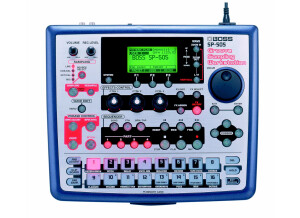
    Sampler frequencies 44.1-22.05-11.025 Max Poly 8 Mono 2 banks up to 8 banks w/card format wav/aiff Sequencer 96 PQN resolution Handles 99 measures 8 pads 26 onboard fx Resampling RCA I/0 Headphone ¼ in Midi I wish there were MAC/PC editing applications but there aren't and I don't feel they are needed UTILIZATION A lot of people use this unit as a looper. I personally use it to grunge up and process my sounds through. I do a lot of sound designing so this has become one of the key tools in my setup, It's small,light weight and easy to use. The manual is very easy to read and understand so any can get this piece up and running in 20 maybe 30 minutes after reading the documentation. Sound editing is very easy to do on the unit, chopping however is another story it takes a bit a practice and requires you to use your ears but it's worth it. SOUNDS The affects on the unit are warm and not clean.. that's a good thing, actually it's a great thing especially for those who are looking to create warm thick sound music. This is the same little box Madlib and J Dilla used in their production it's like every producers dirty little secret next to their technique. OVERALL OPINION You can't find the Sp 303 new anymore you can only get it used and the prices range from 0-300 dollars. I don't think you should spend any more than $200 for this unit (just my opinion). The quality is on point, what I like most about this unit is it's simplicity.

  • Audiofanzine FR's review

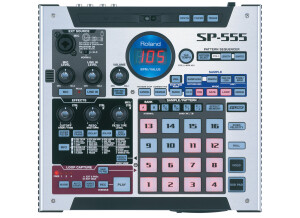
    (Originally written by henridelavillle/translated from Audiofanzine FR) The card's memory can be extended to 128 MB. I have 64 MB and the things you can sample are already huge... Sampling is very easy, much easier than with a computer: just press the button and that's it... When I'm listening to the radio I just sample whenever something nice comes on (with jazz it's easier because you can sample everything)... I created a beat yesterday and it sounds great. - The converters sound great, professional and dynamic! - Typical connections: jack mic input, RCA line input, Midi input and output... - No PC software and that's a good thing, I'm fed up with computer screens. I'm a musician who risked his life in L.A.. not a computer scientist. - The effects are a turnoff because you can only assign one effect to each pad... It's not much unless you resample, which is very easy. - The polyphony is not enough to use it as a classic sequencer UTILIZATION - Very simple and clear setup. - Ultra easy editing however you cannot pitch a sound directly like in Fruity and I miss that option. It's not possible to pitch a sound with only one control. - Typical, super simple Boss user's manual. This manufacturer is great. SOUNDS - The effect sounds very good. - Sound and dynamic range are EXCELLENT. I prefer a million times this sound to Fruity's sound with my M-audio Firewire sound card. Fruity doesn't provide this dynamic range. OVERALL OPINION - I've been using it for one month The least: OS is very slow Memory card is too small (now you get 1 GB) The sequencer doesn't allow external synth sequencing Best: Sound quality (better than Fruity or Cubase) Sampling is extremely easy (one button and that's it) Each track has an adjustable quantization function (typical Boss), which can be deactivated. Typical Boss groove... I might buy the SP555, which seems great because you can sample on the fly in the middle of a song (impossible with the 505).

  • FP User's review

    It was made back in the 80's , so the features it comes with are taken into consideration. The lack of upgrading memory or adding an scsi adapter really stumps this hardware sampler. These two features mentioned were options in the later s950 model. Price paid: $130 USD UTILIZATION The user interface lcd is not lit. The menu consist of page up and page down buttons. Easy and straight forward, just a lot of page up and page down scrolling SOUNDS I bought the s900 off of Ebay for $110- $20 for shipping, so I figured it would be a good deal for an alternative to the two other samplers that I own; ASR-X Pro and MPC 60. Both have their own unique sound but wasn't lo fi enough for me. Yes, I can dirty up my samples and do, but I just an equipment freak! I read up on some old 12 bit samplers that would be able to lower the hz rating within the machine. The s900 and MPC 60 share the same sound engine, but Roger Linn modified how an incoming sample would be introduced changing the outcome (output) of the sample, thus creating a different distinct sound from the same sound engine in the s900. I figured I could have the option of lowering the hz from 16khz to 1khz.. I thought, well the sp1200 runs at 12 bits - 22khz; I believe; so running a sample at lower than 22khz would really make my beats sound grimmy. Well, the outcome was somewhat of a disappointment. I wasn't expecting the s900 to turn circles, but I was a bit surprise at how un lo fi my kick or snare sounded. It came out muffled at 10khz, but I couldn't hear a difference, other than the high's being cut a bit and a hissing sound that sounded more like a tire going flat than crunching corn flakes (if that makes sense). Anyways, the sound came out sterile and a bit cold. I figured I would throw it through some filter and effects to take bring some of the "flat tire" sound down. OVERALL OPINION I am still keeping. I haven't had much time to get in depth with this machine, do to all of the scrolling up and down, I would just stick to my computer audio editor for that. The sound it a bit lacking and if I needed the money, this would be the first item in my studio that I would sell. I would keep my Yamaha DJX over this sampler. Originally posted on FutureProducers.com Posted by: Unknown ( 5-, 2003)