Log in
EN
FR

Drum Machines

300 products found

Filter
Sort by
Evaluation
  • Reviewed or not
  • Editor’s award
  • Reviewed by Audiofanzine
Availability
  • Available or not
  • Sold new or used
  • Sold new
  • Sold used
Must-have products
  • All products
  • Flagship products
  • Best rated products
  • Hot products
  • Popular products
Price
  • Freeware
  • Low-cost (< $200)
  • Mid-range ($200 - $500)
  • Premium (> $500)
€
Clear
Sort by
  • Popularity
  • User ratings
  • Price - low to high
  • Price - high to low
  • Used price, increasing
  • Used price, decreasing
  • Name (from A to Z)
  • Name (from Z to A)
  • Added on
Sort results
  • Popularity
  • User ratings
  • Price - low to high
  • Price - high to low
  • Used price, increasing
  • Used price, decreasing
  • Name (from A to Z)
  • Name (from Z to A)
  • Added on

The best Drum Machines reviews

The reviews Audiofanzine members found the most helpful.
  • « Disappointing »

    You can read the full specs at the manufacturer's official website. UTILIZATION Using it demands some time to get familiar with it, it's a complex and powerful synth, as well as a sequencer. Editing sounds is rather pleasant, you rarely have to push 4 buttons at the same time to do things. However, the sequencer is really limited. I have more often screamed in rage than in joy because I have managed to pull an impossible trick with Maschine... There are no undos on the Tempest, so there you are 20 minutes tweaking a pattern, make a bad turn and you can kiss your pattern bye-bye... SOUNDS This is its only strength. On the model I had, one of the voices always produced sound (a triangle, I think) even if all the oscillators were muted. No calibration ever helped resolve the problem. As usual, I was not dazzled by the factory preset. It has a polyphonic mode, in theory, because in practice the story looks completely different.... The internal sequencer doesn't record several notes at the same time. Envelopes reset to 0 every time you trigger a note. Try to make a nice pad with that... OVERALL OPINION I know I won't be making any new friends for this, but I think this unit is awful. And I don't say that just because it obviously doesn't fit in my workflow, I don't judge it for that. But I'll give you a warning: If you are used to the versatility of software programs (like I am to Maschine), you'll have a hard time, it's like going 20 years back in terms of usability. Maybe that's what you want, but I have found myself more often handicapped than stimulated by its limitations. When I say that this unit is awful it's because it's full of bugs. It's been three years since it came out and there is still no stable OS version. So you find yourself having to choose a version that offers the best compromise in terms of possibilities and bugs. Indeed, not all functionalities mentioned are available on the synth, maybe with the next update (the free-running LFO, for instance)... But worst of all is that when I tried to use it with my DAW, using the Tempest as a slave with MIDI clock, it wouldn't even sync to time. Sometimes I'd get variations of up to 10bpm. A drum machine that can't play in time... For $2000, that's stretching it way too far. In my view, it's a product that isn't finished and I don't know how anybody would dare bring out a thing like this... They probably thought that, since all the problems are software-related, it's not that bad and they can always make up for them with updates... The problem is that the updates never come. Although I've heard rumors that development has resumed work... The same old never-ending story. I can already hear fans of the Tempest telling me I didn't use it enough, I don't know how to use it right, it's a unit that has a steep learning curve, blablablabla.... I don't have anything against learning a new product or new concepts. But learning not to do certain things because the product might blow up in your hands... It's like using Windows 95. It's not learning, it's a waste of time.

  • « Digitakt – a limited, yet boundless product »

    For which specific applications or uses have you chosen this product? I play IDM electronic music, and I chose this device as I was after a small mobile studio without having to sacrifice functionalities, so I don’t use it either to complement a set or as an addition to it. I sold my Circuit and gave up the iPad for this one. Does it seem sturdy? Are its sequencer and various parameters well-conceived and easy to use? It’s very sturdy, up to par with Elektron’s reputation. I feel the supply jack will need to be cautious while using it, though. The screen is awesome with a very sexy touch, even if you’re not yet used to the keyboard. Beware though, the keys are noisy: no way to use it without disturbing the neighbours, so go easy while having fun next to a TV set or bedroom. The more you learn, the fastest you go, a real pleasure – unseen as far as I’m concerned. What do you think of its sound? And of its edition and processing capacities? The sound is crystal-clean, but can easily be as dirty as you wish. No separate outputs except through the upcoming overbridge. Effects are limited to reverb and delay, but they’re typical Elektron fx so they take time to get used to. The lock parameters allow diving into that Dataline-like typical Elektron sound, and I’d say the 70 param. locks settings easily make you forget about the limits of the effect section. A little compression will still be needed for mixing. What are the pros and cons of this product? The Digitakt can easily be turned into whatever you want – whether it be a drum machine, a sampler, an outboard sequencer through the 8 MIDI tracks, so in the end I’ll only judge it on the use that I do make of it, which is a mobile machine that works as a small studio. It has its own workflow with pure Elektron DNA, and considering the price I’ll say it can also be considered as a first step into discovering the brand’s universe. Pros : - a trippy machine with a very tactile use - very compact and rather sturdy - very clean and Elektron-typical sound (see the Dataline video) - designed for live, with a workflow which encourages experimenting - the overbridge feature is very promising - very good value-for-money considering the brand Cons : - mono sound - requires time to get beyond its apparent simplicity - the 8 tracks are quick to fill - a young, buggy OS - as with the Octa, it easily induces a love-hate relationship with it, I’d say you shouldn’t expect too much from it from the start but rather let yourself go and discover the complexity which can emanate from its apparent simplicity. - no “song” mode – it was really made with live in mind - sample adding has to be done blindly In the end : frankly, I could do everything that it does using Ableton, but it’s awfully sexy and features an amazing workflow. A real trip when in the end a loop comes out of it, you tweak it and have fun, so for the price it’s a real, big crush. A machine to be discovered at length, now as I said it all depends on what you want to do with it. And, shall I add, at last there is an affordable Elektron product, and to me it’s up to par with the expectations you would have from such a brand. A little loop to conclude :-D

  • « A poor musician’s 909 ? »

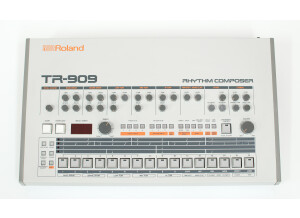
    I’ve played house for a while now, and i’m a great fan of the TR909 sound, to the extent that almost all my tracks contain at least one Roland instrument. Unable to buy a 909 due to its incredibly high price, I was excited when the TR09 was announced on 909 day. First reaction : It seems sturdy and weighs a lot (2 pounds at least). It’s well-built, and the finish is up to par. The knobs are ridiculously small! I turn it on and press play. Ooch! Quite punchy, isn’t it? My first impression as to the knobs only gets confirmes, my index finger gets stuck in between the level and decay controls when I try to change the decay “ala Jeff Mills” (= getting from zero to max in a wink). This forces you to turn the knob cautiously, making any “radical tweak” impossible. The sounds are very punchy. The compressors on the kick and snare are very efficient! I consider the toms to be sub-par compared with the rest, but nothing too bad. The rim shot is to me the least convincing sound of the bunch, I feel it lacks presence. Inversely, the open and closed hihat and the ride sound great!!! (too bad the decay control is not available in the front and you have to go into the Edit menu). No track mute, plus there’s something I just don’t get: no sound setting save system (something I didn’t even think about before I purchased it, as I considered totally obvious a digital machine would have such a feature – well, it doesn’t). Regarding the settings, the menus are well conceived and sync to my Octatrack works wonder. The USB audio out sounds very transparent and allows to get 4 stereo tracks, with each sound freely assignable to any of these. I won’t get into the details about the tiny speaker under the machine, I haven’t even tried it. I’m still satisfied, in spite of the few things it lacks. I’ll be able to take it with me for live sets with no fear to lose $3k in case something happened! Pros: - the sound!!! - portability - no need to resort to samples to get the 909 touch - audio interface functionality - comes with a very thorough manual Cons: - no separate outputs - no sound saves within a pattern To conclude, i would say that it’s not a poor man’s 909, more a little sister to the original :bravo: EDIT following a software update: In the meantime, an update has solved the previous impossibility to mute some tracks!! You can even mute independantly the "open/closed hihat" and "crash/ride" groups, and the same update also brought instrument panning.

  • Audiofanzine FR's review

    (Originally written by tetripor/translated from Audiofanzine FR) Few connections but enough: - The Midi connector allows syncing with any sequencer and the trig output allows you to sync any old cv/gate device. It's not high-end but it's still ok. - Only one audio output but the unit has volume controls for each instrument. The sequencer is also extremely simple but very effective. A 5-year old kid could create a loop within a couple of minutes. The internal memory is a bit low: 32 patterns max. Although the device doesn't have any effects, you can hear some sort of auto-compression as soon as bass drum kicks in and that's what gives the device its groove, a slight pumping effect is audible on the hi-hat and cymbals with every beat: it grooves! The sound possibilities are nothing out of this world, they can't be edited, and you'll only get an aggressive sound if you add a multi-effects processor. With a cheap guitar distortion pedal you'll get a low-fi hardcore sound... UTILIZATION Because of the few editing possibilities on the unit, you'll rapidly go back to basic rhythm patterns with sixteenth note hit-hats, a straight kick and an ultra kitsch snare... The craziest will probably try to play zouk with the snare, but that's been done so many times before that's it's easier to use a sample rather than buying this device. I haven't read the 200-page user's manual, it's more complex than a TR user's manual! SOUNDS I used it for minimalist acid house and techno rhythms. It surely still has a place in a hardcore or hard-tech setup nowadays but it can't compete with a Jomox or a good sampler... The sound is a bit too metallic for trip-hop and the break-beat possibilities have been used a thousand times. A TR808 sounds much better. This device has a very cold and synthetic sound, which can only be used today for minimal easy-techno-kitsch. As a summary, it's a great product if you want the '87 sound but it's no good if you want to create a new techno sound... Toms sound awful and crash cymbals even worse... Once again, it's interesting with a distortion effect. External effects will help you discover its real potential. OVERALL OPINION I've been using it for 10 years for sentimental reasons rather than musical possibilities. Mine just broke and I will bring it to a service center again and again... Its secondhand price increased a lot... It's almost overestimated considering it's not a rare collector's item and you can find it easily on the web. But don't forget it's already 30 years old and a 606 that starts having problems won't reach the end of the year. If you want to spend your money on it, test it before buying it. Advise: I broke mine using a universal PSU so only use a Boss or Roland "authorized" PSU. Think about it before buying one without a PSU.

  • « Full of vintage charm »

    I bought it on the spur of the moment, only realizing afterward how iconic it was (a good thing for me!). Of course, its sounds felt familiar and though it is mostly a preset machine you always have a good time trying the different possible combinations playing with the nice colored controls. Of course, you can easily get tired of some of the instruments such as the guiro, but the good news is you can reduce or even turn off the volume on some of them. I no longer have it, but as a rule, I used to resort to a given rhythm pattern and playing with the fills, all while recording straight to my computer. The great thing with this pretty lady is that in spite of its age, it can be programmed. Of course, the better is to own a TS-1 Memory Write Switch or the (very hard to find) WS-1, but there are alternate devices such as the CR-78PGM or the Swynx which I’ve never tried. I’ve tried programming a bit with a Roland pedal, but you’ll need a perfect timing to be successful. I’ve use dit for almost 3 years but not on a regular basis, so in the end I sold it to make more space in my tiny studio. I’ve also owned a Roland PB-300 – which is very much simpler – and also a Keio Minipops 7 (aka MP 7), even much simpler yet full of character. Apart from its awesome look, what I like most in this device is its very typical sound, especially the slapping snare. What I liked least was how difficult it can be to sync it, and also the very tiny memory space. Separate outputs would also be welcome. Well, in the end, let’s not be too picky, all that’s also part of the charm of vintage devices like this.

  • « A very good product »

    The BeatBuddy is a unique pedal on the market (mind you, a footcontrollable drummer :-D), and it’s very useful for guitar players (among others) wishing to evaluate in their arts of composing and improvisation technique. I’ve now had the BB for 3 months, with a gap in the middle though as it failed me and had to be repaired. Yes, I was unlucky but since the support worked well I won’t reproach it to them. I believe to be part of a minority of persons who encountered problems with this tool. Just know that it may take some time depending on where you live, as you have to return it to the USA and the Chinese factory will then ship you a new one. I won’t get into much details regarding the tech specs, you can get them at their official website. As for its ease of use : VERY easy. You’ll have figured out you don’t have hundreds of possible moves with a foot and a single footswitch anyway. So you can easily launche the track’s intro followed by a verse, then get to the chorus, throw a fill in and gat to the outro – all this as and when you feel like it. It’s done fluently, and the sound is clear. A real pleasure! I still have,’t used the app to make my own tracks (verse/chorus/so on). Hopefully this review will encourage people to do it. So long :)

  • « Flawlessly built ! A very nice analog sound. »

    1- I use this drum machine in the studio only, for Electro, Trance, J.M.Jarre-style (oxygène...), etc, etc. 2-The finish is incredible, but after all this is AKAI PRO! Creating a sequence is very easy if you read the manual from start to finish. The good surprise is the adjustable disco toms, awesome! 3- Analog sound ( techno, acid, trance, but not only). I use it a lot for minimal rhythms (ala J-M Jarre). The bass drum is a killer. You can "maul" the poor cat too for a dirtier sound using the appropriate feature. Hurray for the delay on claps. The hh is great, a lot of possibilities using accents. I haven't used the "pattern" mode yet, for I mostly play fill-ins. I haven't programmed the beast either. Don't forget to link the Tom Cat to a worthy reverb or another effect that will even further its capacities. The ins/outs are comprehensive, for both audio and midi. The dynamics is as expected (no need for a compressor compared with software DMs) but that's only my own opinion. 4- Its size is adapted to environments that lack space, it's not space-consuming at all. As far as its USB connection is concerned, I haven't looked into it, I did connect it though but not testes. I'll look further into this CAT and tell you more later...

  • voicetrack's review

    Technical constraints have their advantages No, it doesn't have MIDI! 8 bit non-linear sounds (12bit analog) on re-programmable Eprom Swing function Separate outputs Tape sync and CV/trig input (you need to find the right connector, but you can control the tuning of the notes by CV) USE Classic drum machine with real-time programming, although the pads have no dynamics only different accent levels. SOUND 8-bit sounds, but with a jaw-dropping quality and tone compared to modern units! This machine has an impressive punch and a lot character. I'm curious to know how it responds to Eproms reprogrammed with other samples. OVERALL OPINION I've had it for several years and don't plan to sell it, even if I don't use it that often.

  • moosers's review

    The Univox SR 95 is an old school drum machine consisting of a series of preset drum patterns. I believe that this is from the mid 1970's, but I don't know the exact dates of production. The SR 95 has two 1/4" outputs for both high and lo impedance, as well as a jack for a pedal. It's got it's own power cord built into it... UTILIZATION The Univox SR 95 has a make up that is definitely self explanatory. There are twenty different preset patterns to choose from, each with their button, and switch to choose between the top and bottom row of presets. It then gives you parameters to control the sound including a large knob for tempo, and sliders for three different percussive instruments (including tambourine). It also gives you volume and balance control. It would most likely be hard to find a manual for the SR 95, nor is one really necessary... SOUNDS While Univox SR 95's sounds are definitely cheesy, for me that's the appeal of the unit. Most of the patterns are definitely going to be familiar if you've used other drum machines or keyboards with built in drum patterns, as it's got everything from waltz to rock beats. You don't have too much control over the sounds, but it's cool that you can at least mix in some percussion to vary it up a bit. What you see is really what you get here, and what you get is a series of old school sounding drum patterns (which is awesome). OVERALL OPINION I would imagine that the Univox SR 95 is a pretty hard drum machine to come by these days, but the good news is that you can get these sorts of patterns in a number of places in terms of software and other old school drum machines that might not be as hard to come by as this one. This was one of the first drum machines out there as far as I know, so it seems like these preset sounds were sort of a template for drum machines to come. Don't expect anything close to a realistic drum sound with the Univox SR 95, but for getting cheesy, old school patterns, the SR 95 is a great little tool.

  • « A nice drum machine. »

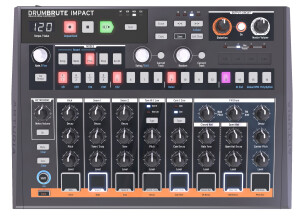
    I use it in my home studio which is (temporarily) deprived of my pc. The machine’s qhality is very good (I suppose Arturia change dits Chinese supplier ^^) The knobs are very nice, the pads are pleasant and the ribbon controller is really coll. Soundwise, some will disappoint a bit like the clap, the so-so snare… It’s essentially the filter variations that are “just a bit not enough” YET… It offers 12 independent outputs (with some instruments sharing the same channel) and a main mix out. And this is where… you can put whichever effect you want on any given instrument! That’s terrific, you can do what you want to do (provided you have the necessary mixer and effects). The sequencer is very nice, even if a longer “song plus” mode would have been appreciated. I’ve only just started using it, and have no idea so far regarding the software side, which allows many modifications, saves and so on. The device was tailored for live use, but can also really find its place in a computer music environment. As far as I’m concerned, I built myself a set that involves a Bass Station 2 + a Circuit + the Drumbrute, and i’m currently waiting to receive cables and effects (hurray for Christmas time, ladies and gentleman!), and as an already insomniac person it will certainly take a sledgehammer to get me to sleep when I get all that!!! The device is very intuitive to use, programming it is simple (though some aspects remain a bit obscure but i’m only starting with it). The manual is well done (unlike some competing brands whose name I won’t mention here). It will clearly need extra effect pedals (there’s plenty of choice for that), and then you can make it sound as you like, and make it do what you like! So far, its limitations don’t bother me at all. In my opinion, Arturia hit the bullseye, I hadn’t had so much fun since I got my Circuit! Take it as a beginner’s review, but what a pleasure to discover it day after day :) Clearly, I’m not about to sell this one! And i’ll learn to know it even better tomorrow, yeepee! PS : no polyrhythmic mode, only polymetrics (which is already complicated enough). PS 2 : now, I have a bit more to say about it. Its ergonomy is still flawless. You really MUST add effect pedals to it, and/or use your mixer’s effects to make the shy-sounding filters sound better. It’s all down to trial and error. So far, I have a basic distortion pedal and a Marshall compressor. I use my mixer’s effects – reverb, flanger, earlyreflection & so on – plus the presets, and things start to get interesting. The MIDI control center is very interesting, but it takes a pc – grrrrrrr ! :) The sequencer is very nice, it provides many a possibility (especially the polymetric mode which is a real asset – used alongside the random feature on the current track, it provides a result, how could I describe it ?...). I really like this drum machine, and its cons (which certainly have to do with the requested specs to offer it in this price range) aren’t a real problem to me (well almost not, but such limitations can be made up for and I’m already considering buying a cheap looper). But even with just a chorus and fuzz/ overdrive (better than a “normal” dist) pedals plus the mixer’s internal effects, there’s already much to be done with a wide array of sound to be explored :) What a pity the filters are so soft-sounding… But, what fun! PS3 : the sounds are flat and you have very soon ended exploring them all. No way to use it without additional filters/effects. I need a REAL reverb, a flanger and a better mixer (more DJ-oriented), a kenton midi thru 5, a keystep, AND... a looper AND – most important – a Squarp Pyramid! But I’ll get one, someday! With only my Circuit slaved to the DB, I’ve just done (not without errors) a 1h30 long mix! Easily, so in a whole night… And, with an audience ! This machine has a great ergonomy! As for the surface inside, well, it’s less reassuring. But the greatest feat is this ribbon controller (like on more and more DJ mixers and controllers) :) PS I don’t remember how much i paid for it. Back to1990-2000 (if you want to)

  • « The TR 909 IS THE TRUE BOSS!!! »

    Easy to program, midi, roland old-school sync, and the typical roland sequencer that earned the TR its reputation. I now think the sequencer of the 808 is more "lively." It has a magical groove which isn't as present on the 909, except when play with the shuffle, which makes it more interesting. I have noticed, for example, that putting the TR 808 in sync out mode to start the 909 in sync in mode, the latter adopts the magical groove of the 808. I think it's due to the sync clock of the 808 being less stable, so the precision of the intervals, which ought to be a defect, turns out to be a good quality. But if you do it the other way around it doesn't work! USE There's no need for a manual, except for step-by-step editing. It has multiple separate outputs, three trig outs to trigger the sequencers and arpeggiators of your good old analog toys. Real-time processing of some instruments is great and it really alows you to "rebuild a song" with the same pattern by playing with the volumes, attacks, decay, tuning, etc... The external card slot is a great plus to save your songs/patterns, just like the MIDI, for those who use it. SOUND I can't say that all sounds are great. The snares are all right, but the ones on the 808 are better, and the same goes for the ride/crash. But it's THE KICK that can really make a difference in an electronic music production, even though the one of the 808 and 606 are pretty good, too. Some sounds of the 707 are similar to those of the 909, like the clap and hi--hat. I have always loved the 909, but I have a weakness for the 808, which has that "special something" that can't be defined and a more vintage sound. OVERALL OPINION I just got it, after having exchanged it for one of the two TB 303s I had. It was in a great condition (I checked the buttons, knobs, etc.). I wanted one ever since I started my TR collection in 1995. It currently sells for about 1200/2200 euros and it's very rare to come by. Like other vintage gear, it's an "investment.". Anyone who has one in a good condition in 15/20 years will make a fortune with it because it will be a 50-year old legend. That's why it's worth buying spare parts right now, so you can service and repair it. The current price is due to supply and demand, anything that's rare is expensive. And even if the TR 8 isn't bad at all, and even just as good for some sounds, it doesn't bear comparison with the 909. The latter has an incredible punch and everybody wants one. The same applies to other analog drum machines and synths (just take a look at the Jupiter 8, whose price has sky-rocketed to over 6000 euros, the same it cost new back in 1981!).

  • Audiofanzine FR's review

    (Originally written by Yvo2000/translated from Audiofanzine FR) - Types of connections (audio, MIDI, etc.)? Midi in/out/thru, six 1/4" TS jack outputs, one 1/4" headphone output, two Tape RCA outputs, footswitch, insert 16 velocity-sensitive pads - How many presets and programs are available? Five banks of 16 sounds, various presets. Very authentic sound considering when it was manufactured (the goal of this drum machine was to reproduce an acoustic drum kit). So there are no electro sounds! Nowadays the sound quality is far from modern software samplers like BFD2, EZdrummer, Battery, Guru, etc. - Does the unit have an effects section? No effects but you can output the drums via six audio outputs so you can mix them with an external device and use effect processors to shape your own sound. The sound is good enough for electro, trip hop, pop or industrial music styles. - What are the features of the sequencer?... The main asset of the device is the sequencer. Combine your R-5 with BFD2 or Toontrack EZdrummer/Superior2 and you get the ultimate workstation for authentic drums production. Free yourself from your computer mouse and you'll increase your creativity. ° Real-time programming with adjustable quantize function, velocity-sensitive step programming with 98 steps per bar! The small display shows all steps, like on the TR-909. ° Editing of complex groove templates you can assign to your patterns. Adjustable swing parameter with pattern assignation. (The swing of the R-5 is a bit "cold"... I miss a "humanize" function like on an Akai MPC2000). You can modify the sound and the tempo to get a human feel. ° You can create songs using the patterns, you can copy/paste and extract a part of a pattern, etc. In short, the sequencer is ultra comprehensive and easy to use. The R-5 can be a professional rhythm creation tool thanks to Midi and a good drums software. Amazing workflow! UTILIZATION - Is it easy to make settings? - Is it easy to edit sounds or effects? - Is the user's manual clear and comprehensive? Menus and sub-menus are easy to use. It's all a matter of practice until everything becomes intuitive. Sound editing is easy and comprehensive (pitch, attack, decay, expression, pan, velocity curve, etc.) but I haven't used the internal sounds for a long time. I use the R-5 only as Midi controller. Very clear user's manual. It details all functions and includes tutorials. The only disadvantage is the display, which is quite small and doesn't show the movement of the cursor (like on a TR-808 or 909). SOUNDS Do the sound presets fit your music style? - Are they authentic? As I already mentioned above, I don't use it as a sound generator but as a Midi controller. But for a drum machine of its age it provides good and authentic sounds. It's not for fans of the analog sound of the TR-808 or TR-909. Guitar and bass players looking for a good drum machine to play with will probably like it . On the contrary, people looking for authentic acoustic drum sounds won't find it good enough. But the sounds can be routed to six independent outputs so they can be processed with a mixer and effect processors. Huge sound editing possibilities for more authenticity or experimenting. However it has a more digital sound of the late 80's than an analog sound of the early 80's. I don't really like the sound. - Is the expressiveness good? (velocity and aftertouch sensitivity)? No aftertouch! But good velocity. It provides the possibility to edit groove templates that affect the pattern playback in a realistic way, giving them a more human feel (that's where the name comes from: R-5 HUMAN RHYTHM COMPOSER. The results can be excellent. OVERALL OPINION - How long have you been using it? 20 years. It's the first music instrument I owned! When I bought it I was looking for a drum machine for my rap band! So I know this device very good and it has a sentimental value for me. - Which feature do you like the most / the least? I used it a lot the first couple of years and I gave up on it at the end of the 90's to use samplers instead because their sound was better for my music. I don't like its sound anymore. it sounds too authentic for electronic music and not authentic enough for acoustic music. But I came back to it some time ago and I rediscovered how easy it is to work with it. I make a lot of drums programming for my different projects and it came in really handy. It's great to use this drum machine together with my favorite software tools like FXpansion BFD2 and Toontrack EZdrummer. I've produced many rhythm parts and grooves ever since I use them together. I first program the R-5 trying different groove templates and swing settings, and then I record that via Midi. Afterwards I fine tune the groove and the "humanization" using BFD2 or EZdrummer (which is much more limited than BFD2). The R-5 and BFD2/Toontrack make a great couple. I couldn't work anymore without both of them. - How would you rate its value for money? It was quite expensive when I bought it. But it's a Roland so it was made for life. I've been using it for almost 20 years so the return on investment was great. Could I say the same thing about the modern gear I buy every year? - Based on your experience, would you buy this product again? I bought an Akai MPC and many different software tools. But thanks to its velocity sensitive step sequencer and humanized groove templates, the R-5 is a fully professional and (still) modern tool. To give you an idea, I currently use a lot the R-5 and almost never my Akai MPC, which is obsolete compared to software tools. Even the plastic pads of the R-5 are better compared to the rubber pads of the Akai. But I guess thats a matter of habit and taste. If my R-5 ever breaks I would do anything to find another one...