Log in
EN
FR

Hardware Sequencers

366 products found

Categories
Filter
Sort by
Brand
Evaluation
  • Reviewed or not
  • Editor’s award
  • Reviewed by Audiofanzine
Availability
  • Available or not
  • Sold new or used
  • Sold new
  • Sold used
Must-have products
  • All products
  • Flagship products
  • Best rated products
  • Hot products
  • Popular products
Price
  • Freeware
  • Low-cost (< $350)
  • Mid-range ($350 - $750)
  • Premium (> $750)
€
Clear
Sort by
  • Popularity
  • User ratings
  • Price - low to high
  • Price - high to low
  • Used price, increasing
  • Used price, decreasing
  • Name (from A to Z)
  • Name (from Z to A)
  • Added on
Choose a category
Selected category: Hardware Sequencers
Sort results
  • Popularity
  • User ratings
  • Price - low to high
  • Price - high to low
  • Used price, increasing
  • Used price, decreasing
  • Name (from A to Z)
  • Name (from Z to A)
  • Added on
Filter results 366 results found
Brands
Evaluation
Availability
Must-have products
Price
  • Freeware
  • Low-cost (< $350)
  • Mid-range ($350 - $750)
  • Premium (> $750)
Show results

The best Hardware Sequencers reviews

The reviews Audiofanzine members found the most helpful.
  • « A well-conceived, efficient and inspiring device »

    I wish I could have given it 4.5 out of 5, but as you can’t give half-stars… I’ll go with 4, as it’s still perfectible! :-D After using it for a few days, I think I can deliver a review on this MPC Live and the said review is all the more positive! First, the promise to get a real standalone gear, like in the good ol’days BUT with modern features (touchscreen) and high capacities (RAM Size, SSD, USB3…), is kept. This was the most important question to me, and I must admit Akai really did the job. It features 2GB of RAM to load samples (which is LARGELY Enough), and yesterday I mounted a NTFS 120GB SSD spare drive that I had, so I could put my entire samples collection + many others, and I have plenty of room left (with no need to reformat anything). It was immediately recognized and you can browse it as easily as you would do on your computer.: very practical for those who like to use their directory tree to organise everything. Then come the sounds. Frankly, I consider it a clear round: full, punchy, warm sounds are here, I’m almost surprised as I expected a more neutral/cleaner converter output so that’s a nice surprise. You can even overdrive it all and have to take care (if need be you still can lower the master level setting in the internal mixer to avoid having the output overdriven). Oh, by the way, the headphone out is really punchy, so no chance you’ll find the sound too thin when monitoring on your headphone, even if it features a high impedence (too bad the connector is a small 3.5mm instead of the usual 6.35 that is usually featured on pro studio gears). The device itself is a bit on the heavy side (well, you can’t blame it for that, it shelters a computer and battery), but it seems designed to last. Quite sturdy, plus it’s good-looking – well, that for one is a question of taste. Its dark/matt/sturdy side is nice in my opinion. No noise can be heard when activated (silent supply, you really have to put your ear just next to the Live’s left panel to perceive a very discrete high frequency – it seems to be using a fanless technology), so you can quietly work in a quiet environment. The battery lasts the promised 5 to 6 hours with no problem. What a bliss to have such a device which you can take anywhere with just a headphone to make sound where and when you feel like to! The sample tweaking is rather well done, you can easily set the start/ end/ loop points where you want, it’s quick and there’s even a zer-crossing option available. Such editing modes are not totally dynamic though, and you can’t modify a loop point while keeping the pad pressed while having the position changed: the pad has to be retriggered to hear the change (to be added to a future update wishlist). On the sample editing screen, you can have a horizontal zoom by pinch or QLinks, while in the piano roll you have to use your fingers – but you soon get used to it. Ergonomically, the QLinks are a welcome surprise as while they do have a default function on each of the OS’s page, they can be customized at will to do whatever you want. In a nutshell, you have 16 knobs available (4 in each of 4 pages) and you can assign each of them the function that you want assigned to it. Another very good point is the possibility to change at anytime the starting and finishing bar within a pattern (that they call “Sequence”), which is very practical to go and correct a precise part (especially if using a long pattern) without requiring you to listen to the entire pattern – and this is a non-destructive feature (you put the starting point back to bar 1 and the end to bar 8 and here we go!&gt; back to the entire pattern getting played) . The way a song is organized can appear quite obscure at first, but once you’ve found your feet and understood the device’s underlying logic it’s a real piece of cake (as it often is). The internal effects are rather efficient (including the distortions/overdrives from which I didn’t expect much usability, while in the end they do the job – provided you take the time to set them up correctly). The reverbs do the job too, but they lack stereo width, which is a pity but should be within reach of a further update. As for delays: once set properly, the Stereo Delay does its part; there are several delay types, and although none of them is really exciting (I got used to mu Strymon TimeLine…), you can stack two of them for a more complex delay effect. The RAM space taken by the samples in a song can be checked (those unused can be purged in a blink), as well as the global CPU usage. However, there’s no detailed “per-FX” view so as to detect which of them are the most CPU-hungry. Regarding effects, a very good news is the fact you can put these in Aux (with a total 4 aux buses available on the master) or insert. In the latter case, plenty of opportunities are provided: on the pad alone, on the bank, on the channel… and that’s great! :bravo:. Another real good news if you want to stack many effects on a pad: resampling of a pad or sequence with effects so as to free CPU is easy. There are resampling features at all levels where it can be needed by the way, so as to avoid slowing the workflow down. Once connected to the computer, the Live instantly recognizes all VSTs and allows to access all plugs. Since it features a sound output, its own audio engine will work as a sound device! (unlike Maschine for instance, which requires an additional audio interface). What’s cool is that you can easily take a stem that contains a VST plug-in applied to the sample, then unplug the device and get back to standalone. That’s where the “best of both worlds” aspect is plenty efficient. Akai’s software is not without faults, but as a whole it does the job. So far, I haven’t spent enough time on it so as to have a real advice, as the standalone mode is what I’ve been most interested in until now. Regarding its teething problems, which we can expect at least some to be addresses through the device’s future OS versions, the following points can be noted: - no current tempo-adjusted loop preview (or at least I still haven’t found how to do it) - no native crossfade within the loops - no granular synthesis on samples (that would be huge !) - the filters do the job especially at extreme settings (low-pass & high-pass), but they’re not very musical at intermediate values in filter-sweeping mode (if only we could gat back to the sound of the E-Mu filters…). It is particularly necessary to go softly on the resonance setting, or it will crack awfully. But you still have plenty of filter to choose from… - no proper modulation matrix : sources and their destinations are fixed and very little in number, so it’s a minimal service so far but those which are already implemented already allow to bring the samples to life. - the automation can only be edited while the device is connected to a computer, unless you use one of those tiresome tricks. Another teething problem. In the end and in spite of its faults, there’s a real pleasure in the ability that it brings to be able to make whole songs outside of a DAW (goodbye you MOUSE!!), as could be expected. It provides more pleasure, sound quality and efficiency, and I’m eager to try its audio functions when recording a guitar or bass part ;) I’d been lucky enough to have an Elektron Octatrack for 2 years in the past. A very good device, but really electronic music-oriented (and not even all styles, but it does the job if you’re into house or minimal). When Akai has implemented a proper automation (especially in standalone), or even a P-Locks system such as that which Elektron users know well, we will have a superb machine able to satisfy all musical uses and expectations. Here we go, that’s a rather positive overview and with a little luck it may even get better with the internal OS and software’s future updates (which seem to be one single object developmentwise, if I understood correctly). But i twill have taken a looooooong while before Akai finally woke up and provided us with a machine that is both 100% standalone (up to its supply mode), while being able to use all that makes a computer’s power (VST/AU/RTAS) when connected to it so as to potentially go back to standalone :-D, filled with nice sounds, but it was worth the wait. Now we’ll see how the software part evolves, as it’s far from perfect (I forgot mentioning a few bugs here and there), but nothing too bad. How pleasing to get back to standalone and be able to make sounds lying on a couch with a good old DT-770 on your head… and how pleasing it is to finally get rid of this horrible mouse/trackball/pad to concentrate on what really matters: the sound. And this little Live frankly has a lot of it to offer – and it’s everything but small. Now the Live has become a central piece in my setup. Now, when I want to work with a VST I don’t even bother turning on the Akai software and I stay in standalone mode: I simply load the VST in my favourite DAW (which happens to be Reaper), then I only have to enter the MIDI parts directly in the Live’s sequencer (and since class-compliant USB devices are recognized, you can use a small auto-supplied USB controller such as a MIDI keyboard for instance – but it can also be done through the classic MIDI port). Once satisfied with the result, here you go – sample it to the Live and, voila! The workflow if plain awesome as you remain in a standalone environment, why bother with a mouse and PC for something else than loading your favourite plug-ins? Using it, I realize I use my external pedals much more than before: all you have to do is use the 3/4 outputs and take back the effect’s output. What’s cool is that separate outputs can be affected PER PAD, making it possible to send all the pads of a drumkit to 1/2 EXCEPT for the snare that you’ll route to 3/4 to put a great hardware reverb (such as a Strymon Big Sky, for instance ;)) ). So you just press play and listen immediately listen to the outcome, in-context, allowing you to tweak the reverb’s sound at will in real time. You’re just a little sampling away from replacing the sample, re-routing the pad’s output to 1/2 and here we go! In a nutshell : I’m still happy with it, even more than ever. It’s really the small machine that I had expected for long. I still can think of a few improvements that would make it an even more lethal soundweapon: &gt; automatable editing (so far in standalone mode all you can do is erase or overwrite) &gt; real-time listening to the loop points (so far the pad has to be retriggered) &gt; Crossfade looping &gt; Granular synthesis

  • « A great device! »

    Hi all, I see no review has been published for this product so far, so I’ll shoot first. As an introduction, I'll start by stating that I’ve owned almost each and every MPC model ever released, the good ones (60, 3000…) and the not-so-good ones (2000, Renaissance...), plus several other samplers (EMU, 440, SP...). So, here’s my review: On the hardware side, this MPC X is a very good device. Sturdy, heavy duty, the knobs don’t seem fragile and the building quality is flawless. A little problem with the screen, though: while very practical, it still protrudes above the device when folded, which not only looks strange but also tends to limit its transportability – nothing too bad though. Very efficient LED display on each qlink pot. The main wheel controller is just as you like it, neither too stiff or too soft: the same as on a Ren (and this is one of the Ren’s strengths), and it also reminds me of the 60’s and the 3000’s. The touchscreen does the job. I particularly appreciate the fact that each control has been doubles, through the screen and qlink: in the end, you can choose depending on your own preference. As for the firmware, the software was really well-thought. It features a classical architecture with sequence, track, drum program, MIDI or audio. The various modes are interesting to use and rather intuitive, both in grid edit or step sequencer mode. They have really worked on the ChopChop, and the result is here! The sound edit feature is also totally MPC-worthy. As a whole, the navigation process is rather easy and quick, it will favour creativity and allow you to do everything you can expect from an MPC (granted, it won’t make music in your place!). The audio engine is very transparent, I personally use it in 24bit/44kHz mode (you can choose from 16 or 24bit). The output dynamics is respected, I’ve sampled through the phono and line ins and the outcoming result was up to my expectations. Now, you know the saying, Shit inside/Shit outside, so if you sample s###... The overall architecture does the job, I have experienced no bug or freeze so far. However, I haven’t pushed it heavily with 50-track projects overloading the RAM or whatever of the kind. The various controllers I’ve used with it respond perfectly, even if you don’t insist. The MIDI and CV/gate perfectly communicate with other instruments or modules. The USB host is very practical, I have plugged a tiny keyboard on it and it’s instant plug-and-play – a real pleasure. The preamps offer a certain margin, so you can boost your sources if necessary without inducing a hiss. I haven’t used it in controller mode (and I don’t intend to use it as such either), so I won’t review this part of the device. So, that was a first review after using it for 3 days. I may complete it with time if necessary, but so far I believe Akai has really managed to go back to the original standalone MPC concept. I’m unsure as to whether JJ has a lot of margin for software optimization. ;-) It’s well-thought and efficient – hats off!!

  • « A good, small sequencer, but limited features »

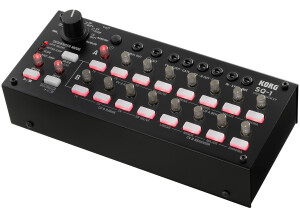
    - I use it with mono and poly synths (with a MIDIpal to sequence chords), but I essentially got it for using with a Korg Arp Odyssey. - I receives it some 6 hours ago - I already have other sequencers. It's a small 2x8-steps sequencer on 2 channels (or 16-steps sequencer on a single channel) sequencer, all-analog, with MIDI out and USB. It can be powered with two batteries (for approximately 5 hours) or the USB port, and a lot of connectors are provided for synchronizing. It features 8 playing modes, in Z, W, alternate, parallel or serial and of course random. You can choose the steps that are to be read (on/off gate), the step jump, the active step (unselected steps are jumped and the number of steps gats lower with it, allowing twisted sounds) and glided steps. Pros: its reduced learning curve, its minor/major modes that allow to gain time with pitches, its (lit) step pads, its many connection/sync slots ans how easy it is to use as a whole. Its appearance and sturdy look (metal case weighing approximately 1.3 lbs). Cons: the main flaw in this device is the mode selector which forces the device to get sync to the first step, so you just can't change mode on-the-fly while playing live - at least you can't with it as a master controller. Also, you won't be able to take advantage of the glide settings if you use it in MIDI, which is quite frustrating. The SQ1's main aim is to deliver patterns on the fly in a really old-school manner, as for more elaborate lines there are much more up-to-date devices. Of course, it allows to modulate other settings such as a filter's frequency cut. Il brings a real electronic and mechanical-sounding touch to your prod, by the way no groove or shuffle setting is available. This makes for a very limited device, just like older analog sequencers (and its bigger brother), but its very practical and finally quite inspirational. I would have liked the possibility to change mode without having to relaunche the sequence, and tp save a few lines. On this matter, the device sends both channels' pitches and gates through MIDI, so it's easy to get the MIDI data (on an MPS for instance) and save it there. Except for the position of the knobs, rebooting the device won't allow you to get the previous program - really old-school! To sync the SQ-1 as a slave, you can either use USB (for configs involving a computer), a Voca, a TR or any other unit with either MIDI or jack (old-school style!) sync. For instance if I want my MPC to be the master in the chain, I send its clock to the TR 707 and the sync to the SQ-1 will be done using the 707's sync out slot and the SQ-1's sync in. The Volca can also receive MIDI and send sync on its (mini jack) sync out. Last but not least, it can be used as a MIDI converter through CV-gate, as all data entering the USB/MIDI in are transmitted to the SQ-1's CV/Gate out.

  • « Squarp Pyramid, or how to get rid of your computer! »

    I’ve used it for a few months now for electro/hip-hop prods in a home studio, and soon in a live context where it will control an Arturia Minibrute, a Moog Sub Phatty, a Korg Minilogue, an Elektron Rytm and an MPC 2500 XL. I control the sunths using a Roland A500PRO MIDI keyboard through the Pyramid’s MIDI in. - In spite of its small format, the Pyramid remains very sturdy. It clearly was built to last, the knobs and chassis all look reliable and sturdy! - It’s easy to adapt to using it, especially thanks to a very well-thought manual. Of course, you’ll need to know the ABC of using a sequencer and also MIDI, but no big deal. The Pyramid offers 4 well-thought and practical modes: LIVE for live recording, STEP for step-by-step editing, TRACK for managing the MIDI tracks and SEQ for editing sequence-relative parameters. The OS features regular updates, bringing new features such as MIDI effects (arpeggiator, transpose, delay…), an improved piano roll, a better sequence manager and so on. The Pyramid is very reliable and so far I have encountered no OS-related issue or bug. - pros : the Pyramid can be taken anywhere easily, takes little space and is sturdy. The OS is stable, and updates come regularly – and they’re very consistent. The Pyramid offers all you could expect from an audio sequencer – and even more! The Squarp team is very attentive to customer reactions. The product is made in France :) - cons: the interface can first appear somehow confusing, but once the machine’s logic has been assimilated the learning curve turns into a musical creation highway. In the end : I’m more than happy with this sequencer, and I’d do the same choice again for sure!!

  • « Bring some groove into your life »

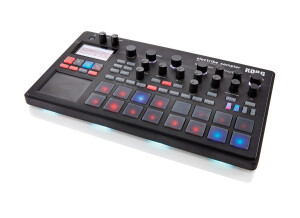
    -250 patterns of up to 4 bars max. -32 master effects (Kaos pad-like). -1 individual effect per track, from among 38 effect types. -50 gate arp -25 groove types (you can change the groove of a track) ------PCM--------- -56 kicks -58 snares -16 claps -56 hit-hats/cymbals -71 percussion/toms -52 synth hits/ synth FX/ instrument hits -16 voices -27 instruments ------SYNTH Modeling--------- -55 pre-set oscillators ------KING KORG FILTER--------- electribe/MS 20/Moog/Prophet 5/oberheim / Acid ------MODULATION--------- -72 presets - Pattern can be saved as WAV or Ableton live projects. - Motion sequencer (to record parameter changes) For more details, visit Korg's website USE - Very user-friendly, I haven't had the need to read the manual (which is pretty brief) - Compared to the EMX version, some important functions are missing, like the "transpose" mode and the fact that you can only record four bars per pattern, instead of eight. Plus, you only have one insert effect per track instead of the 3 on the EMX. - The pads are very pleasant in use and they can record the playing velocity if you wish so. - The unit is very well built, metal housing and tightly anchored knobs, it's solid. - The filter has an endless encoder, which ideal to avoid value jumps between patterns. - You can send MIDI data over 16 fixed channels, as well as the "groove type," which is very useful to sequence your favorite expanders. SOUND - For people who know the EMX version, the sounds of the electribe 2 are a continuation of their predecessors, but with more clarity, precision and warmth (even without tubes), all while keeping a very low signal-to-noise ratio. - The addition of the king korg filter is a real plus that you can hear in the sound. You can play with the resonance of the filters without any artifacts, it's smooth, warm and round, almost like an analog filter. - I think it's a pity that many PCM sounds lack sustain. The synthesis and modeling section also lacks some flexibility. - The oscillator section is excellent and justifies by itself the purchase of this electribe. It gives you access to quite a few new sounds, like the ones dedicated to 8-bit, Chip tune and Dubstep. - The fact that you can save your patterns as Live projects gives you more flexibility to work sound in a studio environment. OVERALL OPINION - I've been using it for almost a week now, so it's only an initial review, but I'm pretty sure this small groove box will be of good service. - I can take it along in journeys, even on a plane with batteries, it's a sort of big musical notepad, like a sketchbook for a painter. You can easily make first drafts of musical projects with this box, which can later be worked more thoroughly in a studio environment. - Nevertheless, I am very surprised that the patterns are limited to 4 bars, especially knowing that the song mode doesn't exist anymore. I hope this will be addressed in an update., because even if you only have 4 actual buttons, I can easily imagine that the bars could be expanded to 8 with flickering effects, like on the keyboard mode. - Very good value for money, considering it costs half what the previous generation did.

  • « A surprising device »

    A good device. Honestly, it’s great! You could just pass it by if you were to just try it too quickly, but it has an incredible potential. I use it to make small loops, to write things I think of on the spur of the moment. It’s the very first “composing” machine that I’ve owned, and it suits me perfectly (I’d already tried with a computer before, but making music using a mouse and keyboard just isn’t my thing). I intend to use it for a live set soon, but nothing precisely planned yet so far. One thing is for sure: it will perfectly find its place in a live setup. Design is flawless: it’s sturdy, you could pogo on it and it barely would feel it (it’s just a figure of speech – but you can try if you feel like it). Seriously, the aluminium front seems reliable, the control buttons seem unbreakable and the machine itself is a very sturdy metal block. The sole problem comes from the knobs which may end up moving in an undesirable manner, but nothing too bad. Soundwise, the device unveils itself as a first-class synth. It has a sound of its own, which may seem quite repetitive in the beginning (I must admit that I first started to wonder why I’d bought it), but once you get familiar with it its capacities appear endless, from beautiful, long pads to tech-like aggressiveness. The principle behind the Elektron “machines” – with one machine corresponding to one given type of synthesis – is very simple to understand once you got it. As stated earlier, some machines sound very much alike, but they reveal their interest once you’ve started to tweak the sound: yes, there are a lot of possibilities for modifying the sounds and they’re really interesting, including Sample Rate Reducer, single-band EQ, delay, VCA, filter and envelopp, disto, 3 LFOs – and this goes for each track! Needless to say there’s room for experimentation: I’ll leave you calculate how many possible combinations this offers, considering that the device allows to layer up to 6 tracks simultaneously. It’s also particularly interesting for external synth sequencing (it’s basically one of the things it was designed for btw): it can control up to 6 synths at once, which is quite practical (and really, really great). While I have explored this aspect very little so far, I have tried a bit external sequencing and it’s incredibly easy. Just a word on the onboard sequencer: it’s somehow the core of the machine, as it has a major role in the sound design process. The “parameters-locks” allow to modify the patch thoroughly for one precise given step, all while featuring easy copy/paste features to copy songs, patches or full tracks and paste them for other uses. In the end of the day, the balance sheet is easy: if you have the opportunity to use one for long enough, go ahead and do it! Now yeah, granted, the learning curve can be relatively long, and one of the reasons for that is the interface which at first may seem terribly complex. However, once you get used to it, it appears logical and user-friendly (yes, I swear it does!), yet it clearly seems intimidating at first. Something I regret is the fact you can “only” use 64 steps: sometimes it’s well enough, but sometimes it’s not. Now, you can’t always get what you want, and you still can chain two patterns to turn them into a longer pattern. Anyway, at first, you’re bound to have a hard time, finding a precise feature will take you hours (reading the manual is vividly recommended, especially considering how comprehensive and pleasant to read it is), you’ll feel like the sounds resemble each other too much and that you always end up doing the same thing, and you’ll get fed up with it; then, slowly, its capacities will appear clearly and you’ll feel that you can’t live without it. Because it allows crazy sounds (just have a look online, there are so many examples), because it’s very user-friendly once the learning curve absorbed, because it’s an exceptional device, and because it has no direct competitor, being in a league of its own. Of course, you’ll have to like the sounds it creates. But if you like the demos you’ll come across, then it’s very likely that you’ll like the machine too!

  • « A stupid concept »

    Sturdy and well-finished, with good ergonomics. Not bad for trance, provided you only use the rhythm part. Good effects and nice editing features, easy to use. Made for beginners. 270 seconds of sampling. It’s a joke, right? Old time musicians will get what I mean : had an 80s electronic musician been told that in the era of 500 GB SSDs Korg would come up with that joke of a 270-second-memory sampler, there’s no way he would have believed it! So what we get here is a hardware sampler which features no content (as it’s a sampler you can put what you like in it), and yet you can’t put anything in it as there’s no room left for that… Well done, Korg! :) Now, as to what kind of customers such a concept is aimed at… well, don’t ask me! Oh, yeah, and it also features sample transfer through an SD card while the esx2 is marketed as “perfectly integrating with Ableton” (so, with a computer), yet it seems that having datas flow through the (non-included) USB cable was too difficult to do for the (normally top notch) engineers of this modern yet not so up-to-date concept… Another feature: resampling :) A great feature, very useful on a sampler, of course… Yet, there’s no room for resampling either! Yeah… Thank you Korg for that stroke of genius which interest still eludes me. Either the designers are bull**** virtuosos, or this crazy product (I mean REALLY crazy, as in “perfectly mad”) comes from a masterplan to disgust users from ever using a piece of hardware again! Should anyone know the truth, please let us know! EDIT: after trying an Elektron, I must review the grade I gave to this Korg, if only because of its excellent ergonomics. The lack of memory can be compensated PROVIDED you only use it as a sample player and turn it into a drum machine ala Volca. Don’t ask too much of it, after all for the price this is something that can be understood. However, it isn’t a real, nameworthy sampler – just a rushed sample-based drum machine with included effects.

  • « A nice plaything with potential »

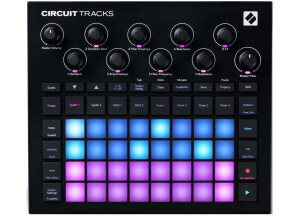
    I’ve tried it for an hour or so before writing this review but I’ve also spent t least 10 times as much reading other review on it on the internet, so I knew what to look after ;) I had never really used such a machine or pad controller before, so my only reference will be the Electribe 2 that I’ve tested in a shop. Music style and context of use Originally a drummer, most often in a live context, I’d use it alongside a synth (a Korg R3) but I think I’ll mostly use in in standalone at home (or elsewhere) due to its portability and as a pad MIDI controller in a studio context. No particular style preference, even if a drum machine and the synth’s original sounds are more on the techno side. Does it seem sturdy and well-finished? It clearly does! I’ve quickly tried an Electribe 2 and felt the latter was fragile, almost an unfinished product (with the x/y pad reminiscent of a 2000s low-end laptop). It’s light, made of plastic, but clean and sturdy. Is it easy to use? What about its ergonomics? It’s very easy to use, even without a screen you easily grab how it works and get used to the workflow. Compared with the Electribe 2 again, the circuit is in the upper league and it’s more user-friendly and clear – even in spite of the absence of a screen. Does it provide enough advanced functionalities for you to edit your sequences? Enough for basic use (velocity, note, control automation). You can’t edit complex rhythm parts or change the time signature (4/4 and so on). What do you think of its overall sound ? What is your opinion on the included factory sounds? What about its editing and processing capacities? As a whole, the basic sounds sound… well, but not exceptional either. The (macro) controls which allow to change the settings are nice and responsive but I understand how frustrated some users can be regarding the fact you can’t know what you’re doing. Novation’s serendipity is nice, but you wish you could do otherwise. BUT – while the basic sounds are not so exceptional, merely tweaking the settings and adding a small amount of the circuit’s delay or reverb allows you to appreciate it more and more. It has a real potential, plus if you add the editot you understand you have a real, comprehensive synth under your fingertip. Of course, you can control it using an external keyboard using its MIDI plugs ( :bave: ). In a nutshell, a small learning and tweaking to build your own sounds will lead you to something that sounds rather well. What are its pros and cons? + Very fun, very quick. You can have fun with it, you quickly learn how to use it and you quickly get familiar with the features – within 10 minutes you know how it works. Veeery easy to transport. It takes 6 batteries, so you unplug it all and take it in your pocket – it even has a small speaker, OK it’s crappy but it’s still nice to have. Great in that regards: it’s transportable, but not cheap. It looks good. I find it classy, again compared with the (ugly) grey Electribe the latter looks all the more cheap. The pads are nice and responsive – though they feature no aftertouch: you can live without it, but it would have been nice. MIDI features open the door to very interesting perspectives. I’ve plugges a keyboard on it, in the end you can almost use it as a Nova rack. Or the other way around: you can use it to control another device, or even Ableton (caution though, don’t expect a Launchpad workflow, though perhaps with an appropriate firmware update?...). Updates come in quickly, which is a nice thing. 2 months after it came out a complete editor was made available, and while it’s not the most user-friendly piece of software you could dream of at least it is here and allows you to explore what this device can do. Regarding drum sounds, it seems it’s all about samples so why not a future possibility to edit these in the future?... - The rhythm parts are limited : you can’t get out of a 4/4 time signature. Of course you could cheat the system, just like the 16-step pattern limit (which can’t be extended). A bit on the light side though. Limited effects : a few reverbs, delays, sidechain – …that’s all, folks! The synths allow for chorus effects but this is it. Not that much of a problem though. It’s always better fo favor dedicated and high quality effect units instead of low-end effects (don’t forget we’re talking about a sub-€350 product!). The lack of control display : a tiny screen to just allow us to see what we do or even change the macros without a computer would have made it the ultimate machine. Not that much of a problem especially given its price and other features, but it’s still noteworthy. In the end, it won’t replace a big sequencer or DAW. You get 2 synth voices and 4 drum voices (kick, snare, perc1 & perc2 ) – a little short for an entire symphony, isn’t it? Unless you’re into a minimal style, it won’t do everything on its own but will still offer a solid ground for composing music or rhythms. Overall After reading and viewing all possible kinds of tests and as someone who rarely buys gear, I’m not disappointed at all and don’t regret my purchase. Updates let us hope that it will get even better in the future, but even in its current state it’s a great device no matter if you play for fun, live or in the studio. It also features a very good value-for-money ratio considering its overall quality. I thought of giving it 4 stars out of 5 considering the few aforementioned cons, but considering its price and competition I’ll go with a 5 ;)

  • « Easy to use, efficient and practical! »

    I’ve used in in a homestudio with a DRM1, a Doepfer modular, a Matrix 1000, a TX81Z, a SUB 37, an Alpha Juno, a Werstatt, Cubase and OSX. Once the firmware updated, no compatibility problem so far. The metal box seems sturdy, it’s heavy, the knobs are sturdy and velocity-sensitive. In my opinion, the most interesting part of it is how it can be used with all sorts of synths and drum machines. It’s practical, easy-to-use, the multiple outputs are a great feature and I like the simplicity of the TR-type sequencer with the notes displayed to make editing easier. I also like the roller which allows to replay a part of que sequence in 1/4, 1/8, 1/16, 1/32 loops. Computer editing provides the same features as the machine with additional dedicated MIDI mods for each pad and knob, which is practical and easy to use. Though I haven’t really gone through it, there is a Swing feature which shifted my sequences when I tried to reset it, which is quite surprising. In the end, I really love it and while some might say there are more complex (and complete) sequencers (especially in eurorack format for modular synths), I’m very happy with it so far.

  • « all round equipment »

    Bought this unit after a testdrive for weeks. It may have the name and purpose as a drum machine / sampler but it is much much more. This unit replaces my apple when i'm on the road. It will be my recorder, sequencer,sampler and editor. At home i use it in combination with standard studio gear and will be my background vocals, second voice, backup recorder and non destructive dubber. I also took a good look at the " music production Controller" but you still in need of a computer which for me is a big Downside. The positive side is that it is not only a drum machine like everybody is saying. It is much more. It is everything you need if you don't have a studio with equipment. it can handle everything from idea till the cd release which this machine can do too. Downside for me personally are the buildin effects. They are acceptable but not excellent and i realy miss some effects in the audio editor but i can work arround those limitations. Another downside is the fact that the harddrive recorder option is stereo only and not a direct 8 track. But hey, you can't expect everything in a machine that has so much to offer already.

  • supamonsta's review

    huge, apart from the limitation 128mb RAM, but it's very very good. UTILIZATION Is a very complete machine, with a very specific OS, there's naturally a time of learning. SOUNDS The sampler is very very good, the converters are best, that is transparent to the possible. OVERALL OPINION 2 months of use. + Quality workmanship, beauty of SE + Size of the beast, layout controls + Quality and sensitivity of the pads (and better than maschine padKONTROL) + Screen size (and blue is very nice) + Operating system + 4 and 2 midi out midi in + 10 audio outs, SPDIF + + Usb + Supports compact flash cards up to 32 gigabytes or 64 with the bone ... - 128mb Ram Max - Resolution of 64PPQN sequencer (cons 480 for a rm1x, and much more for any sequencer software) - Very heavy (but it's sturdy) - OS akai home very limited compared to what is proposed DD Excellent product

  • Audiofanzine FR's review

    (Originally written by kehi75/translated from Audiofanzine FR) Great for audio and Midi!!!!!!!!!! The sequencer is just amazing. UTILIZATION Very easy configuration. Once you know how it works you can start right away. SOUNDS I read lots of things about the quality of the 2000XL converters and I can only say they amazing. Why? Because the response is very linear. everything that comes in comes out exactly the same. That means you won't have surprises, and that's what I expect from it!!! As a summary, the musician makes the sound not the MPC!!!!! OVERALL OPINION I've owned almost all MPC models (2000, 2000XL, 1000, 2500, 4000). I started with the 2000XL and ended up with the 2000XL!!! All other MPC models are good too, but I think you have to choose a gear depending on what it does best. And all technologies provided by the newer MPC models are also available in sequencers like Cubase, Pro Tools, Digital Performer, Logic, etc. Right now this device offers an amazing value for money on the secondhand market. If you want an all-in-one device and the legendary MPC sound you'd better buy other MPC models. But if you use it for what it was conceived and you already have all other tools you require it's an amazing machine!!!!!!!!!!