Log in
EN
FR

Audio-Technica

513 products found

Categories
Series
Filter
Sort by
Evaluation
  • Reviewed or not
  • Editor’s award
  • Reviewed by Audiofanzine
Availability
  • Available or not
  • Sold new or used
  • Sold new
  • Sold used
Must-have products
  • All products
  • Flagship products
  • Best rated products
  • Hot products
  • Popular products
Price
  • Freeware
€
Clear
Sort by
  • Popularity
  • User ratings
  • Price - low to high
  • Price - high to low
  • Used price, increasing
  • Used price, decreasing
  • Name (from A to Z)
  • Name (from Z to A)
  • Added on
Sort results
  • Popularity
  • User ratings
  • Price - low to high
  • Price - high to low
  • Used price, increasing
  • Used price, decreasing
  • Name (from A to Z)
  • Name (from Z to A)
  • Added on
Filter results 513 results found
Evaluation
Availability
Must-have products
Price
  • Freeware
Show results

The best Audio-Technica reviews

The reviews Audiofanzine members found the most helpful.
  • « Very good for its price ! »

    I use it to listen all kinds of music either home or away on mobile devices, on a smartphone and various fixed audio interfaces (m-audio firewire solo, focusrite 2i2, xfi usb hd, audiophonics U-sabre). It’s well built, seems sturdier than most headphones I’ve had the opportunity to try or own in this price range. This trustworthy and sturdy aspect is a good thing and should allow it to survive longer than other headphones… Soundwise, how clear it is! What I mean is, sound is “airy”, you can actually feel a sort of space in between the instruments, e.g. it all sounds more detached than with a Senn in the same price range. But of course, with just any headphone in this price range, don’t push the volume too high or the sound gets messy, which is quite logical. I’ve had the opportunity to compare it with many of its competitors, and provided you like audio technica’s signature sound (a bit light on the mids and a bit too much low mids (but still dry) with an overall “credible” sound), it’s one of the best you’ll find. I’ve been a Senn fanboy for ages now and I must admit this model may convert me. I favour it over my AKGs for instance, as they’re very pleasant but comparatively the sound dull ond too soft. All in all, it’s a great surprise, not so expensive and it provides a really convincing sound, and most important a worthy building quality (it’s not a plastic thing all about bling bling). Well done, AT!

  • « A Good Product »

    I only regret the lack of a high-pass or low-cut. OVERALL OPINION After comparing it to a higher-end tube apex, this mic really surprised me It's a truly ideal mic for rap/rnb and speech recordings because it captures well the high frequency range. In comparison, the apex captures more the mids. I really like it to highlight the pronunciation of a text, for the clarity of the words. On the other hand, I use it sparingly on pop vocals given its excess of high frequencies. It's an excellent mic, though.

  • BeyondR's review

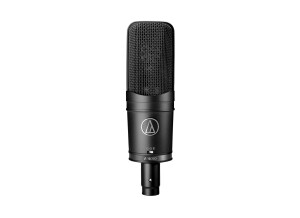
    Audio-Technica AT4047 is a recording mic that uses a condenser technology that gives a wide dynamic range, a very low noise and also high SPL. OVERALL OPINION The thing that I like most about it is how well it captures the recording, it can be used to record strings, guitars, electric guitars, pianos, instruments ensemble, and of course vocals and choir. Also I really how Pro this mic feels, it has three switchable polar patterns: cardioid, omnidirectional, figure-8, which is really handy for recording several type of musical instruments. also low self-noise, wide dynamic range and high SPL capability, Dual-diaphragm capsule design maintains precise polar pattern definition across the full frequency range of the microphone. This mic is a pretty good deal if you want to spend more money and get better sound quality, it costs nearly 1000 $ , however the features provided by this product are pretty crazy, it has a custom shock mount that provides superior isolation, also a Integral 80 Hz high-pass filter switch and 10 dB pad switch. The precision and quality of sounds is outstanding, I really do enjoy the quality provided by this product however I would consider buying something more new, because this mic has some years behind, that's why I would rate this mic 8/10. Right now you can find something cheaper but that is pretty equal in terms of sound quality and precision of the sounds. I tried several condenser types of mics , this has has a big advantage, the low noise and the precision of capturing the frequency range. However I don't think I would buy this mic again because you can find something better and that doesn't cost as much as this mic does, so keep that in mind if you're searching for a podcasting mic or a vocal recording type of mic.

  • « The AT4033 is better LIVE! »

    *Microphones are very subjective. Some microphones that work for some brilliantly may be disastrous on others. It is therefore important to understand the context in which this review is written and take it with a grain of salt, like all reviews on microphones should be treated.* The Audio-Technica Artist Elite AE3300 is a handheld condenser microphone tailored specifically for live use. It boasts a relatively impressive (for a live microphone) 30-18,000Hz frequency response and a relatively remarkable (for a live microphone) Signal to noise ratio of 75 dB, with only 19 dB of self-noise. It is also capable of handling up to 147 dB SPL, before you engage the 10 dB pad that comes with the microphone! Before you even sing into the AE3300, you can take one look at the specs, and take one feel of the perfectly balanced heft of the microphone to know that it's worth the price one pays for it. In addition to this all, there is also a high-pass switch. And before I get off of the frequency: if you look at the curve, you can see a very clever dip in the sibilance range. Unbelievable engineering on Audio-Technica's part. The AE3300 happens to have the same element as the legendary AT4033, which I have also reviewed. I said that the AT4033 is a rather picky microphone in my review, but the truth is, even if you wouldn't use it in the studio, if you could use it live, would you? Especially after it's been optimized for that use? I think most people would say yes to that one. OVERALL OPINION The AE3300 is an unbelievable microphone that exudes its value before you even sing into it. It is clear, it's defined, it's warm. It seems to know exactly what you want to get out of it. If you have the money, I wholeheartedly suggest investing in it. Performing musicians spend unbelievable amounts of money on their speakers, guitars, pianos, cables, etc. Most of them seem to overlook the fact that they're singing into an SM58. It's not that I dislike the SM58; that microphone is fantastic. I just want to point out that your voice is an instrument just like any other, so it should be invested in, like any other.

  • « Good Video Mic »

    These microphones are great for Video work, but not for videos that you need clarity on the vocal without any room noise. Remember you can use shoot gun kinds of microphones for kick drum and snare drums. We have done this for years at my online recording school www.comia.us., however I don't think you would use this for close or clear micing for a video. I would use a lavalier mic. I like lav mics for the real clear video audio. I used this mic for a recent movie and it was a bit low endy and harsh on inside scenes and a bit more noisy on outside scenes in this movie. If you are looking for a great video mic I would go with a more recognized professional mic. If you are looking for decent mic that would suffice for some inside scenes and some basic background sounds, then this mic would work just fine. I used it daily for a while but not for voice during a scene. There is a bump at about 50hz that is noticeable. I also hear a bit of noise. OVERALL OPINION Of the video mics I will review I think this would be in the top 50 percent. I like the clear sound for background video sound. If you are using it for voice in video look into some real expensive microphones that are specifically used for voice work. I would not think this would work great for any voice over or tracking voice in a scene for video. Other uses for a mic like this is for kick drum or a secondary snare mic. It has a narrow diaphragm and does not pick up any noise on the sides of the mic. That would be helpful in a hi-hat bleed drum set up. I use to use these on kick drums but now I find it to be too thin. I would rather use a better shotgun for kick or snare that is not so muddy on the low end.

  • « "Suffers" from the "strangeness" of the 20-series »

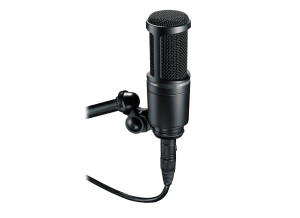
    That being said: The AT2035 is a cardioid condenser microphone that targets the entry market, although the microphone, as part of the AT20-series, does possess the unique characteristic of feeling non-hyped, but slightly squished. This means that it doesn't have the natural "air" of the other low-entry condenser microphones, but it lacks the sibilance peaks and the harshness of the high frequencies of them as well. The AT2035 has a high-pass switch and a pad for high SPL's. Useful to have, but personally, I did not employ either of them regularly during my time with the 2035. That peace of mind, however, does make me feel more confident in singing into one than into a 2020. That, and the shockmount that comes with the microphone makes this microphone much more intimidating. This isn't exactly specific to the AT2020 and the AT2035, but I experience a certain level of anxiety singing into a condenser not in a shockmount. Not because I'm afraid of vibrations, but because the shockmount, like a pop filter, seems to tell a singer where he or she should be. OVERALL OPINION The gripe I have with the AT2035 and most other 20-series mics is its lack of fullness. Great condenser microphones feel like they're enveloping you in the sound; they have a natural size to them that the 20 microphones lack. However, the 20-microphones are set apart from the other entry-level microphones because the other ones for the most part feel like they're poking rather than enveloping. I'm grateful that the way in which the 20-series is cheap is its avoidance of that "fullness" altogether; I appreciate Audio-Technica for not trying badly to recreate that detail. If you were constrained to these entry-level microphones, I would strongly recommend any of the AT20-series microphones. They are leaps and bounds above all of their peers. Although. If deciding between the 2020 and 2035, go for the 2035; it's slightly less noisy, and it's more sensitive and a little more flattering.

  • « Rich Delivery »

    The at4047 is a condenser microphone. It is for studio applications, which can be aplenty with this diverse tool. There is a handy -10 pad on the mic, allowing you to place it right up on the grille of a loud amp or front and center on a kick drum. It also has an option for rolling off the low end, which is always a great resource for eliminating mud in a recording situation. OVERALL OPINION 4047- a great mic. I love Hard rock/heavy guitar sounds like Sevendust, Korn, Vai, Buckethead, Zakk, Satriani. This mic is flat out awesome in this area. I put it right up 1" from the grill and receive a slammin' sound with very little work on mic placement. It gives the combination of clarity and brutality that is so hard to find in distorted guitars. Sometimes I'll pair it up with a 57, or borrow a buddy's royer 121. Often it sounds fantastic by itself, as I like to multitrack rhythm guitars. It is awesome for detuned guitars. This mic was the basis for recent Korn discs- it sounds great on guitars, bass cabs, kick drum. I've recently discovered that I like it better on vocals than my tube Studio Projects T3; so the T3 was sold off. It has a low end presence combined with a clarity on the top end (without that shrilly cheap feel that my 4033 gives, since sold). I can't believe how cheap I got it (used), I'll buy another one at market price in a heartbeat. If you love heavy guitars and are depressed about how much or how brittle a royer 121 is, and you're tired of the 57 sound (always a fallback acceeptable tone) you simply must find try the 4047. This is the first mic I grab when micing up my Ampeg bass stack- it is perfect for those clear low frequencies. The 4047 sounds killer on toms as well, sometimes i'll just stick this one on the rack to capture two toms and the results are fantastic- huge and beefy, with plenty of snap to cut right through a mix. Awesome on the floor tom, gives that huge King Kong sound. Kick drums can benefit by placing this a foot away from the soundhole. This is a great room mic for drums; typically mics on this price level have an exaggerated high end that can be abrasive and annoying, especially after multiple tracks. Darker mics tend to muddy things up...this 4047 delivers dark without mud, it's a real organic sounding level of quality. I would purchase these mic again in a heartbeat, as it has so many applications and they all sound top level. Stranded on a desert island? This is the mic!

  • « A step up from the rest. »

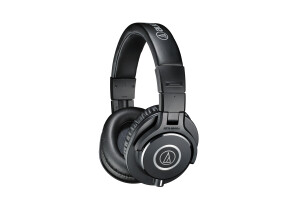
    Searching for "The Sound" The world of headphones is a world of endless possibilities. One might think all headphones are simply designed to create 'good sound,' but this could not be further from the truth: there are multiple factors that are considered in the design and construction of headphone sets at all price points: - Frequency range - Sonic accuracy - Driver size - Closed-back vs. open-back - Noise reduction and attenuation - Comfort and flexibility - Building materials - Style This list only begins to crack the surface of headphone features, and still one of the biggest motivating factors for headphone choice, not listed above, is the price. Headphone prices range from $5 to $500 and beyond, and it is no easy task to shop for a quality set of headphones without being able to test them individually for sound, comfort, and style. Since many musicians and sound professionals (like myself) do not always have the luxury of testing products in person, the next best option is to find recommendations and research specs. This was the process that eventually led to the Audio Technica ATH-M40x closed-back headphones. Overview It's no secret that Audio Technica has been a leading force in the audio industry for years, because they have continually offered exceptional quality at reasonable prices. The advent of home recording over the past decade has only boosted the demand for affordable gear, and Audio Technica has released a vast supply of options for headphones, microphones, and other recording gear to meet every budget on the market. Many serious home studio users often ask the question, "What is the best set of headphones for $100 or less." No doubt, there are a few industry standard options to choose from, such as the Sony MDR-7506 or the Sennheiser HD 280 Pro headphones. But the title for "A step above the rest" belongs to the Audio Technica ATH-M40x closed-back headphones. The Sound When choosing a pair of headphones, most audio engineers and musicians are looking for good sound. Now, while "good sound" is somewhat subjective, accurate frequency production is not. The ATH-M40x's produce an even projection across a wide frequency range of 15Hz-24kHz, making them a very 'flat' sounding set. While this may be a "shorter" range than its competitors, the M40x's do not lack in clarity across the spectrum, and they do not expend energy in low and high frequency ranges outside of the human range of hearing (20 to 20kHz). The comparable Sony and Sennheiser models reach frequencies of 10Hz or lower, but this is wasted energy since it is so far below the actual human range of hearing. The ATH-M40x's feature powerful 40mm drivers (standard at their price point), and have considerably lower impedance levels than their competitors (35 ohms versus to 64 ohms, respectively) making them very compatible with many modern basic home studio setups. Distinct Features Not only do the ATH-M40x's excel in the area of sound, but they also provide some very useful features that cannot be found on other headphones below the $100 range. The most distinct difference is that the M40x's use detachable cables, and every brand new set includes two 9.8 ft. cables--one coiled and one straight--right in the packaging. This means that if one or both of your headphone cables wear out and stop working, you can buy a replacement cable for a fraction of the cost of a new set of headphones. This has huge implications for long-lasting use, when comparable models may stop working and you must replace them altogether. The M40x's also include additional comfort features such as rotating ear cups and firm ergonomic padding all throughout the headphones. They are lightweight and comfortable for long listening sessions, but they do not feel flimsy and weak. And best of all, they don't break the bank. Bottom-Line Every person has his or her own preferences when it comes to sound, comfort, and style. These preferences may be subjective, but quality and price are not. The Audio Technica ATH-M40x's may not be the audiophile's "dream come true" in terms of sound and build quality, but they are great all around headphones for basic mixing, performance tracking, and easy listening.

  • « Great studio microphone. »

    The Audio Technica AT4040 condenser microphone is an excellent choice for studio recordings, great for vocals, acoustic guitars and overheads. It has a wide dynamic range and low noise (only 12dB of self- noise). Its high SPL capability captures every sound with detail and with a natural quality. It also is very affordable compared to similar condenser microphones in that price range like AKG or Rode, so If you're looking for a good home- studio condenser microphone this should be your first option. Even if you go to a professional studio you will definitely find one or two of this microphones around. I use it to record vocals, acoustic guitars (using two of them, one aiming at the neck of the guitar and the other at the body) and overheads, as well as percussion and even a chinese instrument I play called Hulusi, it has a radder odd (but beautiful) sound but it was smoothly captured by the AT4040. The recorded drums sounded amazingly clear and organic. One very important thing to keep in mind when recording with this microphone it's placement; its cardioid pattern and large diaphragm makes it very responsive to sound pressure at the extremes; it will capture from the smallest detail to the loudest hit with equal precision. The AT4040 also features: -Switchable 80Hz hi-pass filter -10dB pad -Cardioid pattern -Frequency response of 20Hz-20kHz -Signal to noise ratio of 82 dB -Includes shock mount and case OVERALL OPINION What I like the most about this microphone is its versatility, clarity and smoothness, it is also very durable and solid built. As I stated before, this mic is perfect for vocals, acoustic instruments and overheads, however regarding lead vocals recording, it may not be the best choice for everyone; it feels a little bit bottom heavy and some voices may sound too deep, but this is easy to EQ out so it's not really a problem, what I'm just saying is that there are more suitable microphones for certain vocals; some voices have the upper midrange about 6-7 kHz but for some others this frequencies are more on their sibilance range, and vice versa. Also what I said earlier about placement is very important when recording vocals, in my band the singer can get very loud so when we were recording vocals we'd make him stand like 40-50 cm away from mic so the whole vocal range could be well captured with no clipping. I'm happy with the results, the vocals sound warm, crisp and full. Precision and quality of the sound are extraordinary for a microphone in that price range. Definitely would buy again. In conclusion: Pros -Wide dynamic range -Clear Sound -Versatility -Durable -Great deep end Cons - Some vocals can get a little bit muddy in the low end

  • « They don't last very long »

    My love for Audio Technica runs deep. They're a very good brand that makes a lot of good gear. They're reasonable with their prices and they have good customer support. These were my very 1st pair of closed back headphones. I purchased them years ago and wound up purchasing the same model years later (in the future). What I love: Cheap/Affordable and they're closed back. Very flat sounding which makes them good for mixing or better yet detailing a mix. Did I say affordable? (40-60 bucks). Accurate across the board, meaning if you purchase 2-3 pair, they are going to sound the same. That's important to me as a consumer What I Don't Like They start to breakdown after a couple years. The ear pieces, the material starts to flake off and it gets nasty because it's all around your ears, neck etc. It's kind of annoying. This is why I had to purchase a second pair and yes that one broke began breaking down as well. Did I Try Other Brands?: Hmmm, you know, I did actually. Farting around in studios, I've always been use to using the MDR 7506 by Sony, but when I went to purchase my own pair of headphones they were out of my price range at the time, both times actually. Are They Worth The Money? No, I don't think they are and If I had to do it all over again I wouldn't waste my time with them because for just 50-60 more dollars you could get a good pair of headphones that would last longer... Going with the cheaper option made me spend 3 times as much 1st pair, 2nd pair and then finally some headphones that were better in both sound and build. Again, I love Audio Technica, but I don't think I'd give these headphones another chance. if all you have is $60, please save the money and get some cans with a better build unless it is an absolute emergency.

  • « Ok, sound was not very "natural" to me »

    The AT2050 is a large diaphragm condenser microphone; it has a 10 dB pad and more than one pickup pattern on it. The most recent instrument that I have used this microphone with was a great piano. Now it didn’t sound like the best microphone but it still sounded pretty good for 200 dollars. OVERALL OPINION The tone was really warm; it just was not as natural as I would have liked it to be especially with the piano. Having a natural sound is the whole purpose of using a real piano instead of a keyboard patch. I have also heard this microphone with guitars acoustic and electric; and also heard it with woodwind instruments. It sounds pretty much the same across the board, the sound is warm but it is not natural. It will just feel like something is missing and as a part time engineer when I get back to my Pro Tools and SSL boards to put a good mix on stuff you can really hear when the sound is coming through those monitors; something is just missing to me! But at this price you can still get some very good recordings and on vocals it sounds much more natural and clean. One thing I can say about this microphone is that it is pretty consistent no matter what you put it with. It will give you a pretty even sound across all instrument and vocal types. The strange thing was, I had it up to a Yamaha guitar amp and it did not have at unnatural sound. There were effects or anything, but maybe the amp just gave it the push that this microphone needed to have a more natural sound. The frequency range is 20Hz to 20kHz and you can change the polar patters from omnidirectional, cardioids or figure 8 quickly to get the sound that you will need to get.

  • « One of the best vocal mics in this price range »

    The AT4050 is a large diaphragm condenser that gives you the ability to change your polar patterns on the fly. So no matter where we were recording at we could easily adjust the polar patterns to give us the best possible quality. I have uses just about every single Audio Technica microphone that has come out over the last 10 years and this one was one of the more impressive ones to me. I was very worried at first when I saw the price tag because I thought they were just jacking up the prices but still keeping the same quality microphones. OVERALL OPINION You can use this microphone for instruments but I think it should stay on vocals. If you want to get the best out of it, you will need to use it on vocals. It will sound great with male and female vocals of all vocal ranges. To me this is one of the best reasonably price vocal microphones that is on the market. We have recorded with this microphone over 40 times and several different artist and bands. We have not received a complaint yet. I actually wanted to see how this microphone would sound live but I just haven’t had the time to do it yet. You can switch from figure 8, cardioid, or omnidirectional polar patterns right on the microphone. It comes with a shock mount and it is very durable, I do not think there is any need to worry about dropping it because it is made out of durable metals and the grill is very solid too. The highs are clean and very transparent, the lows are rich and full just like I like them. I have been using this microphone personally since 2009 and in about 2011 I started recording other musicians with it. It has sounded great with all vocals. I am still kind of anxious to try it live and really try it out on some instruments.