Log in
EN
FR

Radial Engineering

213 products found

Categories
Series
Filter
Sort by
Evaluation
  • Reviewed or not
  • Editor’s award
  • Reviewed by Audiofanzine
Availability
  • Available or not
  • Sold new or used
  • Sold new
  • Sold used
Must-have products
  • All products
  • Flagship products
  • Best rated products
  • Hot products
  • Popular products
Price
  • Freeware
€
Clear
Sort by
  • Popularity
  • User ratings
  • Price - low to high
  • Price - high to low
  • Used price, increasing
  • Used price, decreasing
  • Name (from A to Z)
  • Name (from Z to A)
  • Added on
Choose a series
Sort results
  • Popularity
  • User ratings
  • Price - low to high
  • Price - high to low
  • Used price, increasing
  • Used price, decreasing
  • Name (from A to Z)
  • Name (from Z to A)
  • Added on
Filter results 213 results found
Evaluation
Availability
Must-have products
Price
  • Freeware
Show results

The best Radial Engineering reviews

The reviews Audiofanzine members found the most helpful.
  • « No studio should be without one »

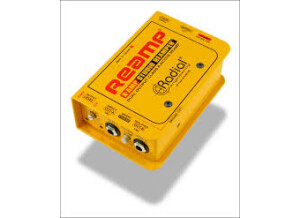
    The Radial Pro-RMP is designed to take a line level signal and transform the impedance to make it useable with an instrument amplifier. The purpose is to take some of the pressure out of the recording process. This way the artist can work on getting a good musical take recorded knowing that the finished sound can be created later on. The devise is basically a high quality transformer housed in a tough as nails metal enclosure. There is a XLR input where you would send the signal from your recording device and a quarter inch out put to route the signal to any amplifier of your choice. This is an analog device that is considered to be passive, meaning it requires no external power to operate. There are also two controls present, one to help set the output volume and a ground lift switch to eliminate any noise that may occur from a ground loop between devices. The box is about the same size as an average stomp box and built like a brick. UTILIZATION This is perhaps one of the easiest studio tools anyone can own. When recording the user must be sure to record a DI track with no effect whatsoever or your results will be flawed. Once you have the track you simply route the output to the RMP and into your amp. Play the track and start setting up your sound like you would if you were playing. When you are satisfied with the tone record it. The only two variables are if there if hum push the ground loop switch and if the input is too loud or soft to the amp adjust the output pot. SOUND QUALITY The best part of this device is that it will not color the signal at all. As long as you have a quality DI track recorded to work with this is one of the best devices a studio can have. Why worry about how your sound is going to be in the project until after you have a technically good take down. We all have had the nightmare of pulling off an awesome take to later realize the sound was bad and needed to be redone. OVERALL OPINION The unit operates with no issues. It just does its job seamlessly without issue. It truly is a worry free product that performs perfectly. The signal is exactly the same as if you had your instrument plugged in directly to the amp. There is no way to tell if a recorded piece was done live or reamped. It is truly an indispensable studio tool. For the price paid this is hands down some of the best money you can spend on your studio. Oddly there are not many other devices like this. There are active models available that can help boost the signal but I honestly can not see any reason that I would need to spend extra when the passive one works flawlessly for me. If someone were to steal it I would replace it and I never see something this tough breaking.

  • mooseherman's review

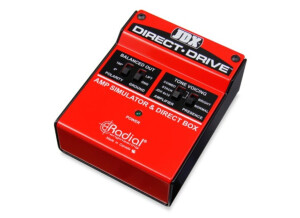
    This DI box is in a league of its own. The defining characteristic of this box is its simulation of an amplifier cabinet. The only effect that is created is replicating the sound of an amp. UTILIZATION The setup isn't too different from a regular DI. The main difference is that rather than going from the electric guitar/bass to the amplifier, this box is supposed to come between the amp head's output and the speaker cabinet. Therefore, it helps mimic the sound of the cabinet, virtually and ideally negating the need for a microphone. The setup is really straightforward and easy, and the manual, if even necessary at all, is clear and succinct. SOUND QUALITY I have to say that this is far removed from most DI boxes I've encountered, but in reality far more useful. I prefer the sound of an amplifier to a DI box (for both guitar and bass, but especially guitar). The only problem that can sometimes occur is that I won't have access to the kind of microphone I need or the room I'm recording in won't allow for a clear, powerful sound. This can be solved easily by the JDX. The sound that comes out of the DI itself is certainly better than most DIs. It does a pretty amazing job of emulating the speaker cabinet that you are using. That being said, however, it's nothing compared to the combined effect of running a microphone from the speaker as well as having the DI signal. Mixing both in Pro Tools allows the engineer far greater control in terms of color and timbre. Even if the microphone signal is dominant in the mix (as it usually is with me), the power and texture added by the JDX is invaluable. I usually don't use another DI unless the player demands a really dry, clean tone (which is something I usually don't encourage, but have to do anyway). OVERALL OPINION I've only recently purchased this item and it's become my choice DI for recording rock bass. Occasionally I'll use it on a thick electric guitar as well. I like the fact that it's not dry and weak like average DIs. I haven't tried anything that really compares to this. I think that it's definitely a little pricey but it's worth it if you like what you hear. I certainly did. I highly recommend it to people who record rock and have limited mic selection!

  • « great, solid ABY. »

    I don't know if I'm just biased towards canadian made stuff but I have always liked radial products, they always seem to have great build quality and very reliable customer service. Even their ABY boxes are high grade steel of some sort and the switch is high quality. The Bigshot ABY is no different. True bypass ABY amp selector with tuner out On-board transformer to eliminate ground buzz 180° polarity reverse to phase-match amps Compact and rugged for pedalboards Plug and play easy to use Quite simple to use it's an A/B and the Y is a combination so if you had 2 guitar amp rigs you can switch between the two, or you can combine both amps for an awesome sounding guitar tone!! Or, you can have 2 guitars and switch between the two. The tuner out is always a bonus. I like the fact that there's the polarity reverse to phase match amps, it's so well thought out. I've once had a 2-amp setup and used another ABY before though I do wish I had this one instead as the other one required power, this one doesn't!! Way more convenient and less tangle with cables etc! I really can’t see any fault with this pedal whatsoever, it is well made and has enough ‘options’ to satisfy anybody that needs an ABY and the fact that it’s ABY also means it’s simple enough to not need much to talk about in terms of features. It’s well-made, high quality and low noise. What more does anybody really need in an ABY? It’s actually pretty unfortunate that these aren’t flying off the shelves, radial has made a name for itself through it’s DI equipment but a lot of their pedal-oriented stuff is definitely worth taking a look at for sure! Radial!

  • « The AV2 vs the ProD2 »

    The Radial ProD2 is a passive stereo DI that has a 15 dB pad. It also has a lift switch and for the price of 150, you really won’t find another one as good as the Radial ProD2 is. It is well made and built to last you a long time. It is made out of metal type material and can fit into your gear bag easily. Using the Radial ProD2 is very easy, there is no set up process involved and it does not come with a manual because you really don’t need one. It does come with a quick start style guide that will show you what everything is. The Radial ProD2 is truly a plug and play unit and it is very reliable for some of your microphones. You can use the Radial ProD2 in the studio or in a live performance and it will work great no matter where you use it at. UTILIZATION It has a balanced XLR output connector and rubber on the bottom of it to keep it from sliding or slipping on the surface where you might have it set up. The It has a balanced XLR output connector is very quit I have not experienced any hissing or humming coming from it no matter what it is plugged into. SOUND QUALITY The Radial Pro D2 has a balanced XLR output connector is very small and it has 2 ¼ inputs and 2 XLR outputs. It is a 2 channel Passive DI that can be used for a number of different applications. OVERALL OPINION It is a solid unit, but I prefer using the Radial Pro AV2 because I feel like it provides a better sound. Both of the units are very similar and even made by the same company but the AV2 has a better quality to me and it is only about 20 bucks more.

  • moosers's review

    The Radial Engineering JDV is a complex direct input box that is unlike any other DI box out there. It has a ton of features - way more than any other direct input boxes that I have seen. There are a bunch of 1/4 inch connections and the unit also has a low cut and high cut filter as well as a bunch of other helpful features that are rarely seen on DI boxes. The Radial Engineering JDV isn't a rack mountable piece of gear as it is a direct input box. UTILIZATION Even though it is more complicated than most direct input boxes out there, the Radial Engineering JDV is still pretty easy to use, especially as far as the basic functions go. It did take me a little bit of time to understand all of the features and to master using them simply because it there is a lot going on. Everything is labeled clearly and it is great to have so many different features as it just makes the DI box more versatile. I wouldn't think that a manual would be needed unless you are a beginner, but I haven't seen the manual anyway so I can't speak to if it is helpful or not. SOUND QUALITY The Radial Engineering JDV direct input box is probably the cleanest DI box that I've ever used. It doesn't color your sound at all and simply translate the information with crystal clear precision. All of the extra features make it possible to get a wide array of sounds as far as a DI box goes and allows this to be used with pretty much anything that you would want to take a direct signal from. I use the Radial Engineering JDV mostly for recording bass guitar in the studio, but also have used it for keyboards and even electric guitar if I am looking to get a direct signal and add effects or amp modeling later on. I can't say enough about the clean signal that the Radial Engineering JDV will provide you. OVERALL OPINION I first used the Radial Engineering JDV about a year ago and I was immediately impressed with the great sound quality. It has a slew of features that are very helpful and through and through is one of, if not the best direct input box that I have used. However, you get what you will pay for as this unit will cost a pretty penny for a DI box and is also one of the most expensive ones I have seen. For this reason I would only recommend this DI box for those who are professionals looking for great tone regardless of price. Overall, the Radial Engineering JDV is a great DI box but the price tag is probably a little bit too steep.

  • nickname009's review

    True Bypass Clean Mode Dynamic Rhythm Distortion Mode Dynamic Lead Distortion Mode 12ax7 tube for natural overdrive tone Effects loop on lead channel Individual controls: Level, Drive, Midboost Shared controls: Filter, High, Low, Top End, Drive Gain FX loop is quite cool for the lead channel, you're able to hook up a set of pedals that you'd use for your leads like a delay as most players do. This is a 2 channel distortion pedal that has a tube in it and is thus a 'hybrid' distortion pedal. The overall features are good but they aren't 2 completely seperate channels as most of the important controls are shared. It's more like 1 and a half channels to be honest. Which might be all one needs? Or maybe not. Depends on the player and how they use it. I used to own two of these at one time just to make sure I had everything covered. UTILIZATION The manual does help if ones needs it however it's all pretty simple to me. The mini switches are preset EQs so that you can't adjust them except for the preset positions that are provided. Most, if not all the controls are active, meaning they are very sensitive and don't require extreme settings to have tonal changes, even the most subtle turn will change a lot. The FX loop is also pretty self explanatory, you do need an 'insert' cable though to get this working properly, refer to the manual for more info. This lets you kick in to the lead channel and turn on your effects in one stomp. Very usable. SOUND QUALITY I like the sound but it's not my preferred sound. Yes it is very dynamic and sounds great with almost any guitar, especially if it's plugged into a tube amp. If you plug this into a solidstate amp your results will definitely vary. I believe the Trimode is meant to be plugged into a clean amp, being that the Trimode would be the pedal to provide all your distortion needs. The sound is very scooped to my ears. A very american modern overdrive sound, if you will. There is a lot of clarity and presence and the lead channel is a tad sharper sounding as well. I like it but bear in mind this is not a high gain box, though it does provide quite a bit of overdrive, you will not get a nice heavy metal modern sound out of this pedal without some help from the amp or other pedals combined. Maybe for lead it can sound great, for high gain metal rhythm I don't believe this will do the trick. Other than that, it's a great sounding pedal! Very tube like and tweakable! OVERALL OPINION I think this is a great pedal for that american overdrive, bluesy type sound. Maybe a bit of classic rock sounds too. Although it has enough gain on tap to do anything, I personally think it's more suited for lower to medium gain applications. Paired with a good tube amp you can't go wrong with this pedal! The power supply is very unique on it's own though, which means extra space on your board cause it's hard to find power supplies that would work with such a device. I don't even know if one exists at this moment. The quality of the pedal is great, it's really well-made of course as is all Radial stuff. So it's definitely a good american overdrive/distortion pedal, but it's not the magic box for ALL my distortion needs.

  • « Another nifty gadget from Radial... »

    This is another Radial switching device. This one lets you switch one head into two different cabs. Comes in super handy when using a channel switcher where you want the clean sounds coming from an open back or ported 2x12 cab and the overdrive sounds from a 4x12. You got your jack for the power supply, and the 1/4 inch jack for the remote input and output, as well as four 1/4 inch jack for you amp and cab, those are all for use with speaker cable of course. Basic set-up is a breeze, plug you head into the input, and your two different cabs into the output. You're good to go. This is assuming you have both cabinets with matching impedances. So..two 8 ohm cabs, no problem. If you have say a 16 ohm 4x12 and a 8 ohm 2x12 the alternate jack is used. here's what happens, on amps like Mesa where you have different output jacks for different impedances i.e. one 16 ohm, two 8 ohm and two for ohm jacks you'd run a speaker cable from the 8 ohm jack and one from the 16 ohm jack to the switcher and you have matched impedance on either cab. Now using something like an old Marshall or any head where instead of different outs for each impedance you have a selector switch you're going to have to make a decision. As a rule I find when using a mismatch running the head set to the lower of the two impedances will work fine. In other words 16 ohm 4x12 and 8 ohm 2x12 set the amp to 8 ohm and you;ll be fine. In addition to this on the Cabbone you can use the remote as a master or slave. In master mode you can use it to toggle other relays, which for my use is fairly unimportant. As a slave where you end up programming a midi switcher to take care of it...this is where this box shines. Especially when used together with the Headbone VT amp switcher. Imagine the possibility...one button push and you go from amp1 with a 2x12 for a clean sound, to amp2 with a 2x12 for a dirty sound, to another stomp of the button amp2 with 4x12 for a lead sound. Brilliant. The same caveat applies to this as for the Headbone, if you use the build in footswitch on your pedal board you're going to have very long cable runs from the back-line to the front of the stage and back. And who wants to stand on cables all night long. Then again, that is what the remote jacks are there for. Unfortunately you're then unlikely to see the LEDs, but that is a very small niggle.

  • moosers's review

    The Radial Engineering Tonebone Classic is a tube overdrive pedal designed for electric guitar. The pedal is made up of analog components and has 1/4 inch connections for both input and output. The pedal requires the power supply that comes with it and this isn't rack mountable as it is a stomp box. I believe that the pedal has a 12AX7 tube inside of it. UTILIZATION The configuration of the Radial Engineering Tonebone Classic isn't anything out of the ordinary, although there are a nice amount of parameters to work with here. You've got knobs for level, high, low, filter, and drive, and then there are switches for top end, mid boost, and drive gain, each of which have three possible settings. It actually has a pretty similar make up to the Nady TD-1 tube overdrive, which I believe got its idea from the Tonebone. Unless you've got no experience whatsoever with overdrive pedals and/or these parameters don't seem familiar to you, I don't think that a manual in needed. SOUND QUALITY Radial Engineering's Tonebone Classic has an absolutely killer tone quality. Its one of the best tube overdrive pedals out there in my opinion, as it not only has a full bodied tone, but is also quite versatile due to the amount of parameters that you've got to work with here. I've used the pedal for recording with a Fender Strat and a Mesa Boogie amp, and the combination of this is definitely a good one as I was very happy with the sounds that I was able to achieve. The pedal is great for both rhythm and lead tones, but I especially love the pedal for the crunchy rhythm sounds that I'm able to get with it. OVERALL OPINION If you're looking for a real tube overdrive pedal, the Radial Engineering Tonebone Classic definitely needs to be considered. It isn't the cheapest pedal out there, but it is reasonable for a real tube pedal as it is comparable to others on the market. My favorite part about the Tonebone is how versatile it is, as I can get all sorts of tube overdrive tones with the pedal. This is definitely a pedal I would highly recommend for anyone who is interested in getting a tube overdrive pedal, or just an overdrive pedal in general...

  • « Great for condenser mics »

    I just used the Radial Cherry Picker for the first time this week and I must say I am very impressed with the built in 48V phantom power and clean warm sound. This pre amp has a straight wire signal path that does not color your sound and is very clean. If you use this with condenser microphones you will hear how well the phantom power works and how quiet and clean it is. I have used two different microphones with it so far it the sound is amazing. I am surprised that this preamp does not cost more than it does. OVERALL OPINION I have used many preamps and most of them that sound as good as the Cherry Picker cost a lot more dollars so I was surprised with the quality of sound that it provided. The value for the price is amazing and I recommend any one to try it out. My favorite feature of working with it was you can change your microphones out on the fly when you select a preamp on the active channel, also the fact that this does not color the sound of the recording at all. This is the first preamp that I have used from Radial and I am very impressed. I look forward to using it more and more with a few different microphones to see how well it holds up. The design and build of it is very solid, I am not a big fan of the color but I do not mind it. There are LED displays on the front for the phantom power and mute functions plus indicators on each of the 4 channels. This preamp is also not very big and seems to be very portable. It basically weights nothing and from what I have heard it is very similar to the Gold Digger 4 channel unit from Radial which I have not used.

  • « Radial Engineering Tonebone Bassbone »

    History: I've played bass professionally for 44 years and a couple of my bands released 45s when that's what bands did, but none was a hit. I currently play in a praise band in a local church and also do studio work. I favor rock but have played just about every style, even -- shame -- disco. Favorite players include Paul McCartney, James Jamerson, Tony Levin, Chris Squire, Joe Osborn, Bob Glaub and Sting. I first purchased the Radial Bassbone from Musiciansfriend in 2006 when my church band went with a 'silent stage,' requiring all electronic instruments to go straight to the board without amps. The Bassbone offered not only DI but great flexibility. MSRP: $350; Price paid :$260. I sometimes switch between bass guitar and electric upright bass, and the Bassbone offers two channels with separate volumes and EQs, along with a DI, an effects loop/boost, tuner out, a ground lift and a line out to amp for stage monitoring. Channel 1 has a three-position Contour switch (flat or two preset EQs); Channel 2 has three standard boost-or-cut tone controls). Switching between the two channels is accomplished with a heavy-duty footswitch that activates green or orange LEDs to indicate channel. The Boost section, also operated by footswitch with a red LED, can be assigned via a three-position slider to activate Boost, Loop (effects) or Both. A separate boost volume control allows you to set the level of the boost, all the way up to distortion if that's what you need (+12DB). The effects out jack uses a standard stereo Y cord for in/out signals. By using the footswitch to activate the chain, you to leave effects 'out of the loop' until you're ready to use them -- a handy thing if your effects drain the tone from your bass even when switched off. Combining Boost with Effects allows you to pump up the volume for a solo or other feature. The Tuner Out jack allows you to keep a tuner plugged in at all times and send a signal tailored for tuners. The Output 1/4' jack sends a processed signal to your amp and a balanced XLR jack sends the same signal to the board. Even if you're not going to the board, the Bassbone can be used as a handy A/B switch if you use more than one bass. There's very little not to like, but I had to replace the included 15VDC power supply after a year because the end that plugs into the unit developed a stress fracture and stopped working. Because the Bassbone can't be powered by batteries and a 15VDC power supply isn't something you can find in most music or electronics stores, I had to order a replacement adapter direct from Radial. Radial is located in Canada, and US customs held the package at the US border for three days for unknown reasons, so I had to go a week without the 'Bone. Since then, Musiciansfriend has started to carry the power supply ($19.95), so that's not a big problem any more. The new power supply cord has stress reduction at the point where it plugs into the pedal, so I assume this was a common problem. However, I'd suggest buying an additional power supply when you buy the Bassbone to avoid hassles. The Bassbone is very well constructed of 14 gauge steel with a black baked enamel finish. Footswitches are heavy duty and rugged, and the knobs won't fall off. Bright LEDs make it easy to see what channel you're using and if Boost/Effects is in or out, even on a dark stage. Separate channel volume controls allow you to easily match volume of different basses, and the three-band EQ on Channel 2 makes it ideal for tailoring the sound of passive basses when going direct. I run my active Lakland 55-94 through Channel 1 (set flat) and other passive basses, including my EUB, through Channel 2 because of its EQ. The radial Bassbone is more than just a DI and is ideal for the working bassist who needs flexibility and options. Although some might think it pricey, it's no more so than some one-trick-pony effects units, and its quality and durability is superior to many stompboxes. This review was originally published on http://www.musicgearreview.com

  • « Radial Tonebone Hot British »

    iv been playing for a while know im 13 and i like guns n roses,nirvana,led zeppelin,pixies,aerosmith etc. ive been looking for the perfect distortion peddle and ive found it.they had it at the amp shop in shermen oaks on the corner of vanoen and woodmen it was 219 bucks but man it was sssssssssssssooooooooooooooooo worth it. its simply perfect not one flaw with it. you could adjust it to sound like aerosmith or take it all the way down to the misfits. its range of different music goes on forever, and perfect clean sound. nothing at all. super durable,long lasting,clean sound. its great if you like classic rock and a little jazz i advise everyonbe to get this This review was originally published on http://www.musicgearreview.com

  • « Hot rod Plexi in a box! »

    The Bones London dual distortion is a pedal modeled after a British half stack that has plenty of options: two independent channel volumes, a drive knob, low and high eq knobs and two 3 position switches to control upper and lower mids. There are also two footswitches, bypass to turn the pedal on and off and toggle to select between the two “channels”. Bright leds to indicate which “channel” is on. It is said to be true bypass. UTILIZATION The pedal does come with a manual that’s easy to read and understand how to dial the tones in. The use couldn’t really be easier: just select the amount of drive you wish and eq it with the Kick and Bite switches to your liking, fine tune it with the high and low knobs, then set one volume for your rhythm and the other for your lead and let it rip! The second drive is rich with mids and will jump out with ease. SOUND QUALITY I use this pedal to drive the front of a clean Marshall plexi type of amp (a Dutch 70’s clone by the name of London City). In bypass my sound is exactly as the amp sounds clean. When turned on it’s pure tonal bliss! I use the first drive as my rhythm and the second for leads. The Bones can be dialed very close if not exactly to sound like a hot-rodded Plexi or JCM (Brown sound anyone?!). Switching to drive 2 results in increased mids with the drive still in tact, so the leads will jump out nicely. The pedal pulls through quite well even in the upper register of my guitar, it doesn’t “sag” like many distortion pedals do when you play around the 12th-14th fret. The only minor flaw is that the mids in drive 2 can’t be tweaked by the user. OVERALL OPINION I was looking for a pedal to solve my problem with solo boost and found the Radial Bones London for sale at the musicians’ forum I frequent here. The main thing that sold me was the two independent channel volumes. I thought to myself that I’d give it a go, use it as a booster to drive my amp over the edge to the eighties hard rock sound and use the other volume as my lead tone. Well, it sure delivered! The Bones has plenty of gain / distortion to do that and more. Now I basically have a three channel amp: 1 bypass - 2 drive 1 - 3 drive 2. No need to mod my amp anymore, I just plug in the Bones and I'm set! Radial Engineering have come up with an awesome pedal here, and I wouldn’t hesitate to recommend it to anyone who’s looking for that British hot-rodded tone in a compact and affordable format.