Log in
EN
FR

Small diaphragm condenser microphones

700 products found

Filter
Sort by
Evaluation
  • Reviewed or not
  • Editor’s award
  • Reviewed by Audiofanzine
Availability
  • Available or not
  • Sold new or used
  • Sold new
  • Sold used
Must-have products
  • All products
  • Flagship products
  • Best rated products
  • Hot products
  • Popular products
Price
  • Freeware
  • Low-cost (< $250)
  • Mid-range ($250 - $650)
  • Premium (> $650)
€
Clear
Sort by
  • Popularity
  • User ratings
  • Price - low to high
  • Price - high to low
  • Used price, increasing
  • Used price, decreasing
  • Name (from A to Z)
  • Name (from Z to A)
  • Added on
Sort results
  • Popularity
  • User ratings
  • Price - low to high
  • Price - high to low
  • Used price, increasing
  • Used price, decreasing
  • Name (from A to Z)
  • Name (from Z to A)
  • Added on

The best Small diaphragm condenser microphones reviews

The reviews Audiofanzine members found the most helpful.
  • « Very good value for money »

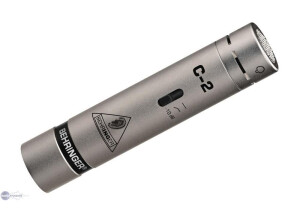
    Condenser microphone small diaphram type Frequency Response: 20 - 20,000 Hz (human ear) Diaphragm: 18mm Power Supply: 48V (phantom) Low Cut:-3dB at 75Hz or 150Hz CSA: -10 or-20dB Sensitivity:-38dB SPL: 130dB OVERALL OPINION Very good mic for miking various guitars, piano, percussion (marimba, xylophone), drums (overhead, snare), etc. ... Not recommended for voice, even with the hoods, pops pass too easily. These microphones are a very good value because they are very similar to NT5 (rumors are that they are pure copies). I recommend it to anyone wanting to start building his home studio and with good microphones versatile. I will choose to repeat this purchase without hesitation!

  • « Good for live applications, unpretentious »

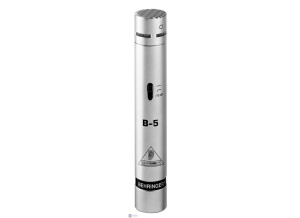
    OVERALL OPINION Frankly, a good CAM product. There are obviously better, but much more expensive ones. It's the second Behringer product I like. Yes, okay, there have been tons that I haven't liked. But this one does the trick. I have used it on all types of sources: Vocals, piano, as overhead You only need to rework the sound at the console and you can get a nice sound. Do note that this mic isn't meant to rival the best mics out there, but it does its work. I have two of them that I always take along whatever I do!

  • « This is a must have for the live musicians »

    The Blue Microphones enCore 300 Series Microphone is a live setting mic. I have been around many people that have used this microphone in a lot of different venues and it has sounded great everywhere. Do not use this microphone for recording in a studio environment. A lot of people who beg to differ with me on that, but the enCore 300 will not excel in a studio situation. Keep it live and you see just how good this condenser is. It is also a handheld microphone and is made to be used that way, though you can also put it on a stand. But if you are looking for a stationary microphone only , then I would not choose the enCore 300. OVERALL OPINION My favorite thing about this microphone and why I think so many bands use it is that it is good in so many different situations. It does not pick up any other instruments that are being played on stage. Its pick up pattern is pretty tight and you will need to be singing directly into the top cone of the microphone in order to get the best sound. I have used several other models of Blue Microphones but this would be one of the only live microphones I have used from them. I am happy that our band uses this every chance that we get, I have not heard any negative complaints yet. This microphone is very precise and straight forward, and the price is just right. For 199 dollars brand new you can afford to have several of these if you need them in your band. I have not found many live microphones that are this good and still affordable. The enCore 300 is built to handle all of the live setting noises that loud like all of the instruments and other vocalist on stage, not to mention the crowd noises. It is a must have.

  • moosers's review

    The MXL 603S is a small diaphragm condenser microphone for using in the recording studio. It's just about as cheap as a condenser microphone that you're going to find, and it actually sounds halfway decent. There is also a modification of this microphone that is possible where you can basically transform it into a Royer microphone. There are kits that are sold by Royer that are from Mojave Audio. I have used a modded 603 as well, but I'll focus on the stock 603S here in this review, just know that it's a good option if you are handy. The stock 603S has a 30 Hz to 20 kHz frequency range and it's a strictly cardioid mic. OVERALL OPINION While overall the sound of the MXL 603S isn't the greatest, when you keep in mind it's ridiculously cheap price, it's not such a bad deal. If you are just getting your home studio off the ground, it would be a pretty good choice for a small diaphragm condenser if you're looking to spend the least amount possible. It's fine for acoustic guitar and a set of them would probably sound somewhat decent over a drum kit. Professionals certainly shouldn't expect much from the stock 603S, but may want to pick up a pair if you think you'd be able to do a mod with the kit issued by Royer. Beyond that, pros will definitely not want to be using these as they aren't as detailed a sound as you'd get with a nice condenser. They'll do a okay job for demos in your small home studio, but aren't anything to write home about on the grander scheme of microphones. You wouldn't think that people would expect much from a $100 condenser mic, but just to cover all the bases here. I'd check it out for your small project studio or if you're a professional who is interested in doing the modification, otherwise I don't think you'd have much business with the MXL 603S.

  • Deleted member's review

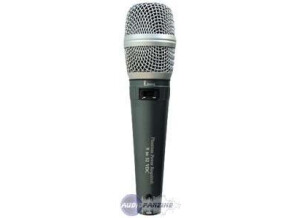
    The Prodipe MC-1 Ludovic Lanen microphone is a higher end model in French audio company Prodipe’s line of hand held vocal microphones. Before committing to that pigeonholing of the microphone into a purely vocal usage, I must comment that the MC-1 is, considering its price, incredibly faithful sounding. And by faithful, I refer to its frequency response, and its relatively non colored reproduction of the sound that it is micing up. The Prodipe MC-1 has a fairly run of the mill frequency response that begins at 50 Hz and goes up to 16,000 Hz. On paper, it honestly is not a very impressive microphone, but Prodipe knows exactly what it is doing when it comes to budget gear. This particular microphone has a remarkably linear frequency curve, and this makes it, despite looking like and being touted as a hand held vocal microphone, incredibly capable of doing so much more. It literally fills a workhorse role in the studio and on the stage for very little. This puts it squarely in the realm of the venerable Shure microphones, the SM57 and the SM58. What is incredible about this microphone is that the Prodipe competes with both, and holds its own. While the SM57 and SM58 are consistently being used for their aggressive presence boosting, the Prodipe MC-1 maintains a fairly smooth curve, allowing an engineer much more control over the end product. OVERALL OPINION The only disadvantage I see is that engineers know how to deal with the Shures better simply because of their ubiquity. But I honestly fail to see where popularity actually comes into play when we are speaking of a microphone’s actual performance. This microphone is flatter than the Shures, and if you’re living not in France, it can be difficult to get a hold of them before buying. The low price should make the gamble lass terrifying however. So give it a shot! You won’t be disappointed!

  • « Fantastic overheads! »

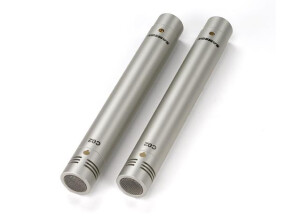
    Specification: Microphone Type - Condenser Polar Pattern(s) - Cardioid, Omni Frequency Response - 20Hz-20kHz Max SPL - 134 dB (149 dB, 159 dB w/Pads) Output Impedance - 150 ohms Self Noise - 14 dB (A-weighted) Low Cut Filter - 18 dB-per-octave @ 80 Hz, 6 dB-per-octave @ 115 Hz Pads - 15 dB, 25 dB Length - 5.75" Width - .8" Depth - .8" Weight - .34 lbs. Notes - Stereo Set I have only used this mic in the studio but it's not too delicate to use live. OVERALL OPINION I really like this microphone. I use it most frequently as an overhead for a drum kit. I use two of them in a spaced pair (I enjoy the wide stereo image) and get wonderful results. Very clear and pristine sounding cymbals and the toms cut through as well. I also love to throw this on acoustic instruments. I've used it on acoustic guitar, violin, piano, etc and it sounds great. Since it picks up a lot of high end and can turn out harsh, I usually match it with a large diaphragm condenser and it sounds fantastic. It's not exactly a low-end microphone but I think it is absolutely worth it for the price. I have paired it against Rode N-5s and Neumann U87s but still prefer the KSM141s for drum overheads. If something happened to these mics I would definitely replace them. They are fantastic overheads and also sound great on acoustic instruments.

  • « Fantastic, relatively cheap condenser mic »

    This is the AKG C451, a small diaphragm condenser microphone. I have used it mostly in the studio, but I have played gigs where the sound engineer has used them as my drummer's overhead mics, so they can be used in live situations as well. However, they are fragile like most condensers, so I would handle with care at all times, especially outside the studio. They are a quality microphone, like almost all the AKG products that I have used. OVERALL OPINION The predominant usage of these mics for me is as drum overheads. I tend to prefer these to almost any drum overheads as they give a crisp, full sound to the overall kit. I like the fact that they get a decent amount of snare and kick sound in them, but that tends to not get in the way of the cymbals. I have had that problem with many condensers that are in the price range of these guys. I think that is what sets them apart; they don't have the GREATEST sound, but it's good enough for me (and also most of the engineers I've worked with, some of whom have far more expensive alternatives in their possession). Beyond overheads, I have had some real success with them on string quarters, string soloists, pianos (usually in tandem with another mic or two), and other mics. They do a solid job with most of these, too, though they aren't my favorite. Part of this is because of low end, mainly, that they don't always provide enough low end response. However, when used with a mic that does have a good low end response they can give a detailed high end response that is stellar. Overall, these are a cheap, useful mic that are definitely a solid investment.

  • moosers's review

    The Josephson Engineering E22S is a side address, small diaphragm condenser microphone designed for use only in the recording studio. I guess you could use it to record a live show as well, but my experience with the E22S is only in a recording studio setting. The mic has a cardioid polar pick up pattern and the capsule will pick up sound only from one side of the mic. It is very easy to place in tight places and is great for a variety of different uses. I'm not sure what range of frequencies it will pick up, but suffice it to say that it comes in crystal clear and is very versatile... OVERALL OPINION The Josephson Engineering E22S is definitely one of the better sounding small diaphragm condenser microphones that I've used. I only recently first got to try out the E22S, using it for recording tom tom drums on a full drum kit. Because of the side address nature of the mic, it was easy to perfectly place the mic right above the drum and have it only pick up the sound of the drum and nothing else. This aspect of the mic will definitely translate well to any application that you'd like to use it for. The tone that I was able to achieve with the Josephson Engineering E22S and a really nice sounding tom tom drum was impeccable. I was immediately impressive with the fullness of the sound - the drum sounded like it was right next to me when I was in the control room. Not too many microphones can do this, as it isn't a sound that you hear everyday, so I was immediately on the side of the E22S from the start. While I've yet to try it out for too many other applications, everyone at the studio where I used this has said that the mic is extremely versatile, so I'm definitley looking to try it out for some applications as soon as I get the chance. While not the cheapest microphone in the world, it's reasonable for a high quality mic of this caliber for professionals looking for top quality sound regardless of the price that they'll need to pay...

  • Audiofanzine FR's review

    (Originally written by leruisseau/translated from Audiofanzine FR) Cardioid mic Max SPL: 130 dB (without Pad) Frequency response: 40Hz - 18KHz Impedance: 100 Ohms Pad: -10 dB Low cut: 150 Hz Condenser microphone for overheads, string instruments and percussion. I own two of these mics and each of them has a different dynamic response and sensitivity. I noticed important differences by doing comparison recording tests with the same source and the same position for each mic. I use it for percussion, cymbals and instruments with a rather narrow frequency response. I find it sounds too dry for an acoustic guitar. The result isn't pleasant at all. I compared it to an Oktava MK-12 which sounds much better. It's obvious that this mic wasn't conceived for that. It would require extreme EQing... I got good results as I recorded a cajon with an ADX-51 stereo couple plus an Oktava MK-12. I have a problem with the grid of one of the mics because it's not properly fastened and comes off pretty easily. OVERALL OPINION I've been using them for 6 months in my home studio. Pros: versatility, precision, high frequency range, transient response Cons: considerable dynamic response difference between mics, rather dry sound, lack of warmth, grid fastening I own a dozen of different mics to compare them to.

  • « very good »

    This Omni Directional mic come in pairs and are great for instruments and will give your instrument recordings a very natural sound. Actually one of the best natural sounds you will hear from a mic that’s under 1000 dollars. When the mic first came out I think it was around 600 for the pair and they come in a nice wooden box with a fancy interior. The box itself looks like it cost 100 bucks, but the mics will do all of the talking you wont need the box anymore after you hear them. You can record some pianos with the STO 2 and play them back in a whole different set up in some headphones or regular speakers for that matter and it will feel like you are really sitting in front of someone playing the piano for you. They are just that good of a mic, I have seen people use this mic when creating 3d sound for certain projects. Just because of how clear the recording will be to start with then using a 3d plug in they will position the instrument in virtual space and it will really give you a 3d experience if your speakers that your listening to can handle it. But even if you arent using 3d sound they will still give you a natural effect of actually being there which is still like a 3d sound. OVERALL OPINION These mics are worth every penny spent, and you will have to pay more than 500 dollars for them because they are just that good, don’t think you can get them much cheaper than that. They hold their value and are still being purchased even though they have been out for a while. I actually think they are still producing them which could be the reason that the price hasn’t dropped that much if at all.

  • « we will keep using it »

    The Apex 185 is a very slim condensor mic that has 2 switches that are actually on the mic itself. One of the switches is a - 10 decibel switch for recording some instruments that pack a sharp punch like some brass instruments and for like a snare drum. Because of these instruments immediate punch can cause mics to record well over 0 decibels which is a big no no. So with the -10 switch it will make a big difference for when you are recording these instruments. I have used several Apex 185 mics at the same time and have nothing negative to say about them. They have worked great for recording some of the groups and bands that come through my studio. OVERALL OPINION This mic is worth the money that it cost. It doesn’t even really cost that much so you can actually afford to get more than one which is well worth the investment to record. it’s a high quality instrument mic that is perfect for those brass and woodwinds and drum sounds. I don’t use it for anything else but instruments like those. Mainly instruments that can have a lot of accent points meaning start with a loud sound and then go down to low tones. Mainly for the instruments that are really dynamic as far as the loudness of them. This mic has worked so well for myself and my team we will continue to use it for many years to come. I think they have actually upgraded the mic now to a different more advanced version that can handle a little more and is more multi purpose , but since we have these there really is no reason for use to upgrade. The Apex 185 is one of the best instrument mics to have in your set up and we will keep using it.

  • « Bright, smooth and creamy pencil mics for a great price »

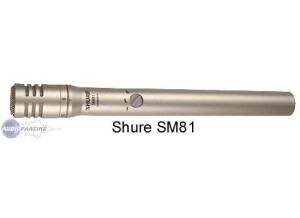
    The Josephson C42s are small diaphragm, discreet FET condenser mics with a transformerless Class-A output. You will want to supply the C24s with a full 48v phantom power for best results. They are equally well suited to live and studio environments and while I have used them in both situations to good effect, the vast majority of my work with them has been in the studio environment. The C42s can handle quite high SPLs and have a healthy but not overly-hot output which, along with their small size, means they are very versatile mics with a broad range of applications. These mics are available either as singles in a stainless steel finish with a sturdy vinyl zippered pouch, foam windscreen and shock-type clip mount included, or as a matched pair in black finish with a carrying case. I purchased my C42s as a pair of singles, partly because they're well toleranced enough to not "really" need to be matched (my two aren't but they sound just the same), partly because it saved me a hundred bucks, and partly because I prefer the stainless finish to the black finish of the matched versions. Regardless of your finish preference, you will get a beautifully machined, simple mic body which is surprisingly small. At only around 4 inches long, these are easy to place just about anywhere, particularly in conjunction with a 90-degree angled XLR connector. The "shock clip" included with these mics fits and grips the mic body well; I have never had any worry about their ability to hold the mic and they do indeed reduce rumble compared to typical hard clips, though not as well as elastic spider mounts. The loose shock design of the clips makes them just a little bit fiddly with placement, only a very minor caveat. A number of alternate clips will work for the C42s as well. OVERALL OPINION The sound of the Josephson C42 could best be described as crisp and present on top, with a full, smooth, creamy coloration of the mid and high frequencies, and a tight, well defined low end response. These are not mics for those in search of ultimate transparency, but if you crave a mic that's bright but smooth rather than harsh in any way and with a fleshed out, palpable midrange, these are for you. I personally love the color of these mics; they can cut a mix well while fattering the source and although there's no mistaking some cream going on in the mids and highs, unlike some decidedly colored sounding mics, these are surprisingly versatile and work in in many apps on many genres. They can take some of the fatigue out of the harder, brightish sound of ProTools rather despite their presence, and are of course real winners with analog tape too. The C42s also play nice with a very broad variety of mic preamps, from inexpensive small mixers to high end, high dollar boutique rack pres--I've plugged them into all of the above with excellent result, though of course more-so with the fancier stuff. One of my favorite preamps with these mics is the A-Designs MP2A 2-channel tube preamp, a combo that gives you all the big, smooth, warm, refined, quality-oozing sheen you can handle! I get great mileage out of them in all I do which is particularly but not limited to various sub-genres of indie rock, folk, singer/songwriter. They are also well suited for jazz and classical stringed instruments and various types of percussion as well. I have had these on acoustic guitars, drum overheads and percussion, hihats, double bass high mics, fiddles, banjo, and even female vocals which can sometimes be surprisingly good with some careful placement to avoid sibilance and peaky presence. The overall aesthetic, electronic and sonic quality of the C24s is very high indeed. I have used these mics routinely for more then 6 years and they've never skipped a beat. There's really not much at all to nitpick. The shock clips are just "OK," and that's really about it. Not much else I would change about this mic or package. In the end, I believe they are wonderful sounding, highly useful mics which represent a superb value. This is NOT something I say about most pieces of equipment, but I really believe that these mics would still be a great value at double the price. They not only meet or exceed such similarly classed mics as Peluso CEMC6, AKG C451, Audio Technica 4041, Shure SM81, etc, but I would put them up against most any small diaphragm condenser at any price, including Neumann/Gefell and others. At $400-450 a pop, they're simply a bargain with a color that is "part of this complete mic collection." Very well done!

Categories that may interest you