Log in
EN
FR

Large diaphragm condenser microphones

809 products found

Filter
Sort by
Brand
Evaluation
  • Reviewed or not
  • Editor’s award
  • Reviewed by Audiofanzine
Availability
  • Available or not
  • Sold new or used
  • Sold new
  • Sold used
Must-have products
  • All products
  • Flagship products
  • Best rated products
  • Hot products
  • Popular products
Price
  • Freeware
  • Low-cost (< $650)
  • Mid-range ($650 - $2,000)
  • Premium (> $2,000)
€
Clear
Sort by
  • Popularity
  • User ratings
  • Price - low to high
  • Price - high to low
  • Used price, increasing
  • Used price, decreasing
  • Name (from A to Z)
  • Name (from Z to A)
  • Added on
Sort results
  • Popularity
  • User ratings
  • Price - low to high
  • Price - high to low
  • Used price, increasing
  • Used price, decreasing
  • Name (from A to Z)
  • Name (from Z to A)
  • Added on
Filter results 809 results found
Brands
Evaluation
Availability
Must-have products
Price
  • Freeware
  • Low-cost (< $650)
  • Mid-range ($650 - $2,000)
  • Premium (> $2,000)
Show results

The best Large diaphragm condenser microphones reviews

The reviews Audiofanzine members found the most helpful.
  • « Cool mic! »

    See below OVERALL OPINION I tested it for rap, guttural screaming, vocals, acoustic and electric instruments. It always performed all right. Excellent as room mic for ambiances, for vocals, it can handle high SPLs. Excellent quality for the price. Conclusion: +Effective all-around mic +No ugly coloration +Correct frequency response, rather proper reproduction. +Correct built and component quality +Value for money -No real personality. -Odd finish on all mics of this model, apparently that's normal but it's ugly (the paint has bubbles). All in all: Good value for money. A mic for less than $250 (back then) that is very satisfying and does its job well.

  • moosers's review

    The Sony C-48 is a large diaphragm condenser microphone that is not made anymore and is a vintage microphone. It is best for use in the recording studio, and in the recording studio is the only place I have used it and I would recommend doing the same. Since it is an older microphone, it is delicate and needs to be kept in the studio and treated properly. OVERALL OPINION I haven't been using the Sony C-48 for all that long, only about a year or so, but since I first used it I have found myself using it whenever I get the chance to. It is really a great sounding microphone for any type of application, but I find it especially great for recording male vocals. It will sound great for female vocals as well, but for some reason it picks up male vocals especially well. It also sounds awesome as a room microphone when recording electric guitar - I put it about three feet away from the guitar amp in addition to a Shure SM57 that picks up the close sound of the guitar amp. This gives me a good amount of room to play around with it when it comes to mixing and I feel that the C-48 does as good of a job of getting that guitar room sound as any other microphone that I've tried. I also like using the Sony C-48 for recording acoustic stringed instruments like acoustic guitar and cello as I feel when placed right does a tremendous job of picking up these instruments' nuances. The price of the Sony C-48 is of course pretty expensive, but this is a microphone that is designed for professionals looking for great tone no matter what the price. If you are a professional studio owner or engineer, I would highly recommend giving the Sony C-48 a shot.

  • moosers's review

    The Blue Kiwi is a high quality condenser recording microphone. It has multiple polar patterns - cardioid, figure 8 and omni. It also has settings for in between each of those, with 9 patterns total. This is a great tool when you want to experiment with different polar patterns or for different applications. It is always convenient to be able change polar patterns right on the microphone. In addition to it being a great sounding mic, it looks really cool - the color shines and the capsule is the signature Blue circle, always good for impressing clients! I have also heard that OVERALL OPINION I've been using the Blue Kiwi for about 8 months and I've found it to be extremely crisp and clear. Its flexibility in terms of polar patterns makes it a candidate to be a top go to, all purpose microphone. That being said I've found it to sound best on male vocals and is one of my favorite for that application. I also like it on acoustic guitars and other acoustic stringed instruments. It is also an effective mic for getting room sounds on a guitar amp or getting any room sound for that matter. I've used a lot of different mics and this one certainly holds its place. I would compare this mic to other high end condenser mics in the same price range like a U87. Compared to the price of a U87, this is a great deal. This can actually sound a bit better for certain applications than the U87. However, I'd probably rather have a U87 if I could only choose one, even though the price range between the two microphones in somewhat significant. All in all, for the price you're going to get what you paid for - a great mic that is used by professional engineers.

  • « The Workhorse »

    Overview Working on a home studio budget comes with its own set of challenges and limitations. When resources are limited, versatility and functionality are essential in equipment choices. When you need a microphone that can do it all, the CAD Equitek e100s stands up to the challenge. The e100s is a supercardiod condenser microphone. Though CAD is often seen as a low-end affordable brand, the Equitek series of microphones raises the bar for high quality microphones at affordable prices. The CAD e100s boasts a $500 price tag and is proudly made in the USA. According to CAD, it has the "lowest noise floor in its class," meaning that the microphone itself produces very little self-noise (3.7 dBA, to be exact), and eliminates unwanted room noise (largely due to its 'tight' supercardiod polar patten). I can testify, this makes the e100s virtually silent when it is plugged in and waiting to be used. The e100s can also withstand up to 150 dB of sound pressure with the -10dB pad engaged, making it almost indestructible (you could record a jet engine with this microphone!) In the Studio While the e100s has some very utilitarian features--such as the -10dB pad and the 80Hz high-pass filter--the microphone truly stands out for its flat frequency response across the spectrum. It evenly captures frequencies ranging from 40Hz–18KHz, and offers a slight boost between 5-10kHz for added signal clarity. Because it has such an even frequency response, it is one of the most competitive "workhorse microphones" on the market. I have personally used the microphone for both acoustic guitar and vocals in my home studio, which have given me very clean and professional results, only requiring slight EQ adjustments in post-production. I have yet to use it for electric guitar, bass guitar, or drums, but other reviews I have read seem to speak highly of the microphone's versatility in capturing many sounds fully and accurately. Another unique feature of this microphone is its built-in shock mount design (similar to the Shure SM7B). The microphone is very flat in design, and can fit tightly up to flat surfaces like pop filters, guitar cabinets, or drum heads. This feature only reinforces its versatility in capturing sounds in the studio from a variety of sound sources. For all of the great features this microphone boasts, one thing is does (subjectively) lack in is "character." The CAD e100s really won't 'color' or 'enhance' any sound it captures. To some, this might be considered a negative trait of the microphone, but I believe there are situations in the studio that do call for accurate sound capturing; the e100s will get the job done in these cases. But if you're looking for a vocal microphone that automatically makes you sound like Freddy Mercury or Taylor Swift, then this is probably not the microphone for you. Bottom-Line Want a microphone that will (almost) do it all? Look into the CAD Equitek e100s. You won't regret it.

  • « Excellent Quality Mic..with a caveat »

    Solid, super well built professional STUDIO microphone, solid state/transformer-less 'pletharos' design. Multi-pattern. Incredibly low self noise. LARGE diaphragm condenser. OVERALL OPINION Quality of sound is excellent. Build quality phenomenal. Built-in pop filter protection (3 screen layers. Natural, uncolored sound. A vocal mic that excels on other sources as well. There is some pleasant color in the Cardiod position. softer top end. Great value for the price. TRY this mic before you BUY if you can. CAVEAT - an extremely SENSITIVE microphone. As sensitive as a BRAUNER Mics, which everyone (according to listed sensitivity response in their manual). Shure says this microphone is for 'critical applications' and they are right. A proper sound from a microphone this sensitive will HEAVILY depend on positioning, being able to distance the mic from the singer/source; which in turn depends on the surrounding acoustic environment.A less sensitive mic would be less dependent on the surrounding environment. Unless you have a good acoustic space set up I would NOT recommend this mic for a noisy or somewhat noisy home studio. It will pick up everything as well as the noise outside; and tiny reflections from the room as well. This mic will pick up all vocal 'mechanical' noises (lip-smacking, saliva noises, etc) as well as any imperfect acceptations that a singer might have.That is why I would say this mic is "Unforgiving". I ended up selling the mic because for my voice it brought out my sibilance issues, and I tried everything (positioning/distance) and could NOT get rid of MY sibilance SIGNIFICANTLY at the mic..... PLeas know that this issue, though,is NOT a character of the mic..every mic resonates a certain way with certain voices...and some mics are just not right for certain people. I have owned the mic for a couple of months, and have use it a lot for vocals/guitar. If I had to get another shure it would be the KSM 32 due to the flatter frequency response and lower sensitivity. My pre was an Focusrite ISA ONE

  • « Perfect »

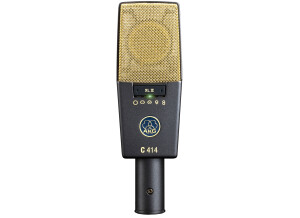
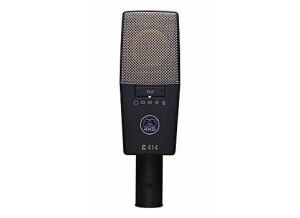
    The AKG C414XLII is a large diaphragm condenser microphone that will allow you to switch to 9 different polar patterns right on the microphone. This is one of my favorite AKG microphones of all time, all of the recordings with the AKG C414XLII are very flat and natural. You will need to do no EQ boosting or really even any cutting for that matter. I have been using this microphone a few times here and there for the last year, and I have not a single complaint about it. It does cost more than the average microphone though that is why you will not see too many people with this in there home studio, the price is 1000 dollars but it is well worth every penny. It is very well built and will last you a long time, it comes in a case to protect the microphone from any damage. The self noise is very low, and it has Ominidirectional, cardioid, hypercardioid, figure 8 and 4 other settings. OVERALL OPINION The C414XLII has a feature that will remember the pickup pattern setting so that when you turn it on it will stay the same as it was the last time you used it. I have not seen that on a microphone yet, it is a very advance microphone. All you have to do is put the settings how you want them, then lock them into place and it doesn’t matter if you turn the microphone off or not. It will be saved to that setting. The Dynamic range is very good, you can pretty much record anything you want to record with this microphone. Though I don’t personally own this microphone, I use it at least 1 or 2 times a week and it has become one of my favorite microphones that I get to use on a regular basis. I have no complaints with it, I just wish it was a little more affordable so I could have a few of them at home!

  • « Amazing »

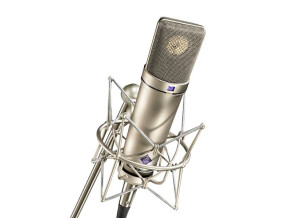
    The Neumann U 89 is a very universal microphone that can be used in many recording environments. It has a dual diaphragm capsule and a rotary switch that can give you a choice of 5 different polar patterns. When I say this microphone is versatile I mean it. You can even record things with this microphone from a farther distance then you would think. You don’t have to be standing right directly in front of the microphone in order to have the U 89 pick up audio. You can be a good distance away and it can still pick it up, which leads me to think they created this microphone more for recording things from a distance. I have used many other Neumann microphones in the past and none of them can really compare to the U 89 I. OVERALL OPINION The quality of recordings you will get with the U89 matches the price point that it sells for. This microphone will cost , it is not cheap. But it is worth every dollar that it cost, I am very happy with the choice we chose to use this microphone. With the wide angled cardioid pattern, it surpasses the basic standard patterns. The U 89 can record huge recordings very clean. Meaning like a whole section of people or a group of instruments. There are a lot of uses for the Neumann U 89. I have used the Neumann U 87 and there are some similarities between this U 89 and the U 87 but the U89 is better built and smaller than the U 87. Both of them are great microphones though. I highly recommend the U 89 and the U 87. The U 89’s built in amplifier can take sounds up to like 140 decibels without having in issues or distortion. That is un heard of!

  • « affordable »

    The SE Electronics SE 2200A is a condenser microphone that has been around for a short while. It is the second version of this mic and has recent came out. The price of this mic is great by the way. This mic can easily compare to some mics double its price range and maybe even outshine them as well. It is a Large Diaphragm Cardioid Condenser mic with a high pass filter. OVERALL OPINION Very well built and this is a must have, if you have the 2200 original mic then you will want to upgrade to the II version of this mic you will see a major difference in quality. I was debating with this mic and the baby bottle mic and used them both back and forth and I have come to the conclusion that this mic is better because of its ability to handle high and low frequencies at the same time and make them sound very good clearn and crisp. This mic seems to be a great all purpose voice mic for any style of music and any type of voice even if it’s a really high pitched singer or a lower raspy voice, it will still put out the sound exactly as it sounds coming out of the talents (singers or vocalists) mouth. This is a must have mic, its very affordable and will be able to with stand any punishment you may bring to it by dropping it, it seems to be made of stell and it is very durable. Also, I haven experienced any clicking or popping noises while using this mic and I have been using it for about 2 months now and I will say that it is great, I look forward to using it for years to come for my own studio set up. I love it

  • « A budget mic? »

    Capsule: One Inch Large Diaphragm Condenser Sensitivity: 20 mV/Pa (-34 dBV) Frequency Range: 20 to 20,000 Hz Equivalent noise level: 13 dB-A (IEC 60268-4) Polar Pattern: Cardioid Max. SPL: 136 / 156 dB SPL (0 / 20 dB Pad) Dynamic range: 123 / 143 dB-A (0 / 20 dB Pad) Low Cut Filter: 160 Hz, 6 dB/Octave, switchable Attenuation Pad: 20 dB, switchable Phantom Power: 12 to 52 V (IEC 61938) Patents: AT 395.225, DE 4.103.784, JP 2.815.488 Dimensions: 160 x 55 mm (6.3 x 2.2 in.) Net / Shipping Weight: 280 / 1450 g (0.62 / 3.22 lbs) Included Accessories: H 85 Shock Mount, W 214 Windscreen, Metal Carrying Case OVERALL OPINION I still remember buying my first 214. I believe it was my second AKG mic I ever bought, and at this time this was a pretty big purchase. Pretty funny considering these days I consider this to be a budget mic for people who can't afford a 414. Let me say up front I have since owned, used, and destroyed a few 414s. And i'm sure a lot of you reading this review want to know is the 214 sounds as good. To be honest, I don't think it's a fair comparison to begin with. But if you want the truth, I think they are scary close. Some people claim the 214 is in fact better, and i don't really agree or disagree with that. They are simply different. The 414 in any high pressure situation will beat the 214 senseless. But for some reason I tend to use my old 214 more? I think the 214 has a bit more of a natural sound overall, which in my opinion makes it a better vocal mic, unless of course you are dealing with the voice of Zeus or something. For instruments, the 214 works alright. I have used it for piano overhead and in rare instances as a drum overhead. It does well for those applications. For anything guitar I much prefer the 414. Sorry to burst some guy's bubble. But realistically, I think this mic is a seriously nice value. Anyone starting a home studio should probably get this mic as one of their first purchases. It's that good. As far as reliability, I can tell you I still have my original 214 I bought years ago, and it works fine. I've probably dropped it a few times and spilled a few things on it. For what it's worth I dropped a 414 a couple years back and it fell apart basically. Not working anymore. Go figure? The 214 gets my recommendation.

  • moosers's review

    The AKG C 414 LTD is a limited edition version of the ever popular 414 condenser microphone. It was made throughout 2007 as a 60th anniversary edition of the microphone but is no longer made and most likely won't be made again unless they do a different anniversary edition. In terms of it's sound it's much like the more modern versions of the 414, but it has a unique look that helps to set it apart. For technical characteristics, it's got 5 different pick up patterns to choose from just like the other 414 mics, including cardioid, wide cardioid, omnidirectional, hypercardioid, and a figure eight pattern. It also has a frequency response ranging from 20 Hz to 20 kHz and a switchable pan and low cut options at 40 Hz, 80 Hz, and 160 Hz. OVERALL OPINION While I don't know if it's worth it to seek out this limited edition version of the AKG C 414, if you do come across one it's going to be as good as any out there. I recently had the chance to borrow one of these from a friend to use at my home studio to record percussion and it sounded amazing. I didn't have the chance to try this against any of the other various versions of the 414, but I've used a few different versions of them extensively and could tell pretty well that this was in the ball park as the others that I've tried. In general, the C 414 is one of the most versatile microphones in the game as it's useful for pretty much any application where you'd want to use a condenser mic. I'm not sure if the C 414 LTD will cost more on the used market since it's a limited edition version, but it probably will. I don't think it would be worth spending more on unless you're a collector of some sort. For those with a home studio on a budget or those who are just looking for any 414, I'd go with whatever you could get the cheapest and the C 414 LTD probably isn't it. Still, it's an amazing mic like any 414!

  • « "Suffers" from the "strangeness" of the 20-series »

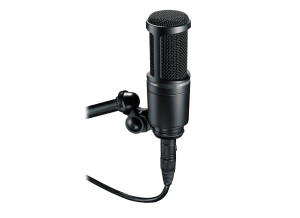
    That being said: The AT2035 is a cardioid condenser microphone that targets the entry market, although the microphone, as part of the AT20-series, does possess the unique characteristic of feeling non-hyped, but slightly squished. This means that it doesn't have the natural "air" of the other low-entry condenser microphones, but it lacks the sibilance peaks and the harshness of the high frequencies of them as well. The AT2035 has a high-pass switch and a pad for high SPL's. Useful to have, but personally, I did not employ either of them regularly during my time with the 2035. That peace of mind, however, does make me feel more confident in singing into one than into a 2020. That, and the shockmount that comes with the microphone makes this microphone much more intimidating. This isn't exactly specific to the AT2020 and the AT2035, but I experience a certain level of anxiety singing into a condenser not in a shockmount. Not because I'm afraid of vibrations, but because the shockmount, like a pop filter, seems to tell a singer where he or she should be. OVERALL OPINION The gripe I have with the AT2035 and most other 20-series mics is its lack of fullness. Great condenser microphones feel like they're enveloping you in the sound; they have a natural size to them that the 20 microphones lack. However, the 20-microphones are set apart from the other entry-level microphones because the other ones for the most part feel like they're poking rather than enveloping. I'm grateful that the way in which the 20-series is cheap is its avoidance of that "fullness" altogether; I appreciate Audio-Technica for not trying badly to recreate that detail. If you were constrained to these entry-level microphones, I would strongly recommend any of the AT20-series microphones. They are leaps and bounds above all of their peers. Although. If deciding between the 2020 and 2035, go for the 2035; it's slightly less noisy, and it's more sensitive and a little more flattering.

  • Audiofanzine FR's review

    (Originally written by zedbee/translated from Audiofanzine FR) It came free with a Joemeek preamp I bought. Nice present... I use it for vocals. OVERALL OPINION I've been using it for 6 months. Its poor quality makes this mic remarkable. It looks awful and cheap and the first time you use it you'll notice that the sound matches the finish... Typical Chinese sound with over-emphasized highs and no accuracy whatsoever. It sounds even cheaper than a basic Thomann mic. And worst of all, it got broken after 6 months of use... It was free so I threw it away without bothering with the warranty... Mr Joemeek would turn in his grave if he could hear this mic...

Categories that may interest you