Log in
EN
FR

Line 6

342 products found

Categories
Series
Filter
Sort by
Evaluation
  • Reviewed or not
  • Editor’s award
  • Reviewed by Audiofanzine
Availability
  • Available or not
  • Sold new or used
  • Sold new
  • Sold used
Must-have products
  • All products
  • Flagship products
  • Best rated products
  • Hot products
  • Popular products
Price
  • Freeware
€
Clear
Sort by
  • Popularity
  • User ratings
  • Price - low to high
  • Price - high to low
  • Used price, increasing
  • Used price, decreasing
  • Name (from A to Z)
  • Name (from Z to A)
  • Added on
Sort results
  • Popularity
  • User ratings
  • Price - low to high
  • Price - high to low
  • Used price, increasing
  • Used price, decreasing
  • Name (from A to Z)
  • Name (from Z to A)
  • Added on
Filter results 342 results found
Evaluation
Availability
Must-have products
Price
  • Freeware
Show results

The best Line 6 reviews

The reviews Audiofanzine members found the most helpful.
  • « Line 6 Helix (Back to the Future) Great Scott !!! »

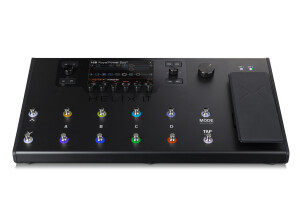
    Line 6 Helix (Back to the Future) Great Scott !!! My complete review of Line 6’s Helix – a full-featured and well-conceived multieffect unit. Unboxing day!!! When unpacking it you’ll immediately realize how heavy it is. It seems sturdy, up to par with the professional level you’d expect for such price ;) It comes with a classic power cord, a 512MB USB drive (what a shock – please see lower for details of the drive’s content) and a cheat sheet, which is a vague manual detailing the Helix’s various controls. The knobs and the big volume/expression pedal seem well-made, but strangely the six selectors under the screen seem a bit cheap and the joystick selector (which is quite useful) seems less sturdy than the rest. Time will tell, everything’s fine so far. The rear panel outputs are comprehensive, almost the same as the rack version (which is not that interesting pricewise considering you’ll have to add the foot controller). This pedalboard version however offers an expression/volume pedal plus 2 outs for adding external expression/volume pedals (a better value-for-money IMHO). It however remains quite easy to use without a manual. However, it can also soon turn hard to use if you start trying to creat fx chains with series and parallel chains within the Helix’s effect, amp or cab blocks + your own IR impulses. There was a bug that prevented the effect chain on the first line to display correctly when I first got in in version 1.01.2 (which was the first real update). I was perplex at first (what a good start, ain’t it ? :8O:), but I went to the official website which announced a v1.02.2 update that corrected screen artefact problems, so I installe dit which solved the problem. So don’t get mad if you encounter such a problem, though of course it can surprise from such a costy product. Helix is back Compared with the previous Pod HD (X) series, the user has to start learning everything from scratch – this is NOT a mere Pod. This multieffect unit WILL sound good, provided you manage to set correctly your inputs and outputs. Whatever you but after it also matters a lot : it won’t sound the same whether you use a poweramp with a cab, a neutral-sounding active amp, a tube amp head full of character or a combo, but this goes with every single multieffect you might think of, no matter its generation. The default Helix setting provides a neutral EQ with a percentage indicator: no more virtual knobs on the screen, as previous Pod users were used to. (e.g. it goes from 0 to 10 and 0% to 100%, so no clock reference such as “put it at 12” and so on) Compared with the previous models, the presets are mors neutral-sounding, and those unwilling to tweak them to use only the default banks (especially “Factory 1”) may be quite disappointed especially by overdriven sounds. Default clean and crunch sounds are usable as is, but the default distorted sounds sound strangely thin and locked in the lower range – all this of course is only for the default presets. With a rather (not to say much too) neutral setting for a preset, with say master at 4/10 and EQ at 5/10, the sound remains within a certain given sound range so all has to be reinforced. While the previous Pod generation could be said to have default settings that featured burdensome differences in volume and an excessive amount of effects that made some presets unusable, this time, it’s the exact opposite! The blocks are quite simple: a reverb + a distortion or drive + a delay and that’s all, folks… At least for most of them, not all of course. The “Factory 2” soundbank is more elaborated and sounds much better. The effects can be heard and show the different possibilities offered by the Helix. Please note you have 8 main banks, each featuring 32 different banks that are each made of 4 presets – I’ll let you do the count but it amounts to a total 1024 ( :8O:). Needless to say you have plenty of room. As for your personal IR cabs, you have 128 free spaces. My Name is Helix, Line 6 Helix Every name in the Helix can be edited, not only the presets and banks but also those of the default effects. Say you want to rename the Scream 808 (the digital model counterpart of the famous Ibanez green box) to Devil 666, well, you can. The footswitch colors can be changed too, with several colors to pick from. The 4 fx loops and the multiple ways to organise them (splits and all) will keep you busy for a moment, you’ll definitely like it if you’re the kind of persons who like tweaking amps and effects. If you tended to consider the old Pods were complicated to use, be aware that in spite of its ergonomics the Helix is to be considered for advanced (and/or demanding) users only, as getting a sound can range from easy to very difficult. Especially if you start a chain four times as complex as what you could do with the previous generation of Pod, which was limited to 2 parallel chains (vs 4 with the Helix + all the different block associations) With the two powerful onboard processors, say goodbye to the previous DSP’s limits that forbade some combinations and stuch the user (e.g. whammies and harmonizers are very demanding as far as DSP is concerned). It still has a limit of course, but when you’ve reached it you’ll get a big message with the amp or fx selection greyed out. Line 6 has been very reactive as far as corrective updates have been concerned, more than with the previous generations of products. Line 6 lends an ear to its community of users as far as suggestions and corrections are concerned, thanks to their Line 6 IdeaScale concept which allows users to suggest improvements. Users can then vote for the ideas that seem the best to them. Update 1: Versus fighting How does Helix rank compared with its predecessor? Since many people are going to want to compare it with a Pod HD (X), I’ll say first that some faults with the Pod HD have been solved, and that the sounds are more airy, less boxy. The sound reacts to the actual instrument used (a DiMarzio pickup-equipped guitar will react differently compared with one using an EMG81), which was not necessarily the case with a Pod HD which only provided the subtlest differences. I could compare sounds from a Pod HD and Helix with “typical” Line 6 sounds, that is Epic and Doom patches (metal-oriented) with only the amp and cab (no effect). I used almost the same settings (“almost” only considering one uses virtual knobs and the other percentages, as stated earlier). So I tried to reproduce the sound from the Helix on the Pod HD. Quite logically, the Helix’s corrected cabs allowed it to stand out by a wide margin. Unlike the HD, the Helix doesn’t sound like all cabs sound the same, and the mic type is also more pronounced, while the Pod HD’s sound was more boxy, with less dynamic and was missing a distorted preamp’s smoothness. I tried both with the same setting, using a Radial AB (A+B) box to switch from one to the other or even to hear both (I particularly liked the result of both playing together, by the way). I used my 2 neutral-sounding (modified) passive/active speakers with Matrix G50 amp inside + 2 Beyma 12GA50 speakers, for those who don’t know these are neutral speakers that don’t color the sound unlike most guitar speakers. I also have another system with a Thomann poweramp and speakers with Eminence Texas Heat speakers. I had to turn the Helix’s cab simulation off because of the characterful speakers, which is quite logical after all. Back to Pod HD vs Helix: both presets had the same Doom and Epic grain, but the Helix’s sound was clearly better with more character, reminiscent of a tube amp, the sound was less smooth and more in the open with harmonics (either natural or artificial) that stood out. Even the guitar’s sustain was better. With the same virtual amp+cab and the same virtual mic, the Pod HD’s sound lacked air compared with the Helix. The only field in which I found the Pod HD better was its ease of use: settings were easier to obtain, but in the same time I’ve been more used to it than to the Helix that I’ve only had for a short time – it takes time to get used to such a device. Update 2: Sound factory: Let’s get straight to it : once set properly, the sounds are very promising. Of course there are a few faults that I’ll list later on. However, I’ve never spent so much time on a multieffect, and yet I’m not the kind to put too much effects here or there – and I’ve had a few multifx! But here, i’m really having fun modifying sounds. Changing the sound panel is very interesting, with so many possibilities. Of course it has less effects than the previous range’s multieffect, but if you own two active poweramps working in stereo its capacities are huge – and so is the sound that comes with it. Only the fx part allows to come up with sounds that come from out of nowhere Clean and crunch sounds are full of dynamics, and if you can find fault with the default settings (as i said before), once you set it correctly the guitar’s sound and expression are precise and authentic in every detail. A volume swell test to get from clean to crunch and so on shows the same dynamics a tube amp would show. Bluffing! Let’s talk metal and other hairy styles – distortion included. Sounds will first sound a pit cold and very Line6-ish – back to my Doom or epic examples of Line 6 custom sounds. What I mean is you’ll find the typical sound grain you’d get from a Pod HD X, but in a more organic and less smooth variation if you set the Helix correctly. I must admit the default low-set distortions were not what most impressed me at first. The settings not being optimized, the sound was too soft and lacked asperity. I only got something more organic in opening up the EQ and raising the master volume. One thing I didn’t mention yet for the preamp part : I tried the 4-cable technique on a Hughes & Kettner Switchblade TSC and a Line 6 DT50 with XLR connector, and it works very well without an unwanted noise or color, no matter whether the preamp part was bypassed or not. All using only the effects on both tube amps and keeping their original – hence real – cabs. That’s getting interesting, especially with the XLR connexion to the DT50 while keeping the Helix’s preamp: it’s worth trying, even if it’s compatible it looks like It’s been added at the last minute. The only cons to it is – the preamps don’t all have the same default power, eg the Soldano Clean sounds very low in volume while the Fender Clean (also in preamp) sounded way louder, hence some unwanted volume raises not exactly agreeable. Is this a real problem? I’m not sure, what I know is that I haven’t found the same difference in volume on the amp + cab part. The Helix provides huge possibilities: you can chain mono cabs, put them in series or stereo, or even in parallel. The IR cabs you can add will sound better than the default ones, but I found that the Helix’s resemble much to the list of Red Wirez IRs so the difference was not all that obvious. Effects Time Although users of previous Line 6 products were used to have more effects (ah, the M13 or Pod HD X’s 100 effects!), I don’t miss those that left the list considering the quality of those on board and the possibility to add several blocks with almost no limit. The drive sounds are more punchy and add to the organic dimension on an amp that goes all the way from clean to metal. The pitch and oscillation effects are very good, and the way it allows to make rather psychedelic sounds resembles hardwares twice the price ;) I believe the delays, flanger, chorus and vibrato to be a notch upper compared with a Pod but I couldn’t try both to compare (I sold the Pod HD X in the meantime and mostly compared the amp+cab blocks). Finish Him !!! +The overall sound (if you want a quick overview of what it can do the Factory 2 sounds are much better than those from the 1) +Routing capacities and easy sound editing method +Well-finished and pro (heavy) hardware +Updates by Line 6 +Use your own IR Cabs +The Input’s Noise Gate, so efficient that most of the time the other block noise gates are not necessary and would only eat your sound out + ability to edit the switch colors as well as the names of all banks and presets +1024 preset possibilities for sound creation +Well-thought templates in the last bank (4-cable and 7-cable techniques, super-series, parallel and so on) +possibility to edit all parameters on the fly with the expression pedal – which turns out to be a little too sensitive, though… +Switches can be set to latch or unlatch -Default Factory 1 sounds (ain’t worked too hard, huh, Mr. Line 6?) -The preamps and their differences in volume -The ongoing compatibility problems with third-party expression pedals (say with Roland’s EV5) -The settings that go back to default every time you change the amps and cabs or preamps. It’s quite a burden to reset everything (EQ, volume…), hopefully things will evolve (I proposed it on Ideascale) - More amps/fx/cabs in the future? - the 512MB USB drive when others offer free chocolates – which are better. Former Axe FX 2 owners know what I mean. -The rack version, not cost-effective considering the foot controller to be bought separately (well, that’s my opinion) And please, please Mr. Line 6, a Mac & PC editor!!! Update 3 Finally, the preset editor for live editing the fx chains is here, and in the meantime many other updates came, with more amps or effects + bug fixes. Since then, I feel the sound has evolved. I’m always as happy with it, it’s as evolutive as an Axe FX and no need to start all presets from scratch everytime ther’s an update ;-) See what I mean, Mr. Fractal Audio? :bravo: *The 512MB USB key contains the Line 6 Helix’s manual, revision A. At a time when the merest USB drice counts in GBs and the manual itself is at its revision B… I’ll leave you fill in the blanks ;) For those interested, I created a French-speaking forum there: http://line6helix.forumactif.org

  • « Variax Standard Sunburst : good value-for-money, but as for its accessories... »

    It took a while before I finally leave a review on this axe, so here we go… As a previous Variax 600 owner who needed new strings, I went to my local dealer where I met a Yamaha salesman who was telling the dealer about the new Line 6 products he intended to sell him. A quick chat with the salesperson, an order by the shopkeeper and 3 weeks later… Specs: (as they appear on a famous German-based reseller's website): Handmade based on the Yamaha Pacifica Body: Alder Neck: Maple, screwed Neck profile: Flat "C" profile Fretboard: Rosewood Radius: 336.6 mm (13 1/4 inches) 22 Frets Nut thomann width: 41.9 mm Scale: 648 mm Pickup: 3 Alnico V Single Coils Special vintage tremolo Graph Tech saddle Integrated Variax HD modelling technology with 13 electric guitar models, 10 models of acoustic guitars and exotic stringed instruments 11 Alternate tunings - own tunings can also be programmed 16 Different pickup types: Selectable in the free thomann software Workbench HD Electronics: Volume, Tone, Model Bank, Old Tuning 5-Way pickup selector VDI connector (Variax Digital Interface) for direct integration with the Line 6 POD HD series Works even without battery power as normal, passive electric guitar Hardware: Chrome Closed machine heads Colour: Black/White/Sunburst Incl. power supply, Li-Ion battery, VDI to USB adapter, USB cable, thomann VDI cable and software I was called on the very day the guitar arrived (it hadn’t even been unpacked yet). So I unpacked it just before trying it – I’m the very first to have touched it :mrgreen: The guitar was very well and solidly packed within various layers of plastic, foam… But no gigbag or softcase! A bad surprise, I would have gladly spent 30 or 40 more bucks for a proprietary softcase (even though, between you and I, they could give it… Goddamn!). So the pack includes the following: the guitar (obviously!), a (very) basic 5ft rj45 cable, the workbench box in a very purified style compared with the previous one which had a very short USB cable, the battery and its dedicated charger, the paper manual (which no longer features a reinforced cover), 2 hex keys and this is it… Quite minimalistic, almost low-cost compared with my Variax 600. As for the guitar: Visually, it’s a sort of mix between a Variax James T (for its neck, tuners and knobs) and a Yamaha Pacifica for its body shape, color and varnish. An entry-to-mid range guitar. Its building quality is flawless ! The different knobs are in chromed metal with LEDs to signal changes in the models/tuning. The tuners are beautiful and shiny! :bravo: However, I had to change the strings within two days – those that came with it were plain crap! They were too rigid for bends (I’d say they were 9 or 10/42s) and sounded very metallish. As for acoustic sounds, it was slightly better… But once D’Addario 9/46 put on, it was way better!! The guitar is particularly light (again compared with the Variax 600), no string buzz problem and the neck’s varnish is very thin with a matte aspect (it slides). Action is set quite low, not as good as my Ibanez JS1200 but it’s a real highway if you compare it to a Strat-like-necked Variax 600! The guitar stays very well in tune, even when using the vibrato a little (yes, I said “a little”!) – it’s not bad at all in that regard. The guitar is plugged with its original pickups into a Mesa Boogie Studio Caliber amp and/or a Pod HD. The three single-coil, AlNiCo pickups have a very typical Strat sound to my taste, anyway it’s a very good guitar. Clean sounds range from crispy to crystal-clear, and crunch to distortion. Really nice for funk, blues, rock and a bit of hard rock! As for metal and beyond, you’ll have to press the button and activate the guitar’s modelling capacities! Modeling activation: The guitar is transformed! The emulated guitar sounds are recognizable (as to how close they sound to the originals I have no idea nor do I care, all I know is they’re all useable), and much more subtle (less of a caricature than my old Variax, at least I find them better). The battery allows to play for 10 to 12 hours, with green DELs at the back of the instrument showing how loaded it is. I personally plug the guitar into the Variax in of the Pod HD500 (with my previous Workbench’s RJ45 which was longer and sturdier) and it’s great! While we’re on the Pod HD500, just one thing I want to mention: the Strat, Tele or Gibson emulations are much better when used with the Pod HD500, not that they’re bad without it but it brings a real difference regarding its sustain, slappy sounds… a real enhancement. The 12-string guitar sounds as wall as other acoustic guitar sounds have been made better to my taste… But the axe’s real pro is its 11 tuning settings for each modelled guitar! Let alone those you can create using the Workbench and save as presets in the guitar’s custom banks… A real pleasure to play in A440, then switch to a semitone lower, then in open G, dropped D – even in baritone!! To avoid hearing the strings (which of course remain in A440), you’ll have to set the amp slightly louder – don’t worry, I said “slightly”, just enough to cover the sound of the strings. Soundwise, the Workbench HD allows for the craziest mixes and really makes the models better as everyone can make his own – provided you’re ready to spend a little time on it it’s a good thing. Originally i wanted a sunburst Variax JVT 69, but at 900 to 1200 bucks and no way to try it where I leave I didn’t feel like it… While for 649€, I could get this Variax Standard AND an opportunity to give it a try beforehand… I sold my Variax 600 with a little nostalgia but no regret, so yes I’m satisfied with my Variax Standard! To conclude: It’s a nice guitar with its pickups, and a great modeling guitar ! The reason why I gave it 4 stars instead of 5 is I find the included accessories to be a little too light, such as the very short and basic rj45 cable (it looks like an Ethernet cable), the manual that looks like one of those cheap ones you get with ready-to-assemble Swedish furniture (Ikea, you name it). Plus, no bag or softcase is included! I’m (not) sorrybut I feel compelled to insist on that point, as this detail shocks me enough to repeat it again and again...

  • « The modern Swiss army knife of guitar amps »

    After using approximately each and every amp range -especially those from Line6 but also different tube and solid-state heads, tube combos, modelization combos...-, I was eager to have an opportunity to test this new generation of products announced as the next revolution in guitar amps. A revolution, well, perhaps not really. But real crazy sounds and a lot of guaranteed fun, well, YEAH!!! First cons: where's the manual!? Frankly, this the the ONE amp for which they should have done something in the true Line6 spirit! Usually their user's manuals are a pleasure to read, filled with advices, stoopid anecdotes and, most important, precious informations. Now, let's get straight to the Amplifi app. I use the Android version, on both smartphones and tablets it works wonder and allows awesome interactions. Soundwise, the models are... INCREDIBLE. I never got such a great and soft sound, at both low and mid level. I had tried the 75W version and was a bit disappointed by it as its distorted sounds sounded harsh, especially on high-gain amp sims. Here, it all just sounds great. The number of models, effects, interactions (some effects can be placed at various places in the FX chain). The ability to send sounds from your own music library wireless through Bluetooth is huge. Not to mention the Tone Search functionality, which allows identifying and finding a sound close to that in your favorite song straight from the Amplifi's online users shared database. I then tried it with the fbv mk2 pedalboard and the amp turned into a real stage performer. Plus, you can connect it straight to your computer through USB, turning it into a recording interface to record your songs in Cubase for instance. I was seduced by the sound it produces, although at very high volume it seems to distort and be less accurate. In this price range, I think it is by far the amp that offers the best modeling and sound capacities. The fact that you can associate different cabs, amp heads and microphones allows to multiply the possibilities. Also, changes are very easy to hear and the results are convincing, which to me is a real sound quality proof. I don't believe it to be up to par with the Pod hd500, but for that price it's hard to compare an all-in-one amp to a pedalboard (even such a high-level one) which implies other costs. I had also been convinced by the Digitech rp500 ans rp1000 series, which in my opinion offer amp modelings (especially the hi gain ones) at least as good as Line6's. To me, this amp is full of quality, I'd recommend it with no hesitation. I also like very much the amplifi TT, a smaller version without a speaker. A real revelation, oh happiness!

  • « The concept is growing up... »

    This is the US build Variax. It has 2 hum buckers by Seymour Duncon, the piezo for the Variax guts, volume, tone, and the Variax selector to switch models, and select alternate tunings. As well as a les paul type toggle switch. It also has a network jack output to to go to the Variax "hockey pick adapter to go into your computer via USB to use the Line 6 work bench to edit settings or into a Pod HD for connecting in the digital domain. It has a wrap around Les Paul Jr. type bridge. It's a very nicely made, well playing guitar. Fret access is good, especially forLes Paul type single-cut body shape. The USB settings/computer connect ability depending on your PC or Mac can be a bit daunting at times. But as of know those drivers seem stable. Sounds...first off, the magnetic pick-ups sound actually pretty awesome. they're a bit hot for my taste. But no more so than say in a les Paul Classic. It has less midrange honk than a Les Paul. Now lets take a look at the Variax sounds. The stand outs for me are the Les paul, Les Paul Special and Firebird. The Gretsch' are very nice. The 335 is a bit too honky and dull. The Start with gain is glorious, the in-between settings could stand a bit more "quack". The acoustics need some careful balancing of the tone knob which then becomes a moving the mic between sound hole and finger board virtual placement. The sitar is one of my have off the wall things in it. The 12 strings at the default setting sound a bit too processed, but rolling down the tone helps. In this case it determines how much octave string you have in the signal. All and all its a great palette at your disposal. The common complaint about "dinginess" to the attack on palm mutes isn't an issue if you lighten your right hand and move it a tad back. The tunings is where th fun starts. Want open strings in a solo but the tune is in F minor? Just set the tuning to up a half step and play in E. Need drop D and Drop C# in the same set but don't want to carry extra guitars? there you go it's in there. And my have the baritone tuning and low B tuning. Sweet on a Tele. I'm glad I got this guitar.

  • « Great for starting out »

    I was in need of an audio interface back in 2018 and stumbled across a used Toneport KB37 for $80 couldn't afford it right then but I did reserve it for later purchase. Got it home and since I hadn't used an interface took me awhile to get it working but it worked fine mostly in the end. It features great feeling keys that are pressure sensitive, 4 knobs and buttons to control stuff inside your DAW. It also comes with many 2 XLR inputs and 1 guitar input. Overall the actuall product is great for starting but I do have a few issues with the knobs for volume control which I think was caused by the previous owner it takes me afew minutes to get the volume to even work has to be in the right place to even output anything from the XLR input. Same problem with headphones output would be 100% satisfied with it if that wasn't an issue but overall I would highly reccomend it to people starting out just make sure to ask the shop or whoever to see if you can test it with the headphones and XLR volume knobs.

  • « Control the show! »

    I just used the Line 6 StageScape M20D for the first time last week, and it has some really amazing features. The interface of this system is truly one of a kind and unique. On the back of the unit are where all of the ins and outs are but by looking at the front of the unit it was hard to tell that it was even an interface. It has a total of 20 different inputs with 12 of them being combo jack mic line ins. UTILIZATION It took me a few minutes to understand working with the M20D. Last week I was in charge of setting up a small show for a local band that I work with and they owned this. They didn’t even know how to use it so I basically had to figure it out on the fly and I did it easy without the manual because they didn’t have it with them (though it does come with one). SOUNDS The effects where perfect, I didn’t expect to get multiband compressors, gates, and limiters right on the M20D. While using this unit I was also able to record the full show in WAV format to a USB drive to put it into my DAW later on because they are working on a live album as well. OVERALL OPINION I basically had the M20D in my hands for most of the rehearsal just messing with options trying to get a better feel for how it worked and I was able to really edit some things like the kick drum. I was able to add some punch and compression to the kick drum right from the M20D. This unit was truly a gift to work with and I will be purchasing one of my own soon too. For any group that performs live or at least practice a lot together, this is an immediate must have. You will be in awe on what can be done by this little interface.

  • « Line6 scores a direct hit with the M13--this is Stomp Box Heaven!!! »

    The Line6 M13 is the flagship stomp box modeling unit from Line6. Unlike most of the Line6 products, this unit does not have all of the signature Line6 amplifier and speaker cabinet modeling software at your disposal. This unit is designed to work WITH your amp and not in place of it. Do not be fooled by this however. The M13 is an extremely flexible unit in that there are myriad different options for sound shaping including the various different stomp box models and the connection options that allow you to connect your amp via the now-famous 4-cable method. This allows you to put effects in their proper place, with distortion and non-modulation effects before your amp's preamp stage, and the time-based and modulation effects after the preamp stage. The amp also has MIDI capability if you want to use it as a controller or control it via MIDI. The MIDI implementation is not the most straightforward but can be figured out with an investigation of the downloadable MIDI Implementation Guide. UTILIZATION The words "Bonehead Simple" are actually printed on the M13 box and I think that about says it all. I received the M13 with the updated 2.01 software on-board. The one thing you DO have to watch out for is that it could be perceived as OVERLY bonehead simple. During one of my trial sessions, I couldn't figure out why sound was coming out of my amp but nothing was happening on the M13. That's because the M13 is truly "true bypass" and it simply wasn't powered on. So you know that if your M13 dies mid-gig, your signal will still get to your amp. Excellent!! This is a great (relatively) little unit. The beauty of the M13 lies in its simplicity and flexibility. It takes about 10 seconds to memorize the color coding for the different types of effects, but hours to go through the settings and different models. There are two different modes of operation: Standard mode and Scene mode. Scene mode works like any other MIDI patch--you call up the patch and it brings up the pre-configured models in the pre-configured order and with the pre-configured levels. In scene mode you have access to the active models in each bank and you can toggle them on and off individually. In standard mode you have access to 12 different stomp boxes'four banks with three options in each position. The payoff is no cables and no re-wiring. When you call up a model, the stomp box is activated with the last settings already pre-programmed. There is a global option to either save all settings automatically or not. I suggest leaving it on as that is really the purpose of the M13. I haven't yet found a need to have the settings NOT automatically saved. Without the auto-save enabled, any called-up model will accept the position of the knobs as-is' most likely undesirable. When I started writing this review, I liked working in standard mode over the Scenes, although in truth the 'Standard' mode is really just a 'scratch pad' scene. Unless you have a special need for a high number of different sounds, you can get a great deal out of standard mode. I have my 'Scratch Pad' M13 scene set up in the following configuration: Bank 1: A. Screamer, B. Blue Comp Treble C. Line6 Drive Bank 2: A. Line6 Distortion, B. Heavy Distortion, C. Dimension Bank 3: A. Noise Gate, B. Dual Phaser, C. Tri-Chorus Bank 4: A. Stereo Delay, B. Noise Gate, C. Echo Notice that I have the Noise Gate in two different positions and weaker distortions in front of heavier distortions. This allows me to either run the Screamer or Comp for a little boost of my amp's preamp or the Bank B distortion. Having the Noise Gate in Banks 3 AND 4 allows me to either put the gate at the end of the signal if running in 2-cable mode, or after the distortion effects in 4-cable mode so that the modulation effects are super-clean. In the latter configuration, the modulation effects really shine through the mix. With this configuration, I can get punishing distortion out of the M13, juice the front end of my amp, or get wonderful multi-dimensional clean tones. After learning about the flexibility of the M13 and how to better leverage scenes, a whole new world opened up to my tonal 'mad science.' It's like having 12 stomp boxes at your disposal at a time, 12 sets of 12 stomp boxes, and you can activate any of them in their pre-defined position' NO WIRING!!! The only thing you can't do is have more than four boxes active at any one time, one from each bank. (You can only have one 'A', one 'B', one 'C', one 'D' on at a time). Pressing the foot switch activates the effect. Pressing another button in the same bank activates that effect and deactivates the previous one. Pressing the button of the active effect toggles it on/off. There is a dedicated button to activate the looper, a button to activate Scene mode, and holding the looper button activates the on-board tuner. The tuner is one of the most sensitive I have encountered. After running the M13 straight into the front of the amps, I configured the M13 to have the effects loop in between banks 2 and 3. This one of the other beautiful features of the M13: you can place the effects loop wherever you want as opposed to being locked into one configuration. Line6 characteristically doesn't include a ton of literature with their products because just about all of their product information is downloadable from the web. While I appreciate their commitment to green initiatives this doesn't help much when you're at the gig and there's no internet connection and you REALLY need some help from a manual. Still, the unit is easy enough to figure out that you only need the manuals for the really intricate operations. SOUND QUALITY I played this modeler with the following guitars: VOS '58 and '59 Gibson Custom Les Paul guitars with Burstbucker 1 and 2 models Gibson Raw Power Les Paul with '57 Classic pickups Ibanez JEM 7VSBL with stock Dimarzio Evolution pickups installed Ibanez RG550MXXDY with Dimarzio Super 3 Bridge, Evolution Middle, and Evolution Neck Ibanez RGR4 with Dimarzio Crunch Lab Bridge and LiquiFire Neck Epiphone Les Paul Standard with Seymour Duncan Phat Cat P-90's PRS SE Semi-hollow with stock pickups Squier Telecaster with Dimarzio Air Norton T bridge and Area T Neck B.C. Rick Mockingbird Neck-Thru with Dimarzio Super Distortion bridge and Super 2 Neck Squier Strat with Dimarzio VV Solo bridge, VV '54 middle, and VV Heavy Blues neck. I played the M13 through the following amps: Marshall JVM410H head and Crate Blue VooDoo stereo 4 x 12 with Jensen 60's Marshall HAZE 40w 1 x 12 combo Marshall Class 5 1 x 10 combo Marshall Vintage Modern 50-watt head and a Carvin mono 4 x 12 with Celestion Heritage 30's Mesa Boogie 1 x 12 Mark V combo Marshall DSL100MLB full stack. Marshall Vintage Modern 50-watt head and a Carvin mono 4 x 12 with Celestion Heritage 30's + Hughes & Kettner TriAmp MK II and a Carvin mono 4 x 12 with Celestion Vintage 30's in stereo. The M13 ended up sounding the best with the Marshall HAZE 40 so I used that as my basis for sound. Hooking up the M13 with the 4-cable method opened up a whole new dimension to the tone. The distortions were tighter and the clean tones were, well, cleaner since I could just run the clean (standard) channel preamp valves of the HAZE. One of my favorite models in the M13 is the model of the old BOSS Dimension C. If you tinker with the different switch combinations on the Dimension C you can get everything from light Chorus to Phase to some unique sounds. I highly recommend using this effect to add a unique ambience to your sound. The Blue Comp + Treble model is nice for cleaning up the darker overtones of the EL34 power valves and really focuses the tone when engaged. Using the Screamer model adds a nice compressed boost to just about anything after without adding too much gain. I didn't have much use for any of the 'Purple' category models, but I play pretty straight-ahead rock, so your mileage may vary. The quality of the models is so good I encourage you to at least try them. There are only a few reverb models in there, but the ones that ARE there are all I could want or need in a reverb including 100-200 millisecond echo model. You can get lost in the delays, especially in the Scene dedicated to them. One of the things I found odd about the M13 is that the EQ models were in the preamp (yellow) category, making them somewhat hard to locate at first. Also, putting them in that category limits the number of EQ/Overdrive/Distortion combinations you can create, but I suppose they had to put them somewhere. Even though there is a Noise Gate pedal model, there is also a master noise gate that is accessible from the main Setup screen, so if you can live with just the overall noise reduction of the M13 you can save pedal spots. The M13 nailed everything. Usually, when you are working with a complex unit like the M13 you'll find something where you're relatively unimpressed. While there are effects in the M13 that I would probably never use, there was no effect that I tried where I thought the model simply didn't pass muster. Line6 really took the time to get all of the models right and it shows when you hit the strings. I found all of the tones easy to work with and great-sounding. You know you've got a good product on your hands when you come across an effect that you've never really been a fan of, but the implementation in the Line6 M13 wins you over. OVERALL OPINION So what's the verdict? It really depends on what you're after. I've read a lot of material that compares the M13 to other Multi-Effects like the BOSS GT-10 or Line6 POD X3 Live. At first, the difference seems pretty obvious... Units like the GT-10 and X3 Live have amp and cabinet models in them and have the ability to emulate both and amp and add effects, where the M13 just adds effects (no amp modeling here), so one would be led to think that the M13 needs to be run into/with an amp, whereas the others can just be run straight to the board or recording console. Well, I got to thinking about it. Let's say for example I just want to use the M13 in 2-cable mode right into the front of my, um, 1968 Plexi. No problem, right? Well, what's the difference between running the M13 into a 'real' Plexi and running the M13 into the POD Farm model of a Plexi? Turns out not very much--you have to tweak the levels a bit, but I found that I could run the M13 in front of my Line6 KB37 and then into POD Farm and with minimal adjustment of levels I got the same results as running into a 'real' amp. How cool is that? I initially figured to get the M13 recorded I would have to turn on an amp and mic a cabinet. Not so. Just wire it in front of your amp modeling software of choice, tweak it to taste and you're good to go. My biggest issue with the M13 as noted previously is that the MIDI implementation on the M13 isn't the most straightforward or "plug-and-play" like most other units that factory default to OMNI/ON so that they just work right out of the box. If the MIDI implementation were as easy to work with as other comparable units the M13 would have scored perfectly. Bottom line, not only is the M13 a great stomp box modeler on its own, providing you with an arsenal of stomp boxes that would cost you thousands to collect and would be a nightmare wiring up the signal chain, Line6 has done it all for you in an affordable, flexible package that works for both live performance, live recording, or in front of your DAW. If there's a sound you're looking for that you can't coax out of the M13, well, there are always drums, right?

  • nickname009's review

    Over 100 stompbox effects • Run up to 3 effects simultaneously (with 3 more on deck) • Dedicated knobs control each effect parameter • Create up to 24 pedal board scenes. (It's like having 24 fully tricked-out pedal boards available at any time!) • Universal tap tempo syncs all your time-based effects • MIDI in/out • 1/4" mono or stereo inputs • 1/4" mono or stereo outputs • Two 1/4" expression pedal jacks • True Analog Bypass or DSP Bypass 28-second looper with dedicated footswitches (Record/Overdub, Play/Stop, Play Once, Undo/Redo, Half Speed, Reverse) • Built-in chromatic tuner • Heavy-duty all-metal chassis and footswitches • Included AC power adapter • Dimensions: 10.5"W X 2.4"H x 6.5"D - 3lbs. Can't really say enough about the features of this multi-effects. They have definitely come a LONG way and I can't believe that I've come full circle with owning one again since...'95 or earlier. UTILIZATION It is quite easy to use as a multi effects, most of the other ones have not difficult, but slightly complex ways to tweak settings and configurations etc. So you are generally bound to spend a few hours with it before taking it to the rehearsal studio or the next gig. Yes you probably should read the manual for certain things but you don't have to read it before playing. You can pretty much plug it in and play, and I read the manual for certain things if I'm looking to do something specific with it that I have in mind. Yes you have to read the advanced manual for anything beyond what the youtube demos show you etc. So yes it does take some time on your part to get used to how this thing works. MIDI has always been my enemy so I can't comment on that. I currently use it with the line 6 expression pedal. SOUND QUALITY Pretty darn good! Lives up to the hype that's been built on the internet from youtube users etc etc. There's tons of video demos that will give a wide range of very usable sounds to crazy whacked out sounds that you'd sparingly use. There's been lots of debate about the distortion sounds and I want to say that I think it sounds VERY good. No, of course it doesn't sound exactly like a tube amp but this kind of debate will go on for years to come regardless of my opinion but I think....I might just bring the m9 to rehearsals for the next little while instead of my usual pedals, that's how convincing it sounds! The effects are top notch in my opinion. I love the variety of wahs available and I use all the effects I need to cover almost any song. I have a huge tube distortion pedal that I use to get most of my sound OVERALL OPINION A really interesting unit to look into. Definitely worth checking out. I was never a multi effects guy, I tried a few in the early 90s and gave up and did the whole single pedals and a board for the next 10 years and now I've come full circle back to a multi effects like the m9. Because this one actually sounds QUITE good and not only that, is very usable live, you can tap things in and out on the fly during a gig and with an expression pedal you can control nearly every parameter of an effect on the fly also. And it sounds great! What more does one need??

  • « 24 Basses in one at your fingertips! »

    Korean Made Line6 Variax 700 4 Strings Modelling Bass. Cable and Power Supply/Di Box Included that “phantom” powers the Bass via a TRS Jack Lead. Comes with a soft padded Line6 Case. It features 24 basses modeled on: Fender Jazz 1960 Fender Jazz (flat-wound strings) MODJ 2004 Fender Deluxe Jazz 1961 Fender Jazz Fretless 1963 Precision Bass 1958 Precision Bass (flat-wound strings) Musicman Stingray 2003 Modulus Flea Rickenbacker 4001 1963 Rickenbacker 4001 (flat-wound strings) 1966 Danelectro Longhorn 1963 Hofner 500/1 (flat-wound strings) 1963 Gibson Thunderbird 1966 Gibson EB2D (flat-wound strings) 2002 MTD 535 2003 Warwick Thumb Alembic Long Scale 1984 Steinberger XL2 8 & 12 1968 Hagström H8 1994 Hamer B12A ACOUSTIC Tacoma Thunderchief Kay M1 Double Bass Mini Moog UTILIZATION I’ve used this bass in a studio only. I play mainly guitar, and I needed a bass that can cover many genres. With standard tuning and dropped ones, I’ve never had a problem. From Pop Rock, to Heavy Downtuned Metal, this bass can cover a lot of ground. The manual is really well written SOUNDS As stated above, I used it in the studio for a lot of projects and genres. No buzz at all and the neck is quite good. My favourite models are the ones based on the Warwick Thump (for harder genres) and the Fender Jazz (for pop-rock). It has bass, mids, highs, volume and pickup controls on it. And with the turn of a knob you can choose a great variety of models. This is done thanks to a piezo electric pickup in the bridge. It can be more or less similar to the models, I think that it goes from a 60% to a 90% of the original sound, but the case here is to have choices without having to do a bank robbery! OVERALL OPINION The bass was discontinued in 2007, so if you are able to find an used one in good conditions and for a good price, my advice is to take it! You will have a lot of great choices, and if you are using it in a studio the possibilities are endless.

  • « Waste of time »

    I hate amp modelers and this is the target of my angst towards these types of amps. They don't sound real and they don't sound natural. All they do is simulate what notes you are hitting with and amp that sounds somewhat like they think the real amp sounds. I am a fan of Line 6 and by no means is this review out of anything against them but these amps are just garbage. This amp is rated at 150 watts, which is a really loud amplifier and 150 watts of poor sterile tone. Nothing that I have heard from Line 6 as far as amps sounds has ever sounded good to my ears. UTILIZATION Features 150 watts (stereo) 500+ presets: 300+ hand-crafted presets from 50 world-famous bands and guitarists, almost 200 dialed in presets inspired by the best guitar songs of all time, up to 64 user-created presets Artist-created presets hand-crafted by Johnny Marr, Slipknot, Pete Anderson, 311, Meshuggah, Lacuna Coil, As I Lay Dying, Steve Stevens, The Donnas, Minus the Bear, and 40 more guitarists and bands Song-based presets inspired by the tones of Master of Puppets, Back in Black, Whole Lotta Love, Daytripper, Toxicity, Purple Haze, Head Like a Hole, Smells Like Teen Spirit, Crazy Train, and almost 200 more 16 exceptional guitar amp models that exhibit sophisticated touch response, complex distortions, and compression that breathes like it's emanating from a vintage tube amp. (Line 6 modeling is often imitated, but never duplicated.) Up to 8 effects at once with FBV MkII. 20 Smart FX (up to 4 at once) including Smart Harmony and Pitch Glide plus echoes, mods, reverbs, tremolos, delays, and more; Additional effects include Quick Loop, Noise Gate, and Boost; Edit all effects up to 7 parameters deep Bass, Mid and Treble knobs behave like the EQ controls from each modeled amp; Drive knob; Channel volume; Master volume; Manual Mode 1/4" input; 1/4-inch headphone/direct output; two 1/4" speaker outputs; 1/8" CD/MP3 input; FBV jack; Built-in chromatic tuner Line 6 FBV MkII foot controllers (not included) feature a foot pedal for wah, volume and pitch-shift control; tap tempo; chromatic tuner display; channel switching; USB connectivity for receiving amplifier updates and upgrades; more. SOUNDS The amp sounds thin and sterile much like a stomp box overdrive or distortion pedal would sounds like. You can hear and feel the digital process in the tone. This amp has no soul and no tone what so ever. It is a complete waste of resources. I like the way their effects sound and the way that their software is set up much like a real guitar rig, but the distortions and amp models are horrible! To me it doesn't matter what guitar you use with this thing it is going to sound nothing like the amps they are trying to recreate. If you must lay this amp then I would play it with a Gibson Les Paul or something with mahogany for the wood. Something dark and bold that will give some thickness to the tone of this amp. OVERALL OPINION I loath solid state amps and how much I can't stand amp modeling. This is just a waste in my opinion. This amp continues to give me very little doubt about the amp modeling world. Line 6 are definitely the leaders in the amp modeling world but to be honest most of their tones from the recreated amps just don't sound very good. At new these amp are at around $399. Not a bad price for an amp but then you have to buy a cabinet as well. I would pass on this head.

  • Audiofanzine FR's review

    (Originally written by jacqn/translated from Audiofanzine FR) UTILIZATION Very easy to use. In the beginning I thought I would have to study the user's manual, but it's very intuitive especially the tap tempo function which keeps flashing when the effect is not active (very good idea!) SOUND QUALITY Really excellent. I use almost exclusively the analog and tape modes. When the effect is on and you turn the knobs it works like a tape echo (funny, but confusing). OVERALL OPINION I sold my old Pearl tape echo in 2000 thinking I would never play guitar again. But I started playing again and I missed an echo/delay effect. I bought this Echopark after reading reviews about almost every affordable product: - Three different effect types, especially the very nice tape emulation - Integrated tap tempo function (unlike the Marshall) - Multiple settings I'm not disappointed, it's an excellent product! I strongly recommend it.

  • « Amazing effects. »

    I play Metal and classical and it does well on the effects but the amp sims are hit and miss as most units of any price range are too. It has a lot of vintage fx that would take a crazy amount of money to collect. The 8 wah pedal choices are great and the whammy is realistic. The 5150 and Mesa Rectifier do not set up like the real ones (tone controls). The ENGL and acoustic sims are amazing tho. I use AMT preamps instead and this is great.They have preamp vers of all the amps so you can run into a poweramp and save CPU usage. Gets alot of flack for no IR loader but I have a Mooer Radar for that if needed. I got it for 4CM on a EVH and Crate BV120H. Perfect for this! The I/O's are the best of all my gear. Can use the mic and guitar in's at the same time as two seperate audio paths and put the FX loop and FX anywhere on either path. Can run a guitar and bass on thier own line path too as well as the two amp at a time mix. They really thought that through! Will be a keeper long after I get tired of the amp sims just for the FX. Global EQ, ect. Amazing unit and does alot for the money ($300-450). Best bang for your buck.