Log in
EN
FR

DiMarzio Humbucker guitar pickups

92 products found

Filter
Sort by
Evaluation
  • Reviewed or not
  • Editor’s award
  • Reviewed by Audiofanzine
Availability
  • Available or not
  • Sold new or used
  • Sold new
  • Sold used
Must-have products
  • All products
  • Flagship products
  • Best rated products
  • Hot products
  • Popular products
Price
  • Freeware
  • Low-cost (< $100)
  • Mid-range ($100 - $150)
  • Premium (> $150)
€
Clear
Sort by
  • Popularity
  • User ratings
  • Price - low to high
  • Price - high to low
  • Used price, increasing
  • Used price, decreasing
  • Name (from A to Z)
  • Name (from Z to A)
  • Added on
Sort results
  • Popularity
  • User ratings
  • Price - low to high
  • Price - high to low
  • Used price, increasing
  • Used price, decreasing
  • Name (from A to Z)
  • Name (from Z to A)
  • Added on
Filter results 92 results found
Evaluation
Availability
Must-have products
Price
  • Freeware
  • Low-cost (< $100)
  • Mid-range ($100 - $150)
  • Premium (> $150)
Show results

The best DiMarzio Humbucker guitar pickups reviews

The reviews Audiofanzine members found the most helpful.
  • « Clean up the mud »

    This is definitely a neck pickup which was designed to give you more of the Stratocaster single coil sound, without the noise. These are great for cleaning up the neck pickup tone of very dark, dull-sounding guitars. If you wire them up for parallel coils, they take on an almost acoustic-electric guitar type sound, which can give you some versatility. These are very similar to the Dimarzio Eric Johnson signature humbuckers, which are also very bright. Contrary to some of the reviews on here, these pickups were not invented in the 80's for shredders. On the official Dimarzio website, it says the DP156 was introduced in 1992. The shredding 80's with big rack units were long gone by 1992.

  • « It has that real old PAF sound »

    DiMarzio has been recently delivering some super high quality pickups at great prices. Ever since the boutique pickup market has started to gain some traction, DiMarzio decided to step it up and show the world that they can deliver pickups just as good and at better prices, all made here in the United States. The Anniversary PAF is a great example of one of their best pickups for that lower to mid gain stuff. If you’ve ever played an older PAF, you’ll know what it sounds like. It’s a lower output pickup that really allows the guitar’s natural frequencies to soar through the amp. It’s not like the standard higher output pickups that so many people seem to add in their guitars. This pickup seems to really mate best with Gibsons, in my experience. I’ve found that it can be a bit bright if you install it in a strat and don’t have a tone knob. The pickup just oozes mojo, though. You can really hear that vowel-ish kind of character that is very prominent in this pickup. It’s also extremely dynamic, so if you pick lightly, you’ll be able to get a great clean tone; if you pick hard, you’ll get an amazing hard rock tone that’ll just completely coat the room in amazing tone. It’s pretty crazy how responsive this pickup is when you start fiddling around with the volume knob. Just be sure that your guitar isn’t too bright sounding already. The pickup has some treble in it, and it might not be too pleasing through the wrong amp. I have these installed in my Gibson R7, and they sound absolutely glorious. I highly recommend them for anyone who wants that vintage kind of tone, especially if you’re a fan of Eric Johnson, Gary Moore and so on.

  • « I really enjoy this pickup »

    Being the big John Petrucci fan that I am, I decided to give this pickup a whirl. Actually, it came stock in the Ibanez Petrucci signature model that I used to own, along with the Steve’s Special. The Air Norton is very famous in the shred world. While I’m not exactly a big shred player, I really enjoy that smooth lead tone that a lot of shredders get. I was quite surprised when I discovered this pickup delivered in every way I could have possibly imagined. The output is nearly perfect for the neck position, and it also has the right amount of every frequency for that dark, smooth and creamy lead tone. It’s not so hot that it becomes undefined, but it’s not so weak that it’s hard to play leads. Keep in mind that this is a dark sounding pickup. It is not for those who like brighter neck pickup tones, and I know that a lot of people have complained about that. If you want something brighter, look into the PAF Pro or something else like that. Instead, this’ll deliver some of the fattest and warmest tones you’ve ever heard in your life, but it’s not so muddy that you can’t tell what notes are being played. If you’ve ever heard John Petrucci’s lead tone, then you’ll know exactly what I’m referring to. This is generally my “go to” pickup when it comes to DiMarzios. I’ve since been using the Liquifire more, but that’s for another review. This is still one of the top DiMarzio pickups I’ve ever used, and it remains in the top three at all times. Don’t forget to pair this with a high output bridge pickup to truly get the most out of this pickup. Some people actually recommend using this in the bridge, but I can’t imagine that would sound that great. Who knows, though? Maybe I’ll give it a whirl in the future for something totally different.

  • « Came stock in my Fender »

    The PAF Pro was actually one of the original pickups that DiMarzio made, and it’s one of those that really started to catch on during the whole 80s rack scene. I remember everyone running these pickups back in the day - Paul Gilbert, Steve Vai, Joe Satriani and the list just keeps on going. A lot of OEM manufacturers actually started putting this pickup in their guitars too. This came stock in lots of Ibanez guitars, and it even came stock in my one Fender stratocaster. The output is enough in that it’ll work in either the neck or the bridge. In the bridge, it matches great with single coils and other medium output neck pickups. It’s fairly open sounding with some slight bite on the top end. In the neck, you get one of the famous neck tones of the 80s. It’s clear and bright without sounding too trebly or thin. It’s also quite dynamic, which is something a lot of people had issues with when they started running a lot of rack gear back then. However, the pickup seems to be a bit dated today. While I still really enjoy this pickup, I recently sold off my last one because it’s just not what I’m looking for these days. I’m starting to prefer more modern sounding pickups as of late, and so I decided to part ways with this. That said, if you’re looking for one of the most versatile pickups ever made, this could suit you. It all depends on what kind of tone you’re aiming for. Today’s DiMarzios come with four conductor wiring, so if you want to experiment with different wiring setups, this would probably be the perfect pickup to do so. It seems to work in anything you throw at it and work in any configuration you wire it in.

  • « Looks similar to the D-Sonic but sounds different »

    The DiMarzio D-Sonic was a fairly successful pickup when it first came out, but it has a lot of issues that came with it. For one, it was quite noisy. It also has some annoying treble in the high end. The Crunch Lab seems like them trying to fix the problems that the original D-Sonic had. It uses the same half blade/half adjustable pole piece design that the Crunch Lab uses, but DiMarzio doesn’t really recommend you swap this around like before. You can, however, adjust its orientation. I found that it sounds really good with the bar facing the neck, but you might feel differently. It’s a high output pickup, but it’s dynamic and fairly tight sounding. They fixed the treble issue that I was having with the original D-Sonic. That pickup had an annoying high end spike that I just could never dial out. This pickup doesn’t seem to have it. In fact, it sounds a bit fatter overall. The midrange seems very even, so this pickup should actually work in just about any wood you throw it in. I’ve tried it in basswood and alder, but I haven’t had the chance to try it in anything else. In both cases, it sounded really good. I had this wired up to a three way switch to split the inner coils automatically, similar to how Petrucci does it. This is one of the pickups he uses, after all. It had a great split sound, and I really recommend trying that. It’s clear under high gain and very dynamic, which is something that is important these days. Today’s amplifiers have so much gain that it’s easy to choose the wrong pickup and have a complete mess on your hands. This should work for those running modern equipment, and I recommend you try it out.

  • « Calmed down version of the Evo »

    The Evolution is a super hot pickup with lots of harmonics and is very tight. However, it had an issue when you try to calm it down. It seemed like it was always full on with no real way of introducing some dynamics to your playing. If you’re someone who likes to ride the volume knob, you’ll probably not like the original Evo. That’s why DiMarzio (or Steve Vai, I’m not truly sure) decided to make the Evo 2. This is similar to the Evo, but it’s not quite as tight sounding, yet it’s more harmonically pleasing and complex. The pickup has a lot of unique overtones going on with it. It has a lot of midrange, so keep that in mind. If you put this in basswood, it might be a bit too strong in the midrange, but a lot of people like it in Ibanez guitars, so it might be worth a shot. Personally, I find this best suited towards alder or mahogany bodied guitars as it really helps push those complex mids while leaving everything else fairly even. It’s not overly bright like the original Evolution was, but this still has a lot of harmonics that the traditional Evo has. I originally put this in my RG3120 and really liked the results I got. I’ve since taken it out and replaced it with something else simply because I like to change up pickups once in awhile, but this is a very solid pickup. I’ve since moved this to my JEM, and it works amazingly well with the middle single coil for those Hendrix and SRV kind of tones in the bridge position when split with the single coil. My guess is that this would sound great with a push/pull, but I didn’t have any on hand to test it, and I didn’t feel like opening up my guitar again.

  • « Vai's other famous pickup »

    Vai has a lot of pickups these days. However, in the past, it was really only the Evolution and the Breed pickups. Whereas the Evolution was a super tight and bright sounding pickup, the Breeds were very fat sounding. In fact, the Breed was actually an overwound PAF Pro with double adjusting screw heads that allow you to fine tune the guitar’s tone more than most pickups at the time. The double adjusting screw heads actually give this pickup its fatness and is the secret behind the tone. The pickup has a lot of bass and midrange - a signature trait of DiMarzio pickups at the time. It also has some more compression to it compared to the PAF Pro that was Vai’s original pickup that he was using. It sounds fairly modern sounding, but it’s not super tight like some of the other pickups out there. This really sounds best in even to bright sounding guitars. A lot of people like this in basswood guitars, and that’s the wood it was originally designed for. I’m not sure if I totally agree with that because basswood has a lot of mids, and this pickup also has lots of mids. It can be a bit overbearing if you’re not careful, but I’ve made it work in my Ibanez guitar at the time. Vai also makes it work, so it all depends on your tastes. I really like this in alder, personally. It works great in mahogany as long as the mahogany bodied guitar has a maple top to help extend the high end a bit. Otherwise, I would look towards another pickup instead of this. If you’re looking for a super tight sound, you’re probably better off with the Evolution instead of this too. Otherwise, this offers a nice higher output PAF kinda pickup without sacrificing too much on the dynamics end of the spectrum.

  • « Steve Vai's most famous pickup »

    Steve Vai has been a long time DiMarzio and Ibanez user. This is probably the most famous of his pickups and is the one everyone thinks of when they hear Steve Vai’s tone. If you’ve ever seen his white Ibanez guitar, then you’ve probably seen this pickup in action. It is a high output pickup, but it still has some dynamics to it. Granted, there are better pickups out there in the dynamics department, this still had more than some of the other DiMarzio offerings at the time. It has a lot of midrange and high end grind. That’s a common complaint that people have with this, actually. He originally made this with the intent of matching it with an alder body, but I’m not sure I totally agree with him in that aspect. To me, this pickup suits something like basswood or mahogany better. I would never use this pickup in swamp ash for fear of the treble becoming too brittle sounding. The pickup has some nice bass, and it’s not so overpowering that it’ll muddy up your tone. The pickup gets compared to an EMG 81 quite a bit, and there are some similarities between the two pickups. Both are very tight pickups, and the Evo is more dynamic overall, but they’re still not quite the same. The pickup is very good, but you just have to be careful what guitar you put this in. If you put it in a guitar that’s bright sounding, it’ll become too overbearing in the high end and kill the audience’s ears. One other trick to do would be to run a darker sounding amplifier, kind of like what Vai does. They’ll naturally complement each other then. I used this in an HSH configured guitar, and when it has the auto split thing going on, it matches nicely with the middle single coil for that old school stratocaster sound.

  • « Used by many I loved, but not by me. »

    I purchased this pickup to replace the bridge pickup in a Washburn guitar that seemed to be a touch anemic for playing the heavier music I was in a band for at the time. I chose this pickup because I had an axe with EMGs in it for metal and was looking for something a bit more organic sounding. Many guitar players I was a fan of had used this model over the years and I figured I would like it for myself as well. Well it was OK. I found that as the name implies it was geared for providing distortion. It did that fine. I played this through two separate tube amp rigs and in both situations it seemed to just have too much high end for my taste. It was a very cutting sound and I have heard many players pull out great tones from this pickup but as we know we all sound different and this was a poor match for me. I tried cutting the tone on the guitar, pedals, and amp in many different combinations and found that as I tried to reel in the harshness I was killing the parts of the sound I did like. I also like to play certain lead passages on the bridge pickup at times and that was not an option for me with the DP100. The sound was way to thin to be useful for any single note playing in the mid to upper registers of the guitar. I did give this pickup a long chance with more than a few output options to show me why it has been used for many years by a lot of my guitar heroes but in the end we were not meant to be together. Its hard to slight a piece that has such a good history as this pickup does but not only would I not buy it again but if I found a guitar I really wanted with it installed in it I would be prejudiced against it and preplan its replacement.

  • « Little better than the bridge »

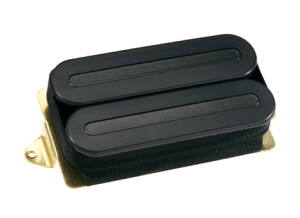
    Dimarzio D Activator X neck, has ceramic magnet with 2 very large rail pole pieces. While I absolutely hated the bridge version this wasn't as bad. I didn't try this in the bridge so can't comment how it sounds there but in the neck it wasn't too awful. Still had the crazy mid bump to it but I guess being lower output and in the neck position if wasn't as prominent. It had a more normal sound to it, nothing extreme and very out of the ordinary like the bridge was. Still wasn't for me but these were much more manageable. They were smooth and deep sounding like a neck pickup should be, but not enough clarity for me. Like most neck pickups this was very bassy so for cleans and bluesy leads it can work wonders. Very smooth so it can make leads creamy, but I like a more cutting neck pickup. I like to be able to play fast leads on the neck pickup while still having clarity and articulation. The rails are good for giving a very even balance in string volume. On some pickups with individual pole pieces when you bend a string it moves out of the magnetic field resulting in slight loss in volume and sustain. Rails are one big pole piece so no matter how much you bend the string it’s still over the rail so there’s no loss in volume or sustain. Along with that these pickups just looked great. Although I wasn’t much of a fan of the sound these sure do look cool. I had them in a red guitar with black hardware so the white bobbins and black rails really made the guitar pop. But so overall this wasn’t for me but I can definitely see why some people would like them. It has a modern twist on a classic sound.

  • « Lesser known Dimarzio neck pickup »

    Steve Morse is the guitar players guitar player. He is well known for his own band the Dixie Dregs and become even more popular when he played for Deep Purple. You have to be a real guitar player if you can take Richie Blackmores place in Deep Purple. He can play just about every style with perfect ability. Since Steve is so diverse in his playing he needs a pickup that can match the diversity in his playing. Dimarzio was the perfect match as a pickup company for him. Dimarzio is a super modern pickup company that makes the preferred pickups for a ton of modern guitar players. Since Steve changes pickups constantly his bridge and neck pickups have to be perfectly matched in tone and output. The sound of this pickup is nice and dark and smooth. It is what you want in a neck pickup. This pickup complements the bridge pickup very well. The pickup has 4 conductor wiring so you can easily split the tones on it. The magnet is ceramic but it is not super strong. It has a lower output and warm sound. The magnets are not super strong with this pickup so the output is pretty low. The eq is pretty flat with a slant towards the mids. The high and and the lows are dialed back a bit to boost up the mids. The pickup is very well rounded it is sound. It has a super smooth sound that can work well with any kind of lead playing. It is similar to the Air Norton or Liquifier in its smoothness. If you are looking for a super smooth neck pickup that is something different this is a good choice. People tend to go to the more obvious choice like the Air Norton or the Liquifier but this pickup can do all that with its own unique tone and feel.

  • « Noisy and unrefined »

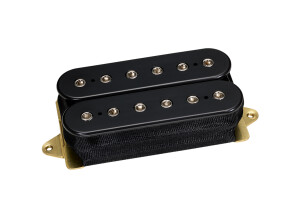
    The Dropsonic was Dimarzios first try at a pickup like this. They now have several half rail half pole piece pickups but I believe this was the first one and it had some growing pains. Its assymetrical design means that depending on how it is oriented in your guitar it will sound quite different. The pickup is like one half x2n and the other half tone zone. It has ceramic magnets and the usual 4 conductor wiring. This pickup did have some growing pains. Being the first pickup of this type it had plenty of problems. It is noted for being super noisy like an old EMG 58 or something. You wouldnt expect a pickup this noisy to be sold nowadays. Even with being noisy it was still pretty popular among guitar players. Petrucci used them when they first came out in his guitars. He now uses a more updated evolution of the same slug and rail design pickup. It really does sound like an x2n mixed with a Tone Zone. The x2n is pretty bright and has decent high end so imagine that mixed with the crazy harmonics of the Tone Zone and you get this pickup. When installing this pickup just imagine the rail part of the pickup the hotter part. If you place the hot end towards the bridge on your guitar you will get a more trebley sound. If you place it towards the neck you get a fatter but also muddier sound. It all depends on what you want. Having an assymetrical design like this kinda makes it two pickups in one. I did not try it in the neck position but I doubt it is any good there. I also did not try the split tones from this pickup. With its design I bet the split tones are either really good or really bad. If you are looking at this pickup I suggest you check out the Crunch Lab also. It is this pickup but more refined and not as noisy.