Log in
EN
FR

Pedals/Controllers

715 products found

Filter
Sort by
Brand
Evaluation
  • Reviewed or not
  • Editor’s award
  • Reviewed by Audiofanzine
Availability
  • Available or not
  • Sold new or used
  • Sold new
  • Sold used
Must-have products
  • All products
  • Flagship products
  • Best rated products
  • Hot products
  • Popular products
Price
  • Freeware
  • Low-cost (< $90)
  • Mid-range ($90 - $200)
  • Premium (> $200)
€
Clear
Sort by
  • Popularity
  • User ratings
  • Price - low to high
  • Price - high to low
  • Used price, increasing
  • Used price, decreasing
  • Name (from A to Z)
  • Name (from Z to A)
  • Added on
Sort results
  • Popularity
  • User ratings
  • Price - low to high
  • Price - high to low
  • Used price, increasing
  • Used price, decreasing
  • Name (from A to Z)
  • Name (from Z to A)
  • Added on
Filter results 715 results found
Brands
Evaluation
Availability
Must-have products
Price
  • Freeware
  • Low-cost (< $90)
  • Mid-range ($90 - $200)
  • Premium (> $200)
Show results

The best Pedals/Controllers reviews

The reviews Audiofanzine members found the most helpful.
  • moosers's review

    The Digitech FS300 Footswitch is a three way foot switch that it designed for use with of course, a few different Digitech products. It's a really simple foot controller with three different switches, and is pretty compact as it's about the size of a normal pedal. The box isn't the sturdiest feeling on the world, but I've definitely never had any problems related to this. I don't know the full list of pedals and products that the FS300 is compatible with, but we've got one in the studio where I work for use with the Jam Man looper pedal. I can't say that I know if you can use it for other brands or not, but I would think not. I do know that it can also be used with the Vocalist Performer and the GNX3 multi-effects pedal. Basically, the FS300 has three separate foot switches and a single 1/4" jack. Depending on the pedal that you're using it with, I'm sure that the three foot switches can be used differently. Of course since it's specifically designed for products made by Digitech, they've decided that they are going to charge much more than what this pedal is really worth. Depending on what you want to use this with, you may or may not be able to find something from a different brand that does the same trick. However, I'd be cautious and make sure that whatever you do get meets the needs you've got, whether it be the FS300 or something else. The upside with the FS300 is that you know it will be compatible with your Digitech pedal, but the downside is the price. If you have a Digitech product that needs a footswitch, I'd probably recommend going with this one, but definitely explore your options since this one is a bit overpriced...

  • « Best ABY pedal made »

    - Optical switching - Gold plated relays - small pots to add gain to one or both of the line outs - huge buttons - super bright LEDs - can be powered by any external power source from 8 to 20 volts - it's like a brick, heavy and solid One of the major benefits of this ABY over other high end (like the Framptone Amp Switcher, Divided By 13 Switchazel, Radial Tonebone Switchbone etc) is how the switching works. In most ABY pedals once you’re in Y mode you need to be aware of if you were in A or B mode on entering. With the Lehle, A and B have separate switches, not a toggle, so you can choose which you return to out of Y mode. It allows for a little less tap dancing and forethought, which is nice. There are other ABY pedals with more functionality (like the Switchazel and Tonebone, for example), but I prefer this pedal due to the simplicity and functionality of the switching. There is also something gratifying about stepping on these large switches. This is completely silent and transparent, unlike cheap ABY boxes. Grounding hum should never be an issue due to the circuit construction. I have owned three of these over the years. Any time I find myself wanting an ABY box, I pick one up. I have tried others and always return to the Lehle. This model has since been replaced with the SGoS model. I am sure that model works just as flawlessly as this pedal. The only thing I don't like is that you need to run an external power source. Since it operates at 9 volts, I wish you could run it off a battery. For most people will pedal boards, this wouldn't be a problem. If you are just running one or two pedals like me and don’t have a pedal board, it's a tad annoying. A small price to pay.

  • « Must have rack unit!! »

    The System Mix Plus (SM+) is the heart of your rack setup. They are no longer produced and are hard to find but they are worth the price. I have been using mine for years and it's a great unit. It is the heart of my rack and I'm not even using all the possibilities it gives you. I used to run it as a rack interface but no longer do that, it worked great for that though. Then, it has a dual stereo mixer on board, allowing you to run fx in parallel, series or both with your dry tone. The mixer part is the same as the Voodoo Lab Dual Line mixer and works and sounds great. It also has a VCA on board, this is a midi-controllable volume pot. You can control the volume of the signal running thru the VCA via your midi-board. I use this as the overall master for my setup, I have it patched after the preamp and before FX so if I turn down the volume, I still have the trails from delay and reverb. Stuff I'm not using, or not often use, are the balanced outputs L+R with speaker simulation (works good, sounds ok), the feed-thrus and the ability to plug in headphones for late night playing. My signal path runs from the pre-amp into the VCA which acts as my master volume. Then into MIX1. In Mix1 I have a FX processor, in Mix2 I have another one. The output of the mixer is then send to my power amp. Having the VCA after the preamp and before fx allows me to do volume swells and shut down the volume while still having the delay and reverb trails. The manual is very good and explains it all. Like I said, hard to find but worth the price. If mine died, I'd be in trouble because it does so much in my rig, it is hard to replace.

  • « SCAM company »

    Loop-Master Pedals is taking orders (and money) but they no longer fulfill them. Countless "customers" have placed complaints online about unfulfilled orders and no response from the companies customer service. Some have investigated and found that the owner has passed away, which means someone is still "running" the company to take orders but has no intentions of honoring those commitments. At this point, I am out $100.00 (I gave the company the benefit of the doubt due to COVID, but my period for fraudulent claims on my credit card has now expired). Save your hard-earned money and avoid this company like the plague. They are running a scam at this point. There are other companies that make the same type of product and actually have them in stock for shipping out within days (instead of the 12+ months this company used to make customers wait). In short, Loop-Master Pedals is no longer a trustworthy business. They are stealing people's money at this point.

  • nickname009's review

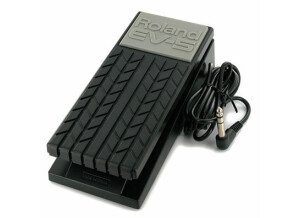
    I currently have two of these to maximize the use of my m9. It’s a pretty good looking pedal and isn’t too costly either. It also comes with a little patch cord to connect with, which is nice, except it’s a very very cheap cord with plastic casing and one of them broke on impact while still in its original box. Weird. But I have plenty of patch cables hanging around so it’s okay, sort of. As for the pedal, I like the size it’s not as big as the boss one as far as I know and it’s quite smooth when using it. Can’t really complain about that. But you can kind of tell it’s cheaply made, the input jack ring is plastic, and I know that’s going to break or crack some day, it’s bound to. There’s also an output label on the side but it’s plugged with a plastic piece. As if this used to be another type of pedal (volume pedal maybe?) and they just simply plugged up the input part and started selling this as an expression pedal. So it’s definitely somewhat of a cheap-ish pedal. However, in terms of use, I haven’t had any problems with it so far. I am just seriously hoping that in the long run this will last. Though I haven’t heard of anybody actually having any problems with these expression pedals so far. I’m just crossing my fingers hoping that I don’t have too much bad luck with these pedals. I’m glad I got two, I did originally intend to use both at the same time but since I only really use one foot at a time 2 is not really necessary, and the 2nd one is now a spare in case the first breaks down somehow. Overally it’s a cheap expression pedal. There are better ones out there and I’d recommend those if you have the extra cash to spend. These are nothing but decent.

  • « A huge improvement over the EP 1 »

    What I like most about this pedal is its overall vast improvements compared to its predecessor the EP-1. I own both and have pretty much shelved the EP-1 at this point do to the amount of noise and issues I have had with it. The EP-2 is a far superior pedal. The resistance of the pedal is much more sturdy and smooth. You also get an "expression" knob to adjust the level of expression from the pedal. Some of the Plastic elements found on the EP-1 have been replaced with metal which not only makes it feel better, but adds the much needed weight to prevent it from sliding away as easily. The cable that runs from the pedal has also been improved with a longer distance and a better overall cable (no plastic). As for things to dislike, I have heard enough users report that these pedals just don't last long. This is a big bummer as the build quality seems really good. Everything that Moog makes is of the highest quality, but unfortunately, they out source the construction of these pedals, which is why they aren't up to par with their other products. I paid $40 for this pedal and, as long as it keeps working, I will be extremely happy with it. I have used many different expression pedals out there and I would say that in quality this one ranks in around the middle, but at the same time, it costs much less than the other mid quality pedals so it gets a little bump for that. I actually own two of these and with the addition of the Moog Multi pedal (they actually make that one, but its 10 times more money) I can't imagine needing any more pedals at this point. I do recommend these.

  • « If You Have Older Line 6 Gear, GRAB One Of These While You Can Get Them For $50 »

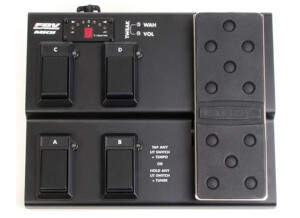
    This is about all the controller you should ever need for any piece of Line 6 gear that uses the older operating system. Built like the proverbial tank, this board will allow you to access features of Line 6 gear that you might not be able to access at all, otherwise. Line 6 is currently blowing these out, direct, for a paltry $50 (street price was $299, in their hey-day.) Shipping to me only added another $5- at those prices, and given the utility and build quality of this thing, it is almost a no-brainer- if you can use it with your L6 gear, just GET one. Be advised- it will only work with some gear- Line 6's website says "This floorboard is only compatible with Flextone® I and II, POD®, POD® Pro, Bass POD®, Bass POD® Pro, original POD® 2.0 (jack labeled "Pedal"), Spider® I (112, 210, 212), Ax2®, Axsys®." I bought it to use with the Line 6 Spider 212 amp I recently acquired. Frankly, it makes playing the amp much easier and enjoyable. First impressions: My God, this thing is HUGE! About 2 full feet long, by about 6 inches wide and 4 inches tall. It fairly dwarfts my old standby Digitech RP-7. Well-built, too- all metal cabinet, solid, no-nonsense push-button foot switches, and well-mounted expression pedals (volume and wah)- this think looks BEEFY. I have my doubts the R52 cable will live nearly as long as the board, but it's a standard cable connection- you can get a replacement at any computer store. The cable that ships with it is LOOONNNNGGGG- around 20 feet- for home use, I rustled up a 8-foot cable, which works just fine. Mostly-black, matt finish means it will not attract too much attention, if you use it on stage. Switches and pedals are solid and give you some tactile/audible feedback, although I'd prefer a "click!" that I could feel through my shoe. You do get a visual cue that a button has been pressed, and that works- but you gotta be looking at the board. Volume and wah pedals work like you'd expect, with the wah having an on/off switch at the toe-down position, said switch requiring a little extra push to flip it. The tuner- only accessable via the Floor Board, when using a Spider I or II amp- is very usable- not too jumpy, like the one on my RP-7 is. I do wish it had a green LED that lit up when the string is in tune. Accessing the tuner by holding the tap tempo button down mutes the guitar a little, but IMO not nearly enough- I like to tune silently- or nearly so- when on stage. The lack of full muting on tune does give you a defeat feature, should you want to have no effects whatsoever. The other buttons give you full access to your amp's, Pod's, or other device's features, and are well-laid out. Manual was fairly well written, and the board is easy to use. GET ONE while you can.

  • « Nice bypass »

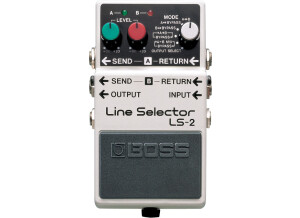
    The Boss Roland company has been producing great sounding effects pedals for decades now. They have build various pedals for almost every single purpose one would use in either their bass rig, keyboard, or their guitar rig. They have successfully manufactured some of the world's first edition effects units and multi units and have set the stage for many other manufacturers to follow in their walking path. They build a system that gets quality pedals at affordable prices to the budgeted consumers. This is a great little pedal for those needing to run an effects pedal in a signal but want to option to take it out of the signal as well. The reason someone would do this is to have another effect in their chain or they would like to take an effects for whatever reason out of the signal chain at times. This pedal works great for what is does. It is simple and easy to use and have a great amount of possible operations. Looping modes AB: Alternate between the two effect loops ABypass: Effect loop A or bypass BBypass: Effect loop B or bypass A-B-Bypass: Switch between loop A, loop B or bypass A+B Mix-Bypass: Switch between both loops in series or bypass Output Select: Input is alternately connected to Send A, Send B or Output Specifications Controls: Level (A, B), 6-way Mode selector Connectors: Input, Output, AC Adaptor (In, Out), Send (A, B), Return (A, B) Current Draw: 25 mA (DC 9V) Weight: 410 g (15 oz.) Recommended AC Adaptor: PSA Series This is a great pedal for someone who uses an older effects pedal from the 70's or 80's that isn't true bypass and wants to remove it from the signal chain when not operating it. For example if you have and old MXR Flanger pedal from the 70's that has a lot of noise since and deteriorates your tone when running through your signal chain but still want to use it with your modern true bypass pedals...well this would be the pedal to use it with. You would hook it up in the loop A or loop B, then click the button on or off when you wanted to take it out of the signal. This would allow you to remove noisy old effects pedals that sound great but damage your buffered tone, you would hook this think up like a send and return on your amp and click the pedal on and off when you desired. Works great and is efficient and what it does. At new these pedals come in right at around $79, which is a great value for a pedal like this. If you need to remove noisy pedals and bring them in when activating then this is a great pedal to do it with. Other manufacturers make ones as well that are smaller such as the Keeley pedal which is about a third of the size. This one has more versatility though.

  • « Compact, good sounding mixer »

    The VL Line mixer is a 9.5" sized mixer. It is a stereo mixer with 2 mixes so you can run your fx units in parallel, series or a combination. It is powered by 9vAC and comes with a power supply. It's a bulky one which is a bit annoying. The manual that comes with it explains clearly and detailed how to hook everything up. It’s fairly straightforward and if you are considering this unit, you probably are well aware of how it works. I would suggest to buy a separate power supply for it, Voodoo Lab make a couple that should work because the one that comes with the unit is really big and can cause noise in your rack. I used mine to run 3 different units with it. I had a Roland RSP 550 in Mix one. This one was doing some delays and chorus sounds most of the time. In mix 2 I had a TC M-one for reverb and micro pitch shifting (chorus-like) and a TC D-Two for delays. This worked great and the sound was very nice. It allowed me to have chorus on the delays and verbs but still keep the clarity of the dry tone as you are actually ADDING the fx sounds to the dry tones. I only sold it because I was able to get a Voodoo Lab System Mix Plus which has the same mixer but a load of other useful features. Voodoo Lab is no longer making these units, which is a pitty. There aren't many options if you want a line mixer for your rack and a 9.5" unit is cool. I don’t think many of these are around so finding one will not be easy but they pop up on Ebay on occasion so keep an eye out if you are in the market for one.

  • « Another nifty gadget from Radial... »

    This is another Radial switching device. This one lets you switch one head into two different cabs. Comes in super handy when using a channel switcher where you want the clean sounds coming from an open back or ported 2x12 cab and the overdrive sounds from a 4x12. You got your jack for the power supply, and the 1/4 inch jack for the remote input and output, as well as four 1/4 inch jack for you amp and cab, those are all for use with speaker cable of course. Basic set-up is a breeze, plug you head into the input, and your two different cabs into the output. You're good to go. This is assuming you have both cabinets with matching impedances. So..two 8 ohm cabs, no problem. If you have say a 16 ohm 4x12 and a 8 ohm 2x12 the alternate jack is used. here's what happens, on amps like Mesa where you have different output jacks for different impedances i.e. one 16 ohm, two 8 ohm and two for ohm jacks you'd run a speaker cable from the 8 ohm jack and one from the 16 ohm jack to the switcher and you have matched impedance on either cab. Now using something like an old Marshall or any head where instead of different outs for each impedance you have a selector switch you're going to have to make a decision. As a rule I find when using a mismatch running the head set to the lower of the two impedances will work fine. In other words 16 ohm 4x12 and 8 ohm 2x12 set the amp to 8 ohm and you;ll be fine. In addition to this on the Cabbone you can use the remote as a master or slave. In master mode you can use it to toggle other relays, which for my use is fairly unimportant. As a slave where you end up programming a midi switcher to take care of it...this is where this box shines. Especially when used together with the Headbone VT amp switcher. Imagine the possibility...one button push and you go from amp1 with a 2x12 for a clean sound, to amp2 with a 2x12 for a dirty sound, to another stomp of the button amp2 with 4x12 for a lead sound. Brilliant. The same caveat applies to this as for the Headbone, if you use the build in footswitch on your pedal board you're going to have very long cable runs from the back-line to the front of the stage and back. And who wants to stand on cables all night long. Then again, that is what the remote jacks are there for. Unfortunately you're then unlikely to see the LEDs, but that is a very small niggle.

  • moosers's review

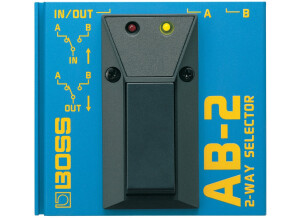
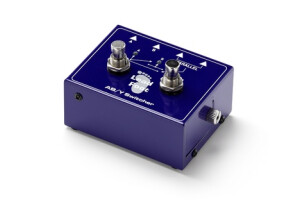
    The Whirlwind A/B Box is a two way selector in the form of a foot pedal.<span> </span>It simply allows you to send your signal to two separate locations, with the ability to either choose one or the other, or have both on the same time.<span> </span>I’ve used this pedal with an electric guitar and two different amplifiers, which is probably what most people will use this for.<span> </span>However, it can be used for any configuration of your choosing, as there are a number of different ways that I can see this being useful.<span> </span>You can also use it in reverse if you want to send two different signals to one place I believe, but I’ve never used it for this purpose.<span> </span>As far as connections go, you’ve only got ¼ inch connections.<span> </span>There are two for A and B, and an I/O port as well.<span> </span>The box has two foot switches – one to choose between A and B, and one for having both at the same time.<span> </span>It can be powered by a standard nine volt power supply.<span> </span>I don’t find that using the unit is hard at all, and I can’t imagine that anyone would since it is such a basic piece of equipment.<span> </span>I’ve never had a desire to seek out a manual, and really don’t think that anyone will be needing one anyway.<span> </span>This won’t color your sound at all, and doesn’t make any sound on its own.<span> </span>I didn’t have a problem with noise or anything like that either.<span> </span>The price of the unit is about right for something of this type, and really won’t cost you all too much money at all.<span> </span>If you’ve got multiple amps or multiple signals, and want to send one signal to them, this is a reasonably priced A/B box that is worth a look into.

  • moosers's review

    The DOD 207 A-B Box is a guitar foot pedal that allows you to send the signal from your guitar to two separate outputs and gives you the ability to choose between the two of them. It is really designed for guitarists who want to have two different amps up and once and switch back and forth between them. It has a two 1/4 inch outputs for the amps and a 1/4 inch input for your guitar. It doesn't require any type of power if I'm not mistaken and is not rackable as it is a stomp box. The configuration of the DOD 207 A-B Box is very easy to follow, with no parameters or control settings necessary. Simply plug your guitar signal into the input and send the outputs to whatever amps or other destinations you would like to send it to. I don't have a manual for the DOD 207 A-B Box, but it is so easy to use and there is no manual necessary at all. Since the DOD 207 A-B Box doesn't really do any signal processing, it is tough to say if the sound quality of the pedal is good or not, but this pedal will not kill your signal at all when your set up is using it. I usually plug my Fender Strat and effects into the input and send this to a '76 Fender Twin Reverb and an Orange Thunderverb amp and choose between the two depending on what type of sound I am going for. I've been using the DOD 207 A-B Box for about five years and it has served me well for the purpose that I use it for. While I don't use it all the time, when I need an A-B box this does the job well without hurting my tone. I got this pedal for free so I don't really know the price that they would go for, but I can imagine they would be pretty cheap used or new. If you are looking for an A-B box for live shows or otherwise, the DOD 207 A-B Box is a perfect choice.