Log in
EN
FR

Analog Modeling Synth Racks/Sound Modules

82 products found

Filter
Sort by
Evaluation
  • Reviewed or not
  • Editor’s award
  • Reviewed by Audiofanzine
Availability
  • Available or not
  • Sold new or used
  • Sold new
  • Sold used
Must-have products
  • All products
  • Flagship products
  • Best rated products
  • Hot products
  • Popular products
Price
  • Freeware
  • Low-cost (< $60)
  • Mid-range ($60 - $250)
  • Premium (> $250)
€
Clear
Sort by
  • Popularity
  • User ratings
  • Price - low to high
  • Price - high to low
  • Used price, increasing
  • Used price, decreasing
  • Name (from A to Z)
  • Name (from Z to A)
  • Added on
Sort results
  • Popularity
  • User ratings
  • Price - low to high
  • Price - high to low
  • Used price, increasing
  • Used price, decreasing
  • Name (from A to Z)
  • Name (from Z to A)
  • Added on
Filter results 82 results found
Evaluation
Availability
Must-have products
Price
  • Freeware
  • Low-cost (< $60)
  • Mid-range ($60 - $250)
  • Premium (> $250)
Show results

The best Analog Modeling Synth Racks/Sound Modules reviews

The reviews Audiofanzine members found the most helpful.
  • « A vintage-spirited vocoder »

    I’ve invested in a VP-03 to get credible vintage string machine and vocoder sounds, and the VP-03 perfectly fulfills my expectations. As with all Boutique series products, manufactoring quality is very good. The lower shell is made of plactic, and the upper part of metal. The switches and faders don’t move unexpectedly and remain in their original axis. The controls are easy to handle and (unlike with the JP-08 for instance) they’re well adapted to their use, in spite of their small size. There’s no preset memory, but what use would they be? Regarding the settings, everything here is minimalistic, so no risk to get lost: it’s easy and instantly efficient, not a machine designed for experimenting deeply with sound but it remains an inspiring device to record vocoded vocal inspirations while having fun. I like the fact that when you turn it on, you find the same settings you were using when you turned it off, so there’s no discrepancy with the knob positions and you easily gat back to where you had left the previous recording session. In the end, the VP-03 only does three things: a string sound, a human voice sound and a vocoder sound – but it does each of them very well. -16 patterns can be programmed over 16 steps, and bits of your own voice (or other sources) can also be recorded through USB. It’s fun, and you can leave it to chance to create strange loops, mixing your direct voice with the vocoded voice, the string machine and the human voice. The 5/6 USB outs allow sending other sound sources (carrier, VST synths…) to the vocoder, and the 3/4 outputs or the mic’s physical input allow to send modulated vocals of speeches, so it’s rather versatile though the lack of an analog audio in is a pity as you can’t send hardware synths through it... I find its value-for-money to be a little under that of the other Boutique series synths. So far, i haven’t remarked any MIDI micro-latency. Pros: -Well-built -A convincing vintage-sounding vocoder -Good and fun-to-use ergonomics. -16 chord memory banks which are very useful. -The last settings used are kept when turned on again. -Credible and inspiring vintage sounds. -The Ensemble effect is well-modelled. -Stereo 24/96kHz audio interface -USB power supply -Battery-supplied for a complete autonomous use -Possibility to send other audio sources to the vocoder through USB Cons: -No audio in like on the first three Boutique models. -Audio out volume lower than on the three previous Boutique models. -The original microphone is very sensitive to all kinds of unwanted noises (breath, pop, keyboard noises…). -A slight audio buzz when plugged on the computer’s USB, like all other Boutique models. -Value-for-money is not as good as the 3 first Boutique synths. -Polyphonics is a beat subpar compared with a real string machine. -No plug for a sustain pedal, which would have been useful for such kinds of sounds.

  • « Get the Juno-106 vintage spirit »

    The JU-06 is an expander-format synth that adapts to a dedicated mini-keyboard. It is well-designed and built, with a metal-made upper casing and faders well into their rail that respond very well to being moved – very smooth and agreeable. The JU-06 can be used as a direct mixer using a mini jack audio input, which can’t be modulated through the synth section (a real pity). It features 4-note polyphony with 64 recordable presets. The headphone out is powerful enough and delivers a well-defined, ample sound. The 2 Ribbon controllers work well, but I would have preferred real, classic knobs which I find easier to manipulate. The JU-06 is totally autonomous using batteries or an auto-power supply through the micro-USB input and its small (and weak-sounding) integrated speakers. Audio drivers are stable, still I noticed a small latency on the midi in which forces to readjust recorded sequences. As for programming, it’s very easy to use and it always sounds good, the sound is always pleasant, the entire modelling seems perfect, the sound seems lively – not frozen compared with other Vas that I have. I found real analog feelings with the JU-06, it’s really impressive especially for such a price. Even if it features a single oscillator (but which can be combined with a SQUARE, SAW, NOISE and SUB wave), you can dose the volume of the NOISE and SUB but not those of the SQUARE and SAW, which is a pity – you can only turn them on or off. Still, you can modulate the SQUARE’s PWM through the LFO, which is a lot of fun. I found the direct access to octave sounds (16/8/4) through 3 tiny buttons very practical. The chorus is just huge, all by itself it justifies buying the synth. It fattens the sound in a very musical way, so it’s all the more a pity that it can’t be used through the audio in… The UNISON seems to me very unpleasant, it sounds metallic so I won’t use it, but it’s not a real problem considering the quality of the Chorus. In the end, the 4-note polyphony suits me a,d its sound really brings something positive to my current prods, this mini synth is not a gadget but a real musical instrument and on some aspects it can even take on my flagship Nord Lead4! It is particularly good at delivering fat bass sounds (with the addition of the SUB and CHORUS), very soft pad sounds, and 80s-style leads – all this very easily thanks to a great ergonomy and well-dimensioned fader course. The JU-06 features a 16-bar sequencer which can be saved into 16 preset banks. you can also add (or not) a delay effect, so far I don’t intend to use it but it can be useful for programming sequencesindependently. I personally would have preferred an arpeggiator instead. Pros : 1/ the modeling’s overall sound rendition 2/ Chorus quality, which induces a slight hiss but which i finally like 3/ building quality 4/the mini expander format which can be adapted to a dedicated keyboard to turn it into a 100% independant synth. Cons : 1/ i noticed a slight latency in the midi in, which induces problems to program sequences through my DAW (Ableton Live 9) 2/ the ribbon controller isn’t much fun to replace a real pitch bend, it often causes mistakes 3/ rather metallic-sounding Unison mode The JU-06 is neither a futile or impulsive purchase, but a unique tool very useful for producers or live performers, as it’s easy to find it a place. I gave it the highest grade for its value-for-money.

  • « A maintenance review of the Yamaha AN200 »

    A lot of great reviews with regard to functionality, however, now these are starting to age - I thought it was a good time to show how to repair one the most common problems - a failing data encoder! Part 1: Part 2: I have attached a track that I made using mainly the AN200 - Syncola :) please visit my blog page for more examples: http://ranzee.com I will be doing a functional review using today's operating systems and the aging legacy software to still manage and connect to the AN200 - coming soon!

  • Deleted member's review

    The clavia website is the best place to look for this... ;) UTILIZATION - Is it easy to make settings? 1 function 1 control, it is often repeated but it's the synth's greatest advantage. Some menus to configure the unit, the audio outputs, the MIDI I/Os and everything can be accessed from the front panel! It's really the best to program quickly very personal sounds - Is it easy to edit sounds or effects? Editing is the best, despite the absence of effects, I think the sound can be edited very deeply thanks to the LFO and other modulations The Morph group is evidently the synths greatest asset, you can assign a control to several settings, each one of which can be individually programmed (its intensity, direction)... It's excellent! The arpeggiator is also awesome, it's great on round and warm leads. It doesn't have any effects, but I don't miss them. You can find all the effects you need in any sequencer. The only thing it lacks, in my view, is more original oscillators... - Is the user's manual clear and comprehensive? Clear and comprehensive enough, very good! SOUNDS - Do the presets fit your music style? Oh, yes they do! Complemented with my Virus, I have the best of 2 worlds, the round and warm sounds of the Nord Rack 3 and the aggressive and brutal sounds of the Virus... This synth is specially good for pads of all genres and nice arpeggios that can acquire a very personal color. It's a great instrument! - Are they authentic? I think there are better synths for that, but that's not the reason I bought it! - Are the effects effective and do they suit your application? No effects, except for a (nice) distortion and a detune (which isn't any good, in my opinion...) - Is the expressiveness good? (velocity and aftertouch sensitivity)? Very good expression, especially when you assign its parameters (velocity, aftertouch) with the Morph Group. - Which sounds do you prefer / hate?... The best: The big pads, strings, the warm and round leads, but also the somewhat distorted sounds. I was surprised that some people here complain about the basses, with a bit of effort you can get really good things out of it!!! The filters are very good, the envelopes, too. Nothing to say in this regard, the sound is excellent! I only regret the detune!!! To be honest, when you activate it the sound loses consistency and volume, and I find the effect dull and tasteless, nothing like the one on the Virus, for example... OVERALL OPINION - How long have you been using it? 1 month - Which features do you like the most / the least? It's personal touch, the warmth of its sound - Did you try any other models before buying it? No, just the Virus Ti, which I bought as well!!! - How would you rate its value for money? Excellent at first, but maybe less now because you can find more "technological" synths at the same price point today, but I bought it due to its sound, and it's really worth it!!! - Based on your experience, would you choose this product again? Yes, I would!!!

  • « User interface has taken a leap forward! »

    I bought my TI2 as a new unit from US. I can't remember how much it cost, but it has been worth every penny ever since. I'm already a proud owner of Virus Powercore and Virus C, so TI2 was a warm welcome to my studio. First thing I noticed was that the user interface has had a great facelift with new leds and new thinking of knobs on the front panel. This is more than welcome comparing to the old user interface of TI1 for example. There is much more space between the knobs and the panel itself if a bit "taller" and looks modern with its wooden decorations. I'm making electronic dance music and I'm doing sound design on advanced level, so I was able put the TI on it's limits. Although they promise you a lot more voices, it does not always stand for it. This is due to simple fact that by adding more effects to a patch, you will loose polyphony. Sound engine is probably the most talked thread about TI of course after the USB connection and I have a word here I would like to say: The sound engine is not the same comparing to Virus C, but I'm not saying it's a bad thing. Old engines like Virus C intend to have quite muddy sound, although there is punch / depth presence in a way that the new engine is left cold. I'm not the guy that connects stuff with USB's and wifis to my DAW, instead I'm using a 96 channel old desk to connect my synths & emagic amt-8's that send / receive MIDI. I'm happy to use my TI without the official Total Integration software since for me, it caused loss of sync and much more due to the complexity of my setup. Pros: :bravo: + I like the new looks of it + Sound engine allows much bigger sounds + Delay and Reverb at the same time? YES! + Effects are new and constantly new ones appear + Product support is good as it has always been Cons: - Audio engine sounds thin and digital - Rackmount kit still not included

  • « Some issues with output volume »

    The Arturia Origin is a virtual analog synth desktop module that has 2 line inputs and 10 line outputs. It does come at high price but it is worth it. I have used this with a cheap MIDI keyboard and it didn’t work for me, I needed to upgrade the MIDI keyboard in order for it to have a nice feel to it. So I purchased a MIDI keyboard that has weighted keys so I could get a better feel while playing with the sounds and patches on the Arturia Origin. If you can imagine a sound in your head, I am pretty sure that the Arturia Origin can create that sound. It may take you some time to get the parameters worked out to the way they will need to be, but it is fun getting it to the way you want it. UTILIZATION The Arturia has polyphony of up to 32 voices and a 32 or 16 step sequencer. There are MIDI in, MIDI out, and MIDI thru on the Arturia Origin as well as 11 total outputs. The Arturia Origin is not even as heavy as I thought it was going to be. But with it being so wide you cannot really call it portable. SOUNDS The Arturia Origin comes loaded with around 400 presets, and there are not expansion capabilities. The soft synths on the Arturia Origin are by far the best feature though, the pads are pretty decent too. Despite the fact they took a long time to release the Arturia Origin it still released with some issues. OVERALL OPINION The main issue that I have come across is the volume output is not as loud as it should be. You will really have to jack up the volume and hope you can still get a clean recording when tracking the audio out to your DAW.

  • « It never gets old »

    The Access Virus TI Snow is a portable synth with a built in audio and MIDI interface. The first thing about this unit that I noticed besides the sounds of it is that it is very portable. I have not seen many desktop synths built this well and still be affordable and portable. If you have used the Virus TI then you know how well the sounds are. The Access Virus TI Snow has the same exact set of sounds as the Virus TI does. The Access Virus TI Snow even has the same software integration as the original Virus TI did. If you own the Virus TI then I would not buy the Access Virus TI Snow because you will pretty much be buying the exact same unit, so it would be a waste of money. UTILIZATION Setting up the Access Virus TI Snow can be easy or difficult depending how your set up is. The sounds on the TI Snow are just flat out amazing. For the price this could be the best sound set that you can get. The pads on the Access Virus TI Snow are by far some of the best pads that I have ever heard. Out of all of the synths that I have had like the Juno, Fantom, Motif, and a lot more that I have used. The Access Virus TI Snow still has the best pads and some of the best basses on the market. SOUNDS The Access Virus TI Snow has over a thousand presets and you can even get thousands of patches online for free. There are 21 buttons and 6 knobs on the Access Virus TI Snow, these buttons and knobs make it easy to reach and edit the functions that you want to be changed. It comes with some effects like the flanger, chorus and phaser. OVERALL OPINION You will have everything you need with the Access Virus TI Snow to get some really great sounds in your music. You will never run out of ideas or sounds with the TI Snow.

  • Audiofanzine FR's review

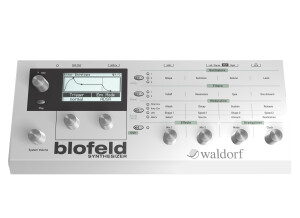
    (Originally written by nth206/translated from Audiofanzine FR) Some important details: - 1 Midi In port, Midi Out managed via USB port - Audio output on TRS jack - 16 multi-timbral parts but no Midi Off selection (see below for part muting) - About 1000 sounds of all sorts organized in 8 banks (if I recall correctly) - 2 menu knobs and 4 controls UTILIZATION Very easy to use for those who already know Waldorf synths like MicroQ, etc. On the contrary, newbies will need some time to get use to it. Lots of editing possibilities, it's a Waldorf!!! Even if the menus and sub-menus seem tedious, it's not really a problem, except for live applications. Since all parameters are editable via Midi, you'll quickly get used to automating everything to get the best out of the unit. The user's manual is clear, period. SOUNDS No surprise for those who already know Waldorf. For everybody else, it's a digital synth with a particular sound character. This synth sounds rather loud compared to other digital instruments I already tested (even the famous E-mu range). The factory presets are good. We're talking about real synthetic sounds (forget the trumpets!!). I believe the unit is conceived for hard house, hard trance, progressive or even ambient music producers. The presets are so many that you can get the impression that they are endless... Delay and reverb effects are average but the distortion is excellent (big German sound!!) OVERALL OPINION In spite of all these qualities, it is still possible to criticize the Blofeld. (see the high amount of posts on the forum) First of all, the unit keeps on having lots of bugs even after the 4th upgrade. (which, by the way, can take a long time to solve and become a real headache before installation) The theory according to which "distorted and crackling sounds are normal" may have to be reviewed because presets do sound much better after updating the unit. Some presets are designed to sound distorted or with crackles but you'll notice immediately the difference between them and a preset that's being distorted because the unit is not working properly. The synth sometimes freezes during playback and all your editing gets lost! (it is really bothersome to have to always look for updates in order to get the unit to work properly) Concerning the use of the unit, I was really surprised to learn that it's not possible to use only 3 or 4 parts in multimode, it's either 16 or one. As a result, if you have a system with several instruments (as in my case), you'll have to use the synth's USB MIDI interface to increase the Midi Outs and use all your gear. But if you want to play live without a PC (like me), it will be exasperating because you'll need 2 Midi Outs on your sequencer. I actually wrote to Waldorf about this and their answer was that the unit was not conceived for such applications! Great! To wrap it up, I'll say the unit is good for studio use or as a complement in live situations if you already have a sequencer. Its performance problems don't really undermine its enormous potential, they only are irritating. I'm really happy with this synth, I really like its warm and powerful sound. This unit fits perfectly in any synth rig thanks to its plentiful presets and its compact size... and it looks really nice!!!

  • FP User's review

    I can't think of anything that's missing. Lots of features, 3 oscillators, 2 LFO's, lots of parameters, lots of realtime tweakable knobs (±30), lots of FX onboard with nearly all possible parameters, 512 (changeable) sound presets and 512 empty user sound storage, ... I dare to say this a hundred percent complete machine. And if I have to say one bad thing about it: the presets are very bad - only a few exceptions. Price paid $ 2.100 UTILIZATION This is a great piece of gear, but it has a learning curve. I mean it's hard to start working with it, but once you know and understand the key features, it's a very easy and lovely machine. The manual is not that good. The first time you read it, it's hard to understand - a thing I usually don't have with new gear. Could be better; maybe for the Supernova III ?! And I prefer - but that's a personal opinion - sliders instead of knobs, especially for filter features and so... SOUNDS Sound quality is very good to excellent. I like it. Maybe not thé &quot;real analog&quot; sound, but still very close. Excellent for bass sounds, trance leads, dirty organs, in fact any kind of analog-type sounds. Less (but still very good) for strings/pads/sweeps. Focused on dance-music (especially trance/progressive). FX: all kind of FX (the classic reverb / delay / chorus/flanger/phaser types - as well as distortion / pan / tremolo / EQ fx) stored by sound preset, with lots of features - but a minor point is the FX quality: especially the reverb FX could be much better OVERALL OPINION This is a robust 2U rack, with only minor point that sometimes the knobs intend to come loose. I once contacted customer support via e-mail, and I received an answer from Novation (also by e-mail) within 24 hrs. I really can't think of anything that's missing (as I said above). This is a very complete and lovely machine with a great (virtual) analog sound. Already a classic machine !! Also used by: ATB, Jamiroquai, Orbital, A Guy Called Gerald, and many many more... Originally posted on FutureProducers.com Posted by: Unknown ( 4-, 2002)

  • « Finally, a renewal »

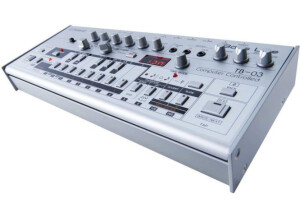
    For which kind of music and specific applications or uses (studio, shows...) have you chosen this synth? No introduction needed for Roland's TB synths, I use it for experimental, techno and other electronic stuff. Does it seem sturdy and well-finished? Is it easy to use from the start? What about the quality of its keyboard and touch? So far I have no reproach to make, it seems sturdy, to be confirmed as time goes by. The knobs don't feel loose at least. What do you think of its overall sound? What about factory presets? It gets close to the 303 but the sound lacks weight. What do you think of its edit/effect capacities? Great! You can choose your favorite edit mode from original (ala 303) or new. According to you, what are the pros and cons of this product? First the cons : - USB power supply (that really disturbs me) - the volume knob is at the back. - The manual forgot to mention half of the machine's processes.

  • FP User's review

    Everything's okay for me except a missing user definable arpeg and more patch slots. Some people complain about the lack of individual reverb/delay but i don't think it is a problem since there are exernal & plugin FX.... it's a great synth! DOT Price paid 1850 Euro UTILIZATION At the beginning we miss a lot of things since they are into the menus but with time, we get used to the menus & shortcuts and we don't ever think about that, it becomes s natural that u forget u wishes. The manual I got is good, printed in english and covers every aspect of the synth. never contacted access nor the vendor for a problem. IMO it it robust, such a machine is intended to travel in concerts & live gigs. Til now never had any problem. SOUNDS Great sounds from every kind from basses to leads to strings..... offers a wide range of possibilities and can easily replace other synths.. btw, since the day i got it haven't used my bass station & VSTi yet OVERALL OPINION I usually forget to call my GF when i am tweaking it I love this red-eyed black beast, it is so.......exciting. BUY IT Originally posted on FutureProducers.com Posted by: Unknown ( 3-, 2003)

  • FP User's review

    Has some killer features for a box in its price range. I'd like more filter types, though. The filter resonance gain adjustment is really nice - it won't help you model an oberheim or whatever, but it'll give you soem flexibility in how your resonance works. The basic FM makes for some nice effects, but it's a little wonky to use. Price paid $450 UTILIZATION Has lots of knobs. Many things are easy to grab and tweak in realtime. But...the rest of it is screwy. They crammed a lot of parameters into a 1U rack, so most knobs are dual-purpose and require you to flip a teeeny switch to adjust the otehr parameters. They tiny keypad isn't all that helpful either. And bafflingly, they have a 2-char LED display when most parameters have 0-127 values (and the patch bank numbers are 3-digit). It can be confusing if you don't know if you're on patch 136 or 236, or if your cutoff is at 120 or 20. The manual is...eh. It's like most manuals. It's a dense little box. It's bult pretty solid. I don't gig with it though, so I can't judge that. SOUNDS Very beefy sound. The leads cut through a mix really well, and the basses can shake a room. The effects section is, predictably, a bit weak. Kill the effects and use something built for it. OVERALL OPINION Love. Love love. It's supplanted most of my other VA's in the studio. Just that warm squishy sound it has - really really nice. Originally posted on FutureProducers.com Posted by: Unknown (January 1-, 2003)