Log in
EN
FR

Behringer

1120 products found

Categories
Series
Filter
Sort by
Evaluation
  • Reviewed or not
  • Editor’s award
  • Reviewed by Audiofanzine
Availability
  • Available or not
  • Sold new or used
  • Sold new
  • Sold used
Must-have products
  • All products
  • Flagship products
  • Best rated products
  • Hot products
  • Popular products
Price
  • Freeware
€
Clear
Sort by
  • Popularity
  • User ratings
  • Price - low to high
  • Price - high to low
  • Used price, increasing
  • Used price, decreasing
  • Name (from A to Z)
  • Name (from Z to A)
  • Added on
Sort results
  • Popularity
  • User ratings
  • Price - low to high
  • Price - high to low
  • Used price, increasing
  • Used price, decreasing
  • Name (from A to Z)
  • Name (from Z to A)
  • Added on
Filter results 1,120 results found
Evaluation
Availability
Must-have products
Price
  • Freeware
Show results

The best Behringer reviews

The reviews Audiofanzine members found the most helpful.
  • « A legend for €350! »

    First step, unboxing: the unit is nicely finished, seems sturdy for a Behringer product, the knobs feel “hard” and the size is compact but not too much either (unlike the ridiculously small Roland Boutique). So you plug it in, tweak the knobs a little and within 5 minutes you’re starting creating sounds! The learning curve goes very fast, and it’s ergonomically great. Again, the knobs are small but not too small either, just the right size to remain pleasant to use. The envelopes sound crispy, really punchy and are extremely precise. The filter is excellent, though lacking a little musicality, especially the resonance which rises up quite quickly even in the beginning of its course – so, you have to set it very precisely to get a softer sound. The cutoff sounds very bright and goes way further than on most other synths I know. It reminds me a bit of the ARP Odyssey, but in a less aggressive version. The LFO can be either very slow or very fast, with a huge amplitude. It reminds me a bit of the Yamaha CS15’s LFO, which is awesome (though the CS15’s remains better). Oscillators have a real presence all around the sound spectrum – in the mids, highs and lows. Still, I was expecting a little more subs, but as I don’t know the original Minimoog I have no idea as to whether the Moog’s famous low end is a mere legend or not? However, compared with my Korg MS20, it doesn’t go lower in terms of frequencies. Its interest is more in the overall spectrum width, as while the MS20 lacks mids the Model D does the job everywhere and remains musical-sounding in all kinds of registers. But to me, the most interesting point is the sound’s personality: you immediately recognize the sound texture that you’ve heard in countless classic tracks, as if it were tattooed within our minds. To name but a few, you can quickly get the bass from Thriller (yeah, it’s the one, real Moog sound), perfectly reproduce the lead sounds of Herbie Hanckock, ELP, Richard Wright and many others. But what I like even more is the ability to use this potential for modern production, to get more out of it than the usual prog-jazz-funky leads we’ve all already heard 1000s of times! In the end, what impressed me most were the really crispy-sounding envelopes and the sound’s presence and identity. All that for just €350!!! When you see the price for a vintage Minimoog or even Moog’s new edition of it, you wonder where the problem is?? Is it going to self-destruct in a fortnight? Are they going to ask for it back?... Well, no, actually it’s just that Behringer is not an elitist company and has made such a legendary instrument accessible to all!

  • « A switchblade that looks like a penknife »

    August 2018 update Serendipity I had gone to a local shop to demo the Model D, and pure chance made me get out with this Neutron. What a great idea! My reference in terms of synth is the 80s poly models – both analog and digital models, and both back in the days and in modern contexts. In the past months, I’ve sold a 01/W (though it’s great for its waveshaping pads), sent back a (too artificially-sounding) Deepmind12, renounced a (too polite) Rev 2 and frowned upon a (too cold-sounding) Prologue. I still have no experience in terms of modular synthsn and chance made me discover the JX-3P in 2018 (the real deal, with auto-oscillating resonance). Enough for background sounds. Raw and wild The Neutron is striking by its raw, wild character ans oscillators, so much that it’s very easy to mistake it for dirty. The sound soon turns acid, especially with the overdrive, BBD and filter resonance circuits bring a lot of harmonics with various types of signal distortion and overdrive. Dial back While truing it in the shop, I wasn’t too much worried by the sound mayhem which soon came up while playing with the Neutron’s controls, nor by how difficult it was to gat out of it as experience taught me it’s sometimes easier to have an analog synth sound bad by tweaking its controls without knowing what you’re doing. With headphones, I managed to find very fat sounds, a deafening clipping redonance filter sound, a (very tight) mono delay right into dub territory and an overdrive which will dissuade you from adding an external overdrive pedal (only a stereo chorus might sometimes prove useful). The Neutron has all it takes for standalone use. Once back home, all parameters reset and tuned one tone down, through the air using monitors, another character arised. LFO and envelope modulations sound lusher and lushed as the LFO turns into frequency modulation and filter is added. Forget reverb or any other external processor, its standalone aspect gets confirmed with a big physical sensation and fat sound, with all reserves of various effects allowing to make it sound even better, make it even fatter up to making the Neutron scream. A nice Design choice Some features that quickly stand out (at least in my own experience) : update- the different waveshapes available allow to obtain a subtle, almost LFO-like beat, even at their lowest settings, making the sound lively whatever you do. The Neutron’s front offers no PWM but the ATTENUATOR 2 is default-hardwired inside to altern between both width settings, independently from the Mod Depth which results in a kind of cyclical PWN. You easily get beat patterns following the various selected waveshape, as they cross as the oscillator phases zero in – all that even before touching the filter and modulations. -the paraphonic mode opens a wide territory for keyboard-playing which can’t even be envisioned on a monophonic synth as here you can work on harmonic variations of the sound itself (filter, resonance, oscillator interactions) from a diaphony. In that regard, the Neutron is some sort of diatonic accordion, immediately lusher and you can play with counterpoints, fugues and so on: a lot of fun for any keyboardist. -the VCA BIAS parameter allows to control the overall amount of sound to be affected by the (VCA) envelope 1. In other words, when pushed, the Neutron outputs the sound through bypassing the amplitude envelope, allowing to play with it even without a keyboard and to enrich that drone-like background sound. A sort of variable anf progressive HOLD feature. -the TONE and OVERDRIVE sections work as a lowpass filter, it’s very useful as it allows to tame the overdrive’s peaks and the filter’s resonance, avoiding ear-piercing sounds while maintaining the right amount of harmonics brought in by these sound sweeteners. In the end, the entire OVERDRIVE section works like a guitar preamp with overdrive, gain and volume – all independent from the master volume level. It allows to get overdriven sounds without having the overall sound volume explode. - The NOISE generator is very efficient even with the TONE and filter controls lowered, so that NOISE soon turns into an auxiliary oscillatorwhich works wonder with transitions and other inflexions of a drone or sequence. -the LFO can get both very low and very high. In the lower end, you’re way under 1Hz while the upper range goes far beyond what can be heard, so that you can have the Neutron sing like a talkbox-style robot or produce FM-style metallic sounds. One of its hidden features allows a continuous variation of the LFO shape (with the same feature available for oscillators) instead of a toggle, and settings can be changed without having to reset the synth (and stays on when lit again). - the BDD delay is a real marvel. Rather on the dirty side, but all depends on the incoming signal. It really eats the signal’s peak, instantly giving the sound a roots/dub, somehow vintagy footprint. Short values allow to place the sound in space in a minimal way, so in the end the synth doesn’t sound dry even without an external reverb/delay.Long values gat you into a world of feedbacks up to total buffer overdrive, and as this buffer overdrive is delay time-related it can be modulated to make the time longer so as to fill the BBD in and then empty it out while shortening the time – all this even as the synth no longer produces any sound as the delay features a buffer that can autosupply to provide un turn a secondary oscillator, an external LFO, a sequence engine or the ultimate and progressive control of a drone sound which can act as to modify uninterruptedly the underlying patch – a kind of manual and analog "patch remain" with no learning curve, you’re here instantly! - the filter resonance is very lush, most of the time you’ll get a natural overdrive at halfway which will nurture the overdrive in a most pleasant way. The resonance’s KEY TRACK allows to follow the resonance chromatically and offers an additional kind of boost as it goes beyond the ceiling of the filter frequency, so that you can use this KEY TRACK toggle to reach a step further toward ecstasy, e.g. through an evolutive patch. As a live instrument As a whole, there are 1000s of ways to use such a synth. Of course, it can be used in a most traditional way to power a sampler, when recording separate elements of an electro drums kit, or even for a precise tracking in a sequencer, when recording different parts one by one. But the Neutron offers even much more than that for live play and sequence building, and their evolution towards harmonic peak landscapes. This is in my opinion the highlight in a series of good design choices made with this synth. Most often, analog synths don’t offer much room for manoeuvre to create steps, once the filter is open, the LFO in place and the resonance engaged, you only have to go down or switch the gate on, or you have to go with external processing. With the Neutron, it’s the other way around: if you start slowly with the oscillators interacting through SHAPE, then you go upper following more or less the order of the aforementioned parameters, while making the best out of each, you can get step after step and go far up the road with no need to get back, especially as the output stage features an OVERDRIVE which can push all limits as you readjust it with each selected step. This is one of this synth’s assets: its sound texture and dynamics are very, very wide with lush oscillators (+paraphony), envelope management (VCA BIAS & ENV DEPTH), LFO (ATTENUATOR 2 and MOD DEPTH), the filter’s latitude and brilliance (FREQ, RES & TONE), giving the OVERDRIVE and DELAY duet (together or separately) all the materials it needs for vast sequence progressions. Far, far away Truth be said, I haven’t spent much time on it so far, but after a few dozen minutes what I can say is that by itself, in standalone mode, this synth brings in a wide array of possibilities to make the audience take off (at least to my ears). In a set with other synths, its sonic autonomy and raw, wild character make it a sharp knife that cuts through any pad or atmosphere, even one already heavily loaded with overdrives and distortions, or extralong delays and reverbs. It cuts through the clouds and while its leads aren’t as polished and clean as those from, say, a Model D, at least they don’t get drowned in the ambiance. The Neutron swims through the whole of it, it’s a very expressive synth in that context, when you want to add another waveshape to an already existing landscape, it can be heard easily – without having to reduce the rest for that. It’s also a rhythm synth which animates as soon as you plug it in. R2D2 at Acapulco Bay Through the Sample&Hold module, the patchbay is a crazy territory for random creations. So far, I’m getting lost in it, I plug it in, try to understand what I’m doing and the Neutron quickly goes at bay in a great discussion with itself. Very interesting: see the included sound excerpt, all I did was record (with only an additional stereo chorus added to the output). So far, I still have 2 cords available out of the original 6. Obviously, the merest move on the keyboard or parameters would break this balance, inducing a real musical creativeness. A real world of its own. The patch I used for this excerpt : S&H -> Osc2 Osc2 -> Delay Time LFO Uni -> LFO Shape LFO -> Osc1+2 Extricating Philip K.Dick update- I haven’t talked much of the patchbay, or (almost) the three sections on the left of it. Others will do it. By itself, the (perfect) patchbay guarantees many possible evolutions, including on the long term, and the included 6 cords allow to make things even more exciting. For beginners, the patchbay consists in taking the signal from here to there, then from this point to somewhere else. Needless to say that most often, nothing happens if you only connect a single cord, fun only begins with combinations involving at least two of them. The manual provides useful examples and tips, and as you understand more and more of what happens you get the inspiration for new patch settings. A counter-example for this is the single-chord patch from the S&H out to the FREQ MOD in, which allows to use the Neutron’s Sample & Hold module (which can only be accessed through the patchbay and is the source for most of the modular fun you can get out of this device as it introduces randomness). In the beginning, you may be left circumspect with the cable limitations, but several ins/outs are dedicated to signal multiplication, so all it takes is imagination and know-how to find how to make the complex routing idea you have (even before you have to use a doubling cable and so on). Finally, an assignable output allows to add velocity and aftertouch (though not both simultaneously). It’s very comprehensive, and with additional outer modules even more possibilities emerge. update- The Neutron is also audio-proned, with an audio input in the back which takes hot signals (most often +6 to 12dB to get the best out of it, depending on the signal level and impedance). The filter and envelope are to be opened to let the signal through, so you’ll have to do with a compromise between the synth’s sound and the quality of the incoming signal if you want both to coexist. On a drum machine or another rhythm device, the audio IN proves very interesting and allows to play the synth in the same time, through a sequence or using the keyboard. For signal treatment alone, the OSCs have to be used outside of the audio spectrum, either at the very top or bottom, and once this is done the entire Neutron controls (except those from the OSC section) are dedicated to processing the incoming signal. The patchbay’s other audio ins, the VCF IN, OD IN and DELAY IN, shunt the synth but are easier to use and allow custom routing. A word on the finish and the material aspects: I like the headphone volume knob at the back, which is independent from the output volume (hence allowing to look for a patch in one’s headphones without having to do it publicly – a perfect feature for stage use!), the MIDI THRU output which avoids using a USB hub, the DIP switches on the back that allow (through the use of combinations) to set the synth on a MIDI channel from 1 to 16 (without having to go through, say, sending SYSEX). Well, I’ve let my enthusiasm carry me away! From afar, the Neutron could be compare with a small penknife that does not look like much with its two oscillos and its bargain price, but it turns out to be a real shiny switchblade with shark teeth back – or, even, a machete, the Fire Station’s rescue tools, or, even better, the drilling machine from Cartel B on Philip K. Dick’s Mars peopled with electric sheep!

  • « A logical evolution for huge results ! Analog mixers are going to suffer while bands will love it. »

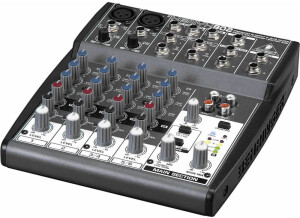
    I bought this compact gear as part of a sound system for my small, 5 to 7 band with several acoustic instruments, drums and sax. I own the RACK XR 18 version. Really small, but a huge result. The 6 aux sends to send whatever signal you want to monitors (I personally opt for the Ear Monitor, with added stereo ;) ) although the headphone out to get the master signal could be enough in many cases. The wifi sound management from the stage using a Samsung tablet or PC is great… I precise the PC software has a visual signal routing quicker and more logical compared with on a tablet, although the latter’s graphical resolution is better. Otherwise, a PC with a 50 meters cable can do… No more hums emanating from low-quality multi-pair cables sensible to light dimmers… Our rehearsal setup can easily be transported for small performances. The presence of effects, EQs and other useful features such as BBE or PULTEC emulations is great… Per-channel compression, FX sends… there’s plenty in it. As a result, our entry-level monitors sound fine because we can “draw” a worthy equalization without losing one’s earing… Yet I still favor the Ear Monitor, as less monitors means more room available, less feedback issues and a better overall sound, plus the bright musician ceases to call for the sound engineer every 2 seconds or so to express his needs regarding his monitor (here, just DIY). Recording our rehearsals or shows has become so easy… My sole regret is the lack of any opening to something bigger. I wish there were AES50-style connectors to patch the ins so a sound engineers gets what he wants for his front signal, which makes all the difference with the 32 model… “Caution, the XR18 tends to heat a bit even with its integrated fan”, so allow some room for the heat to evacuate properly. At such a price… GO AHEAD AND GET IT!!! I’m not disappointed to have a USB interface mixer with “by MIDAS” that I can put in my glove compartment. And frankly, it’ll soon be a real standard… 06/03/2015 update: The latest software update is great, clearer and a more coherent routing with the PC version… Better GUI and it works better with my old Samsung S3 too. It’s enormous! It’s so good that I’d do that choice again, or maybe I’d get a X32. Now that I’m used to some of its subtleties it’s great to be able to equalize each monitor with additional RTA to avoid feedback. Don’t look further: if it sounds bad, it’s either because of the band or your ears, not the gear. 09/28/2015 re-update ! Network use with a dual band ethernet & wifi router, which means : - A virtual front engineer PC-linked with a 50m cat.5 ethernet cable, the whole for under the €100 mark – so no more heavier, bigger multi-pairs - 5 additional connections from tablets with X Air Edit so everyone manages his own stage monitoring volume (but it’s more difficult for some, it takes a certain know-how, it’s an eternal debate between generations) – so no need for a €300 PM16 interface. I found the setting on the address below. - and of course, you keep the possibility to get a 16-track recording of the whole http://www.face.be/content/files/manuals/Behringer/FACE_User%20guide_XR18%20usage%20with%20external%20router.pdf So, it’s just huge !!! To be even better would mean an additional ethernet/AES 50 interface to please the sound engineers equipped with a X32 so as to leave them something to do, or an ADAT in to add more tracks for I use all of its inputs.

  • « I'm very happy with it ! »

    In what context do you currently use this product? I've been a live sound engineer since 1978 and I use it for that purpose on a regular basis. How long have you used it? For a few months now, after trying the X32 Standard several times. Have you tested other comparable or competing products before purchasing this one? Yes, I've tried almost all analog and digital mixers on the market! What are the pros and cons of this product? Pros: Value-for-money-for-space ratio Very complete features Internal effects Remote controllable from an Androd tablet Ergonomics and capacities (it's the first time a mixer allows me to do whatever I want or so) 22 ins/14 outs (considering AUXes) + the ability to add more through the S16 rack (16 ins/8 outs) Cons: Well, there's nothing I can think of... A 24/96 version would be better? Oh, I got one: the "Combinator" (multiband compressor) and reverbs can only be used on the first 4 effect slots, the following 4 are reserved for EQs, dynamic processors, enhancers and so on... I've only used it for a few months but I'm really having a great time and can record my shows on 24 tracks. I also use in in my home studio as a USB sound interface (22 ins/14 outs) with very low latency. Here's my opinion on it... Marc

  • « Small but mighty »

    Just received it and gave it a quick try. It weighs under 6 lbs, I got it to replace a xenius2222fx mixer, 2x15 and 2x31 equalizers, a stereo compressor, all in a flightcase + current supply. I use it for our rehearsals and shows. Here's our setup: drums backing track, singer, two back vocalists, acoustic guitar, electric acoustic guitar and mandolin on the pedalboard out, keyboard and digital piano. Buss send to return through a parametric EQ for feedback-taming purpose. The XR12 has a professional look, it resembles a patch bay. It's very small but I put it in a a short-depth 19" rack for its safety on stage. We got extra effects that we can also use as inserts. USB-only playback (wave files, 48kHz), recording on 2 tracks, really nice. Soundwise, nothing wrong as a replacement for a mixer of the same brand. Pros: it allows to gain space, weighs less, features wireless, and if you're switching from a small-sized rack you're gaining extra effects. Cons: none so far, but we'll see if future updates through the x-air app and the xr firmware cause no issue in the future. Also to be seen whether controlling from a tablet isn't a problem for outdoor daily shows. Have a nice time playing, Elwood

  • « Very good! »

    Nothing to add here!! UTILIZATION I think this is its main strength: In concert, everything can be accessed quickly and intuitively, there's no need for a manual (which is only available as PDF). You can access the dynamics section quickly, the EQ benefits from a very practical analyzer, an "assign" block lets you freely configure 12 pots and 24 buttons (distributed in 3 banks) to the parameters of your choice, intuitive "bus sends" and "DCA" sections, comfortable scene management and fast FX management. The list is long, just to say that it's a pleasure to mix with the X 32. SOUNDS Regarding sound, it's hard to say, it may have some issues in the high end, but I'm really satisfied with the overall sound (post-EQ). OVERALL OPINION I've used it for 2 months (in concert and studio) and have no complaints. Yes, I have used lots of other models in the same price range as the X 32 and also at much higher price points. If I had to choose between he LS9 and the x 32, I'd take the x 32 (despite preferring the yamaha preamps). The hardest thing for me was to trust its reliability, I hope it was a good choice. It's also not easy to convince bands to use this mixer, but every single one of them has been satisfied and even seduced by it. I have to explain many new bands that I do FOH for that Behringer has released a good product, etc., etc., which is a negative point (to talk to someone and say: "My mixer? A Behringer!" is not easy) In my opinion, this mixer is for concerts, but it is also quite useful as a soundcard. You can do multitrack concert recordings without a sweat, the send-return connections with the DAW are relatively comfortable, recording on a USB is practical for rehearsals, I'm thrilled with the possibility to mix on a tablet (it's awesome;) ), both to control the monitors and to mix when the console is hidden in a dark and dirty corner of the venue (it spares me having to go back and forth from the center of the venue to the console and then again to the center of the venue and back to the console. It features a practical built-in talkback mic on 2 assignable channels, the delay and reverb effects are good (but be careful not to change certain parameters live because it's not very smooth), the 31-band EQs are a bit weak, in my opinion, but the EQs on the channels are very good, plus, it also features an oscilloscope and noise gate. Unbeatable value for money IMHO, I never would've thought I'd get such a console at this price.

  • « Superb and timeless concept for sound-processing »

    Totally worth the money if you're still somewhere using the analog stage of recording or mastering! I see people selling this thing for 50 euros now, which is insane value for money. Me and my cousin bought this unit somewhere late 1993 in order to beautify old tape-recordings (often even from cassette-tape) and planned to also use it during mastering of new recordings, dance-mixes, remixes and own audio for film/video-productions. I liked it so much that I've also used it in the end-stage of mastering pre-recorded FM-radio broadcasts for years on end in the 1990s. Recently (in 2025) I dusted off the box and connected it again, and am honestly amazed by its quality output. Not only does it still work as new, it totally outperforms most of the (expensive) 'enhancer' and 'exciter' plugins that I've used for the last couple of decades. Even ones I paid for. If you solo out its output you can clearly hear what it does, and how well it does that. Behringer have truly delivered class audio processing with this device. Not sure how or what they've decided to create those harmonics with, but they truly work wonderful for the human ear. This device actually does what it says on the tin: The output creates airy crisp VERY warm sounding harmonics for the high notes, harmonics that remind me of old tube-amp artifacts from the late 1970s, it sounds purely analog to me. And its low end harmonics peak with truly sub-bass content of 80Hz and below, which also boosts the warmer end of the lower spectrum perfectly well. I will add a photo of how I've set it recently mixing a live performance which I've also recorded from the desk with the UltraFEX II EX3100 using Aux sends so I could control what instruments/mics should have what amount of added harmonics. The sound of this device sincerely amazes me still. It's the thing making an end product in audio sound warm and fuzzy. Just do some testing on the amount to add, find out the ratio between wet and dry before doing the actual productions, gigs or performances and you'll be glad you used it. The low-end can be too much quite fast, so use it scarcely, but if you high-pass the high harmonics set at its max frequency (around 8kHz) it's pure bliss for the human ear! Ever since rediscovering this unit I've started to also use it as a DJ, it works really well over large PA-systems too, even as an in-between before active speakers. THD is insignificantly low, and I/O is symmetrical/balanced so no worries there.

  • muzikal's review

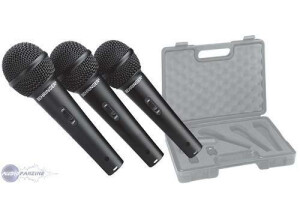
    Small-diaphragm dynamic (or electret?) mic Cardioid polar pattern. It comes with a mic clip and windscreen (for winter). OVERALL OPINION This mic that costs almost nothing (60 bucks for a pair and 30 secondhand) has a big advantage in my view, which has been pointed out as a defect by my predecessors: The frequency response curve that's attenuated in the high end, unlike Chinese pencil mics that are extremely bright. In fact, it's less sensitive and saves you in situations where you have unfavorable acoustic conditions, or when you need to record a clanking acoustic guitar. This mic smoothens out the timbre thanks to its attenuated highs and balanced high mids. With a good EQ you can easily remove the 10-16khz band. So the highs are very present, but attenuated. When I use them as OH I don't notice their lack of sting. On the other hand, as ambient mic they seem quite neutral. I have no noise problems with mine and the signal-to-noise ratio isn't any worse than my mk319. They will never replace my high-end pencil mics. But they can be useful in many situations. When I'm on the road, for example, to record takes with my folk guitar in places with bad acoustics: The result is better than with my more expensive mics, which are unforgiving with the acoustics and the mediocrity of the instrument... For the price, it's a chance not to be missed.

  • Audiofanzine FR's review

    (Originally written by SlapKid/translated from Audiofanzine FR) I've been using this compressor for three weeks. I was looking for a simple and effective device and it is exactly the tool I needed. My first surprise was that it has a true bypass (without battery and PSU the signal just goes through...). Second surprise: you must remove the housing screws to access the battery, which is really stupid. Third surprise: once you open the housing you can see a small brass screw to make adjustments. I didn't touch it because I'm satisfied with the sound of the DC9 and my Telecaster. UTILIZATION Very easy... I love it. The level control affects only the output level. With the sensitivity control you set the level at which the compressor starts working, depending on the guitar (each guitar requires its own sensitivity setting). It's great because you still have the trim pot inside to fine tune. It won't take you long to set the compressor correctly. SOUND QUALITY I don't own the Dynacomp (the one I tested at the shop sounded like a hair blower and it altered the signal) but I own many compressors (they all have disadvantages so I'm always for new models...). First of all, the DC9 sounds transparent and intelligible without saturation. It also adds high frequencies. It's like adding a pinch of salt to the food, it enhances the taste. The compression is not that strong (no pumping effect compared with other pedals). I insert the DC9 between my guitar and the amp (a 30 watts Line6 Spider3) and it enhances the overall sound response (clarity, punch, definition). And it's the same thing when connected between my Sansamp Triod and a clean amp. The DC9 doesn't amplify too much the noise. It's the ideal effect with the neck pickup of my Telecaster: without effect I get a jazz sound while with effect I get a perfect sound for funky rhythm parts. OVERALL OPINION I give it a 10. However, if you want an extreme compression it's not the right pedal for you. Perhaps the trim pot can change that. The CS100 sounds clear but it saturates. The Boss CS3 sounds awful like the Ibanez CP5. The DOD Milkbox creates too much noise and colors the mids. The Fat Burner is too expensive and it doesn't sound natural. The Compnova is not effective enough but it offers the best quality among effect pedals. I think all these compressors use the same technology (Ross-type). If you want a product in another category try the BBE Orange Squash, which has a fully different technology. But it's much more expensive (too expensive for me)! The DC9 is very useful and it is always on. I use it as a soft and discreet enhancer, and it is exactly what I expected.

  • « It's a Must Have! »

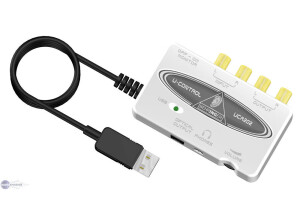
    Behringer Podcastudio USB - First, let me get this off my chest and out of the way. There are a fair about of bad review on the product, most people complaining at the audio quality is not professional. Well, that is not the intent of the product it was never meant to replace your semi producer or budget recording set up that consists of the following *Condenser Mic $200-500 *Mic preamp $100-300 *Pop Filter $10-60 *Recording Booth $200-1,000 *Studio headphones or Monitors $70-300 *Mixer $200-400 Now seriously do you think you are going to get the same quality or flexibility from a package that only cost $99? I feel this is a very good purchase for those that are looking to get their feet wet with podcasting and voice over work. To be honest one can get good quality if they understand what they are doing... I purchased this little setup for my daughter (or that's what i keep telling myself) she wanted to make recordings for her blog. I thought it was a good idea and started using it myself for video tutorials when traveling to visit family or if I'm somewhere where I can only bring a laptop. Here are some tips you can use to get quality recordings from the this budget rig 1. Buy a pop filter or make a pop filter they are inexpensive 2. Make sure you are recording in silent room 3. Always route the audio you are overdubbing to play through your headphones this way the sound is less likely to be picked up by the mic 4. learn eq and gating plugins (there are a bunch of free ones out there. These will be used to clean your vocals I've never needed to clean my vocals using this setup but if you do i would suggest downloading a free program called Audacity as well as it's lame mp3 encoder. Once again there are a lot of vocal cleaning plugins you can download legally for free and use within Audacity 5.Practice recording and use the mic, understanding how the mic picks up your voice will help you understand how loud you will need to be and from what distances. 6.Basic mixing, search the internet for basic level or mixing tutorials this will help you mix in your vocals making them sound more professional 7. Remember you don't have to record everything all at once. You can do them in segments This podcasting package comes with the following Mic Mixer headphones Software Mic Stand usb interface it really can't be beat for it's price. I will be honest the only other podcasting package I've tried were the ones I've put together myself but again that all consist of professional recording gear so it's not a fair comparison. If I had an extra $100.00 and a friend told me their kid was interested in getting into recording or they themselves were looking into it. I'd purchase this package for them

  • « BEHRINGER SNR202 DENOISER »

    Original Made in Germany. Die im SNR202 DENOISER verwendeten Operationsverstärker sind außergewöhnlich. Sie zeichnen sich durch extreme Linearität und sehr geringe Verzerrungseigenschaften aus. Um dieses Design zu ergänzen, umfasst die Auswahl der Komponenten hochtolerante Widerstände und Kondensatoren, Rastpotentiometer und mehrere andere streng ausgewählte Elemente. Er ist gebaut wie ein Panzer und sprüht noch von der guten alten original Behringer Qualität, die dafür gesorgt hat, dass Behringer weltweit zu einem der führenden Hersteller aufsteigt. Die alte Behringer Serie ist absolut ernstzunehmendes professionelles Studioequipment. Hat nichts mit heutigen Behringerprodukten aus China zu tun.

  • « Behringer SNR201 »

    Behringer SNR201 Guitar Pream-Denoiser rack noise reduction gate (Vintage) Model: SNR-201 (Made in Germany) Audio Interactive Noise Reduction System mit Vorverstärker + Ton Dynamic Filter, zu 19 Zoll Rack. Hi-Z und einen Line input und einen -20dB und einen line output. Preamp, Dynamic Filter, Expander / Gate Der Behringer SNR201 stellt ohne Frage einen Qualität-Meilenstein in der nunmehr Firmengeschichte des deutschen Audio-Spezialisten dar. Die Preamp klingt, wie es sich für ein Referenzgerät gehört, überhaupt nicht. Soll heißen, es treten keinerlei Verfärbungen auf, das Gerät überträgt absolut linear und präzise feinzeichnend. Haben das sogar mal mit einem Audio Analysesystem überprüft. Die Soundqualität ist wirklich genial.