Log in
EN
FR

Roland

1786 products found

Categories
Series
Filter
Sort by
Evaluation
  • Reviewed or not
  • Editor’s award
  • Reviewed by Audiofanzine
Availability
  • Available or not
  • Sold new or used
  • Sold new
  • Sold used
Must-have products
  • All products
  • Flagship products
  • Best rated products
  • Hot products
  • Popular products
Price
  • Freeware
€
Clear
Sort by
  • Popularity
  • User ratings
  • Price - low to high
  • Price - high to low
  • Used price, increasing
  • Used price, decreasing
  • Name (from A to Z)
  • Name (from Z to A)
  • Added on
Sort results
  • Popularity
  • User ratings
  • Price - low to high
  • Price - high to low
  • Used price, increasing
  • Used price, decreasing
  • Name (from A to Z)
  • Name (from Z to A)
  • Added on
Filter results 1,786 results found
Evaluation
Availability
Must-have products
Price
  • Freeware
Show results

The best Roland reviews

The reviews Audiofanzine members found the most helpful.
  • « Inspiring! Very good sounds, but some notable flaws in design & ergonomics. »

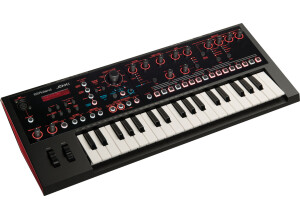
    Here’s my user review after a few weeks spent testing and using it. I hesitated between rating it 3 ½ or 4 stars, but still opted for 4. Unboxing: Once the synth out of its box and protective package, you immediately remark its interesting futuristic design. The device is well balanced, neither too heavy or too light for an instrument mainly made out of plastic. By the way, apart from two metallic horizontal bars/plates that feature hexagon socket head screw, there’s a bit too much of it (plastic I mean) which is quite surprising on an instrument in that price range. It has been mentioned countless times but opting for a mirror-like plastic surface is not an ideal choice for obvious reasons that involve fingerprints and light reflexion. I don’t understand why Roland didn’t keep the metallic aspect of the two horizontal bars, it would have looked way better. Now, let’s start it: the on/off switch is located behind the synth (no surprise here) but is not easy to access due to the way the back of the synth is designed. Let’s face it, turning it on somehow resembles lighting up a Christmas tree and it will delight the eyes of children around (or should I say grown-up children). At first touch the keyboard is very pleasant and the knobs look sturdy, although they’re made of plastic. Once you put your hands on it, you realize how an extra octave would have been appreciable – too bad. But, there’s something strange, the keyboard looks tiny… Actually the keys are shorter than usual for a synth! I wonder who came up with this strange idea… I mean, what’s the point considering the size of the synth? I know mini keyboards are fashionable (see the latest Roland Boutique expanders) but shortened keys on a flagship product is a bit… cheap. On a side note: Let’s make it clear, I consider that there have been no real innovation in synthesis for years now… I’d even go as far as to say the latest real novative synth was the Hartman Neuron’s neural-inspired synthesis (which for one was a bit too far on the experimental side). Unfortunately, manufacturers just serve us endless remakes of their best, historic synths with more or less success and generally little if any new feature… Though it doesn’t bring much new features synthesis-wise, this model is an analog/digital hybrid and there are not that many in that category (first that comes to mind is Dave Smith’s Evolver/PolyEvolver, which is not from yesterday). But now, let’s get back to the JD-XA: Its names owes much to an old model that was quite a revolution in its time: the JD-800! As one could expect, it doesn’t look unlike it with its many front knobs and buttons, and an overall look, say, darker (like, on the dark side) compared with its predecessor. It also reminds of DSI’s Prophet 12 for the black and red aspect and black/metal controls (but this is all there is to compare, with the DSI’s building quality far exceeding the Roland’s). The JD-XA actually only took the JD-800’s aspect as its digital synthesis engine comes from the INTEGRA 7, while the analog part is brand new if we may say so (Roland has already developed analog stuff in the past). To begin with you start with the first presets and happily remark the sound quality. The sound is always clean with a nice, characterful grain, soft on some sounds and more grainy on others. Pad sounds are beautiful, basses (especially the analog ones) have a great presence and benefit from very good filters, and the arpeggios are well made, so you are soon reassured as to the JD-XA’s sonic capacities. Oh, and thanks to Roland for generously offering four 16-sound banks! Is this a joke, huh? That kind of low-quality “libraries” is plain unacceptable for such a pricey synth! You’d swear theyr HAD TO release the synth before taking the time to provide a good sound library that would go along with it… This being said, you’ll be relieved to learn from the manual that you can import the Integra7’s sound banks, and from the internet that Roland plans to provide free soundbanks in the future at their website axial.roland.com. A kind of compensation… Some banks are interesting (basses, arp and cinematic pads). Oh and just to mention, the user manual is written so small that it’s almost unreadable, but thankfully there also is an online, pdf versionthat is easier to read. Still, the paper version is not comprehensive and refers to another (pdf) document to be downloaded… Everything is done so sparingly regarding manuals these days – let alone the fact that in some countries the importers don’t even bother to have the manuals of 2000/3000-buck devices translated… After the wonderful moment of the first time you set it on (by the way there’s a stand-by mode that has the synth blinking endlessly – a real Christmas tree), you start getting interested in how to edit sounds. You soon realize there are two parts: the analog one featuring four monophonic parts (or a “Poly Stack” control for 4-note polyphonic analog sounds), and the digital one which also features four parts (all polyphonic, sharing 64 voices). Each analog part classically features two oscillators. As for the digital parts, each is made of three sub-parts. When you’re used to synths, you expect program and multi modes – well, that’s not the case here. The “program” mode as they call it is actually a sort of global mode where each program records everything, both the analog and digital parts, the arpeggiator and sequences (a sort of snapshot in a way). This is both intriguing and disconcerting. As far as creation and sound design are concerned, this is a rather good thing as you can activate/deactivate each part very quickly, select it, edit a detail then get back at once to the same overall program. On the other hand, you wonder, how to deal with all these sound banks on the long term… How to extract the sounds created in the analog or digital part from a program and import it into another? Accordingly, you can’t name anything but the whole programme itself so you can’t sort or categorize the sounds (= the sub-parts of a programme) so as to find them easily in the future. The manual mentions a copy function, so here we go! And yes, it works! Too bad you just can’t browse or listen to the sounds while copying, so you have to spot the origin and destination programs in advance. Ergonomically perfectible, but it works. While the analog sound editor appears quite standard for whoever has already had an analog synth under his hands, editing the digital part is quite disconcerting: you’d expect to finding the front the entire controls that allow to shape the digital sound, but unfortunately you soon realize that you can’t edit some basic settings such as the basic PCM type with the front controls relating to the oscillator section. You have to enter the menus and use the + and – keys and the arrows for such operations… Both astonishing and appaling, how can that be!? Do you imagine browsing 450 waveshapes using a tiny “+” key? And no way to sort the waveforms, Roland only seems to have planned a shift key to skip 10 by 10… Amazing technology, ain’t it!? By the way, 450 PCM is a bit short for a ssynth in that price range, especially as some wave shapes are doubled with one for the right side and the other for the left one. I don’t know if this can be extended in the future, and even though quality is here there’s nothing revolutionary. That’s the moment I’m starting to wonder about the team that made the synth… It seems obvious to me that no specialist in ergonomics has worked on this product, when I see how the waveshapes have to be edited in the digital part I feel transported back 20 years in time in front of a JV 1080. Some may like this vintage aspect, but I don’t… As it induces a real waste of time and your workflow (and hence, your creativity) gets affected. Another weakness is the lack of a big screen (which again is quite surprising on a synth in that price range) for editing parameters. The choice to opt for a seven-segment display as a reference to its predecessor the JD-800 may reveal a nice intention, but having to work on such a small screen nowadays is plain nonsense! Especially as Roland perfectly knows how to provide such modern, quality features. Roland definitely has to come up quickly with a way to edit the digital parts. Perhaps through hijacking the portamento or the oscillator2’s PWM/PW sliders (which are not used in digital mode)? This is all the more regrettable when you think that the JD-XA’s digital parts are extremely powerful and provides amazing sounds! So let’s hope we soon can download a proper editor but so far I haven’t found anything of the kind (of course when you conceive such a device it’s not to provide a separate editor – provided you took everything into account first…). By the way, Roland offers a library software (which unfortunately froze on the first time I tried to use it on my Windows PC – haven’t tried it again in the meantime). Thankfully there’s a USB port to transfer the sounds you downloaded using a USB key. I won’t get into all the details and settings of the synth but I was both pleased and surprised by the filters’ sound quality and grain. The effect block is really well made and offers many(simple or multiple) accessible programs, all described in the second, downloadable document. A good surprise, each part (analog or digital) has its own effect block, plus 4 common effect blocks. Where things start to get complicated is that the 4 common blocks are connected in series and the first in the chain is a reverb (with a few to choose from), then two effects to choose from, then the delay (with a few to choose from again). This fixed chain is appaling to me and definitely lacks interest. A selectable structure chaining of the four effect blocks would have been necessary, plus a send level on each part of it… Compared with the (little brother) JD-Xi, the effect architecture is better and more variable on the JD-Xi, which doesn’t have a MFX per part but you can separately balance the send level of each part to the 4 effects, plus balance the effect send among them up to a certain point (e.g. FX1 to reverb). You can also route the effect blocks among themselves up to a certain point. The JD-XA allows none of this! So, why didn’t they keep the same idea, adding simply the MFX to each part? No idea… A few words on the arpegiator: the proposed arpeggios are rather nice and you can edit and create your own using the sequencer. I was surprised to find out there only was a single pair of stereo pair on the back of the synth, considering its capacities at least another pair would have been necessary, plus routing possibilities to split different sounds on different assignable outs (there’s a specific analog out, but this is still not enough). There’s also a USB bridge that allows to plug a USB drive so as to import all kinds of sounds or to save your programs or even to backup the entire device, which always is appreciable (there’s also a USB digital audio out). Now, back to the programming aspect of the synth. I’m now starting to wonder how to take advantage of all its MIDI-driven parts using my favourite DAW. I first plug my MIDI cables (for those who can I recommend using the USB port, unfortunately we don’t always have enough of these ports free on our PCs) and find quite a surprising mode (which btw is awfully explained in the manual): each part gets assigned a default MIDI channel, with the 1st analog part on channel 1, 2nd analog on channel 2 up to channel 4, then the four digital parts on channels 5 to 8. So you’ll have to manage no less than a total 8 MIDI channels to control all parts. Playing on the synth’s keyboard you don’t play parts separately, but (depending on the setting) several parts at once if all parts are set ‘ON’. I wonder how to record the whole of it. Playing directly on the keyboard, the synth sends your DAW all doubled MIDI messages for each channel of each activated part. That’s a possibility, and it works. According to the MIDI channel diagram, channels 9-16 are used for other settings but I haven’t looked up which ones. This involves that controlling the JD-XA requires 16 MIDI channels, or at least 8 to control all parts. A useful tip : to use the JD-XA’s program as a multi and control it from the external sequencer, you can also reassign MIDI channels. Typically, you’ll use several parts for each sound within a program, so all you have to do is route each of the parts that constitute a same sound to the same MIDI channel and here you go. Using an external keyboard or your DAW, all you have to do then is play the selected MIDI channel and each of the MIDI parts affected to it will be heard (even if they weren’t activated on the JD-XA’s front interface). Inversely, to play a single sound from the program using the JD-XA’s keyboard (that with several parts), you’d have to only activate ont of the parts associated to the MIDI channel, which is enough to trigger all of them (otherwise you get a sort of chorus/unison due to the sound being triggered by both the keyboard and the internal MIDI routing). This can be seen with the “active part” light lit in green on all parts involved. It’s a bit disconcerting at first, but you soon get used to it. First conclusion: After a few weeks using it, I can see good and much less good (and even some bad) points. I’m extremely disappointed to see the lack of serious ergonomics for sound editing (digital parts). It’s obvious the editing function was thought for the analog part as that of the digital one sis much more complex and you’ll have to navigate through menus, use the “<” and “>” as well as tiny “+” and “-“ keys, just like 20 years back… On a synth in that price range made by a manufacturer like Roland, this is plain unacceptable to me. A real pity, especially considering the synth engine and sound quality are really high quality. For sound design, it’s a great device, this synth immediately inspires and boosts creativity – which certainly is the most important for composers and musicians. If you want to create pads, strings or other complex sounds, what a bliss! To summarize my opinion about it, I’d say: Pros: - Hybrid architecture - Sound quality: very good for the digital parts and analog oscillators. The JD-XA is really great at producing pad sounds. - The program mode which generally is good at creating complex sounds by mixing analog and digital parts. - Sound edition using several knobs and sliders for the analog parts. - Sequence recording mode. - It looks nice (except for the mirror effect that sometimes blinds you) - The keyboard’s touch - The backup save/load on USB drive (plus the possibility to import INTEGRA 7 sounds). - Downloadable librarian utility software for Windows (not tested) - Vocoder Average : - the effect edit control block (not complete enough) - the (too small) nimber of “digital oscillator” PCMs. 450 may seem a lot but they’re not so novative (nor expansible?) - only 4 octaves and shortcut keys! Who came up with this strange idea??? - Limited polyphony on the analog parts - 4 included banks of 16 preset sounds each… could be better. Still, there are now freely downloadable banks that start to appear. - The mirror effect, screen printing and color contrasts (red printing + red LED = lack of visibility in the dark) - No editor (which wouldn’t be necessary anyway had the rest been better conceived) Cons: - the fixedarchitecture of the four general effects that limit routing possibilities when you want several different sounds within a same program (the JD-Xi’s architecture seems more flexible and interesting, a further update would be welcome). - The deigital parts’ edit menu, FX parameters and other interfaces are 20 years late, which seems to indicate a lack of serious ergonomic study… A big, infinite “value/data”-type knob (like on the JV-1080) really seems to be missing (the portamento knob or osc2’s PWM/PW sliders could be used in a future update for digital parts editing, if anyone at Roland reads this…). - The impossibility to use the sounds/parts (analog or digital) from a program to separate banks so as to recall them back later within another program. - The keyboard’s response curve (non-adjustable?) BIG cons : - the edit screen on a single usable line (two lines as a whole)! It’s too small, once again we’re dragged 20 years back. - A single physical stereo output (plus a dedicated analog out), on a synth that can deliver up to 8 different sounds - The manual is only half-printed (the rest has to be downloaded), plus it’s too small… Second conclusion: Due to some of the aforementioned aspects which were badly designed, Roland takes the risk of missing the opportunity to produce a real classic. Some things could be fixed via an update, but for others, well… Houston, we have a problem! This is a real pity as the JD-XA could have been an absolute hit (and get some awards along the way). It’s still an excellent synth for sound design, it inspires and makes creative, plus it fills a gap on the hybrid synthesis physical synthesizer market.

  • « Roland's big sound in a 4-in-1 synth »

    As a happy System 8 owner (I bought it soon after its release), here’s a first review after a few months using it. First, some specs : - 4-octave keyboard with normal-sized keys and a very good feeling. After owning several other Roland keyboards in the past years (including the FA06, Jupiter 50, V-Synth, VP550 and JD XI), I can affirm the System 8’s ranks high; - it weighs in at barely over 13 lbs (very slightly under 6kg), but its knobs and control keys are very sturdy – so does the synth seem as a whole; - comes with the Model System 8 and the Jupiter 8 plus ; the Juno 106 plus has been available since Christmas if you download the latest update, and the fourth slot can take up another plug to be downloaded from Roland’s website (for 75€ apiece) ; - each plug can contain 64 patches – all rewritable; - an excellent vocoder (but no XLR in, only a classic jack input); - a 16-pad sequencer which can be used in realtime or step-by-step (TR-like) on a max 64 steps (2x64 in performance mode); - a very basic arpeggiator on a maximum 2 octaves ; - maximum polyphony: 8 voices (4x2 in performance mode); it’s still impossible to play poly on mono plugs such as the SH101 :) - finally, the keyboard’s surface is smooth and uniform, all-aluminium made (unlike the JD Xi/JD XA and FA06/FA08), with a nice white silkscreen printing; the keyboard is rather good-looking when it’s off (that’s for those who don’t like green!). Factory sounds are Roland classics. Editing is very simple with everything at hand, and sounds can be created very quickly. To carve your own sound, you can start from a preset, from scratch or from a “basic” System 8 sound (which sound like 8-bit video games). Sound exploration is really fun on this keyboard and really all kinds of sounds can be created with punchy leads, fat bass sounds, airy pads, “Jump”-style brass, Vangelis- or J.M. Jarre/Oxygene-like strings and so on. Having 4 different synth types in a same machine is very nive and adds to both pleasure and creativity, especially considering that in performance mode you can combine 2 sounds from different plugs. In performance mode, you can play in either split (and you can even choose the split point) or layer mode. Anyway, the sound you get from the System 8 is heavily punchy. The first time I put my hands on it, I was impressed by the warmth of the sound – something I hadn’t experienced in a long time. As for the green LEDs, you can choose to keep them as-is, dim their luminosity or turn them off entirely. Unexpectedly for some, they ARE highly useful: when they’re lit up, they indicate which knobs/faders can be used: - on the System 8, all LEDs are on - on the Jupiter 8 and Juno 106, almost all of them are; - but on the SH101, many less are on, especially that for the 2nd oscillator as the original model only had one. This avoids turning some knobs to no avail. Regarding the editing of parameters, all is available on the front and it’s very complete. Without getting too much into details, you have 2 oscillators (plus a 3rd one that can be used as a Sub Osc), 1 LFO, 1 filter, and 1 effect (distorsion/saturation/metal/fuzz/crusher/phaser) can be assigned with 1 delay/chorus and 1 reverb. Overall The System 8 is a nice and playful synth. Editing is simple for people like me who are no sound designers, and you really enjoy playing it. Of course it also has its cons: - limited polyphony in performance mode: if you play a mono sound on the left side and poly on the right one, you’re limited to 4 voices per part instead of 1/7; - not enough memory slots (256 as a whole for 4 models) - no XLR in for the mic - when you save a performance, the patch’s settings are not saved, except if you also save the patches. However, for those who are reluctant to anything computer-based and can’t afford a real Jupiter 8, Juno 106 and SH (or who don’t want to invest into the Boutique range), the System 8 is an excellent, very punchy VA synth. It’s a 4-in-1 synth, or even a 6-in-1 if you take its 2x64 step sequencer and very good vocoder into account. I’m now dreaming of a VP330 plug (why not considering there is a Boutique version of it ?). Anyway, this is a synth that I love and a real keeper which makes both playing and creating very pleasant.

  • « MINIMINIMINIMOOG »

    ROLAND’s SE-02 is a mono analog synth resulting from the collaboration between ROLAND and STUDIO ELECTRONICS. It is a kind of SE-01 (a rack inspired by Studio Electronics’s Minimoog) in Roland’s “boutique” format. The size was much debated: it is indeed very small and could disturb – say – owners of a JU-06! But what is lost as to ergonomics is won again in terms of transportation ease. As a whole, building quality is good but the select switches don’t look that reliable, perhaps I’m wrong but as a consequence they’re not pleasant to tweak. Otherwise, the other switches are OK. As to the audio inputs/outputs, they’re in the minijack format – not jack: while there’s no tragedy here, it’s still a bit of a pity as on the long run it risks being less sturdy and to cause more contact problems. Please also note that the SE-02 is Roland’s only Boutique not to run on batteries. However, it features a real power supply socket (there’s a USB plug too, but it’s not used to supply the synth). The user manual (or, should I say, the user sheet) is very minimal, but there’s also a great unofficial guide which can be an excellent replacement for it with a lot of explanations: http://sunshine-jones.com/wp-content/uploads/2017/09/A-Users-Guide-To-The-Roland-SE-02-01D.pdf What about the sound? Well, it’s conversely proportional to the instrument’s size – it’s huge! Its sound grain is very close to that of a Minimoog, much more to me than the recent Moog models* and many modern synths, which oscillators sound too sterile. All the opposite with the SE-02’s sound which vibrates like that of a vintage Moog - its leads will make you shiver, and the bass lines will just hit you in the guts! The sound is huge, fat, rough (or sweet, at taste)... for such a price, it’s hard to believe! So, is the SE-02 a smaller Minimoog clone? Well, it’s not, but it’s strongly inspired by it and in the end, adding the memory, delay, sequencer and far superior synthesis features, it is actually way more powerful: no need to stay within the range of Moog-types bass/leads, especially with the pwn, the (real) LFO and the xmod feature. However, the interface and look are far less pleasant than a Minimoog’s, and these aspects also matter when you tweak or play an instrument. This is why I opted for adding the small K-25m keyboard to complement it (it’s finally quite playable in mono) and to add it wooden (walnut) sides: how cute! (see pics below) I ordered them through mixingtable.com . Yet, while the keyboard can easily be transposed using the SE-02’s transpose keys, it’s a real pity that the k-25m features neither a pitch bend nor a wheel. As a consequence, you’ll have to modulate in real time using the knobs, which is all the less practical considering their size… Also, the product’s lifetime (likely to be much lesser than a Minimoog’s) is to be taken into account. If you’re interested in a comparison with the Minimoog, a blind test is available here: https://www.reddit.com/r/synthesizers/comments/6rw82d/minimoog_model_d_vs_se02_part_1/ https://www.reddit.com/r/synthesizers/comments/6smdan/minimoog_model_d_vs_se02_part_2/ https://www.reddit.com/r/synthesizers/comments/6uxtg8/minimoog_model_d_vs_se02_part_3_finale/ This is great, as for 600€ (approximately 6 times less than a reissue), you are as close as it gets to a Minimoog’s sound, closer at least than with any other recent synth (Behringer has announced a “real” Mini clone for soon which shall be even less expensive, but so far it’s hard to tell whether it will sound as good or not). What a great time we’re living for analog synths! However, I have the feeling that it won’t last beyond a few years as the market is already almost saturated (especially regarding mono models), but let’s take advantage of it while it lasts! The Roland SE-02 is perfect for those after the Minimoog sound (and even more), however they’ll have to try it first to check if its size is not a problem for them. As far as I’m concerned, after one month owning this "miniminiminimoog", I’m still amazed by the sound that gets out of it everytime I set it on, plus it perfectly complements my other four analog synths (Sequential Prophet 6, MFB dominion 1, Dreadbox Erebus and Analogue Solutions Nyborg-24), especially for its sounds in the (very) low end and the rough soundgrains for which it surpasses my old Moog Sub phatty and Vermona mono Lancet. To conclude, I wanted to share these two videos which are significant as to the Roland SE-02’s capacities in terms of vintage sounds: PS : According to SE’s website, it seems that the SE-02 would only be the beginning of the collaboration between Studio Electronics and Roland: hopefully, they’ll release a 5-6 voices poly version under the 2000€mark! * (except of course for the Minimoog’s 2016 reissue)

  • « This tiny synth could have been a giant – alas... »

    I’ve tried the JD-Xi at length for almost a month, but I haven’t kept it in the end. It’s a nice small synth with many an asset but also too many flaws (some related to its youth maybe?) led me to return it. It’s a real pity as this small machine is very inspiring, you reach very interesting results in no time and the more you play the more you feel like a great musician – and you don’t see time pass! I won’t get much into its look or minikeys – you like it or don’t – but the keys are not what disturbed me most. I really liked: -the digital part with absolutely awesome sounds that remind of Roland (how logical!), the pads are perfect, warm-sounding and very expressive. -the drum sounds, especially the CR-78 -the vocoder, rather efficient and intelligible -the arpeggiator which I found great – especially used with the analog part -the musical aspect of it, as a whole it sounds right away and really great (especially considering the size and toy aspect) I liked a little: -the analog part: it’s a great news that Roland has gotten less stubborn and FINALLY accepts to go back to analog, but don’t expect anything exceptional either – it does the job, nothing more or less than that. Now, it’s not bad at all for bass lines. The DCO is reminiscent of Roland’s great era of the 70s-80s, though it’s not as juicy as a VCO, or even the Juno-60’s DCO which is a role model. Please note that the filter sounds much better since the latest update, it’s more musical very much more efficient, but most important, compared with the Prophet-600 (before the GliGli mod, for those in the know) you no longer hear these unpleasant steps when closing the filter with a high resonance setting. I didn’t like: -the lack of direct commands -the sequencer is way too limited and not exactly flexible, you end up turning round with the same mini loop that repeats endlessly. You still can have fun with it (if only the sequence could be transposed…) -no song mode or pattern chaining -the acoustic sounds (but I’m biased, I don’t like these sounds on any synth) -bugs that happen here and there, as the synth freezes from time to time when you push it a little, the notes freeze which make you reboot it entirely. A real problem if you play live… I hated: -a single knob for ADSR, you need to get through thousands of sub-menus to set the envelope, which is both a stupid choice and a real scandal -you can’t transpose a sequence using the keys (even my old SH-101 can do it) -editing is very laborious, with many menus and submenus that kill the inspiration and the straightaway aspect of the machine -this is especially the case to edit effects, as while they have offered many direct commands they are of little use in the end. An unlogical decision quite typical of Roland! (sometimes you wonder what they drink at R&D!) -the shiny surface is VERY FRAGILE (it easily gets scratched) ans seems to attract all sorts of dusts you could imagine. -the red-over-black inscriptions are impossible to read with a dim light (but not only), and the mirror effects only makes things worse and initially I had to keep a pocket torch around! Hopefully, Roland will know how to straighten up some of these problems and make some functions better thanks to future OS updates (as for instance allowing to transpose sequences using the keys), but for sure the single knob to set the 4 envelope parameters will stay and to me this absurdity in itself is impossible to forgive and is definitely a critical flaw. Too bad, it’s a real pity, I wish I could have loved it...

  • « High-powered = 10 JD800 piled up! »

    USE To be honest, there's no need for a manual. It's rather easy to use. Sound editing is pretty traditional. You can start either with a modeled waveform (sine, saw, square, SH, and super saw) or with sampled waveforms from classic and renowned synths, or with a hyper realistic "super acoustic" sound. I was a bit disappointed to learn that the Jupiter 80 has less "super acoustic" sounds than the Integra. But the Jupiter is good for purely electronics sounds, as well as for realistic sounds (it has some fabulous brasses). In terms of electronic sounds, the options are huge...From vintage sounds with character to modern sounds (modern sounds that take from vintage sounds all the same). SOUND The sounds are great for any style of music. I have almost never heard such a realistic and warm orchestral sound. That's certainly due to the possibility to layer several sounds without too many surprises, given the 256-voice polyphony. Hence, you can increase the sustain of your pads without the notes being cutoff due to the lack of polyphony voices available. In this video of mine (youtube.com/watch?v=RaI5ZXH69zw), there's a pad with a very long sustain underneath the piano. I can't do that with my other synths that have 128 polyphony voices. The piano is often criticized...You be the judge of its quality and purity: youtube.com/watch?v=OfkstfvQu7M&list=UUwnDgSStLuFagET1RmBF8ww&feature=c4-overview) That video is worth more than a thousand words. Afterwards, there's not much to say about the piano. I recently found the samples corresponding to the Strings of the VP330 among the long list of samples. I recognized it by ear, because the name is not too explicit. I compared it to the Xils V+ and the VP330 video, and it's exactly the same sound. So, you have typical Jupiter 8 and Juno sounds, plus more modern and realistic sounds. The effects are excellent although I sometimes think they sound cold, metallic. I had to find something negative...Although they are really good, anyway. The aftertouch is hard! You have to press real hard...A pity! And the LFO modulation is not assignable to the aftertouch...A pity again! The arpeggiator is not entirely programmable directly from the Jupiter. You need to first create the arpeggio and then import it as a MIDI file. Actually, you can import an arpeggio or an entire chord sequence to accompany a song, because it's a MIDI file. In this video I play the bass with the left hand, the melody with the right, the USB key playbacks the drums in WAV or AIFF and the arpeggiator triggers the chord sequence: youtube.com/watch?v=f7pSOMuAyEw&list=UUwnDgSStLuFagET1RmBF8ww (I know, the sound isn't the best and the image is inverted, but you get the idea) In short, the Jupiter is truly made for all styles. It can even be used as a soundcard. I own a JD800. And the Jupiter 80 is like having ten JD800s piled up! If you know that a performance is made up of four sounds, that you can layer two performances (that's already eight JD800), plus the Solo and Percussion parts, you get the ten JD800!!! OVERALL OPINION I've had it for a year now. At first, like most people, I asked myself whether buying it had been a bad move. But with time I have come to master it by playing, discovering, comparing. And I don't regret anything now. Other than the fact that many of my other things sound like toys in comparison...I would love to get a Little Phatty to really boost the quality of my home studio. It was pretty expensive at first (3300 euros), but now its price is more reasonable (2600 euros). For that price, you can expect a good sounding synth, if it's not a workstation. I am not disappointed at all!

  • « Very small – but very mighty, too! »

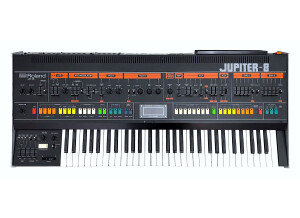
    So this is a miniature analog-modelling synth rendering Toland’s high-end synth from the early 80s (1981 precisely), the Jupiter 8. It seems sturdy and is quite heavy considering its size, which is quite telling as to its building quality. After a closer look, it IS indeed a high-quality product, all the more when you consider its price! It only comes with 4 batteries, the micro-USB cord is not supplied (but it’s the same standard as the one powering your cell phone). It’s very cute but very small too – hence some of the nicknames people have given it, the “gnome synth” or “hobbit synth”. After the Korg Volca, Arturia mini/micro-brute, Korg mini MS20/ARP Odyssey and Yamaha Reface, Roland seems to have followed that “honey, I’ve shrunk the synth” trend which has been going on for the last few years now. I love compact machines, but this one is a bit on the extreme side: try and edit with faders that are only 2cm long… Thankfully, they offer a good resistance which allows to compensate the problem while adding precision. Roland’s technology used here is called ACB (for Analog Circuit Behavior), it models the behaviour of each of the original synth’s component for better rendering of the analog sound. It is a further improvement compared with the previous generation Virtual Analog models: this time, it sounds (almost) like a real analog’s oscillators, envelopes or filters! It may still sound a bit too clean, but only a bit… As to comparing with the original, I’ve owned a Jupiter 8 in the past (which I had bought used when it was still affordable), but it was 20 years ago or so. In theory, I could compare it with what my ears remember, but it’s frankly too old for anything reliable. However, all in all, I’d say it sounds rather close. So far, with the synth’s processor, you’ll have to choose from polyphony or realism, and Roland has favored sound quality over polyphony which is limited to 4 voices. Hey, why only 4 voices? That’s much too limited for a digital device, even just 6 would have worked for me but 4… Granted, you can buy another JP-08 and chain it to the first one for a total 8 voices, but it instantly becomes less practical and more expensive – plus the psychological effect: buying twice the same gear, doesn’t that feel strange? Especially as we can expect further evolutions: Roland has indicated the Boutique series would be a limited edition, which doesn’t mean another (better) series won’t be produced, e.g. bigger models with more polyphony. So, with the original 4 voices, wave your pads goodbye… (unless perhaps you can do with only two notes, but that’s quite limites). This won’t be a problem with most other sounds without too long a release – well, as long as you’re not into very complex chords. Of all three Boutique synths, the JP-08 is the only one that I’ve bought as it’s also the only one featuring VCOs, the one with the most powerful synthesis engine, plus the only one with such an “80s legend” status. The only things missing compared with the other two (the JX-03 and JU-06) are a good chorus and longer-coursed faders/knobs. I also bought the optional clipsable keyboard (a great idea by Roland), which is nice though nothing exceptional: the advantage is that you can play instantly with nothing else to plug and it also looks clearly nicer, but you’re soon limited with only two octaves. Please note that the JP-08 also can also be used as a rather powerful sound interface (though I haven’t used it as such), features a rather basic step sequencer, and has an integrated small speaker of very average quality (don’t count on it for more than quick sound tests). So, in the end, Pros: - Almost analog sounding (ala 80s). - Very good manufacturing quality. - Doesn’t take up mush space in a portable, standalone and already-crammed homestudio. Cons: - The faders’ course is too small. - Polyphony offers only 4 voices, which is the JU-08’s big fault: a real pity, which by itself prevents me from giving it a 4-star rating. But clearly, it sounds very well and its power allows to create a wide array of analog sounds: so wile it’s small in size, this JP-08 delivers a mighty, mighty sound! As a bonus : a track (and album!) entirely recreated using the Jp-08 :

  • « A poor musician’s 909 ? »

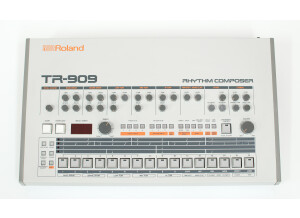
    I’ve played house for a while now, and i’m a great fan of the TR909 sound, to the extent that almost all my tracks contain at least one Roland instrument. Unable to buy a 909 due to its incredibly high price, I was excited when the TR09 was announced on 909 day. First reaction : It seems sturdy and weighs a lot (2 pounds at least). It’s well-built, and the finish is up to par. The knobs are ridiculously small! I turn it on and press play. Ooch! Quite punchy, isn’t it? My first impression as to the knobs only gets confirmes, my index finger gets stuck in between the level and decay controls when I try to change the decay “ala Jeff Mills” (= getting from zero to max in a wink). This forces you to turn the knob cautiously, making any “radical tweak” impossible. The sounds are very punchy. The compressors on the kick and snare are very efficient! I consider the toms to be sub-par compared with the rest, but nothing too bad. The rim shot is to me the least convincing sound of the bunch, I feel it lacks presence. Inversely, the open and closed hihat and the ride sound great!!! (too bad the decay control is not available in the front and you have to go into the Edit menu). No track mute, plus there’s something I just don’t get: no sound setting save system (something I didn’t even think about before I purchased it, as I considered totally obvious a digital machine would have such a feature – well, it doesn’t). Regarding the settings, the menus are well conceived and sync to my Octatrack works wonder. The USB audio out sounds very transparent and allows to get 4 stereo tracks, with each sound freely assignable to any of these. I won’t get into the details about the tiny speaker under the machine, I haven’t even tried it. I’m still satisfied, in spite of the few things it lacks. I’ll be able to take it with me for live sets with no fear to lose $3k in case something happened! Pros: - the sound!!! - portability - no need to resort to samples to get the 909 touch - audio interface functionality - comes with a very thorough manual Cons: - no separate outputs - no sound saves within a pattern To conclude, i would say that it’s not a poor man’s 909, more a little sister to the original :bravo: EDIT following a software update: In the meantime, an update has solved the previous impossibility to mute some tracks!! You can even mute independantly the "open/closed hihat" and "crash/ride" groups, and the same update also brought instrument panning.

  • « Probably the best in the series »

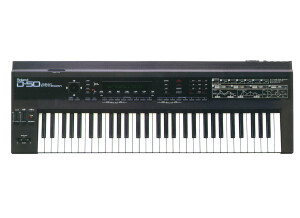
    Hi, I’m not a big fan of Roland’s Boutique series. I’ve owned the Juno, the Jupiter and the TR-09, and I’ve long hesitated before getting this D-05 in loving memory of my good ol’ D-550 ;-) Well, I ‘ain’t been disappointed! It’s really lovely, smaller than the other models in the series I think – at least it’s not as wide. The original model’s color scheme is partly reproduced, as with the rest of the series. Accessing banks, presets and sequences is as easy as can be! I’ve read here and there there were output gain problems, so I took the step to plug my MindPrint preamp behind it, just in case… I still consider this new fashion of putting a minijack out irritating, but I must admit the size of the device would hardly have made a full-sized XLR a legit option ;-) The power supply, MIDI and audio all go through a mini-USB connector (mini-connectors for a mini-synth: quite logical somehow): just install a driver and here you go! Strangely, there’s only one knob on the back side for volume setting. All tweakings are done using the buttons and switches as well as + and -, just like on the original. Driver : OK, USB : OK, audio signal : OK… Here we go! It sounds great from the very start – a little cleaner compared with the original if I remember correctly, but it delivers the same warmth. The effects are not exaggerated. I’m getting my old feelings back! The small joystick seems quite fragile, but it does the job. The 2 ribbons sound interesting and are respectively used for pitch bend and modulation, plus a nice ladder filter. But let’s concentrate on the sound: well, this is where this nice little guy really shines! The sound structure is the exact same compared with the original, except it was modelled by Roland. Put them side by side in a blind test, and I dare you to recognize which is which. Regarding the editing process… Well, that’s less brilliant. Linear synthesis is approximately to Roland what FM synthesis was to Yamaha – that’s very harsh. Plus, you certainly wouldn’t consider getting into upper-level synthesis with a 2-line screen and four control buttons, so I looked for an editor and, well… that was not easy. For Windows, you’ll find what you need. For iOS, you’ll find what you need – provided you pay for it As for Mac OS X… well, not so much to be found. But don’t be afraid, you’ll still find an EXCELLENT software http://ctrlr.org/roland-d50-editor/ which is free, very efficient and comprehensive. So, now we can finally tweak it as we like. My advice is (as usual) to start from a preset you like and manipulate the dozens of sliders: you’ll soon understand which has which effect. Well, that’s not the most usual way into the world of linear synthesis, but that’s quite efficient. But for the lazy ones – and I shall know, I’m one – who are after the sounds from their youth, this tiny synth can get those of its predecessors, and god knows you’ll find many all over the internet. So… It’s a beautiful life, ain’t it?

  • La2a's review

    When you read an opinion as Previous, one can only perform all necessary! Chorus / Spat unique. analog. UTILIZATION Four buttons for four chorus effects but engageable sparment ... So 16 variations of effects. Indeed one button off and I said nothing of spending in love circuits. Plug-in fan go your way! (Having said that it is plug-in in AU), ditto for lovers of rglages endless! Spatialization ... you branch it is l. A bypass and a sound that you return the blow you all riquiqui stepfather. it works for everything synth guitar, bass, vocals ... you return to Mono (Stereo output of course) or Stereo. SOUND QUALITY Stro trs wide, suddenly there's air! chorus musical and sweet. And spatialization! unique, with the classical principle of reverse polarity, and adding in the other channel, but the alchemy of circuits gives characters trs staff. A signature, anything but transparent, but subtle. OVERALL OPINION I love it! iremplaable for me. It may well recess does not like that sound, it is not 36,000 things ... But he does it well! As for the price ... Well if the unit silent not good, not the sellers sell and the price go down! Also an important concept, no tubes, no tapes, printed circuits ... I do not see a commit could fail ... The buttons can be ... photos: https://www.modezero.com/roland-dimension-D.htm Why Universal Audio has taken the few effects that copy plug-in? it is not good compnie? https://www.uaudio.com/menu/products.html So read what they say: https://www.uaudio.com/webzine/2004/september/index4.html look at the end of the few studio effects Miraval (beginners and artists who have registered): http://fernould.club.fr/miraval.html year of release for those that Roland has branch: http://www.roland-museum.de/rec_fx.html

  • « A vintage-spirited vocoder »

    I’ve invested in a VP-03 to get credible vintage string machine and vocoder sounds, and the VP-03 perfectly fulfills my expectations. As with all Boutique series products, manufactoring quality is very good. The lower shell is made of plactic, and the upper part of metal. The switches and faders don’t move unexpectedly and remain in their original axis. The controls are easy to handle and (unlike with the JP-08 for instance) they’re well adapted to their use, in spite of their small size. There’s no preset memory, but what use would they be? Regarding the settings, everything here is minimalistic, so no risk to get lost: it’s easy and instantly efficient, not a machine designed for experimenting deeply with sound but it remains an inspiring device to record vocoded vocal inspirations while having fun. I like the fact that when you turn it on, you find the same settings you were using when you turned it off, so there’s no discrepancy with the knob positions and you easily gat back to where you had left the previous recording session. In the end, the VP-03 only does three things: a string sound, a human voice sound and a vocoder sound – but it does each of them very well. -16 patterns can be programmed over 16 steps, and bits of your own voice (or other sources) can also be recorded through USB. It’s fun, and you can leave it to chance to create strange loops, mixing your direct voice with the vocoded voice, the string machine and the human voice. The 5/6 USB outs allow sending other sound sources (carrier, VST synths…) to the vocoder, and the 3/4 outputs or the mic’s physical input allow to send modulated vocals of speeches, so it’s rather versatile though the lack of an analog audio in is a pity as you can’t send hardware synths through it... I find its value-for-money to be a little under that of the other Boutique series synths. So far, i haven’t remarked any MIDI micro-latency. Pros: -Well-built -A convincing vintage-sounding vocoder -Good and fun-to-use ergonomics. -16 chord memory banks which are very useful. -The last settings used are kept when turned on again. -Credible and inspiring vintage sounds. -The Ensemble effect is well-modelled. -Stereo 24/96kHz audio interface -USB power supply -Battery-supplied for a complete autonomous use -Possibility to send other audio sources to the vocoder through USB Cons: -No audio in like on the first three Boutique models. -Audio out volume lower than on the three previous Boutique models. -The original microphone is very sensitive to all kinds of unwanted noises (breath, pop, keyboard noises…). -A slight audio buzz when plugged on the computer’s USB, like all other Boutique models. -Value-for-money is not as good as the 3 first Boutique synths. -Polyphonics is a beat subpar compared with a real string machine. -No plug for a sustain pedal, which would have been useful for such kinds of sounds.

  • « Get the Juno-106 vintage spirit »

    The JU-06 is an expander-format synth that adapts to a dedicated mini-keyboard. It is well-designed and built, with a metal-made upper casing and faders well into their rail that respond very well to being moved – very smooth and agreeable. The JU-06 can be used as a direct mixer using a mini jack audio input, which can’t be modulated through the synth section (a real pity). It features 4-note polyphony with 64 recordable presets. The headphone out is powerful enough and delivers a well-defined, ample sound. The 2 Ribbon controllers work well, but I would have preferred real, classic knobs which I find easier to manipulate. The JU-06 is totally autonomous using batteries or an auto-power supply through the micro-USB input and its small (and weak-sounding) integrated speakers. Audio drivers are stable, still I noticed a small latency on the midi in which forces to readjust recorded sequences. As for programming, it’s very easy to use and it always sounds good, the sound is always pleasant, the entire modelling seems perfect, the sound seems lively – not frozen compared with other Vas that I have. I found real analog feelings with the JU-06, it’s really impressive especially for such a price. Even if it features a single oscillator (but which can be combined with a SQUARE, SAW, NOISE and SUB wave), you can dose the volume of the NOISE and SUB but not those of the SQUARE and SAW, which is a pity – you can only turn them on or off. Still, you can modulate the SQUARE’s PWM through the LFO, which is a lot of fun. I found the direct access to octave sounds (16/8/4) through 3 tiny buttons very practical. The chorus is just huge, all by itself it justifies buying the synth. It fattens the sound in a very musical way, so it’s all the more a pity that it can’t be used through the audio in… The UNISON seems to me very unpleasant, it sounds metallic so I won’t use it, but it’s not a real problem considering the quality of the Chorus. In the end, the 4-note polyphony suits me a,d its sound really brings something positive to my current prods, this mini synth is not a gadget but a real musical instrument and on some aspects it can even take on my flagship Nord Lead4! It is particularly good at delivering fat bass sounds (with the addition of the SUB and CHORUS), very soft pad sounds, and 80s-style leads – all this very easily thanks to a great ergonomy and well-dimensioned fader course. The JU-06 features a 16-bar sequencer which can be saved into 16 preset banks. you can also add (or not) a delay effect, so far I don’t intend to use it but it can be useful for programming sequencesindependently. I personally would have preferred an arpeggiator instead. Pros : 1/ the modeling’s overall sound rendition 2/ Chorus quality, which induces a slight hiss but which i finally like 3/ building quality 4/the mini expander format which can be adapted to a dedicated keyboard to turn it into a 100% independant synth. Cons : 1/ i noticed a slight latency in the midi in, which induces problems to program sequences through my DAW (Ableton Live 9) 2/ the ribbon controller isn’t much fun to replace a real pitch bend, it often causes mistakes 3/ rather metallic-sounding Unison mode The JU-06 is neither a futile or impulsive purchase, but a unique tool very useful for producers or live performers, as it’s easy to find it a place. I gave it the highest grade for its value-for-money.

  • « A true source of inspiration »

    1113 tones, 88 keys, ... you can download the user manual from the Roland website. UTILIZATION The RD 800 has the aesthetic design of a piano not of a synth, it's sober... What a delight! Right from the first touch, the keys are skilfully weighted and feel very nice. I'm rediscovering it and it's great. Moving from the RD 700 GX to the RD 800, the manual seems clear, but my view might be subjective, having previously owned an RD. The main access buttons are accessible and effective, the display is now a color one, but no bigger than on the RD 700 nor is it touchscreen, you must always use the wheel (maybe for the RD 900?) The patches and setups can be accessed extremely fast. I won't give it a 10 only for the connections, which are on the bottom part of the piano's front panel, making them less visible and accessible than on the RD 700, although on an "aesthetic" level, the cables are hidden away. SOUNDS In terms of sounds...I'm still stuck at sound "0001" – Concert Grand – what a sound! It's a real delight. The sampling is precise and brilliant right until the sound fades away completely. I'm really amazed. This Concert Grand alone justifies its purchase. It's no use to have 12000 sounds if they don't feel right. Just go a and try it out and you'll see what I'm talking about! The other sounds rise to the expectations, be it the electric pianos or other sounds. Typically Roland, the sounds are brilliant and dynamic, more for pop rock, funk than classical music. You can really make expressive music with this keyboard, from velvety to a percussive and explosive sounds, depending on the force on the keyboard. OVERALL OPINION I got it two weeks ago and it's a real treat. Owners of Roland pianos should go test it, it's worth it. I've had Yamaha (CP5) and Roland (FP7, FP7F, ROLAND RD 700) before, but the RD 800 is a true revelation and a source of inspiration. I'll still use the RD 700 until I configure a couple of things on the 800, but I can't wait to make the switch. Yes, it has won me over despite its price of about $2900, which is the normal price for pianos in this category. It is much better than my previous purchases, both in terms of sampling and keyboard. Images linked to this review