Log in
EN
FR

Marshall Guitar Amp Heads

107 products found

Categories
Series
Filter
Sort by
Marshall
Evaluation
  • Reviewed or not
  • Editor’s award
  • Reviewed by Audiofanzine
Availability
  • Available or not
  • Sold new or used
  • Sold new
  • Sold used
Must-have products
  • All products
  • Flagship products
  • Best rated products
  • Hot products
  • Popular products
Price
  • Freeware
  • Low-cost (< $150)
  • Mid-range ($150 - $650)
  • Premium (> $650)
€
Clear
Sort by
  • Popularity
  • User ratings
  • Price - low to high
  • Price - high to low
  • Used price, increasing
  • Used price, decreasing
  • Name (from A to Z)
  • Name (from Z to A)
  • Added on
Choose a category
Selected category: Guitar Amp Heads
Sort results
  • Popularity
  • User ratings
  • Price - low to high
  • Price - high to low
  • Used price, increasing
  • Used price, decreasing
  • Name (from A to Z)
  • Name (from Z to A)
  • Added on
Filter results 107 results found
Brands
Evaluation
Availability
Must-have products
Price
  • Freeware
  • Low-cost (< $150)
  • Mid-range ($150 - $650)
  • Premium (> $650)
Show results

The best Marshall Guitar Amp Heads reviews

The reviews Audiofanzine members found the most helpful.
  • « Marshall TSL 100 »

    I bought my amp @ a local music store & this was an upgrade from a DSL 50 as I traded (2) DSL 50's for the 1 TSL 100 The thing I love about the TSL 100 is it has (2) FX loops & for what I play that is great.Also having 3 channel's that are footswitchable is a big plus. To be honest I haven't found anything that I dis like about the amp. It is like any Marshall product built with tons of pride...I mean Marshall has set the standard for Rock & blues amps.Made with quality woods & parts. I would have to add ....if you thinking of buying an amp & your kind of stuck & not sure what to buy that most companies try to copy Marshall but most fall way short. This review was originally published on http://www.musicgearreview.com

  • « The original rock god. »

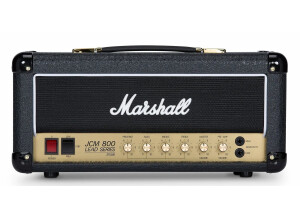
    The Marshall JCM800 50w head is the smaller of the two iconic original single channel 800s. They have been used by many noted rock and metal players both in stick and modded form. It has a very simple layout of controls that includes 2 volumes, bass, middle, treble and presence. Players would sometimes mod these for more gain or effects but the amp in it's stock form is a firebreather, rest assured. It is loaded with EL34s in the power section and puts out 50 watts. Pretty simple, it's worked for the best of the best and that was validation enough for me. No reverb or effects with this one but you can get pedals to that job or just let 'er rip as is! UTILIZATION Getting a good sound out of this rig is simple in some respects, difficult in others. There aren't many controls to work with so if you're looking for super flexibility you won't find it here. The controls have a narrower range than many modern high gainers and that can be difficult to deal with if you are used to modern amps. Also, these are fairly loud amps, and need the volume to get the saturated tones that many expect. The point here is that these aren't really the mega high gain rig, so in that respect it is harder to dial in. However if you have one of these amps in a good loud environment with a band, prepare for some fun. SOUNDS This amp was THE tone of the eighties, to put it simply. They have that classic Brit sizzle on the top end with a focused mids and nice crunchy lows. Since it's single channel there isn't much to say about it's clean tones but you can get away with use of the guitar volume knob for passable cleans. This amp lives for classic crunchy rock and early metal tones. Used with a Les Paul gets KILLER rhythm sounds and a nice thick lead tone with fat in all the right places... Switching over to a superstrat or Strat thins out the tone but brings that awesome high end sizzle RIGHT to the fore for LA style lead tones galore! These amps also take well to being boosted with a TS9 or BOSS SD1 to bring the gain up to even closer to modern levels. Very cool. OVERALL OPINION All in all I think this amp is a pretty fantastic way to get those killer eighties tones in the real deal package. Sure it doesn't have the versatility or tweaking functions of some modern rigs, but when you get 'er cranked in the right setting it flat out KILLS. whether you're playing hard rock or more modern stuff with the amp boosted you can't go wrong if you need that slice of British fury. These can be had used for under a grand if you look which is an awesome deal. Many were modded too over time so look for one of them if you desire more gain. Happy hunting!

  • « Nice throwback »

    I have owned 3 of these over the years. I let them go and then I come back to them. I always come back to them. The quintessential rock n roll amp if there ever was one. This amp has been featured on countless records over the years from anyone and everyone. Granted most of them have been hot rodded up but that it the fun of it too. These amps are so great when you get them to an amp guru who can add a little muscle to the amp. Or keep it unmodified and get a classic hard rock tone. The attack is snappy and quick. There is only 6 knobs so its not to hard to figure out. But you have to have the gain on 10. UTILIZATION Features 4 EL34s in the power stage 3 ECC83s in the preamp True bypass series FX loop 3-band EQ Presence control SOUNDS It is a great rock tone that can be bland but cranked it gets sweet. There is a very warm tone from this amp when paired with the right speaker and cab. But if you don't want to shell out $700 to get it modified then slap a Boss Sd-1 in front of it and you'll get some killer hard rock tones. If you want to get this thing sizzeling then you need to throw a pedal in front of it preferably a clean boost pedal with just a hint of gain was all that I needed. I had a Wolfgang style guitar and an Boss SD-1 in front with just a hit of gain but the level all the way up going in to a vintage Marshall 4x12 with Blackbacks and a another 4x12 with GT75's. It was a gain experience! I needed a noise gate because this thing was cranking some noise. OVERALL OPINION At new you can pick these amps up for right at around $2300. That is a bit of a hefty price for a single channel amp. I suggest going with a used one fro right around $850 or so. I have even score for for right at $650. The newer reissues will fetch a higher check but no more than $1100 for a used one of these. If someone is asking for more just reminds them in a few weeks when they don't sell it that you will take it for around $1000 at a favor to them.

  • « A classic... »

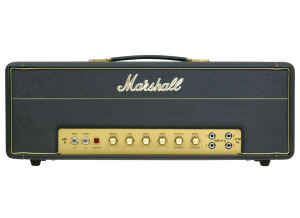
    The Marshall JMP was the go-to amp if you were a rock or metal musician in the seventies and early eighties. Everyone from Thin Lizzy to Iron Maiden used them and the picture of a wall of Marshalls sitting behind an arena stage is something every aspiring rocker dreams of. This firebreather used EL34s in the power section to deliver 100 watts of British crunch. It is a single channel amp with standard bass, middle, treble, presence, and dual volume controls. After 1975 these amps were changed to the gain and master volume setup to appease the players who needed that distorted tone but couldn't dime a 100 watt head. There's no reverb or effects loop on this amp unless it is modified. UTILIZATION These amps sound killer for classic rock or hard rock tones. The thing is, even the Master Volume model JMP is still an extremely loud amplifier. You either need to be in a soundproof room or have a good power attenuator to get the cranked tone at a more manageable volume level. The controls are pretty straightforward and act as intended. I find they can get kinda harsh when turned up so I prefer to keep the treble and presence lower when I've turned these amps up to stage volumes. SOUNDS This amp sounds killer for that raunchy British powered rock style used by so many bands back in the day. I would say it is a bit of a one trick pony but it does that trick very well. These amps get gain from volume, so naturally it will sound better as the volume is turned up, definitely. It sounds great with a variety of guitars, but the combination of this amp with a Gibson or other mahogany humbucker loaded guitar is awesome. Definitely the ticket for rock and early metal tones with that classic EL34 bite. These amps also make great mod platforms to be turned into high gain monsters too. OVERALL OPINION All in all I think the Marshall JMP is a great sounding and ultimately one of the classic Marshall amps of days gone by. They can be had for about a grand used which is a good price considering how good they sound and how iconic they are. You might want to budget for an attenuator to really get the most out of one of these, but when you do, look out!

  • « Killer amp! »

    The Marshall JCM 800 is such a great amplifier for pretty much any style of music. It has a great platform for modification or just using any type of overdrive or modulation effect pedal out there. It takes whatever guitar you use and doesn't turn your guitar into something that it's not the just uses the elements of your guitar and whatever affects or pedals do you have it just makes the most beautiful sound you've ever heard. I am a martial fan and you probably hear that in the tone of two which I'm right. I love Marshall amplifiers and are some of the grace amplifiers that have ever been created. They have spun off so much inspiration to so many modern boutique builders out there. They have influenced so many guitarists to write some of the best music that is ever been created. It has such a great voicing an overall great feel and are just perfect for hard rock music. UTILIZATION This amplifier is a 50 W version of the hundred watt main amplifier that Marshall built. So you have the power cut in half which gives you a little bit more spongy feel and attack. You will get less headroom in the tone and therefore your power tubes will break up a lot quicker. These are great for recording in my opinion because they have such a great feeling tone for capturing through a microphone into the recording session. They're very easy to dial and it doesn't take long to figure out or find out that perfect sweet spot in this amplifier. I generally turned the preamp gain all the way up and I control my volume to where I need in the room. The base I usually turn up pretty high because the marshals seem to be more mid range street and amplifier. I use the presents and travel pretty much in conjunction with each other to depending on what amp for fire speaker cabinet I have or whatever guitar I have depends on where I have these control knobs dialing. The middle I usually have just a little less than where I have the travel control knob. Again it's very easy and fire to dial in and it doesn't take too long to figure out where you like it. SOUNDS I love the tone of this amplifier when you using boss SB one overdrive distortion pedal . That pedal gives this amplifier at whole new tone region. I primarily like Marshall's with the Gibson Les Paul or a super Stratocaster guitar of some sort. Just some guitar with a humbucker pick up installed will get me the tones that I'm looking for. These amplifiers are great for modifying and there are so many people out there that now modify these amplifiers so it's not very hard to find someone to work on this get him to give you the tones that you're looking for. If there's a certain guitarists or professional musician out there that has a specific marshall tone which most of them do you then take this amplifier to a guitar tech amplifier text and get them to get this amplifier to the tones that you are chasing. If you don't want to get modified and just using good overdrive pedal and I'll get you almost exactly what you're looking for. I highly recommend using a good delay pedal with these amplifiers because they just really feeling the gaps and a hard rock or just pop music session. These amplifiers take petals very well so if you have a good overdrive pedal or good delay, phaser, chorus, flange or, or any other modulation effect pedal out there this amplifier didn't take those petals really bring out the good color and tone and voicings of all the gear that's in use. OVERALL OPINION I highly recommend this amplifier to anyone looking for one of the best martial tones out there. This is a 50 watt version which is going to be a little bit lot less louder than the hundred watt version. Is good. Have a good feeling good soft spongy attack with a little bit less headroom than hundred watt amplifier. These amplifiers will be a little bit less than the hundred watt to just take that into account when you're looking for budgeting for a Marshall amplifier. This is a fantastic voicing for our any amplifier and if you're looking for a good hard rock amplifier then look no further than this amplifier.

  • « Just trash »

    Marshall MG 100 amplifier is a cheaper version of some of the other amplifiers and Marshall has done before. This is an all tube amplifier but it really doesn't sound like a tube amplifier in my opinion. It doesn't have the fell or punch enemies to lexi amplifier. This just doesn't have feel the touch in the dynamics and I'm used to in pretty much every other Marshall amplifier I've ever played before. To me this thing is just plain garbage and the price you're asking for is not exactly what I would have in mind when it comes to the tone voicing this amplifier. UTILIZATION Features 100W of all-tube Marshall tone 2 channels 3 ECC83 preamp tubes 4 EL34 power tubes Independent volume and 3-band EQ controls per channel Gain, Crunch, and Balance controls on OD channel Master Presence, Resonance, Reverb controls Spring reverb Serial effects loop Footswitch included SOUNDS It does have some decent modern features such as the balance controls on the overdrive channel as well as the presences control for the power section. This allows you better dial in the voicing in tone of your sound you're looking for. This is a two channel amp that has for pop EL34 power tubes in it. You also get a spring reverb and a serial FX loop and it's all controlled via this foot switch that is included with you. The Thomas amp is not that special and it just does have that martial quality I like to hear have the amps that I've played from Marshall. Doesn't feel the dynamics or anything associated with any other Marshall amplifier I've ever played. I just feel like this amplifier is a terrible representation of what Marshall stands for. It just doesn't have that feeling tell him that I like to hear. OVERALL OPINION It doesn't really matter what are you playing this amplifier with it just doesn't sound natural or authentic. At new these amplifiers come in at around $799 which is a little over priced for what you get my opinion. Peavey has such a better amplifier for this same so I would go with the Peavey amplifier over this such as a 5151 6505 amplifiers from Peavey. Those are much better sounding and much more usable than this amplifiers.

  • « Garbage »

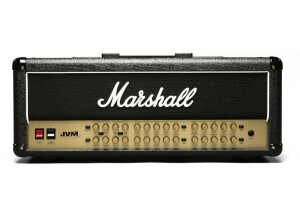
    Marshall has gone way down hill in recent years. Their JVM series amp sounds ok but nothing great or spectacular. There last newest amp that was decent was the Marshall JCm 2000 Dsl 100. That amp was great workable amp that sounded good and had the right blend of tone and features. This amp is the MG series which is no tubes but all solid state tone and sound like garbage. This amp has four channel and all of them sound about the same as far as soul and feeling. This amp has no feeling at all . You cannot get any type of dynamics or feel in a solid state amp. You get a bunch of on board effects built right into the amp which is nice for the beginner guitar player ho wants an all in one amp set up. UTILIZATION * Power: 100W RMS * Channels: 4 * Stompware footswitchable (not included) * EQ: 3-stage * Damping: FDD onboard and additional 2-way selector * Custom Effects: Reverb, chorus, phaser, flanger, delay * Emulated MP3/Line in * Emulated Headphones Out * Effects Loop * Dimensions: 23-3/10" W x 9-4/5" H x 10-4/5" D * Weight: 25 lb. SOUNDS The one saving grace for this amp is the FDD feature. This gives the tone a bit more girth and beef that makes for the tone to be more like a tube valve amp. It will not quite make it completely accurate but will have enough boost int he tone to make it worth listening too. The amp does have some decent sounding effects like the delay,chorus, phaser, and flanger. You also get some reverb but that is on a lot of tube amps as well. These effects are the basic most heavily used effects that any guitar player would use on a recording session or in a live band setting. You get a very usable sound out of these effects and make it easier to not have to carry around a pedal board to you gig or rehearsal. OVERALL OPINION AT new these amps come in right at around $359, which isn't a bad price for a 100 watt head. Why you wold need 100 watts of solid state power is beyond me. I would recommend this amp to anyone needing a loud practice amp. I would not gig with this thing or bring it out to any band I was trying out for. So a practice amp in home is where it would stay and to why I don't need 100 watts of power.

  • « Suprisingly not too bad »

    I have heard two of my favorite guitar player play through this amp, Paul Gilbert and Doug Aldrich. I actually heard Doug from about 5 feet away at NAMM a couple years ago when this amp came out. Of course he can make just about anything sound decent but I also heard one of Marshall's demo guys play through it and it sounded equally as impressive. I have never been a fan of digital modelers but this one as a hybrid modeler doesn't sound too bad. The price is good and the tone is pretty close to the amp models they claim to emulate. Marshall JDM100 Digital/Tube Guitar Combo Amp Features: Power: 100-watts 16 digital preamps Power Amp: 4 x EL34 Four modulation FX Delay FX Reverb Noise Gate Series/Parallel FX Loop Footcontroller included MIDI In and Thru Emulated Line Out Headphone Out MP3/CD Line In UTILIZATION Details Type Hybrid Number of Channels 4 Power 50W Effects Reverb EQ Bass, Middle, Treble Amp Modeling Yes Number of Models 16 Number of Tubes 2 No Preamp Tubes Power Tubes 2 x EL34 Inputs 1 x Instrument, 1 x Line (1.4") Outputs 3 x Speaker, 1 x Headphone (1/4"), 1 x Preamp, 1 x XLR Footswitch I/O Effects Loop Height 12.2" Width 29.53" Depth 8.66" Weight 44.53 lbs. SOUNDS So basically it is a digital preamp and a tube driven power section. The preamps cover just about ever Marshall amp that they have done and it does a surprisingly good job. I have never been a fan of amp modeling as most of my experience has been with Line 6 and those things sound terrible. So when I first heard this amp, my ears immediately perked up. The amp covers a lot of Marshall ground and the price is nice as well. If you can't find a decent tone out of 16 amp models then this isn't the amp for you. You can get basically any Marshall tone from the ages. OVERALL OPINION At new these amp come in at around $1099, which isn't a bad price for the features and tone that you get. There are plenty of hot-rodded Marshall tones available in this amp and it doesn't take too long to find them either. I would recommend this amp to anyone who loves the Marshall tone and can't decide which series they would like to have. The tone come as close as you can get for a modeler and sounds fairly organic.

  • « Metal Marshall hybrid amp »

    In the 90s Marshall attempted to bridge the gap between tube amps and solid state amps by making hybrid amps. The Marshall hybrid amps contained a tube in the preamp with a solid state power section. This solid state power section meant you could easily simulate load on the amp and get great tones even at low volumes. It has a clean channel and an overdrive channel. The overdrive channel comes with two voicings and the clean channel has its own EQ. They call it a 3 channel amp but it is really a two channel amp with two overdrive modes. It puts out 100watts of power with an effects loop. It has a rather flimsy spring reverb. When i got mine it was almost broken off. It pretty much rattles inside the amp chassis. UTILIZATION It has a few more knobs than your normal amp. Starting at the left you have the input for your guitar cable. The first set of knobs are for the clean channel. After the clean channels EQ knobs there are some buttons for a clean boost or clean OD sound for the clean channel. The next two knobs are the gain and volume for the overdrive 1 channel. Then there is a button to switch between OD 1 and OD 2. The overdrive 2 section has gain contour and volume. The contour knob will be your best friend with this amp. After these knobs there is the shared EQ for the overdrive channels. The last set of knobs are for the FX loop and the reverb. You can adjust how much reverb you get on the clean and dirty channels. SOUNDS The gain on this amp is very contemporary sounding. Playing with the contour knob you can go from a classic British sound to a searing high gain sound. The contour knob emulates the loading of the power amp. Chuck Schuldiner from Death used this this amp on most of his albums and it sounds exactly like what you heard on these albums. With the contour knob on low the sound is more classic Marshall. It has a lot of bite and clarity. With the contour knob turned up all the way the it tightens way up. With the contour knob up it almost sounds like a modern 6l6 amp. The clean channel is good but it is not great. The clean channel has a very cold sound even with the reverb on. OVERALL OPINION These amps are hidden gems. They only sell for about 200 bucks because everyone is afraid of the valvestate label. These amps are really good. You can get classic Marshall tones and heavy metal tones. Since it has half the tubes there is pretty much no maintenence needed. If you are looking for a good solid metal amp and see one of these you should try it.

  • « Marshall's best currently made amp. »

    The Marshall 2466 Vintage Modern head is a 100 watt tube head that was introduced by Marshall to capitalize on the "modified Marshall" craze being spearheaded by guys like Dave Friedman, Rick Onslow, Scott Splawn and many others.The specs are as follows: Valve compliment: 4 x ECC83 (12AX7s) in preamp, 4 x KT66 in power amp Master Volume with two Gain Controls: Detail (highs) & Body (lows) Two footswitchable Dynamic Ranges Low & High Mid Boost switch Footswitchable Proprietary digital Plate Reverb Series FX loop with level switch and bypass Made in England It's a very simple amp upon first inspection. The front panel looks a lot like the traditional Marshall JMP/JCM 800 layout, but with a couple major changes. On the far right there is the Body and Detail controls which control your two different gain frequencies, low and high. There is also a Dynamic Range switch which allows you to switch from a lower gain, looser sound to a higher gain sound that is a little bit tighter in my experience. Though it's basically a single channel amp, there is still a lot of flexibility if you use the guitar's volume control and amp's various gain adjusters to hone your sound. There is also an effects loop on the back and a plate reverb on the front panel. UTILIZATION Getting a good tone out of the Marshall Vintage Modern (2466) is really quite easy. I found that was very dynamic and responsive to the type of guitar, type of pickup, picking attack, and use of the volume control. Since there is no "clean" channel on this amp, the best you're going to get is by using a combination of the low range modes, low settings on the body and detail controls and use of your guitar's volume control and picking dynamics. However, most people don't buy Marshall type amps for cleans, myself included, so that's not a huge dealbreaker in my eyes. Really, the biggest thing about setting up this amp is remembering one key word... "balance." Make sure to set the controls to a happy medium between super high gain and lower gain if you want the best of both worlds. However, if you are looking for a single sound (IE: classic plexi, super high gain 800) just set the amp up to your taste and enjoy the dulcet tones! SOUNDS I tried this guitar with numerous Les Pauls mainly, as I wanted to get a feel for it when playing seventies and eighties hard rock and see how it would handle tones ala Van Halen, Whitesnake, Dio, et al. Because of this, I spent most of my time in the high dynamic range mode with the body and detail controls to taste (I tended to leave the body control around noon, and the detail was set to about 1 or 2 oclock.) I was using this amp through a Vintage 30 loaded 4x12, which is a great sounding speaker compliment for this amp's tonal range. The tones I liked best were those higher gain settings that were very similar to the tones of guys like Doug Aldrich or John Sykes. Very full and thick sounding, not too grainy, but with enough of that top end Marshall-y "sizzle" to give the tone that classic burning quality for riffs and leads. For that set of tones, the only amp I've played that was comparable was the Splawn Quick Rod. Everything else Marshall makes falls flat on its face when compared to this amp for raunchy British aggression, in my opinion. OVERALL OPINION All in all I was very impressed with this amp. I was recommend to try it by a friend of mine who works at the local Marshall dealer. I was very skeptical, since I normally *loathe* new Marshall amplifiers. However, this one was a pleasant surprise! The vintage and modern tones were both there in spades, and I really dug both tones. Though I spent more time with the more modern riff rock tone, I did mess around with the lower range cleaner tones and was impressed with those as well for a smoky blues/classic rock vibe. For the $1,200 or so price point they hit new, it's an absolute no-brainer to me. They're a great sounding hard rock amp. Users of the classic Marshalls will be happy that it's so similar to their favourite JMP or 800 in terms of controls, and modern users should enjoy the fact that this amp doesn't take endless tweaking to get sounding great. Probably the only new Marshall I would recommend right now is this one. If you want that classic Marshall rock tone, this is the one to get!

  • « Pass!! »

    I had heard so much talk about this amp for some time that I felt I need to get it. I was recently playing Mesa Boogies and wanted to go back to the Marshall tone that I was comfortable with. So I sold a Mesa that I had to get this amp. I had already owned a DSL 100 and was looking for something similar with more options. I got this home and was immediately disappointed. The amp was cold right out of the box. In that the bias needed to be warmer and get those tubes cranking hotter. So the sound was kind of thin to me. Next I noticed how noisy this amp was compared to the DSL 100. I always knew the DSL has a bit of noise but not even close to this amp. There was so much gain in here that I needed to go out and buy a noise gate. I don't like using noise gates if I don't have to. It was really too much for me to handle, so I dumped the amp within a month after buying it. Marshall JVM Series JVM410H Tube Amp Head Features: * 100-Watt valve head * Valve complement: 5 x ECC83 (12AX7s) in preamp, 2 x EL34s in power amp * 4 independent, footswitchable channels-Clean, Crunch, OD1 & OD2 * Each channel boasts 3 footswitchable modes — Green, Orange & Red * Studio quality, footswitchable digital reverb with level controls for all 4 channels. * 2 footswitchable master volumes * Two FX loops — Series/Parallel & Parallel * Series/Parallel FX loop is footswitchable * Emulated line out * 6-way, 7-LED footswitch with memory capabilities (UK patent pending) * All switching can be done via MIDI * Made in England UTILIZATION There are a load of options in this amp. There are four channels with three different modes to choose from within each channel. So essentially it is a 12 channel amp. Some of these modes are repetitive. For instance you can get the same sound out of channel one on the red mode as you can channel 2 with the green mode. I pretty much stayed away from channel one since it seemed pointless to me. I used channel two quite a bit since it felt the most natural sounding of them all. The 3rd and 4th channel while sounding gainy were just too much and there was so much noise that it just didn't get used. I read through the manual online at Marshall's website just to see if there was anything that I was missing. It was clear that I wasn't going to get this thing sounding the way I wanted. SOUNDS Perhaps I didn't give it a fair shake but I just couldn't get past how much noise this thing had. Plus it felt cheap to me. The sound was similar to a Line 6 simulator. It didn't feel natural at all. Nothing about this amp felt like a real amp except maybe channel one or two. I used all kinds of guitars with this thing to make it sound good such as Strats, Tele, LP's, Wolfgang and even a Rickenbacker. Nothing could make this thing sound natural. Allow me to preface this by saying I had owned a Splawn QR and comparing the two was not fair. The Splawn was so far superior that it was pointless to even keep this amp. This amp wasn't even in the same league. OVERALL OPINION My opinion on this amp is to pass it up. Get a DSL 100 if you want high gain Marshall or get a JCM 800, modify it or slap a SD-1 in front for about have the price as this amp. If you want to buy an amp with high gain Marshall tones then get a Quickrod. If you want a huge low end amp then get a Nitro. Just don't waste your time with this amp. I would not recommend this amp to anyone. At new prices they are over $2000. At used you may find it as good as I did for $1100. Save half that and get an DSL. Or save part and buy a 800 or a used Splawn.

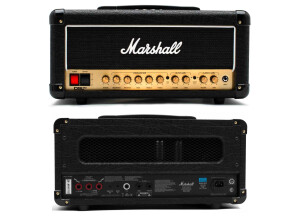
  • « DSL = Drooling Sounds of Love! »

    - 100 watts - all tube - 4 preamp 12ax7, 4 power EL34 - 2 channel - green channel - clean/crunch - red channel - lead - effects channel - spring reverb - classic marshall styling - classic marshall look - 1 button footswitch (used for either channel switching or reverb on/off) - 4, 8, and 16 ohm speaker connections UTILIZATION As with most marshall amps and tube amps in general, you really need to pump up the volume on the DSL to find the sweet spot. I find that keeping the master volume about 2 is a priority. If you can get above 4, you will fall in love with the tone. The look of the amp is classic marshall...no crazy LED lights, no space age looking junk...only the goods that Marshall is known for. Very straightforward and simple operation. The one thing that I wish that Marshall would have considered or actually implemented when designing this amp would be to have the green channel foot switchable. You either need to be on the clean setting or the crunch setting. I usually will keep it on the crunch and use my guitar's volume knob to roll down for a clean sound. SOUNDS Currently, this is my go to, all around amplifier that I use whether it's live on stage or recording in the studio. I'm not really a picky tone chaser. I know what i like and prefer to keep it simple. The DSL does that in spades. Plug in, turn up and you're ready to rock. I use a few effects with the amp...mainly a Boss SD-1, NS-2 noise gate, CH-2 chorus, and a Rocktron Banshee talk box. All perform very well with the amp. The gate and chorus are run through the effects loop. I play in a Bon Jovi tribute band so the DSL really gets me to where I need to be in terms of 80's, 90's and now rock. OVERALL OPINION This is my 3rd time owning a DSL. I previously sold the amp twice thinking I could use something else or go to a modelling setup. Each time I've been proven wrong. I always come back to this amp. I've made a pact with myself to NOT sell this amp again. For an amp with what some would view as a limited amp in part because of the channel setup/switching, this amp can go from the cleanest of cleans to rip your face off metal (with the added use of overdrive pedals). I dare anyone to plug straight into one of these with a Les Paul, switch to the green/crunch channel, turn the channel gain up to about 8 or 9, turn the master volume up to 4, hit an open G chord and not feel like you're rocking a 100,000 seat stadium!